
Longbeak Sedge (Carex sprengelii)
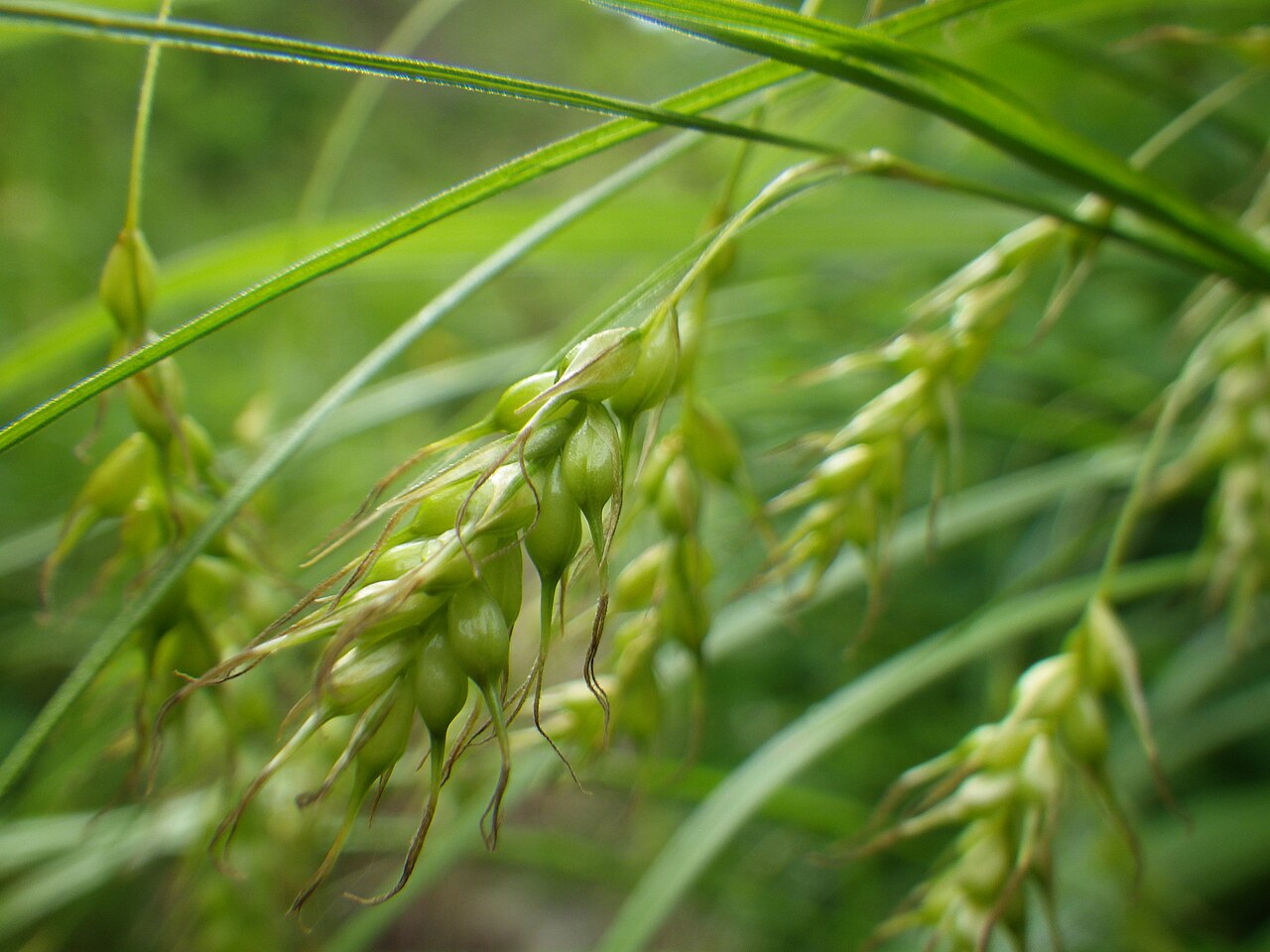
Carex sprengelii, known as Longbeak Sedge, long-beaked sedge or Sprengel’s sedge (the USDA PLANTS name), is a clump-forming, cool-season sedge in the sedge family (Cyperaceae). It forms graceful, arching tufts of fine, light green leaves 1 to 2 feet tall, and in late spring it carries slender, nodding spikes of seeds, each enclosed in a sac with a long, narrow beak. It is native across the northern United States and southern Canada, from New England and the Great Lakes to the northern Rockies.
Longbeak sedge grows in woodland edges, open deciduous woods, thickets, riverbanks and floodplain terraces, often on rich, calcareous soils, and it also turns up in urban parks, old fields and shaded roadsides. It tolerates both moist and fairly dry soil, sun or shade, and is one of the more adaptable native woodland sedges.
Gardeners value it as a native groundcover for light to medium shade, under trees and along woodland paths, where it can replace lawn or non-native groundcovers. It is available from native plant nurseries. Its fine texture combines well with spring wildflowers and ferns.
Identification
Look for dense tufts of narrow, light green leaves with fibrous, brown remains of old leaf bases, and slender, drooping spikes of loosely spaced fruits with long, thin beaks in late spring.
Growth Habit
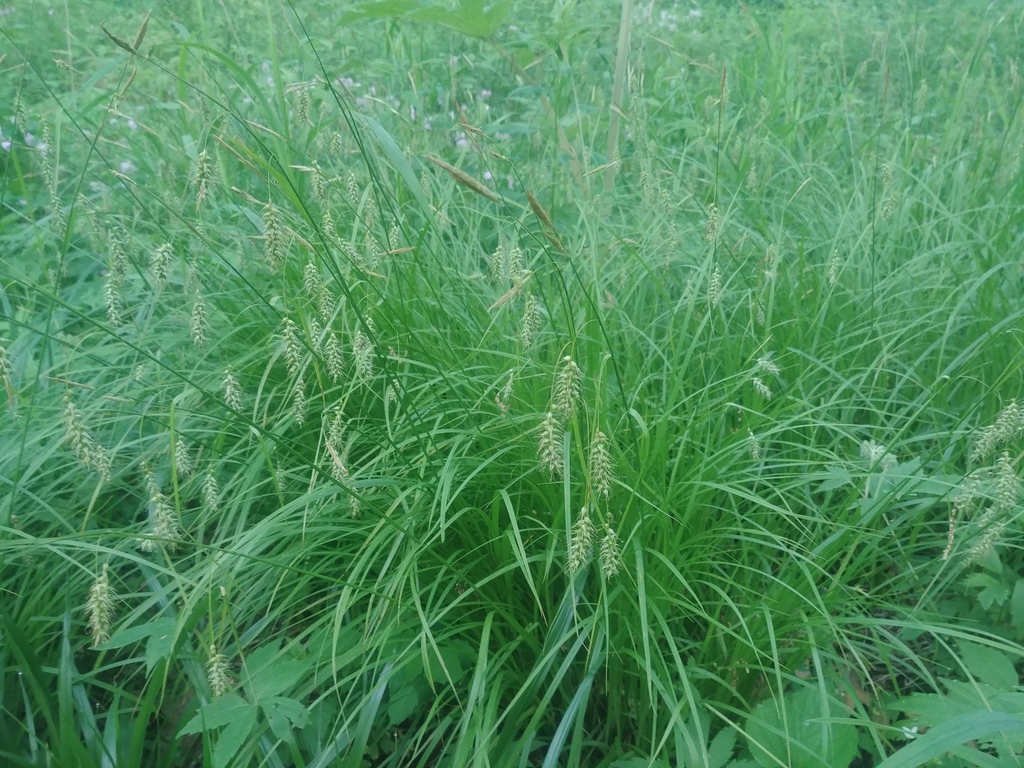
Longbeak sedge grows in dense clumps from short rhizomes, so clumps slowly widen and can merge into a loose turf. Leafy clumps are usually 1 to 2 feet tall, with flowering stems 1 to 3 feet tall that arch outward as the seeds ripen. The bases of the stems are surrounded by brown, fibrous remnants of old leaf sheaths, a useful field mark.
Leaves
The leaves are flat, 1/16 to 3/16 inch (2 to 4 mm) wide, light to medium green and soft, arching over to give a fine, grassy texture. They stay green from early spring well into fall.
Flowers
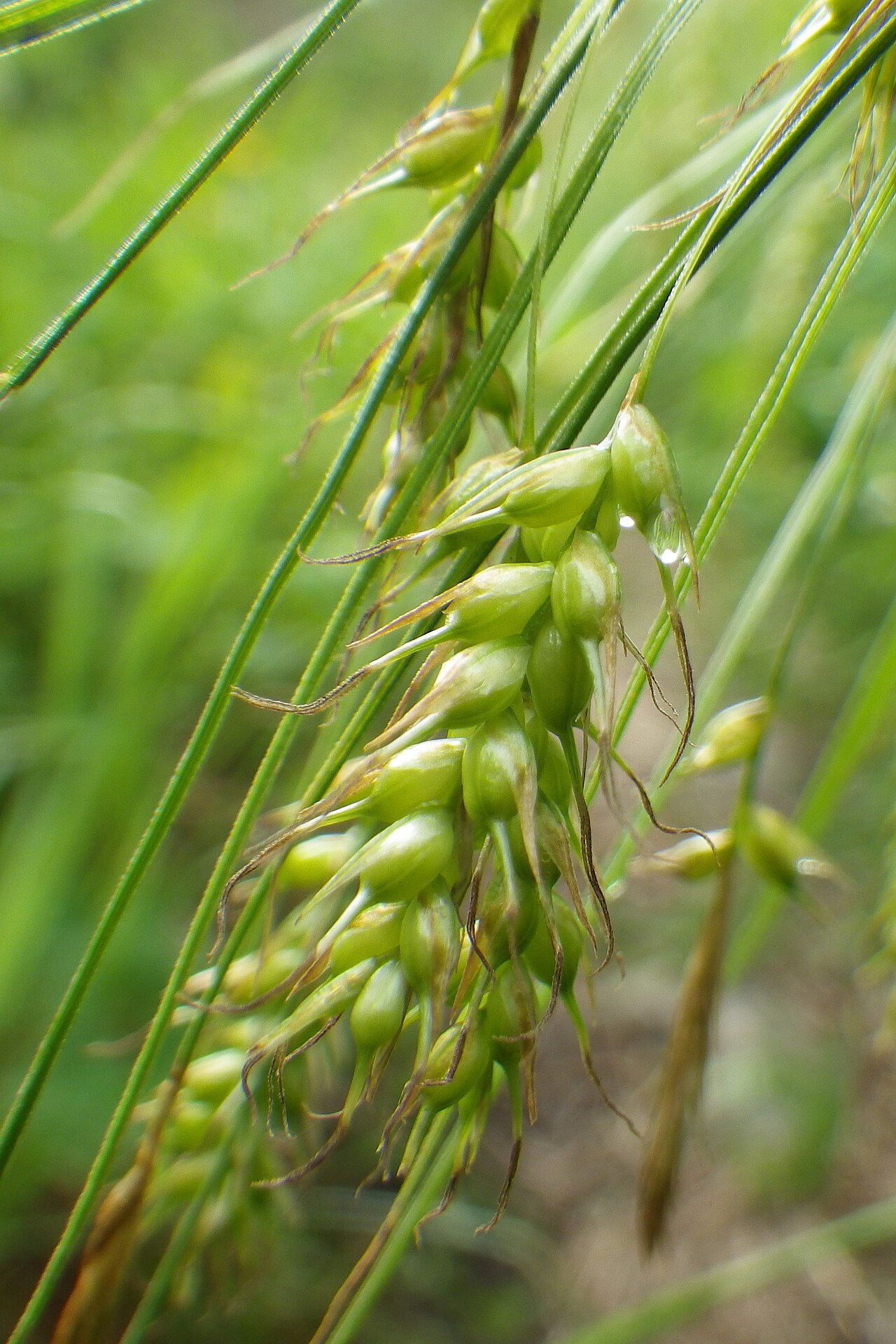
Like all sedges, it has separate male and female flowers. A narrow male spike sits at the top of each stem, and two to four female spikes hang below it on slender stalks, nodding or drooping as they mature. It flowers in spring, usually April to June, and the seeds ripen in early summer.
Fruit & Seeds
The female spikes are 3/4 to 2 inches long, with loosely arranged perigynia (the sacs that enclose the seeds). Each perigynium has a rounded, smooth body that narrows abruptly into a long, slender beak about as long as the body. This long beak gives the plant its common name and separates it from most other woodland sedges.
Look-alikes
Pennsylvania sedge (Carex pensylvanica) is shorter, forms spreading mats and has small, upright, hairy fruit spikes very early in spring. Graceful sedge (C. gracillima) also has drooping spikes, but its perigynia are small and beakless. Bottlebrush sedge and other wetland sedges with long-beaked fruits have much denser, bristly spikes and grow in wetter ground.
Quick Facts
| Scientific Name | Carex sprengelii |
| Family | Cyperaceae (sedge family) |
| Plant Type | Clump-forming cool-season sedge |
| Mature Height | 1–2 ft (flowering stems to 3 ft) |
| Mature Spread | 1–2 ft; slowly spreading |
| Growth Rate | Moderate |
| Sun Exposure | Part shade to shade; tolerates sun |
| Water Needs | Medium; tolerates moderately dry soil |
| Soil Type | Loam, clay or sandy soils; often rich or calcareous |
| Soil pH | Slightly acidic to alkaline (about 6.0–8.0) |
| Bloom Time | April–June |
| Flower Color | Green to tan (inconspicuous) |
| Fall Color | Green to tan |
| Fruit | Drooping spikes of long-beaked perigynia |
| Deer Resistant | Yes; seldom browsed |
| USDA Hardiness Zones | 3–7 |
Native Range
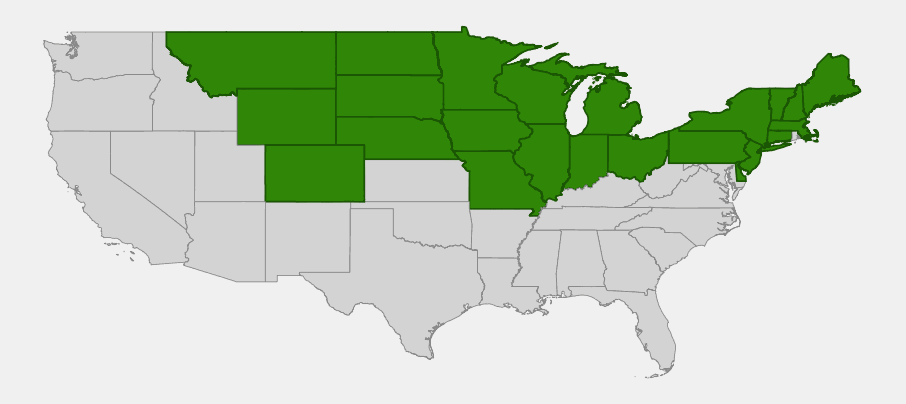
Longbeak sedge is native to the northern United States and southern Canada. USDA PLANTS lists it from 23 states in the lower 48, from Maine to New Jersey and Delaware, west through the Great Lakes states and the upper Midwest to the Dakotas, Nebraska, Montana, Wyoming and Colorado. USDA also lists it as native in Alaska, and NatureServe ranks it as critically imperiled there, but the Alaska occurrence is not shown on the map because USDA has no state distribution record for it.
In Canada it ranges from British Columbia, Alberta, Saskatchewan and Manitoba east through Ontario and Quebec to New Brunswick. It is common in the Great Lakes region, Minnesota, Wisconsin and New York. It becomes rare at the southern and western edges of its range: it is historical in Delaware and ranked as imperiled in Colorado, Missouri and Ohio.
It grows in deciduous and mixed woods, woodland edges and openings, thickets, riverbanks, floodplain terraces, rocky slopes and shaded roadsides, and it often colonizes disturbed woods and urban green spaces. In the northern Rockies it grows along rivers and in aspen and cottonwood stands. It is often found on calcareous soils.
📋 Regional plant lists featuring Longbeak Sedge: New York, Pennsylvania & Northern New Jersey · Ohio & Indiana · Montana & Wyoming · Michigan, Wisconsin & Eastern Minnesota · Nebraska, Kansas & Eastern Colorado · Connecticut, Massachusetts & Rhode Island · New Hampshire, Maine & Vermont · Delaware, Southern New Jersey & Long Island · Illinois, Iowa & Missouri · North Dakota, South Dakota & Western Minnesota
Growing & Care Guide
Longbeak sedge is one of the easiest native sedges to grow. It adapts to many soils and light levels, needs no fertilizer and makes a soft, green groundcover that stays attractive from spring into fall.
Light
Part shade to shade is ideal, such as under deciduous trees or on the north side of buildings. It also grows in full sun if the soil does not dry out completely, but the leaves may yellow in hot, dry sites.
Soil & Water
It grows in loam, clay or sandy soils and is especially at home in rich, neutral to alkaline soil. Medium moisture is best, but once established it tolerates periods of dryness under trees. Water new plantings through their first summer.
Planting Tips
Plant plugs 12 to 18 inches apart for a groundcover, or use single clumps among woodland wildflowers and ferns. It is a good native alternative to lawn or non-native groundcovers in shade and works well along paths and on gentle slopes to hold soil.
Pruning & Maintenance
Little maintenance is needed. Comb out or trim old, tan leaves in early spring before new growth starts. It tolerates occasional mowing at a high setting, but looks best left unmowed. It can self-sow modestly in open soil.
Propagation
Divide clumps in spring or early fall. It also grows from seed: sow fresh seed outdoors in fall or give it 60 days of cold, moist stratification before spring sowing, and keep the seed bed moist.
Landscape Uses
- Shade groundcover: a fine-textured native lawn alternative
- Woodland gardens: pairs with spring ephemerals and ferns
- Erosion control: holds soil on shaded slopes and stream banks
- Restoration: woodland edges, savannas and riparian plantings
- Urban plantings: tolerates compacted soil and dry shade
Wildlife & Ecological Value
Like other native sedges, longbeak sedge supports a surprising number of insects and other wildlife in woodland and riparian habitats.
For Pollinators
Sedges are wind-pollinated and offer little nectar, but bees occasionally collect their pollen in spring. Native sedges are larval food plants for several skipper butterflies and many moths.
For Birds
Ground-feeding birds such as juncos, sparrows and wild turkeys eat the seeds, which ripen in early summer. Some birds use the fine leaves as nesting material.
For Mammals
Small mammals eat the seeds and shelter in the clumps. Deer seldom browse it heavily.
Ecosystem Role
Its dense, fibrous roots bind soil on stream banks and slopes and help absorb runoff. Clumps provide cover for ground beetles, spiders and other invertebrates, and the evergreen-ish leaves give shelter in early spring and late fall.
Cultural & Historical Uses
The species is named for Kurt Sprengel, an 18th- and 19th-century German botanist and physician who wrote widely on plants and the history of medicine. The genus name Carex is the classical Latin name for sedges.
Native sedges such as longbeak sedge have become popular in recent decades as alternatives to turfgrass and non-native groundcovers in shady gardens. They need no fertilizer, little water once established and little or no mowing.
Longbeak sedge belongs to a group of sedges (section Longirostres, meaning “long-beaked”) that is small in North America. Its combination of drooping spikes, long-beaked fruits and fibrous old leaf bases makes it one of the more distinctive woodland sedges for beginning botanists to learn.
Frequently Asked Questions
Is longbeak sedge good for shade?
Yes. It grows well in part shade to shade, including dry shade under trees once it is established.
Can longbeak sedge replace a lawn?
It can replace lawn in shady areas where grass struggles, especially areas with little foot traffic. Plant plugs about a foot apart.
Why is it called longbeak sedge?
Each seed is enclosed in a sac called a perigynium, which narrows into a long, slender beak about as long as its body.
Does longbeak sedge spread?
It forms clumps that widen slowly from short rhizomes and may self-sow lightly, but it is not aggressive.
Is longbeak sedge evergreen?
Its leaves stay green from early spring into late fall and may stay partly green through mild winters, but it is best described as semi-evergreen.

Looking for a nursery that carries Longbeak Sedge?
Browse our native plant nursery directory: Colorado, Connecticut & Delaware · Illinois, Indiana & Iowa · Maine, Massachusetts, Michigan, Minnesota, Missouri & Montana · Nebraska, New Hampshire, New Jersey, New York, North Dakota & Ohio · Pennsylvania, South Dakota & Vermont · Wisconsin & Wyoming

