
Slender Toothwort (Cardamine angustata)
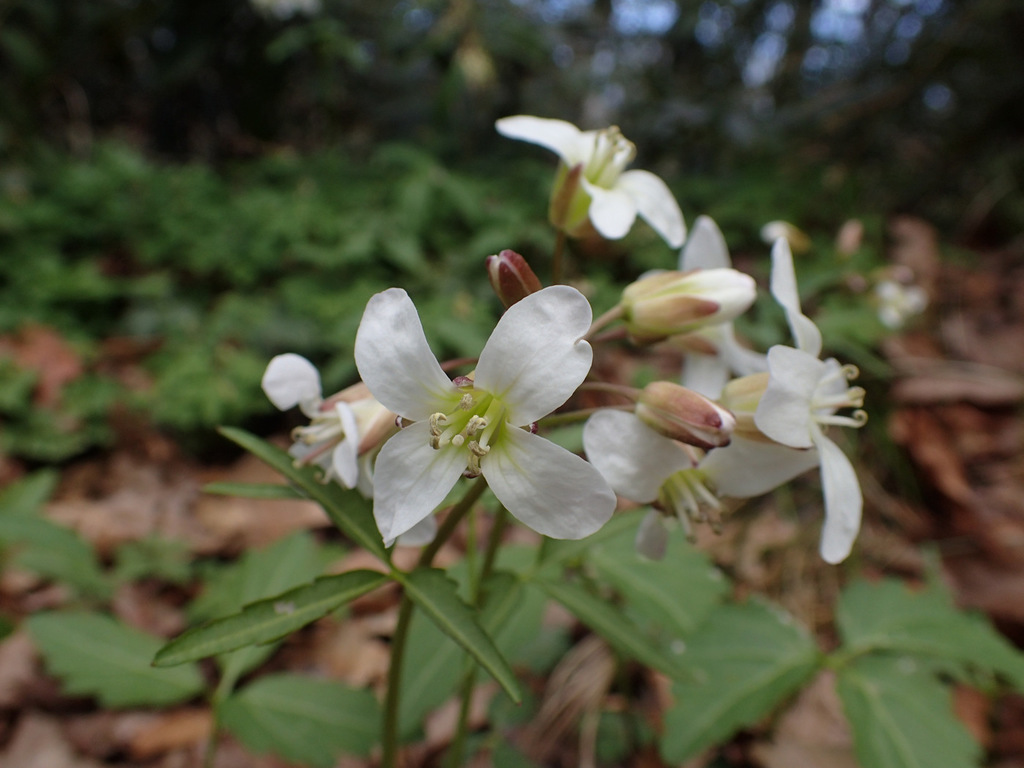
Cardamine angustata, known as Slender Toothwort, is a spring wildflower of rich eastern hardwood forests in the mustard family (Brassicaceae). In early spring it sends up a slender stem 8 to 16 inches tall with a pair of three-parted leaves and a loose cluster of white to pale pink or lavender, four-petaled flowers. By early summer the whole plant has vanished back to its underground rhizome, like many of the woodland “spring ephemerals” it grows with.
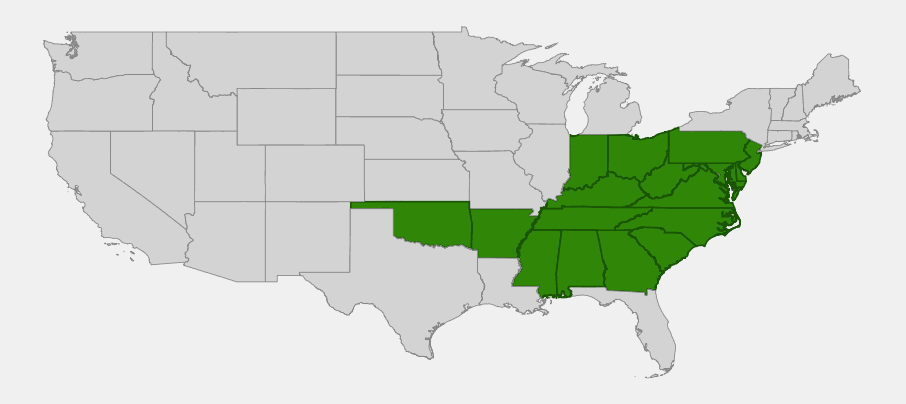
Slender toothwort grows from New Jersey and Pennsylvania west to Ohio, Indiana and eastern Oklahoma and south to Georgia, Alabama and Mississippi. It is most at home in the Appalachian foothills, the Piedmont and the Interior Low Plateaus of Kentucky and Tennessee. It is often listed under its old name Dentaria heterophylla, “the toothwort with different leaves,” which describes its best field mark: broad leaflets on the basal leaf and very narrow leaflets on the stem leaves.
For woodland gardeners in its range, slender toothwort is a delicate companion for spring beauties, trout lilies and bluebells under deciduous trees. Its early flowers feed native bees, and toothworts are host plants for the falcate orangetip and the uncommon West Virginia white butterfly. Buy nursery-propagated plants or grow it from seed, and never dig it from the wild.
Identification
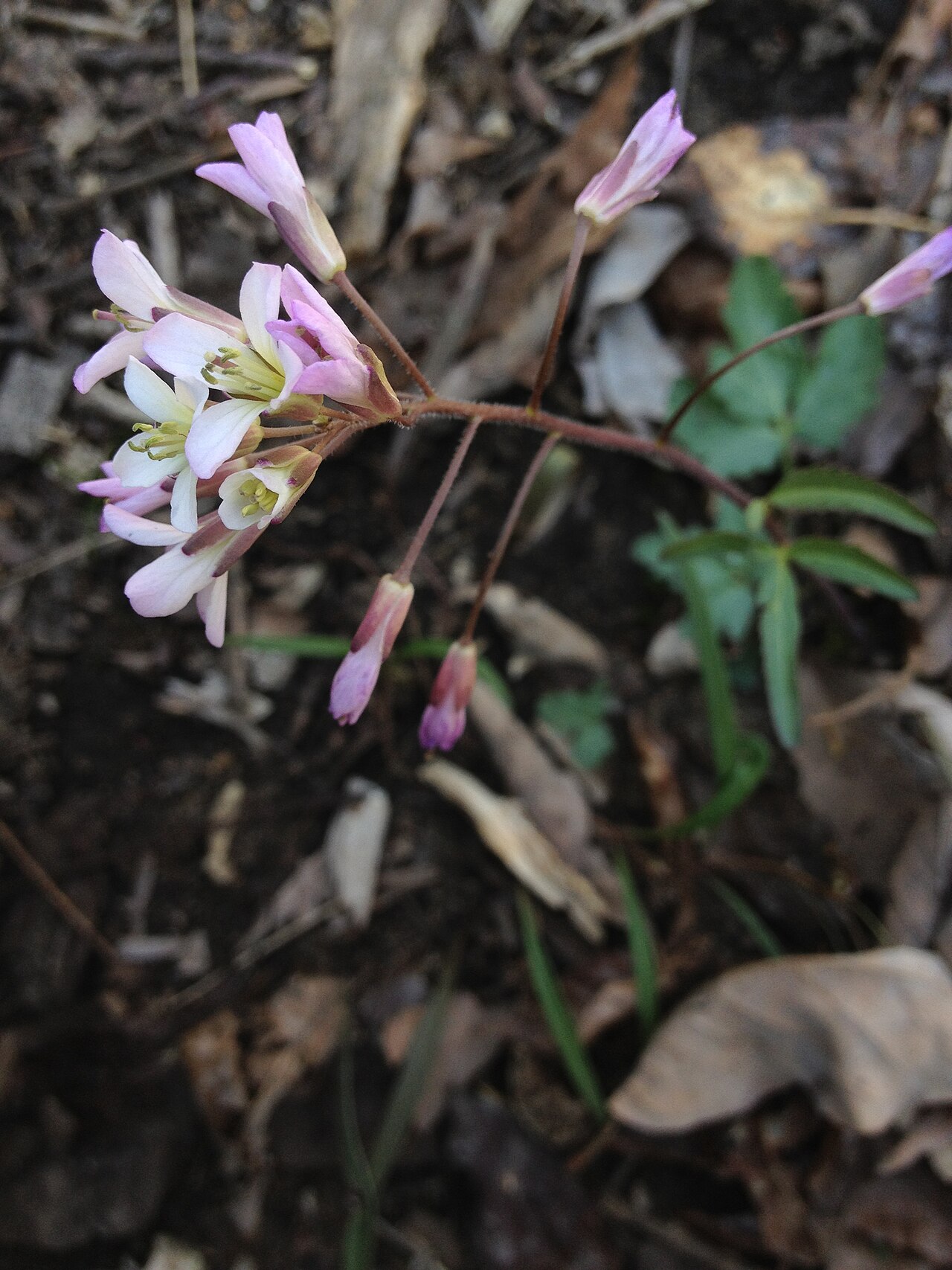
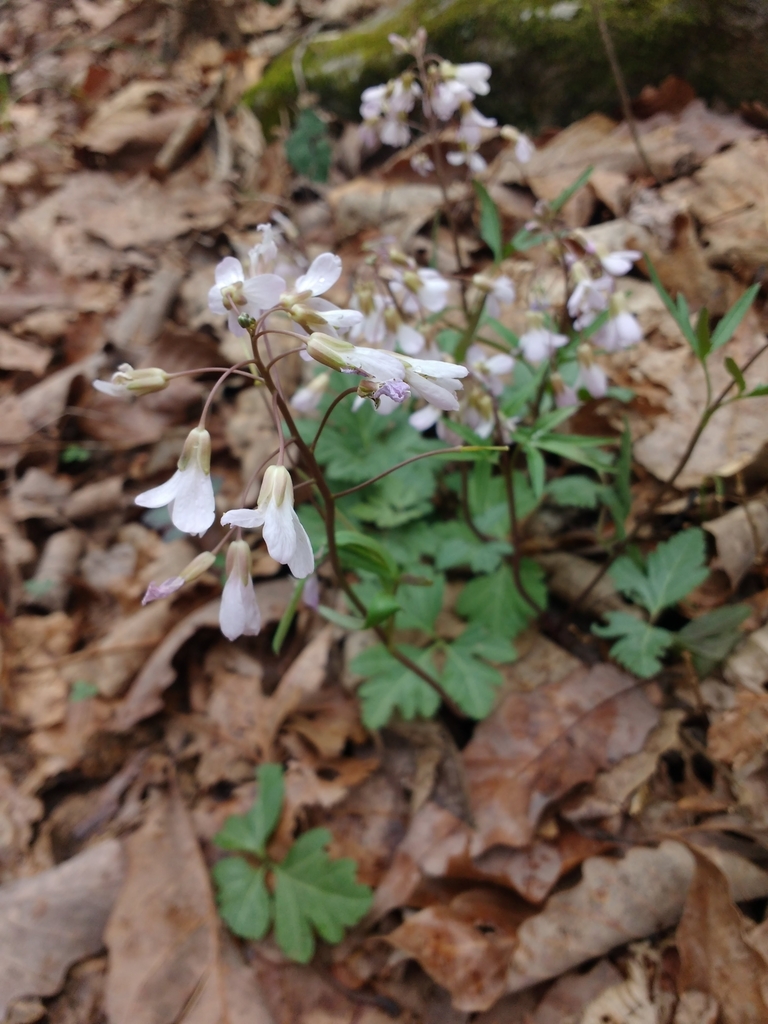
Look for a slender stem in early spring with two three-parted stem leaves made of very narrow, almost linear leaflets, a separate basal leaf with broader toothed leaflets, and a loose cluster of white to pinkish four-petaled flowers.
Growth Habit
Slender toothwort is a perennial that grows from a short, fleshy, white rhizome just under the leaf litter. Each year it produces a single flowering stem 8 to 16 inches tall, and often a separate long-stalked basal leaf. The plant appears in late winter or early spring, flowers, sets seed and dies back by early summer.
Leaves
The basal leaf, when present, is divided into three lance-shaped to oval leaflets with coarsely toothed edges, broader than those of the stem leaves. The stem carries two (sometimes three) stalked leaves, opposite or nearly so, each divided into three narrow, linear to narrowly lance-shaped leaflets with smooth or slightly toothed edges. This difference between the basal and stem leaves inspired the old name heterophylla.
Flowers
The flowers grow in a loose raceme at the top of the stem and bloom from March to May. Each has four petals about 1/2 to 3/4 inch long, white to pale pink or lavender, and six stamens, four long and two short, as in other mustards.
Fruit
The fruit is a slender, upright pod (silique) 1 to 1 1/2 inches long with a short beak. It splits open when ripe to release small seeds, usually in late spring. Many flowers do not set fruit.
Look-alikes
Cut-leaved toothwort (Cardamine concatenata) has a whorl of three stem leaves deeply cut into narrow, jagged segments. Two-leaved toothwort (Cardamine diphylla) has two stem leaves with broad, coarsely toothed leaflets, and its basal leaves are similar to its stem leaves. Slender toothwort is the one with narrow stem leaflets and broader basal leaflets. Hybrids between slender and cut-leaved toothworts are known where they grow together.
Quick Facts
| Scientific Name | Cardamine angustata |
| Family | Brassicaceae (mustard family) |
| Plant Type | Spring ephemeral perennial wildflower |
| Mature Height | 8–16 in |
| Mature Spread | 4–8 in; slowly forms small colonies |
| Growth Rate | Slow |
| Sun Exposure | Part shade to shade (spring sun under deciduous trees) |
| Water Needs | Average; moist, well-drained soil |
| Soil Type | Rich, humusy woodland loam |
| Soil pH | About 5.5–7.5 |
| Bloom Time | March–May |
| Flower Color | White to pale pink or lavender |
| Fall Color | None; dormant by early summer |
| Fruit | Slender upright pods (siliques) |
| Deer Resistant | Moderately; rarely a target |
| USDA Hardiness Zones | 5–8 |
Native Range
Slender toothwort is native to the eastern and south-central United States. USDA PLANTS lists it from 17 states: New Jersey, Pennsylvania, Delaware, Maryland, Virginia, West Virginia, Ohio, Indiana, Kentucky, Tennessee, North Carolina, South Carolina, Georgia, Alabama, Mississippi, Arkansas and Oklahoma. It is also recorded from the District of Columbia.
It is most common in the Appalachian foothills and valleys, the Piedmont, the Cumberland Plateau and the Interior Low Plateaus of Kentucky and Tennessee. At the edges of its range, in New Jersey, Delaware, Indiana, Oklahoma, Arkansas and Mississippi, it is local and uncommon, and some of those states track it as a rare plant.
Its habitat is rich, moist deciduous forest: wooded slopes and ravines, coves, stream terraces and floodplain forests, often over limestone or other base-rich soils. It grows under oaks, maples, beech, tulip trees and other hardwoods that let in sun before their leaves come out.
📋 Regional plant lists featuring Slender Toothwort: Alabama, Georgia & Mississippi · Arkansas, Louisiana, Eastern Oklahoma & Eastern Texas · Delaware, Southern New Jersey & Long Island · Ohio & Indiana · Kentucky & Tennessee · Maryland, Virginia & West Virginia · North & South Carolina · New York, Pennsylvania & Northern New Jersey
Growing & Care Guide
Slender toothwort is easy to keep in a woodland garden with deciduous shade and leaf-rich soil, though it is seldom sold. Look for it at specialist native plant nurseries and plant sales, and never dig plants from the wild.
Light
Part shade to full shade in summer, with spring sun before the trees leaf out. It is ideal under deciduous trees and shrubs; avoid evergreen shade and hot, open sites.
Soil & Water
Grow it in moist, rich, well-drained woodland soil with plenty of leaf mold. Keep the soil moist in spring while it is growing. It tolerates drier soil in summer once it is dormant, but not compacted, waterlogged or bare soil.
Planting Tips
Plant dormant rhizomes in late summer or fall, about 1 to 2 inches deep, or set out potted plants in early spring. Group several plants together, and mark the spot so you do not dig into them while they are dormant. Mix them with later-emerging ferns, wild ginger and sedges that cover the ground after the toothwort disappears.
Pruning & Maintenance
No pruning is needed. Let the foliage wither naturally, and leave fallen leaves in place as a natural mulch. Keep aggressive groundcovers and invasive garlic mustard out of the planting.
Propagation
Divide the rhizomes carefully after the foliage dies back in late spring or summer. Seed is produced sparingly; sow fresh seed outdoors as soon as it ripens, since it needs a period of moist cold before it germinates. Seedlings take several years to flower.
Landscape Uses
- Woodland gardens: early white to pink flowers under deciduous trees
- Spring ephemeral plantings: mixes with spring beauty, trout lily and bluebells
- Shade gardens: a delicate early accent among ferns and sedges
- Pollinator gardens: early nectar and pollen for small native bees
- Butterfly host plantings: a toothwort for orangetips and the West Virginia white
Wildlife & Ecological Value
Like other toothworts, slender toothwort is one of the first sources of food in the spring woods.
For Pollinators
Its flowers are visited by early-flying native bees, including small mining bees, sweat bees and bee flies, as well as early butterflies. Toothworts (Cardamine) are larval host plants for the falcate orangetip and the West Virginia white, a woodland butterfly whose caterpillars feed only on toothworts and a few related mustards.
For Birds
It offers little direct food for birds, but the insects it supports in early spring are eaten by returning warblers and other songbirds.
For Mammals
Deer and rabbits may nibble the foliage, but it is seldom heavily browsed. Small mammals may dig the fleshy rhizomes.
Ecosystem Role
As a spring ephemeral, it captures sunlight and nutrients before the canopy closes, then returns them to the soil as its leaves decay. Its decline in some areas is linked to invasive garlic mustard, which also confuses egg-laying West Virginia white butterflies, whose caterpillars cannot complete development on it.
Cultural & Historical Uses
The genus name Cardamine comes from the Greek kardamon, a name for a kind of cress. The species name angustata means “narrowed,” for the narrow stem leaflets. The name “toothwort” refers to the tooth-like projections on the rhizomes of some toothworts, which led early herbalists to use them for toothache.
Toothworts were long placed in their own genus, Dentaria, and many older field guides still use names like Dentaria heterophylla for this species. DNA studies showed that they belong within the bittercress genus Cardamine.
The rhizomes of toothworts have a peppery, horseradish-like taste and were eaten by some Native American peoples and early settlers. Because slender toothwort is uncommon in many areas, it should not be harvested from the wild.
Frequently Asked Questions
When does slender toothwort bloom?
From March to May, depending on latitude and elevation. It is one of the early spring wildflowers of eastern hardwood forests.
How do I tell slender toothwort from cut-leaved toothwort?
Slender toothwort has two stem leaves with three narrow, mostly smooth-edged leaflets, plus broader basal leaflets. Cut-leaved toothwort has a whorl of three stem leaves deeply cut into narrow, jagged segments.
Why did my slender toothwort disappear?
It is a spring ephemeral and goes dormant by early summer. The rhizome is still alive underground and will send up new growth next spring.
Is slender toothwort a host plant for butterflies?
Yes. Toothworts are larval host plants for the falcate orangetip and the West Virginia white.
Can I dig slender toothwort from the woods?
No. It is uncommon in many areas and does not move well. Buy nursery-propagated plants or grow it from seed.

Looking for a nursery that carries Slender Toothwort?
Browse our native plant nursery directory: Alabama & Arkansas · Delaware & Georgia · Indiana · Kentucky, Maryland & Mississippi · New Jersey, North Carolina, Ohio & Oklahoma · Pennsylvania, South Carolina, Tennessee & Virginia · West Virginia

