
Rock Bush Monkeyflower (Diplacus calycinus)
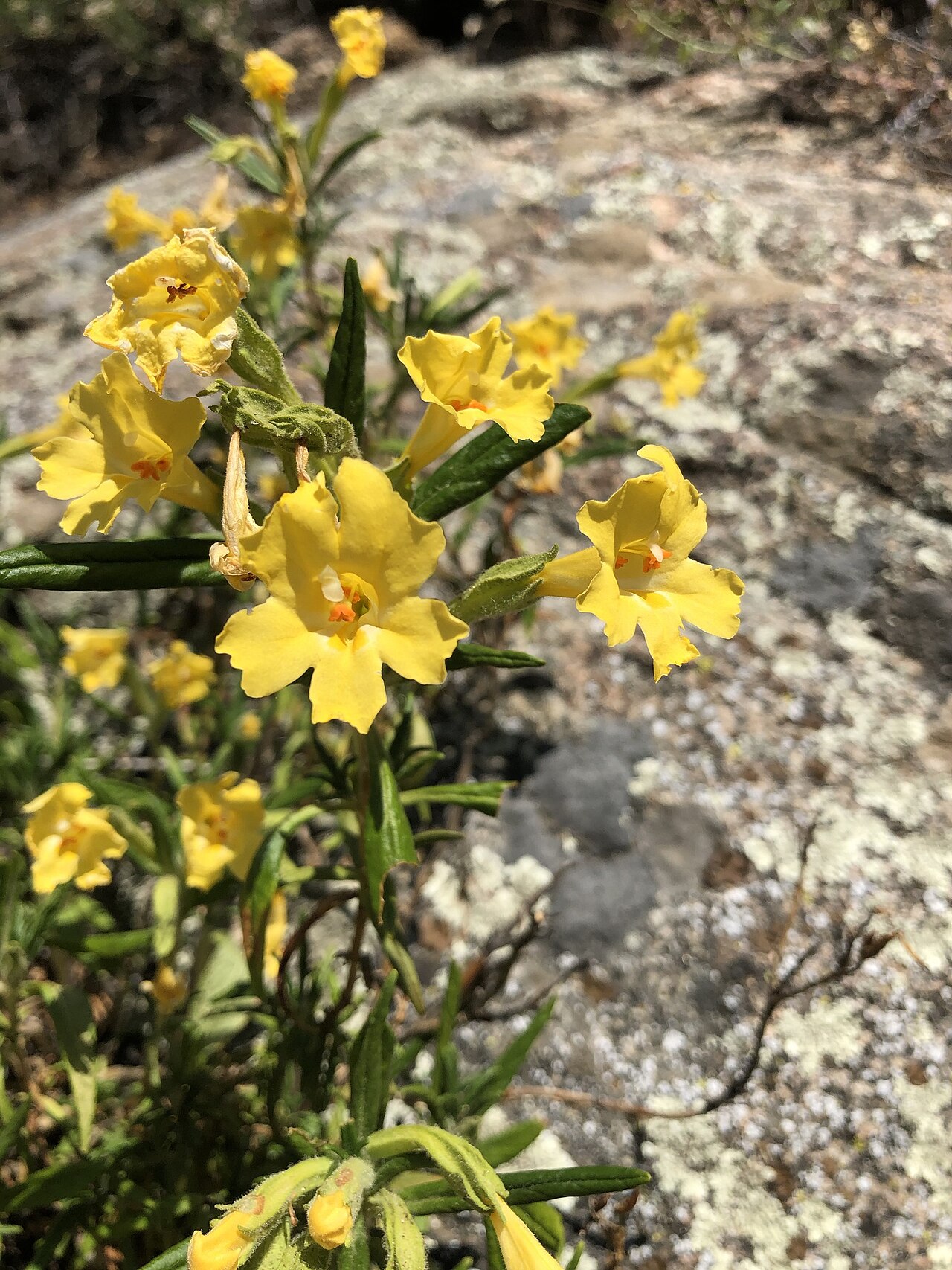
Diplacus calycinus, known as Rock Bush Monkeyflower and listed by USDA as Kaweah River bush monkeyflower, is a small, sticky-leaved shrub that grows on granite outcrops, boulders and rocky slopes in the mountains of California. In spring and early summer it covers itself in large, pale yellow to cream, trumpet-shaped flowers that seem to pour out of cracks in bare rock.
It belongs to the group of shrubby or “bush” monkeyflowers that includes the widespread sticky monkeyflower. Many botanists have treated it as a variety of sticky monkeyflower or of southern bush monkeyflower, but it is now usually recognized as its own species. The name calycinus refers to the calyx, the green tube around the base of each flower, which is relatively large and has long, conspicuous lobes in this species.
This California endemic is found in the southern Sierra Nevada and in the mountains of central and southern California, and was first described by Alice Eastwood from the Kaweah River country of Tulare County. This guide covers how to identify rock bush monkeyflower, where it grows, how to grow it in a dry, rocky garden, and its value to hummingbirds and bees.
Identification
Look for a low, rounded shrub with glossy, sticky, dark green leaves growing from rock crevices or granite talus, carrying large, pale yellow monkeyflowers. Its light yellow flowers and rocky habitat set it apart from the orange-flowered sticky monkeyflower of nearby chaparral.
Growth Habit
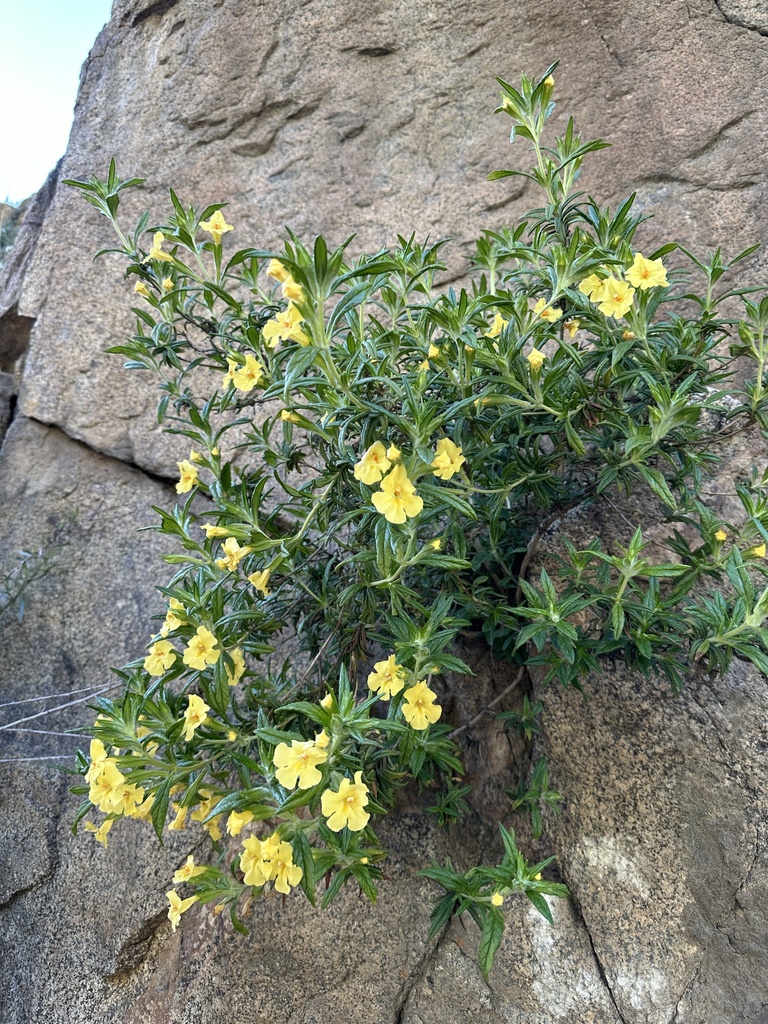
It is a small, evergreen to summer-semideciduous shrub, usually 1 to 3 feet tall and about as wide, with many brittle, branching stems from a woody base. On cliff faces it often grows as a sprawling cushion rooted in a single crack.
Leaves
The leaves are opposite, narrow, lance-shaped and about 1 to 3 inches long, with slightly toothed or rolled edges. They are dark green and sticky with glandular hairs, and are often somewhat hairy underneath. In severe summer drought plants may drop many of their leaves.
Flowers
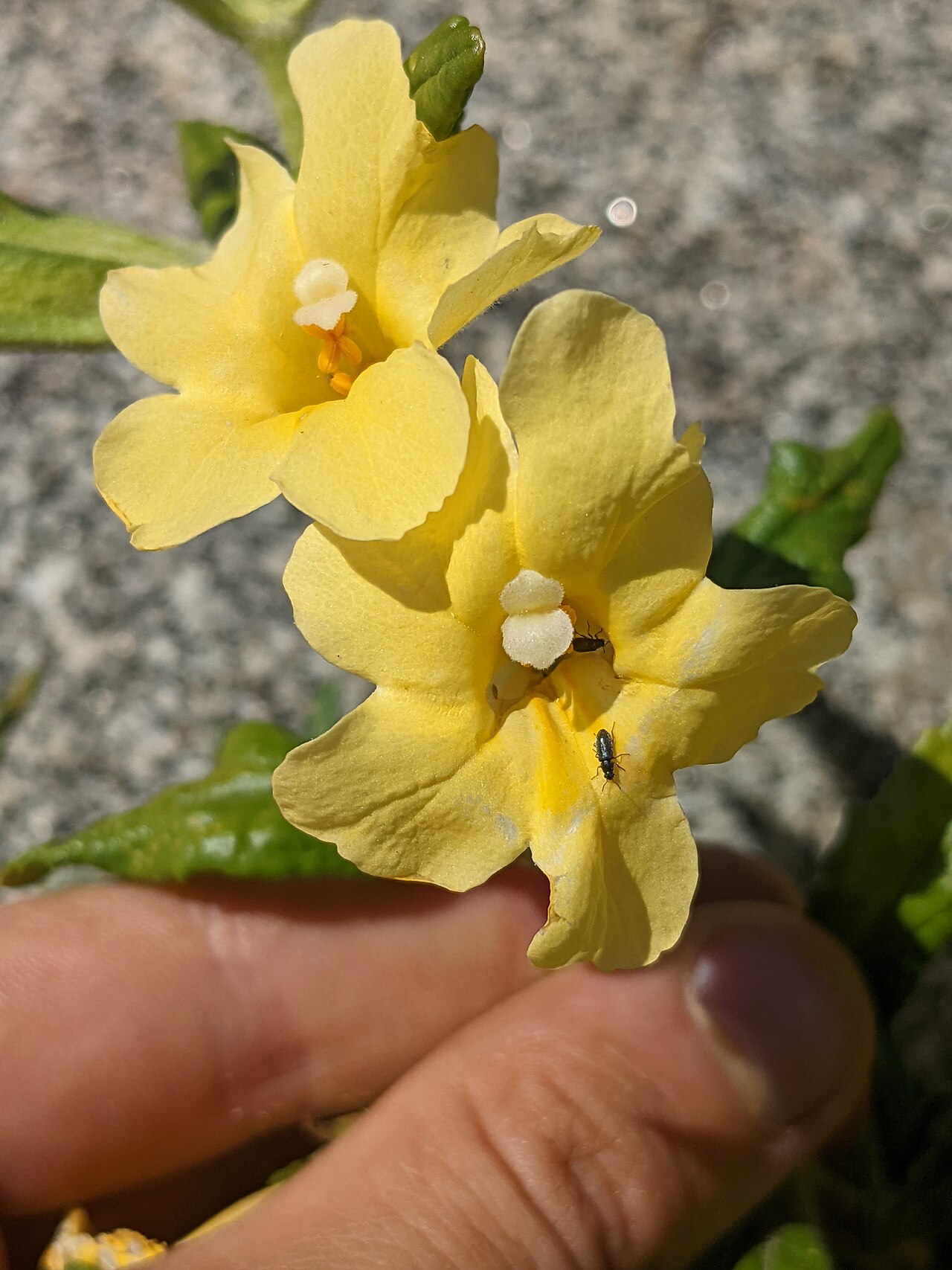
The flowers are tubular and two-lipped, about 1 1/2 to 2 1/2 inches long, with five broad, often notched or ruffled lobes. They are pale yellow to cream or light buff-yellow, with darker yellow or orange ridges in the throat. The calyx is long and sticky, with longer, more pointed lobes than in related bush monkeyflowers. Like other monkeyflowers, the two-lobed stigma closes when touched. Bloom is mainly April through July, depending on elevation.
Fruit & Seeds
Each flower produces a narrow capsule enclosed by the persistent calyx, which splits in summer to release many tiny seeds.
Look-alikes
Sticky monkeyflower (Diplacus aurantiacus) has orange to salmon flowers and grows mostly in chaparral and coastal scrub. Southern bush monkeyflower (Diplacus longiflorus) of southern California has pale orange to yellow-orange flowers and densely hairy leaves. Hybrids between these bush monkeyflowers occur where their ranges meet, and some plants are hard to assign to a single species.
Quick Facts
| Scientific Name | Diplacus calycinus Eastw. |
| Family | Phrymaceae (lopseed family; formerly placed in Scrophulariaceae) |
| Plant Type | Small evergreen to summer-semideciduous shrub |
| Mature Height | 1–3 ft |
| Mature Spread | 1–3 ft |
| Growth Rate | Moderate |
| Sun Exposure | Full sun to part shade |
| Water Needs | Low; summer-dry once established |
| Soil Type | Rocky, gravelly or sandy, fast-draining soil; rock crevices |
| Soil pH | About 5.5–7.5 |
| Bloom Time | April–July |
| Flower Color | Pale yellow to cream |
| Fall Color | None; may drop leaves in late summer drought |
| Fruit | Narrow capsule with many tiny seeds |
| Deer Resistant | Fairly resistant; sticky, bitter leaves are seldom browsed heavily |
| USDA Hardiness Zones | 8–10 |
Native Range
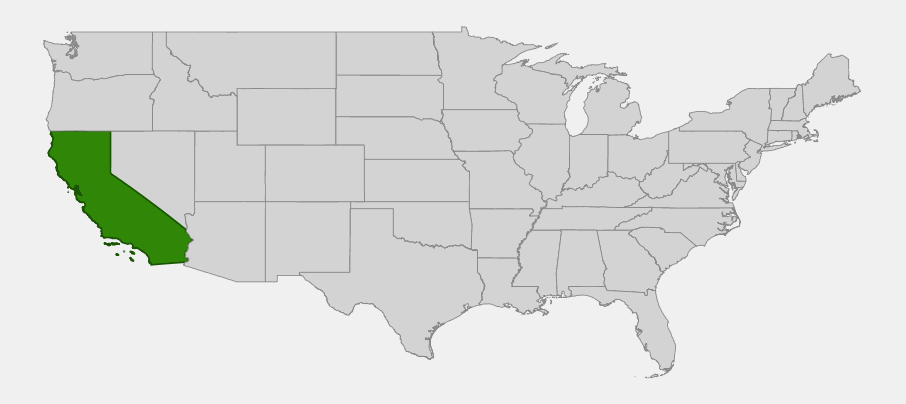
Rock bush monkeyflower is endemic to California, and USDA PLANTS lists it only from that state. It is best known from the granite country of the southern Sierra Nevada, especially the foothills and canyons of Tulare and Kern counties, including the Kaweah River drainage for which USDA names it.
It also grows in the Transverse Ranges and the mountains of central and southern California, and populations in inland southern California are increasingly assigned to this species. Because it has often been lumped with other bush monkeyflowers, older maps and records do not always separate it, and its exact limits are still being worked out.
Its habitat is distinctive: granite outcrops, cliffs, boulder piles and rocky washes, often in openings in chaparral, oak woodland or foothill pine woodland. Most populations grow from about 2,300 to 7,200 feet in elevation, rooted in crevices where little else can survive.
📋 Regional plant lists featuring Rock Bush Monkeyflower: California & Nevada
Growing & Care Guide
Rock bush monkeyflower is a fine choice for rock gardens, dry walls and sunny, rocky slopes in California and other mild, dry-summer climates. It is less common in the nursery trade than sticky monkeyflower, but California native nurseries sometimes offer it, and its soft yellow flowers blend well with other drought-tolerant natives.
Light
Full sun is best near the coast and at higher elevations. In hot inland gardens it appreciates afternoon shade or the reflected cool of a north- or east-facing rock.
Soil & Water
Give it a fast-draining, gritty soil, such as decomposed granite, or plant it between rocks or in a dry stone wall where the roots stay cool. Water regularly until established, then only occasionally in summer. With no summer water it may go partly dormant and drop leaves; a deep watering once or twice a month in summer keeps it greener but too much water and heavy soil cause root rot.
Planting Tips
Plant in fall or winter. Set the crown slightly high so water drains away from the stems, and tuck plants against boulders or into terraces. Combine with buckwheats, penstemons, ferns of dry rock, sages and bush poppy.
Pruning & Maintenance
Cut stems back by about a third after flowering or in fall to keep plants compact and encourage new growth; old, unpruned plants get woody and leggy. Bush monkeyflowers are often short-lived in gardens, so take cuttings to have replacements on hand.
Propagation
Softwood or semi-hardwood cuttings root easily in spring or fall. The tiny seeds can be surface-sown on a gritty mix in late fall or winter and need light to germinate. Collect cuttings or seed only from garden plants or where permitted.
Landscape Uses
- Rock gardens and dry walls: thrives in crevices and between boulders
- Hummingbird gardens: large tubular flowers attract hummingbirds
- Pollinator gardens: bees visit the flowers through spring and early summer
- Waterwise landscapes: needs little summer water once established
- Slope plantings: holds gritty soil on sunny, rocky banks
Wildlife & Ecological Value
Rock bush monkeyflower brings nectar to rocky places where few other plants bloom, and it hosts the caterpillars of the variable checkerspot butterfly, like other bush monkeyflowers.
For Pollinators
The large, pale tubular flowers are visited by hummingbirds and by bumble bees and other large bees that crawl into the throat. Bush monkeyflowers are larval host plants for the variable checkerspot (Euphydryas chalcedona), and the plant’s bitter chemicals help make the caterpillars distasteful to predators. The sensitive stigma closes after a pollinator touches it, which helps the flower hold onto pollen it has received.
For Birds
Anna’s and other hummingbirds feed on the nectar, and birds of the chaparral and rocky slopes use the shrubs for cover and insect foraging.
For Mammals
The sticky, resinous foliage is not a favored food, though deer may nibble new growth. The shrubs give some shelter to lizards and small mammals living among the rocks.
Ecosystem Role
As a crevice-dwelling shrub, it is one of the pioneer plants of granite outcrops, trapping soil and organic matter in cracks. It is part of the rich rock-outcrop flora of the southern Sierra Nevada foothills.
Cultural & Historical Uses
The species was described in 1906 by Alice Eastwood, the influential curator of botany at the California Academy of Sciences. It has been treated as a variety of several other bush monkeyflowers, as Mimulus longiflorus var. calycinus or Diplacus aurantiacus var. calycinus, which is why it appears under different names in older books.
Bush monkeyflowers were moved from the large genus Mimulus into Diplacus after DNA studies showed that the North American monkeyflowers belong to several separate lineages. The shrubby, sticky-leaved species of California and Baja California form Diplacus, a group known for hybridizing freely, which keeps botanists debating where one species ends and the next begins.
Bush monkeyflowers have a long history of use: Indigenous peoples of California used related species as medicinal washes and poultices. Today rock bush monkeyflower is mostly appreciated for the striking sight of its pale yellow flowers spilling down granite boulders in late spring.
Frequently Asked Questions
Where does rock bush monkeyflower grow?
It is endemic to California and grows on granite outcrops, cliffs and rocky slopes, especially in the southern Sierra Nevada foothills of Tulare and Kern counties, and in other mountains of central and southern California.
What color are rock bush monkeyflower flowers?
They are pale yellow to cream, often with darker yellow or orange markings in the throat, unlike the orange flowers of sticky monkeyflower.
Is rock bush monkeyflower the same as sticky monkeyflower?
It is closely related and has sometimes been treated as a variety of sticky monkeyflower, but it is now usually recognized as its own species with paler flowers and a longer-lobed calyx.
Does rock bush monkeyflower need summer water?
No. Established plants survive summer drought, though they may drop leaves. An occasional deep watering keeps them greener.
What wildlife uses rock bush monkeyflower?
Hummingbirds and bees visit the flowers, and bush monkeyflowers are host plants for the caterpillars of the variable checkerspot butterfly.

Looking for a nursery that carries Rock Bush Monkeyflower?
Browse our native plant nursery directory: California

