
Creeping Cactus (Opuntia pusilla)
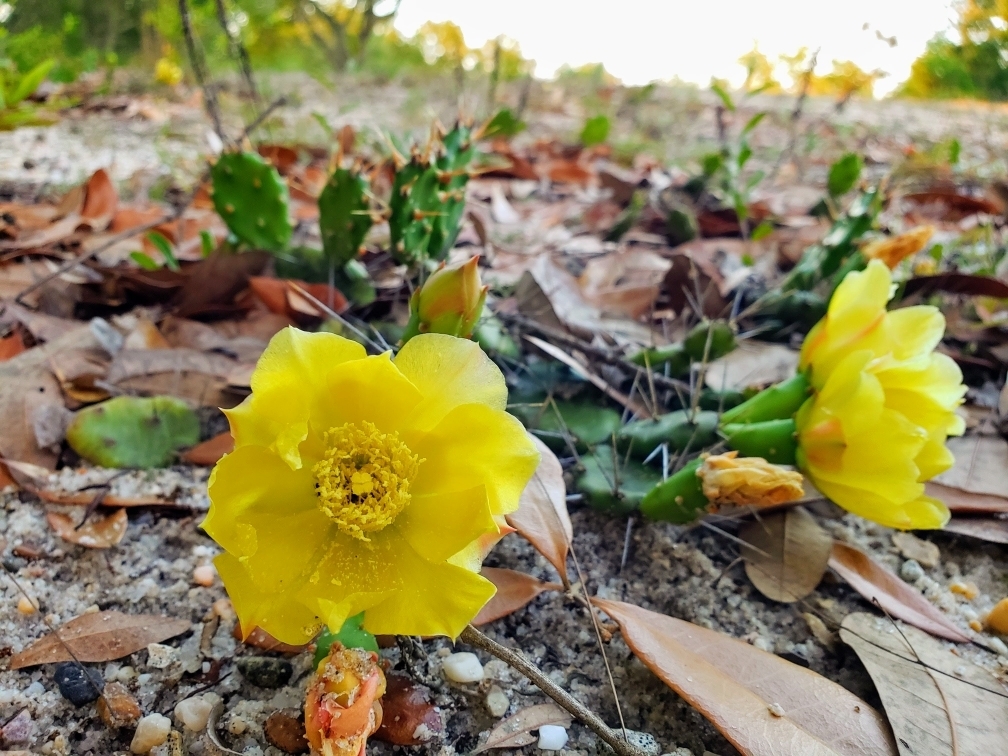
Opuntia pusilla, known as Creeping Cactus, cockspur prickly pear or sand-bur prickly pear, is a small, low-growing prickly pear of the sandy coastal plain of the southeastern United States. It forms loose mats of small, thick pads only a few inches tall that trail through dunes, sandhills and pine woods, and in spring it produces cheerful yellow flowers surprisingly large for such a small plant.
Its pads are easily knocked loose, and their long, sharp spines readily stick in shoes, paws and bare feet, which explains names like cockspur and sand-bur. Detached segments root where they fall, so the plant spreads mostly by these broken pieces rather than by seed. Many botanists now treat it as part of a broader Opuntia drummondii; USDA PLANTS keeps it as Opuntia pusilla.
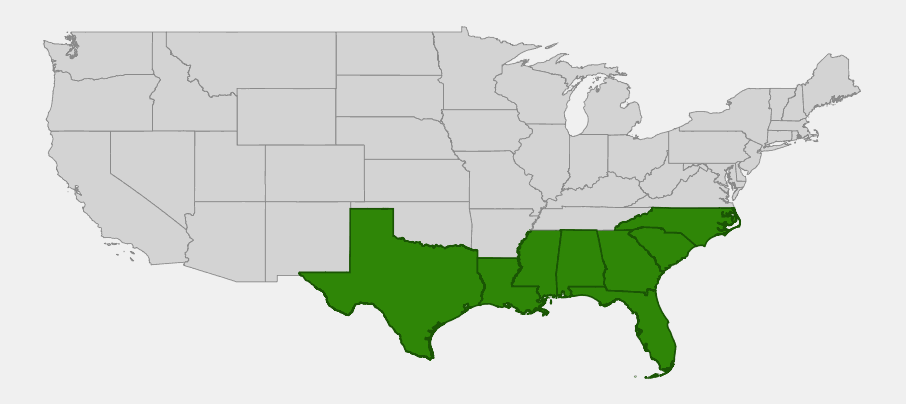
It ranges along the Atlantic and Gulf coastal plains from North Carolina to Florida and west to Texas. This guide covers how to identify creeping cactus, where it grows, how to grow it in a sandy, sunny garden, and its value to pollinators and wildlife.
Identification
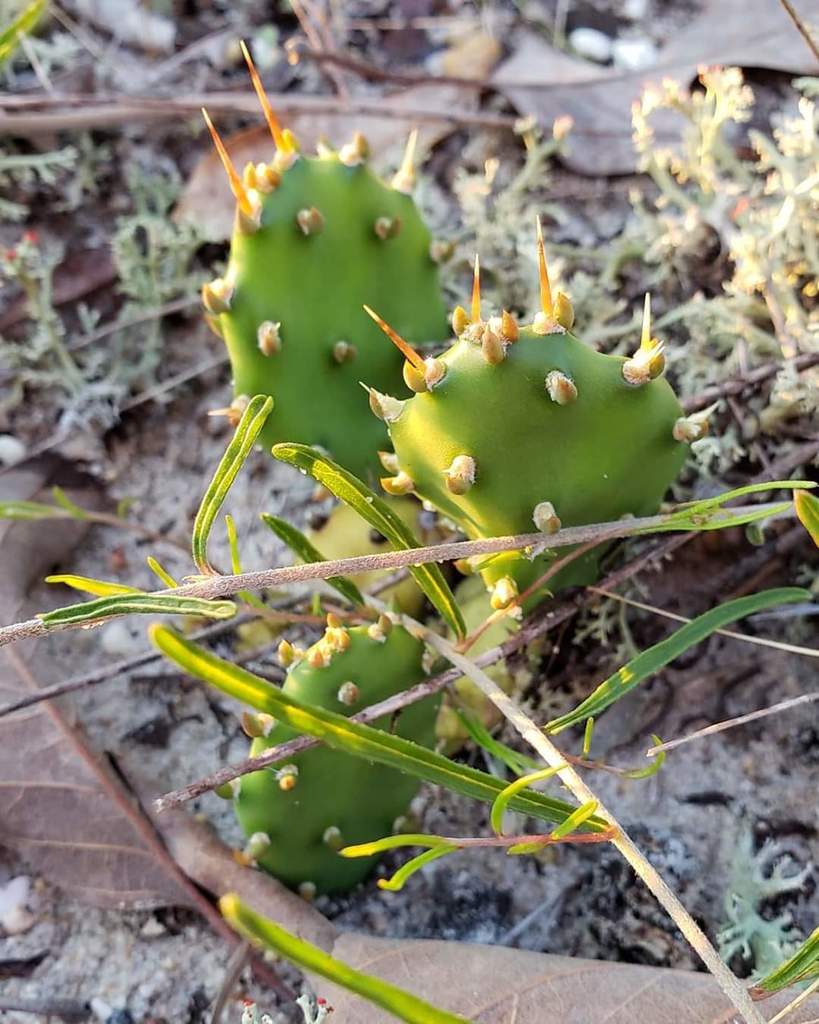
Creeping cactus is the smallest prickly pear of the Southeast. Look for a low mat, rarely more than 6 inches high, of small, often narrow or almost cylindrical pads that break apart easily, with long spines and bright yellow spring flowers.
Growth Habit
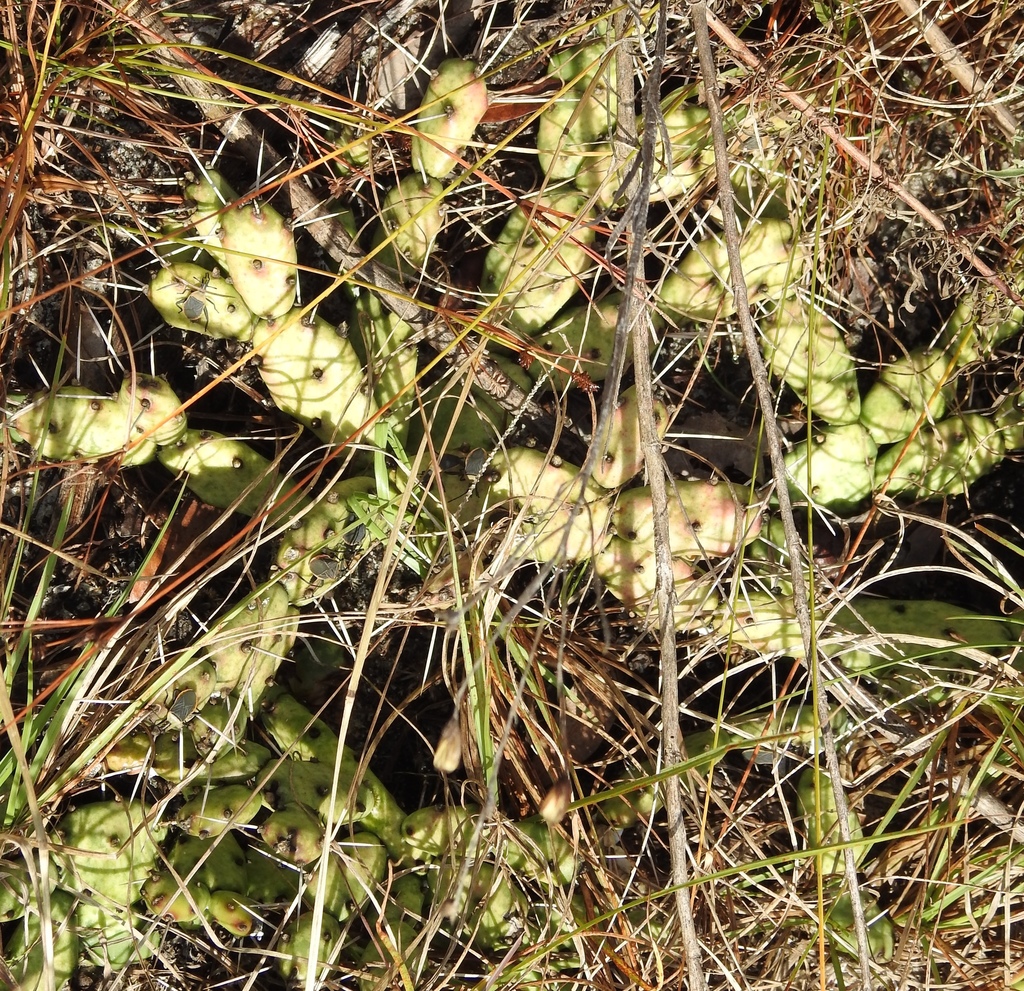
It is a perennial cactus with prostrate or sprawling stems made of jointed segments (pads), usually 2 to 6 inches tall and forming patches a few feet across. Segments are small, typically 1 to 3 inches long, and range from flattened and oval to narrow and nearly round in cross-section. They detach at the slightest touch.
Spines & Glochids
Most areoles on the upper part of each pad carry one to a few stiff, straight spines, often 1 to 1 1/2 inches long, yellowish to brown or gray, with tiny backward-pointing barbs. Each areole also has a tuft of glochids, minute barbed bristles that come off at a touch and are hard to remove from skin.
Flowers
The flowers are bright lemon yellow, sometimes with a slightly reddish center, about 2 to 3 inches across, with many satiny petals around a mass of yellow stamens. They appear mainly in April and May and open for a day each.
Fruit
The fruit is a small, fleshy, club-shaped to egg-shaped berry about 1 to 1 1/2 inches long that ripens red to purplish in late summer and fall. It carries glochids, so it should not be handled without care.
Look-alikes
Eastern prickly pear has larger, broader pads that are firmly attached and usually few or no spines. Florida prickly pear is larger and more upright. Brittle prickly pear (Opuntia fragilis) also has detachable segments but grows in the West and North, not on the southeastern coastal plain.
Quick Facts
| Scientific Name | Opuntia pusilla (Haw.) Haw. |
| Family | Cactaceae (cactus family) |
| Plant Type | Low, mat-forming perennial cactus |
| Mature Height | 2–6 in |
| Mature Spread | 1–3 ft |
| Growth Rate | Slow to moderate; spreads by rooting segments |
| Sun Exposure | Full sun |
| Water Needs | Very low; drought tolerant |
| Soil Type | Dry, deep sand; dunes, sandhills and sandy pinelands |
| Soil pH | About 5.0–7.5 |
| Bloom Time | April–May |
| Flower Color | Bright yellow |
| Fall Color | Pads may take on a reddish or purplish tinge in cold or drought |
| Fruit | Red to purple fleshy berry, about 1–1 1/2 in long |
| Deer Resistant | Yes; spines deter browsing |
| USDA Hardiness Zones | 7–10 |
Native Range
Creeping cactus is native to the coastal plain of the southeastern United States. USDA PLANTS lists it in Alabama, Florida, Georgia, Louisiana, Mississippi, North Carolina, South Carolina and Texas. It reaches its northern limit on the coast of North Carolina, including the Outer Banks.
It grows along the Atlantic coast from North Carolina through South Carolina and Georgia into Florida, where it occurs widely in the peninsula and panhandle, and west along the Gulf coast through Alabama, Mississippi and Louisiana to the upper Texas coast. Most populations are within a short distance of the coast or on inland sand ridges and sandhills of the coastal plain.
Its habitats are dry and sandy: back dunes and coastal grasslands, maritime scrub, sandhills, sandy pine and oak woodlands, shell middens and old fields, from sea level to a few hundred feet. It tolerates salt spray and often grows among sea oats on stabilized dunes.
📋 Regional plant lists featuring Creeping Cactus: Alabama, Georgia & Mississippi · North & South Florida · North & South Carolina · Arkansas, Louisiana, Eastern Oklahoma & Eastern Texas
Growing & Care Guide
Creeping cactus is a tough, low groundcover for the hottest, driest, sandiest spots in a southeastern garden, such as a coastal yard, a sandy slope or a rock garden. Its spines make it a poor choice next to paths, play areas or anywhere people walk barefoot. It is occasionally available from native plant nurseries and cactus specialists in the Southeast; buy nursery-grown plants rather than collecting from dunes or preserves.
Light
Plant it in full sun. In shade it grows thin and weak and rarely flowers.
Soil & Water
It needs very well-drained soil: deep sand, sandy loam or a gravelly raised bed. It is extremely drought tolerant once established and needs no watering in most of its range. Heavy, wet or poorly drained soil causes rot, especially in winter.
Planting Tips
Wear thick gloves and use tongs or folded newspaper when handling it. Set pads or rooted plants just at the soil surface; there is no need to bury them. Give it room away from walkways, and combine it with other sand-loving natives such as Adam’s needle, gopher apple and golden aster.
Pruning & Maintenance
It needs almost no care. Pull weeds and grasses from around the mat with long tongs or tools, and remove fallen leaves that smother the low pads. If it spreads where it is not wanted, lift the segments with tongs.
Propagation
It is very easy to grow from detached pads: let a segment dry for a few days, then lay it on dry sand, where it will root. It can also be grown from seed cleaned from ripe fruit, though seedlings are slow.
Landscape Uses
- Coastal and dune gardens: tolerates salt spray, sand and heat
- Rock and gravel gardens: a low, spreading cactus for dry, sunny pockets
- Pollinator gardens: large spring flowers attract native bees
- Barrier planting: its spines discourage foot traffic along property edges
- Dune and sandhill restoration: a native component of dry coastal plant communities
Wildlife & Ecological Value
Creeping cactus contributes flowers, fruit and spiny shelter to some of the harshest habitats on the southeastern coastal plain.
For Pollinators
The large, open flowers produce abundant pollen and are visited mainly by native bees, including bumble bees and specialist cactus bees, as well as beetles. The stamens of prickly pear flowers move inward when touched, dusting visiting bees with pollen.
For Birds
Ground-feeding birds and mockingbirds eat the ripe fruits, and the dense, spiny mats give cover to small animals.
For Mammals
Gopher tortoises, a keystone species of southeastern sandhills, eat prickly pear pads, flowers and fruits, and rodents and other small mammals take the fruit and seeds.
Ecosystem Role
Prickly pears in the Southeast host cactus-feeding insects, including native cactus bugs and scale insects. Its habit of spreading by detached segments helps it colonize open sand on dunes and sandhills.
Cultural & Historical Uses
The species name pusilla is Latin for “very small” or “tiny”, a reference to its small pads and low habit. It was described in the early nineteenth century by the English botanist Adrian Hardy Haworth. Its classification is still debated: some treatments merge it with Opuntia drummondii, while USDA PLANTS keeps it as a separate species.
The names cockspur and sand-bur prickly pear reflect its habit of sticking to anything that brushes against it. Safety note: the spines are sharp and barbed, and the glochids on pads and fruits lodge in skin and are hard to remove. Keep it away from paths and play areas, and wear thick gloves when handling it. If you are pricked, remove glochids with tweezers or adhesive tape.
Prickly pear fruits and young pads have been eaten for centuries in the Americas. Those of creeping cactus are small and spiny, so they are of little use as food, and plants on dunes and in parks should be left in place.
Frequently Asked Questions
Is creeping cactus native to Florida?
Yes. It is native to the coastal plain from North Carolina to Florida and west to Texas, and it is widespread in sandy habitats in Florida.
Why do the pads fall off so easily?
The segments are only loosely joined, which is how the plant spreads: broken pads cling to passing animals or simply drop to the ground and root to form new plants.
Is creeping cactus dangerous?
It is not poisonous, but its sharp, barbed spines and tiny glochids readily stick in skin, shoes and pet paws. Plant it away from paths and handle it with thick gloves.
How do I grow creeping cactus?
Plant it in full sun in deep sand or very well-drained soil. It needs no watering once established and can be propagated by laying a dried pad on sand.
When does creeping cactus bloom?
It blooms mainly in April and May, with bright yellow flowers 2 to 3 inches across that each last a day.

Looking for a nursery that carries Creeping Cactus?
Browse our native plant nursery directory: Alabama · Florida & Georgia · Louisiana & Mississippi · North Carolina · South Carolina & Texas

