
Early Purple Milkvetch (Astragalus shortianus)
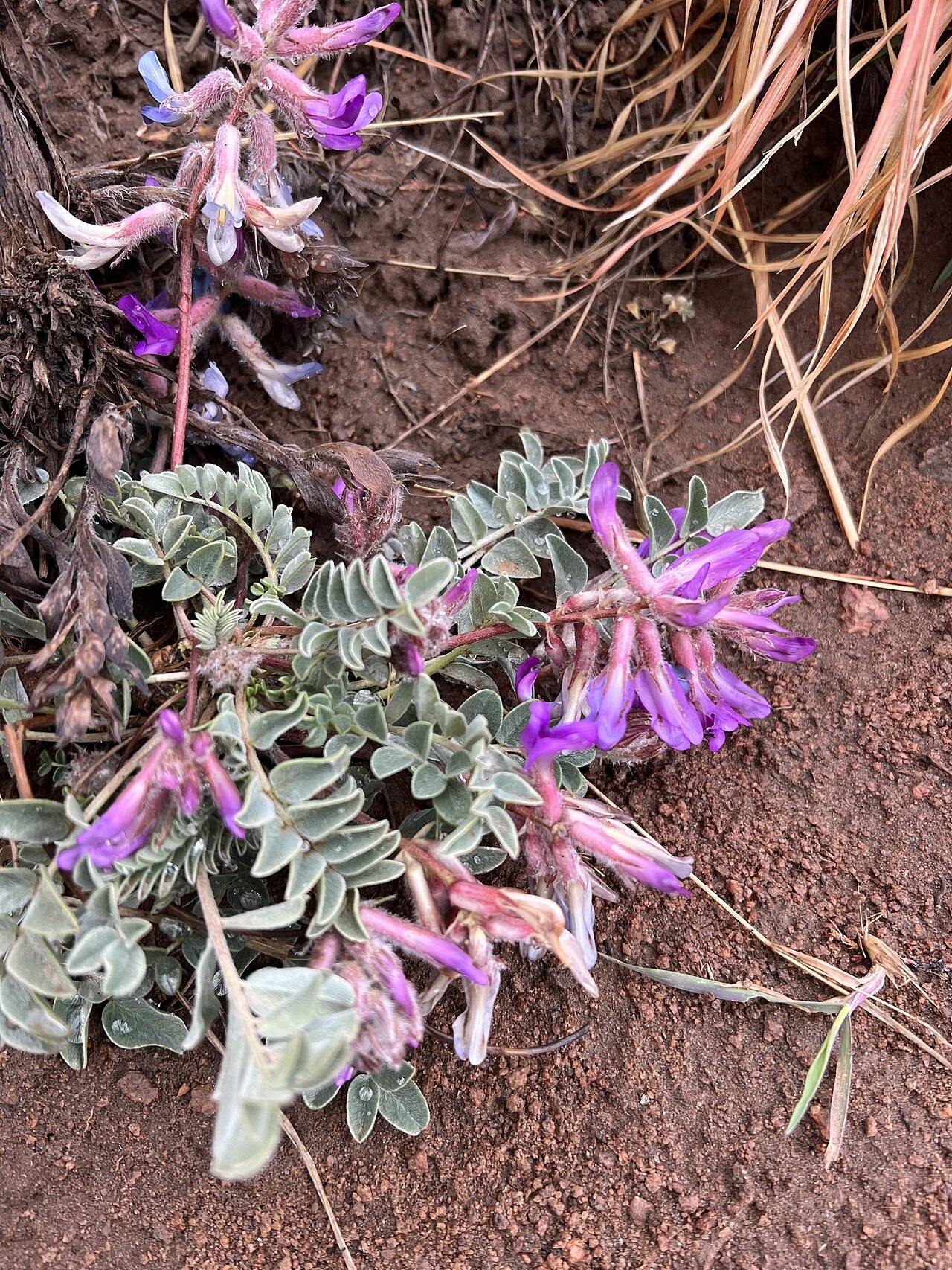
Astragalus shortianus, known as Early Purple Milkvetch or Short’s milkvetch, is a low, nearly stemless wildflower in the pea family (Fabaceae). It forms silvery tufts of silky-haired, pinnately divided leaves just a few inches tall, and in spring it bears short clusters of bright pink-purple, pea-shaped flowers, followed by plump pods that rest on the ground.
It is a plant of the high plains and foothills along the eastern edge of the southern Rocky Mountains. It is frequent on the Front Range foothills and adjacent plains of Colorado and southeastern Wyoming, ranges south into northern New Mexico and west into central Wyoming, and reaches western Nebraska. It grows on dry prairies, hilltops, stony ridges and gravelly bluffs, often on decomposed granite, at about 5,200 to 9,000 feet.
Early purple milkvetch is one of the first wildflowers to bloom on the Front Range, giving early bees nectar and pollen. Like many milkvetches it can be toxic to livestock and should never be eaten. It is rarely sold, but rock gardeners in its range sometimes grow it from seed in very lean, well-drained gravel.
Identification
Look for a low, silvery tuft of pinnate leaves with broad, silky-haired leaflets, short clusters of bright pink-purple pea flowers in early spring, and fat, curved pods lying on the ground beside the plant.
Growth Habit
Early purple milkvetch is a perennial with a deep taproot and a knotty, branched root crown at ground level. It is almost stemless, forming a tuft 2 to 6 inches tall and up to about a foot across, with leaves and flower stalks rising straight from the crown.
Leaves
The leaves are pinnately compound, 2 to 7 inches long, with about 7 to 17 broad, oval to nearly round leaflets. The leaves are densely covered with fine, silky, flat-lying hairs on both sides, giving the plant a silvery-gray color.
Flowers
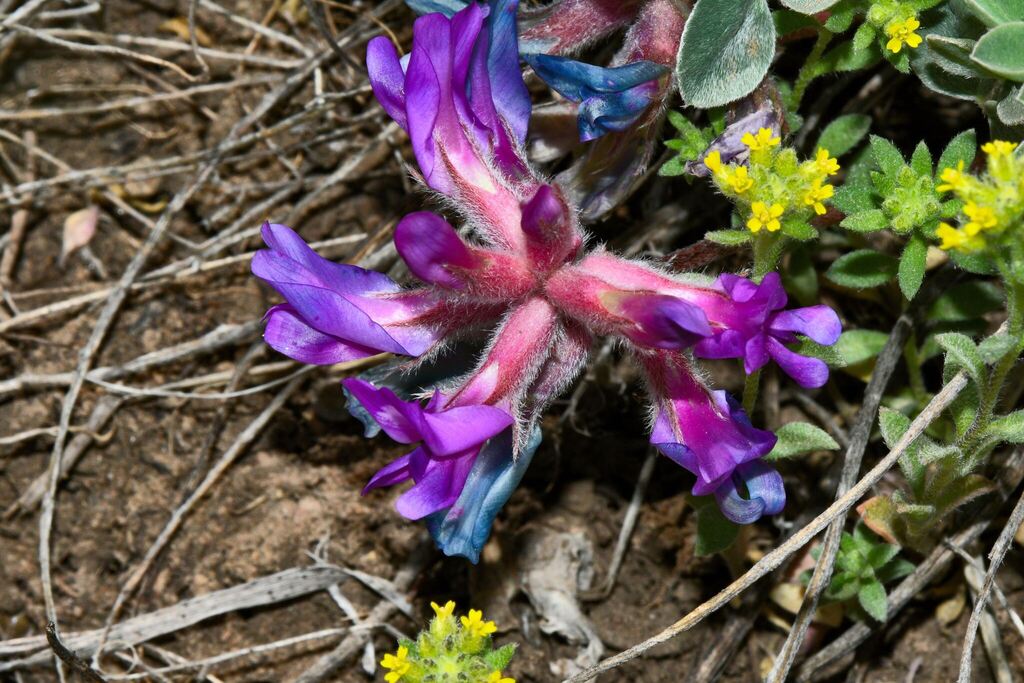
It blooms from April to July, earliest at lower elevations. Short stalks carry compact racemes of about 5 to 15 flowers. Each flower is pea-shaped, about 3/4 to 1 inch long, bright pink-purple to violet, with a hairy calyx.
Fruit
The pods are plump, oblong to egg-shaped and curved, about 1 to 1 1/2 inches long. They are fleshy when young and become leathery and hard as they dry, usually lying on the ground around the plant.
Look-alikes
Missouri milkvetch (Astragalus missouriensis) is similar and often grows nearby, but it has smaller flowers, narrower leaflets and smaller, narrower pods. Ground plum (Astragalus crassicarpus) has greener leaves, longer trailing stems and round, plum-like pods. Woolly locoweed (Astragalus mollissimus) is woolly rather than silky and grows larger. Lambert’s locoweed (Oxytropis lambertii) has pointed keel petals and taller, leafless flower stalks.
Quick Facts
| Scientific Name | Astragalus shortianus |
| Family | Fabaceae (pea family) |
| Plant Type | Low, tufted perennial wildflower |
| Mature Height | 2–6 in |
| Mature Spread | 6–12 in |
| Growth Rate | Slow |
| Sun Exposure | Full sun |
| Water Needs | Low; very dry, well-drained soil |
| Soil Type | Gravelly, rocky or sandy soil, often decomposed granite |
| Soil pH | About 6.0–8.0 |
| Bloom Time | April–July |
| Flower Color | Pink-purple to violet |
| Fall Color | Dormant by late summer |
| Fruit | Plump, curved pods 1–1.5 in long |
| Deer Resistant | Somewhat; may be toxic to grazing animals |
| USDA Hardiness Zones | 4–7 |
Native Range
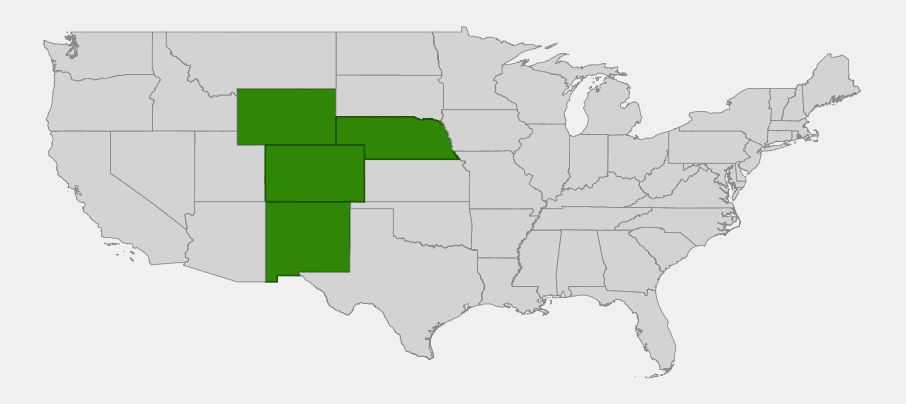
Early purple milkvetch is native to a small area of the west-central United States. USDA PLANTS lists it from four states: Colorado, Wyoming, New Mexico and Nebraska.
It is frequent and locally plentiful on the eastern slope and foothills of the Rocky Mountains in the basins of the North Platte, South Platte and Arkansas rivers in Colorado and southeastern Wyoming. It extends more rarely across the Continental Divide in Colorado to the upper Colorado River basin, south to the headwaters of the Canadian River and the upper Rio Grande in northern New Mexico, and northwest to the Wind River and Bighorn basins of central Wyoming. In Nebraska it is known only from the far west of the state, at the edge of its range.
Its habitat is open grassland and rocky ground: prairies, dry hilltops, stony ridges and cobble bluffs, usually on decomposed granite and sometimes on sandstone or coarse gravel. It grows at about 5,200 to 9,000 feet, from the high plains into the lower montane zone, among bunchgrasses, ponderosa pine and mountain mahogany.
📋 Regional plant lists featuring Early Purple Milkvetch: Nebraska, Kansas & Eastern Colorado · Arizona & New Mexico · Montana & Wyoming
Growing & Care Guide
Early purple milkvetch is a plant for dry rock gardens and xeric plantings within its native range. It is rarely available; grow it from seed collected responsibly or purchased, and never dig plants from the wild, since its taproot rarely survives transplanting. Safety note: many milkvetches contain compounds that are toxic to livestock and people. Do not eat any part of the plant, and do not plant it where livestock or pets graze.
Light
Full sun. It will not tolerate shade or competition from taller plants.
Soil & Water
It needs very lean, sharply drained gravel, sand or decomposed granite. Water seedlings sparingly until established, then let rainfall do the rest. Rich soil, summer watering or poor drainage will rot the crown. It is best suited to the semi-arid climate of the Rocky Mountain Front Range.
Planting Tips
Sow seed directly where you want it to grow, or grow it in deep pots and plant it out while young, because the long taproot resents disturbance. A raised, gravelly rock garden bed, crevice garden or dry slope suits it best.
Pruning & Maintenance
No pruning is needed. Keep grasses and weeds from crowding it, and do not fertilize. The foliage often dies back by late summer in dry years.
Propagation
Grow it from seed. The hard seed coat must be scarified, by nicking or rubbing with sandpaper, before sowing in spring. Inoculating with the right nitrogen-fixing bacteria (from soil near wild plants or a compatible legume inoculant) may help seedlings. It is not propagated by division.
Landscape Uses
- Rock and crevice gardens: silvery tufts and early purple flowers in lean gravel
- Xeric and dryland gardens: needs no irrigation once established in its range
- Early-season pollinator plantings: one of the first flowers for spring bees
- Prairie and foothill restoration: for dry, gravelly grassland sites
- Native plant appreciation: a signature spring wildflower of the Front Range
Wildlife & Ecological Value
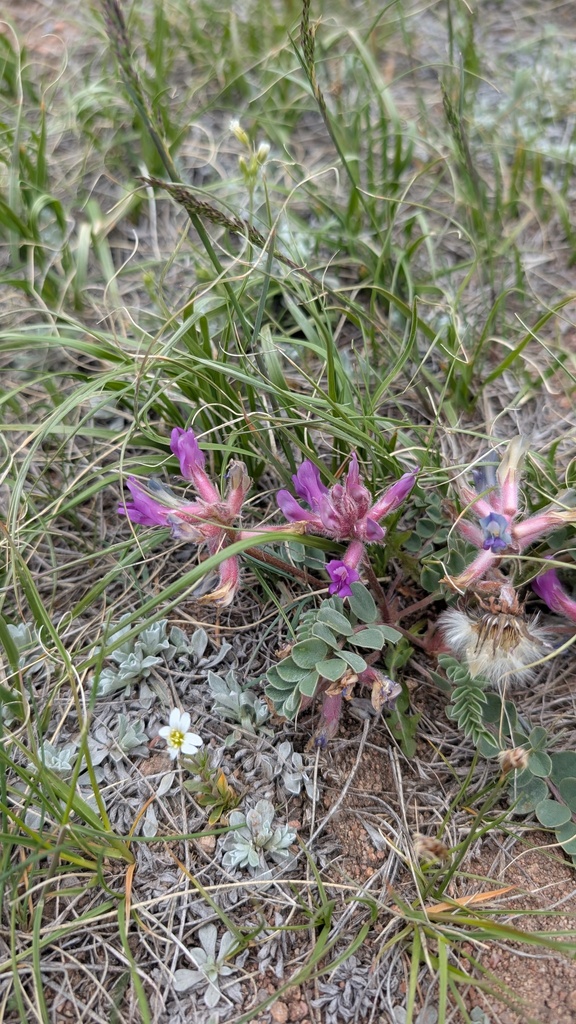
Early purple milkvetch is an important early-season flower on the dry grasslands of the Front Range.
For Pollinators
Its flowers are pollinated mainly by bumble bees and other early-season native bees, including mason bees and long-horned bees, which can push open the pea-shaped flowers. Milkvetches are also larval host plants for blue butterflies and some sulphurs and duskywings.
For Birds
Ground-feeding birds may eat its seeds, but it is not a major bird food plant.
For Mammals
Small mammals may eat the pods and seeds. Many milkvetches are toxic to livestock, so grazing animals generally avoid it when other forage is available.
Ecosystem Role
Like other legumes, it works with soil bacteria in root nodules to fix nitrogen, enriching the lean, gravelly soils it grows in. It is part of the diverse wildflower community of foothill grasslands.
Cultural & Historical Uses
The species is named for Charles Wilkins Short, a 19th-century Kentucky physician and botanist. It was described by the English naturalist Thomas Nuttall, who explored the American West in the 1830s. The genus name Astragalus is an ancient Greek name for a plant of the pea family.
Astragalus is the largest genus of flowering plants in the world, with more than 2,500 species. Many western species, called locoweeds, contain swainsonine, a compound that causes “locoism” in livestock, while others accumulate selenium or contain toxic nitro compounds. Not every species has been studied in detail, so it is wise to treat all wild milkvetches as potentially toxic.
Its early bloom makes it a favorite of wildflower watchers on the foothills west of Denver, Boulder and Fort Collins, where its purple flowers appear while the grasses are still brown.
Frequently Asked Questions
Is early purple milkvetch poisonous?
It should be treated as potentially toxic. Many milkvetches and locoweeds are poisonous to livestock and people. Never eat any part of it, and keep it away from grazing animals.
When does early purple milkvetch bloom?
From April to July, earliest at lower elevations. It is one of the first wildflowers to bloom on the Colorado and Wyoming foothills.
Where does early purple milkvetch grow?
On dry prairies, hilltops and gravelly ridges along the eastern foothills of the Rocky Mountains, mainly in Colorado and southeastern Wyoming, with smaller populations in New Mexico and western Nebraska.
Can I grow early purple milkvetch in my garden?
Yes, within its native range, if you have a dry, sunny rock garden with very lean, well-drained gravel. Grow it from seed; do not dig wild plants.
Why is it called Short’s milkvetch?
It is named for Charles Wilkins Short, a 19th-century Kentucky botanist and physician.

Looking for a nursery that carries Early Purple Milkvetch?
Browse our native plant nursery directory: Colorado · Nebraska & New Mexico · Wyoming

