
Bartram’s Airplant (Tillandsia bartramii)
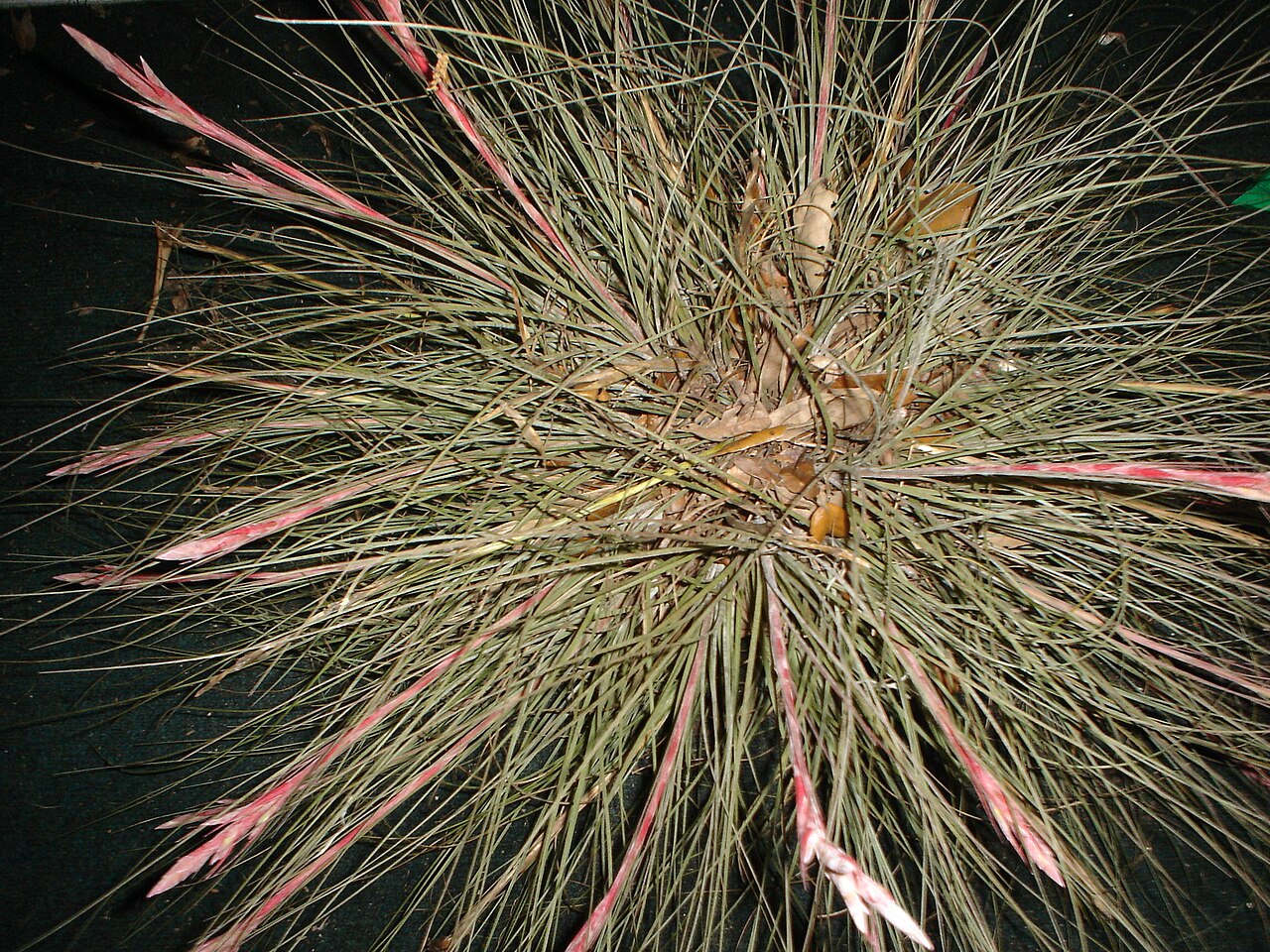
Tillandsia bartramii, known as Bartram’s Airplant or Bartram’s wild-pine, is a small native bromeliad that grows perched on the trunks and branches of trees in Florida’s hammocks, swamps and woodlands. It forms a rounded tuft, 8 to 16 inches across, of many very narrow, gray-green leaves, and in spring and summer it sends up slender spikes of rose-red bracts with small violet flowers.
Like Spanish moss and other airplants, it is an epiphyte: it grows on other plants for support but is not a parasite and takes nothing from its host tree. Its leaves are covered with tiny silvery scales (trichomes) that absorb water and nutrients from rain, dew and dust, and its roots serve mainly to anchor it to bark. It is named for William Bartram, the eighteenth-century naturalist who explored and wrote about Florida.
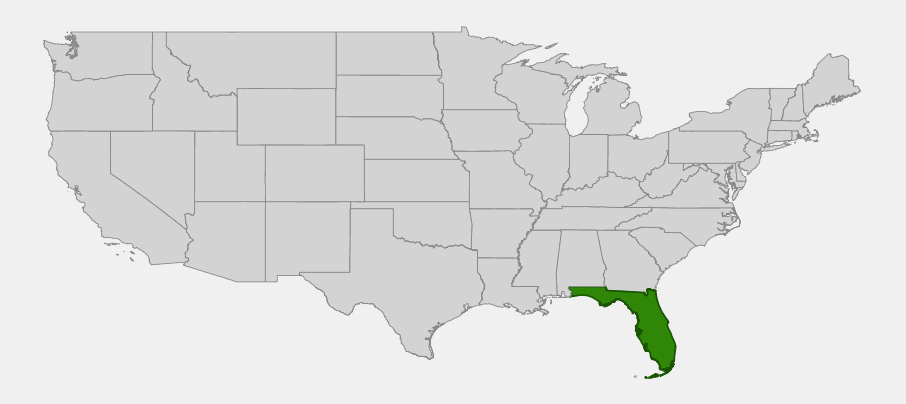
In the United States it is mainly a Florida plant; USDA PLANTS lists it only in Florida, although some sources also report it from southern Georgia and South Carolina. It also grows in Mexico and Guatemala. This guide covers how to identify Bartram’s airplant, where it grows, how to grow it on a tree or mount, and why wild plants should be left in place.
Identification
Look for a fountain-shaped tuft of many thin, grayish, almost thread-like leaves on a tree branch, with narrow red or pink flower spikes rising from the center in spring or summer.
Growth Habit
Bartram’s airplant is a perennial epiphytic bromeliad that grows singly or in clumps on tree trunks and branches. Each rosette is about 8 to 16 inches across, and older plants produce offsets (pups) that build up small colonies.
Leaves
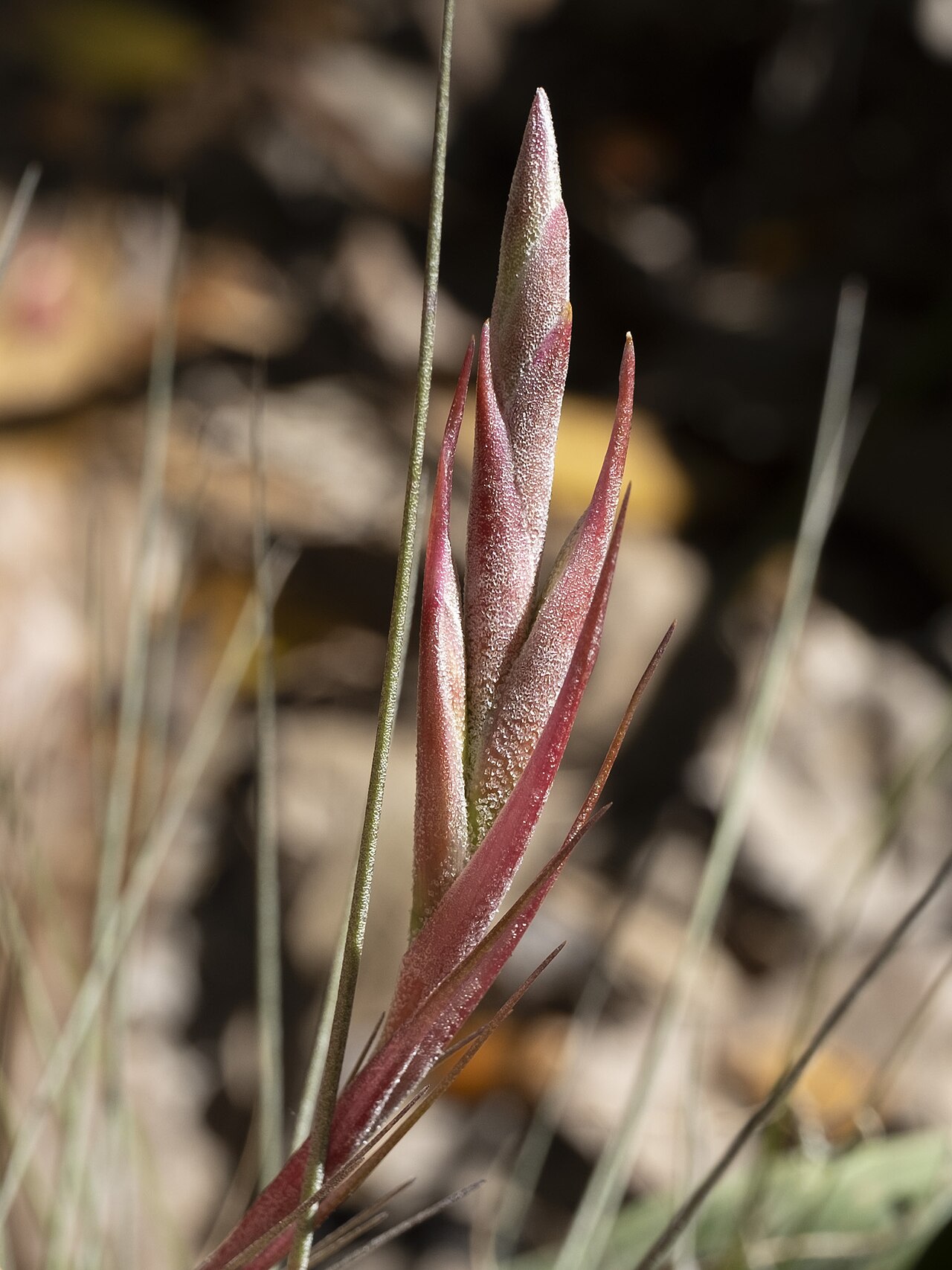
Each rosette has about 15 to 30 leaves, each 6 to 16 inches long but only about 1/8 inch wide, channeled and tapering to a fine point. They are gray-green, covered with silvery scales, and often tinged red or purple, especially in bright light or near flowering time.
Flowers
The flower stalk is 3 to 6 inches long, slender, and ends in one or a few narrow spikes covered with overlapping rose-red to pink bracts. Small tubular violet flowers, about 1 inch long, emerge from between the bracts a few at a time. Flowering is mostly in spring and early summer.
Fruit & Seeds
The fruit is a narrow capsule about 1 inch long that splits open to release seeds with fluffy, parachute-like hairs, which drift on the wind to new branches.
Look-alikes
Southern needleleaf airplant (T. setacea) has even finer, needle-like leaves that are more green to reddish and less gray, and its flower spikes are shorter and greener. Cardinal airplant (T. fasciculata) is much larger, with broader leaves and fan-shaped red, yellow or green flower spikes. Ball moss forms small gray balls with very short leaves.
Quick Facts
| Scientific Name | Tillandsia bartramii Elliott |
| Family | Bromeliaceae (bromeliad or pineapple family) |
| Plant Type | Epiphytic perennial bromeliad (airplant) |
| Mature Height | 6–12 in |
| Mature Spread | 8–16 in per rosette; clumps larger |
| Growth Rate | Slow |
| Sun Exposure | Part shade to bright filtered light |
| Water Needs | Moderate; regular rain, dew or misting with good air movement |
| Soil Type | None; grows on bark of trees (epiphyte) |
| Soil pH | Not applicable |
| Bloom Time | Spring to early summer |
| Flower Color | Violet flowers among rose-red to pink bracts |
| Fall Color | Evergreen; leaves may blush red in bright light |
| Fruit | Narrow capsule with wind-borne plumed seeds |
| Deer Resistant | Yes; grows out of reach on trees |
| USDA Hardiness Zones | 9–11 |
Native Range
Bartram’s airplant is native to the southeastern United States, Mexico and Guatemala. USDA PLANTS lists it in Florida, where the Atlas of Florida Plants documents it as native. Some references also report it from southern Georgia and South Carolina, which would be the northern edge of its range.
In Florida it grows through much of the peninsula, from the northern counties south into central and parts of southern Florida, and in some areas of the panhandle. It is generally less common than Spanish moss or ball moss, and it is often overlooked because its narrow, gray leaves blend in with the bark and lichens of its host trees.
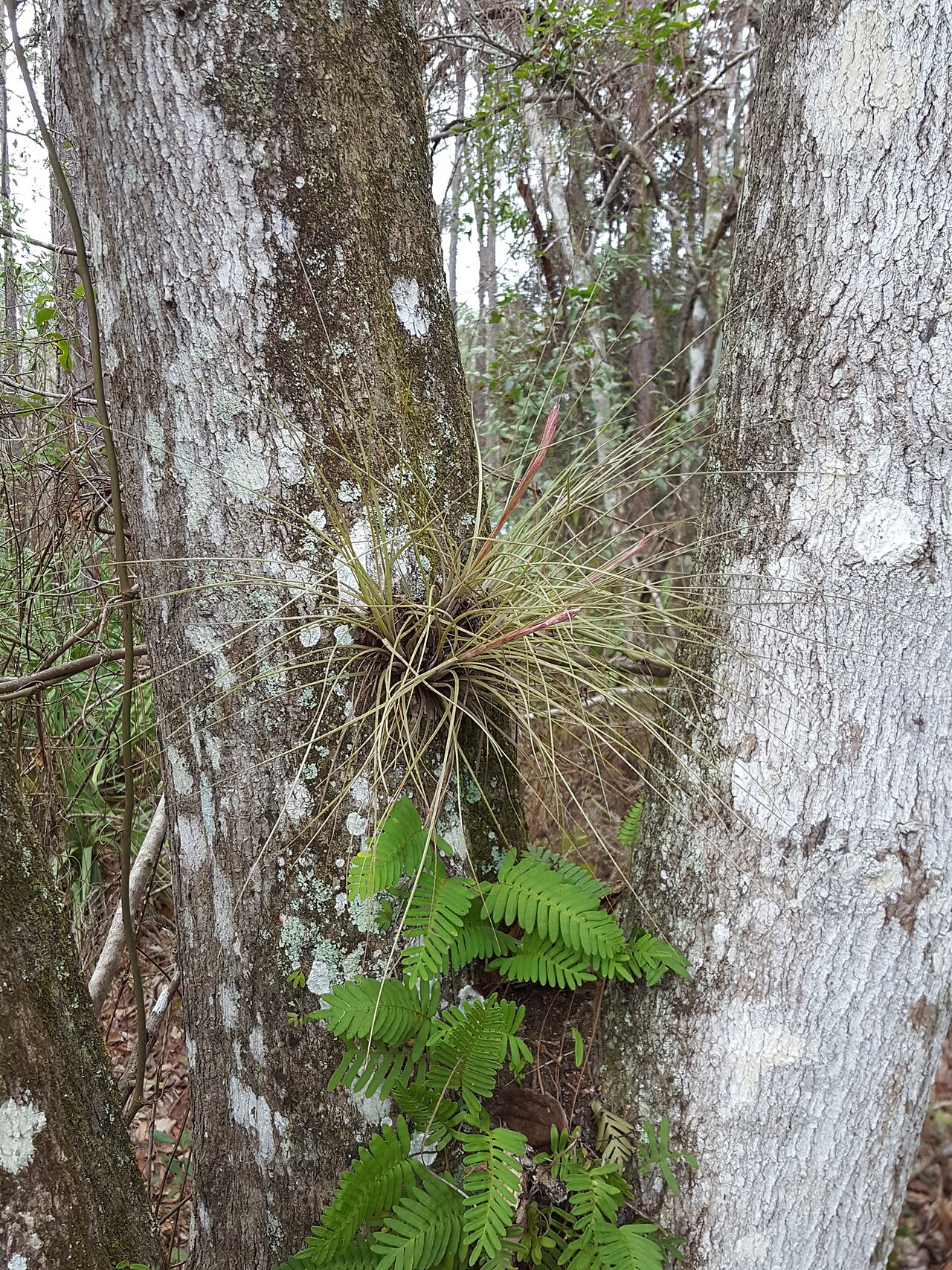
It grows on the trunks and branches of trees in moist hammocks, swamps, cypress domes, river floodplains and shady woodlands, often on oaks, cypress, red maple, ash and other hardwoods, and sometimes on pines. It favors humid, sheltered sites with filtered light, at low elevations near sea level.
📋 Regional plant lists featuring Bartram’s Airplant: North & South Florida
Growing & Care Guide
Bartram’s airplant can be grown on a tree in a Florida or Gulf Coast garden, or on a mount on a shaded porch or patio. It is occasionally offered by native plant nurseries and bromeliad growers. Buy only nursery-grown plants: wild plants should never be removed from trees, and in Florida collecting native airplants from the wild is restricted, especially for species that are state-listed because of the invasive Mexican bromeliad weevil.
Light
Bright, filtered light or part shade, such as the dappled light under an oak canopy. Hot, direct afternoon sun can scorch the leaves, while deep shade reduces flowering.
Soil & Water
It needs no soil. In humid Florida gardens, rain and dew are usually enough. On a covered porch or indoors, mist or soak it briefly once or twice a week, then let it dry within a few hours; good air circulation is essential to prevent rot.
Planting Tips
Attach the base of the plant to rough bark, a cork slab or a driftwood mount with soft cotton string, fishing line or a dab of non-toxic plant glue. Never bury it in potting soil and never use copper wire, which is toxic to bromeliads. On a tree, place it on the north or east side of a branch where it will catch rain but stay out of harsh sun.
Pruning & Maintenance
Remove old, dead leaves and spent flower spikes gently. A diluted bromeliad or orchid fertilizer applied as a mist a few times a year can help potted or mounted plants. Watch for scale insects.
Propagation
After flowering, each plant produces pups at its base. Leave them attached to form a clump, or separate them when they are about one-third the size of the parent. It can also be grown from the fluffy seed, but seedlings take several years to reach flowering size.
Landscape Uses
- Living tree decoration: a natural ornament for oak and hardwood branches in Florida gardens
- Mounted displays: grows on cork, driftwood or bark on shaded porches and patios
- Native plant collections: one of Florida’s distinctive native bromeliads
- Wildlife gardens: adds structure and moisture-holding habitat for small creatures
- Education: shows how epiphytes live on trees without harming them
Wildlife & Ecological Value
Bartram’s airplant is part of the rich epiphyte community of Florida’s hammocks and swamps, adding habitat high above the ground.
For Pollinators
The violet tubular flowers and bright red bracts suggest pollination by hummingbirds and long-tongued insects such as butterflies and moths, which visit to reach the nectar at the base of the tube.
For Birds
Birds such as gnatcatchers, warblers and wrens glean insects from the leaves, and the fluffy seed hairs and dry leaves may be gathered as nesting material.
For Mammals
Being up in trees, it is out of reach of deer and most other mammals. Tree frogs and small reptiles shelter among the leaves.
Ecosystem Role
Airplants capture water and nutrients from rain and dust and return them to the forest as their leaves decay. Their tufts provide humid microhabitats for spiders, insects, tree frogs and other small animals.
Cultural & Historical Uses
The species was described by the South Carolina botanist Stephen Elliott in the early nineteenth century and named for William Bartram (1739–1823), whose book Travels, published in 1791, is one of the earliest and most vivid accounts of Florida’s natural landscapes and plants.
Florida’s native airplants face a serious threat from the Mexican bromeliad weevil (Metamasius callizona), an invasive insect first found in Florida in 1989 whose larvae bore into and kill larger bromeliads. Several native Tillandsia species are now listed as threatened or endangered by the state as a result. Never collect airplants from the wild, and buy plants only from reputable nurseries that propagate them.
Gray, scale-covered airplants like this one are sometimes mistaken for parasites or for something harmful to trees. They are neither: they simply use the tree as a perch, and their presence is a sign of clean, humid air and healthy woodland.
Frequently Asked Questions
Does Bartram’s airplant hurt the trees it grows on?
No. It is an epiphyte, not a parasite. It uses the tree only for support and gets water and nutrients from rain, dew and dust through the silvery scales on its leaves.
Where does Bartram’s airplant grow?
In the United States it grows mainly in Florida, on trees in moist hammocks, swamps and woodlands. It also occurs in Mexico and Guatemala, and some sources report it from southern Georgia and South Carolina.
Can I collect Bartram’s airplant from the wild?
No. Leave wild plants in place; Florida restricts collecting native airplants, and several are state-listed because of the invasive Mexican bromeliad weevil. Buy nursery-grown plants instead.
How do I grow Bartram’s airplant?
Attach it to bark, cork or a tree branch in bright, filtered light, and make sure it gets rain or regular misting with good air circulation. Never plant it in soil.
When does Bartram’s airplant bloom?
Mostly in spring and early summer, when it produces slender spikes of rose-red bracts with small violet flowers.

Looking for a nursery that carries Bartram’s Airplant?
Browse our native plant nursery directory: Florida

