
Velvet Panicum (Dichanthelium scoparium)
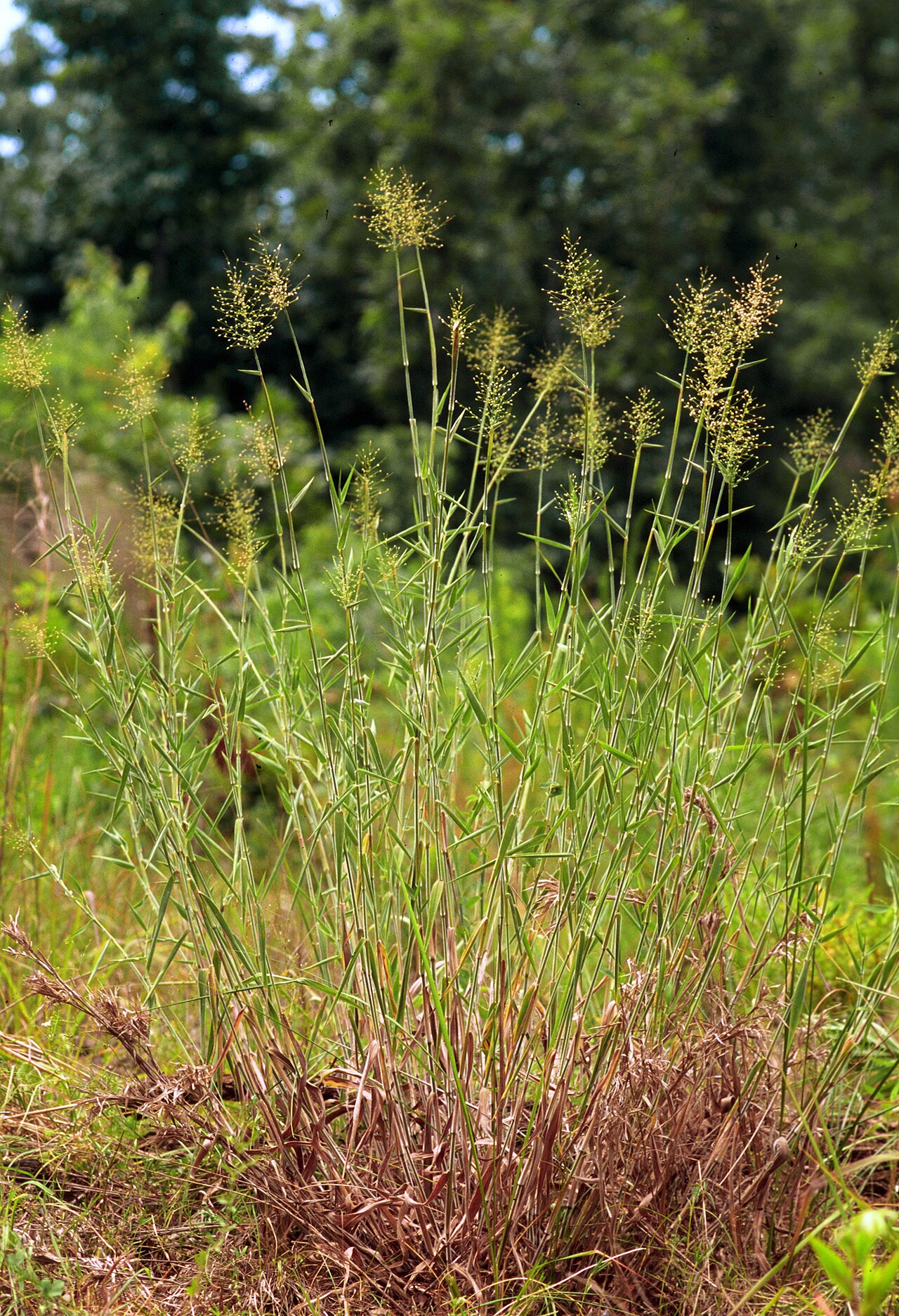
Dichanthelium scoparium, known as Velvet Panicum or velvet rosette grass, is a robust, clump-forming native grass in the grass family (Poaceae). It grows 2 to 4 feet tall, with broad, lance-shaped leaves and stems covered in soft, velvety hairs. In late spring and early summer it produces open, airy panicles of small, purplish spikelets; later in the season the stems branch repeatedly, giving the plant a bushy, broom-like look.
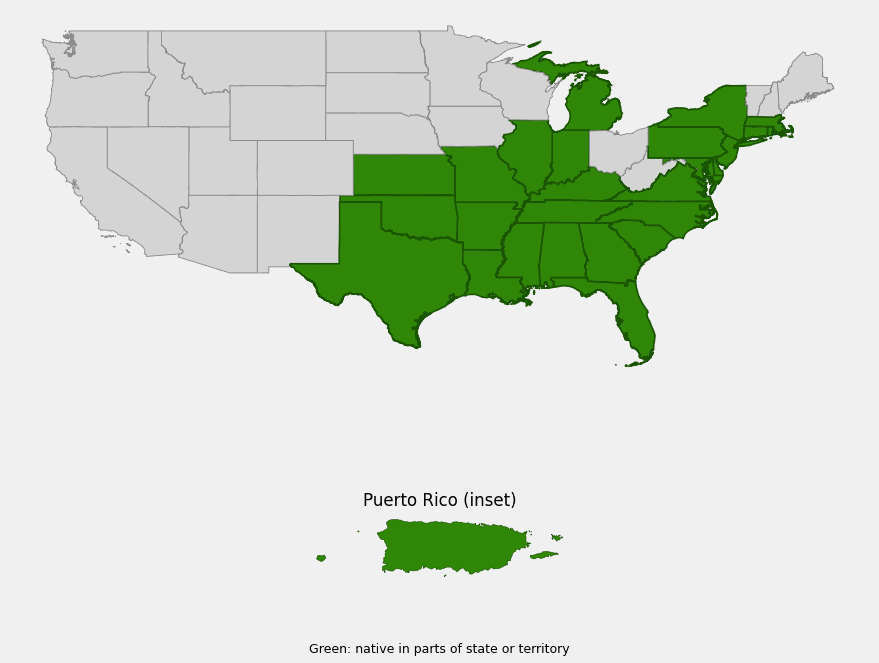
Velvet panicum is native from New York, southern New England and Michigan south to Florida and west to Kansas, Oklahoma and Texas, and it also grows in Puerto Rico and elsewhere in the Caribbean and tropical America. It is most common on the Atlantic and Gulf coastal plains, in moist to wet, open places: ditches, wet meadows, pine flatwoods, pond edges, clearings and moist old fields.
For gardeners and land managers, velvet panicum is a useful native grass for rain gardens, wet meadows, ditch banks and restoration sites, where it fills in quickly and feeds wildlife. Its seeds are eaten by songbirds, quail and turkeys. It was formerly known as Panicum scoparium.
Identification
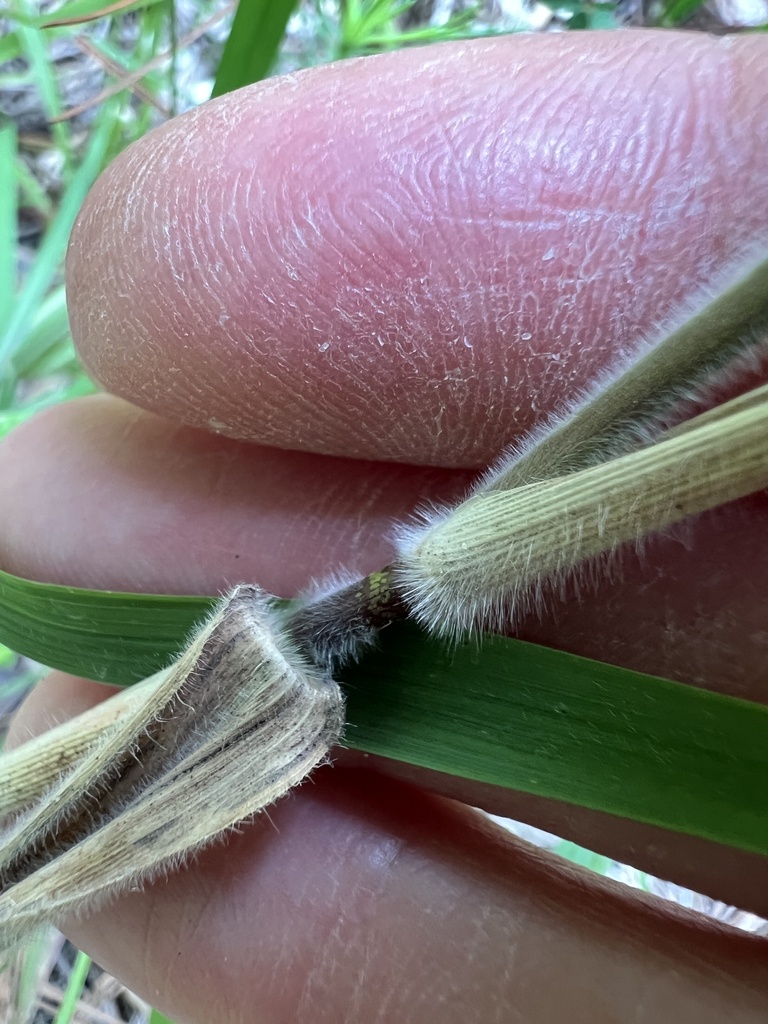
Look for a tufted grass of moist, open ground with broad, velvety leaves and sheaths, a smooth, often purplish and sticky band just below each stem node, and open panicles of small spikelets in early summer.
Growth Habit
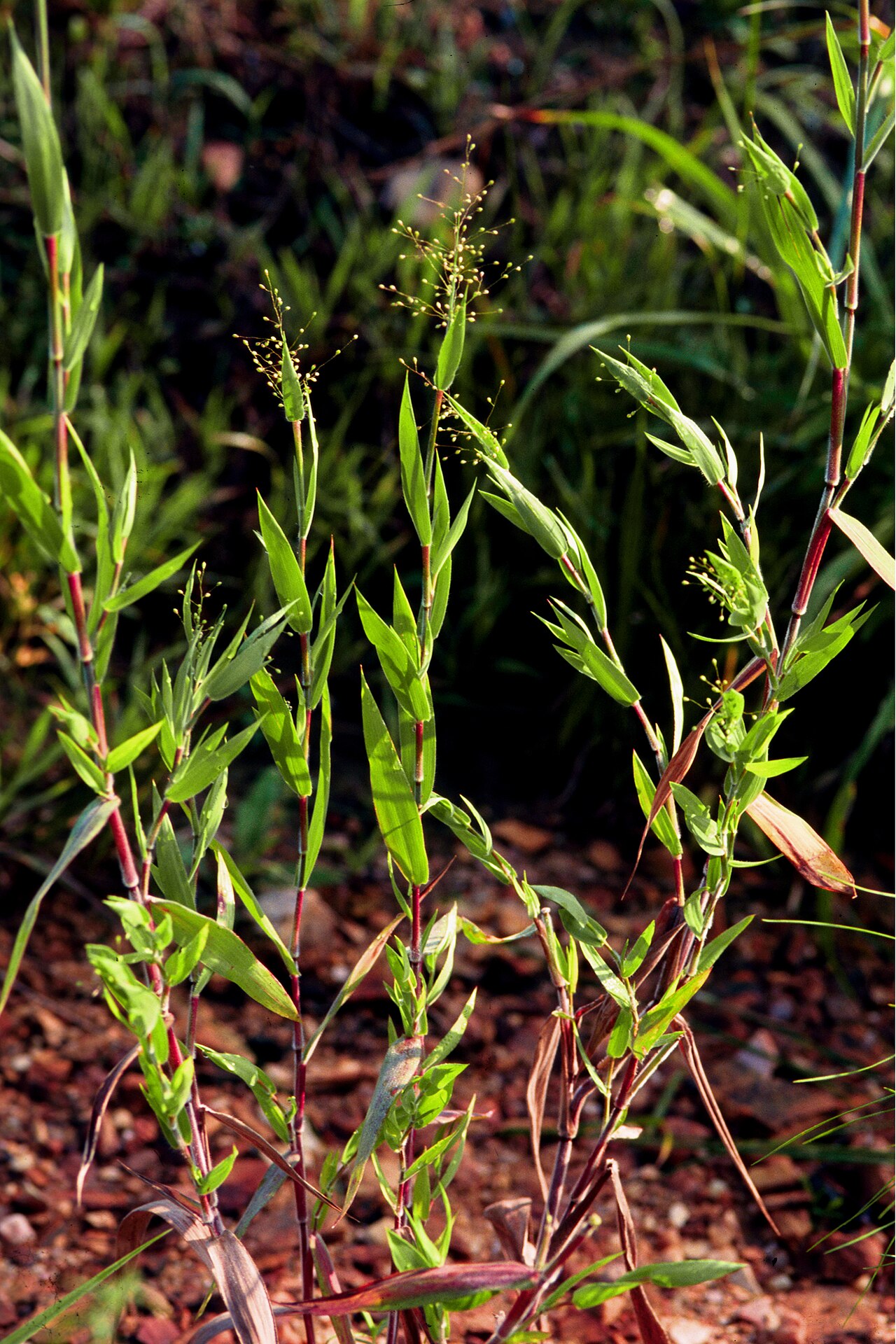
Velvet panicum is a perennial bunchgrass. Like other rosette grasses (Dichanthelium), it forms a winter rosette of short, broad leaves at the base, then sends up flowering stems in spring. The stems are 2 to 4 feet tall (occasionally taller), erect to leaning, and branch heavily from the nodes in summer and fall.
Leaves & Sheaths
The leaves are lance-shaped, about 4 to 8 inches long and 1/3 to 3/4 inch wide, with a rounded base that clasps the stem. Leaves and sheaths are covered with soft, velvety hairs. A distinctive feature is a smooth, hairless band on the stem just below each node, which is often purplish and sticky (viscid). The nodes themselves are bearded with soft hairs.
Flowers
It flowers in two phases. In late spring and early summer, each main stem ends in an open, branched panicle 3 to 6 inches long with many small, egg-shaped spikelets about 1/10 inch long, green to purple. From summer into fall, the stems branch and produce many small panicles partly hidden among the leaves, whose flowers often self-pollinate without opening.
Fruit
Each spikelet produces a single small grain (caryopsis), which ripens from early summer into fall and falls with the spikelet.
Look-alikes
Deertongue (Dichanthelium clandestinum) has even broader leaves, rough, bristly sheaths and spreads by rhizomes. Bosc’s panicgrass (Dichanthelium boscii) is shorter, grows in drier woods and has larger spikelets. Other rosette grasses are smaller and lack the velvety hairs and sticky band below the nodes. Switchgrass (Panicum virgatum) is taller, with long, narrow, smooth leaves and no winter rosette.
Quick Facts
| Scientific Name | Dichanthelium scoparium |
| Family | Poaceae (grass family) |
| Plant Type | Clump-forming perennial grass |
| Mature Height | 2–4 ft |
| Mature Spread | 1–2 ft |
| Growth Rate | Fast |
| Sun Exposure | Full sun to part shade |
| Water Needs | Medium to high; moist to wet soil |
| Soil Type | Sandy, loamy or clay soils; tolerates poor drainage |
| Soil pH | Acidic to neutral (about 4.5–7.0) |
| Bloom Time | May–October |
| Flower Color | Green to purplish spikelets |
| Fall Color | Tan to purplish |
| Fruit | Small grains in tiny spikelets |
| Deer Resistant | Moderately; young leaves are grazed |
| USDA Hardiness Zones | 5–11 |
Native Range
Velvet panicum is native to the eastern and south-central United States, Puerto Rico, and it also extends into the Caribbean and tropical America. USDA PLANTS lists it from 26 states and Puerto Rico, from New York, Connecticut, Rhode Island, Massachusetts and Michigan south to Florida and west to Illinois, Missouri, Kansas, Oklahoma and Texas. It also occurs in the District of Columbia.
It is most common on the Atlantic and Gulf coastal plains, from New Jersey to Florida and Texas, and in the Piedmont and lower Mississippi Valley. Northward and inland it becomes local and uncommon, with scattered populations in southern New England, New York, Michigan, Illinois and Kansas at the edges of its range.
Its habitat is moist to wet, open or lightly shaded ground: ditches, roadsides, wet meadows, marsh edges, pond shores, pine flatwoods and savannas, clearings, power-line cuts and moist old fields. It often colonizes disturbed soils and is common in managed pine forests and along woods roads in the South.
📋 Regional plant lists featuring Velvet Panicum: Alabama, Georgia & Mississippi · Arkansas, Louisiana, Eastern Oklahoma & Eastern Texas · North & South Florida · Puerto Rico · North & South Carolina · Kentucky & Tennessee · Maryland, Virginia & West Virginia · Delaware, Southern New Jersey & Long Island · New York, Pennsylvania & Northern New Jersey · Connecticut, Massachusetts & Rhode Island · New Hampshire, Maine & Vermont · Illinois, Iowa & Missouri · Ohio & Indiana · Michigan, Wisconsin & Eastern Minnesota · Nebraska, Kansas & Eastern Colorado
Growing & Care Guide
Velvet panicum is an easy, adaptable grass for moist, sunny sites. It establishes quickly from seed and needs little care once it is growing.
Light
Full sun to part shade. It grows densest and flowers best in sun, but tolerates the light shade of open pine woods and woodland edges.
Soil & Water
It prefers moist to wet, acidic soil and tolerates seasonal flooding, poorly drained clay and sandy soils. It handles short dry spells once established, but it is not suited to dry, well-drained sites.
Planting Tips
Sow seed in fall or early spring on bare, moist soil, or plant plugs 12 to 18 inches apart. It works well in rain gardens, swales, wet meadows and along pond edges, combined with rushes, sedges, meadow beauty and other wet-meadow plants.
Pruning & Maintenance
Cut or mow the old stems in late winter, before the new rosettes start growing. It can self-seed into open soil; mow or pull unwanted seedlings if you want it confined.
Propagation
Grow it from seed, which germinates best after a period of cold, moist stratification over winter. Clumps can also be divided in spring.
Landscape Uses
- Rain gardens and swales: tolerates wet soil and periodic flooding
- Wet meadow and ditch plantings: fills in quickly on moist, open ground
- Wildlife plantings: seeds for songbirds, quail and turkeys
- Erosion control: fibrous roots hold moist soil on banks
- Pine savanna restoration: a native grass of southern flatwoods
Wildlife & Ecological Value
Like other rosette grasses, velvet panicum is an important source of seed and cover for wildlife in the Southeast.
For Pollinators
It is wind-pollinated and offers little to bees. Panic grasses, including rosette grasses, are larval host plants for several grass skippers and satyr butterflies.
For Birds
Northern bobwhite, wild turkeys, mourning doves, sparrows and other songbirds eat the seeds, which are produced over a long season. The dense clumps provide nesting and escape cover.
For Mammals
White-tailed deer graze the young leaves and winter rosettes, and small mammals eat the seeds and use the clumps for cover.
Ecosystem Role
Its fibrous roots help stabilize moist soils along ditches, pond edges and clearings. As a quick colonizer of open, disturbed ground, it helps cover bare soil and prepares the way for other native plants.
Cultural & Historical Uses
The genus name Dichanthelium comes from Greek words meaning “twice-flowering,” for the two flowering phases of these grasses: an open spring bloom and a later, mostly self-pollinated summer and fall bloom. The species name scoparium means “broom-like,” for the bushy branching of the plant late in the season.
The rosette grasses were once placed in the large genus Panicum, and velvet panicum is still listed as Panicum scoparium in many older references. Their winter rosettes of short, broad leaves are a key feature that sets them apart from true panic grasses.
Velvet panicum is valued by wildlife managers in the South, where it is common in managed pine forests, food plots and field borders, providing seed for quail and turkeys.
Frequently Asked Questions
How do I identify velvet panicum?
Look for broad, velvety-hairy leaves and sheaths, bearded nodes, and a smooth, often purplish and sticky band on the stem just below each node.
Does velvet panicum grow in wet soil?
Yes. It prefers moist to wet, acidic soil and tolerates seasonal flooding, making it good for rain gardens, swales and wet meadows.
Is velvet panicum good for wildlife?
Yes. Quail, turkeys, doves and songbirds eat its seeds, deer graze its leaves, and it provides cover for small animals and ground-nesting birds.
Why does velvet panicum look different in fall?
Its stems branch heavily in summer and fall, producing many small flower clusters hidden among the leaves and giving the plant a bushy, broom-like look.
Is velvet panicum the same as switchgrass?
No. Both were once in the genus Panicum, but switchgrass is taller, with long, narrow, smooth leaves. Velvet panicum has broad, velvety leaves and a winter rosette.

Looking for a nursery that carries Velvet Panicum?
Browse our native plant nursery directory: Alabama & Arkansas · Connecticut, Delaware, Florida & Georgia · Illinois, Indiana & Kansas · Kentucky, Louisiana, Maryland, Massachusetts, Michigan, Mississippi & Missouri · New Jersey, New York, North Carolina & Oklahoma · Pennsylvania, Rhode Island, South Carolina, Tennessee, Texas & Virginia

