
Native Yews (Taxus)
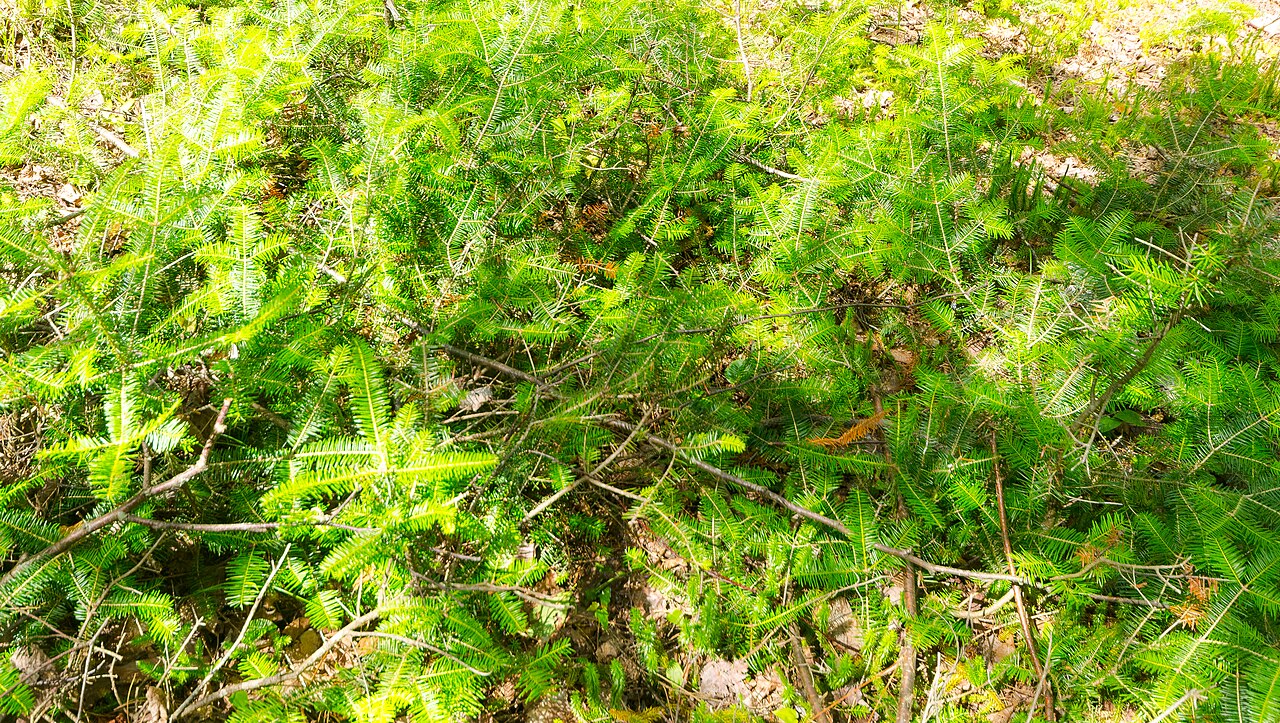
Yews are slow-growing evergreen conifers in the genus Taxus, family Taxaceae. They have soft, flat, dark green needles and, instead of woody cones, single seeds held in a bright red, fleshy cup called an aril. Yews are famous for two things: their ability to grow in deep shade and survive heavy pruning, which makes them classic hedges and foundation shrubs, and their toxicity, since nearly every part of the plant is poisonous.
About ten yew species grow around the Northern Hemisphere. Only three are native to the United States: Canada yew, a low shrub of cool northern and Appalachian forests; Pacific yew, a small understory tree of the Pacific Northwest and northern Rockies; and Florida yew, a rare shrub or small tree that grows wild only along a short stretch of the Apalachicola River in the Florida Panhandle.
The yews in most American yards and hedges are not native. They are English yew, Japanese yew and above all their hybrid, Anglo-Japanese yew (Taxus × media). If you reached this page from one of our evergreen guides for Massachusetts, New York or other states, this page will help you tell those garden yews from the native ones and decide where a native yew fits.
Identification
Needles
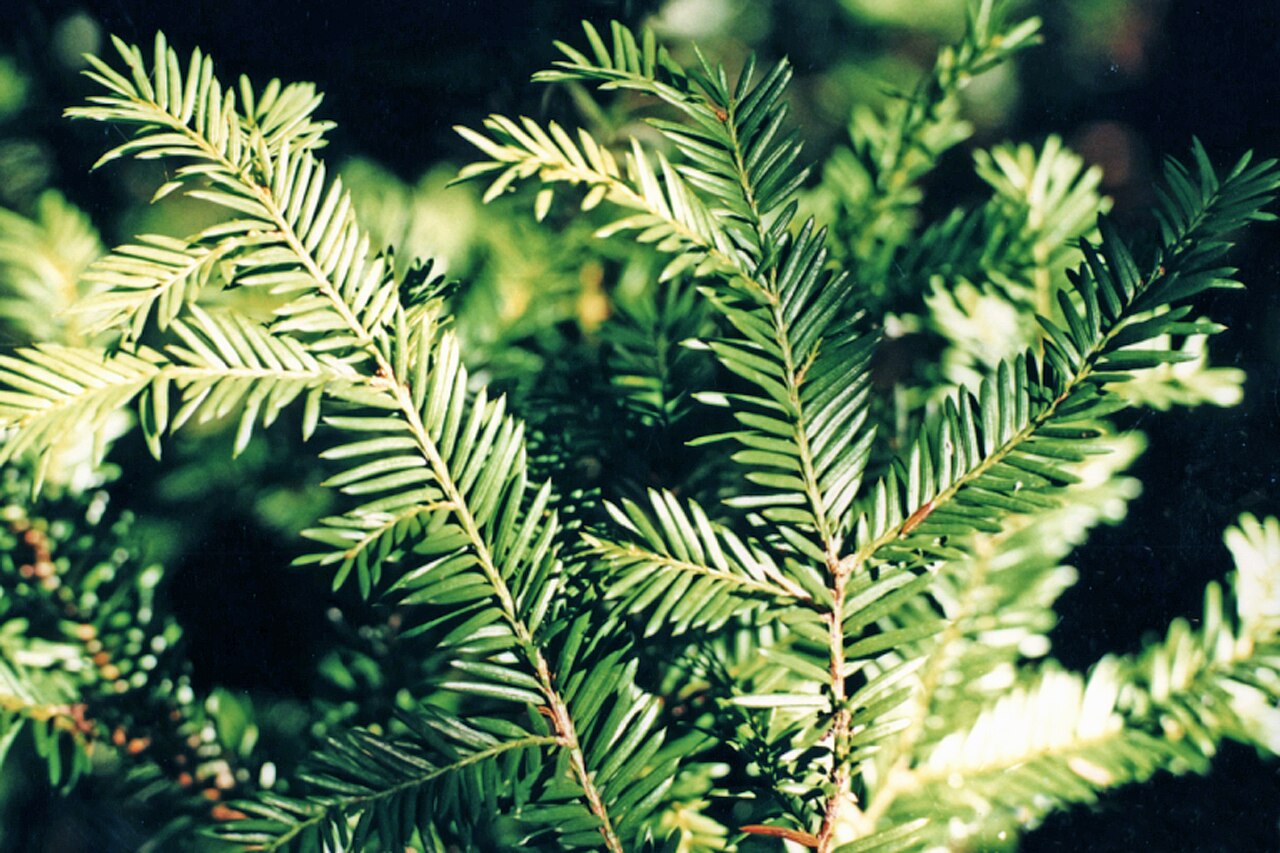
Yew needles are flat, soft and flexible, about 1/2 to 1 inch long, with a short, sharp but not prickly point. They are dark or yellowish green above and paler green below, with two dull, pale green bands on the underside rather than the bright white stripes of hemlocks and firs. Each needle narrows into a short green stalk whose base runs down the twig, so the twig itself looks green and ridged. On most shoots the needles spread to either side in two flat rows. Canada yew often turns reddish-brown in winter sun; garden yews generally stay dark green.
Seeds (the “berries”)
Yews do not make cones. A female yew bears single seeds, each partly enclosed in a juicy, bright red aril about 1/4 to 3/8 inch across, open at one end so the dark seed shows through. The arils ripen in late summer and fall. Pacific yew and Florida yew are dioecious (separate male and female plants), so only females produce arils. Canada yew is unusual: most plants carry both male and female flowers. Male plants produce tiny, round, pale yellow pollen cones under the shoots in early spring.
Bark and form
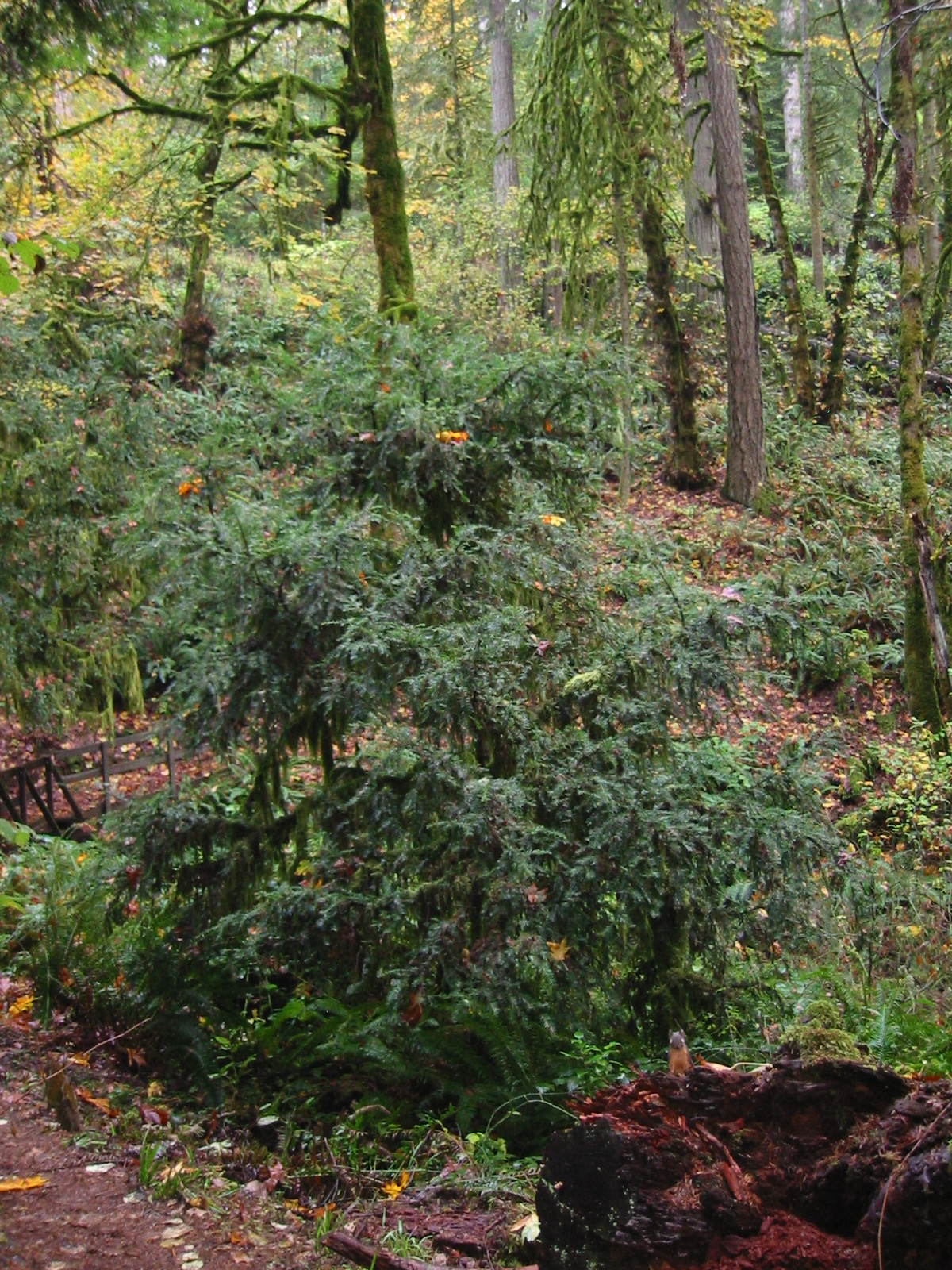
Yew bark is thin and reddish-brown to purplish, flaking off in small scales that reveal red or purple patches beneath. Canada yew is a sprawling shrub, usually 3–6 feet tall and wider than tall, whose branches often root where they touch the ground. Pacific yew is a small, often crooked tree of 20–50 feet, typically leaning in the shade of much larger conifers. Florida yew is a multi-stemmed shrub or small tree, usually under 20 feet.
Not to be confused with
Hemlocks (Tsuga) have shorter needles with bright white bands beneath and small hanging cones. Firs (Abies) have upright cones and leave round, flat scars where needles fall. The yew’s closest native relatives, Florida torreya and California nutmeg, have stiff, very sharp needles with a pungent smell when crushed and large, olive-like seeds instead of red arils.
Quick Facts
| Scientific Name | Taxus (genus) |
| Family | Taxaceae (Yew) |
| U.S. Native Species | 3: Canada yew, Pacific yew and Florida yew |
| Plant Type | Evergreen coniferous shrubs and small trees |
| Mature Height | 3–6 ft (Canada yew); 20–50 ft (Pacific yew); usually under 20 ft (Florida yew) |
| Growth Rate | Slow |
| Sun Exposure | Part shade to full shade; tolerates sun only where summers are cool |
| Water Needs | Moderate; evenly moist but well-drained soil |
| Soil Type | Moist, humus-rich, well-drained soils; intolerant of waterlogging |
| Seeds | Single seed in a red, fleshy aril; late summer to fall |
| Fall Color | None (evergreen); Canada yew may redden in winter sun |
| Wildlife Value | Arils eaten by birds; dense evergreen cover; winter browse for deer and moose |
| Deer Resistant | No; deer browse yews heavily despite their toxicity to livestock and pets |
| USDA Hardiness Zones | About 2–6 (Canada yew), 6–9 (Pacific yew), 8–9 (Florida yew) |
| Toxicity | Highly toxic: needles, bark and seeds poison people, pets and livestock |
| Conservation | Florida yew is listed as endangered in Florida |
Native Range
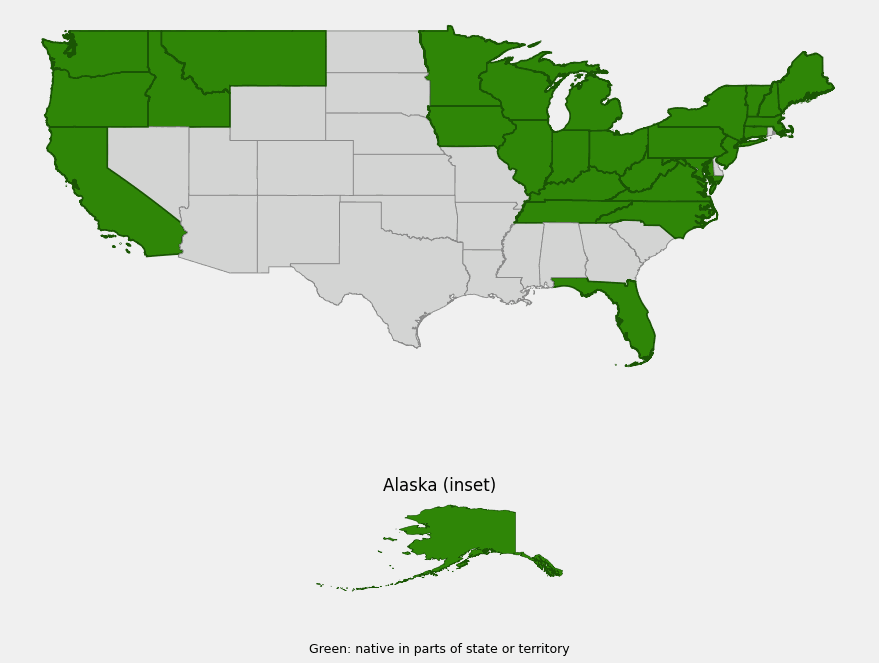
Canada yew is the native yew of the Northeast, the Great Lakes and the Appalachians. It grows in cool, moist, shaded forests, ravines and swamp edges from Maine, New Hampshire, Vermont, Massachusetts and Connecticut through New York, northern New Jersey and Pennsylvania, west through Ohio, Michigan, Wisconsin, Minnesota and northeastern Iowa, and south in the mountains to West Virginia, Virginia, Kentucky, Tennessee and North Carolina. It is rare at the southern and western edges of its range, including Maryland, Indiana and Illinois. Its range extends north across eastern Canada to Newfoundland and Manitoba.
Pacific yew grows from southeastern Alaska through coastal and Cascade forests of British Columbia, Washington and Oregon to northern California and the Sierra Nevada, and inland in northern Idaho and northwestern Montana. It is almost always an understory tree beneath old Douglas-firs, western red cedars and hemlocks, usually along streams and on moist, shaded slopes.
Florida yew has one of the smallest ranges of any American tree. It grows only in steep, shaded ravines and bluffs on the east side of the Apalachicola River in Gadsden and Liberty Counties, Florida, the same area that shelters Florida torreya.
No yew is native to the Great Plains, the Southwest, the Deep South outside the Florida Panhandle, or Texas.
📋 Regional plant lists covering native yew ranges: Maine, New Hampshire & Vermont · Southern New England · New York, Pennsylvania & Northern New Jersey · Maryland, Virginia & West Virginia · North Carolina & South Carolina · Kentucky & Tennessee · Ohio & Indiana · Illinois, Iowa & Missouri · Michigan, Wisconsin & Eastern Minnesota · Montana & Wyoming · Idaho, Eastern Oregon & Washington · Western Oregon & Washington · California & Nevada · Alaska
Native Species
All three U.S.-native yews have full growing guides on Plant Native.
Canada Yew (Taxus canadensis)
Also called American yew or ground hemlock. A low, straggling shrub, 3–6 feet tall and spreading wider, that layers itself into dense patches on the floors of cool hemlock, cedar and northern hardwood forests. It is the hardiest yew in the world, comfortable to about zone 2, but it dislikes hot, dry summers and full sun. Canada yew has declined in much of its range because white-tailed deer and moose browse it so heavily; healthy stands are often found only on islands, cliffs or inside deer fences.
Pacific Yew (Taxus brevifolia)
Also called western yew. A small, slow-growing tree, 20–50 feet tall, with thin, papery, reddish-purple bark, often with a twisted or leaning trunk. It grows in the shade of old-growth conifers from southeastern Alaska to California and inland to Idaho and Montana. Pacific yew bark was the original source of the cancer drug paclitaxel (Taxol); the harvest of wild trees for bark in the late 1980s and early 1990s led to concern for the species until production shifted to other sources.
Florida Yew (Taxus floridana)
A bushy, multi-stemmed shrub or small tree of shaded limestone ravines and bluffs along the Apalachicola River in the Florida Panhandle, and nowhere else on Earth. It is listed as endangered by the state of Florida and is considered critically endangered worldwide. It is occasionally available from specialty nurseries as propagated plants for gardens in zones 8 and 9; never collect from the wild.
Non-Native Look-Alikes
Almost every yew planted as a hedge or foundation shrub in the United States is one of the three imports below. None is widely listed as invasive, but they are toxic, they are heavily browsed by deer, and they offer native wildlife less than native shrubs do. For shady, cool sites in the Northeast and Great Lakes, Canada yew is the native alternative; for hedges in sun, consider a native evergreen such as eastern red cedar or American holly where it is native.
English Yew (Taxus baccata)
Native to Europe, North Africa and western Asia, English yew is the tree of old English churchyards, where some specimens are believed to be well over a thousand years old. It becomes a broad tree in time and is the classic yew for clipped hedges and topiary. Its needles are dark green and often slightly curved, and the bud scales are blunt. Cultivars include the narrow Irish yew (‘Fastigiata’) and golden forms. It is reliably hardy only to about zone 6, so in the colder Northeast it suffers winter burn.
Japanese Yew (Taxus cuspidata)
Native to Japan, Korea, northeastern China and the Russian Far East. Hardier than English yew, it was planted heavily in the Northeast and Midwest from the late 1800s on. Its needles are dark green above with a distinct yellowish-green band beneath and an abruptly pointed tip, and they often stand in a loose V rather than a flat row. Forms range from spreading shrubs (‘Nana’) to upright trees (‘Capitata’).
Anglo-Japanese Yew (Taxus × media)
This hybrid between English and Japanese yew combines the look of English yew with the hardiness of Japanese yew, and it is the yew most often sold for hedges in New England, New York and the Midwest. Familiar cultivars include the upright, columnar ‘Hicksii’ and ‘Hatfieldii’ and the low, mounded ‘Densiformis’. When an evergreen tree guide recommends “yew” for a hedge in Massachusetts or New York, this is usually the plant it means.
How to tell them from Canada yew: garden yews stay deep green all winter, grow upright or as dense mounds, and are planted in rows or along foundations. Canada yew sprawls low over the forest floor, has lighter yellow-green needles that often redden in winter, and grows wild in shady woods.
Growing & Care Guide
Light
Native yews are shade plants. Canada yew does best in part to full shade and burns or declines in hot sun, especially south of its native range. Pacific yew grows naturally under tall conifers and does best in bright shade in gardens. Florida yew needs shade and shelter from hot afternoon sun.
Soil & Water
Give yews moist, humus-rich, well-drained soil. They tolerate acidic to near-neutral soils, and Canada yew grows on both acidic forest soils and limestone. All yews quickly die in waterlogged ground, so avoid low spots where water stands, and mulch to keep roots cool and moist. Water through dry spells, especially in the first two years.
Planting Tips
Plant in spring or early fall. Canada yew is best used as a naturalistic groundcover under deciduous trees or on a cool, north-facing slope, spaced 3–4 feet apart so plants knit together. Pacific yew makes an interesting small specimen tree for a shaded Northwest garden. In deer country, protect native yews with fencing or cages until they are well above browsing height or well established, or they may be eaten to the ground.
Pruning & Maintenance
Yews are among the few conifers that resprout from old, bare wood, which is why they tolerate hard shearing. Native yews need little pruning; trim them lightly in late winter or after the spring flush. Wear gloves when pruning and dispose of clippings where livestock, horses and pets cannot reach them.
Propagation
Yews root readily from semi-hardwood cuttings taken in late summer or fall. Seeds have a deeply dormant embryo and often take two years or more to germinate. Florida yew should only be propagated from nursery stock.
Wildlife & Ecological Value
For Birds
The sweet red arils are eaten by American robins, cedar waxwings, thrushes, grouse and other birds, which pass the seeds unharmed and spread them. Dense, low yew thickets provide nesting and winter cover for ground-dwelling birds such as ruffed grouse.
For Mammals
Canada yew is important winter browse for white-tailed deer and moose, and heavy browsing has eliminated it from many forests. Deer also browse Pacific yew. Squirrels, chipmunks and other rodents eat yew seeds.
For Pollinators
Yews are wind-pollinated and offer little to bees, though early-season pollen may be collected by honey bees.
Ecosystem Role
Canada yew’s low, evergreen cover shades the soil and shelters seedlings of other trees on cool forest floors. Pacific yew is a characteristic understory tree of old-growth forests and is much less common in logged and replanted stands.
Toxicity & Safety
Yews contain taxine alkaloids that affect the heart. The needles, bark, twigs and seeds are highly toxic to people, dogs, cats, horses, cattle and other livestock; horses and cattle have been killed by eating yew clippings thrown over a fence. The red flesh of the aril is the only part considered low in toxicity, but the seed inside is poisonous, so children should be taught never to eat yew “berries”. If anyone swallows yew, contact Poison Control or a veterinarian immediately.
Cultural & Historical Uses
Yew wood is dense, strong and elastic. Pacific Northwest Native peoples made bows, paddles, digging sticks, wedges and other tools from Pacific yew, and in Europe English yew was the wood of the medieval longbow. In 1971 researchers reported paclitaxel, a compound isolated from Pacific yew bark, and it was later developed into the cancer drug Taxol. This is history, not a home remedy: never use any part of a yew for medicine.
Frequently Asked Questions
Which yews are native to the United States?
Three: Canada yew in the Northeast, Great Lakes and Appalachians, Pacific yew in the Pacific Northwest and northern Rockies, and the rare Florida yew in the Florida Panhandle.
Are yews native to Massachusetts and New York?
Yes. Canada yew is native to both states, where it grows as a low shrub in cool, shaded woods. The upright hedge yews sold for yards there, such as ‘Hicksii’ and ‘Densiformis’, are English, Japanese or hybrid yews.
Are yew berries poisonous?
The red flesh of the aril is low in toxicity, but the seed inside it, along with the needles and bark, is highly poisonous. Treat every part of a yew as dangerous to people and pets, and keep clippings away from horses and livestock.
Can I grow Canada yew as a hedge?
Not easily. Canada yew is a low, sprawling groundcover shrub that prefers shade and seldom grows taller than about 6 feet. It works best as a woodland groundcover. For a native evergreen hedge in sun, consider eastern red cedar or American holly where they are native.
Why are my native yews disappearing?
Deer browsing is the most common reason. Deer and moose eat Canada yew so heavily that it has vanished from many northeastern and Great Lakes forests. Fencing young plants is often the only way to establish them.

Looking for a nursery that carries Native Yews?
Browse our native plant nursery directory: Alaska · California · Florida & Connecticut · Idaho, Indiana, Illinois & Iowa · Montana, Maine, Massachusetts, Maryland, Kentucky, Minnesota & Michigan · New Hampshire, New York, New Jersey, North Carolina & Ohio · Oregon · Vermont, Pennsylvania, Virginia & Tennessee · Washington · West Virginia & Wisconsin

