
Native Blueberries (Vaccinium)
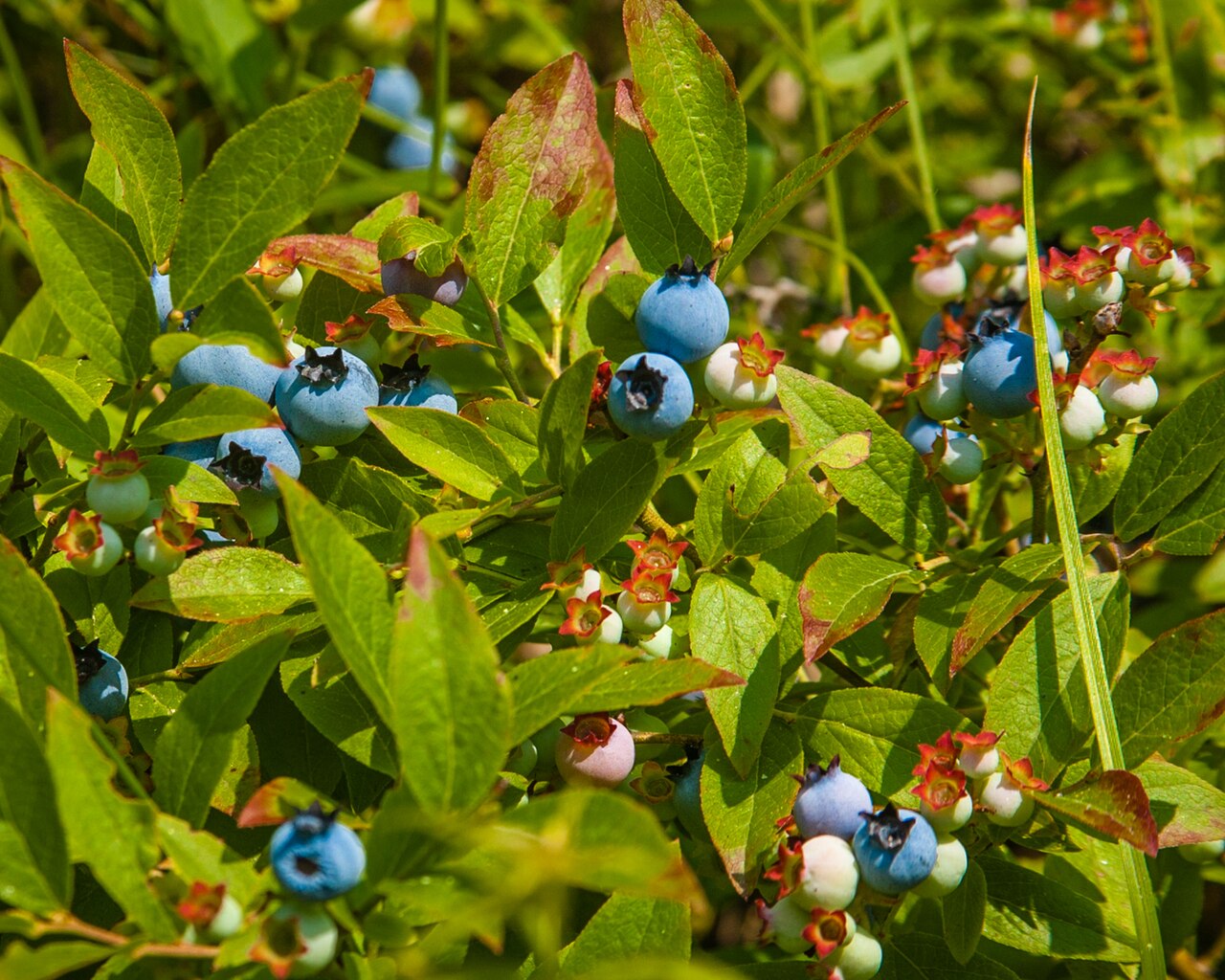
Blueberries are one of the few fruits Americans eat every day that come from plants native to North America. Every cultivated blueberry, from the ‘Bluecrop’ in a supermarket clamshell to the southern highbush in a Florida backyard, was bred from wild Vaccinium species that still grow in our bogs, pine barrens, mountain slopes and forest edges. Grow a native blueberry and you get spring flowers for bees, summer fruit for you and the birds, and some of the best red fall color of any shrub.
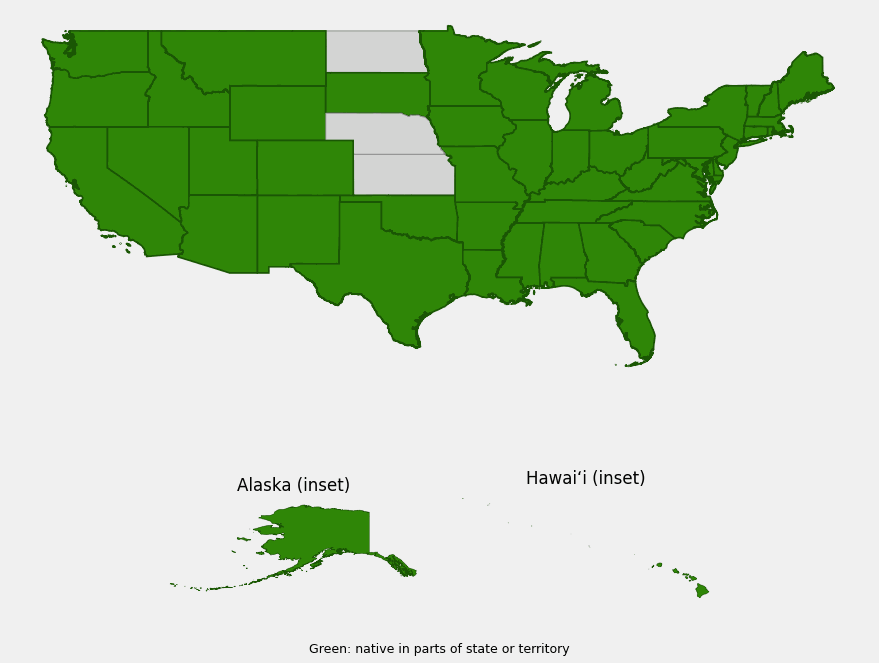
Vaccinium is a large genus in the heath family (Ericaceae), with around 450 species worldwide. Roughly 30 to 40 are native to the United States (the exact count depends on how botanists split the blueberries of the Southeast). The genus includes not only blueberries but also the huckleberries of the western mountains, the cranberries of northern bogs, lingonberry, deerberry, farkleberry and the ʻōhelo of Hawaiʻi. Native species grow in 47 states; only North Dakota, Nebraska and Kansas have none.
This guide covers the most important US-native species, where each grows, how to grow them, and how to tell native blueberries from the non-native and look-alike plants that share the name. If you came here from a Maine landscaping list, lowbush and highbush blueberry are both native there. If you came from Oklahoma, the state’s native Vaccinium are farkleberry, deerberry and Blue Ridge blueberry, all in the eastern part of the state.
Identification
All Vaccinium are woody plants, from creeping mats only a few inches tall to small trees over 20 feet. Despite what some older garden articles say, they are not in the rose family; they are heaths, related to rhododendrons, mountain laurel and wintergreen, and like most heaths they need acidic soil.
Bark & Stems
Young twigs are often green or reddish and finely speckled with tiny raised dots, and in winter many species have bright red or yellow-green stems. Highbush blueberry grows as a multi-stemmed shrub of upright canes with shredding gray-brown bark on old stems. Farkleberry, the one tree-sized species, develops smooth, flaking reddish-gray bark. Lowbush blueberry and the cranberries spread by underground or trailing stems into wide colonies.
Leaves
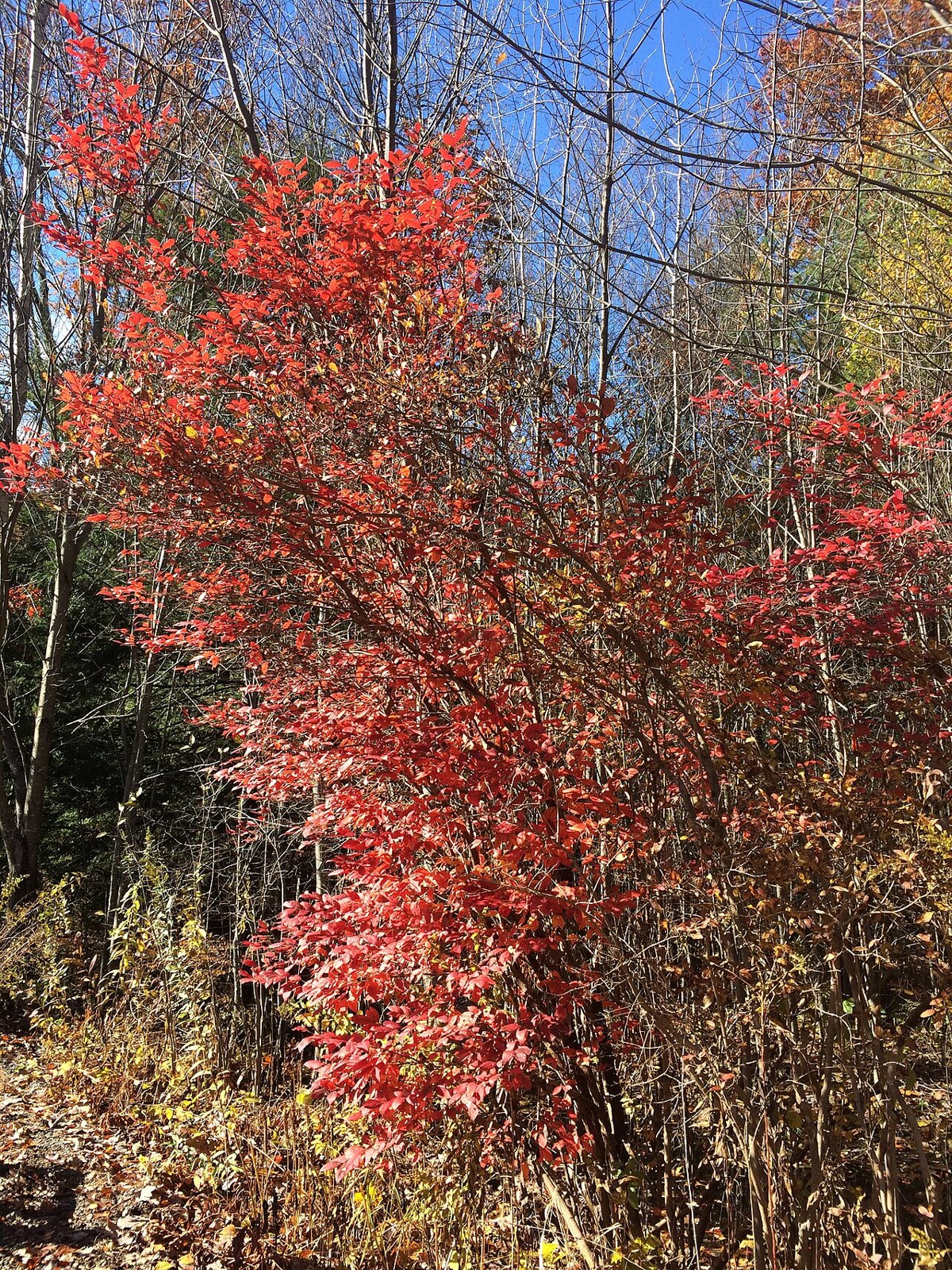
Leaves are simple and alternate, usually oval to elliptic, from under half an inch (cranberries, lingonberry, grouse whortleberry) to about 3 inches long. Most blueberries and huckleberries are deciduous and turn scarlet, crimson or burgundy in fall. Cranberries, lingonberry, evergreen huckleberry, Darrow’s and shiny blueberry are evergreen. Leaf margins can be smooth or finely toothed, a useful detail for telling species apart.
Flowers
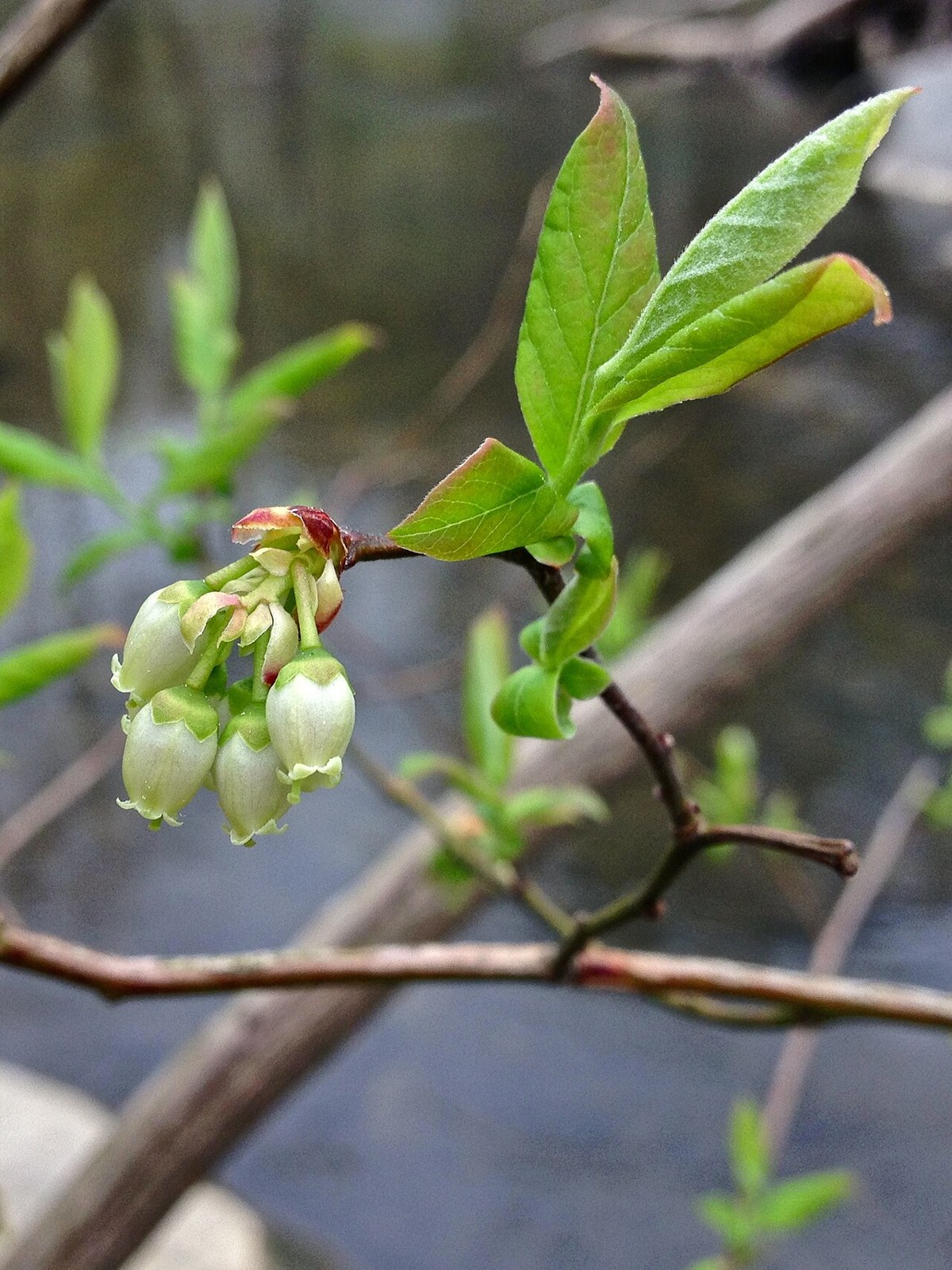
The flowers are small, white to pink bells or urns that hang in clusters in spring, usually before or as the leaves open. Each flower has a narrow opening that holds its pollen inside; bumble bees and other native bees “buzz” the flowers to shake pollen loose. Deerberry has open, bell-shaped flowers with protruding stamens, and the cranberries have nodding pink flowers with swept-back petals that inspired the name “craneberry.”
Fruit & Seeds
The fruit is a true berry with many tiny seeds. The most reliable field mark of a blueberry or huckleberry is the small five-pointed crown at the tip of each berry, left by the calyx of the flower. Fruit color ranges from powdery blue (most blueberries) to black (farkleberry, black-fruited huckleberries), red (red huckleberry, cranberries, lingonberry, grouse whortleberry) and greenish or purplish (deerberry). All native Vaccinium berries are edible, though some, like farkleberry and deerberry, are dry or sour.
Quick Facts
| Scientific Name | Vaccinium L. (genus) |
| Family | Ericaceae (Heath) |
| US-Native Species | Roughly 30–40 (approximate; counts vary with taxonomy) |
| Growth Forms | Creeping evergreen mats, low colonial shrubs, upright shrubs and one small tree |
| Mature Height | 2 in (cranberries) to 6–12 ft (highbush blueberry); farkleberry to 25 ft |
| Sun Exposure | Full Sun to Part Shade for most species; western huckleberries tolerate shade |
| Water Needs | Varies: wet bogs (cranberries, highbush) to dry, sandy or rocky slopes (lowbush, Blue Ridge, farkleberry) |
| Soil Type | Acidic sand, peat, loam or rocky soil rich in organic matter |
| Soil pH | 4.5–5.5 for most species; farkleberry tolerates less acidic soil |
| Bloom Time | March–June depending on species and latitude |
| Flower Color | White, greenish white or pink |
| Fall Color | Scarlet, crimson or burgundy in deciduous species |
| Fruit | Blue, black, red or greenish berries; edible |
| Wildlife Value | Very high: fruit for birds, bears and small mammals; buzz-pollinated by native bees; caterpillar host for hundreds of moth and butterfly species |
| Deer Resistant | No; deer browse twigs and leaves |
| USDA Hardiness Zones | 1–10 across the genus; varies by species |
Native Range
Native Vaccinium grow from the Arctic tundra of Alaska to the Florida scrub and from the Maine coast to the volcanoes of Hawaiʻi. The eastern United States is the center of blueberry diversity. The Southeast, especially the coastal plain from North Carolina to Florida and Alabama, has the most species, including rabbiteye, Elliott’s, Darrow’s and shiny blueberries. The Northeast and Great Lakes have lowbush, velvetleaf and highbush blueberries, plus bog cranberries and lingonberry in the far north. Maine’s sandy “blueberry barrens” are the heart of the world’s wild blueberry harvest.
In the West, Vaccinium are mountain and coastal plants, usually called huckleberries. Thinleaf huckleberry ranges from Alaska through the Cascades and northern Rockies, grouse whortleberry carpets subalpine forests from Washington and Montana south to California, Colorado and New Mexico, and red, evergreen and Alaska huckleberries are plants of the moist Pacific coastal forests. Dwarf bilberry and bilberry grow in high mountains from Washington to New Mexico, and ʻōhelo and its relatives grow on Hawaiian volcanic slopes. In the southern Great Plains, native blueberries reach only the eastern forests of Oklahoma and Texas, where farkleberry and deerberry grow on rocky, sandy woodland slopes.
North Dakota, Nebraska and Kansas have no native Vaccinium. Blueberries planted there, or in the alkaline soils of much of the Southwest, need heavily amended acidic beds or containers. In much of Europe, highbush blueberry from North America has escaped cultivation and become invasive in heaths and woodlands, a reminder that these are vigorous plants in the right conditions.
📋 Regional plant lists covering native blueberry country: New Hampshire, Maine & Vermont · Connecticut, Massachusetts & Rhode Island · New York, Pennsylvania & Northern New Jersey · Delaware, Southern New Jersey & Long Island · Maryland, Virginia & West Virginia · North Carolina & South Carolina · Georgia, Alabama & Mississippi · Kentucky & Tennessee · Arkansas, Louisiana, Eastern Oklahoma & Eastern Texas · Ohio & Indiana · Illinois, Iowa & Missouri · Michigan, Wisconsin & Eastern Minnesota · North Dakota, South Dakota & Western Minnesota · Montana & Wyoming · Idaho, Eastern Oregon & Eastern Washington · Western Oregon & Washington · California & Nevada · Utah & Western Colorado · Arizona & New Mexico · Alaska · Hawaii
Native Species
These are the US-native Vaccinium most often grown in gardens or met in the wild, grouped by type. Follow the links for full growing profiles.
Blueberries of the East and South
Highbush Blueberry (Vaccinium corymbosum): Native from Maine and Nova Scotia to Florida, west to Wisconsin, Michigan and eastern Texas, in swamps, bog edges and moist woods. A multi-stemmed shrub 6 to 12 feet tall with white flowers, large blue berries and brilliant red fall color. It is the main ancestor of the northern highbush cultivars grown commercially, such as ‘Bluecrop’, ‘Duke’ and ‘Jersey’.
Lowbush Blueberry (Vaccinium angustifolium): The wild blueberry of Maine, eastern Canada, the Great Lakes and the northern Appalachians. A colonial shrub 6 to 24 inches tall with small, finely toothed, glossy leaves and small, intensely flavored berries. It spreads by underground stems into wide mats on sandy, acidic, sunny ground and makes an excellent edible ground cover. Commercial “wild blueberries” from Maine are harvested from managed native stands of this species and its relatives.
Early Lowbush Blueberry (Vaccinium pallidum): Also called Blue Ridge or hillside blueberry. Native from New England and the Great Lakes to Georgia and west to Missouri and eastern Oklahoma, on dry, rocky oak and pine woods. Grows 1 to 3 feet tall with pale, blue-green leaves and sweet berries in early summer. A good choice for dry, shady slopes where highbush struggles.
Velvetleaf Blueberry (Vaccinium myrtilloides): A northern lowbush species of the Great Lakes, Northeast and boreal forest, west into Montana and Washington. Its leaves and young twigs are softly hairy (velvety), and the leaf edges are untoothed, two easy ways to tell it from lowbush blueberry. Grows 8 to 24 inches tall on sandy jack pine plains, rock outcrops and bog edges.
Rabbiteye Blueberry (Vaccinium virgatum): Native to the southeastern coastal plain, mainly Georgia, Florida, Alabama and South Carolina. A tall shrub, 6 to 15 feet, with heat tolerance and low chilling needs that make it the standard blueberry for the Deep South. Cultivars such as ‘Tifblue’, ‘Powderblue’ and ‘Climax’ come from this species. It is not native to, and is not hardy in, northern states like Maine.
Elliott’s Blueberry (Vaccinium elliottii): Also called mayberry. Native to the coastal plain from Virginia to Florida and west to eastern Texas and Arkansas, in floodplain woods and wet thickets. A finely textured shrub 4 to 12 feet tall with small, glossy leaves and early, pink-tinged flowers, often blooming in late winter.
Darrow’s Blueberry (Vaccinium darrowii): An evergreen dwarf blueberry, 1 to 3 feet tall, of sandy pine flatwoods in Florida and the Gulf coastal plain. Its small blue-gray leaves make it an attractive low hedge. Plant breeders crossed it with highbush blueberry to create the low-chill southern highbush cultivars.
Deerberry and Farkleberry
Farkleberry (Vaccinium arboreum): Also called sparkleberry or tree huckleberry. Native from Virginia to Florida and west to southern Illinois, Missouri, Oklahoma and Texas. The largest Vaccinium in North America, a shrub or small tree to about 25 feet, with glossy, semi-evergreen leaves, flaking bark and small black berries that persist into winter. It tolerates drier and less acidic soils than other blueberries, which makes it one of the best native choices for eastern Oklahoma and Texas.
Deerberry (Vaccinium stamineum): Native across the eastern US from Massachusetts to Florida and west to Missouri, eastern Oklahoma and eastern Texas, in dry oak and pine woods. A 2- to 6-foot shrub with open, bell-shaped white flowers and protruding stamens, followed by greenish to purplish, sour berries eaten by deer, turkeys and other wildlife.
Cranberries and Lingonberry
American Cranberry (Vaccinium macrocarpon): A trailing evergreen of bogs and wet shores from Newfoundland to Minnesota, south to New Jersey and, in the mountains, to North Carolina and Tennessee. Stems creep a few inches tall and bear large red berries in fall. It is the cranberry of commerce, grown in Wisconsin, Massachusetts and New Jersey.
Bog Cranberry (Vaccinium oxycoccos): Also called small cranberry. A tiny, thread-stemmed evergreen of sphagnum bogs across the northern US, Alaska and the Pacific Northwest, with leaves under half an inch long and small red berries.
Lingonberry (Vaccinium vitis-idaea): Also called lowbush cranberry or mountain cranberry. A low, glossy evergreen of Alaska, the northern Great Lakes and New England’s mountains and coast, with pink bell flowers and tart red berries. A handsome ground cover for cool, acidic gardens.
Western Huckleberries
Thinleaf Huckleberry (Vaccinium membranaceum): The black huckleberry of western mountains, native from Alaska through the Cascades and northern Rockies to northern California, Idaho, Montana and Wyoming, with an outlying population around Lake Superior. A 2- to 6-foot shrub with thin, toothed leaves and dark purple berries prized by hikers, tribes and grizzly bears. Idaho’s state fruit is the huckleberry.
Evergreen Huckleberry (Vaccinium ovatum): A glossy evergreen shrub of the Pacific coast from British Columbia to California, 3 to 8 feet tall in sun and taller in shade. Pink spring flowers and shiny black berries ripen in late summer and fall. One of the best native hedge and screen shrubs for the coastal Northwest.
Red Huckleberry (Vaccinium parvifolium): A lacy shrub with bright green, angled twigs and translucent red berries, native from Alaska to California in moist conifer forests. It often grows from old stumps and nurse logs and is ideal for shady woodland gardens west of the Cascades.
More native Vaccinium profiles: Shiny Blueberry (V. myrsinites), an evergreen dwarf of the southeastern coastal plain · Alaska Blueberry (V. ovalifolium) · Bog Bilberry (V. uliginosum) · Grouse Whortleberry (V. scoparium) · ʻŌhelo ʻAi (V. reticulatum)
Other native species without their own profile yet include dwarf bilberry (V. cespitosum) of western mountains and the northern states, Cascade bilberry (V. deliciosum) of Pacific Northwest subalpine meadows, black highbush blueberry (V. fuscatum) of the Southeast, small black blueberry (V. tenellum) of the southern coastal plain, and southern mountain cranberry (V. erythrocarpum) of the high southern Appalachians.
Non-Native Look-Alikes
Unlike most ornamental genera, the blueberries sold for gardens are almost all derived from American natives. The confusion comes from cultivars, from European relatives, and from unrelated plants that share the names “huckleberry” or “blueberry.”
Cultivated Blueberries
Northern highbush cultivars (‘Bluecrop’, ‘Duke’, ‘Patriot’, ‘Jersey’) are selections and hybrids of native highbush blueberry. Southern highbush cultivars (‘O’Neal’, ‘Misty’, ‘Emerald’) combine highbush with Darrow’s blueberry and other southern natives. Rabbiteye cultivars come from V. virgatum, and half-high cultivars (‘Northblue’, ‘Chippewa’, ‘Northcountry’) from crosses of highbush and lowbush. All are North American in origin and offer much of the wildlife value of their parents, though wild forms are better adapted to local soils and seasons and are best for naturalistic plantings.
European Bilberry (Vaccinium myrtillus)
The bilberry or whortleberry famous in European jams and tarts is a low shrub with single, dark blue berries that are blue-purple inside, unlike the pale flesh of American blueberries. It is mainly a plant of Europe and northern Asia, but it also grows natively in high mountains of the American West, from Washington and Montana south to Arizona and New Mexico, where it is sometimes called whortleberry. Plants sold as “European bilberry” come from European stock.
Plants That Are Not Blueberries
- Black huckleberries (Gaylussacia): Eastern native shrubs such as black huckleberry, with berries containing about ten hard seeds and leaves dotted with resin glands. Edible and native, but a different genus.
- Garden huckleberry and wonderberry (Solanum): Annual nightshades sold by seed companies. Not related to Vaccinium; unripe fruit and foliage are toxic.
- Common buckthorn (Rhamnus cathartica): An invasive Eurasian shrub across the Midwest and Northeast with black berries that cause severe digestive upset. It lacks the five-pointed crown of a blueberry.
- Nightshades and pokeweed: Dark-berried plants of yards and fields that are toxic. When foraging, eat only berries you can positively identify, starting with the blueberry crown and the plant’s woody, heath-like habit.
Growing & Care Guide
Light
Most blueberries fruit best in full sun and will grow but bear lightly in part shade. Lowbush, Blue Ridge and Darrow’s blueberries need sun to stay dense. Western huckleberries, red huckleberry and evergreen huckleberry tolerate considerable shade, and deerberry and farkleberry grow naturally in open woods.
Soil & Water
Acidic soil is the one thing almost every Vaccinium needs: aim for pH 4.5 to 5.5. In neutral or alkaline soil, leaves turn yellow between the veins and plants decline. Test your soil before planting; lower pH with elemental sulfur and mix in peat-free acidic organic matter such as pine bark fines or composted leaves. Highbush blueberry and cranberries like constantly moist soil, but even highbush grows best on raised, well-drained beds in gardens. Lowbush, Blue Ridge and farkleberry are drought tolerant once established. Mulch with pine needles, wood chips or shredded leaves to keep roots cool and moist.
Planting Tips
Plant in early spring or fall. Set highbush and rabbiteye plants 4 to 6 feet apart, lowbush 1 to 2 feet apart. For good fruit, plant at least two different plants (two seedlings or two cultivars of the same type) for cross-pollination; rabbiteye especially needs a partner. Choose types suited to your climate: northern highbush and lowbush for cold winters, rabbiteye and southern highbush where winters are mild.
Pruning & Maintenance
Highbush blueberries need light pruning in late winter starting about the fourth year: remove a few of the oldest, least productive canes at ground level and any weak or crossing growth. Lowbush patches are renewed by mowing or cutting the whole patch to the ground every two or three years in late fall or early spring, which is how Maine’s wild blueberry fields are managed. Feed sparingly with a fertilizer for acid-loving plants; never use lime. Bird netting is the only reliable way to save a full crop from robins and catbirds.
Propagation
Softwood cuttings in early summer and hardwood cuttings in late winter root readily under mist. Lowbush and cranberry colonies can be divided. Seed from cleaned, fresh berries germinates on moist peat but produces variable plants that take several years to fruit.
Landscape Uses
- Edible hedges and borders with highbush, rabbiteye or evergreen huckleberry
- Sunny, sandy ground cover with lowbush blueberry, sweetfern and kinnikinnik
- Rain gardens and wet edges with highbush blueberry, winterberry holly and summersweet
- Acidic woodland gardens with mountain laurel, pink azalea and checkerberry
- Pacific Northwest shade gardens with red huckleberry, evergreen huckleberry and salal
- Small native tree for dry southern yards with farkleberry
Wildlife & Ecological Value
For Pollinators
Blueberry flowers are among the most important early-season food sources for native bees. Bumble bee queens and specialist bees vibrate the bell-shaped flowers to release pollen, a technique honey bees cannot use. The southeastern blueberry bee (Habropoda laboriosa) times its short spring flight to blueberry bloom and is a key pollinator of rabbiteye blueberries. Many mining bees also forage heavily on Vaccinium.
For Caterpillars
Vaccinium is one of the top woody plant genera in North America for supporting moth and butterfly caterpillars, hosting hundreds of species. They include several elfins and hairstreaks such as the Henry’s elfin and striped hairstreak, plus many inchworms and other moths that become food for nesting birds.
For Birds
The berries feed bluebirds, robins, catbirds, thrashers, thrushes, towhees, scarlet tanagers, wild turkeys and grouse. Farkleberry fruit hangs on into winter and is valuable to wintering birds in the South. Dense highbush thickets provide nesting cover.
For Mammals
Black bears and grizzly bears depend on huckleberries and blueberries in late summer to fatten for winter. Foxes, chipmunks, skunks and mice also eat the fruit, and deer and rabbits browse twigs and leaves, especially in winter.
Ecosystem Role
Blueberries thrive after disturbance. Many species resprout vigorously from underground stems after fire, and lowbush blueberry barrens, pine barrens and western huckleberry fields were traditionally maintained by periodic burning. Their roots partner with specialized ericoid mycorrhizal fungi that help them draw nutrients from poor, acidic soils.
Cultural & Historical Uses
Blueberries, huckleberries and cranberries were major foods for Native American peoples across the continent. Berries were eaten fresh, dried in the sun or over fires, and mixed with meat and fat into pemmican. Many Plateau and Northwest tribes still hold first-fruit ceremonies for huckleberries, and some national forest huckleberry fields are managed partly for tribal harvest. In Hawaiʻi, ʻōhelo berries are traditionally associated with the volcano goddess Pele.
Modern blueberry farming began in the early 1900s, when USDA botanist Frederick Coville and New Jersey grower Elizabeth White selected and crossed wild highbush blueberries from the Pine Barrens. Their first commercial crop was sold in 1916. Maine designated the wild blueberry its official state berry, and Idaho named the huckleberry its state fruit.
Cranberries have their own history: native peoples used them for food and dye, and commercial cranberry cultivation began on Cape Cod in the early 1800s. Today Wisconsin and Massachusetts lead the nation in cranberry production, all from the native Vaccinium macrocarpon.
Frequently Asked Questions
Are blueberries native to the United States?
Yes. Blueberries are North American natives, and every cultivated blueberry was bred from wild American species, mainly highbush, lowbush, rabbiteye and Darrow’s blueberry. Native Vaccinium grow in 47 states.
Which blueberries are native to Maine?
Lowbush blueberry, velvetleaf blueberry and highbush blueberry are all native to Maine, along with cranberries, lingonberry and bog bilberry. Rabbiteye blueberry is a southern species that is neither native nor hardy there.
Do blueberries grow wild in Oklahoma?
Yes, in eastern Oklahoma. Farkleberry, deerberry and Blue Ridge blueberry grow in the forests of the Ozark Plateau and Ouachita Mountains. Most of the state is too dry and alkaline for blueberries without amended, acidic soil.
What is the difference between a blueberry and a huckleberry?
In the East, “huckleberry” usually means Gaylussacia, a related genus whose berries have about ten hard seeds. In the West, huckleberries are Vaccinium species, the same genus as blueberries, usually with darker or red fruit borne singly rather than in clusters.
Why are my blueberry leaves turning yellow?
Usually because the soil is not acidic enough. Above about pH 5.5, blueberries cannot take up iron and their leaves yellow between the veins. Test the soil and lower the pH with sulfur and acidic mulch.

Looking for a nursery that carries Native Blueberries?
Browse our native plant nursery directory: Alabama, Alaska, Arizona & Arkansas · California · Colorado, Connecticut, Delaware, Florida, Georgia & Hawaii · Idaho, Illinois, Indiana & Iowa · Kentucky, Louisiana, Maine, Maryland, Massachusetts, Michigan, Minnesota, Mississippi, Missouri & Montana · Nevada, New Hampshire, New Jersey, New Mexico, New York, North Carolina, Ohio & Oklahoma · Oregon · Pennsylvania, Rhode Island, South Carolina, South Dakota, Tennessee, Texas, Utah, Vermont & Virginia · Washington · West Virginia, Wisconsin & Wyoming

