
Native Junipers (Juniperus)
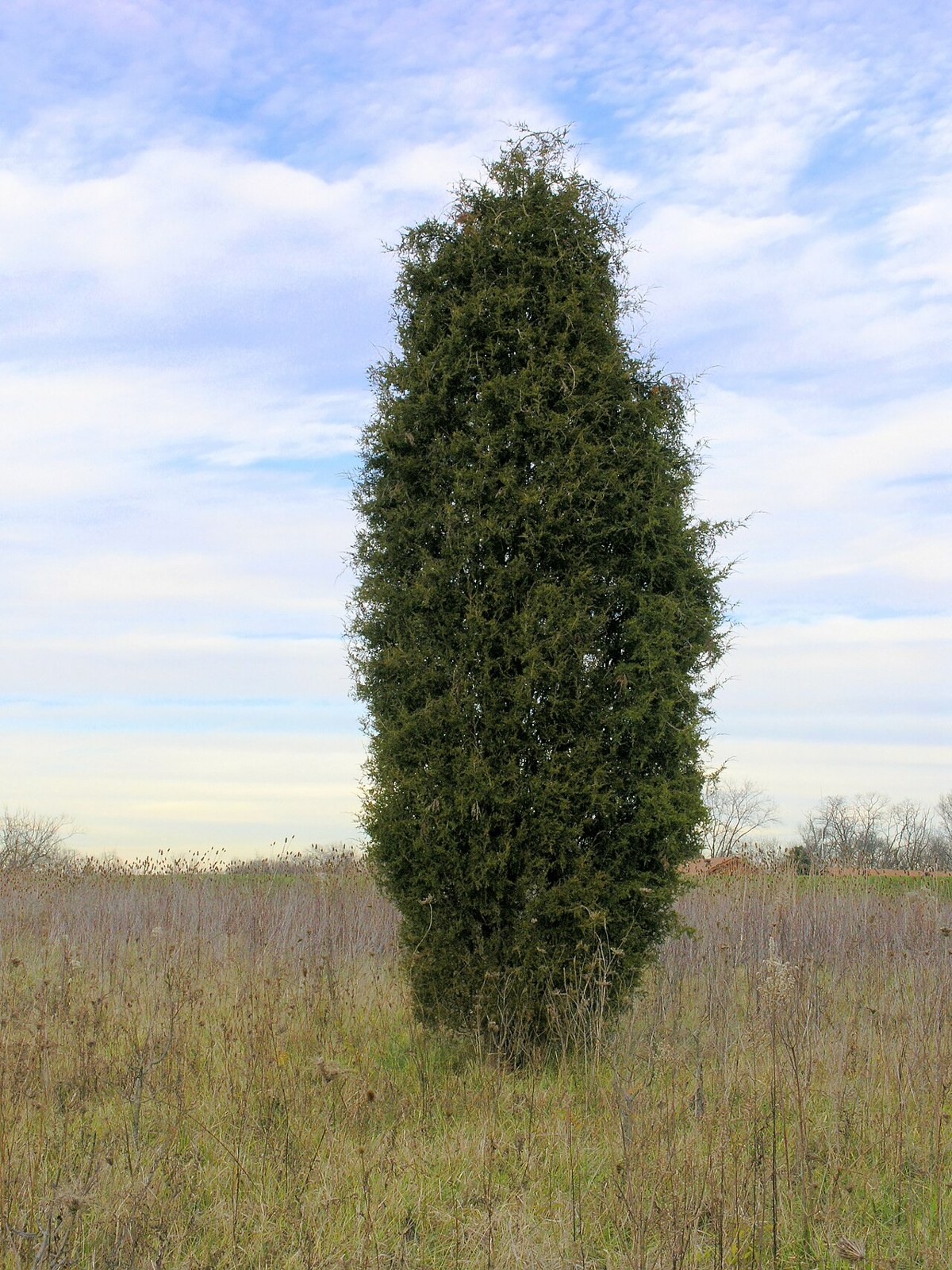
Junipers are evergreen conifers in the genus Juniperus, part of the cypress family (Cupressaceae). They range from ground-hugging mats a few inches tall to rugged trees of 50 feet or more, and they share one feature found in no other North American conifer group: their seed cones are small, fleshy and berry-like. These “juniper berries” ripen blue, blue-black, copper or red and feed a long list of birds and mammals through fall and winter.
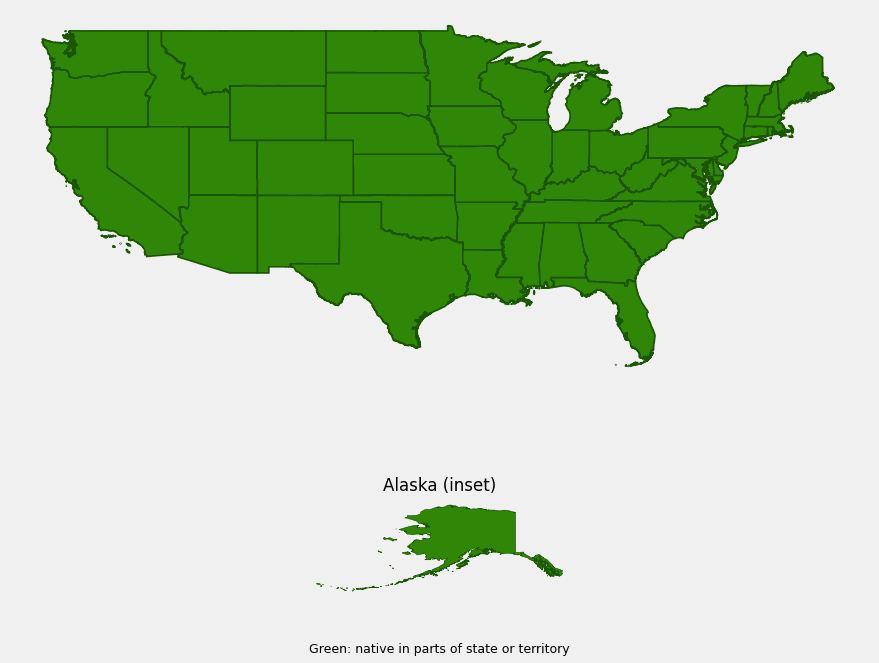
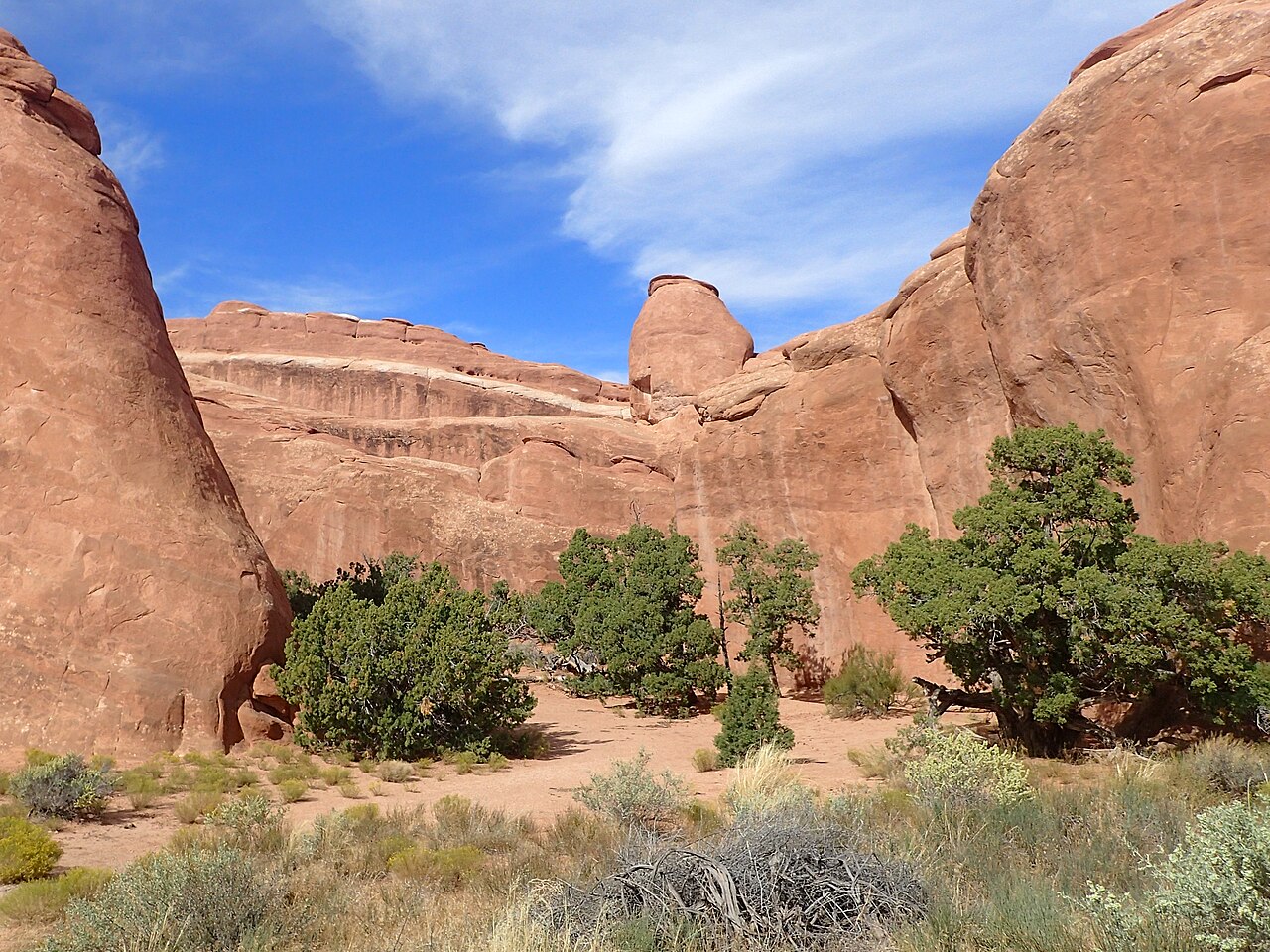
Roughly 50 to 70 juniper species grow around the Northern Hemisphere, and about 15 are native to the United States. Every state except Hawaii has at least one. In the East and Midwest the native juniper most people know is eastern red cedar, joined in the North by common juniper and creeping juniper. The West is juniper country: Utah juniper, one-seed juniper, western juniper and Rocky Mountain juniper cover millions of acres of dry foothills and plateaus, often mixed with pinyon pines in the “pinyon-juniper” woodlands of the Great Basin and Southwest.
Many evergreen guides, including our lists for Michigan and Missouri, simply say “juniper”. Most junipers sold at garden centers are actually Asian or European species and their cultivars, such as Chinese juniper ‘Spartan’ or ‘Blue Point’. This guide shows which junipers are native where you live, how to recognize them, and how to choose a native juniper instead of an import.
Identification
Junipers are easy to recognize as a group once you look at three things: the leaves, the cones and the bark.
Leaves
Juniper leaves come in two forms. Needle-like (awl-shaped) leaves are sharp, stiff and spread away from the twig; they are found on seedlings and young shoots of most species and on every shoot of common juniper, which keeps prickly needles in whorls of three all its life. Scale-like leaves are tiny, overlapping and pressed flat against the twig, so the shoots look like braided green cord. Adult eastern red cedar, Rocky Mountain juniper and most western tree junipers carry mostly scale leaves, often with a few prickly juvenile shoots mixed in. Many species have a small resin gland on the back of each scale; crushed foliage smells sharply resinous, like gin or cedar chests.
Cones (“berries”)
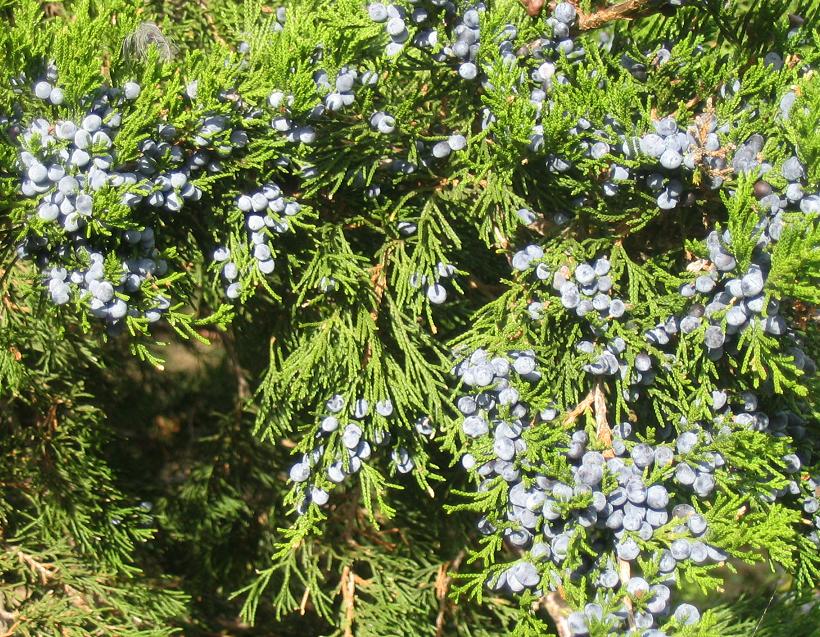
The female cones are the key identification feature. Their scales fuse into a soft, round, berry-like structure about 1/4 to 1/2 inch across, often covered with a waxy, powder-blue bloom. Depending on the species they take one or two seasons to ripen and hold one to several hard seeds. Color helps narrow down the species: blue to blue-black in eastern red cedar, common juniper and Rocky Mountain juniper; copper to reddish-brown in one-seed and California juniper; red to orange-red in redberry and Coahuila juniper. Most native junipers are dioecious (separate male and female plants), so only female plants bear berries; male plants produce tiny tan pollen cones that shed clouds of pollen in late winter or spring. Utah juniper is the notable exception and usually carries both on one tree.
Bark and shape
Juniper bark is thin, fibrous and reddish-brown to gray, peeling in long, shreddy strips. alligator juniper is the exception: its thick bark breaks into square plates like an alligator’s hide. Shapes vary enormously. Eastern red cedar is usually a narrow, dense column or pyramid; desert species such as Utah and one-seed juniper are multi-stemmed, rounded and often gnarled; common and creeping juniper are low, spreading shrubs.
Not to be confused with
Native arborvitae (Thuja) and the true cedars (Cedrus, all Old World) are sometimes confused with junipers. Arborvitae has flat, fan-like sprays of scale leaves and small woody cones; true cedars have needle clusters and large upright cones. Neither has berry-like cones.
Quick Facts
| Scientific Name | Juniperus (genus) |
| Family | Cupressaceae (Cypress) |
| U.S. Native Species | About 15 (counts vary as botanists split or lump species) |
| Plant Type | Evergreen coniferous trees and shrubs, including groundcovers |
| Mature Height | Under 1 ft (creeping juniper) to 30–60 ft (eastern red cedar, alligator juniper) |
| Growth Rate | Slow to moderate |
| Sun Exposure | Full sun; most thin out and decline in shade |
| Water Needs | Low once established; very drought tolerant |
| Soil Type | Well-drained; tolerates rocky, sandy, alkaline and poor soils; dislikes wet ground |
| Cones | Fleshy, berry-like; blue, copper or red depending on species |
| Fall Color | None (evergreen); some turn bronze or purplish in winter |
| Wildlife Value | Berries for birds and mammals; dense year-round cover and nest sites |
| Deer Resistant | Moderately; deer browse some species in hard winters |
| USDA Hardiness Zones | About 2–9 depending on species |
| Toxicity | Foliage and most berries are mildly toxic; savin juniper (non-native) is highly toxic |
Native Range
Junipers are native in every state except Hawaii, which makes them the most widespread native conifer group in the country. common juniper alone is the most widely distributed conifer in the world, growing across North America, Europe and Asia. In the U.S. it is native from Alaska and the western mountains across the northern states to New England, with scattered southern outposts.
East of the Rockies, eastern red cedar is the common native juniper from Maine and southern Ontario to Florida and west to the Dakotas, Nebraska, Kansas, Oklahoma and Texas. In Missouri it is the dominant native evergreen of glades, bluffs and old fields, and Ashe juniper reaches a few Ozark glades in the southwest of the state. In Michigan the native junipers are eastern red cedar in the south, plus common juniper and creeping juniper, which grows on Great Lakes dunes, limestone shores and rock outcrops.
The West holds most of the diversity. Rocky Mountain juniper grows from the northern Great Plains through the Rockies to the Southwest. Utah juniper dominates the Great Basin and Colorado Plateau, one-seed juniper covers New Mexico, Arizona, southern Colorado and west Texas, and western juniper and Sierra juniper grow in eastern Oregon, northeastern California and the Sierra Nevada. Texas has the most native species of any state, including Ashe, redberry, alligator, Coahuila and the rare drooping juniper.
In parts of the Great Plains, eastern red cedar is spreading into grasslands where wildfire no longer keeps it in check. It is native there, but in rangeland states such as Oklahoma, Kansas and Nebraska it is managed as a problem species. Western juniper is expanding into sagebrush steppe in Oregon in a similar way.
📋 Regional plant lists covering native juniper ranges: Maine, New Hampshire & Vermont · Southern New England · New York, Pennsylvania & Northern New Jersey · Delaware, Southern New Jersey & Long Island · Maryland, Virginia & West Virginia · North Carolina & South Carolina · Georgia, Alabama & Mississippi · Kentucky & Tennessee · Ohio & Indiana · Illinois, Iowa & Missouri · Michigan, Wisconsin & Eastern Minnesota · Arkansas, Louisiana, Eastern Oklahoma & East Texas · North Dakota, South Dakota & Western Minnesota · Nebraska, Kansas & Eastern Colorado · South & West Texas · Montana & Wyoming · Utah & Western Colorado · Arizona & New Mexico · Idaho, Eastern Oregon & Washington · Western Oregon & Washington · California & Nevada · Alaska
Native Species
These are the U.S.-native junipers with full growing guides on Plant Native. Click a name for range, care and wildlife details.
Eastern Red Cedar (Juniperus virginiana)
The common native juniper of the eastern half of the country, from Maine to Florida and west to the Great Plains. A dense, columnar or pyramidal tree usually 30–50 feet tall, with scale leaves, blue berries on female trees and aromatic reddish heartwood. Thrives in poor, dry or alkaline soil and full sun. The southern coastal form is sometimes treated as a separate variety, southern red cedar.
Common Juniper (Juniperus communis)
A low, spreading shrub, usually 1–4 feet tall in the U.S., with sharp needles in whorls of three, each marked with a single white band on the upper side. Native across the northern states, the Rockies, the Pacific Northwest and Alaska, often on rocky, sterile ground. Its berries are the ones used to flavor gin.
Creeping Juniper (Juniperus horizontalis)
A true native groundcover, typically 6–18 inches tall and spreading several feet, with long trailing branches. Native to dunes, shores, rocky barrens and northern prairies from Maine and the Great Lakes to the northern Plains, the northern Rockies and Alaska. Many popular groundcover junipers, including ‘Blue Rug’ (‘Wiltonii’) and ‘Bar Harbor’, are selections of this species.
Rocky Mountain Juniper (Juniperus scopulorum)
An upright tree, usually 20–40 feet, of dry foothills from the northern Great Plains through the Rockies to Arizona, New Mexico and west Texas. Similar to eastern red cedar but its berries take two seasons to ripen. Silvery-blue cultivars such as ‘Wichita Blue’ and ‘Moonglow’ are widely sold as narrow screening trees.
Utah Juniper (Juniperus osteosperma)
The dominant juniper of the Great Basin and Colorado Plateau, a broad, often multi-trunked tree 15–30 feet tall with shreddy gray bark and bluish to reddish-brown berries. Usually carries both male and female cones on the same tree. Extremely drought tolerant and long-lived.
One-seed Juniper (Juniperus monosperma)
A shrubby, multi-stemmed tree of New Mexico, Arizona, southern Colorado, the Oklahoma Panhandle and west Texas. As the name says, each copper to bluish berry usually holds a single seed. A key partner of pinyon pine in southwestern woodlands.
Western Juniper (Juniperus occidentalis)
The juniper of the high desert in eastern Oregon, southwestern Idaho, northeastern California and parts of Washington and Nevada. A stout tree 15–30 feet tall with blue-black berries. Ancient specimens grow on rimrock, while younger trees have spread into sagebrush where fire has been suppressed.
Sierra Juniper (Juniperus grandis)
Formerly treated as a variety of western juniper. A massive, slow-growing tree of granite slopes in the Sierra Nevada of California and western Nevada, famous for ancient, wind-sculpted giants with reddish, shreddy bark.
Ashe Juniper (Juniperus ashei)
The “mountain cedar” of the Texas Hill Country, also native in Oklahoma, Arkansas and southwest Missouri. A multi-stemmed tree 15–30 feet tall with blue berries. Its heavy winter pollen causes “cedar fever” allergies in central Texas, but its shreddy bark is the essential nesting material of the endangered golden-cheeked warbler.
Redberry Juniper (Juniperus pinchotii)
A shrubby juniper of west and central Texas, western Oklahoma and southeastern New Mexico with red to copper berries. Unlike most junipers, it resprouts from the base after it is cut or burned.
Alligator Juniper (Juniperus deppeana)
A large juniper of the mountains of Arizona, New Mexico and the Trans-Pecos of Texas, recognized at once by its thick bark broken into square plates like alligator hide. Berries are large and reddish-brown with a waxy bloom.
California Juniper (Juniperus californica)
A shrub or small tree of dry slopes and desert edges in California, with scattered populations in southern Nevada and northwestern Arizona. Berries are bluish when young, ripening reddish-brown.
Coahuila Juniper (Juniperus coahuilensis)
A shrubby juniper of grasslands and desert hills in southern Arizona, southern New Mexico and west Texas, extending into Mexico. Its berries are rose-red to orange, with a thin bloom.
Drooping Juniper (Juniperus flaccida)
A graceful Mexican juniper with weeping branch tips. In the U.S. it grows only in the Chisos Mountains of Big Bend National Park in Brewster County, Texas.
Seaside Juniper (Juniperus maritima)
Described as a separate species only in 2007, this close relative of Rocky Mountain juniper grows on rocky shores and dry bluffs around the Salish Sea in western Washington and southwestern British Columbia.
Other native junipers without their own Plant Native guide yet include Arizona juniper (Juniperus arizonica), a close relative of Coahuila juniper found in Arizona and New Mexico, and several varieties of the species above that some botanists treat as separate species.
Non-Native Look-Alikes
Most junipers in garden centers and foundation plantings are imported species or hybrids. None of the ones below is a significant invasive in the United States, but they offer less to native wildlife than a local native juniper does, and they are a reason why “juniper” on a plant tag tells you very little.
Chinese Juniper (Juniperus chinensis)
Native to China, Japan and Korea, Chinese juniper is the source of the most-planted upright landscape junipers in America. ‘Spartan’ is a dense, rich green column often used as a narrow screen, and ‘Blue Point’ is a compact, blue-gray pyramid. The spreading Pfitzer junipers, ‘Sea Green’ and ‘Hetzii’, also belong to Chinese juniper or its hybrids. Chinese juniper usually carries both scale and needle leaves on the same plant and has small, bluish to brownish berries. In the East, plant eastern red cedar for a similar upright form; in the West, choose Rocky Mountain juniper.
Savin Juniper (Juniperus sabina)
A low, spreading shrub from the mountains of Europe and Asia, sold as cultivars such as ‘Broadmoor’, ‘Buffalo’ and ‘Calgary Carpet’. Its crushed foliage has a strong, unpleasant smell. Savin juniper is highly poisonous to people and livestock and should never be used for food or home remedies. Native alternatives for the same low, spreading habit are creeping juniper and common juniper.
Shore Juniper (Juniperus conferta)
A trailing groundcover from the sandy coasts of Japan, now often classified as Juniperus rigida subsp. conferta. Popular cultivars include ‘Blue Pacific’ and ‘Emerald Sea’. It has soft but sharp-tipped, bright green to blue-green needles and is widely used on banks and beach landscapes along the Atlantic coast. Creeping juniper is the native groundcover choice in the North; in the Southeast, where no native groundcover juniper grows, native groundcovers other than junipers are better matches.
Other imports
Japanese garden juniper (J. procumbens, including ‘Nana’), singleseed juniper (J. squamata, including the silver-blue ‘Blue Star’) and the European forms of common juniper are also widely sold. European common juniper is the same species as the American native, but nursery cultivars such as ‘Hibernica’ and ‘Gold Cone’ are European selections.
Growing & Care Guide
Choosing a native juniper for your region
Northeast, Mid-Atlantic, Southeast and Midwest: eastern red cedar for an upright tree or screen, plus common juniper or creeping juniper for low, spreading cover in the northern states. Missouri gardeners should start with eastern red cedar; it is the native juniper behind most of the state’s evergreen glades and handles heat, drought and clay that defeat other evergreens. Michigan gardeners can use all three. Great Plains and Rockies: Rocky Mountain juniper, plus creeping juniper in the north. Southwest and Great Basin: Utah juniper, one-seed juniper and alligator juniper. Texas: Ashe juniper in the Hill Country, redberry juniper farther west, or eastern red cedar in the east. Pacific Northwest: Rocky Mountain juniper or seaside juniper west of the Cascades, western juniper east of them. California: California juniper or Sierra juniper.
Light
All junipers want full sun. In shade they become thin and open, lose their inner foliage and are more prone to disease. Give them at least six hours of direct sun.
Soil & Water
Junipers are among the toughest evergreens for dry, rocky, sandy, shallow or alkaline soils, including limestone glades and road cuts. What they cannot tolerate is poor drainage; standing water and heavy, wet clay cause root rot. Water new plantings regularly through the first summer, then rely on rainfall except in extreme drought. Do not fertilize junipers in lean native soils.
Planting Tips
Plant container-grown junipers in spring or early fall, setting the root ball level with the surrounding soil. Junipers develop deep taproots and resent being moved once established. Space upright types according to their mature width: eastern red cedar and Rocky Mountain juniper spread 8–20 feet. If you want berries, plant several seedlings or include a known female plant; a male tree nearby is needed for fruit set.
Pruning & Maintenance
Prune lightly, cutting back to a green side shoot. Most junipers do not resprout from bare, leafless wood, so shearing too hard into old growth leaves permanent bare patches. Redberry juniper is an exception that resprouts from the base. Remove dead or crossing branches in late winter.
Pests & Diseases
Eastern red cedar and Rocky Mountain juniper are alternate hosts of cedar-apple rust and related rusts. In spring, orange, jelly-like galls appear on the juniper and release spores that spot the leaves and fruit of apples, crabapples, hawthorns and serviceberries. The rust rarely harms the juniper. Where you grow apples, choose rust-resistant apple varieties or keep the two at a distance. Bagworms and Phomopsis or Kabatina tip blight can also affect junipers, especially in humid regions or dense plantings.
Landscape Uses
Upright native junipers make long-lived windbreaks, screens and wildlife hedgerows. Low natives cover slopes, rock gardens and sunny banks. Junipers are also standard choices for xeriscapes and for restoring glades and barrens.
Wildlife & Ecological Value
For Birds
Juniper berries are a winter staple for dozens of birds. The cedar waxwing is named for its fondness for eastern red cedar fruit, and eastern bluebirds, American robins, yellow-rumped warblers, northern mockingbirds and wild turkeys eat them heavily. In the West, Townsend’s solitaires defend juniper patches as winter feeding territories, and the pinyon jay and juniper titmouse depend on pinyon-juniper woodlands. Dense juniper foliage gives roosting and nesting cover to songbirds year round. In Texas, the endangered golden-cheeked warbler builds its nest almost entirely from the shredded bark of mature Ashe juniper.
For Butterflies
Native junipers are the caterpillar host plants of the juniper hairstreak (Callophrys gryneus), a small green butterfly that spends most of its life in the crowns of eastern red cedar and its western relatives.
For Mammals
Foxes, coyotes, raccoons, opossums and other mammals eat the berries and spread the seeds. Deer browse juniper foliage, mainly in hard winters, and use dense stands for shelter. In the West, juniper woodlands are important winter range for mule deer.
Ecosystem Role
Junipers are pioneers. Birds drop the seeds along fence lines and in old fields, and eastern red cedar is often the first tree to colonize abandoned farmland in the East. Without fire, that same ability lets native junipers spread into prairies and sagebrush, so prairie restorations often include cutting or burning young cedars.
Cultural & Historical Uses
Eastern red cedar’s fragrant, rot-resistant heartwood was long used for fence posts, cedar chests and closets, and pencils. Juniper wood and foliage have ceremonial importance for many Native American nations, and western junipers supplied posts, fuel and bark fiber. The berries of common juniper, mostly harvested in Europe, are the traditional flavoring of gin and are used sparingly as a spice. That use is specific to common juniper; do not eat the berries of other junipers, which can be bitter, resinous and mildly toxic.
Frequently Asked Questions
Which junipers are native to the United States?
About 15, including eastern red cedar, common juniper, creeping juniper, Rocky Mountain juniper, Utah juniper, one-seed juniper, western juniper and Ashe juniper. Every state except Hawaii has at least one native juniper.
Is eastern red cedar really a juniper?
Yes. Despite its name, eastern red cedar is Juniperus virginiana, a juniper. True cedars (Cedrus) are Old World trees, and several unrelated North American conifers also carry the name “cedar”.
Which juniper is native to Missouri?
eastern red cedar is Missouri’s native juniper and one of the most common trees in the state. Ashe juniper also reaches a few glades in southwest Missouri. Spartan and Blue Point junipers are Chinese imports.
Which junipers are native to Michigan?
Three: eastern red cedar, mainly in the southern Lower Peninsula, plus common juniper and creeping juniper, which grow on dunes, shores and rocky ground in the north.
Are juniper berries edible?
Only common juniper berries are traditionally used, in small amounts, as a spice and gin flavoring. Other junipers can be bitter and mildly toxic, and savin juniper is highly poisonous. Do not eat berries from a juniper you cannot identify with certainty, and do not use them during pregnancy.
Are junipers invasive?
The common imported junipers are not significant invasives in the U.S. Native eastern red cedar and western juniper can spread aggressively into grasslands and sagebrush where fire is suppressed, so they are managed on rangeland even within their native range.

Looking for a nursery that carries Native Junipers?
Browse our native plant nursery directory: Alabama, Alaska, Arizona & Arkansas · California · Colorado, Connecticut, Delaware, Florida & Georgia · Idaho, Illinois, Indiana, Iowa & Kansas · Kentucky, Louisiana, Maine, Maryland, Massachusetts, Michigan, Minnesota, Mississippi, Missouri & Montana · Nebraska, Nevada, New Hampshire, New Jersey, New Mexico, New York, North Carolina, North Dakota, Ohio & Oklahoma · Oregon · Pennsylvania, Rhode Island, South Carolina, South Dakota, Tennessee, Texas, Utah, Vermont & Virginia · Washington · West Virginia, Wisconsin & Wyoming

