
Fairy Slipper Orchid (Calypso bulbosa)
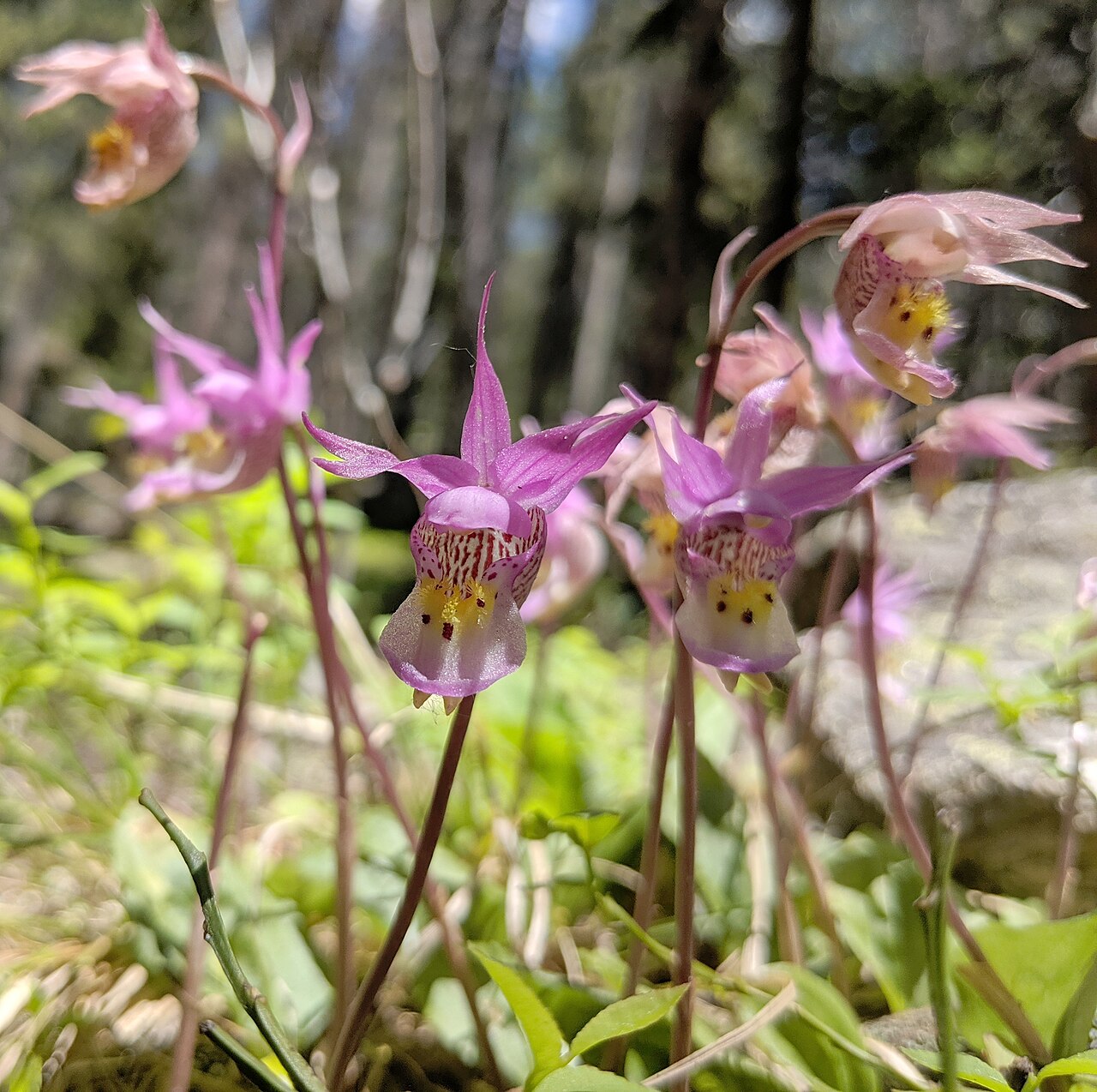
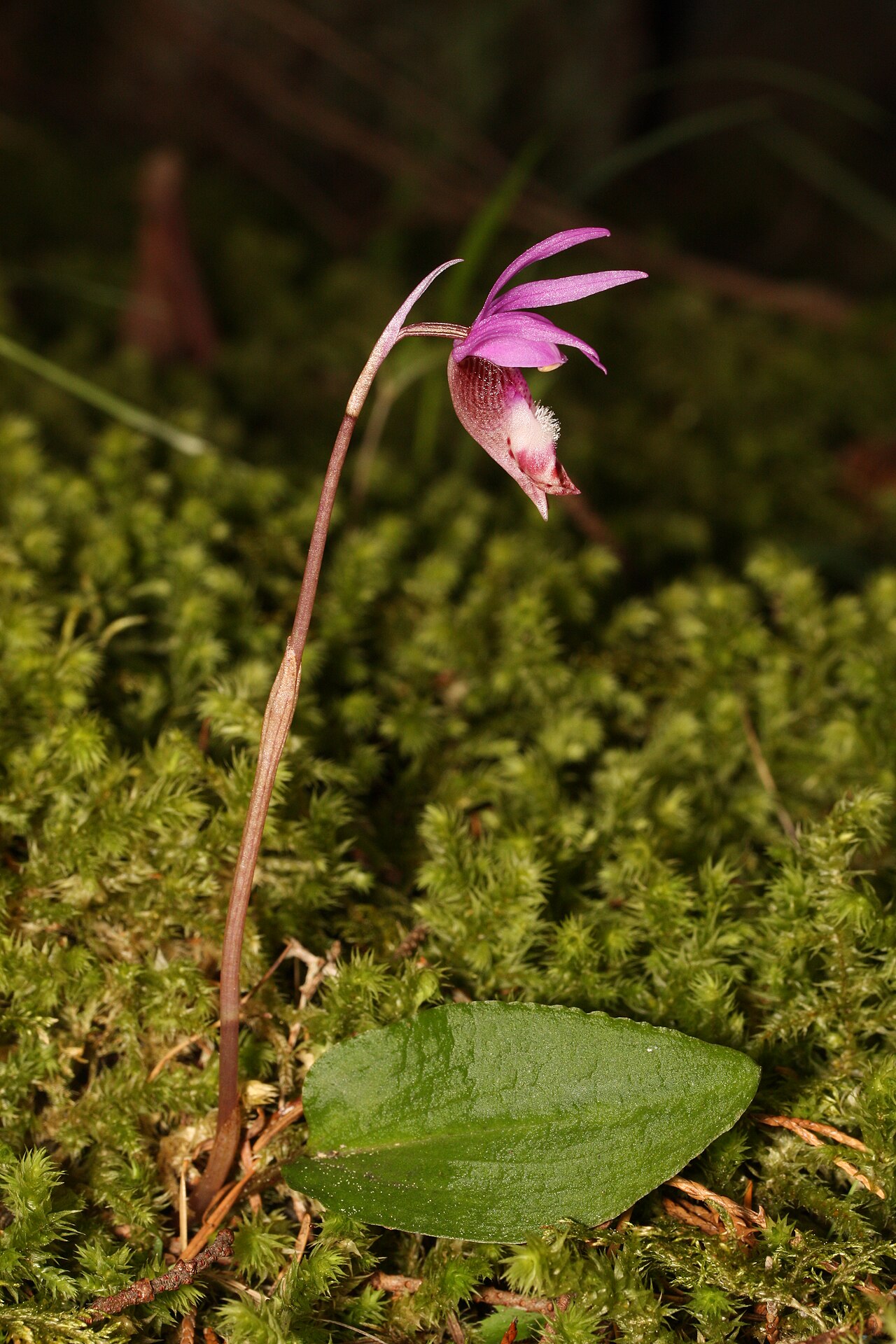
Calypso bulbosa, the Fairy Slipper Orchid, also called calypso orchid or Venus’s slipper, is a small, exquisite native orchid of cool, mossy conifer forests. Each plant has a single oval leaf and one nodding pink to magenta flower, 3 to 8 inches tall, with a slipper-shaped lip decorated with purple streaks and spots and a tuft of yellow or white hairs. It blooms in spring, often just after the snow melts.
The fairy slipper grows across the cool forests of the Northern Hemisphere, from Scandinavia across northern Asia to North America. In the United States it grows in Alaska, throughout the mountains of the West from Washington and California to Arizona and New Mexico, and across the northern Great Lakes states to northern New England. It is common in parts of the Pacific Northwest and Rocky Mountains but rare and protected in many eastern states.
Never dig or pick fairy slippers. The plant grows from a tiny corm with a few very shallow roots and depends on soil fungi; it almost never survives being transplanted, and picking the flower often kills the plant. It is not available as legally propagated nursery stock, so this page is an identification and appreciation guide: enjoy it on the trail, and stay on the path so you do not trample plants.
Identification
Look in spring on a mossy, shaded conifer forest floor for a single nodding pink flower with a pouch-like lip, standing above one dark green, oval leaf.
Growth Habit
The fairy slipper grows from a small, round to egg-shaped corm (the “bulb” of bulbosa) buried in moss or duff, with a few slender, fleshy roots. Each corm produces a single leaf in late summer or fall, which lasts through the winter and withers soon after flowering. A single flowering stem rises 3 to 8 inches in spring. Plants grow singly or in small, scattered groups.
Leaves
The one leaf is oval to egg-shaped, 1 to 2 1/2 inches long, dark green and slightly pleated, with a wavy edge, lying flat or nearly so on the ground at the base of the stem. It is often purplish underneath.
Flowers
Each stem holds one nodding flower about 1 to 1 1/2 inches long. The three sepals and two petals are narrow, pointed and pink to magenta, spreading upward like rays. The lip is a pale, inflated, slipper-shaped pouch streaked and spotted with purple and red inside, with two small “horns” at the tip and an apron-like flap at the front with a patch of hairs. It is sweetly fragrant. Flowers bloom from March at low elevations in California and the Pacific Northwest to June and early July in the mountains, northern states and Alaska.
Varieties
Two varieties grow in the United States. The widespread var. americana, from Alaska and the Rocky Mountains east to New England, has bright yellow hairs on the lip apron and weaker spotting. Var. occidentalis, of the Pacific Coast from southern British Columbia to northern California, has white to pale lavender hairs and heavier purple spotting, and it blooms earlier.
Look-alikes
No other North American plant looks quite like it. Lady’s slipper orchids, such as pink lady’s slipper and mountain lady’s slipper, are much larger, have two or more large leaves and a big, rounded pouch. Coralroots grow in the same forests but have no green leaves and many small flowers on each stem.
Quick Facts
| Scientific Name | Calypso bulbosa |
| Family | Orchidaceae (orchid family) |
| Plant Type | Perennial terrestrial orchid from a corm |
| Mature Height | 3–8 in |
| Mature Spread | 2–3 in (single plant) |
| Growth Rate | Very slow |
| Sun Exposure | Part shade to full shade |
| Water Needs | Medium; cool, moist, well-drained duff |
| Soil Type | Moss, decaying needles and woody humus over well-drained soil |
| Soil pH | Slightly acidic to neutral; varies by region |
| Bloom Time | March–July (spring, soon after snowmelt) |
| Flower Color | Pink to magenta; white lip with purple streaks and yellow or white hairs |
| Fall Color | None; leaf appears in fall and overwinters |
| Fruit | Upright capsule with thousands of dust-like seeds |
| Deer Resistant | No |
| USDA Hardiness Zones | 2–7 |
Native Range
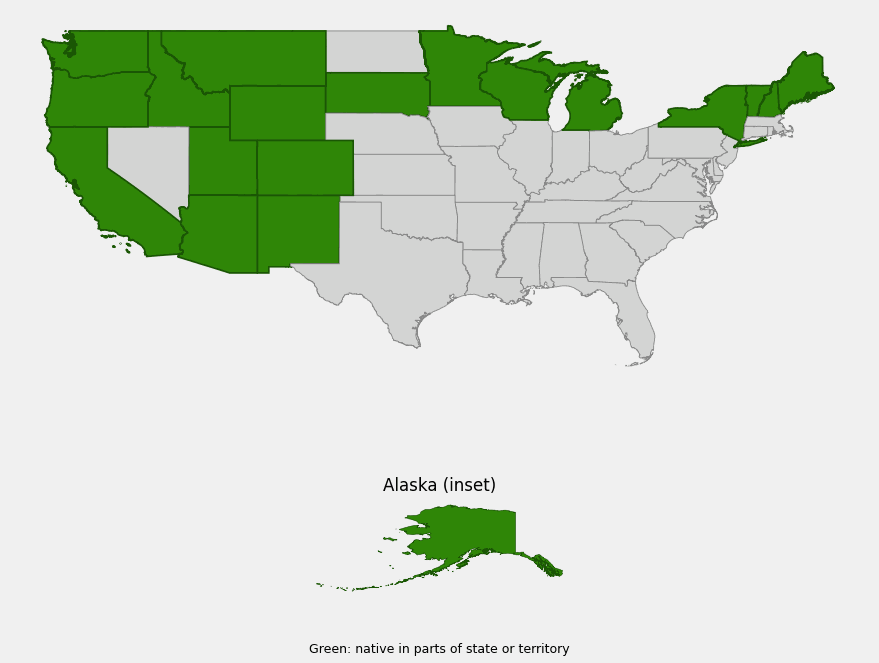
The fairy slipper has a circumboreal range. In North America it grows from Alaska and the Yukon across the boreal forest of Canada to Newfoundland. USDA PLANTS lists it as native in Alaska and 18 of the lower 48 states: Washington, Oregon, California, Idaho, Montana, Wyoming, Utah, Colorado, Arizona, New Mexico, South Dakota, Minnesota, Wisconsin, Michigan, New York, Vermont, New Hampshire and Maine.
It is most common in the Pacific Northwest, the northern Rocky Mountains and Alaska. In California it grows in coastal and northern forests, and in the Southwest it reaches the high mountains of Arizona and New Mexico, while in South Dakota it grows in the Black Hills. In the Great Lakes states and northern New England it is found in cool cedar swamps, conifer forests and along Lake Superior, but it is rare at the southern edge of its range there, and several states list it as threatened or endangered.
Across its range it grows in moist, shaded, undisturbed conifer and mixed forests with a deep layer of moss and decaying needles, often under spruce, fir, hemlock, Douglas-fir, northern white cedar or lodgepole pine, from near sea level in the Pacific Northwest to about 11,000 feet in the southern Rocky Mountains.
📋 Regional plant lists featuring Fairy Slipper Orchid: Alaska · Western Oregon & Western Washington · Idaho, Eastern Oregon & Eastern Washington · California & Nevada · Montana & Wyoming · Utah & Western Colorado · Arizona & New Mexico · North Dakota, South Dakota & Western Minnesota · Michigan, Wisconsin & Eastern Minnesota · New York, Pennsylvania & Northern New Jersey · Delaware, Southern New Jersey & Long Island · New Hampshire, Maine & Vermont
Can You Grow It?
Realistically, no. Fairy slippers are not sold as legally propagated nursery plants, and wild plants must never be dug: they depend on specific soil fungi and almost always die after transplanting. Many plants have been lost to picking and digging along trails. The best way to enjoy them is in the wild, and the best way to help them is to protect the old, undisturbed forests where they grow.
Light
In the wild it grows in deep to partial shade under conifers, often in dappled light at forest edges or in small openings.
Soil & Water
It roots in a thin layer of moss, decaying needles and rotting wood that stays cool and moist in spring and dries out in summer, when the plant is dormant. Like most orchids, it depends on soil fungi (mycorrhizae) for nutrients, especially as a seedling.
Planting Tips
Do not plant or transplant it. If you own land where it grows, the best “gardening” is to leave the forest floor alone: avoid raking, compacting, clearing the canopy or adding fertilizer, mulch or lime.
Pruning & Maintenance
Never pick the flower or the leaf. The single leaf feeds the corm for the following year, so picking either weakens or kills the plant. Keep to trails, and keep dogs on leash in places where it grows.
Propagation
It reproduces from dust-like seed that needs the right fungus to germinate, and plants take several years to reach flowering size. Laboratory propagation for research or conservation is possible, but plants are not in the nursery trade. Never buy plants offered as collected from the wild.
Where to See It
- National parks and forests: Olympic, Mount Rainier, Glacier, Rocky Mountain and Denali national parks and many national forests
- Pacific Northwest trails: often common in mossy Douglas-fir and hemlock forests in early spring
- Rocky Mountains: spruce-fir and lodgepole pine forests from May to July
- Great Lakes and New England: rare in cedar swamps and conifer forests; visit with care
- Wildflower walks: guided walks with native plant societies in spring
Wildlife & Ecological Value
The fairy slipper is part of the rich, mossy floor of old conifer forests, and it has a remarkable relationship with bumblebees.
For Pollinators
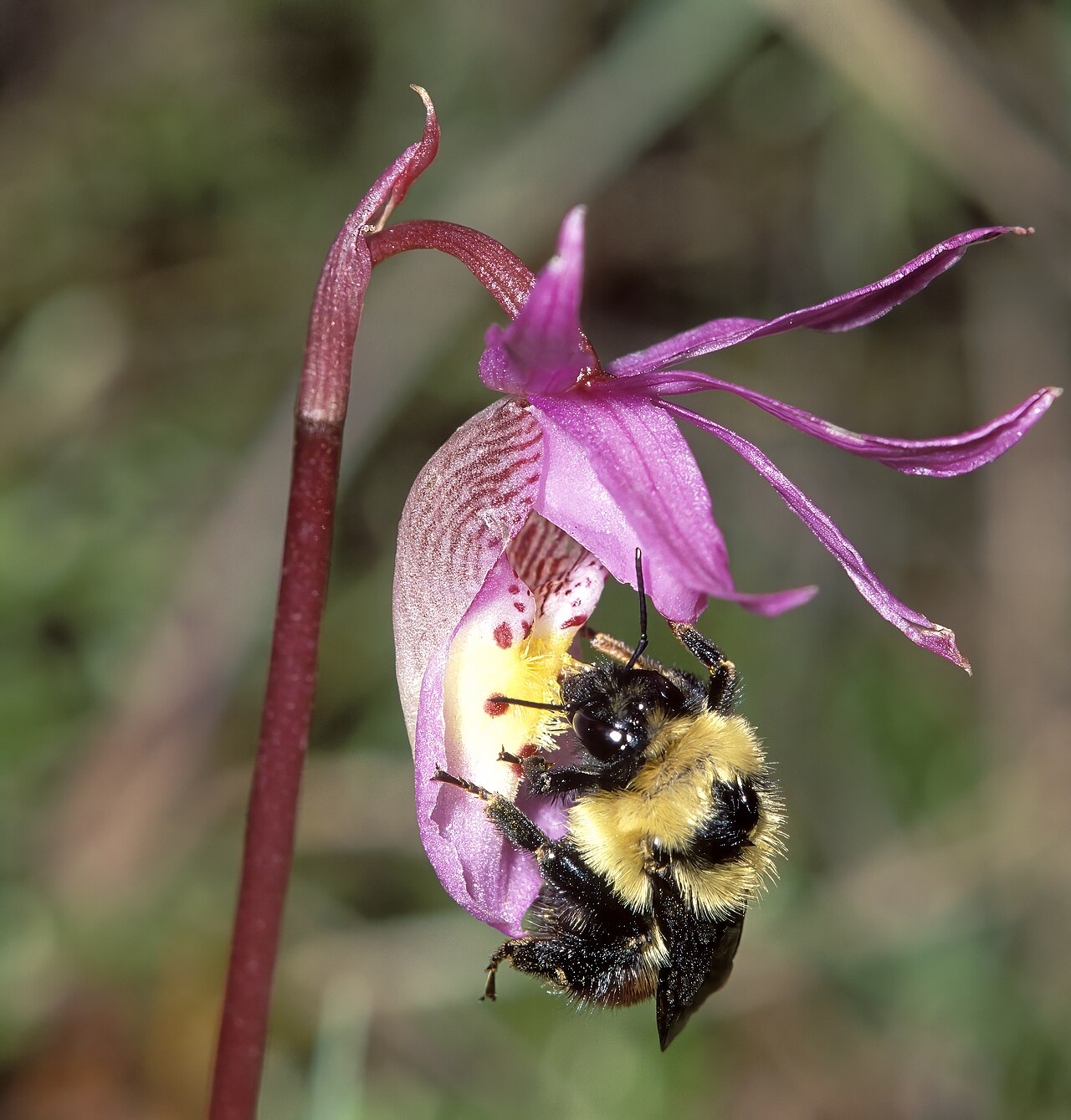
It is pollinated mainly by queen bumblebees in early spring. The flower is fragrant and showy, with yellow hairs that look like pollen, but it offers no nectar or food. Inexperienced young queens crawl into the slipper looking for nectar and pick up the pollen packet on their backs. Bees soon learn to avoid it, so many flowers go unpollinated.
For Birds
Birds do not use the plant directly, but it grows in the same mature forests used by grouse, thrushes, warblers and other forest birds.
For Mammals
Deer, elk and small mammals sometimes eat the leaves, flowers and corms.
Ecosystem Role
As a mycorrhizal orchid it is tied into the fungal network of the forest floor. It is sensitive to logging, fire, trampling and soil disturbance, and its presence is a sign of an old, undisturbed forest with a deep, healthy moss and duff layer.
Cultural & Historical Uses
The genus is named for Calypso, the sea nymph of Homer’s Odyssey who kept Odysseus on her hidden island, a reference to the orchid’s beauty and its habit of hiding in secluded forests. Bulbosa refers to its bulb-like corm.
Some Indigenous peoples of western North America ate the small, starchy corms, which are reported to have a rich, buttery flavor, although digging them destroys the plant. Today it is valued mainly as one of the most beloved spring wildflowers of the northern forests.
Because it is so beautiful and so easily killed by picking and digging, the fairy slipper has become a symbol of the need to leave wildflowers where they grow. It is protected or listed as rare in several states, and it is a protected species in some European countries.
Frequently Asked Questions
Can I transplant a fairy slipper orchid into my garden?
No. It depends on specific soil fungi, and it nearly always dies when moved. It is also protected in several states. Enjoy it where it grows.
Is it OK to pick a fairy slipper flower?
No. Picking the flower or the single leaf often kills the plant, because the leaf feeds the corm for next year.
When does the fairy slipper bloom?
In spring, from March at low elevations in California and the Pacific Northwest to June and early July in the mountains and in Alaska.
How is the fairy slipper pollinated?
By young queen bumblebees, which are fooled by its color, scent and pollen-like yellow hairs into visiting a flower that has no nectar.
Where can I see fairy slipper orchids?
In moist, mossy conifer forests of Alaska, the Pacific Northwest, the Rocky Mountains and the northern Great Lakes and New England states, especially in national parks and forests.

Looking for a nursery that carries Fairy Slipper Orchid?
Browse our native plant nursery directory: Alaska & Arizona · California · Colorado · Idaho · Maine, Michigan, Minnesota & Montana · New Hampshire, New Mexico & New York · Oregon · South Dakota, Utah & Vermont · Washington · Wisconsin & Wyoming

