
Tussock Cottongrass (Eriophorum vaginatum)
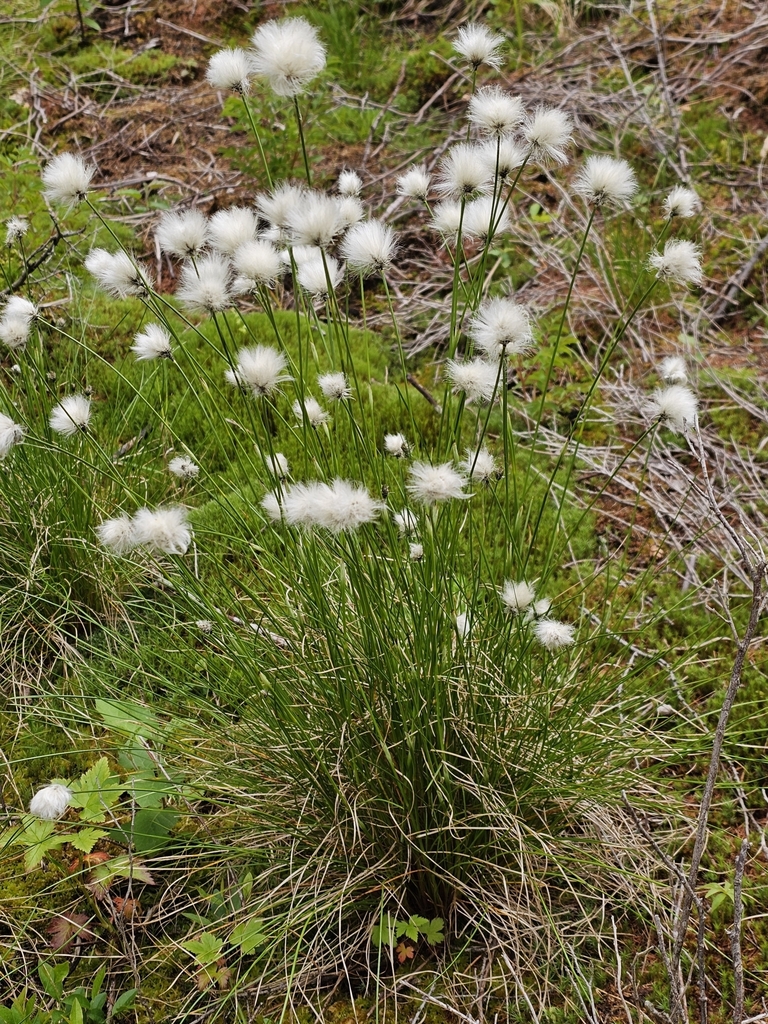
Eriophorum vaginatum, known as Tussock Cottongrass or hare’s-tail cottongrass, is a grass-like sedge of bogs and tundra. It grows in dense, rounded tussocks of very fine, wiry leaves, and in spring each stem carries a single spike that ripens into a round, fluffy white head of cotton-like bristles. It is a member of the sedge family (Cyperaceae), not a true grass.
Tussock cottongrass is one of the defining plants of the North. Across Alaska’s North Slope and much of the Arctic it forms tussock tundra, mile after mile of knee-high tussocks, and its early flower heads are a key spring food for caribou. Farther south it grows in sphagnum bogs of the Great Lakes, New England and the Northeast.
For gardeners in cool climates, it is a striking plant for a bog garden or the wet edge of a pond, where its white tufts in late spring catch the light. It needs constantly wet, acidic, peaty soil.
Identification
Look for dense tussocks of thread-like leaves in a bog or wet tundra, with stems that each carry a single cottony white head in late spring and early summer, and an inflated, papery sheath on the upper stem.
Growth Habit
Tussock cottongrass forms dense, upright clumps that build up over many years into raised tussocks, often a foot or more tall and wide, made of living shoots on top of old leaf bases and roots. The flowering stems are 8 to 24 inches tall, round to slightly three-sided, and smooth.
Leaves
The basal leaves are very narrow, almost thread-like, and wiry, about 1/16 inch wide, and grow in dense tufts. Leaves on the flowering stems are reduced to one or two inflated, papery sheaths with little or no blade. Old leaves persist as brown thatch around the base of the tussock.
Flowers
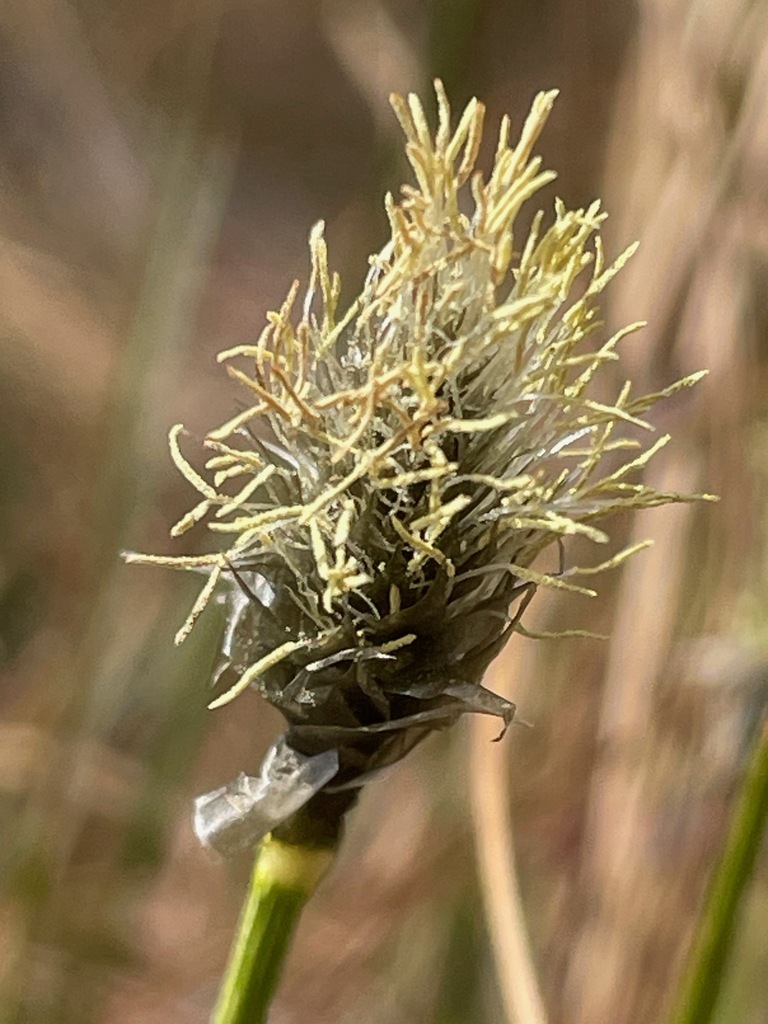
Each stem ends in a single, egg-shaped spikelet about 1/2 to 1 inch long, with gray to blackish scales and pale yellow anthers. It flowers very early, from April to June, often while the bog is still cold. There are no leafy bracts below the spike, unlike other cottongrasses.
Fruit & Seeds
After flowering, the bristles around each tiny fruit lengthen into bright white, silky hairs, forming a round head 1 to 2 inches across, usually in late May to July. Each head looks like a cotton ball. The small, dark seeds are carried off by the wind on these bristles.
Look-alikes
Common cottongrass has several drooping cotton heads per stem and flat, wider leaves, and it spreads by runners rather than forming tussocks. Tawny cottongrass has a cluster of tawny to rusty-brown heads with leafy bracts beneath and blooms later in summer. Tussock cottongrass’s single white head per stem, inflated stem sheath and dense tussocks set it apart.
Quick Facts
| Scientific Name | Eriophorum vaginatum |
| Family | Cyperaceae (sedge family) |
| Plant Type | Tussock-forming perennial sedge |
| Mature Height | 8–24 in |
| Mature Spread | 6–18 in |
| Growth Rate | Slow to moderate |
| Sun Exposure | Full sun |
| Water Needs | High; constantly wet |
| Soil Type | Wet, acidic peat or sphagnum; tundra soils |
| Soil pH | Strongly acidic (about 3.5–5.5) |
| Bloom Time | April–June; cotton heads late May–July |
| Flower Color | Inconspicuous gray-black scales and yellow anthers; white cotton in fruit |
| Fall Color | Tan to golden |
| Fruit | Tiny achene with long white bristles |
| Deer Resistant | Yes in gardens; grazed by caribou in the wild |
| USDA Hardiness Zones | 1–6 |
Native Range
Tussock cottongrass is circumboreal, growing across northern Europe, Asia and North America. In North America it ranges throughout Alaska and Canada, from Yukon and the Arctic to Labrador, Newfoundland and the Maritimes. Plants of Alaska and the Northwest are usually treated as subspecies vaginatum, and those of eastern North America as subspecies or variety spissum.
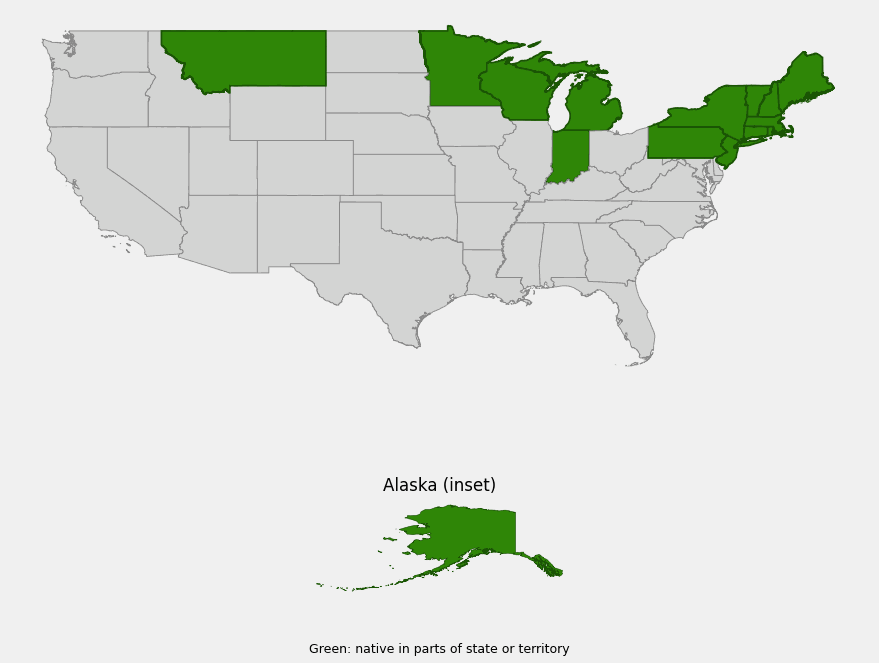
USDA PLANTS lists it as native in Alaska, Montana, Minnesota, Wisconsin, Michigan, Indiana, New York, Pennsylvania, New Jersey, Vermont, New Hampshire, Maine, Massachusetts, Connecticut and Rhode Island. In Alaska it covers vast areas of tundra. Elsewhere it is a bog plant, fairly common in the northern Great Lakes states and northern New England and increasingly rare toward the southern edge of its range in Indiana, Pennsylvania, New Jersey, Connecticut and Rhode Island. Montana’s records are outlying ones, far west of its main range.
It grows in sphagnum bogs, poor fens, muskeg, black spruce and tamarack peatlands, and wet to moist Arctic and alpine tundra, almost always on acidic, nutrient-poor peat.
📋 Regional plant lists featuring Tussock Cottongrass: Alaska · Michigan, Wisconsin & Eastern Minnesota · Ohio & Indiana · Montana & Wyoming · Connecticut, Massachusetts & Rhode Island · New Hampshire, Maine & Vermont · New York, Pennsylvania & Northern New Jersey · Delaware, Southern New Jersey & Long Island
Growing & Care Guide
Tussock cottongrass is a specialist plant for bog gardens, pond margins and container bogs in cool climates. It is offered by some bog and water-garden nurseries. Buy nursery-grown plants; never dig tussocks from wild bogs, which are slow-growing and easily damaged, and rare in several states.
Light
Full sun. It tolerates very light shade but flowers and fruits best in the open.
Soil & Water
Plant it in permanently wet, acidic, nutrient-poor soil: a mix of peat (or a peat substitute) and sand, kept saturated, ideally with rainwater. Avoid fertilizer, lime and hard tap water, which harm it. It never needs to dry out and does poorly in heat; it is best in zones 1 to 6.
Planting Tips
Use it in a lined bog garden, the boggy edge of a pond or a large container bog with drainage only near the top. Plant it with other bog natives such as purple pitcher plant, leatherleaf and bog rosemary. Give it full sun and keep it away from tall plants.
Pruning & Maintenance
Little care is needed. You can comb out dead leaves in spring, but leaving the thatch protects the crown. Keep the soil wet, especially in summer.
Propagation
Divide tussocks in early spring. It also grows from fresh seed sown on the surface of wet peat and kept constantly moist; seedlings take a few years to form flowering tussocks.
Landscape Uses
- Bog gardens: white cotton heads in late spring above fine, grassy foliage
- Pond margins: for the permanently wet, acidic edge of a pond
- Container bogs: a clump in a large, wet container of peat and sand
- Peatland restoration: used to revegetate bare peat in restored bogs
Wildlife & Ecological Value
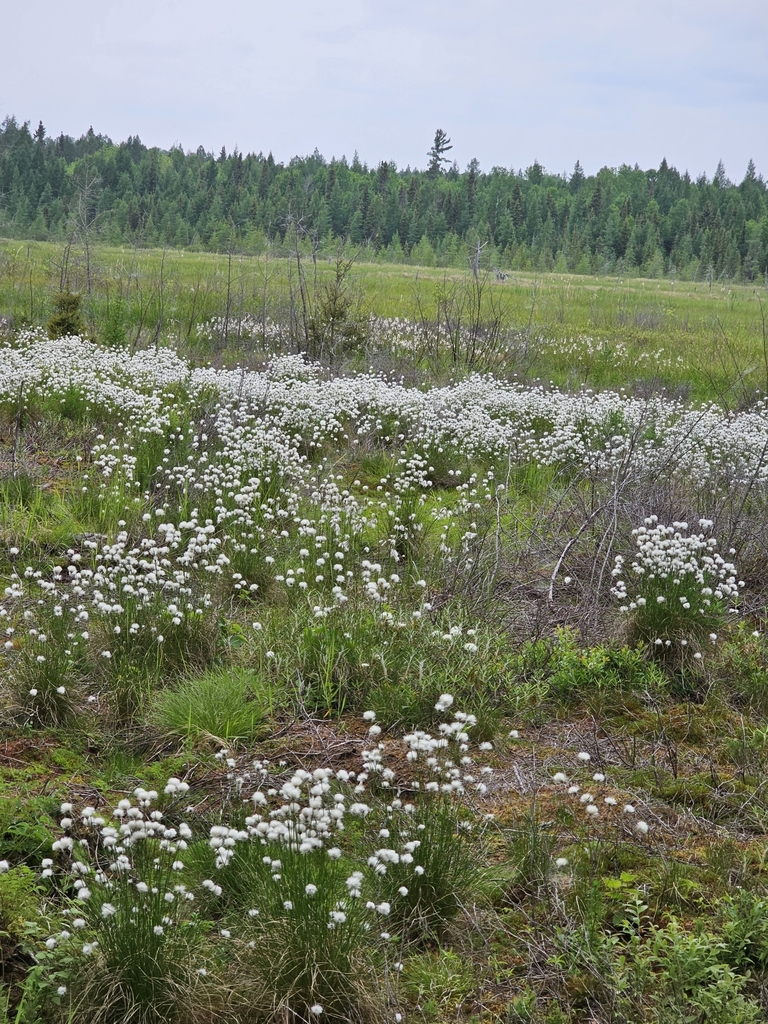
Tussock cottongrass shapes whole landscapes in the Arctic, and its tussocks and early flowers support a surprising range of wildlife.
For Pollinators
It is wind-pollinated, but its very early flowers offer pollen at a time when little else is in bloom, and bees and flies may visit them.
For Birds
Tussock tundra is nesting habitat for many shorebirds, ptarmigan and songbirds, which nest on or between the tussocks. Birds may also use the soft cotton to line their nests.
For Mammals
In Alaska and northern Canada, caribou rely heavily on its young flower heads and shoots in spring, especially during calving, when few other plants are green. Lemmings, voles and other small mammals eat the leaves and shelter in the tussocks.
Ecosystem Role
Its tussocks can persist for many decades, building up peat and creating the hummocky ground of the tundra. It is a key species in Arctic carbon storage, and much of the research on how warming affects the tundra focuses on it. In bogs, its root channels also carry oxygen into the waterlogged peat.
Cultural & Historical Uses
The genus name Eriophorum comes from Greek words meaning “wool-bearing,” from the cottony fruiting heads, and vaginatum means “sheathed,” from the inflated sheath on the stem.
In northern Europe and North America, the fluffy cotton was used to stuff pillows, as tinder, and as wicking for lamps. The cotton is too short and brittle to spin well, though people have tried to use it for cloth and paper.
Walking across tussock tundra is famously difficult: the tussocks wobble underfoot, and the gaps between them are wet. Anyone who has hiked Alaska’s North Slope knows this plant well, and “tussock” has become shorthand for tough going in the Arctic.
Frequently Asked Questions
Is tussock cottongrass a grass?
No. It is a sedge (family Cyperaceae), though it looks grass-like. Sedges usually have solid, often three-sided stems.
How can I tell tussock cottongrass from other cottongrasses?
It has a single white cotton head on each stem, an inflated sheath on the upper stem, and grows in dense tussocks. Most other cottongrasses have several heads per stem.
Can I grow tussock cottongrass in my garden?
Yes, in a bog garden or pond edge with constantly wet, acidic, peaty soil in a cool climate. Buy nursery-grown plants and never dig them from wild bogs.
Why is it important in the Arctic?
It forms tussock tundra across huge areas of Alaska and Canada, stores carbon in peat, and its spring flower heads are a key food for caribou.
When does tussock cottongrass bloom?
Very early, from April to June. The white cotton heads appear soon after, usually from late May into July.

Looking for a nursery that carries Tussock Cottongrass?
Browse our native plant nursery directory: Alaska · Connecticut · Indiana · Maine, Massachusetts, Michigan, Minnesota & Montana · New Hampshire, New Jersey & New York · Pennsylvania, Rhode Island & Vermont · Wisconsin

