
Northern Redcurrant (Ribes triste)
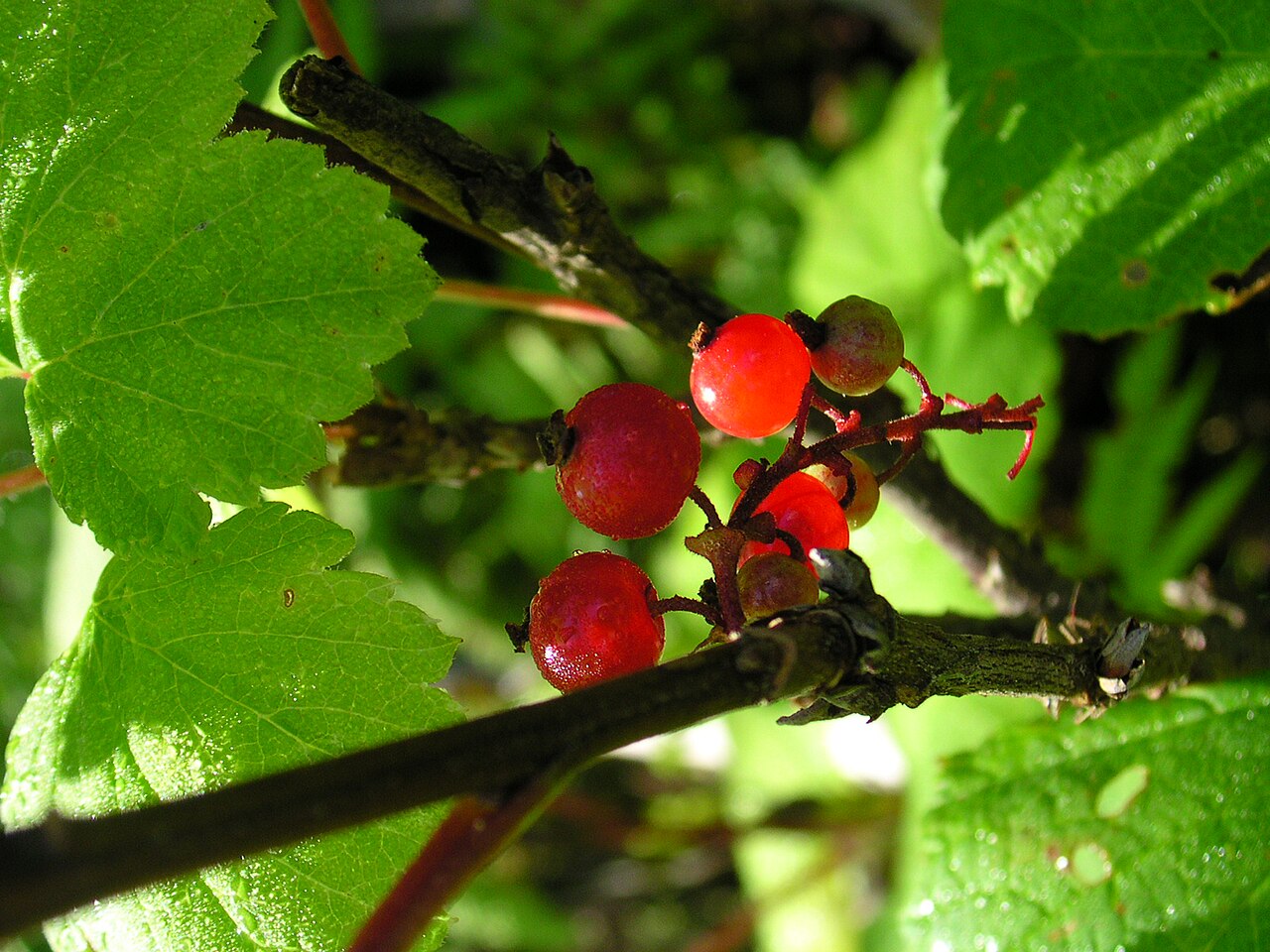
Ribes triste, known as Northern Redcurrant, swamp red currant or wild red currant, is a low, sprawling, spineless shrub of cool, wet forests, cedar swamps and stream banks across Alaska, Canada and the northern United States. It has maple-like leaves, small drooping clusters of purplish flowers in spring, and bright red, translucent berries in midsummer that look and taste much like garden red currants. It belongs to the currant and gooseberry family (Grossulariaceae).
It is the only wild red currant native to most of North America, and it often grows unnoticed under the canopy, its stems creeping along the ground and rooting in moss and leaf litter. The berries are sour but good to eat and make excellent jelly. Unlike the gooseberries, such as Smooth Gooseberry, it has no spines or prickles.
Note on white pine blister rust: like all Ribes, northern redcurrant is an alternate host of white pine blister rust, a disease that kills Eastern White Pine, Western White Pine and other five-needled pines. Some states and towns, especially in the Northeast, still restrict planting Ribes near white pines, so check local rules before planting. This guide covers how to identify it, where it grows, how to grow it, and its value to wildlife.
Identification
Northern redcurrant is recognized by its low, sprawling, spineless stems that often root where they touch the ground, its broad, three-lobed leaves, its drooping clusters of small purplish flowers, and its smooth red berries.
Stems & Growth Habit
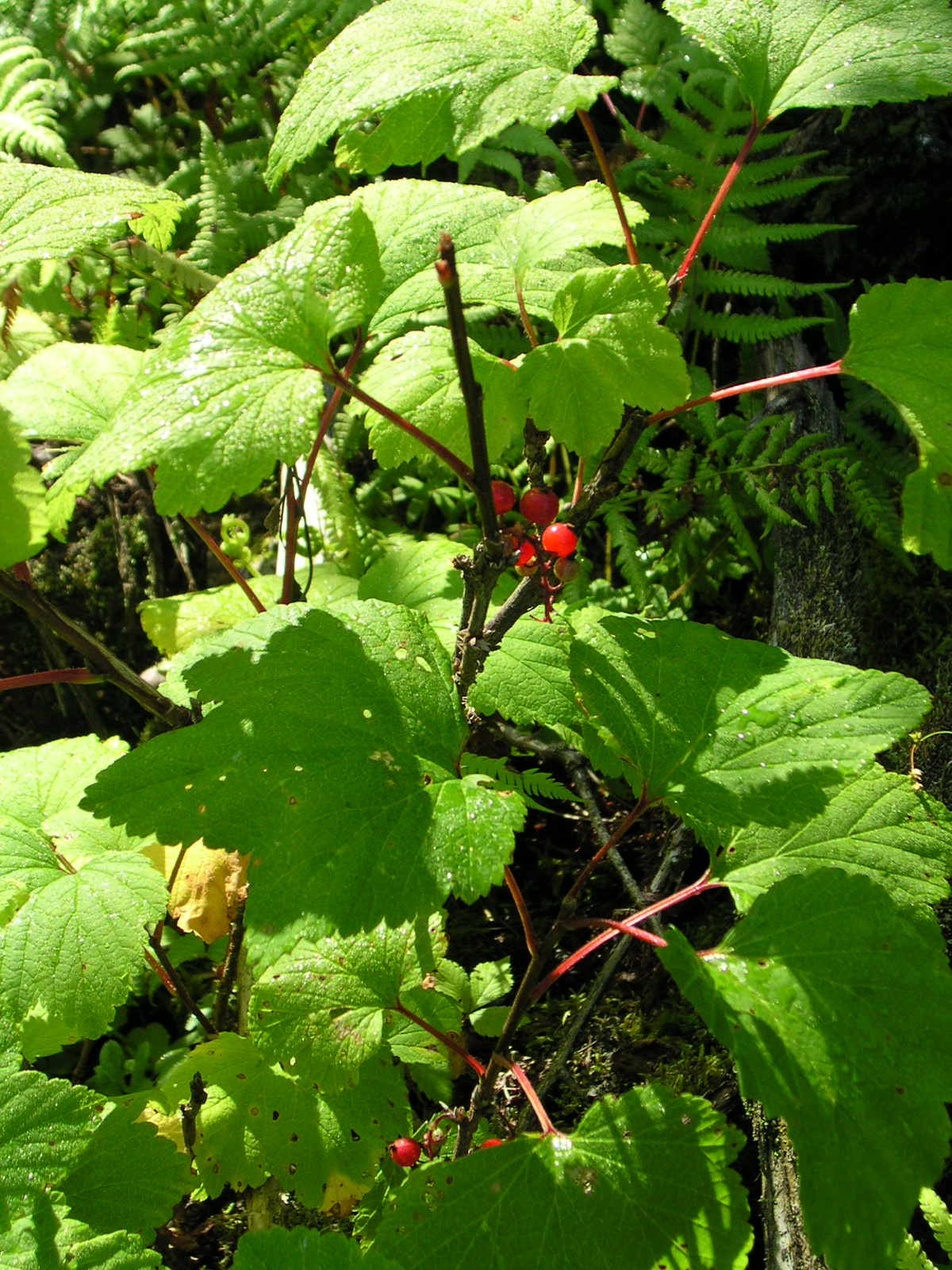
A low, straggling deciduous shrub, usually 1 to 3 feet tall, with stems that sprawl, arch or creep along the ground and root at the nodes (layering), forming loose patches. The stems have no spines or bristles. Young bark is smooth and gray to reddish-brown and becomes darker and shreddy with age.
Leaves
The leaves are alternate, 1½ to 4 inches wide, broader than long, with 3 (sometimes 5) shallow, toothed lobes, much like a small maple leaf. They are smooth above and often softly hairy beneath, and they have no strong odor, unlike the skunky-smelling leaves of some currants. In fall they turn yellow, orange or red.
Flowers
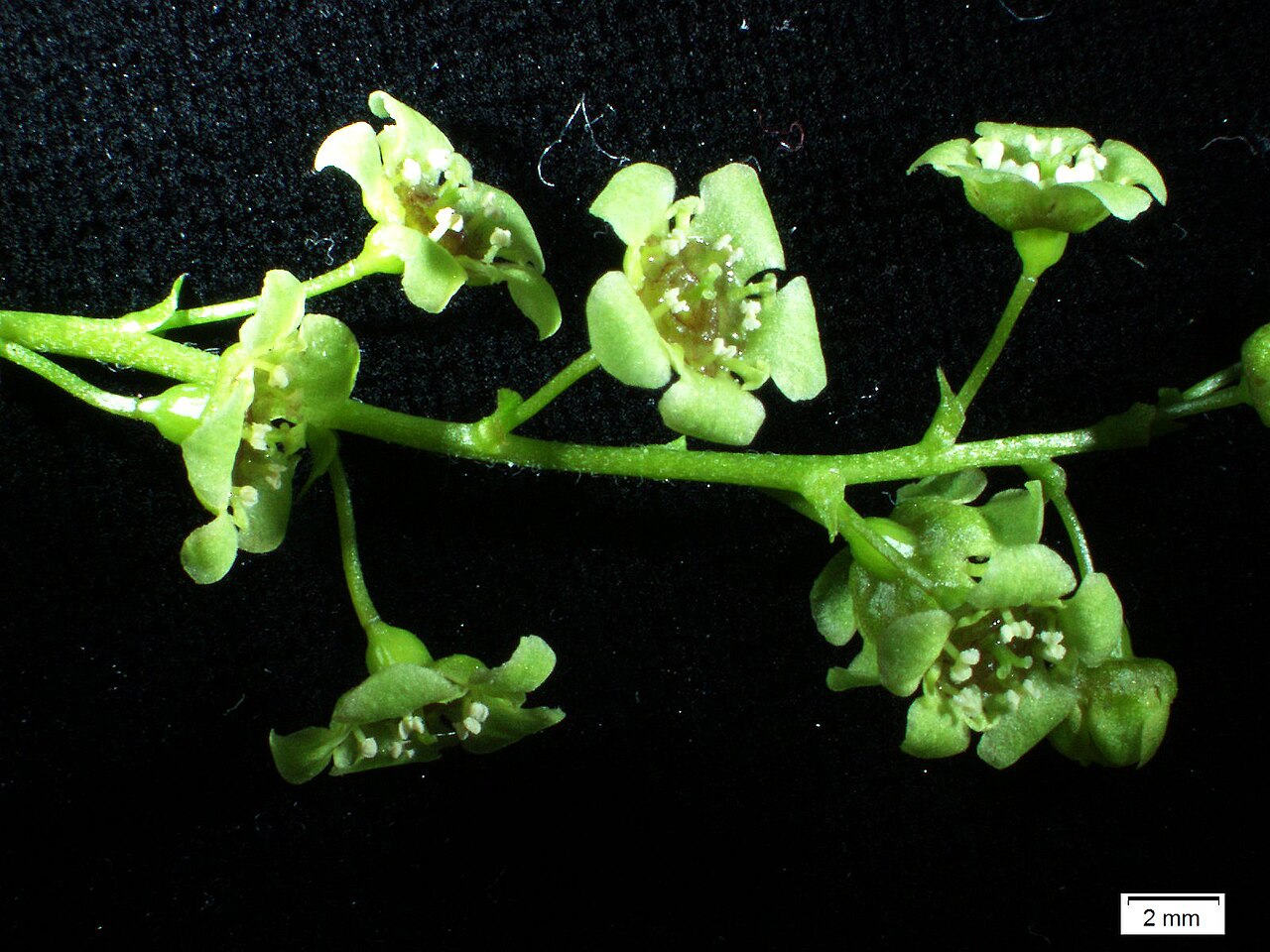
In May and June, as the leaves expand, drooping clusters (racemes) of 6 to 15 tiny flowers hang from the older wood. Each flower is a small, flat saucer about ¼ inch across, greenish to reddish-purple, with five broad sepals, five tiny petals and short stamens. The drooping, dull-colored clusters may explain the species name triste, meaning “sad.”
Fruit & Look-alikes
The fruit is a smooth, shiny, translucent, bright red berry about ¼ to ⅜ inch across, ripening in July and August, with the dried flower remains at the tip. It is sour and juicy. Swamp Currant (R. lacustre) has bristly, prickly stems and dark purple, bristly berries. Skunk Currant (R. glandulosum) has a similar habit but bristly red berries and leaves with a skunky smell when crushed. American Black Currant is taller, with black fruit and resin-dotted leaves.
Quick Facts
| Scientific Name | Ribes triste |
| Family | Grossulariaceae (currant and gooseberry family) |
| Plant Type | Low, sprawling, spineless deciduous shrub |
| Mature Height | 1–3 ft |
| Mature Spread | 3–5 ft, spreading by layering |
| Growth Rate | Moderate |
| Sun Exposure | Part shade to full shade; tolerates sun in cool sites |
| Water Needs | Moist to wet |
| Soil Type | Humus-rich loam, peat or mossy, rocky soil |
| Soil pH | About 5.0–7.5 |
| Bloom Time | May–June |
| Flower Color | Greenish to reddish-purple |
| Fall Color | Yellow, orange or red |
| Fruit | Smooth, translucent red berry; edible and sour |
| Deer Resistant | Low; browsed by deer and moose |
| USDA Hardiness Zones | 2–6 |
Native Range
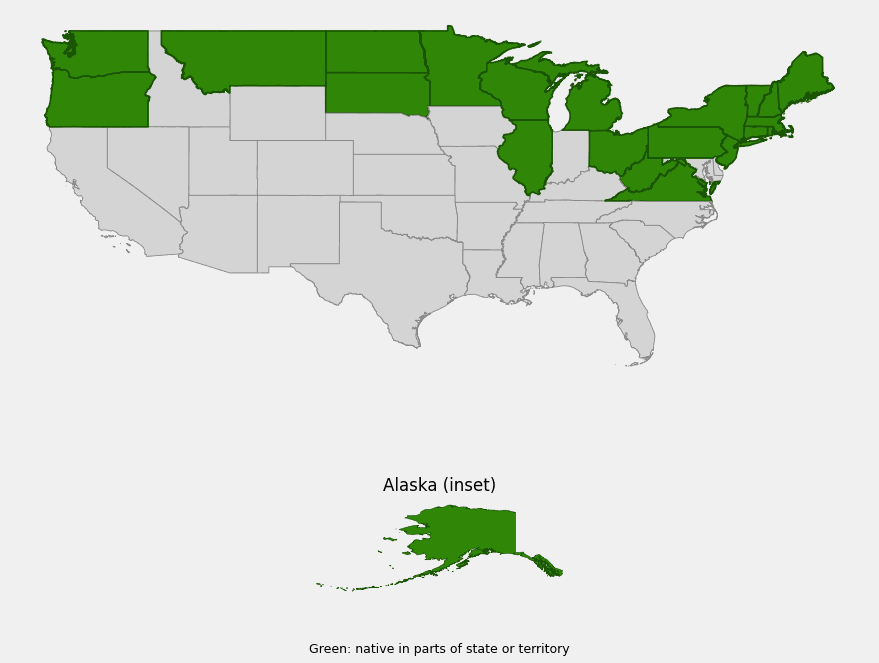
Northern redcurrant ranges across boreal North America and into northeastern Asia. USDA PLANTS lists it as native in Alaska, Washington, Oregon, Montana, North Dakota, South Dakota, Minnesota, Wisconsin, Michigan, Illinois, Ohio, Pennsylvania, New York, New Jersey, West Virginia, Virginia and all six New England states. In Canada it grows in every province and territory from Yukon and British Columbia to Newfoundland and Labrador.
It is most common in Alaska, the boreal forests of Canada, the Upper Great Lakes states and northern New England. Farther south it becomes rare and local, and the records in Illinois, Ohio, New Jersey, southern New England, Virginia and West Virginia are outlying populations, mostly in cold swamps, bogs and high-elevation forests. In the West it is scattered in northeastern Washington, Oregon and Montana.
Its typical habitats are cool, moist to wet coniferous and mixed forests, especially northern white cedar and black spruce swamps, alder thickets, stream banks, bog edges and mossy, shaded rock outcrops. It usually grows in the shade of the canopy.
📋 Regional plant lists featuring Northern Redcurrant: Alaska · Idaho, Eastern Oregon & Eastern Washington · Montana & Wyoming · North Dakota, South Dakota & Western Minnesota · Michigan, Wisconsin & Eastern Minnesota · Illinois, Iowa & Missouri · Ohio & Indiana · New York, Pennsylvania & Northern New Jersey · Delaware, Southern New Jersey & Long Island · Maryland, Virginia & West Virginia · Connecticut, Massachusetts & Rhode Island · New Hampshire, Maine & Vermont · Western Oregon & Western Washington
Growing & Care Guide
Northern redcurrant is a good choice for shady, moist woodland gardens and edible native plantings in cold climates. It is occasionally available from native plant nurseries in the northern states and Canada. Before planting, check whether your state or town restricts Ribes because of white pine blister rust.
Light
It grows best in part shade to full shade, as on the forest floor. In cool northern areas it tolerates more sun if the soil stays moist, and plants in brighter light fruit more heavily.
Soil & Water
It needs consistently moist to wet, humus-rich soil, and it does well in peaty or mossy ground. It tolerates seasonal flooding but not drought. A thick mulch of leaves or wood chips helps keep the roots cool and moist.
Planting Tips
Plant in spring or fall, 3 feet apart, in a shady, moist spot such as a woodland edge, a north-facing bed or near a stream or pond. It is best suited to zones 2 to 6. Keep it well away from white pines if blister rust is a concern in your area, and follow any local spacing rules.
Pruning & Maintenance
Little pruning is needed. In late winter, remove dead or very old stems at the base to encourage new growth, since currants fruit best on two- and three-year-old wood. Let the stems sprawl and root to form a low ground cover.
Propagation
It is very easy to propagate by layering, since stems root where they touch the soil; simply cut off and transplant rooted pieces in spring. Hardwood cuttings taken in late winter also root readily. Seed needs about three months of cold, moist stratification.
Landscape Uses
- Shady woodland gardens: a low, spineless ground-covering shrub for moist shade
- Edible native gardens: sour red berries for jelly, sauces and fresh eating
- Wetland and stream-bank restoration: in cool swamps and riparian woods within its range
- Wildlife plantings: early flowers for bees and summer fruit for birds and mammals
Wildlife & Ecological Value
Northern redcurrant feeds early-season pollinators with its spring flowers and a variety of birds and mammals with its summer fruit, and its low, sprawling stems give cover on the forest floor.
For Pollinators
The small, open flowers are visited by bees, flies, and early wasps, which find nectar easily in the shallow saucers. Like other Ribes, it is a larval host for the gray comma butterfly and several moths.
For Birds
Grouse, thrushes, robins, cedar waxwings, gray jays and many other birds eat the berries in late summer, and spread the seeds through the forest.
For Mammals
Black and brown bears, foxes, martens, chipmunks and red squirrels eat the fruit, and deer, moose and snowshoe hares browse the leaves and twigs.
Ecosystem Role
By rooting along its creeping stems, it forms low patches that help hold soil on stream banks and in wet woods. It is also part of the life cycle of white pine blister rust, a fungus introduced from Eurasia that must alternate between Ribes and five-needled pines, so in forests managed for white pine it is sometimes removed.
Cultural & Historical Uses
Peter Simon Pallas described Ribes triste in 1797 from plants in Siberia. Some botanists have treated it as a variety of the Eurasian red currant, Ribes rubrum, so it may appear under that name in older books. It belongs to the same group of red currants as the garden red currant, and its berries look and taste very similar.
Indigenous peoples across the boreal forest gathered the berries and ate them fresh, dried or cooked, often mixed with other fruit or with fat, and settlers made them into jelly and preserves. Like garden red currants, the tart berries set well as jelly.
In the early 20th century, after white pine blister rust arrived in North America, federal and state crews pulled millions of wild currant and gooseberry plants from forests to protect white pines. A federal ban on Ribes was lifted in 1966, and most states have since relaxed their rules, but some planting restrictions remain in parts of New England and elsewhere.
Frequently Asked Questions
Are northern redcurrant berries edible?
Yes. The ripe red berries are edible, sour and juicy. They are good fresh in small amounts and excellent cooked into jelly, jam or sauces. As with any wild fruit, be sure of your identification before eating.
How is northern redcurrant different from garden red currant?
Garden red currants come mainly from European species such as Ribes rubrum. Northern redcurrant is a native North American and Asian relative with a lower, sprawling habit and smaller fruit clusters, but similar-tasting berries.
Can I plant currants near white pines?
Check your state and local rules first. All Ribes can host white pine blister rust, and some states and towns restrict planting near white pines. Where it is allowed, keeping currants well away from five-needled pines reduces the risk.
Does northern redcurrant have thorns?
No. Its stems are smooth and spineless, unlike gooseberries and the bristly swamp currant.
Will northern redcurrant grow in shade?
Yes. It is a shade-loving shrub of the forest floor and grows well in part to full shade, as long as the soil stays moist. It fruits more heavily with some sun.

Looking for a nursery that carries Northern Redcurrant?
Browse our native plant nursery directory: Alaska · Connecticut · Illinois · Maine, Massachusetts, Michigan, Minnesota & Montana · New Hampshire, New Jersey, New York, North Dakota & Ohio · Oregon · Pennsylvania, Rhode Island, South Dakota, Vermont & Virginia · Washington · West Virginia & Wisconsin

