
Cusick’s Camas (Camassia cusickii)
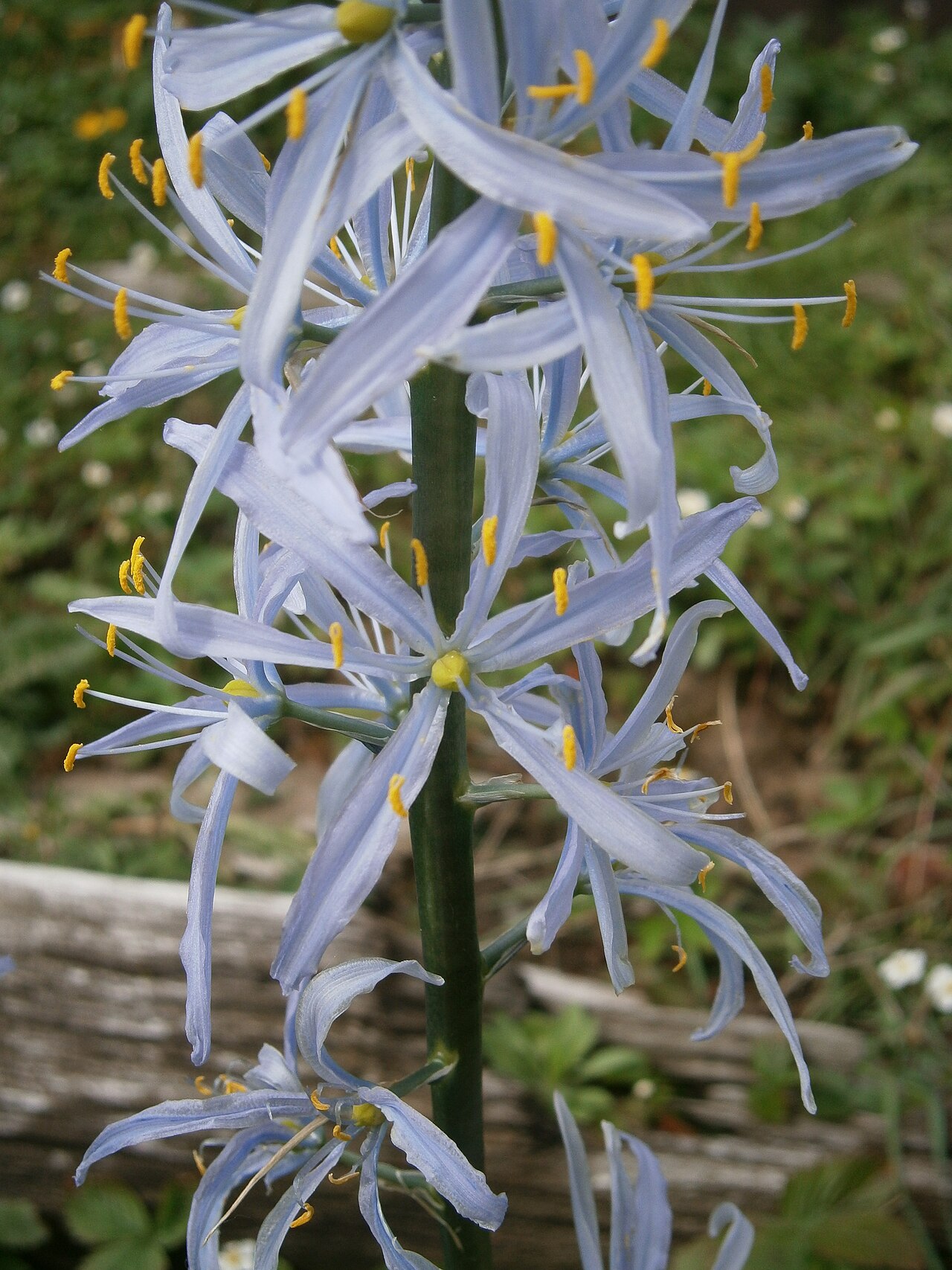
Camassia cusickii, known as Cusick’s Camas, is the largest-bulbed and one of the most robust of the camas lilies. In late spring it sends up stalks 2 to 3 feet tall carrying dozens of pale, icy blue, star-shaped flowers above a clump of broad, wavy, gray-green leaves. It is a familiar garden bulb in Europe and North America, but in the wild it has one of the smallest ranges of any camas.
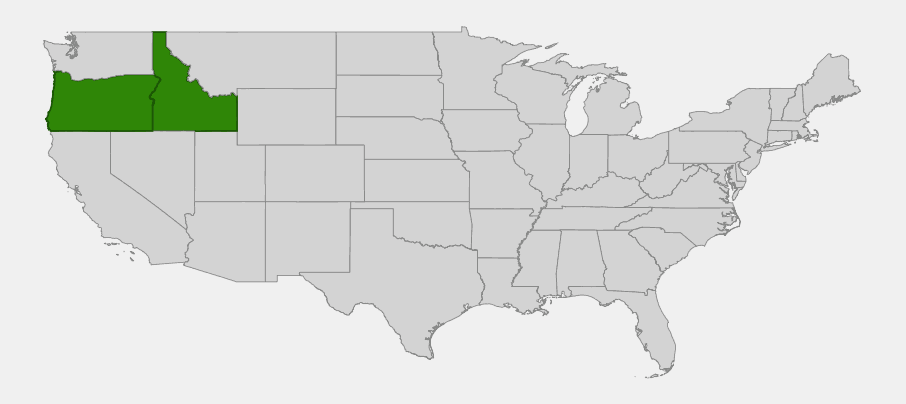
Cusick’s camas is native only to northeastern Oregon and western Idaho, mainly around the Wallowa Mountains, Hells Canyon and the Snake River country. It grows on moist, rocky slopes, seeps, streamsides and wet meadows that are soaked in spring and dry by late summer.
This guide explains how to identify Cusick’s camas and tell it from other camas species and from the poisonous death camas, where it grows, how to grow it in a garden, and what it offers pollinators and other wildlife.
Identification
Cusick’s camas looks like a large, pale version of common blue camas. Its broad, glaucous leaves, pale blue flowers and big clustered bulbs are the best clues.
Bulbs & Leaves
The bulbs are large, often 2 inches or more across, and they tend to form clumps of several bulbs. Each bulb produces many leaves, often a dozen or more, which are strap-shaped, about 1/2 to 1 1/2 inches wide, gray-green (glaucous), and often wavy along the edges. They come up early in spring and wither by midsummer as the plant goes dormant.
Flowering Stalk
A stout, leafless stalk rises 2 to 3 feet (sometimes taller) in late spring, carrying a long raceme with many flowers that open from the bottom up over several weeks.
Flowers
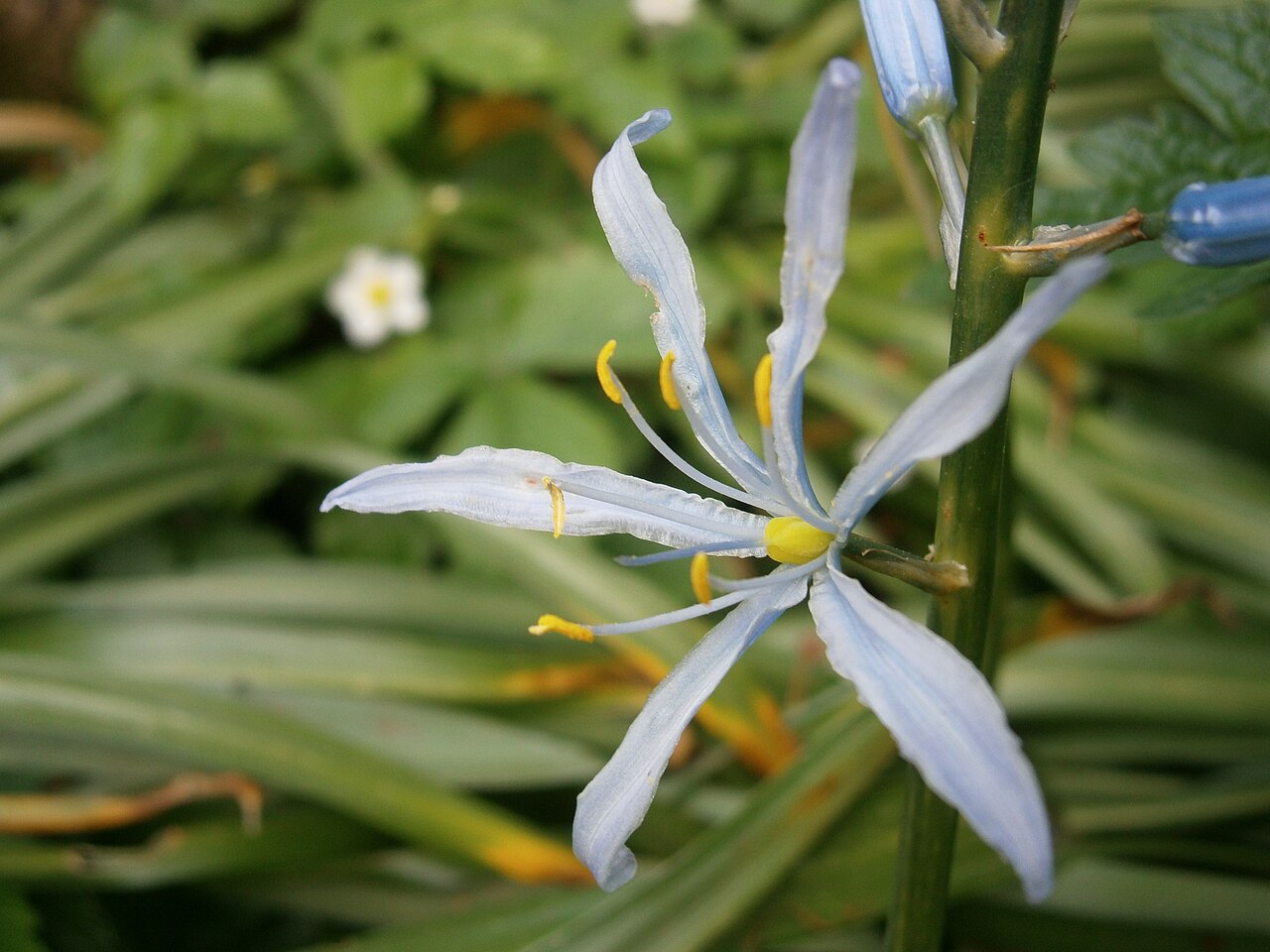
The flowers are star-shaped, about 1 1/2 to 2 inches across, with six narrow, pale blue to light lavender-blue tepals (rarely white) and six stamens with bright yellow anthers. The flowers are nearly symmetrical. They bloom mostly in May and June, depending on elevation.
Fruit
After flowering, the stalk carries plump, three-sided green capsules that dry and split to release shiny black seeds in summer.
Similar Species
Blue Camas (Camassia quamash) is the common camas of the Northwest. It usually has deeper blue to violet flowers, narrower and fewer leaves, and smaller, single bulbs. Great Camas (Camassia leichtlinii) grows west of the Cascades and in the Sierra; its withered tepals twist together over the developing fruit. The most important look-alikes are the poisonous death camases, such as Meadow Death Camas, Foothill Death Camas and Mountain Death Camas, which have cream to white or greenish flowers, often grow in the same places, and have similar grass-like leaves and bulbs. See the safety note below.
Quick Facts
| Scientific Name | Camassia cusickii S. Watson |
| Family | Asparagaceae (asparagus family; formerly Liliaceae) |
| Plant Type | Bulbous perennial wildflower |
| Mature Height | 2–3 ft in flower |
| Mature Spread | 1–1.5 ft (clumps) |
| Growth Rate | Moderate; clumps slowly enlarge |
| Sun Exposure | Full sun to part shade |
| Water Needs | Moist in spring, drier in summer dormancy |
| Soil Type | Rich, moist loam or rocky soil; tolerates clay |
| Soil pH | About 5.5–7.5 |
| Bloom Time | May–June |
| Flower Color | Pale icy blue (rarely white) |
| Fall Color | None; leaves die back in summer |
| Fruit | Three-sided capsules with black seeds |
| Deer Resistant | Moderate |
| USDA Hardiness Zones | 4–8 |
Native Range
USDA PLANTS lists Cusick’s camas as native in two states, Oregon and Idaho. In Oregon it is found in the northeast, mainly in Wallowa and Baker counties around the Wallowa Mountains and the Snake River canyons. In Idaho it grows in the west-central and southwestern part of the state, along Hells Canyon and in the mountains and canyons near the Snake River.
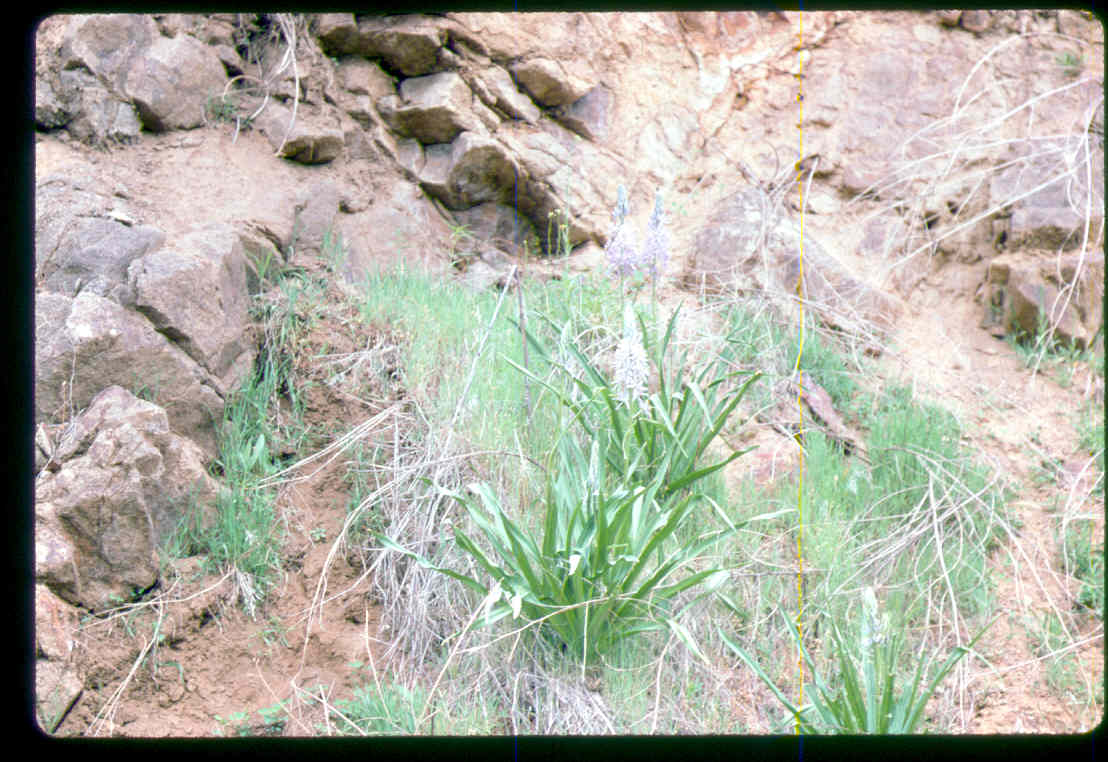
It grows in moist places on otherwise dry, rocky terrain: seepy slopes and talus, streambanks, canyon bottoms and the edges of wet meadows, often among bunchgrasses and shrubs. These spots are wet from snowmelt in spring and dry out in summer, when the plant is dormant.
Cusick’s camas is endemic to this small region of the interior Northwest and does not occur in Canada. It was named for William Conklin Cusick, a pioneer botanist of northeastern Oregon who collected the first specimens.
📋 Regional plant lists featuring Cusick’s Camas: Idaho, Eastern Oregon & Eastern Washington
Growing & Care Guide
Cusick’s camas is one of the easiest and showiest native bulbs, and it is widely sold by bulb suppliers. It is long-lived and trouble-free in gardens with moist spring soil. Buy nursery-grown bulbs; never dig bulbs from the wild.
Light
Full sun gives the best flowering; it also does well in part shade, especially in hot, dry climates.
Soil & Water
It likes rich, moist soil in spring and tolerates heavy and clay soils better than many bulbs. It does not need summer water once the leaves die back, and it tolerates normal garden watering as long as the soil is not waterlogged for long in summer heat.
Planting Tips
Plant bulbs in fall, about 4 to 6 inches deep and 6 to 10 inches apart, in groups of five or more for a good display. They look best in drifts in a meadow, a moist border, near a pond, or among grasses where their fading leaves will be hidden in summer.
Pruning & Maintenance
Let the leaves die back naturally so the bulbs can store energy. Remove spent flower stalks if you don’t want seed. Divide crowded clumps in late summer or fall every several years.
Propagation
Divide the clumps of offset bulbs when dormant. Seed sown in fall germinates after winter cold, but seedlings take three to five years to bloom.
Safety Note: Death Camas
Camas bulbs of several species were a staple food of Native American peoples, but they look almost identical to the bulbs of death camas, which contain toxic alkaloids that can kill people and livestock. Out of flower, the leaves and bulbs are very hard to tell apart, and the plants often grow together. Never eat a wild camas bulb unless you are an expert who identified the plant in flower, and don’t plant death camas in the same bed as edible camas.
Landscape Uses
- Meadow and prairie gardens: drifts of icy blue spikes in late spring, naturalizing among grasses
- Borders: tall spring color in moist borders, combined with later-blooming perennials that cover its summer dormancy
- Rain gardens and pond edges: tolerates soil that is wet in spring
- Pollinator gardens: early nectar and pollen for native bees and bumblebees
- Native Northwest landscapes: a regional native for gardens in Idaho and eastern Oregon
Wildlife & Ecological Value
Like other camas lilies, Cusick’s camas is an important early-season source of nectar and pollen.
For Pollinators
Bumblebees, mason bees, sweat bees and other native bees visit the open, star-shaped flowers for pollen and nectar. Butterflies and hover flies also visit.
For Birds
Birds rarely eat camas directly, but insects visiting the flowers feed songbirds in spring.
For Mammals
Pocket gophers, ground squirrels, elk, deer and bears dig or graze camas bulbs and leaves.
Ecosystem Role
Its bulbs store water and nutrients through summer drought, and its spring flowering feeds pollinators early in the season. As a regional endemic, it is part of the distinctive flora of the Hells Canyon and Wallowa region.
Cultural & Historical Uses
The name camas comes from the Chinook Jargon kamas, from a Nuu-chah-nulth word for the sweet cooked bulbs. The bulbs of camas species were dug, pit-roasted and stored by many Indigenous peoples of the Northwest, and camas meadows were carefully tended.
Sereno Watson named Camassia cusickii in the late 1880s after William Conklin Cusick, a rancher, teacher and self-taught botanist from Union County, Oregon, who collected many plants of the Blue and Wallowa mountains.
Cusick’s camas became popular in European gardens, where its pale blue form and selections such as ‘Zwanenburg’ are sold in the bulb trade alongside great camas and blue camas.
Frequently Asked Questions
Where does Cusick’s camas grow wild?
Only in northeastern Oregon and western Idaho, around the Wallowa Mountains, Hells Canyon and the Snake River canyons, on moist rocky slopes, seeps and streamsides.
How is Cusick’s camas different from blue camas?
Cusick’s camas has paler, icy blue flowers, broader and more numerous gray-green leaves, and larger bulbs that grow in clumps. Blue camas usually has deeper blue or violet flowers and a much wider range.
Can you eat Cusick’s camas bulbs?
Camas bulbs were a traditional food, but they are easily confused with poisonous death camas. Never eat a wild bulb unless you are an expert, and never dig wild plants.
When should I plant Cusick’s camas bulbs?
Plant them in fall, 4 to 6 inches deep, in moist, rich soil in full sun or part shade. They bloom in late spring and go dormant in summer.
Is Cusick’s camas deer resistant?
Moderately. Deer and elk sometimes graze camas, but garden plantings are usually not heavily damaged.


