
Eastern Mosquito Fern (Azolla caroliniana)
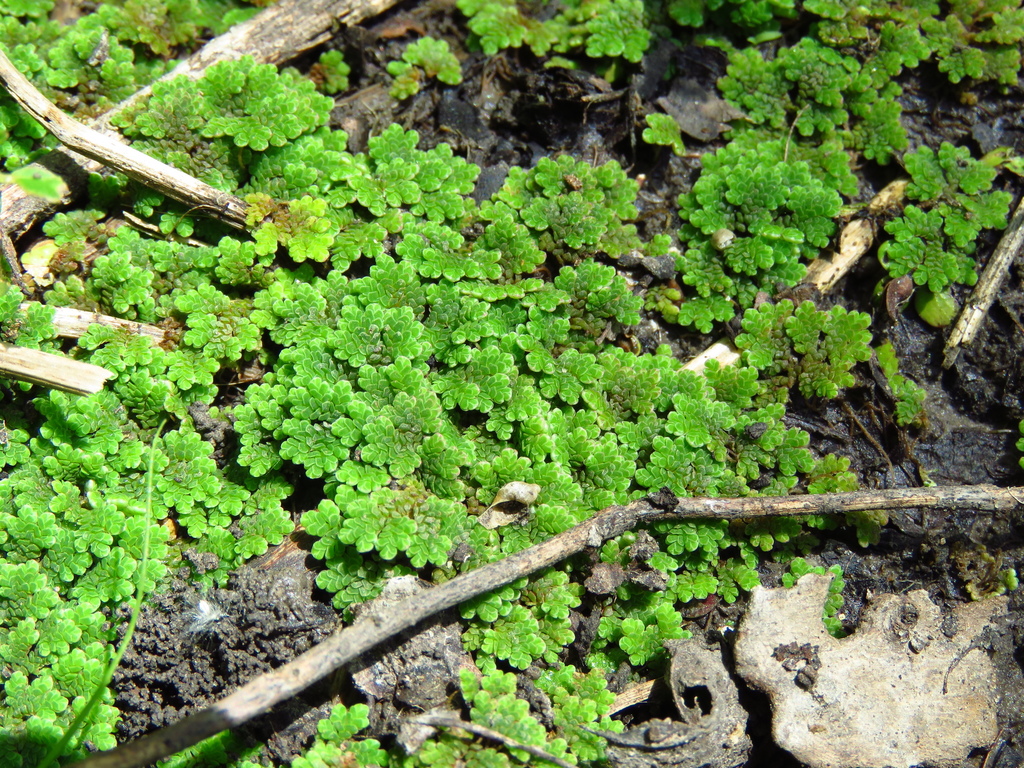
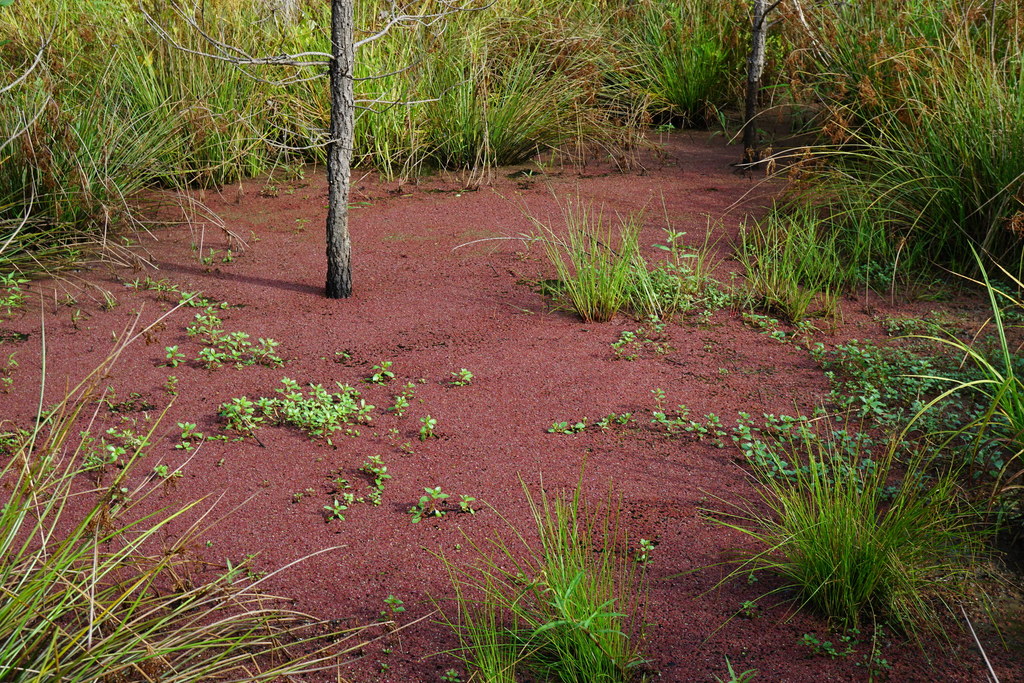
Azolla caroliniana, the Eastern Mosquito Fern (also called Carolina mosquito fern, Carolina azolla or water velvet), is one of the world’s smallest ferns. It floats freely on still water as tiny, branching fronds less than half an inch across, made of minute, overlapping, velvety leaves. Where conditions suit it, it multiplies into a solid carpet that can turn from bright green to deep red in sun and cold weather.
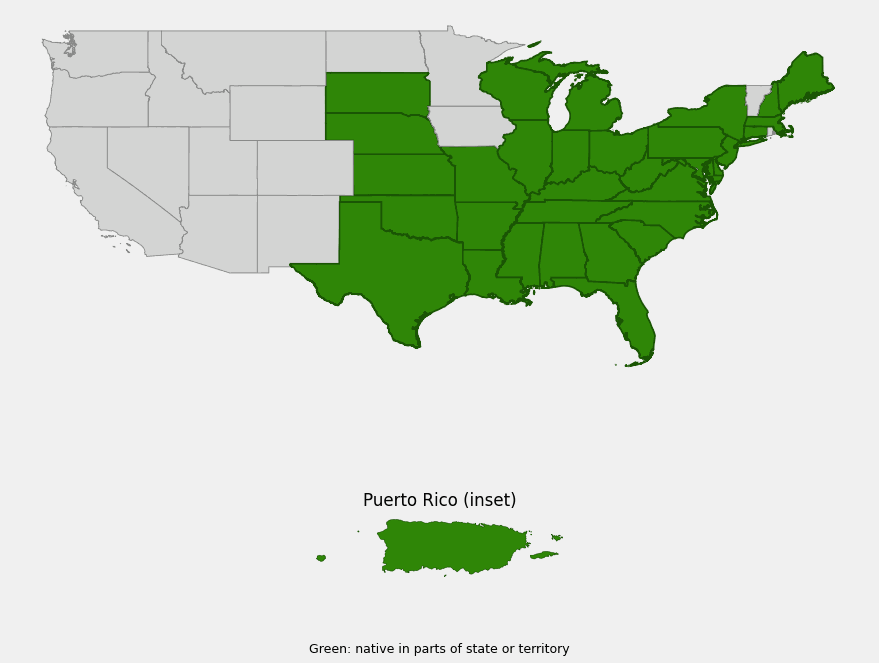
It is native across the eastern United States, from Texas, Oklahoma, Kansas, Nebraska and South Dakota east to the Atlantic coast and north to Wisconsin, Michigan and New England, and to Puerto Rico. Its range continues through the Caribbean and Latin America to Argentina. Many botanists now call it Azolla cristata, because the old name caroliniana was found to be based on a specimen of a different species.
Mosquito fern has a remarkable partnership with a nitrogen-fixing cyanobacterium that lives inside its leaves, which lets it grow without nitrogen fertilizer and has made Azolla a valued green manure in rice fields. This page covers how to identify it, where it grows, how to grow it in ponds and aquariums, and its role in wetland ecology.
Identification
Eastern mosquito fern is easy to recognize as a floating fern, though telling it from other Azolla species requires a microscope. Look for tiny, flat, branching fronds with scale-like leaves and fine roots dangling below.
Size & Form
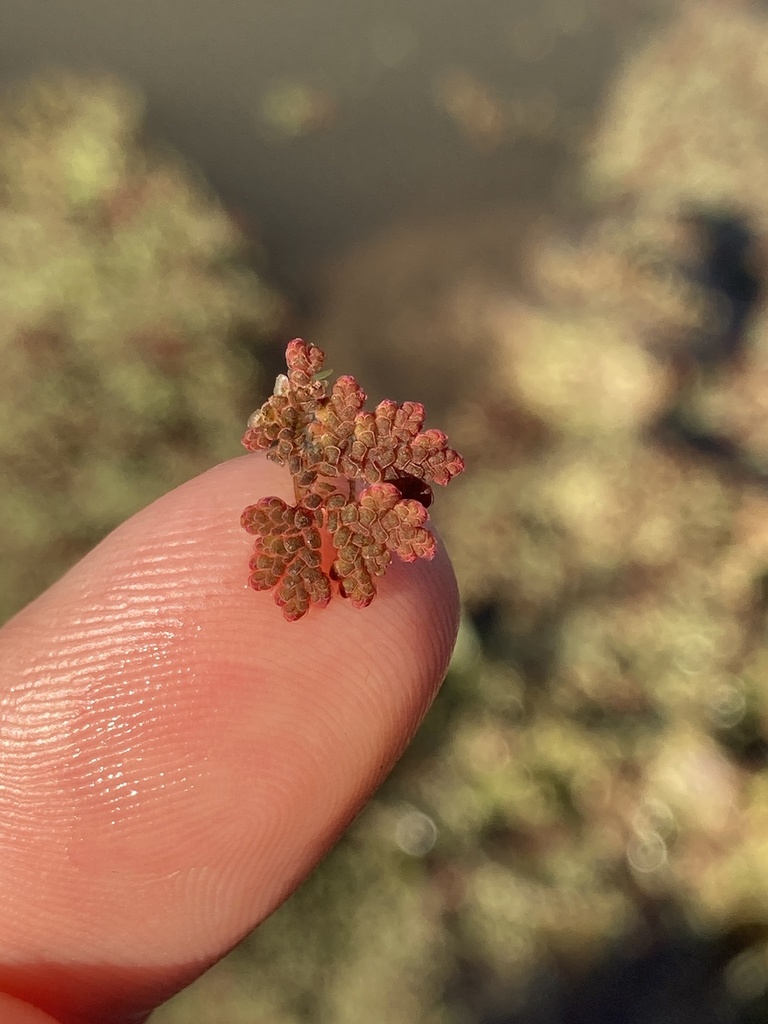
Each plant is a small, flat, branched frond about 1/5 to 2/5 inch (5 to 10 mm) long, floating on the water surface. Plants break apart and multiply rapidly, forming mats that can be over an inch thick in sheltered water.
Leaves
The stems are covered in tiny, overlapping leaves arranged in two rows. Each leaf has two lobes: a thick, green or reddish upper lobe that floats above the water, and a thin, translucent lower lobe that rests on the water. The upper lobe has a cavity holding colonies of a cyanobacterium (Anabaena azollae) and is covered in microscopic bumps (trichomes) that give it a velvety, water-repellent surface.
Color
Plants are bright green to blue-green in shade and warm weather. In strong sun, cold weather or when nutrients run short, they produce red pigments and turn rusty red to purplish.
Roots & Spores
Fine, unbranched roots hang down into the water from the underside of the fronds. Like other ferns, it reproduces by spores, borne in tiny round sporocarps on the undersides of the leaves, but most of its spread is by fragments of fronds.
Similar Species
Duckweeds (Lemna and relatives) are flowering plants with flat, unbranched, oval green bodies rather than scale-like leaves. The western mosquito fern (Azolla filiculoides), native to the western United States, is usually larger; the two are reliably separated only by the shape of the microscopic leaf trichomes, which are one-celled in A. filiculoides and two-celled in this species. Giant salvinia and common salvinia, introduced floating ferns, have much larger, hairy leaves.
Quick Facts
| Scientific Name | Azolla caroliniana Willd. (syn. Azolla cristata Kaulf.) |
| Family | Salviniaceae (floating fern family; formerly Azollaceae) |
| Plant Type | Free-floating aquatic fern |
| Mature Height | Floating; mats up to about 1.5 in thick |
| Mature Spread | Individual fronds 0.2–0.4 in; colonies cover still water |
| Growth Rate | Very fast; can double in a few days in warm weather |
| Sun Exposure | Full sun to part shade |
| Water Needs | Aquatic; still or slow fresh water |
| Soil Type | None; floats on water |
| Soil pH | Water pH about 5.0–7.5 |
| Bloom Time | Does not flower; spores produced mainly in summer and fall |
| Flower Color | None (fern) |
| Fall Color | Turns red to purplish in cold weather and strong sun |
| Fruit | None; spores in tiny sporocarps |
| Deer Resistant | Not applicable; aquatic |
| USDA Hardiness Zones | 5–11 |
Native Range
USDA PLANTS lists eastern mosquito fern as native in Alabama, Arkansas, Connecticut, Delaware, Florida, Georgia, Illinois, Indiana, Kansas, Kentucky, Louisiana, Maine, Maryland, Massachusetts, Michigan, Mississippi, Missouri, Nebraska, New Hampshire, New Jersey, New York, North Carolina, Ohio, Oklahoma, Pennsylvania, South Carolina, South Dakota, Tennessee, Texas, Virginia, West Virginia and Wisconsin, and in Puerto Rico. It is most common in the warm Southeast and Gulf Coast.
Outside the United States it ranges through the Caribbean, southern Mexico and Central America to South America as far as northern Argentina and Uruguay. In Canada it is recorded from southern Ontario and British Columbia, where USDA treats it as introduced. It has also been introduced to Europe, Asia and elsewhere, often through aquarium and rice-farming use.
It grows on still or slow-moving fresh water: ponds, lakes, swamps, ditches, backwaters of rivers and the edges of marshes. It is often found with duckweeds and in cypress swamps, and its abundance rises and falls with nutrients, temperature and water levels.
📋 Regional plant lists featuring Eastern Mosquito Fern: North & South Florida · Alabama, Georgia & Mississippi · North & South Carolina · Maryland, Virginia & West Virginia · Kentucky & Tennessee · Arkansas, Louisiana, Eastern Oklahoma & Eastern Texas · South & West Texas · Illinois, Iowa & Missouri · Ohio & Indiana · Michigan, Wisconsin & Eastern Minnesota · Nebraska, Kansas & Eastern Colorado · North Dakota, South Dakota & Western Minnesota · New York, Pennsylvania & Northern New Jersey · Delaware, Southern New Jersey & Long Island · Connecticut, Massachusetts & Rhode Island · New Hampshire, Maine & Vermont · Puerto Rico
Growing & Care Guide
Eastern mosquito fern is one of the easiest aquatic plants to grow, and is sold for ponds, water gardens and aquariums. The challenge is usually controlling it rather than keeping it alive. Only grow it within its native range, and never release it into natural waters, especially where it is not native.
Light
It grows best in full sun to part shade outdoors, turning red in strong light. Indoors under aquarium lights it stays green. Too little light causes it to fade and break apart.
Soil & Water
It floats on still or slow water and does poorly in moving water or under surface agitation from filters and fountains. It thrives in warm water (about 77 to 86°F, 25 to 30°C) and survives cool water down to about 41°F (5°C). It needs phosphorus and iron, so it grows fastest in nutrient-rich water. Because it makes its own nitrogen, it is not limited by nitrogen.
Planting Tips
Simply float a handful on the water surface. In a small pond it can cover the surface within weeks in summer, so start small and use it in ponds where you can scoop out the extra. In aquariums it shades plants below, so keep it to part of the surface.
Pruning & Maintenance
Skim off excess with a net and add it to compost, where its nitrogen makes it an excellent green fertilizer or mulch. Keep at least some open water so submerged plants and fish get light and oxygen. In cold areas, plants often sink or die back in winter and regrow in spring from fragments and spores; you can overwinter a portion indoors in a bright container of water.
Propagation
Divide it by simply separating fronds; each piece grows into a new plant. Spores also allow it to reappear after drying or cold.
Landscape Uses
- Ponds and water gardens: a fast floating cover that shades water and helps reduce algae
- Aquariums: a tiny floating plant that gives cover to fish and fry
- Compost and green manure: nitrogen-rich fronds for compost or mulch
- Animal feed: fed to poultry, ducks and fish in small farms
- Education: a living example of plant-bacteria symbiosis
Wildlife & Ecological Value
Small as it is, mosquito fern supports a surprising range of wetland life and helps shape the water it floats on.
For Pollinators
As a fern, it has no flowers and is not used by pollinators. It does host a specialized insect, the mosquito fern weevil (Stenopelmus rufinasus), which feeds on Azolla and has been used to control it where it is invasive.
For Birds
Ducks, geese and other waterfowl eat mosquito fern, and its mats shelter the snails, insects and small crustaceans that many waterbirds feed on.
For Mammals
Its main value to mammals is indirect, through the aquatic animals it supports..
Ecosystem Role
Through its cyanobacterial partner, it adds nitrogen to wetlands. Its mats shade the water, cooling it and reducing algae, but very dense mats can lower oxygen levels below. The name “mosquito fern” comes from the belief that thick mats stop mosquito larvae from reaching the surface to breathe.
Cultural & Historical Uses
For centuries, farmers in China and Vietnam grew Azolla in flooded rice fields as a natural nitrogen fertilizer, and the practice spread through Asia in the 20th century. This species, as Azolla cristata, is among those grown commercially for this purpose and as feed for fish and poultry.
The genus has a dramatic geological history. About 49 million years ago, during the “Azolla event,” huge blooms of Azolla covered the then-freshwater surface of the Arctic Ocean for hundreds of thousands of years. Scientists think the carbon they buried may have helped cool the global climate.
The naming of this species is tangled. Botanists Evrard and Van Hove found that the original specimen of Azolla caroliniana was actually Azolla filiculoides, so many recent references use Azolla cristata for the eastern American plant. USDA PLANTS and many state floras still use Azolla caroliniana.
Frequently Asked Questions
Is mosquito fern native?
Yes. Eastern mosquito fern is native to the eastern United States, from Texas and South Dakota east to the Atlantic coast, and to Puerto Rico. It also grows wild from Mexico to Argentina. It has been introduced in Canada, Europe and Asia.
Does mosquito fern really stop mosquitoes?
Very thick mats are thought to make it harder for mosquito larvae to reach the surface to breathe, which gave the plant its name. It is not a reliable mosquito control, though, and open water nearby is still used by mosquitoes.
Why does my Azolla turn red?
It produces red pigments in strong sunlight, in cold weather or when nutrients are low. Red fronds are healthy; they turn green again in shade or warm conditions with enough nutrients.
Is Azolla good for ponds?
In moderation, yes. It shades the water, reduces algae, adds nitrogen and shelters wildlife. But it can cover a small pond completely in summer, so skim off excess regularly and keep part of the surface open.
What is the difference between Azolla caroliniana and Azolla cristata?
They refer to the same eastern American plant. Studies showed the original A. caroliniana specimen was a different species, so many botanists now use Azolla cristata, while USDA PLANTS still uses Azolla caroliniana.

Looking for a nursery that carries Eastern Mosquito Fern?
Browse our native plant nursery directory: Alabama & Arkansas · Connecticut, Delaware, Florida & Georgia · Illinois, Indiana & Kansas · Kentucky, Louisiana, Maine, Maryland, Massachusetts, Michigan, Mississippi & Missouri · Nebraska, New Hampshire, New Jersey, New York, North Carolina, Ohio & Oklahoma · Pennsylvania, South Carolina, South Dakota, Tennessee, Texas & Virginia · West Virginia & Wisconsin

