
Four-petal Pawpaw (Asimina tetramera)
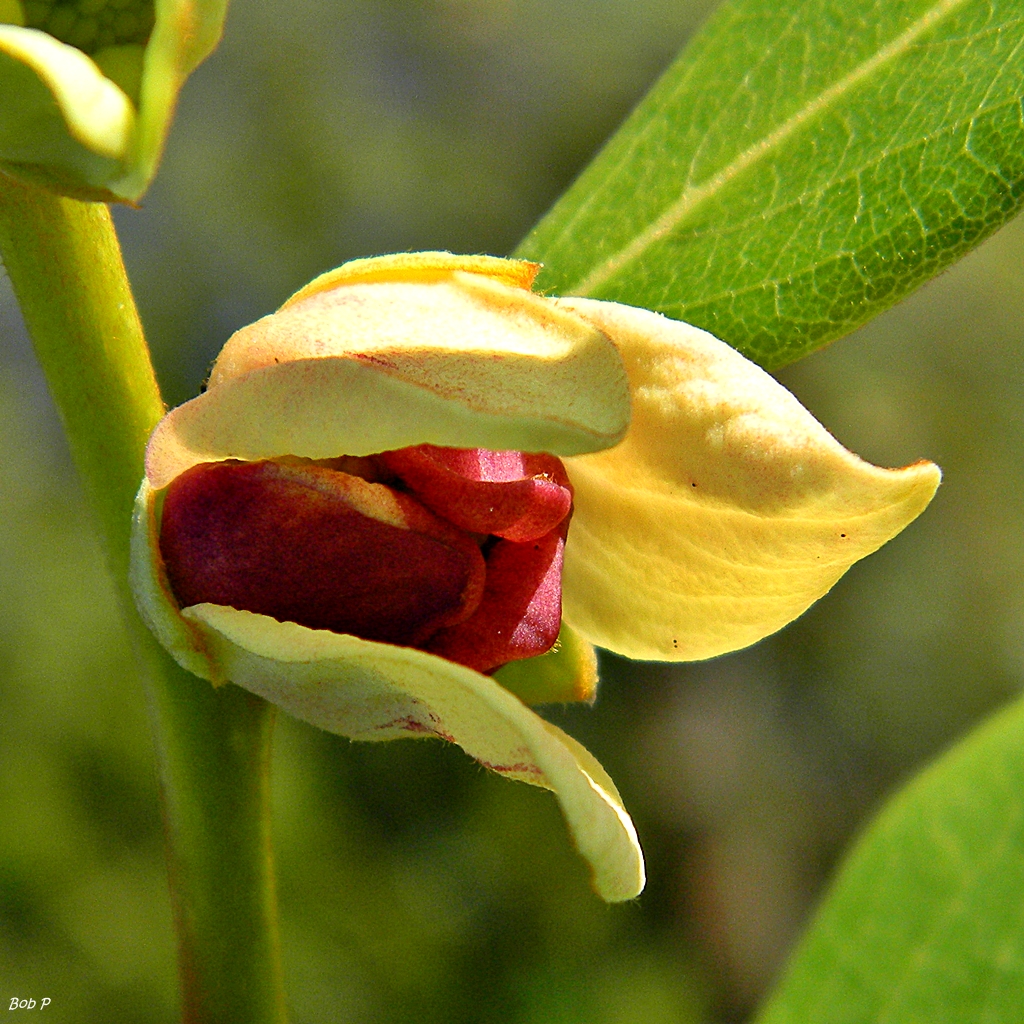
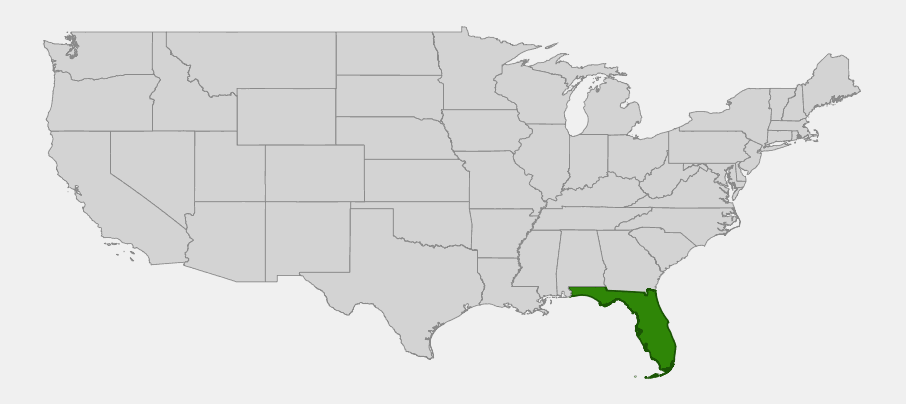
Asimina tetramera, the Four-petal Pawpaw (also written fourpetal pawpaw), is one of the rarest shrubs in the United States. It is endemic to a small part of southeastern Florida, where it grows only in sand pine scrub on the ancient dunes of the Atlantic Coastal Ridge in Martin and Palm Beach counties. It is listed as endangered under the U.S. Endangered Species Act and by the State of Florida.
It is a slender, open shrub or small tree with leathery, oblong leaves and nodding, fragrant flowers with pale cream outer petals and dark maroon inner petals. Like its relative the familiar Pawpaw, it produces a yellow-green, banana-scented fruit. It depends on periodic fire, which clears the scrub canopy and lets it flower and set fruit.
Most of its original habitat has been lost to coastal development, and the remaining plants are protected. This page is an identification and appreciation guide: it covers how to recognize four-petal pawpaw, where it grows, why it is endangered and how it is being conserved. Never dig up or collect plants or seeds from the wild.
Identification
Four-petal pawpaw is a sparse, upright shrub of sandy scrub with leathery, oblong leaves and nodding flowers that open cream and turn maroon. It is one of several pawpaws in Florida, and its range alone is a strong clue, since no other pawpaw grows in coastal sand pine scrub in Martin and Palm Beach counties.
Form & Bark
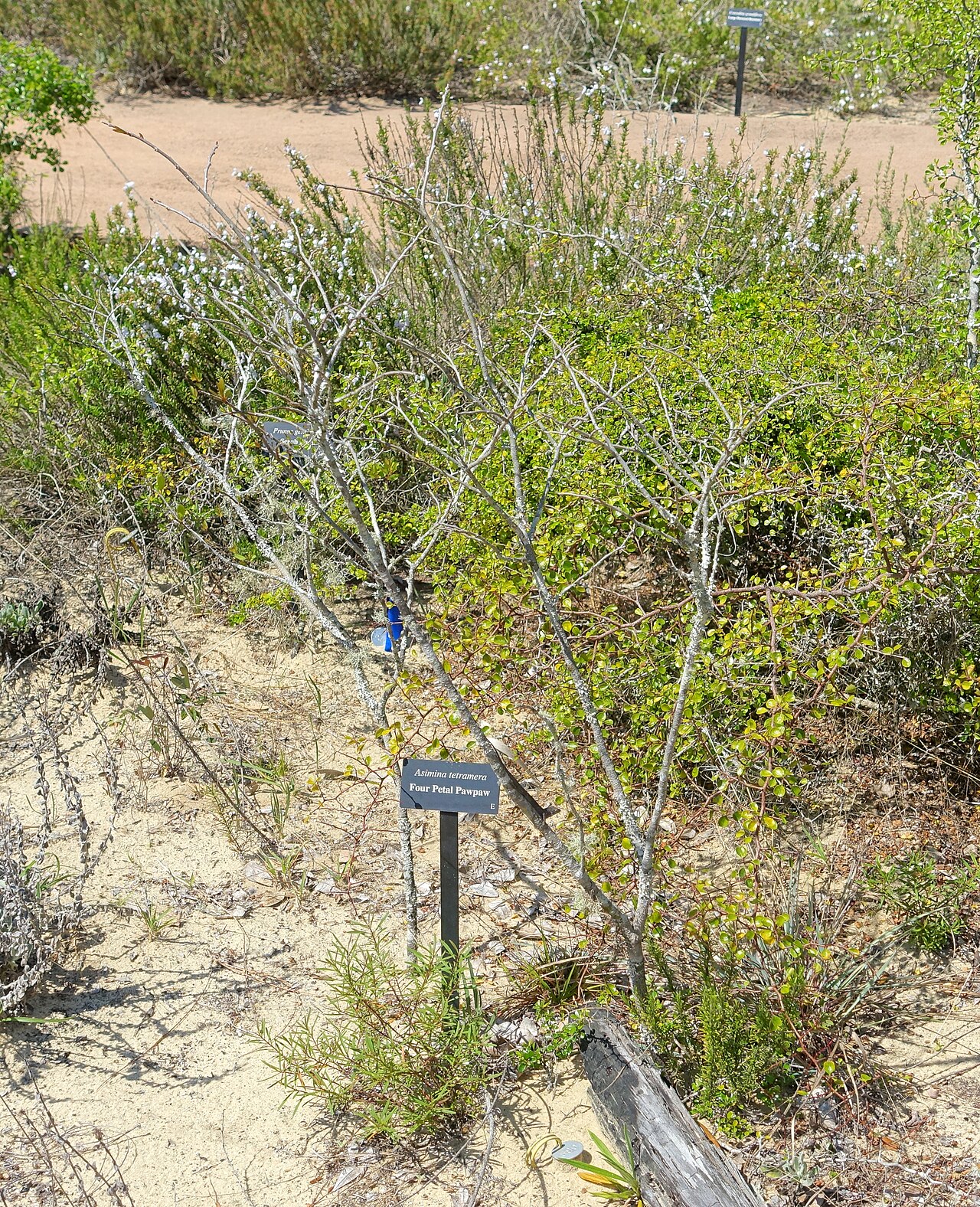
It grows 3 to 10 feet tall, usually with one to a few slender, sparsely branched stems from a deep taproot. The bark is reddish-brown to gray, with pale lenticels. Young twigs are often rusty-hairy. Plants burned or cut back resprout from the root.
Leaves
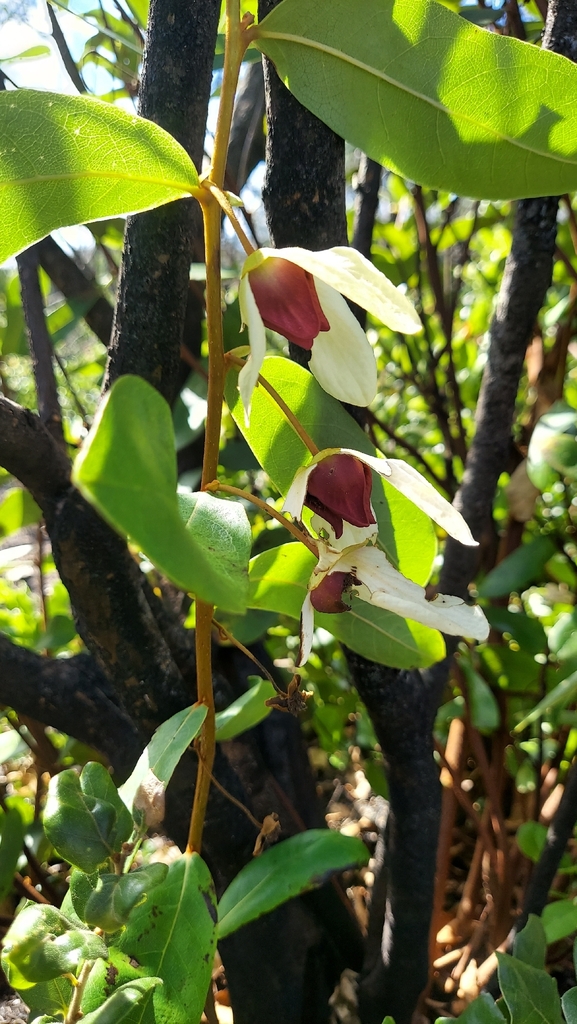
The leaves are alternate, oblong to narrowly oval, about 2 to 4 inches long, thick and leathery, with a blunt or rounded tip and smooth edges. They are often held angled upward along the stems, and young leaves are rusty-hairy beneath. The plant is deciduous to partly evergreen, losing many leaves in the dry winter season.
Flowers
In spring it bears nodding, fragrant flowers singly or in small clusters along the branches. The large outer petals open cream to pale yellow and often become flushed with maroon, and the smaller inner petals are dark maroon to purple at the base. The species name tetramera means “four-parted,” because many flowers have their parts in fours rather than the threes typical of pawpaws, although the number varies.
Fruit
The fruit is an oblong, fleshy, yellow-green berry, 2 to 4 inches long, with a banana-like scent when ripe in summer. It holds several flat, shiny, dark brown seeds. As with other pawpaws, seeds are dispersed by animals that eat the fruit.
Quick Facts
| Scientific Name | Asimina tetramera Small |
| Family | Annonaceae (custard apple family) |
| Plant Type | Shrub or small tree; federally endangered Florida endemic |
| Mature Height | 3–10 ft |
| Mature Spread | 2–5 ft |
| Growth Rate | Slow |
| Sun Exposure | Full sun |
| Water Needs | Low; dry, deep sand |
| Soil Type | Deep, excessively drained white sand |
| Soil pH | Acidic, about 4.5–6.0 |
| Bloom Time | Spring (roughly March–June) |
| Flower Color | Cream outer petals aging maroon; dark maroon inner petals |
| Fall Color | None significant |
| Fruit | Yellow-green, banana-scented berry |
| Deer Resistant | Unknown; protected species |
| USDA Hardiness Zones | 10 |
Native Range
Four-petal pawpaw is endemic to Florida and has one of the smallest ranges of any U.S. shrub. It grows only along a narrow strip of the Atlantic Coastal Ridge in Martin and Palm Beach counties, on the southeastern coast of the peninsula. USDA PLANTS lists it in Florida only.
Its habitat is sand pine scrub: ancient, deep, white sand dunes covered with a low canopy of sand pine and a dense layer of scrub oaks, rosemary and saw palmetto. This type of scrub needs periodic fire to stay open, and four-petal pawpaw grows and flowers best in the sunny years after a fire, slowing down again as the canopy closes.
Much of the coastal ridge has been developed for homes and businesses, and fire suppression has allowed the remaining scrub to grow too dense. Today the plant survives mainly in a few protected parks and preserves, where land managers use prescribed fire and mechanical clearing, and conservation groups reintroduce nursery-grown plants into suitable habitat.
📋 Regional plant lists featuring Four-petal Pawpaw: North & South Florida
Can You Grow It?
Four-petal pawpaw is a federally endangered species, and it is not a garden plant. It is not sold by ordinary nurseries, and taking plants, cuttings or seeds from the wild is illegal and harms a species with very few remaining populations. Its deep taproot also makes it almost impossible to transplant. Conservation nurseries and botanical gardens grow it from seed for reintroduction projects under permits. Gardeners who want a pawpaw can choose a common native species instead, such as Netted Pawpaw in Florida or Pawpaw farther north.
Light
In the wild it needs full sun and grows best after fire opens the scrub canopy. Under a closed canopy it grows slowly and rarely flowers.
Soil & Water
It grows only in deep, dry, acidic, nutrient-poor white sand that drains instantly. It is adapted to drought and cannot tolerate rich or wet soil.
Planting Tips
Planting is done only by conservation organizations, which raise seedlings in deep containers to protect the taproot and plant them into managed scrub. Do not plant it outside of these programs.
Pruning & Maintenance
In nature, fire is its “pruning”: it burns back to the ground and resprouts from the root. Managers use prescribed fire or mechanical clearing every several years to keep its scrub habitat open.
Propagation
Conservation nurseries propagate it from seed, which must be sown fresh and grown in deep pots. Seed collection from wild plants requires permits. Home propagation from wild material is not permitted.
Where to See It
- Protected scrub preserves: a few public parks and natural areas in Martin and Palm Beach counties protect remaining plants; view them only from trails
- Botanical gardens: conservation collections such as Bok Tower Gardens display rare Florida scrub plants
- Conservation volunteering: scrub restoration and rare plant monitoring programs
- Native alternatives: grow netted pawpaw or other common Florida pawpaws at home
Wildlife & Ecological Value
Although rare, four-petal pawpaw is part of the distinctive scrub community of the Atlantic Coastal Ridge, one of the most threatened habitats in Florida.
For Pollinators
Its flowers are pollinated mainly by small beetles, which feed on pollen and tissue on the flower parts. Seed set is often low, which is one reason populations recover slowly.
For Birds
Like other pawpaws, its leaves can host the caterpillars of the zebra swallowtail butterfly and the pawpaw sphinx moth, which are food for scrub birds.
For Mammals
The banana-scented fruit is eaten by mammals such as raccoons, opossums and gray foxes, which help scatter the seeds.
Ecosystem Role
It is one of many rare plants restricted to Florida scrub, a habitat that also supports the Florida scrub-jay and other endemic animals. Protecting and burning scrub for four-petal pawpaw benefits the entire community.
Cultural & Historical Uses
John Kunkel Small, a botanist at the New York Botanical Garden who explored Florida extensively in the early 20th century, described Asimina tetramera. Small documented many plants of the Florida scrub just before much of it was cleared for development.
Four-petal pawpaw was listed as endangered by the U.S. Fish and Wildlife Service in the 1980s because of habitat loss on the rapidly developing southeast Florida coast. Recovery work includes protecting land, prescribed burning, monitoring and reintroducing nursery-grown plants.
Florida is home to more pawpaw species than any other state, including several that are endemic to the peninsula. Four-petal pawpaw is the rarest of them.
Frequently Asked Questions
Can I buy or grow four-petal pawpaw?
No. It is a federally endangered species that is grown only by conservation nurseries for reintroduction. Collecting plants or seeds from the wild is illegal. Grow a common native pawpaw instead.
Where does four-petal pawpaw grow?
Only in sand pine scrub on the Atlantic Coastal Ridge in Martin and Palm Beach counties in southeastern Florida.
Why is four-petal pawpaw endangered?
Most of its coastal scrub habitat has been developed, and fire suppression has let the remaining scrub grow too dense for it to thrive.
Is the fruit of four-petal pawpaw edible?
Pawpaw fruits are generally edible, but this species is protected, and its fruit should be left for wildlife and natural reproduction.
Why is it called four-petal pawpaw?
Many of its flowers have their parts in fours instead of the threes typical of pawpaws; the scientific name tetramera means “four-parted.”

Looking for a nursery that carries Four-petal Pawpaw?
Browse our native plant nursery directory: Florida

