
Mojave Seablite (Suaeda moquinii)
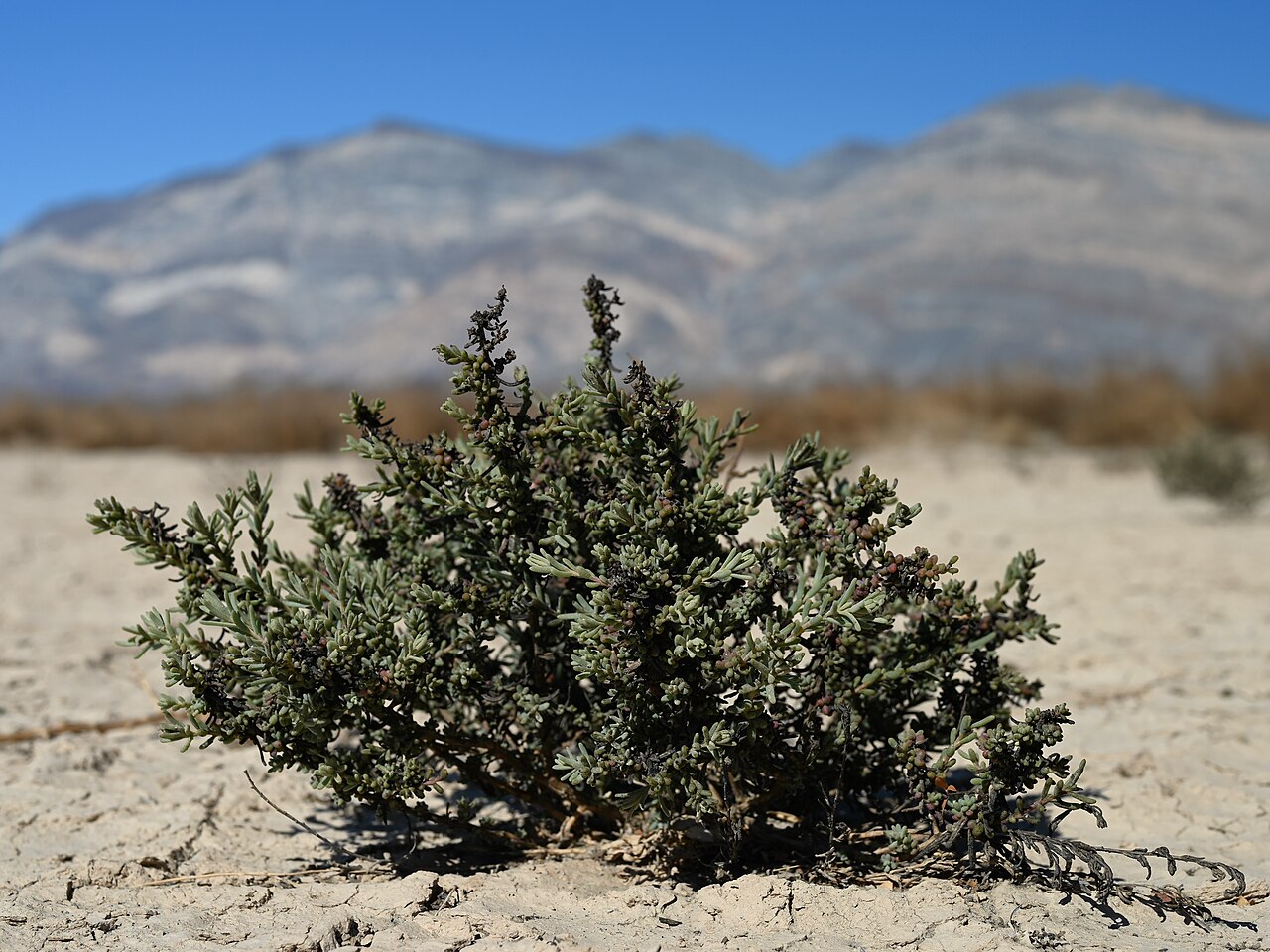
Suaeda moquinii, known as Mojave Seablite, bush seepweed or Torrey’s seepweed, is a salt-tolerant shrub of alkaline flats, dry lake beds, seeps and salt marshes across the arid West. It is a member of the amaranth family (Amaranthaceae), which now includes the former goosefoot family. Many botanists now call it Suaeda nigra, and it also appears in older references as Suaeda torreyana and, misapplied, Suaeda fruticosa.
Mojave seablite is a much-branched, rounded shrub or subshrub, usually 1 to 5 feet tall, with small, fleshy, nearly cylindrical leaves that may be blue-green, red, purple or almost black. Its tiny green flowers are easy to overlook, but the plant itself is a familiar part of the salty landscapes of the Great Basin, Mojave Desert and northern plains, often growing where few other plants can.
Like other seablites and saltbushes, it stores salt in its succulent leaves and is a classic halophyte, or salt-loving plant. This guide covers how to identify it, where it grows, how to use it in restoration and xeric landscapes, and its value to wildlife.
Identification
Mojave seablite is variable, but its combination of a woody base, fleshy narrow leaves and alkaline habitat makes it recognizable.
Leaves & Growth Habit
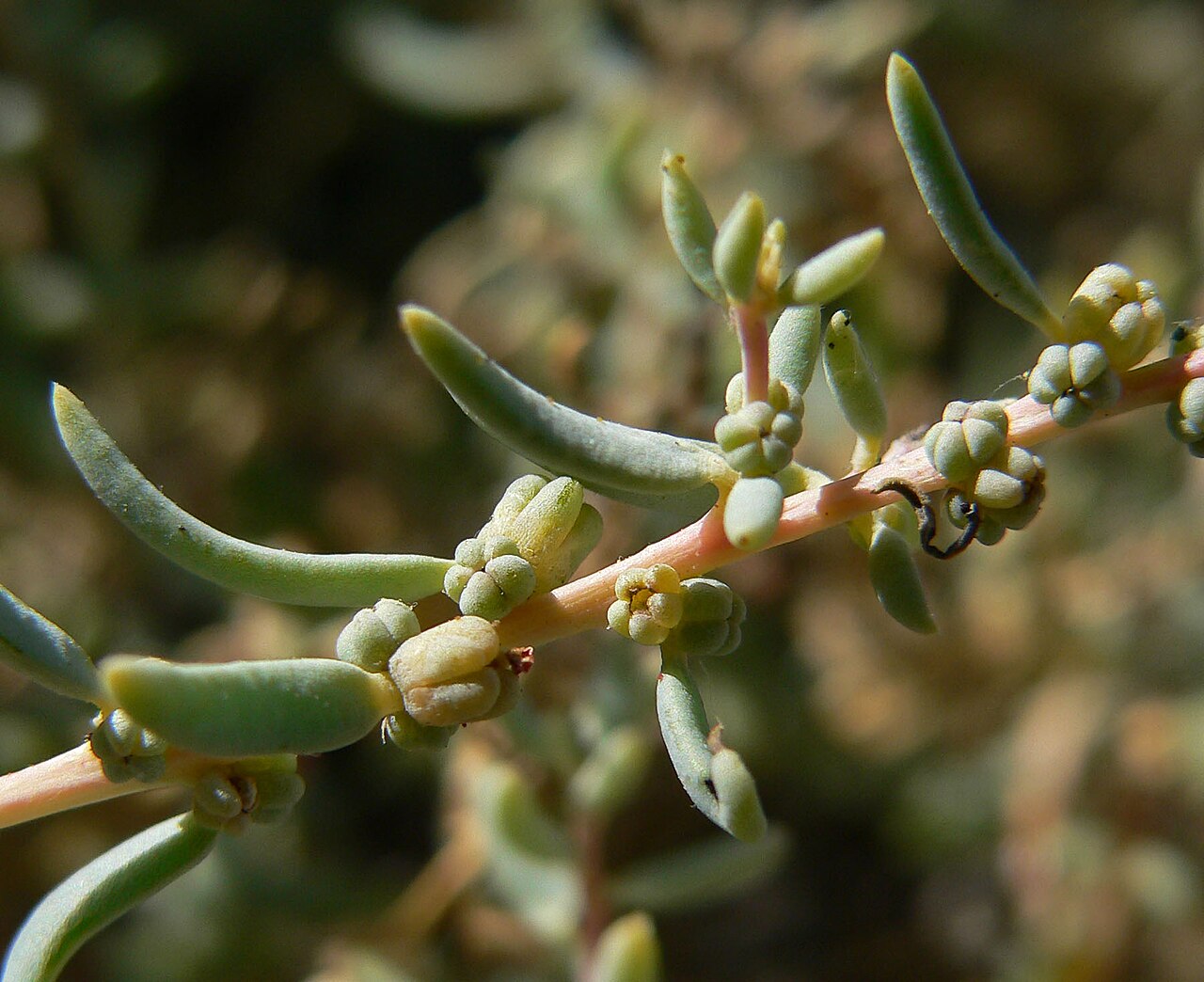
A perennial shrub or subshrub from a woody base, with many spreading to upright branches forming a rounded mound up to about 5 feet tall and as wide. In seasonally flooded wetlands it can behave as an annual. Stems may be hairless or finely hairy and are often waxy. The leaves are alternate, linear to narrowly lance-shaped, ½ to 1¼ inches long, fleshy and flat to nearly cylindrical. Plant color varies from blue-green to red, dark purple or nearly black, especially late in the season.
Flowers
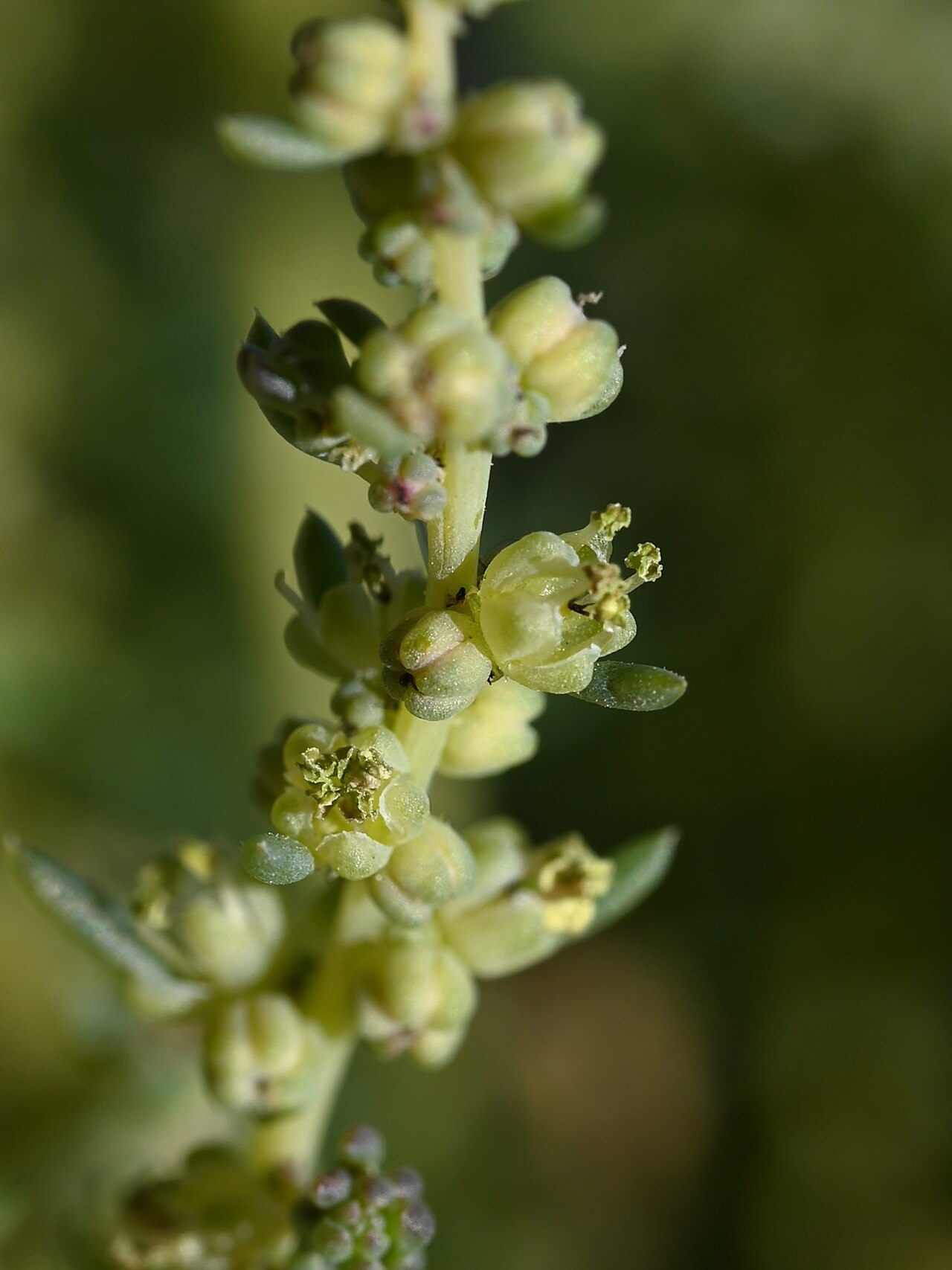
Flowers appear from summer into fall in small clusters of 1 to 12 in the axils of leaf-like bracts along the upper stems. They are tiny and green, with no petals; each has five fleshy, rounded sepals of equal size, five stamens and a short stigma.
Fruit
The fruit is a small utricle enclosed by the persistent sepals, holding a single shiny black, lens-shaped seed about 1 to 2 mm across.
Look-alikes
Annual seablites, such as pursh seepweed (Suaeda calceoliformis), lack a woody base and have unequal, hooded or keeled sepals. Herbaceous Seepweed (Suaeda maritima) is an annual of coastal and inland salt marshes. Greasewood is a taller, spiny shrub with fleshy, bright green leaves. Iodine Bush has jointed, leafless-looking succulent stems.
Quick Facts
| Scientific Name | Suaeda moquinii (syn. Suaeda nigra, Suaeda torreyana, Suaeda fruticosa misapplied) |
| Family | Amaranthaceae (amaranth family; formerly Chenopodiaceae) |
| Plant Type | Succulent-leaved shrub or subshrub; halophyte |
| Mature Height | 1–5 ft |
| Mature Spread | 2–5 ft |
| Growth Rate | Moderate |
| Sun Exposure | Full sun |
| Water Needs | Low to moderate; tolerates both drought and seasonal flooding |
| Soil Type | Saline and alkaline clay, silt or sand; playas and alkali flats |
| Soil pH | Alkaline to strongly alkaline |
| Bloom Time | June–October |
| Flower Color | Green, inconspicuous |
| Fall Color | Foliage often turns red, purple or blackish |
| Fruit | Small utricle with a shiny black seed |
| Deer Resistant | Moderately; salty foliage is lightly browsed |
| USDA Hardiness Zones | 4–10 |
Native Range
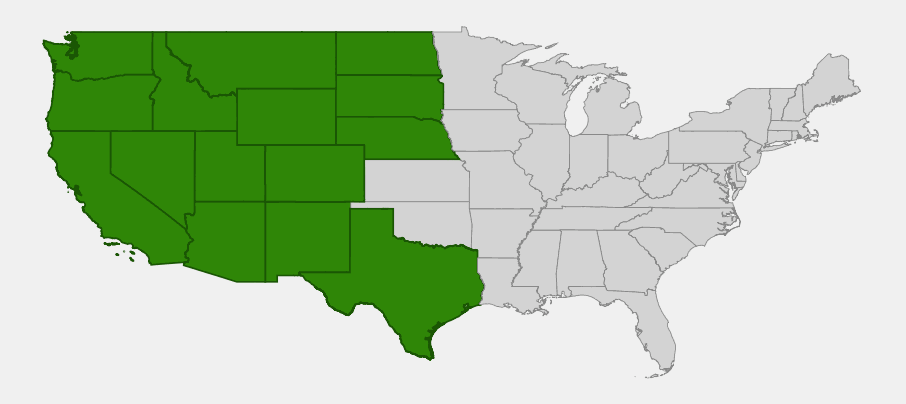
Mojave seablite is native to western North America. USDA PLANTS lists it in Washington, Oregon, California, Idaho, Nevada, Utah, Arizona, Montana, Wyoming, Colorado, New Mexico, North Dakota, South Dakota, Nebraska and Texas, and in Canada in Alberta and Saskatchewan. It also extends into northern Mexico.
It is most common in the Great Basin and the Mojave Desert, including Death Valley, the Owens Valley and the Amargosa region, and on the salty basins of the Colorado Plateau and northern Great Plains. In Washington and Oregon it grows only east of the Cascades, and in Texas it reaches the Panhandle and the Trans-Pecos; the original specimen of the species was collected along the Canadian River in the Texas Panhandle in 1820.
It grows on saline and alkaline soils: playa edges and dry lake beds, alkali flats and meadows, desert springs and seeps, salt marshes, and the margins of saline lakes and streams. It is mostly an inland plant, though it is occasionally found in coastal estuaries. It is often a dominant shrub in salt-desert scrub with greasewood and saltbushes.
📋 Regional plant lists featuring Mojave Seablite: Arizona & New Mexico · California & Nevada · North Dakota, South Dakota & Western Minnesota · Idaho, Eastern Oregon & Eastern Washington · Montana & Wyoming · Nebraska, Kansas & Eastern Colorado · South & West Texas · Utah & Western Colorado
Growing & Care Guide
Mojave seablite is mainly used in restoration of saline and alkaline sites, where few other plants will grow. It is occasionally available as seed from western native seed suppliers. For home gardeners it is a specialist plant: useful where soils are salty or alkaline, but plain in appearance.
Light
Full sun.
Soil & Water
It is adapted to saline and alkaline soils, including heavy clay, silt and sand, and is one of the few shrubs that tolerate high salt levels. It tolerates both seasonal flooding and long drought once established. Water seedlings until established; avoid fertilizer.
Planting Tips
Use it to revegetate salty or alkaline ground, such as areas affected by irrigation salts, road salt, or the margins of ponds and playas. Sow seed or plant seedlings in fall or early spring, when soils are moist and salt is diluted by rain or snowmelt.
Pruning & Maintenance
Little maintenance is needed. Older shrubs can be cut back hard in late winter to renew dense growth.
Propagation
Grow it from seed sown on the surface of moist soil in fall or after a short cold-moist stratification. Seeds germinate best when the soil is moist and salinity is low, such as after spring rains. Stem cuttings can also be rooted in a sandy medium.
Landscape Uses
- Saline and alkaline site restoration: for playas, alkali flats and salt-affected ground
- Erosion control: stabilizing salty soils where little else grows
- Wildlife cover: in salt-desert scrub and wetland margins
- Xeric landscapes: a tough native shrub for alkaline soils in the arid West
Wildlife & Ecological Value
In salt-desert landscapes, Mojave seablite provides scarce food and cover.
For Pollinators
Its flowers are wind-pollinated and offer little nectar, but its foliage feeds insects. Seablites are among the host plants of the western pygmy-blue, one of North America’s smallest butterflies, whose caterpillars feed on plants in the goosefoot group.
For Birds
Its seeds are eaten by sparrows, finches, quail and waterfowl, and its dense shrubs give cover to small birds around desert springs and alkali wetlands.
For Mammals
Rabbits and other browsers eat the salty foliage, especially when other forage is scarce, and kangaroo rats and other rodents gather the seeds.
Ecosystem Role
As a halophyte, it can take up salt from the soil and store it in its leaves, and it often dominates the salty zones around playas and springs. These salt-desert communities provide habitat for specialized insects and other wildlife adapted to saline conditions.
Cultural & Historical Uses
The first specimen was collected by Edwin James along the Canadian River in the Texas Panhandle in 1820, during Stephen Long’s expedition. Constantine Rafinesque named it Chenopodium nigrum in 1832, and John Torrey later described it as Chenopodina moquini, honoring the French botanist Alfred Moquin-Tandon, a specialist in the goosefoot family. Edward Lee Greene moved it to Suaeda in 1889.
Because Rafinesque’s name was published first, many botanists now use Suaeda nigra, while USDA PLANTS and many older floras use Suaeda moquinii. “Nigra” means black, a reference to the plant’s tendency to blacken as it dries.
According to ethnobotanical records, several Southwestern peoples cooked the young leaves of seablites as greens and used the plant to make a black dye. The name “seablite” comes from coastal European relatives that grow in salt marshes.
Frequently Asked Questions
Is Suaeda moquinii the same as Suaeda nigra?
Yes. They are names for the same species. Suaeda nigra, published earlier, is used by many current floras, while USDA PLANTS uses Suaeda moquinii.
Where does Mojave seablite grow?
On salty and alkaline soils across the western United States and into Alberta, Saskatchewan and northern Mexico, especially around playas, alkali flats and desert springs in the Great Basin and Mojave Desert.
Is Mojave seablite a succulent?
Its leaves are fleshy and store water and salt, so it is a succulent-leaved shrub, although it is not a cactus or a typical garden succulent.
Can Mojave seablite grow in salty soil?
Yes. It is a halophyte, adapted to saline and alkaline soils, which makes it valuable for restoring salt-affected land.
Is it a good garden plant?
It is mainly a restoration plant. It is useful where soils are salty or alkaline, but its tiny green flowers are not showy.

Looking for a nursery that carries Mojave Seablite?
Browse our native plant nursery directory: Arizona · California · Colorado · Idaho · Montana · Nebraska, Nevada, New Mexico & North Dakota · Oregon · South Dakota, Texas & Utah · Washington · Wyoming

