
Agueweed (Gentianella quinquefolia)
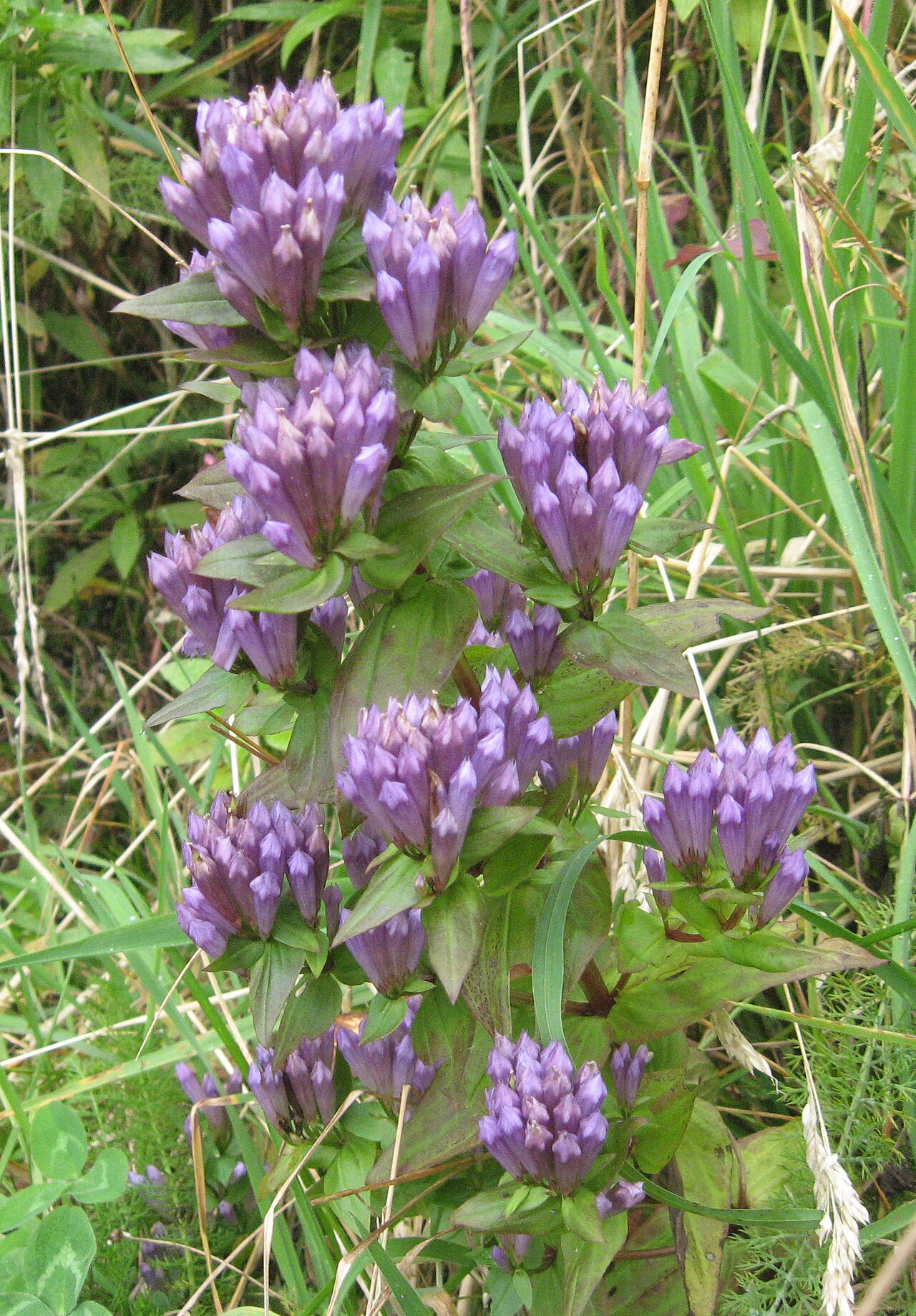
Gentianella quinquefolia, known as Agueweed or stiff gentian, is a small annual or biennial wildflower in the gentian family (Gentianaceae). It grows 4 inches to 2 feet tall on a stiff, four-angled stem, with pairs of clasping leaves and tight clusters of slender, pale violet to lilac flowers at the top of the stem and in the upper leaf axils. It was long known as Gentiana quinquefolia, and many older field guides still list it under that name.
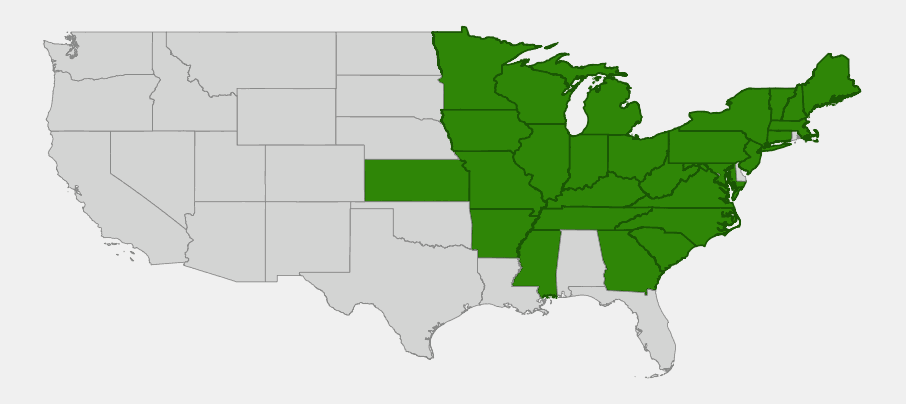
Agueweed is native to eastern North America, from southern Maine and Ontario west to Minnesota, Iowa and Kansas and south to Arkansas, Mississippi and Georgia. It grows in moist meadows, open woods, wooded slopes and bluffs, seeps, fens, old fields and roadsides, and on the grassy balds and high-elevation openings of the Southern Appalachians.
It is one of the last wildflowers of the year, blooming from late August into October, often after most other plants have gone to seed. Because it is a short-lived annual or biennial that depends on fresh seed, it is rarely sold. It is best appreciated in the wild, or encouraged in a moist native meadow where it can reseed on its own.
Identification
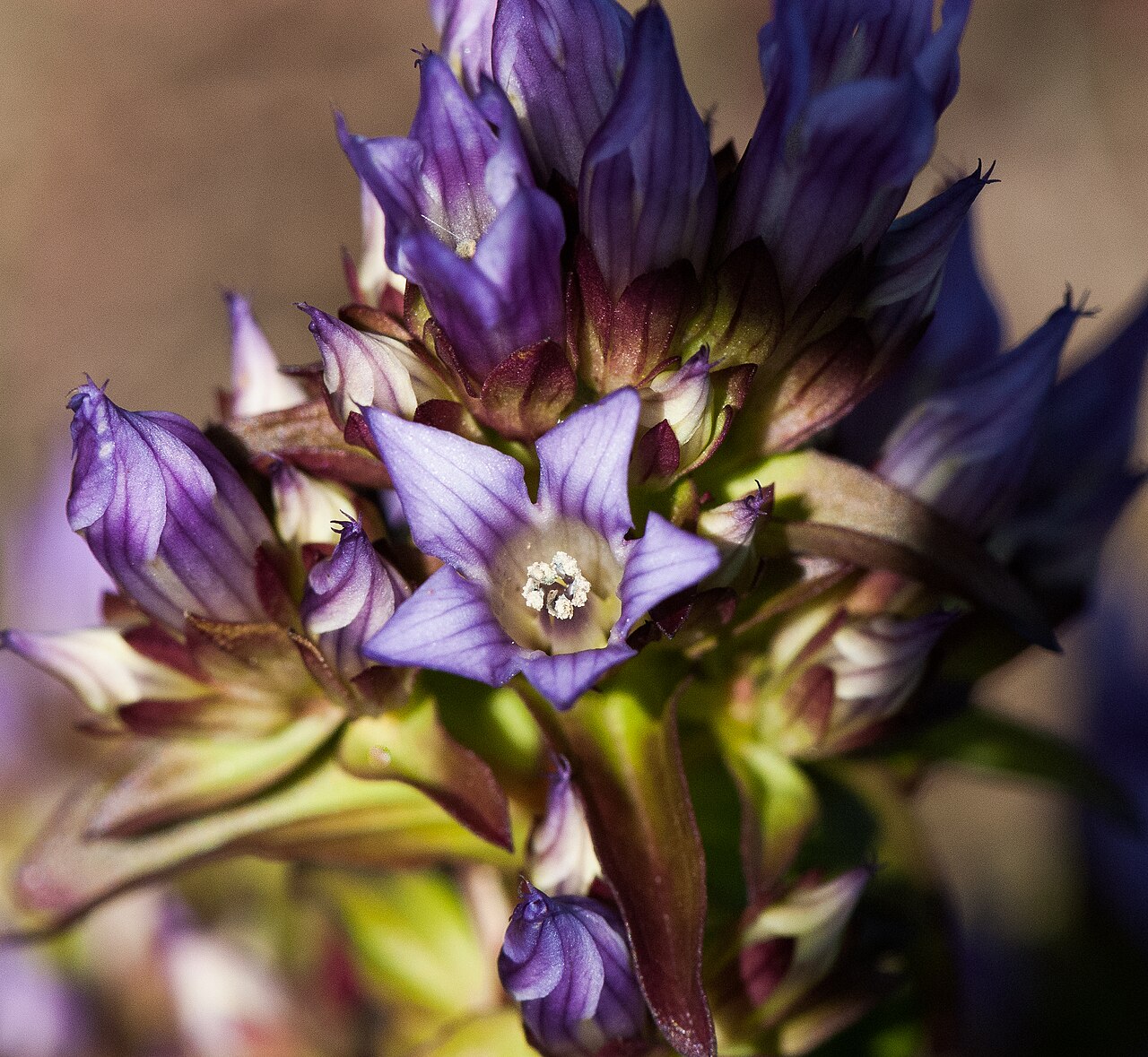
Look for a stiff, upright, often branched plant with square stems, paired clasping leaves and crowded clusters of narrow, pale violet flowers whose short, pointed lobes have no fringe.
Growth Habit
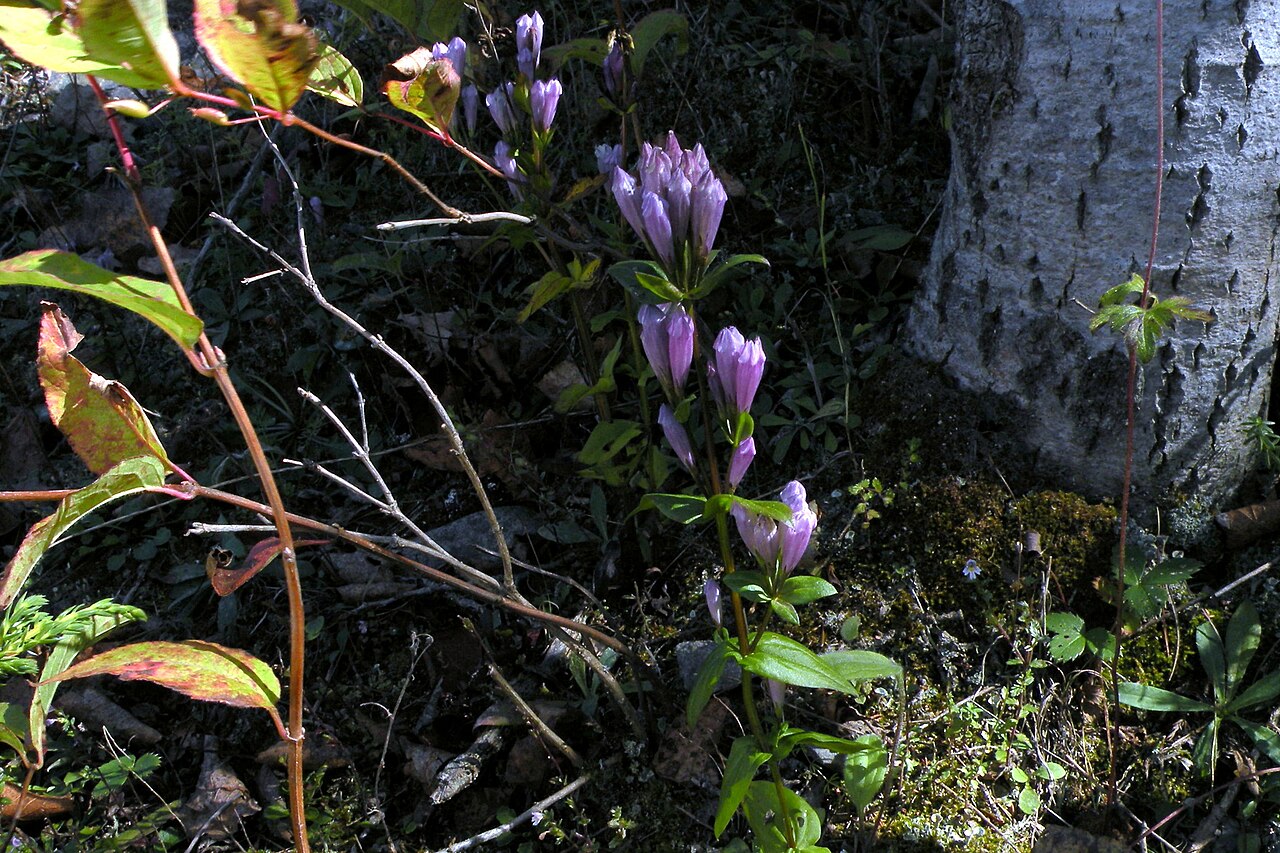
Agueweed is an annual or biennial. In its first year it may form only a small rosette, then send up a single flowering stem that dies after setting seed. The stems are 4-angled, often purplish, and usually branched in the upper half, so a well-grown plant looks like a small candelabra of flower clusters. Plants in shade are often thin and unbranched.
Leaves
The leaves are opposite, stalkless and ovate to lance-shaped, about 1 to 3 inches long, with rounded or slightly heart-shaped bases that clasp the stem. They have three to seven prominent veins running lengthwise and smooth edges.
Flowers
The flowers grow in clusters of about two to seven at the tip of the stem and at the ends of short side branches. Each flower is a narrow tube about 1/2 to 3/4 inch long, pale blue-violet to lilac and occasionally white. The tube ends in four or five short, triangular, bristle-tipped lobes that open only partly, and the throat has a ring of fine hairs inside. There is no fringe on the lobes and no pleats between them. The calyx has narrow, unequal lobes much shorter than the corolla.
Fruit & Seeds
The fruit is a slender capsule that develops inside the withered flower and splits open at the top to release many tiny seeds in late fall.
Look-alikes
Greater fringed gentian has much larger, sky-blue flowers with four conspicuously fringed lobes, borne singly on long stalks. Closed gentians such as bottle gentian and soapwort gentian are perennials with stouter, deep blue, club-shaped flowers and pleats between the lobes. Agueweed’s many small, narrow, lilac flowers with sharp lobes and no pleats set it apart.
Quick Facts
| Scientific Name | Gentianella quinquefolia (syn. Gentiana quinquefolia) |
| Family | Gentianaceae (gentian family) |
| Plant Type | Annual or biennial wildflower |
| Mature Height | 4 in–2 ft |
| Mature Spread | 4–10 in |
| Growth Rate | Fast (completes its life in one or two seasons) |
| Sun Exposure | Full sun to part shade |
| Water Needs | Moderate to moist; not drought tolerant |
| Soil Type | Moist loam, rocky or gravelly soil; often over limestone |
| Soil pH | Slightly acidic to alkaline (about 6.0–8.0) |
| Bloom Time | Late August–October |
| Flower Color | Pale blue-violet to lilac, rarely white |
| Fall Color | Stems and leaves often turn purplish |
| Fruit | Slender capsule with many tiny seeds |
| Deer Resistant | Somewhat (bitter foliage) |
| USDA Hardiness Zones | 4–8 |
Native Range
Agueweed is native to eastern North America. USDA PLANTS records it from 27 states, from Maine, New Hampshire and Vermont south to Georgia and South Carolina and west to Minnesota, Iowa, Kansas, Missouri, Arkansas and Mississippi, and from Ontario in Canada. It is most frequent in the Appalachians, the Ohio Valley and the Great Lakes region and becomes uncommon to rare toward the edges of its range.
Two subspecies are often recognized. The typical eastern form, subspecies quinquefolia, grows mainly from New England and the Appalachians south, while subspecies occidentalis, with somewhat larger flowers, grows mainly to the west, in the Midwest, the Ozarks and the prairie edge. They meet and intergrade in the Ohio Valley.
It grows in moist, open or lightly shaded places: wet and mesic meadows, calcareous seeps and fens, open deciduous woods, wooded slopes and limestone bluffs, glades, old fields and road banks. In the Southern Appalachians it reaches high-elevation grassy balds and spruce-fir openings above 6,000 feet.
📋 Regional plant lists featuring Agueweed: New York, Pennsylvania & Northern New Jersey · Ohio & Indiana · Michigan, Wisconsin & Eastern Minnesota · Kentucky & Tennessee · Nebraska, Kansas & Eastern Colorado · Connecticut, Massachusetts & Rhode Island · New Hampshire, Maine & Vermont · Maryland, Virginia & West Virginia · Delaware, Southern New Jersey & Long Island · Illinois, Iowa & Missouri · Alabama, Georgia & Mississippi · North & South Carolina · Arkansas, Louisiana, Eastern Oklahoma & Eastern Texas
Growing & Care Guide
Agueweed is not a typical garden plant. It is an annual or biennial that lives for only one or two seasons, it is almost never sold as plants, and it survives only where it can reseed. If you have a moist, sunny meadow, a seep or a rocky woodland edge, you can try to establish it from seed and let it come and go on its own.
Light
Full sun to part shade. It flowers most heavily in sun and in light, dappled shade at woodland edges. In deep shade it grows as a thin single stem with few flowers.
Soil & Water
It needs soil that stays evenly moist through summer, such as a meadow, a seep edge or a north-facing slope. Many populations grow over limestone or other base-rich rock, so neutral to slightly alkaline soil suits it, but it also grows in mildly acidic loam. Do not let young plants dry out.
Planting Tips
Sow fresh seed on the surface of bare, moist soil in fall, in a spot with short, open vegetation. The seed is dust-fine and needs light and a cold winter to germinate, so do not bury it. Thin, patchy grass or a gap in a meadow works better than a dense stand of tall perennials, which will shade out the seedlings.
Pruning & Maintenance
Do not cut the plants until the capsules have opened and shed their seed in late fall. Mowing or burning the meadow in late winter or early spring keeps the vegetation open enough for new seedlings. Avoid mowing in late summer and fall, when it is flowering and setting seed.
Propagation
Propagate only by seed. Collect it in late fall, when the capsules turn brown and split at the top, and sow it right away outdoors, or store it cold and dry and give it about 60 to 90 days of cold, moist stratification before sowing in spring. Seedlings are tiny and slow at first. Like many gentians, it may depend on soil fungi in the early stages, so sowing it where it already grows nearby gives the best chance of success.
Landscape Uses
- Moist meadows: late color in a wet or mesic native meadow
- Seep and fen restoration: part of the native flora of calcareous seeps and fens
- Woodland edges: light shade and moist, rocky soils
- Pollinator gardens: late-season food for bumble bees
- Naturalized areas: reseeds where vegetation stays short and open
Wildlife & Ecological Value
Agueweed blooms when few other flowers are left, so it is a useful late source of nectar and pollen for the last bumble bees of the season.
For Pollinators
The narrow, partly closed flowers are visited mainly by bumble bees, which are strong enough to push into the tube, as well as by some smaller bees. Bumble bee queens feeding before winter make use of late-blooming plants like this one.
For Birds
The seeds are dust-fine and of little direct value to birds, but the moist meadows and woodland edges where agueweed grows provide cover and insect food for many birds.
For Mammals
The foliage is very bitter, like that of other gentians, and mammals rarely browse it. Deer may nibble it occasionally.
Ecosystem Role
As a short-lived plant, agueweed relies on small openings in moist meadows, seeps and woods. It is an indicator of high-quality, often calcium-rich habitats, and its presence often signals a diverse native plant community.
Cultural & Historical Uses
The common name agueweed comes from the old use of the plant as a bitter tonic for “ague,” the chills and fevers of malaria and similar illnesses. Like other gentians, the plant contains intensely bitter compounds, and gentian roots and herbs were widely used as bitter tonics in folk medicine. It should not be used for self-treatment.
The genus name Gentianella means “little gentian.” The gentians are said to be named after Gentius, a king of ancient Illyria who was believed to have discovered their medicinal uses. The species name quinquefolia means “five-leaved,” and is often thought to refer to the five-lobed flowers.
Botanists moved this species from Gentiana to Gentianella because its flowers lack the pleats between the lobes found in true gentians. It is also called stiff gentian, after its stiff, upright, branching stems.
Frequently Asked Questions
Is agueweed a perennial?
No. Agueweed is an annual or biennial. Each plant flowers once and dies, so it lasts in a place only if it can reseed.
Why is it called agueweed?
The bitter plant was once used as a folk tonic for ague, the chills and fevers of malaria. That use is historical, and the plant should not be used for self-treatment.
How is agueweed different from fringed gentian?
Fringed gentian has large, sky-blue flowers with four fringed lobes on long stalks. Agueweed has small, narrow, pale violet flowers in tight clusters, with short, pointed lobes and no fringe.
When does agueweed bloom?
From late August into October. It is one of the last wildflowers to bloom in many eastern meadows and woods.
Can I buy agueweed plants?
It is very rarely sold. The best way to grow it is to sow fresh, locally collected seed on bare, moist soil in fall.

Looking for a nursery that carries Agueweed?
Browse our native plant nursery directory: Arkansas · Connecticut & Georgia · Illinois, Indiana, Iowa & Kansas · Kentucky, Maine, Maryland, Massachusetts, Michigan, Minnesota, Mississippi & Missouri · New Hampshire, New Jersey, New York, North Carolina & Ohio · Pennsylvania, South Carolina, Tennessee, Vermont & Virginia · West Virginia & Wisconsin

