
Aspen Onion (Allium bisceptrum)
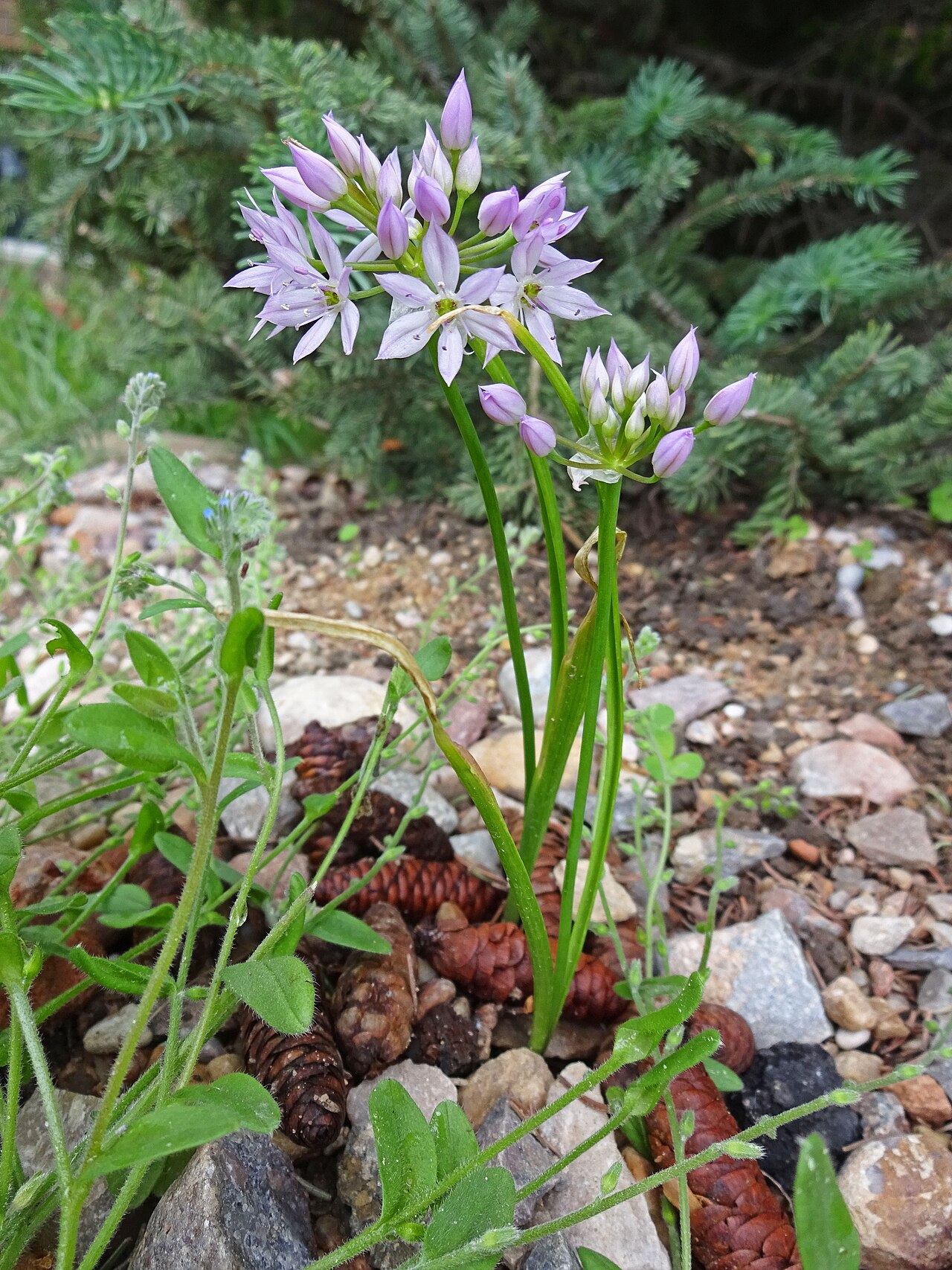
Allium bisceptrum, the Aspen Onion, is a wild onion of the mountains of the western United States. USDA PLANTS calls it twincrest onion, a name that refers to the six small crests, in pairs, on top of its ovary. In late spring and early summer it raises loose, rounded clusters of 15 to 40 pink to purple, star-shaped flowers on stalks 4 to 16 inches tall. It is named for the aspen groves where it often grows, along with moist meadows, streambanks and open pine forests.
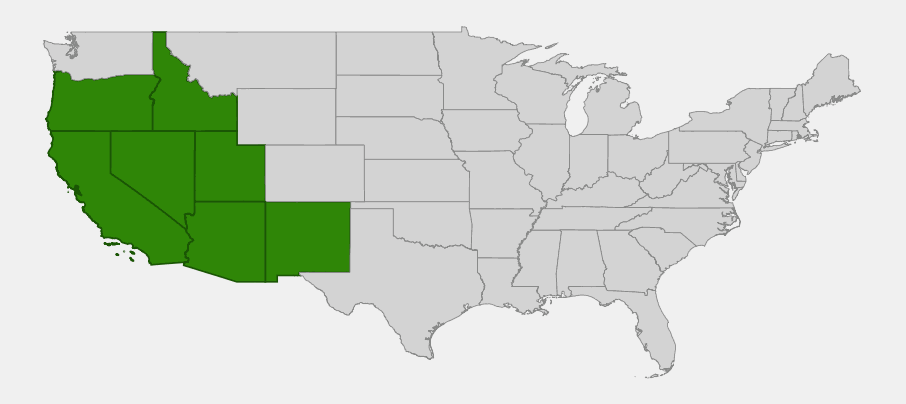
Aspen onion is native to California, Oregon, Idaho, Nevada, Utah, Arizona and New Mexico. It is especially common in the Great Basin ranges and the Wasatch and other Utah mountains, where it can carpet the floor of aspen stands in early summer. Its leaves and bulbs have a strong onion smell, and like other wild onions it is edible in small amounts.
This guide covers how to identify aspen onion, including how to tell it from the highly poisonous death camas that grows in the same meadows, where it grows and how to grow it in a native garden.
Identification
Aspen onion is a small bulb plant with two flat leaves and an open umbel of pink flowers. Every part smells strongly of onion when crushed, which is the single most important identification test.
Bulb and Leaves
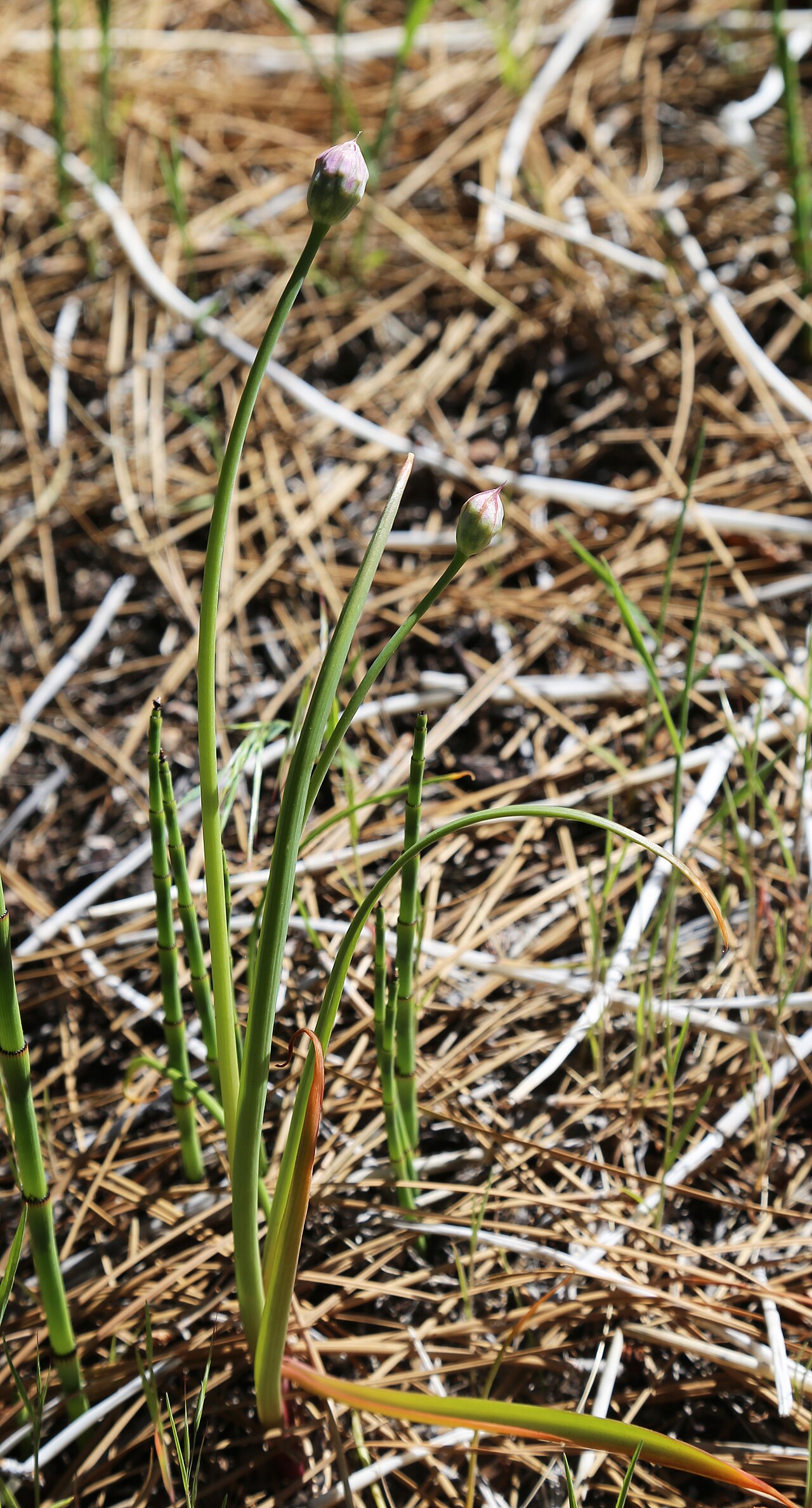
Each plant grows from a small, egg-shaped to round bulb with a pale outer coat. It usually has two flat, grass-like leaves, about as long as the flower stalk or a little shorter. The leaves stay green through flowering, longer than in many other wild onions, and smell of onion when scratched.
Flowers
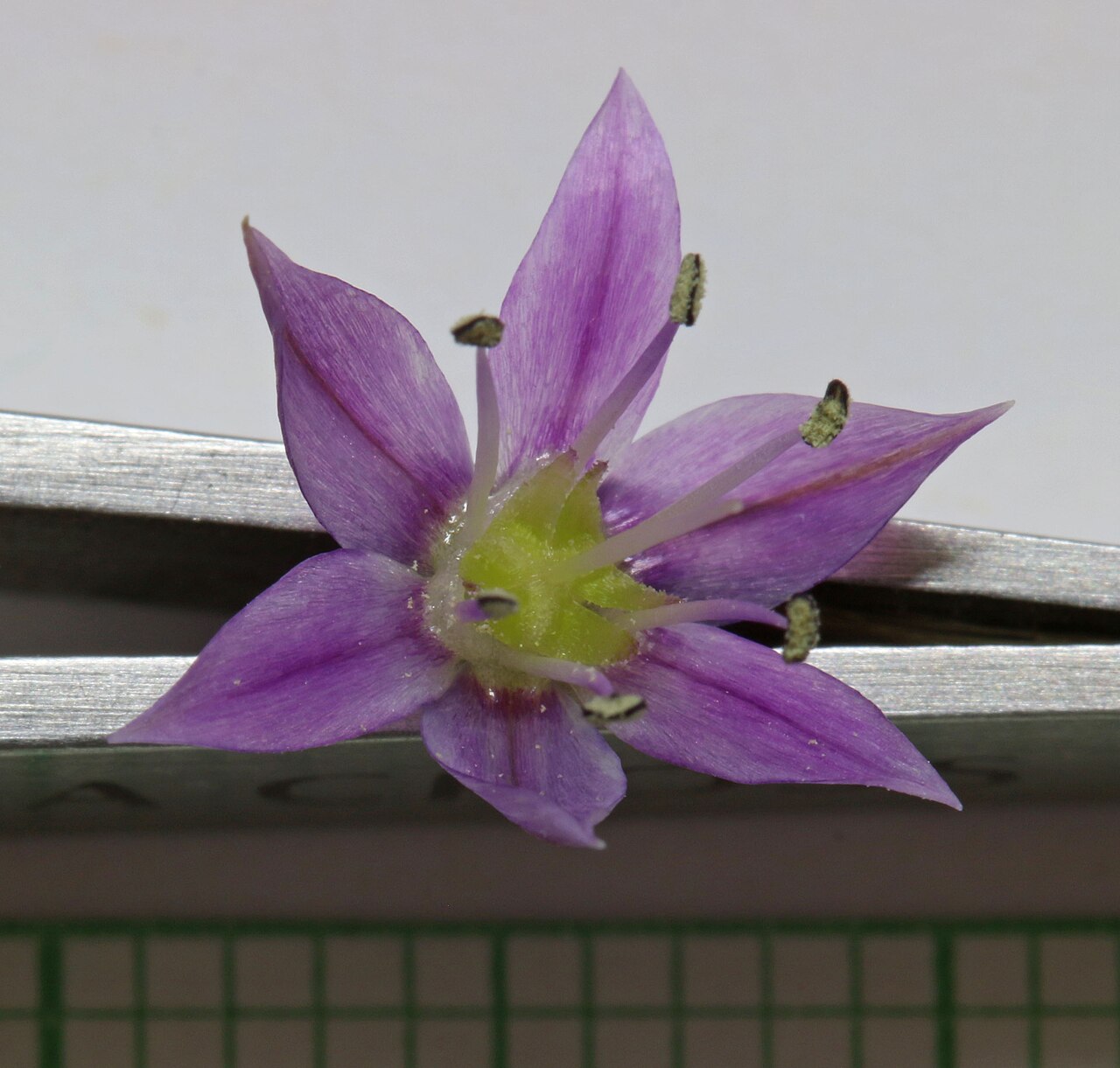
The flower stalk (scape) is 4 to 16 inches tall and ends in a loose, rounded umbel of about 15 to 40 flowers. Each flower is star-shaped, with six narrow, sharply pointed tepals about ⅜ to ⅝ inch long. They are pink to rose-purple, sometimes paler, often with a darker midstripe. It blooms from May to July, depending on elevation.
Fruit and Seeds
The fruit is a small, three-lobed capsule. On top of the ovary there are six short crests arranged in pairs, the “twin crests” that give the plant its USDA name. The capsules split to release small black seeds.
Look-alikes: Other Wild Onions
Swamp Onion is taller, with several leaves and an upright cluster of flowers, and grows in wetter places. Nodding Onion has a nodding flower head. Hooker’s Onion grows in drier, open sites and its leaves usually wither before flowering. See our guide to Native Wild Onions for more.
Safety: Do Not Confuse with Death Camas
Death camas is deadly and grows in the same mountain meadows and aspen groves. Meadow Death Camas, Foothill Death Camas and Mountain Death Camas all have grass-like leaves and bulbs that look much like onion bulbs, especially before flowering. All parts of death camas contain toxic alkaloids, and eating even a small amount of bulb or leaf can be fatal to people and livestock.
Use the smell test on every plant you collect: a true onion smells of onion when a leaf or bulb is crushed. If it does not smell like onion, do not eat it. Death camas has no onion smell, its leaves are usually V-shaped (keeled) and it bears cream to white or greenish flowers in a spike or branched cluster, not a pink umbel. Because the smell can linger on your hands after handling onions, wash your hands between plants, and never eat any wild bulb you are not completely sure of.
Quick Facts
| Scientific Name | Allium bisceptrum S. Watson |
| Family | Amaryllidaceae (onion subfamily Allioideae); formerly Liliaceae |
| Plant Type | Perennial bulb (wildflower) |
| Mature Height | 4–16 in |
| Mature Spread | 3–6 in per plant; forms loose groups |
| Growth Rate | Moderate; slow from seed |
| Sun Exposure | Full sun to part shade |
| Water Needs | Medium; moist in spring, drier in late summer |
| Soil Type | Loam, clay loam or gravelly soil with organic matter |
| Soil pH | Slightly acidic to neutral, about 6.0–7.5 |
| Bloom Time | May–July |
| Flower Color | Pink to rose-purple |
| Fall Color | None; leaves die back in summer |
| Fruit | Small three-lobed capsule with black seeds |
| Deer Resistant | Mostly; the onion smell deters deer, but elk and rodents eat the bulbs |
| USDA Hardiness Zones | 4–8 |
Native Range
USDA PLANTS lists aspen onion as native in California, Oregon, Idaho, Nevada, Utah, Arizona and New Mexico. It is a mountain plant, usually found from about 5,000 to 10,000 feet. It grows in the Sierra Nevada and other mountains of eastern and northern California, the mountains of eastern Oregon and southern Idaho, the many ranges of the Great Basin in Nevada and Utah, and the high plateaus and mountains of northern Arizona and New Mexico.
Utah is the heart of its range. It is common in the Wasatch Range and on the high plateaus of central and southern Utah, often in quaking aspen stands. In New Mexico and Arizona it grows in aspen and mixed conifer forests and mountain meadows. It does not occur in Canada.
Typical habitats include aspen groves, moist mountain meadows, streambanks and openings in ponderosa pine, fir and mixed conifer forests. The soil is usually moist in spring, when the plant grows and blooms, and drier by late summer, when it goes dormant.
📋 Regional plant lists featuring Aspen Onion: California & Nevada · Idaho, Eastern Oregon & Eastern Washington · Utah & Western Colorado · Arizona & New Mexico
Growing & Care Guide
Aspen onion is an easy, small bulb for mountain and high-desert gardens in the West. It looks best planted in groups in a meadow, under aspens or at the edge of a woodland, where its pink flower heads appear in early summer. Plants and seed are occasionally offered by native plant nurseries and seed companies in the Intermountain West.
Light
Plant in full sun to part shade. In the wild it often grows in the dappled shade of aspens; in hot, low-elevation gardens, afternoon shade helps it last longer in bloom.
Soil & Water
It prefers loamy, reasonably rich soil that is moist in spring and early summer and drier afterward. Water regularly while it is in growth if spring is dry, then reduce watering once the leaves start to yellow in summer. Avoid soggy soil while the bulbs are dormant.
Planting Tips
Plant bulbs in fall, about 2 to 3 inches deep and 3 to 4 inches apart, in groups of a dozen or more for a natural look. Or sow seed outdoors in fall. Buy bulbs or seed from nurseries; never dig wild bulbs, and never plant wild-collected “onions” you have not identified with certainty, since death camas looks very similar.
Pruning & Maintenance
Let the leaves die back naturally so the bulb can store energy for next year. Leave the seed heads to ripen if you want plants to self-sow. Mark where the bulbs are so they are not dug up while dormant.
Propagation
Sow fresh seed in fall so that it receives a natural cold, moist period over winter; seedlings may take three or more years to flower. Established clumps can be lifted and divided in late summer or fall after the foliage has died back.
Landscape Uses
- Mountain meadow and aspen gardens: pink early-summer color among grasses and wildflowers
- Pollinator gardens: nectar for native bees, butterflies and other insects
- Woodland edges: tolerates dappled shade under aspens and pines
- Edible landscaping: leaves and bulbs can be used like chives or green onions in small amounts
- Restoration: native bulb for moist mountain meadows and aspen stands
Wildlife & Ecological Value
Aspen onion is a small plant, but its flowers and bulbs feed many animals of western mountain meadows.
For Pollinators
The open, star-shaped flowers provide nectar and pollen to native bees, including sweat bees and small solitary bees, as well as to flies, butterflies and moths.
For Birds
Seed-eating birds may eat the small black seeds. The plant also contributes to the insect-rich meadows where grouse and songbirds raise their young.
For Mammals
Elk, black bears, gophers, ground squirrels and prairie dogs eat wild onion bulbs. The leaves are grazed by elk and livestock, though the strong onion flavor makes them less attractive to deer.
Ecosystem Role
Aspen onion is part of the rich herb layer of western aspen stands, one of the most diverse plant communities in the Intermountain West. Like other spring-growing bulbs, it does most of its growing while the soil is moist and then goes dormant in the dry summer.
Cultural & Historical Uses
Sereno Watson described Allium bisceptrum in 1871 in the botany report of the U.S. Geological Exploration of the Fortieth Parallel, led by Clarence King. The name bisceptrum means “two scepters.” Forms once separated as var. palmeri and var. utahense are now generally included in the species.
Indigenous peoples of the Great Basin and surrounding mountains gathered the region’s wild onions for their bulbs and leaves, which were eaten raw, cooked or used for flavor. Wild onions were one of the first fresh greens available in spring.
Today aspen onion is mostly appreciated by hikers and wildflower watchers. It is still a useful lesson in plant safety: in the same meadows grow death camas species that have poisoned people who mistook them for wild onions, which is why the onion smell test is so important.
Frequently Asked Questions
Is aspen onion edible?
Yes. The bulbs and leaves are edible and taste strongly of onion. Harvest only small amounts where collecting is allowed, and only after a positive identification, including the onion smell test, because poisonous death camas grows in the same places.
How can I tell aspen onion from death camas?
Crush a leaf or bulb: aspen onion smells clearly of onion, and death camas does not. Aspen onion has a rounded umbel of pink to purple flowers; Meadow Death Camas and its relatives have cream to white flowers in a spike or branched cluster and usually V-shaped leaves. If a plant does not smell like onion, do not eat it.
Is twincrest onion the same as aspen onion?
Yes. Twincrest onion is the USDA PLANTS name for Allium bisceptrum, from the paired crests on its ovary. Aspen onion is the name used by many field guides, because the plant is so common in aspen groves.
Where does aspen onion grow?
In the mountains of California, Oregon, Idaho, Nevada, Utah, Arizona and New Mexico, mainly in aspen groves, moist meadows, streambanks and open conifer forests between about 5,000 and 10,000 feet.
Can I grow aspen onion in my garden?
Yes. Plant bulbs or sow seed in fall in loamy soil that is moist in spring and drier in summer, in full sun or part shade. It suits meadow gardens and woodland edges in the Intermountain West and other cold-winter gardens.

Looking for a nursery that carries Aspen Onion?
Browse our native plant nursery directory: Arizona · California · Idaho · Nevada & New Mexico · Oregon · Utah

