
Native Wild Onions (Allium)
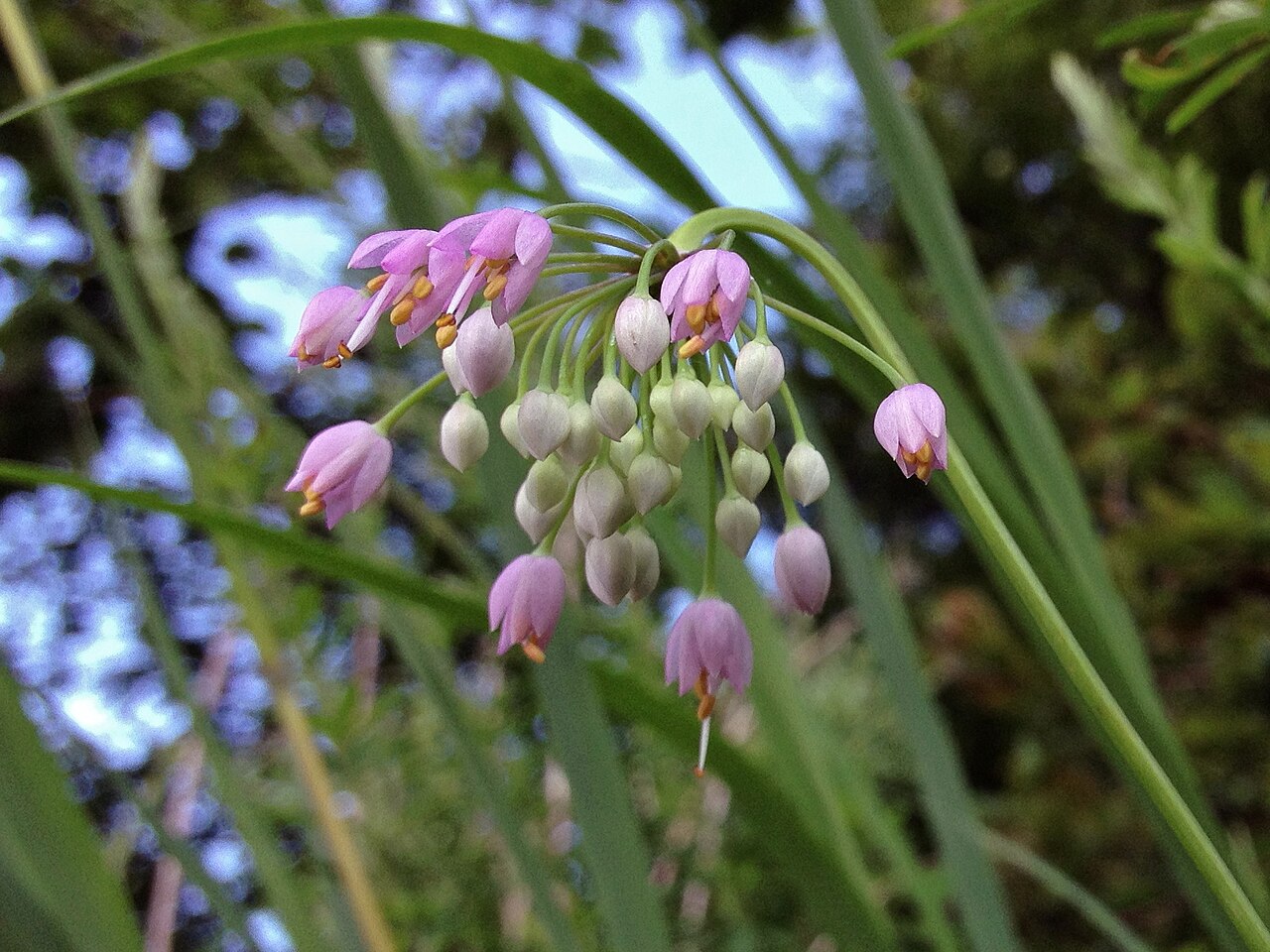
When gardeners talk about alliums, they usually mean kitchen onions, garlic and chives, or the big purple globes of ornamental alliums from Central Asia. But the United States has its own wild onions, and plenty of them. Roughly 90 Allium species are native to the US, more than anywhere else in the Americas. They grow in every one of the lower 48 states and in Alaska, from the ramps of Appalachian forests and the nodding onions of Midwestern prairies to dozens of small, jewel-colored species on the rocky slopes and serpentine soils of Oregon and California.
Native onions are bulbs that smell unmistakably of onion or garlic when you crush a leaf. Most send up grassy or strap-shaped leaves in spring and then round or drooping clusters of small, star-shaped flowers in pink, rose, purple, white or lavender. They are tough, long-lived and easy in sunny, well-drained gardens, and their flowers are busy with native bees, honeybees, butterflies and hover flies. Deer and rabbits usually leave them alone.
This guide covers the native onions most worth knowing and growing, where each grows wild, how to tell them from their poisonous look-alikes, and how they compare with the culinary and ornamental alliums sold in stores. If you came from our strawberry companion-planting article, native onions can fill the same role as chives and garlic along a strawberry bed. If you came from our Oregon pollinator article, the species native to Oregon are marked below.
Identification
Wild onions belong to the genus Allium in the amaryllis family (Amaryllidaceae), which now includes the former onion family (Alliaceae). All are perennial herbs that grow from bulbs, often clustered, and all contain the sulfur compounds that give onions and garlic their smell and bite.
Smell
The single most important field mark is the smell. Crush a leaf or bulb: a true wild onion smells of onion or garlic. Several native bulbs that look similar, including the deadly death camases, have no onion smell at all. If a plant does not smell like onion, do not treat it as one. Be aware that the smell can linger on your fingers from a previous plant, so test each plant separately.
Leaves
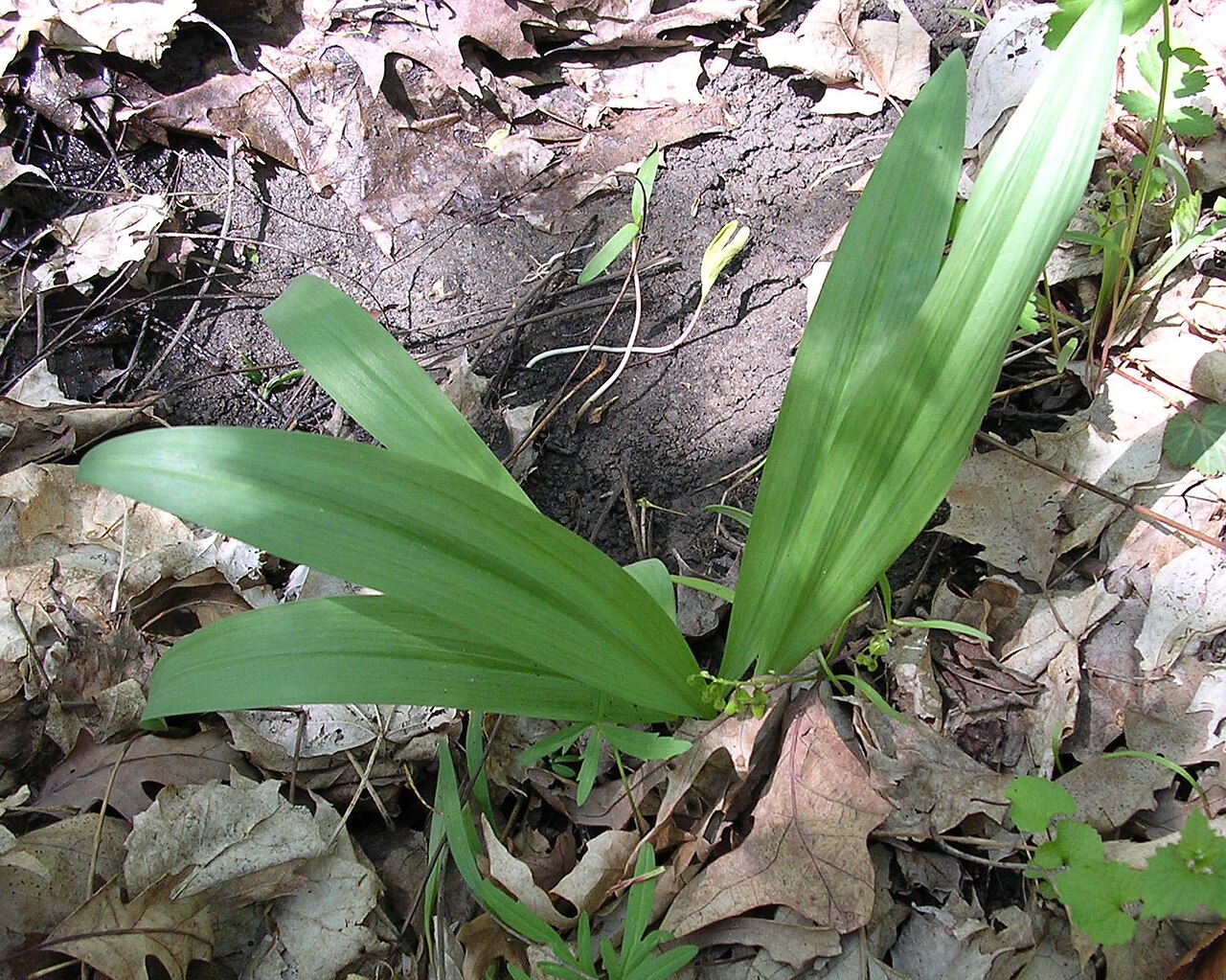
Leaves arise from the bulb and are usually grasslike, either flat, channeled or round and hollow like a chive. Many western species have just one or two leaves per bulb, and in some, such as Hooker’s onion, the leaves wither by the time the flowers open. Ramps are the striking exception: they have broad, smooth, lily-of-the-valley-like leaves 1 to 2½ inches wide.
Flowers
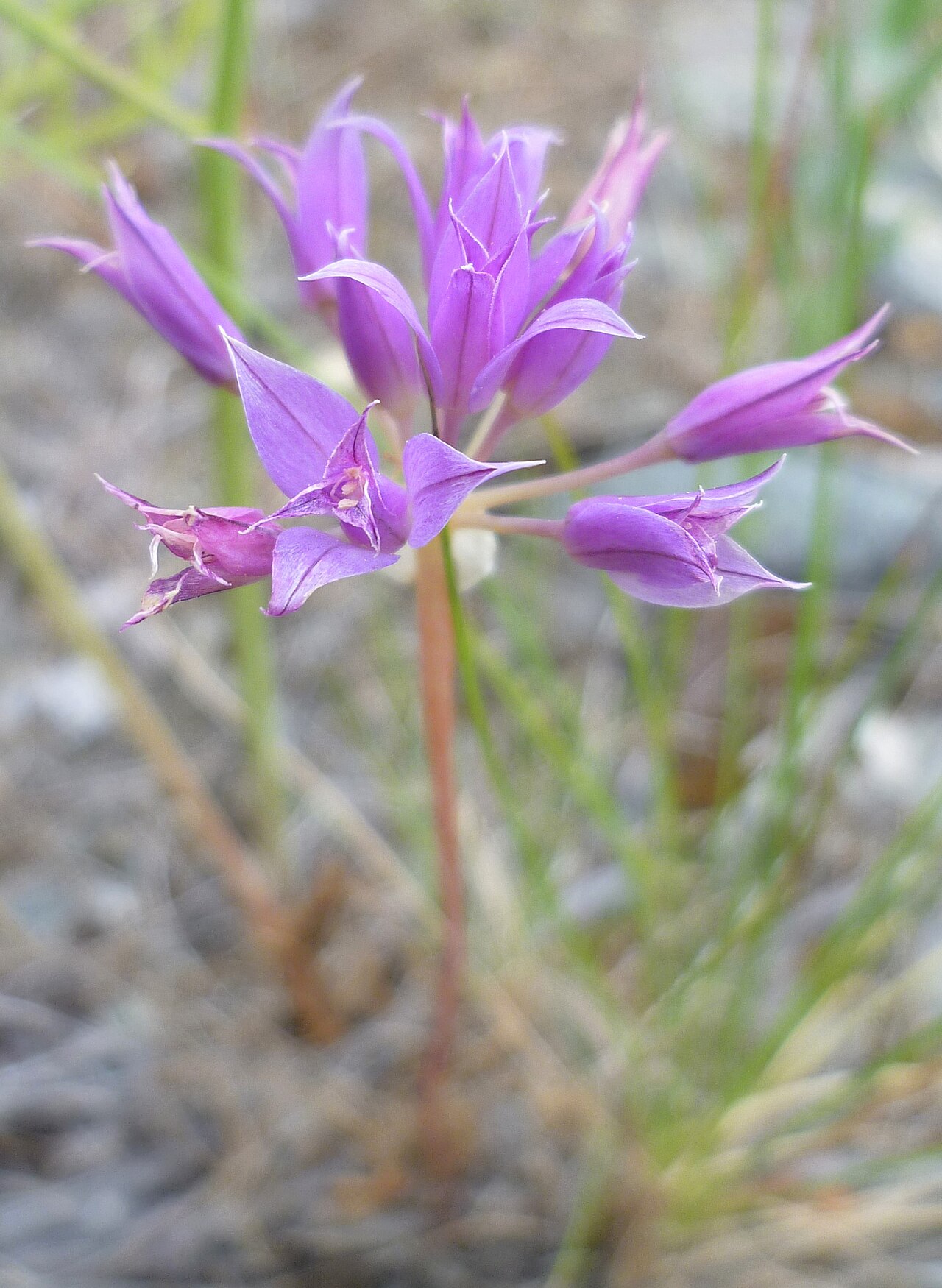
The flowers sit in an umbel, a cluster in which all the flower stalks radiate from one point at the top of a leafless stem (scape). Before opening, the umbel is wrapped in two or three papery bracts. Each flower has six petal-like tepals and six stamens. Umbels are upright and starry in most species, but nodding in nodding onion. In wild garlic and some others, many or all of the flowers are replaced by small bulblets that drop and sprout. Most native onions bloom in spring or early summer; nodding onion and prairie onion bloom in summer and early fall.
Bulbs
The outer coat of the bulb is a useful clue for botanists. In textile onion and wild garlic it is a net of tough fibers; in others it is papery or membranous. Several western species sit on top of a short rhizome, and ramps have slender bulbs that form dense colonies.
Poisonous Look-Alikes
Never eat a wild “onion” that lacks onion smell. The most dangerous look-alikes are the death camases, such as meadow death camas (Toxicoscordion venenosum) and foothill death camas, which grow alongside wild onions across the West and are highly toxic to people and livestock. Crowpoison (Nothoscordum bivalve) of the Southeast and southern Plains looks like a small white wild onion but has no onion odor. Lily-of-the-valley, which is poisonous, is sometimes confused with ramps; ramp leaves smell strongly of garlic and grow singly or in pairs from a bulb, while lily-of-the-valley leaves have no onion smell.
Quick Facts
| Scientific Name | Allium L. |
| Family | Amaryllidaceae (Amaryllis; formerly Alliaceae, Onion) |
| US-Native Species | Roughly 90 (approximate), most in the West, especially California and Oregon |
| Growth Form | Perennial bulbs with grassy or strap-shaped leaves |
| Mature Height | Mostly 4 in–2 ft in flower |
| Sun Exposure | Mostly Full Sun; ramps and a few others need Part Shade to Shade |
| Water Needs | Most prefer dry to average, well-drained soil; swamp onion and a few others need moist ground |
| Soil Type | Sandy, gravelly, rocky or clay soils, depending on species |
| Bloom Time | Spring to early fall, depending on species |
| Flower Color | Pink, rose, magenta, purple, lavender or white |
| Wildlife Value | Nectar and pollen for native bees, honeybees, butterflies and hover flies |
| Deer Resistant | Yes, usually; the onion smell deters deer and rabbits |
| Toxicity | Toxic to dogs, cats, horses and cattle if eaten in quantity; poisonous look-alikes exist |
Native Range
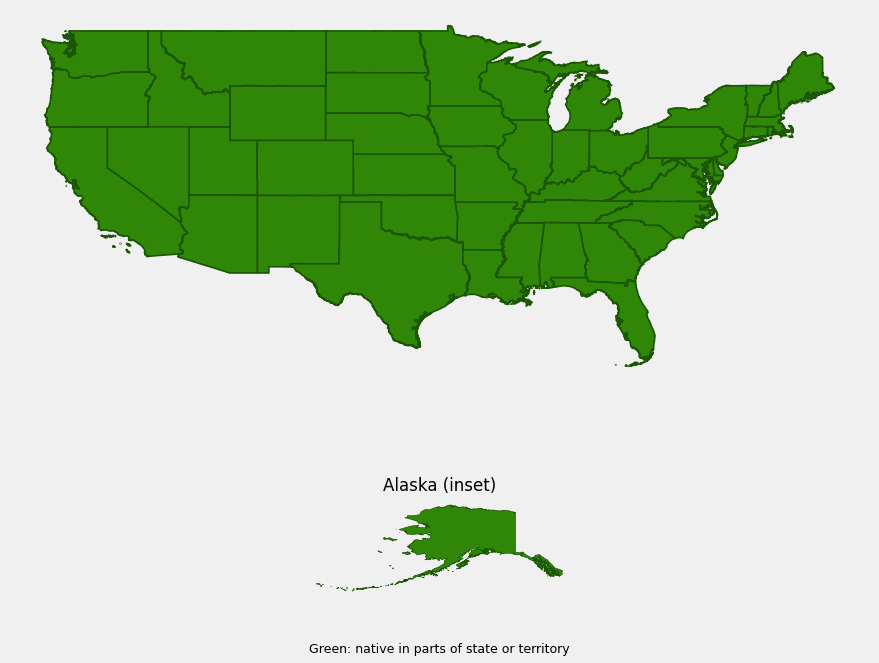
Native onions grow in all 48 contiguous states, the District of Columbia and Alaska. The East has relatively few species: wild garlic, nodding onion, ramps and a handful of others are the common ones from Maine to Florida and west to the Mississippi. The Great Plains add prairie onion, textile onion and Drummond’s onion, which bloom on dry, rocky prairies and limestone outcrops.
The real center of diversity is the Far West. California has about half of all the native species, and Oregon, Idaho, Nevada and Washington have many more, often confined to a single soil type such as serpentine, volcanic scabland or vernally wet clay. Wild chives grow across the northern states and into Alaska. No onions are native to Hawaii.
Several European and Asian onions have escaped and become weeds, especially field garlic in the East. Those plants are described under Non-Native Look-Alikes and are not part of the native range shown here.
📋 Regional plant lists with native wild onions: New Hampshire, Maine & Vermont · Connecticut, Massachusetts & Rhode Island · New York, Pennsylvania & Northern New Jersey · Delaware, Southern New Jersey & Long Island · Maryland, Virginia & West Virginia · North Carolina & South Carolina · Georgia, Alabama & Mississippi · Arkansas, Louisiana, Eastern Oklahoma & Eastern Texas · South & West Texas · Kentucky & Tennessee · Ohio & Indiana · Illinois, Iowa & Missouri · Michigan, Wisconsin & Eastern Minnesota · North Dakota, South Dakota & Western Minnesota · Nebraska, Kansas & Eastern Colorado · Montana & Wyoming · Utah & Western Colorado · Arizona & New Mexico · Idaho, Eastern Oregon & Eastern Washington · Western Oregon & Washington · California & Nevada · Alaska
Native Species
These native onions are the most widespread, the most useful in gardens, or both. Each linked name goes to our full growing guide.
Nodding wild onion (Allium cernuum) is the most widespread native onion, found from the Appalachians across the Midwest and Rockies to the Pacific Northwest, including Oregon. Its flower stalk bends over at the top so the cluster of pink to white bells hangs down, in July and August. It is the easiest native onion for gardens: it grows 1 to 2 feet tall in sun and almost any well-drained soil, and bumblebees love it. It self-sows readily.
Prairie onion (Allium stellatum) has an upright, starry cluster of bright pink flowers in late summer and early fall, after most onions are done. It grows on rocky prairies, bluffs and limestone glades from Minnesota and Wisconsin south to Texas and is a fine plant for dry, sunny rock gardens.
Wild garlic (Allium canadense), also called meadow garlic, grows in fields, open woods and roadsides across the East, Midwest and southern Plains. Its spring umbel usually carries a mix of small pink or white flowers and tiny bulblets, though some varieties have only flowers. Its bulb has a fibrous, netted coat. It spreads easily by bulblets and can become weedy in lawns.
Ramps or wild leek (Allium tricoccum) carpet rich, moist hardwood forests from New England and the Great Lakes south through the Appalachians in early spring. The broad leaves appear in March or April and die back by early summer, before the white flower clusters open. Ramps are prized as a spring vegetable, and heavy commercial digging has depleted many wild colonies; Great Smoky Mountains National Park banned harvest in 2004, and Quebec bans commercial harvesting. Plant ramps from nursery-grown bulbs or seed rather than dug plants, and if you harvest, take one leaf per plant and leave the bulb.
Wild chives (Allium schoenoprasum) are the same species as garden chives. Native populations grow on lake shores, river gravels and moist meadows across the northern US, in the Rocky Mountains and in Alaska. Garden chives are mostly of European origin, but the plant itself is circumpolar and truly native here, with round, hollow leaves and dense lavender-pink heads in early summer.
Drummond’s wild onion (Allium drummondii) is a small spring onion of the southern Great Plains, from Kansas through Oklahoma, Texas and New Mexico. It has white, pink or rose flowers on 4- to 12-inch stems and a fibrous bulb coat, and it thrives on dry prairie, limestone and caliche.
Textile onion (Allium textile) is one of the first wildflowers of spring on the northern Great Plains and in the intermountain West. It has small white flowers (sometimes pink-tinged) just a few inches tall, and a bulb wrapped in a netted, cloth-like coat that gives it its name.
Hooker’s onion (Allium acuminatum), also called tapertip onion, is widespread on dry, open, rocky slopes from British Columbia to California and east to Wyoming and Colorado, including eastern and western Oregon. Its bright magenta to rose flowers have pointed, outcurved tips and open in late spring, often after the leaves have dried up.
Swamp onion (Allium validum) grows in wet mountain meadows and along streams in the Cascades, Sierra Nevada and northern Rockies, including Oregon. It is one of the largest native onions, 1½ to 3 feet tall, with flat leaves and rose-pink to white flowers in summer, and it is one of the few that wants constantly moist soil.
Oneleaf onion (Allium unifolium) grows in moist, clay soils, meadows and open woods in the Coast Ranges of California and southwestern Oregon. Despite its name it often has two or three leaves. Its loose umbels of large, pink, cup-shaped flowers in late spring make it one of the showiest and most garden-tolerant western onions, and it spreads by offsets.
Narrowleaf onion (Allium amplectens) has dense, rounded heads of white to pale pink, often papery flowers in late spring. It grows in grasslands, rocky slopes and vernally wet clay or serpentine soils from Washington and Oregon through California.
Scytheleaf onion (Allium falcifolium) is a low plant of serpentine and rocky soils in southwestern Oregon and northern California. Its two flat, sickle-curved leaves lie close to the ground, and its tight heads of deep rose-purple flowers bloom just a few inches up in spring. It needs sharp drainage and a dry summer.
Non-Native Look-Alikes
Most alliums sold in the US come from Europe and Asia. Many are fine garden plants, but none of them is native, and a few have become weeds.
- Onion (Allium cepa), garlic (A. sativum), leek (A. ampeloprasum), shallots and Welsh onion (A. fistulosum): The kitchen alliums were domesticated in Asia and the Mediterranean. They are the alliums most often recommended as strawberry companions, and they do not persist in the wild here.
- Garden chives (A. schoenoprasum): The species is native, but most garden strains are European. If you want local wild chives, look for seed or plants of native origin from a regional nursery.
- Garlic chives (A. tuberosum): An Asian herb with flat leaves and white flowers in late summer. It self-sows heavily and has escaped in parts of the East and Midwest; remove the seed heads before they ripen.
- Ornamental alliums: Giant onion (A. giganteum), the hybrid ‘Globemaster’, ‘Purple Sensation’ (A. hollandicum), star of Persia (A. cristophii) and drumstick allium (A. sphaerocephalon) are from Central and Southwest Asia and Europe. Their big spherical heads bloom in late spring and summer. They are not invasive, but they are not native.
- Field garlic (A. vineale): A European species that is a widespread weed of lawns, pastures and fields across the East and Midwest. It has hollow, round leaves and a head made mostly of bulblets. It taints the milk of cows that graze it and is hard to eliminate. Don’t plant it.
- Three-cornered leek (A. triquetrum) and Naples onion (A. neapolitanum): Mediterranean species with white flowers that have escaped in coastal California and the Pacific Northwest. Three-cornered leek has a sharply triangular stem.
A quick rule: big round heads on tall stems in a garden bed are almost always ornamental Eurasian alliums, while the native species have smaller, looser umbels and mostly grow under 2 feet tall.
Growing & Care Guide
Light
Most native onions want full sun, at least six hours a day. Nodding onion and swamp onion take light shade. Ramps are the exception: they need the spring sun and summer shade of a deciduous forest and will not grow in an open bed.
Soil & Water
Good drainage is the key for prairie and western species. Prairie, textile, Drummond’s, Hooker’s and scytheleaf onion rot in soil that stays wet, especially in winter, and the western species expect a dry summer once they finish blooming; don’t water them in July and August. Nodding onion is more forgiving and grows in average garden soil. Swamp onion needs constantly moist ground, and ramps want rich, moist, leafy forest soil.
Planting Tips
Plant dormant bulbs in fall, 2 to 3 inches deep and 3 to 6 inches apart, in groups of seven or more for a good show. Potted plants can go in during spring. Because onions have narrow leaves and take up little room, they combine well with low grasses and with wild strawberry, prairie smoke and other low plants at the front of a bed. Along a garden strawberry patch, a row of nodding onion or wild chives brings in pollinators while doing the job usually given to kitchen chives.
Pruning & Maintenance
Native onions need little care. Let the foliage yellow and die back on its own so the bulbs can store energy. Cut off seed heads of nodding onion and wild garlic if you don’t want seedlings. Divide crowded clumps every few years in early spring or fall.
Propagation
Most species grow easily from seed sown outdoors in fall; spring-sown seed usually needs 60 to 90 days of cold, moist stratification. Seedlings take two to three years to flower. Clump-forming species can be divided, and wild garlic spreads by its bulblets. Ramps are slow from seed, which can take a year or more to germinate, and take five to seven years to reach harvest size.
Landscape Uses
- Rock gardens and dry slopes with prairie, Hooker’s or scytheleaf onion
- Prairie and meadow plantings with nodding onion and little bluestem
- Western spring-bulb meadows with blue camas and blue dicks
- Edible and woodland gardens with ramps under deciduous trees
- Pollinator gardens and vegetable-bed edges with nodding onion or wild chives
Wildlife & Ecological Value
For Pollinators
Wild onion flowers offer easy-to-reach nectar and pollen. Bumblebees, sweat bees, small carpenter bees, honeybees, hover flies and small butterflies such as hairstreaks and skippers all visit them. Nodding onion and prairie onion are especially valuable because they bloom in late summer.
For Mammals
The sulfur compounds that make onions pungent also discourage deer, rabbits and voles, so native onions usually survive where other bulbs are eaten. In the wild, bears and other animals do dig ramps and some western onion bulbs in spring.
Ecosystem Role
In western grasslands and scablands, small onions are a regular part of the spring bulb flora along with camas, brodiaeas and mariposa lilies. Ramps are part of the spring “ephemeral” layer of eastern forests, using the light before the tree canopy closes.
Toxicity
Onions and garlic, wild or cultivated, are toxic to dogs, cats, horses and cattle in large amounts, causing damage to red blood cells. Livestock rarely eat enough wild onion to be harmed, but don’t feed onion scraps to pets.
Cultural & Historical Uses
Wild onions were a food of many Native American peoples. Bulbs of nodding onion, Hooker’s onion, wild garlic and many western species were dug in spring and eaten raw, cooked or dried. Ramps were an important spring green in the East. These are historical and traditional uses; anyone foraging today should be certain of identification and should not dig rare species.
The name Chicago is usually traced to a Miami-Illinois word, shikaakwa, for a wild onion or wild leek that grew along the Chicago River, generally identified as ramps. In Appalachia, ramp suppers and spring ramp festivals have been a tradition for generations.
Frequently Asked Questions
Are alliums native to the United States?
Some are. Roughly 90 wild onion species are native to the US, including nodding onion, prairie onion, wild garlic and ramps. The kitchen onion, garlic, leek and the big ornamental alliums such as ‘Globemaster’ are from Europe and Asia.
Which wild onions are native to Oregon?
Oregon has many, including nodding onion, Hooker’s onion, swamp onion, oneleaf onion, narrowleaf onion and scytheleaf onion, plus numerous rarer species. Nodding onion and oneleaf onion are the easiest in gardens, and all of them are visited by bees.
Are onions good companions for strawberries?
Onions, garlic and chives are often recommended as strawberry companions because their smell is thought to confuse pests. The evidence is mixed, but they take up little room and attract pollinators when they flower. Native nodding onion or wild chives work just as well as kitchen chives along a strawberry bed.
Can I eat wild onions?
Native onions are edible, but only if you are completely sure of the identification. Every true onion smells like onion or garlic; if a plant doesn’t, it may be a deadly death camas. Don’t dig rare species, and buy ramps from growers rather than wild-harvesters.
Are wild onions toxic to dogs?
Yes. Like garden onions and garlic, wild onions can harm the red blood cells of dogs and cats if eaten in quantity. Keep pets from chewing on them.

Looking for a nursery that carries Native Wild Onions?
Browse our native plant nursery directory: Alabama, Alaska, Arizona & Arkansas · California · Colorado, Connecticut, Delaware, Florida & Georgia · Idaho, Illinois, Indiana, Iowa & Kansas · Kentucky, Louisiana, Maine, Maryland, Massachusetts, Michigan, Minnesota, Mississippi, Missouri & Montana · Nebraska, Nevada, New Hampshire, New Jersey, New Mexico, New York, North Carolina, North Dakota, Ohio & Oklahoma · Oregon · Pennsylvania, Rhode Island, South Carolina, South Dakota, Tennessee, Texas, Utah, Vermont & Virginia · Washington · West Virginia, Wisconsin & Wyoming

