
Caribbean Spider-lily (Hymenocallis caribaea)
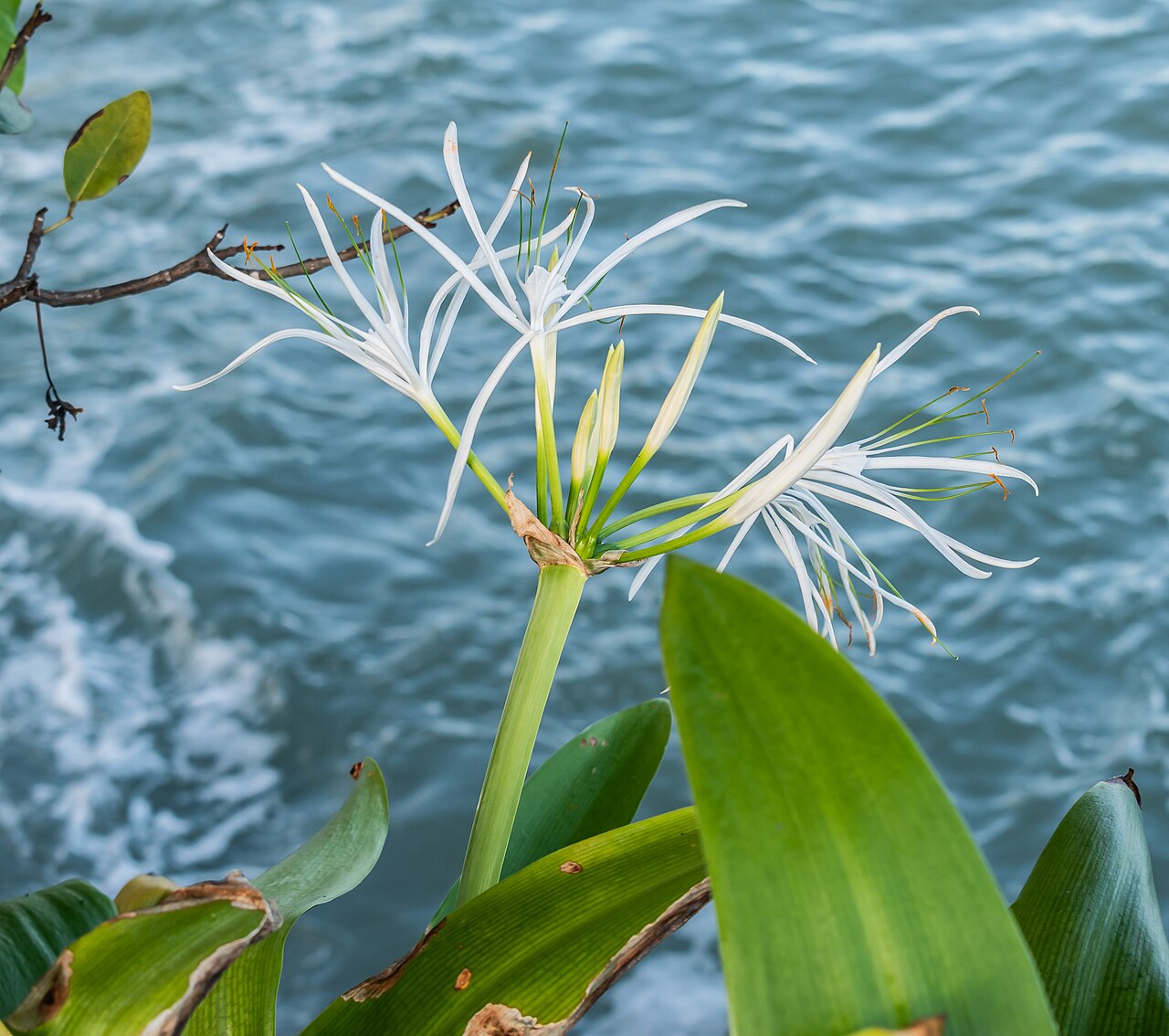
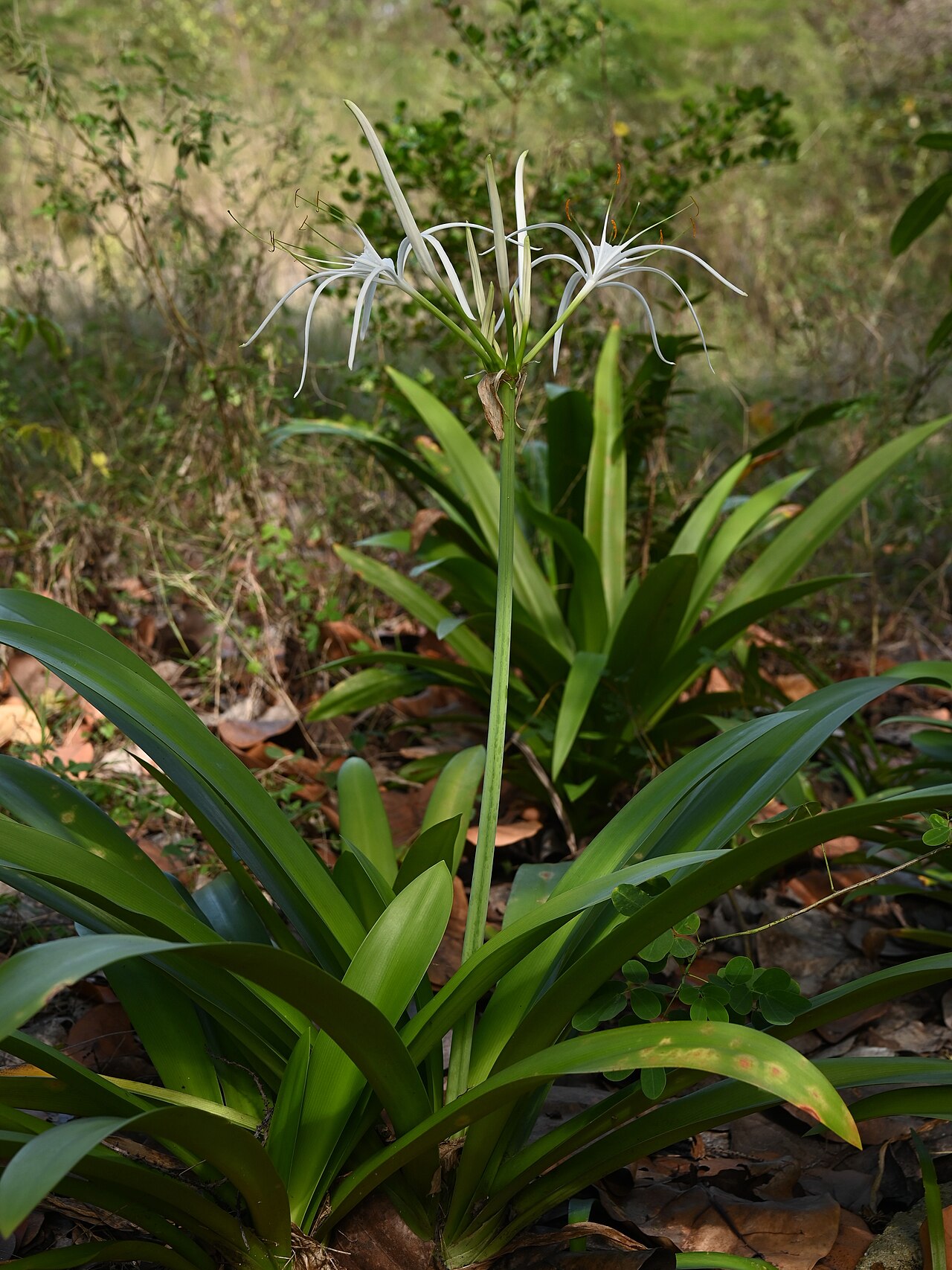
Hymenocallis caribaea, the Caribbean Spider-lily, is an evergreen bulb with glossy, strap-shaped leaves and clusters of fragrant white flowers with long, thread-like petals. Each flower has a small, delicate cup, or corona, in the center that joins the bases of the stamens, the feature that gives the genus its name, from the Greek for “beautiful membrane.” Clumps grow about 2 to 3 feet tall and bloom mostly from late spring into fall.
Within the United States it is native only to Puerto Rico and the U.S. Virgin Islands, where it grows near the coast on rocky shores, sandy flats and the edges of dry coastal forest. Its wider native range covers the Caribbean islands from Cuba and Jamaica through Hispaniola to the Lesser Antilles and the islands off Venezuela.
It is also one of the most widely planted spider-lilies in the tropics and in frost-free parts of Florida, Texas, California and Hawaiʻi, where it is valued as a tough, salt-tolerant groundcover and accent plant. Many people search for it as a garden bulb or a container plant. This page covers how to identify it, where it grows wild, how to grow it outdoors and in pots, and why its bulbs should be treated as poisonous.
Identification
Caribbean spider-lily is the spider-lily most often seen in tropical landscaping. Its evergreen, glossy foliage and many-flowered umbels with drooping petals and a small cup help separate it from the mainland U.S. spider-lilies.
Bulb & Leaves
It grows from a large, round to egg-shaped bulb, and older plants form clumps of several bulbs. The leaves are evergreen, glossy, deep green, strap-shaped and up to about 30 inches long and 2 to 3 inches wide, arching from a short neck at the top of the bulb. A cream-striped form, sold as variegated spider-lily, is common in cultivation.
Flowers
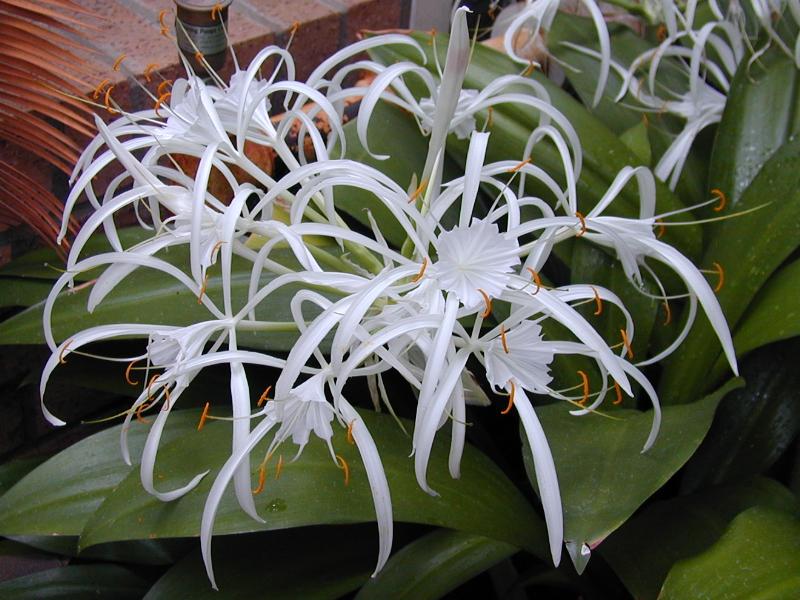
A solid, flattened stalk 1 to 2 feet tall carries an umbel of up to about a dozen stalkless flowers. Each flower has a slender green tube several inches long, six narrow, white petal-like tepals up to about 4 inches long that usually droop or curl, and a white, funnel-shaped cup about an inch long joining the six stamens. The stamens end in orange anthers, and the flowers have a sweet vanilla-like fragrance, strongest in the evening.
Fruit & Seeds
Pollinated flowers form a green, rounded capsule holding a few large, fleshy green seeds. The seeds have no dormancy and often begin to sprout while still on or near the parent plant.
Similar Species
Mangrove Spiderlily of South Florida and the Caribbean is closely related and similar, but it has a larger cup and usually broader leaves. Mainland species such as Alligatorlily and Woodland Spiderlily have fewer flowers and die back seasonally. Swamp Lily (Crinum) has white flowers without a connecting cup between the stamens.
Quick Facts
| Scientific Name | Hymenocallis caribaea (L.) Herb. |
| Family | Amaryllidaceae (amaryllis family) |
| Plant Type | Evergreen bulbous perennial |
| Mature Height | 2–3 ft |
| Mature Spread | 2–3 ft; clumps widen over time |
| Growth Rate | Moderate |
| Sun Exposure | Full sun to part shade |
| Water Needs | Medium; drought tolerant once established |
| Soil Type | Sandy, rocky, loamy or limestone soils; tolerates salt spray |
| Soil pH | About 6.0–8.0 |
| Bloom Time | Mostly late spring to fall; sporadic year-round in the tropics |
| Flower Color | White with orange anthers; fragrant |
| Fall Color | None; evergreen |
| Fruit | Green capsule with large, fleshy green seeds |
| Deer Resistant | Yes; foliage and bulbs are toxic |
| USDA Hardiness Zones | 9–11 (outdoors); container or houseplant elsewhere |
Native Range
USDA PLANTS lists Caribbean spider-lily as native to Puerto Rico and the U.S. Virgin Islands, and it is not native anywhere in the 50 states. In Puerto Rico it grows mainly in the coastal lowlands, on rocky and sandy shores, coastal thickets, limestone outcrops and the edges of dry and moist coastal forest, as well as on nearby islands. It is also widely planted in gardens and along roadsides throughout the island.
Its native range covers the Caribbean: the Greater Antilles (Cuba, Jamaica, Hispaniola and Puerto Rico), the Virgin Islands, the Leeward and Windward Islands of the Lesser Antilles, and the islands off the coast of Venezuela. In much of this range it grows within sight of the sea and tolerates salt spray, sandy soil and dry seasons.
As a popular ornamental it has escaped and naturalized in some places outside its native range, including parts of northern South America, Sri Lanka and eastern Australia. In the continental United States it is grown in gardens in South Florida, the Gulf Coast and southern California, but those plants are cultivated, not native.
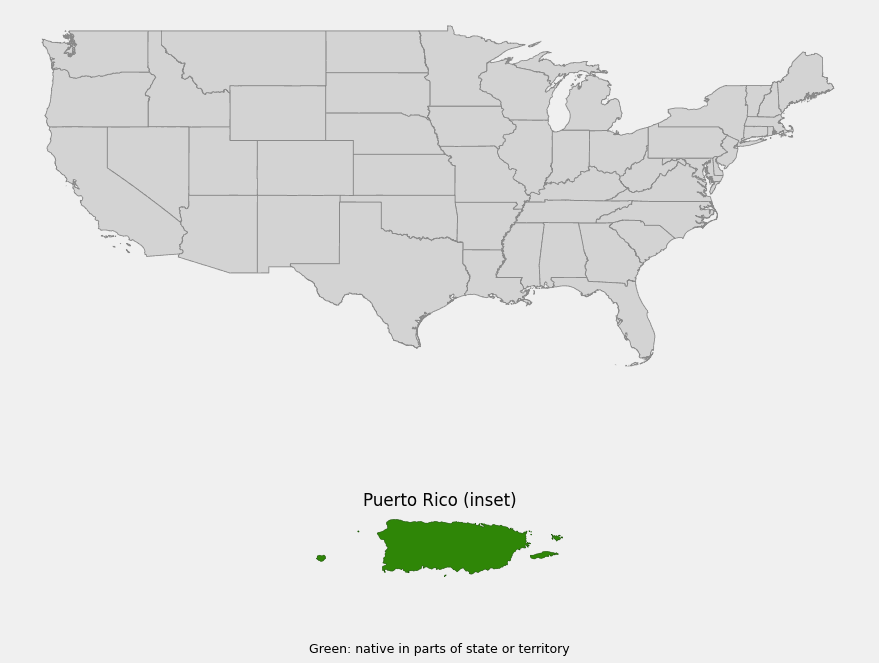
📋 Regional plant lists featuring Caribbean Spider-lily: Puerto Rico
Growing & Care Guide
Caribbean spider-lily is one of the easiest tropical bulbs to grow. In frost-free gardens it makes a dependable evergreen clump that flowers for months, and in colder climates it does well in a large pot that spends summer outside and winter indoors. Wear gloves when dividing bulbs, and keep plants away from pets and small children, because all parts are poisonous if eaten.
Light
Outdoors, full sun to part shade; flowering is best with at least half a day of sun. As a houseplant, give it the brightest window you have, ideally a south- or west-facing one, and move it outside to a sunny spot for the summer.
Soil & Water
It grows in almost any well-drained soil, including sand, limestone and ordinary garden loam, and it tolerates salt spray, making it a good choice for coastal gardens. Water regularly during active growth and bloom; established clumps in the ground tolerate dry spells but look best with occasional deep watering. In pots, use a fast-draining potting mix, water when the top inch is dry, and water sparingly in winter.
Planting Tips
Plant bulbs in spring with the neck at or just above soil level, spaced about 18 inches apart. In zones 9 to 11 it can stay in the ground year-round; brief light frosts may damage the leaves, but the bulbs usually regrow. In colder zones, grow it in a pot at least 12 inches wide, or lift the bulbs in fall and store them dry and frost-free, though they are evergreen and do best kept in leaf in a pot.
Pruning & Maintenance
Remove spent flower stalks and yellowed leaves. Feed lightly with a balanced fertilizer during the growing season. Divide crowded clumps every few years, after flowering. Watch for lubber grasshoppers and the caterpillars of the Spanish moth and the lily borer, which can damage the leaves and bulbs of amaryllis-family plants in Florida and the Caribbean.
Propagation
Divide offset bulbs from the clump, or sow the large green seeds as soon as they ripen, pressing them halfway into moist potting mix. Seeds sprout quickly, and seedlings usually flower in two to three years.
Landscape Uses
- Coastal gardens: salt-tolerant evergreen clumps for seaside beds and dune-edge plantings in Puerto Rico and other frost-free areas
- Mass plantings and borders: a tough groundcover or edging under palms and along walks
- Containers and houseplants: grown in pots on patios and brought indoors for winter in colder climates
- Fragrance gardens: evening-scented flowers near patios and windows
- Moon gardens: white flowers that glow at dusk and attract night-flying moths
Wildlife & Ecological Value
Caribbean spider-lily adds nectar and night-time fragrance to coastal habitats.
For Pollinators
Spider-lilies are classic moth flowers: the long, narrow flower tube, white color and strong evening fragrance attract hawkmoths (sphinx moths), whose long tongues reach the nectar at the base of the tube. Bees and butterflies also visit the open flowers by day.
For Birds
It is not an important food plant for birds, but its clumps provide low cover in coastal thickets.
For Mammals
Because its leaves and bulbs contain toxic alkaloids, mammals generally leave it alone.
Ecosystem Role
As a long-lived, evergreen bulb of rocky and sandy coasts, it helps hold soil in exposed places and adds to the diversity of coastal plant communities. Its fleshy seeds can float, which may help explain its wide distribution across the Caribbean islands.
Cultural & Historical Uses
Toxicity: Like other members of the amaryllis family, Caribbean spider-lily contains alkaloids such as lycorine, mostly concentrated in the bulb. Eating any part can cause nausea, vomiting, diarrhea and abdominal pain in people, and it is considered toxic to dogs and cats. Keep the plant out of reach of children and pets, never confuse the bulbs with onions, and wear gloves when dividing clumps if you have sensitive skin.
Linnaeus described the plant in 1753 as Pancratium caribaeum, and later botanists illustrated it under several other names in the great botanical works of the early 1800s, including Redouté’s Les Liliacées. Richard Salisbury named the genus Hymenocallis in 1812, and William Herbert, an English clergyman and bulb specialist, later transferred this species to it.
It has been grown in tropical gardens for centuries and is now found in parks, hotel grounds and roadside plantings across the tropics, often under the general name spider lily. Its variegated form is a popular container plant in cooler climates.
Frequently Asked Questions
Is Caribbean spider-lily native to the United States?
It is native to Puerto Rico and the U.S. Virgin Islands, and to the wider Caribbean. It is not native to Florida or other states, although it is widely planted there. Florida has its own native spider-lilies, such as mangrove spiderlily and alligatorlily.
Is Caribbean spider-lily poisonous?
Yes. All parts, especially the bulb, contain toxic alkaloids. Eating it can cause vomiting and diarrhea in people and is dangerous for dogs and cats. Keep it away from children and pets.
Can I grow Caribbean spider-lily indoors?
Yes. Grow it in a large pot of well-drained mix in your sunniest window, water when the top inch is dry, and move it outdoors for the summer. It may flower less indoors than outside, but it stays evergreen.
How cold-hardy is Caribbean spider-lily?
It is reliable outdoors in USDA zones 9 to 11. Light frost can burn the leaves, but established bulbs often regrow. In colder areas, grow it in a container and bring it indoors before frost.
How do I get my spider-lily to bloom?
Give it more sun, regular water and light feeding during the growing season. Newly divided or very crowded clumps may skip a year; divide crowded plants every few years and avoid overly rich nitrogen fertilizer.

Looking for a nursery that carries Caribbean Spider-lily?
Our nursery directory does not yet include Puerto Rico. Browse the native plant nursery directory by state: Alabama–Arkansas · California · Colorado–Hawaii · Idaho–Kansas · Kentucky–Montana · Nebraska–Oklahoma · Oregon · Pennsylvania–Virginia · Washington · West Virginia–Wyoming

