
Great Plains Ragwort (Packera tampicana)
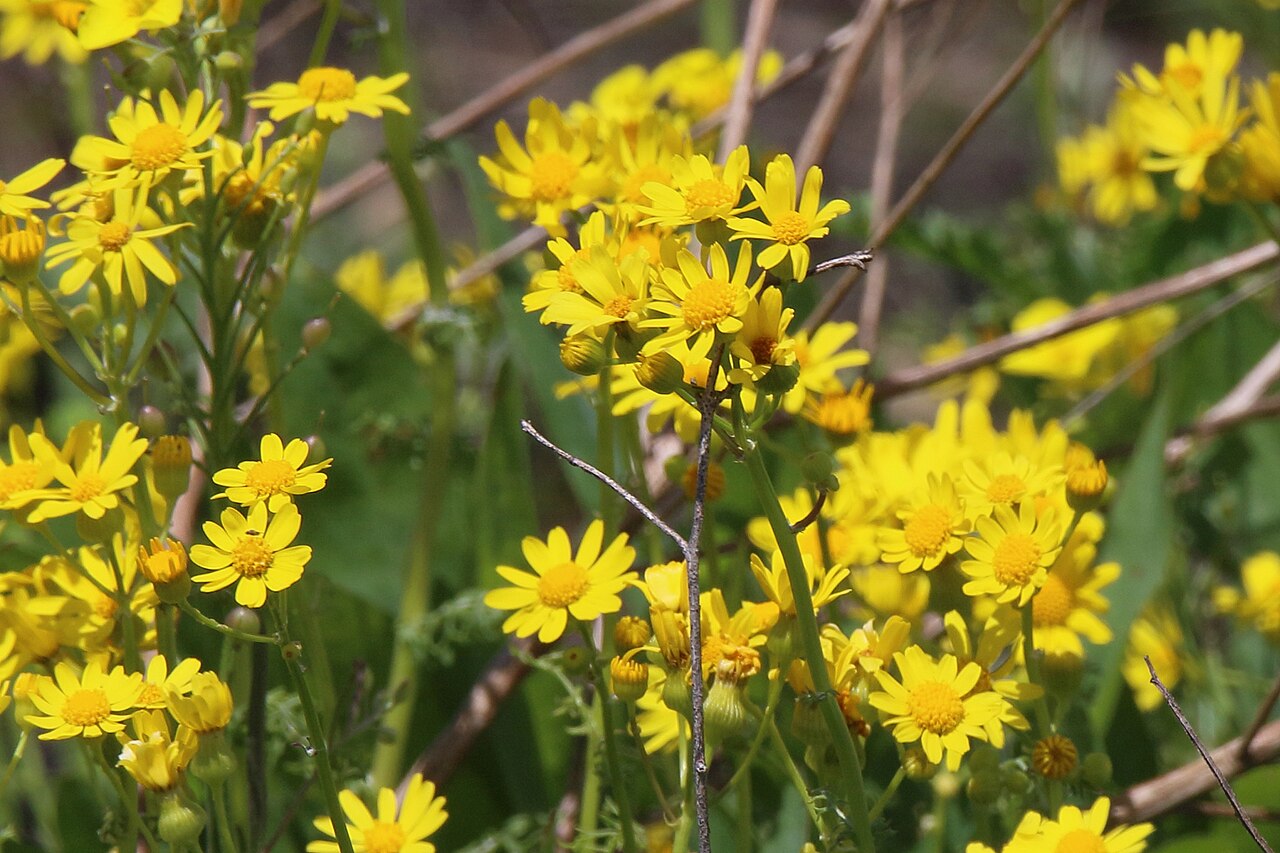
Packera tampicana, known as Great Plains Ragwort or Great Plains groundsel, is a cheerful spring annual in the aster family (Asteraceae). It grows 8 to 20 inches tall, with deeply lobed, almost fern-like leaves and flat-topped clusters of small, bright yellow daisies, each about 3/4 inch across. In a wet spring it can turn roadsides, pastures and lawns in Texas and Oklahoma solid yellow.
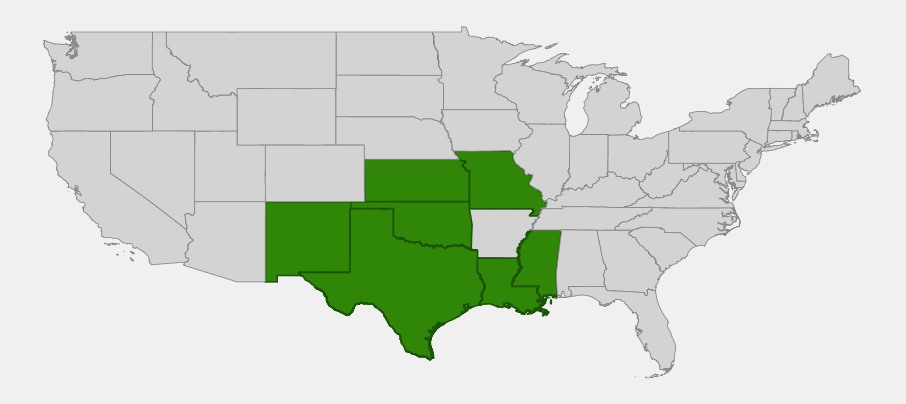
Great Plains ragwort is native from Kansas and Oklahoma south through Texas to northeastern Mexico, with scattered records east to Louisiana, Mississippi and Missouri and west to New Mexico. The species name refers to Tampico in Tamaulipas, Mexico, near where it was first collected. It grows in prairies, pastures, roadsides, fields and lawns, often on clay soils that are wet in spring, and in open woods and floodplains.
It blooms from late winter into early summer, mainly in March and April, and is one of the earliest yellow wildflowers of the southern prairies. It is easy to grow from seed and reseeds readily. Like other ragworts it contains toxic alkaloids, so it should never be eaten, and it is best kept out of pastures where livestock graze.
Identification
Look for a low to knee-high spring annual with deeply cut, lobed leaves and many small yellow daisies in flat-topped clusters, usually growing in grassy, open places that are damp in spring.
Growth Habit
Great Plains ragwort is an annual, or sometimes a short-lived biennial. It germinates in fall or winter, forms a loose rosette of lobed leaves, and in spring sends up one or several stems 8 to 20 inches tall (occasionally taller), branched near the top. Young stems and leaves may have a little cobwebby hair, which usually wears off. The plant dies after setting seed in late spring.
Leaves
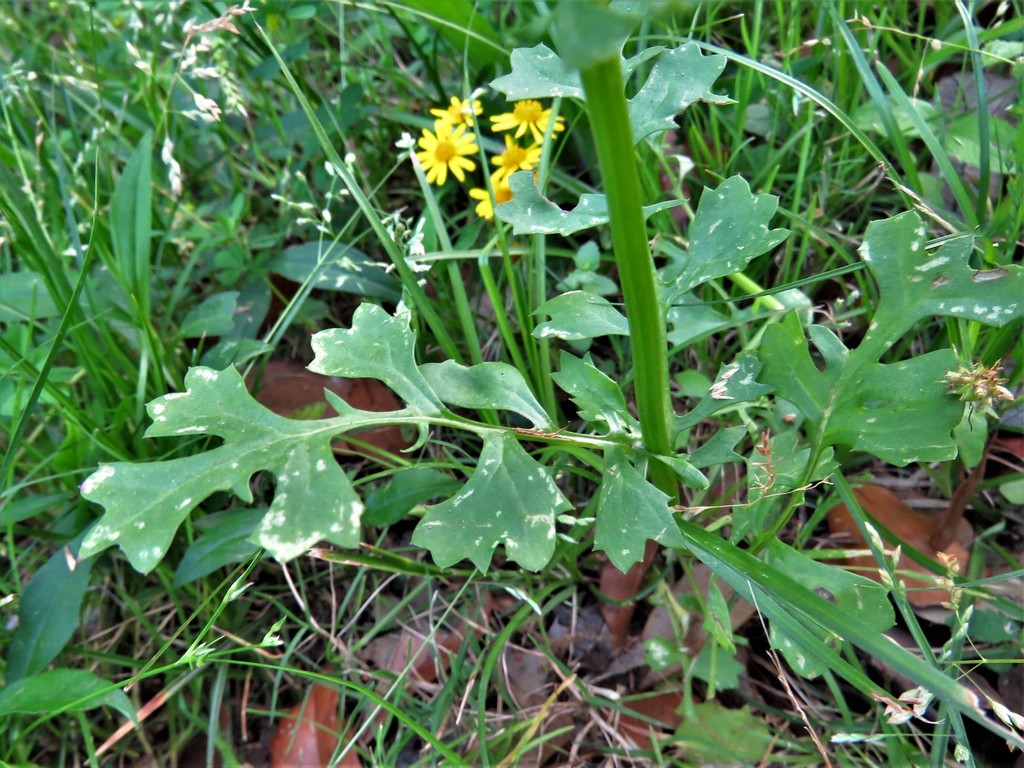
The leaves are alternate and deeply divided into rounded or toothed lobes, with the end lobe usually largest. The lower leaves have stalks and can be 2 to 6 inches long; the upper leaves are smaller, more finely divided and attach directly to the stem. The leaves are thin and bright green.
Flowers
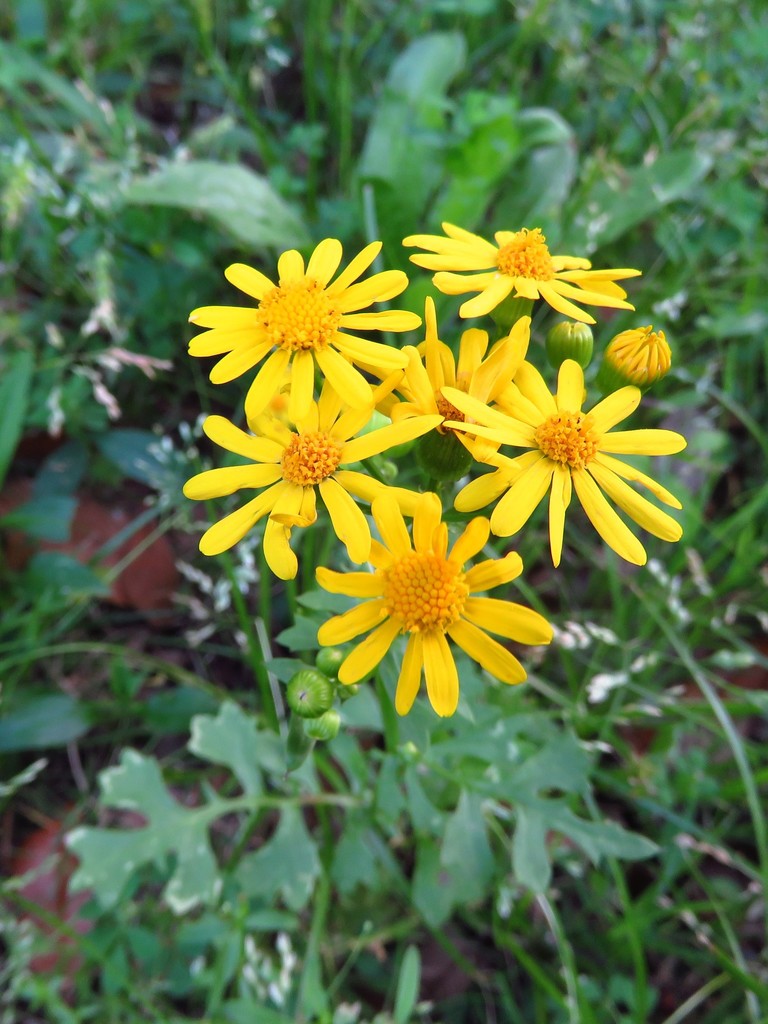
The flower heads are about 3/4 inch across and grow in flat-topped or rounded clusters at the branch tips. Each head has about 8 to 13 bright yellow ray flowers around a yellow to orange-yellow disc. A ring of narrow green bracts, often purple-tipped, surrounds the head. Bloom runs from February to June, peaking in March and April.
Fruit & Seeds
Each flower produces a small seed with a tuft of soft white bristles (pappus), and the seed heads look like small dandelion puffs. The seeds blow away in the wind in late spring.
Look-alikes
Butterweed (Packera glabella) is a taller, coarser annual of wet bottomlands, with a thick, hollow stem and larger leaves. Golden ragwort (P. aurea) and roundleaf ragwort (P. obovata) are perennials with rounded basal leaves. Texas ragwort (Senecio ampullaceus) has undivided, toothed leaves and grows on sandy soils.
Quick Facts
| Scientific Name | Packera tampicana |
| Family | Asteraceae (aster family) |
| Plant Type | Annual (sometimes biennial) wildflower |
| Mature Height | 8–20 in |
| Mature Spread | 6–12 in |
| Growth Rate | Fast |
| Sun Exposure | Full sun to part shade |
| Water Needs | Moderate; moist in spring, tolerates summer drought as seed |
| Soil Type | Clay, loam or sandy loam |
| Soil pH | Slightly acidic to alkaline (about 6.0–8.0) |
| Bloom Time | February–June (peak March–April) |
| Flower Color | Bright yellow |
| Fall Color | None (annual) |
| Fruit | Small seeds with white fluffy bristles |
| Deer Resistant | Yes; toxic and rarely browsed |
| USDA Hardiness Zones | 6–9 (annual) |
Native Range
USDA PLANTS lists Great Plains ragwort as native in Kansas, Louisiana, Missouri, Mississippi, New Mexico, Oklahoma and Texas. The core of its range is Texas and Oklahoma, with records north into southern Kansas and south into northeastern Mexico, including Tamaulipas. Records from Missouri, Mississippi, Louisiana and New Mexico are outlying and scattered. It is not found in Canada.
In Texas it is common across the Blackland Prairie, the Cross Timbers, the Post Oak Savannah, the Gulf Coast Prairies and the eastern Edwards Plateau and South Texas Plains, and it is a familiar spring roadside flower around Dallas, Fort Worth, Austin and Houston.
It grows in prairies, pastures, old fields, lawns and roadsides, along ditches and in open floodplain woods, usually on clay or loamy soils that stay moist in spring. It is listed as a facultative wetland plant, and it is often most abundant in low, seasonally wet spots.
📋 Regional plant lists featuring Great Plains Ragwort: Nebraska, Kansas & Eastern Colorado · Illinois, Iowa & Missouri · Alabama, Georgia & Mississippi · Arkansas, Louisiana, Eastern Oklahoma & Eastern Texas · South & West Texas
Growing & Care Guide
Great Plains ragwort is an easy annual for spring color in Texas and the southern plains. It is best used in wildflower meadows, native lawns and naturalized areas where it can reseed, rather than in formal beds.
Light
Full sun to part shade. It flowers most heavily in sun and also grows at the edges of open woods.
Soil & Water
It grows in most soils, including heavy clay, and does best where the soil is moist in winter and spring. It needs no summer water, because it completes its life cycle and dies back by early summer. Supplemental water in a dry winter helps the rosettes grow larger.
Planting Tips
Scatter seed on bare or lightly raked soil in fall, along with other spring wildflowers such as bluebonnets and Indian paintbrush. Seedlings form rosettes over winter. Avoid planting it in pastures or hay fields, because it is toxic to livestock.
Pruning & Maintenance
No pruning is needed. Let the plants set seed before mowing in late spring if you want them to return the next year. In a lawn, mowing after the seeds blow away keeps the area tidy.
Propagation
Grow it from seed, collected when the fluffy seed heads appear in late spring and sown in fall. It reseeds readily on its own in open, sunny ground.
Landscape Uses
- Wildflower meadows: early yellow color with bluebonnets and other spring annuals
- Native lawns: blooms in spring before the grass needs mowing
- Pollinator gardens: early nectar for bees, flies and small butterflies
- Rain gardens and swales: tolerates soils that are wet in spring
- Roadside and restoration seeding: quickly covers open ground
Wildlife & Ecological Value
Great Plains ragwort blooms early, when few other flowers are open, and its yellow carpets are a valuable early food source for insects on the southern prairies.
For Pollinators
The flower heads attract many small native bees, honey bees, flies and small butterflies such as sulphurs and skippers, which visit for nectar and pollen in early spring.
For Birds
Finches, sparrows and other small birds eat the seeds, and insect-eating birds forage among the flowers.
For Mammals
Deer and rabbits usually avoid it. Like other members of the genus, it contains pyrrolizidine alkaloids, which are toxic to livestock, especially cattle and horses, when eaten in quantity.
Ecosystem Role
As an early-flowering annual, it fills open, disturbed and seasonally wet ground in spring and supports pollinators before most prairie perennials bloom.
Cultural & Historical Uses
The genus Packera was separated from the large genus Senecio in 1976 and honors the Canadian botanist John G. Packer. Older books list this plant as Senecio tampicanus. The species name refers to Tampico, Mexico.
Ragworts and groundsels get their names from their ragged, lobed leaves and from the Old English “grundeswylige,” often translated as “ground swallower,” for weedy groundsels that spread quickly over open ground.
Safety note: Great Plains ragwort, like other Packera and Senecio species, contains pyrrolizidine alkaloids, which can damage the liver. It should never be eaten or used as an herbal remedy, and it should be kept out of hay and pastures.
Frequently Asked Questions
Is Great Plains ragwort poisonous?
Yes. Like other ragworts it contains pyrrolizidine alkaloids that can damage the liver of livestock and people if eaten. It is safe to grow in a garden, but it should never be eaten.
Is Great Plains ragwort an annual?
Yes. It is an annual, sometimes a biennial. It germinates in fall or winter, blooms in spring and dies after setting seed, but it reseeds readily.
When does Great Plains ragwort bloom?
From February to June, with peak bloom in March and April in Texas and Oklahoma.
How is it different from butterweed?
Butterweed (Packera glabella) is taller and coarser, with a thick hollow stem, and grows in wet bottomlands. Great Plains ragwort is smaller and more common in prairies, lawns and roadsides.
Where does Great Plains ragwort grow?
Mainly in Texas, Oklahoma and southern Kansas, with scattered records east to Louisiana, Mississippi and Missouri and west to New Mexico, and south into northeastern Mexico.

Looking for a nursery that carries Great Plains Ragwort?
Browse our native plant nursery directory: Kansas · Louisiana, Mississippi & Missouri · New Mexico & Oklahoma · Texas

