
Oppositeleaf Spotflower (Acmella oppositifolia)
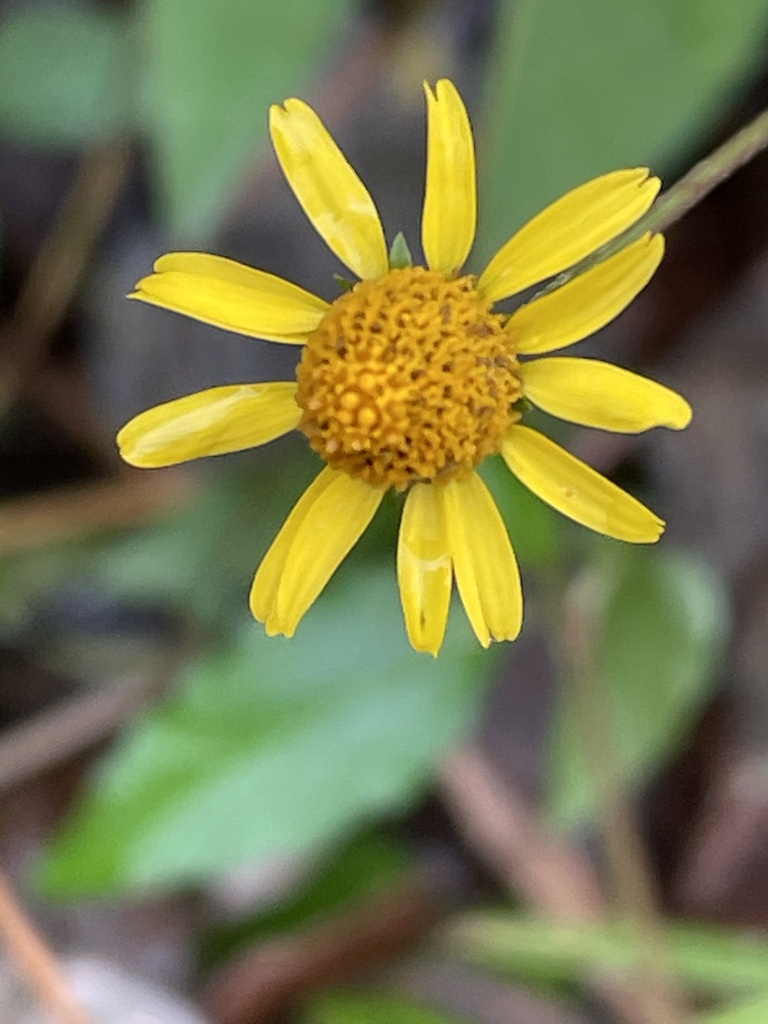
Acmella oppositifolia, known as Oppositeleaf Spotflower, is a low, sprawling wildflower in the aster family (Asteraceae) that grows in moist, open places across the southeastern and south-central United States. The plants native to the United States belong to variety repens, creeping spotflower, which many references now treat as a separate species, Acmella repens. It is also known by the older name Spilanthes americana.
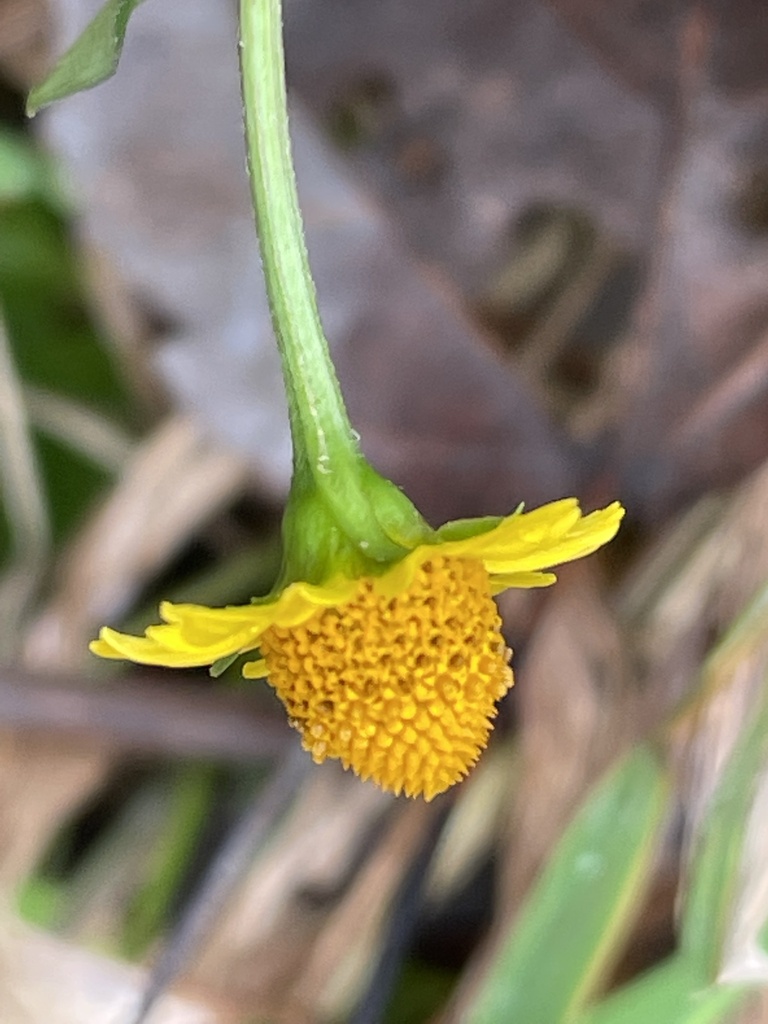
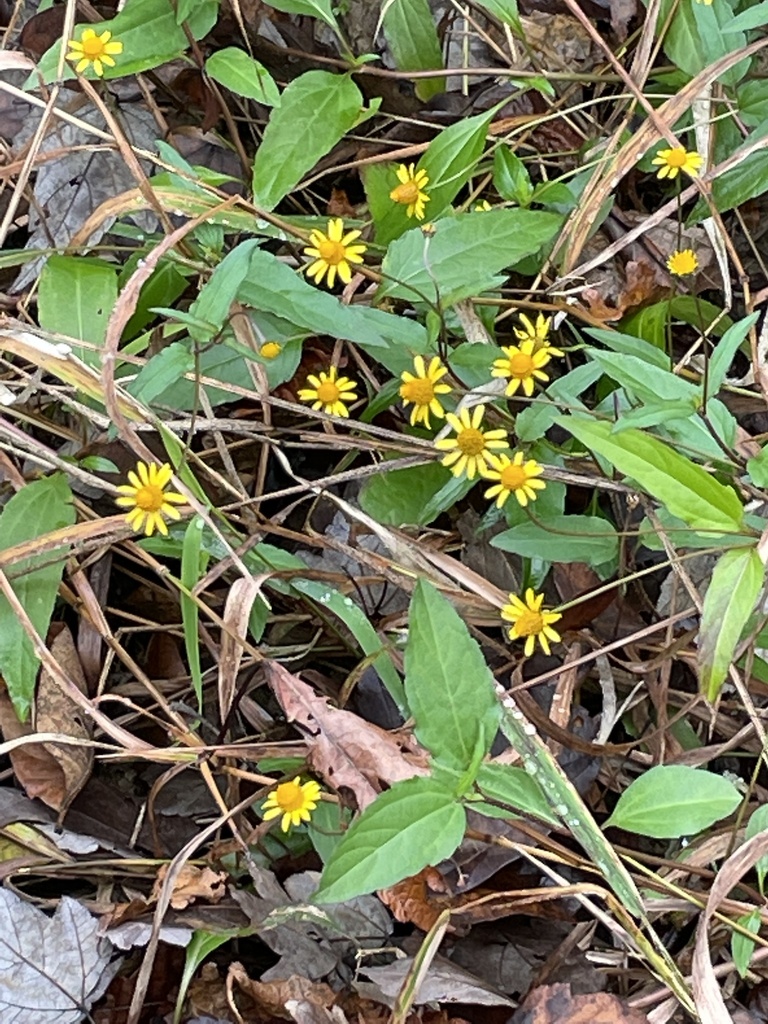
Its small but cheerful flower heads have a domed to cone-shaped yellow-orange center ringed by short, bright yellow rays, each held on a long, slender stalk above pairs of opposite, lance-shaped leaves. The plant blooms over a long season from late spring until frost, and its creeping stems root at the nodes, forming loose mats along ditches, stream banks, pond margins and wet meadows.
Oppositeleaf spotflower is an easy, low-growing native for rain gardens, pond edges and moist, informal plantings in the South. Its long bloom provides nectar for small bees, butterflies and other pollinators through summer and fall.
Identification
Look for a low, creeping plant with opposite, lance-shaped leaves and small yellow flower heads with a tall, cone-shaped center on long, bare stalks, in damp, open ground.
Growth Habit
A short-lived perennial, sometimes behaving as an annual, with weak stems 6 to 24 inches long that sprawl along the ground or lean on other plants and root at the lower nodes. The stems are green to reddish and sparsely hairy. Plants often form loose mats in wet soil.
Leaves
The leaves are opposite, lance-shaped to narrowly egg-shaped, about 1 to 3 1/2 inches long, with short stalks, a pointed tip and smooth to shallowly toothed edges. They are thin and bright to dark green, with three main veins visible from the base on larger leaves.
Flowers
The flower heads are borne singly on long, slender stalks from the leaf axils and stem tips. Each head is about 1/2 to 3/4 inch across, with roughly 6 to 12 short, bright yellow ray flowers around a domed disk of tiny yellow to orange-yellow disk flowers that becomes taller and cone-shaped as it matures. Flowering runs from about May to November, and nearly all year in Florida.
Fruit
The seeds (cypselae) are small, flattened and dark, often with a pale margin and one or two short bristles at the top. They drop near the parent plant or are carried by water.
Look-alikes
Bitterweeds and sneezeweeds such as common sneezeweed have similar rounded centers but are upright plants with alternate leaves and wedge-shaped, three-toothed rays. Spanish needles has white rays and barbed seeds. Toothache plant (Acmella oleracea), a cultivated relative, has rayless, red-and-yellow flower heads.
Quick Facts
| Scientific Name | Acmella oppositifolia var. repens (syn. Acmella repens, Spilanthes americana) |
| Family | Asteraceae (aster family) |
| Plant Type | Creeping short-lived perennial or annual |
| Mature Height | 6–18 in |
| Mature Spread | 1–3 ft; creeping and rooting stems |
| Growth Rate | Fast |
| Sun Exposure | Full sun to part shade |
| Water Needs | Medium to high; moist to wet soil |
| Soil Type | Moist sand, loam or clay; tolerates seasonal flooding |
| Soil pH | Acidic to neutral (about 5.0–7.5) |
| Bloom Time | May–November |
| Flower Color | Yellow with an orange-yellow center |
| Fall Color | None |
| Fruit | Small flattened seeds |
| Deer Resistant | Moderately; seldom browsed |
| USDA Hardiness Zones | 7–10 |
Native Range
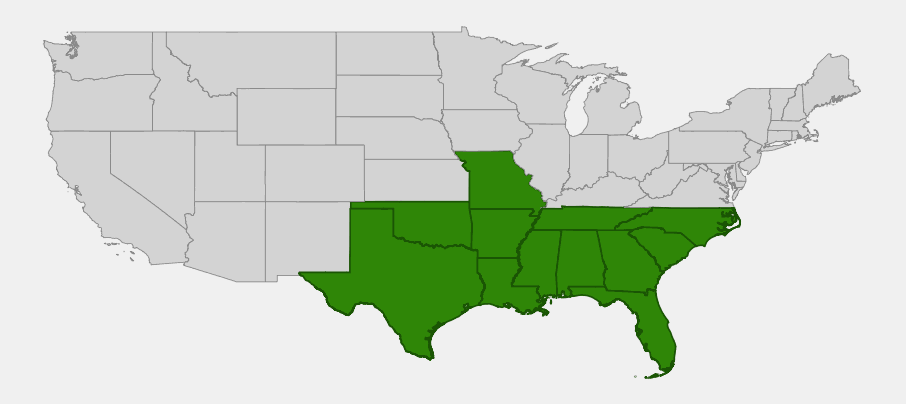
Oppositeleaf spotflower is native to the Americas, from the southeastern United States through Mexico and Central America to South America. USDA PLANTS lists variety repens as native in 12 states: Alabama, Arkansas, Florida, Georgia, Louisiana, Mississippi, Missouri, North Carolina, Oklahoma, South Carolina, Tennessee and Texas.
In the United States it is most common on the Gulf and Atlantic Coastal Plains, from the Carolinas through Georgia and Florida to Louisiana and eastern Texas, and up the Mississippi Valley into Arkansas, western Tennessee and southeastern Missouri. In Texas it is widespread in the east and also grows in the central and south-central parts of the state, including the Austin and San Antonio areas. Records from Oklahoma and Missouri are near the northern edge of its range.
It grows in wet, open or partly shaded places: ditches, stream and river banks, pond and lake margins, floodplain clearings, wet meadows, moist lawns and disturbed damp ground, from near sea level to low hills.
📋 Regional plant lists featuring Oppositeleaf Spotflower: Kentucky & Tennessee · Illinois, Iowa & Missouri · Alabama, Georgia & Mississippi · North & South Florida · North & South Carolina · Arkansas, Louisiana, Eastern Oklahoma & Eastern Texas · South & West Texas
Growing & Care Guide
Oppositeleaf spotflower is easy to grow in any consistently moist, sunny to partly shaded spot in the South. It fills in quickly and blooms for months.
Light
Full sun to part shade. It flowers best with at least a half day of sun.
Soil & Water
Grow in moist to wet soil of almost any texture. It tolerates short periods of flooding and does well at the edges of ponds, rain gardens and swales. In dry soil it struggles or dies back in summer heat.
Planting Tips
Plant from seed or small plants in spring, 12 to 18 inches apart. Use it as a low filler or temporary groundcover at the front of rain gardens, along pond edges and in moist, informal beds.
Pruning & Maintenance
Little care is needed. Trim stems that sprawl too far and cut back worn plants in late summer to encourage fresh growth and flowers. In colder parts of its range, plants may die back in winter and return from rooted stems or seed.
Propagation
It grows easily from seed sown on the surface of moist soil in spring; seeds need warmth and light. Rooted stem sections can be cut from the parent plant and replanted at any time during the growing season.
Landscape Uses
- Rain gardens: a low native filler for wet edges
- Pond and stream margins: creeping stems root in damp soil
- Pollinator gardens: months of small yellow flowers for bees and butterflies
- Moist lawns and paths: tolerates occasional mowing in damp areas
- Containers: spills over the edges of moist pots and water garden tubs
Wildlife & Ecological Value
Oppositeleaf spotflower is a small plant, but its long bloom makes it a reliable nectar source in southern wetlands and ditches.
For Pollinators
Small bees, including sweat bees, as well as small butterflies such as skippers, hairstreaks and crescents, visit the flower heads for nectar and pollen from late spring until frost.
For Birds
Seed-eating birds may take the small seeds, and the insects attracted to the flowers feed insect-eating birds.
For Mammals
It is not an important food plant for mammals and is seldom browsed by deer.
Ecosystem Role
Its mats of creeping stems help hold damp soil on ditch banks, stream edges and pond margins, and it quickly colonizes bare, wet ground after disturbance or flooding.
Cultural & Historical Uses
The genus name Acmella is thought to come from a Sinhalese name for a related plant in Sri Lanka. The species name oppositifolia means “with opposite leaves,” and the variety name repens means “creeping.”
Several Acmella species, especially the cultivated toothache plant (Acmella oleracea), contain spilanthol, a compound that causes tingling and numbness in the mouth. Those relatives have been used in folk medicine for toothaches, but oppositeleaf spotflower should not be used as a home remedy.
Botanists have long debated how to classify the spotflowers. The United States plants have been called Spilanthes americana, Spilanthes repens, Acmella oppositifolia var. repens and Acmella repens, so you will find all of these names in older and newer field guides.
Frequently Asked Questions
Is oppositeleaf spotflower the same as creeping spotflower?
Yes. The plants native to the United States are variety repens, often called creeping spotflower, and many references now treat them as Acmella repens.
Where does oppositeleaf spotflower grow?
In moist, open places across the Southeast and south-central United States, from North Carolina and Florida west to Missouri, Oklahoma and Texas, and south through Mexico to South America.
When does it bloom?
From about May until frost, and nearly year-round in Florida.
Is oppositeleaf spotflower good for pollinators?
Yes. Its long bloom feeds small bees and butterflies through summer and fall.
Can I grow it in a rain garden?
Yes. It thrives in moist to wet soil and tolerates short flooding, making it a good low plant for rain garden edges.

Looking for a nursery that carries Oppositeleaf Spotflower?
Browse our native plant nursery directory: Alabama & Arkansas · Florida & Georgia · Louisiana, Mississippi & Missouri · North Carolina & Oklahoma · South Carolina, Tennessee & Texas

