
Star Chickweed (Stellaria pubera)
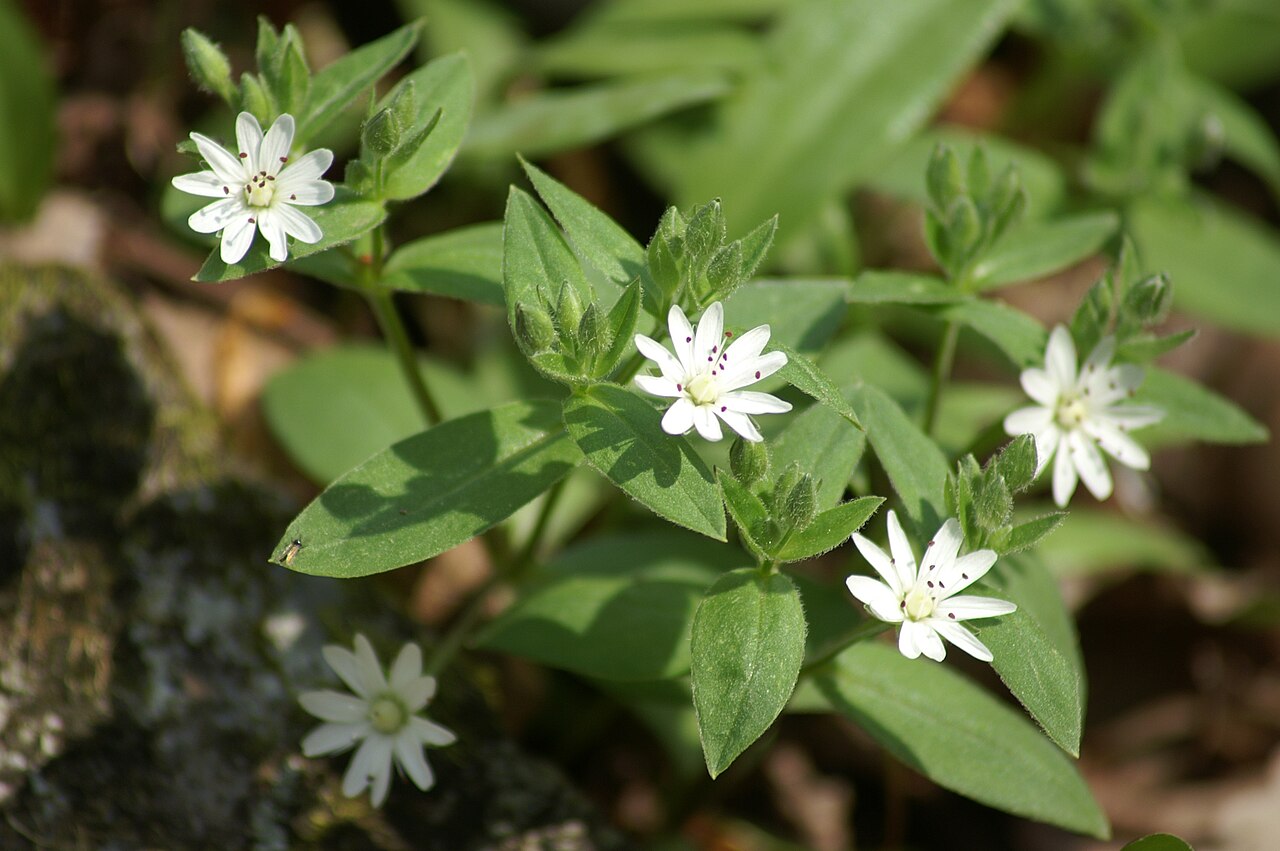
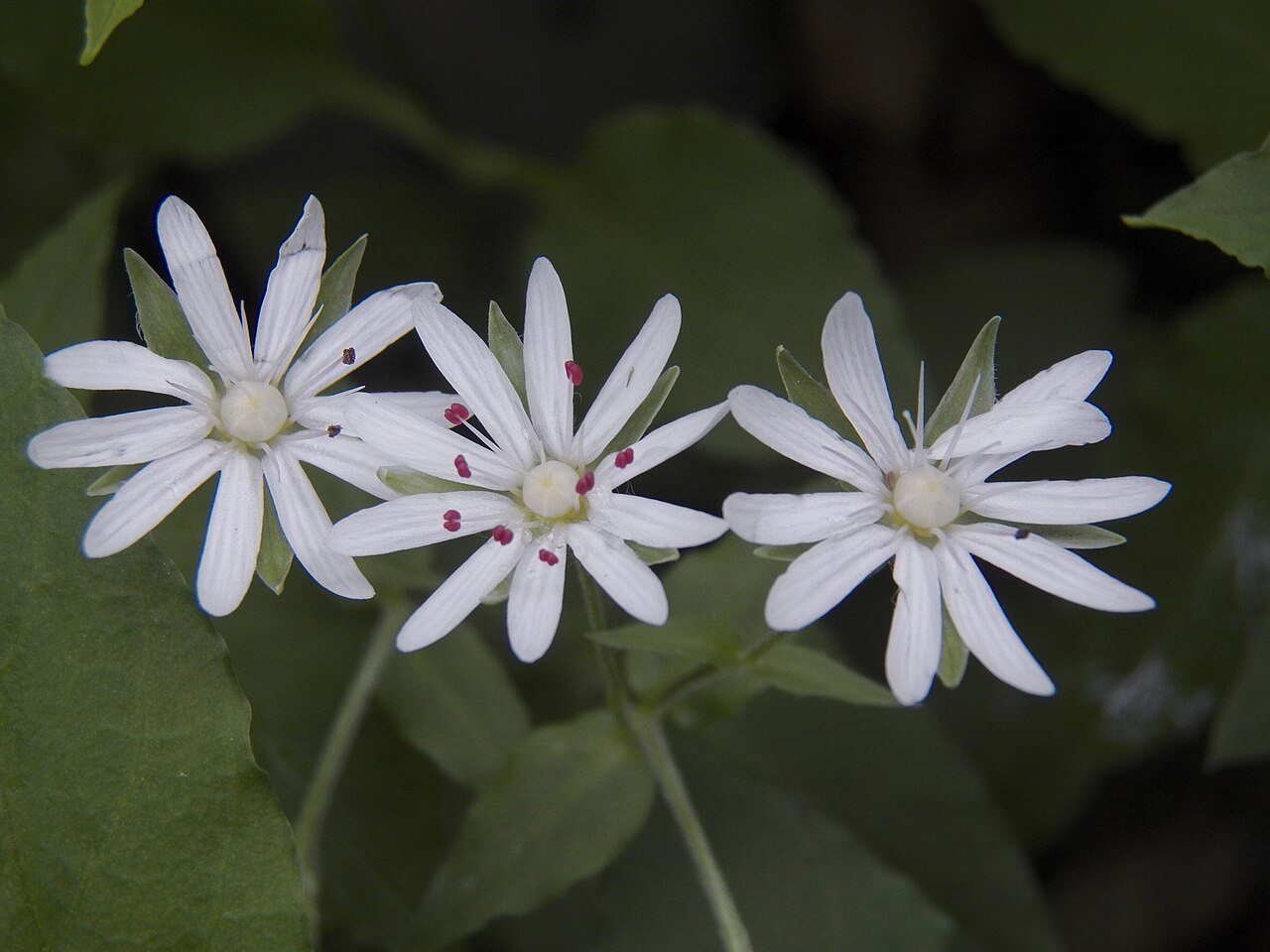
Stellaria pubera, known as Star Chickweed or great chickweed, is a spring wildflower of rich eastern woodlands and the showiest of the North American chickweeds. From March to May it covers low, leafy stems with bright white, star-shaped flowers about half an inch across. Each of the five petals is split nearly to the base, so the flower appears to have ten narrow petals, set off by a ring of small reddish-purple anthers. It belongs to the pink family (Caryophyllaceae).
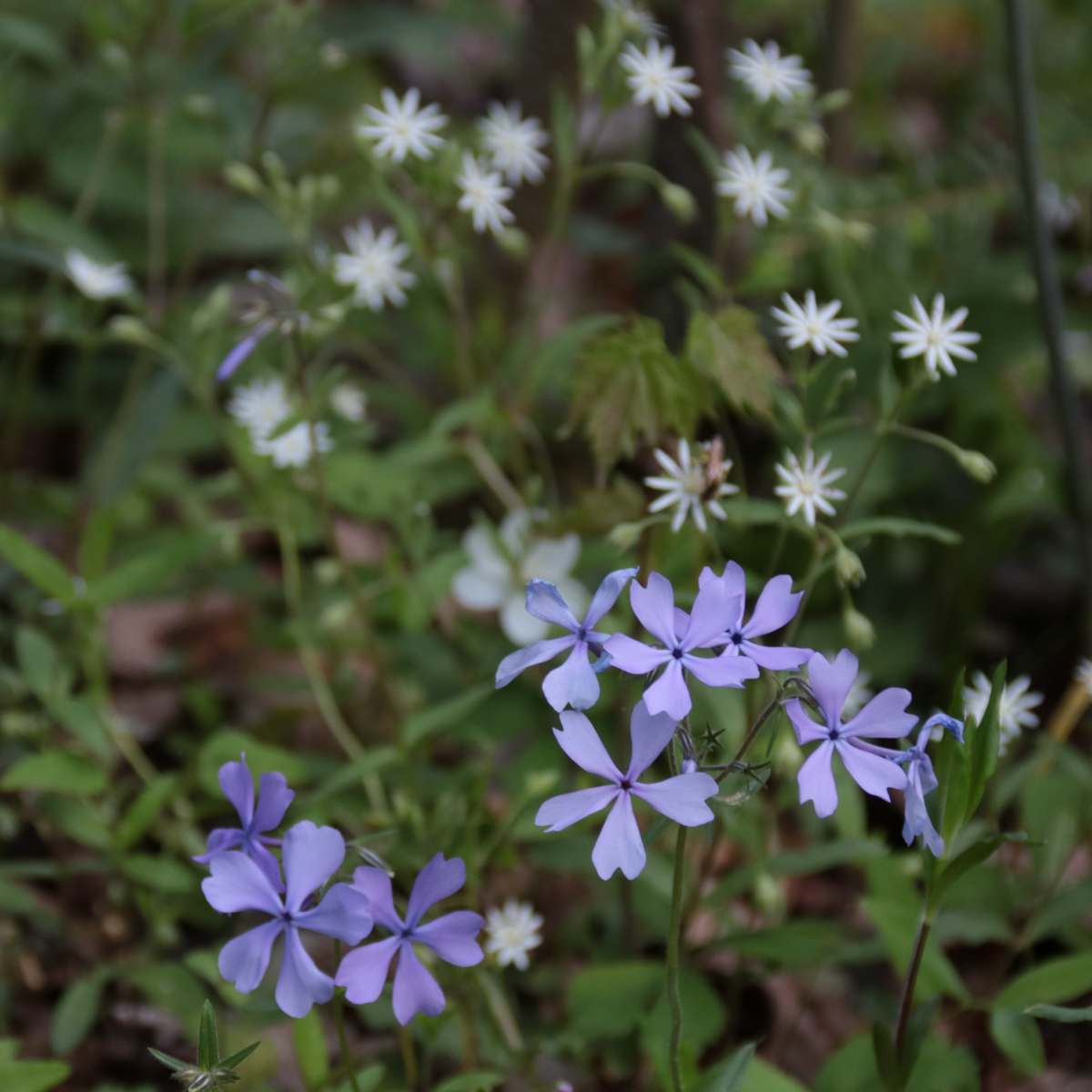
Unlike the weedy common chickweed (Stellaria media), which came from Europe and is found in lawns and gardens across the continent, star chickweed is a native woodland perennial. It grows in moist, humus-rich deciduous forests, on wooded slopes and ravines and along streams, mostly from New York and Illinois south to northern Florida and Louisiana. Plants form loose patches 6 to 12 inches tall and bloom alongside other spring ephemerals such as Woodland Phlox, Trout Lily and Spring Beauty.
For gardeners, star chickweed is a charming, low-maintenance groundcover for shady woodland gardens. It is not aggressive, its flowers brighten the spring shade garden, and its foliage persists well into summer in moist sites. This guide covers how to identify it, where it grows, and how to grow it from nursery plants or seed.
Identification
Star chickweed is easy to tell apart from other chickweeds by its size. Its flowers are much larger than those of common and mouse-ear chickweeds, and its leaves are broader and longer. Its deeply notched petals also distinguish it from other white spring wildflowers.
Stems
Stems are weak and somewhat sprawling, usually 4 to 16 inches long, and often lean or rest on surrounding plants. They carry lines of fine hairs, or are hairy all around, which is the origin of the species name pubera (“downy”). Plants produce both flowering stems and taller, leafy non-flowering stems, and together they form loose patches.
Leaves
The leaves are opposite, smooth-edged and elliptic to oblong, usually 1 to 3 inches long and about half as wide, with a pointed tip. Upper leaves are stalkless and clasp the stem, while the lowest leaves may have short stalks. The foliage is bright to medium green and has a soft, slightly succulent texture.
Flowers
Flowers are borne in loose clusters at the stem tips and in the upper leaf axils. Each is about half an inch across, with five white petals so deeply cleft that the flower looks like a ten-pointed star. The petals are longer than the green sepals. In the center are ten stamens with reddish to purple anthers, which give the flower a dark-dotted ring, and three styles. Bloom time is March to May, beginning earliest in the Deep South.
Fruit & Seeds
After flowering, each flower produces a small, oval capsule that opens at the tip to release several small, brownish seeds. By early summer the plant has set seed. In moist shade its leaves stay green into summer, but in dry years or heat they may yellow and die back early.
Quick Facts
| Scientific Name | Stellaria pubera Michx. (syn. Alsine pubera) |
| Family | Caryophyllaceae (pink family) |
| Plant Type | Herbaceous perennial; spring woodland wildflower |
| Mature Height | 6–12 in (stems to about 16 in) |
| Mature Spread | 12–18 in; forms loose patches |
| Growth Rate | Moderate |
| Sun Exposure | Partial shade to full shade |
| Water Needs | Medium; prefers consistently moist soil |
| Soil Type | Rich, humus-rich loam; rocky wooded slopes |
| Soil pH | About 5.5–7.0 (slightly acidic to neutral) |
| Bloom Time | March–May |
| Flower Color | White, with reddish-purple anthers |
| Fall Color | None; foliage often dies back by late summer |
| Fruit | Small oval capsule with brown seeds |
| Deer Resistant | Moderate; occasionally browsed |
| USDA Hardiness Zones | 5–9 |
Native Range
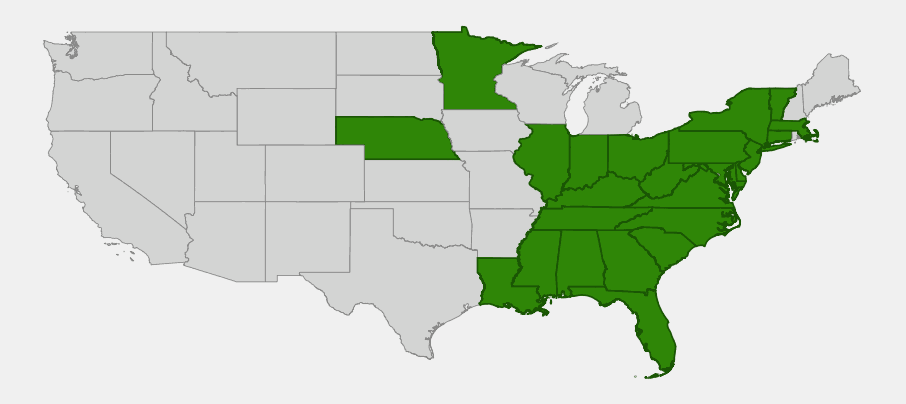
Star chickweed is a plant of the eastern deciduous forest. USDA PLANTS records it as native in 24 states and the District of Columbia. The core of its range runs from southern New York and Pennsylvania south through the Appalachians and the Piedmont to Georgia, Alabama and the Florida panhandle, and west through the Ohio Valley to Illinois, Kentucky, Tennessee, Mississippi and Louisiana.
It is most abundant in the southern and central Appalachians, the Cumberland Plateau and the Ohio Valley, where it can carpet rich, north-facing slopes and ravines in spring. Toward the edges of its range it becomes scarce. Records from New England, Minnesota and Nebraska are scattered and outlying, and it reaches only the northern part of Florida.
Typical habitats are rich, moist deciduous and mixed forests, rocky wooded slopes, ravines, stream banks, and coves, often on soils derived from limestone or other base-rich rock. It is a plant of mature woods and often grows among other spring wildflowers that need undisturbed, humus-rich soil.
📋 Regional plant lists featuring Star Chickweed: New York, Pennsylvania & Northern New Jersey · Ohio & Indiana · Michigan, Wisconsin & Eastern Minnesota · Kentucky & Tennessee · Nebraska, Kansas & Eastern Colorado · Connecticut, Massachusetts & Rhode Island · New Hampshire, Maine & Vermont · Maryland, Virginia & West Virginia · Delaware, Southern New Jersey & Long Island · Illinois, Iowa & Missouri · Alabama, Georgia & Mississippi · North & South Florida
Growing & Care Guide
Star chickweed is easy to grow in a shady garden with moist, rich soil. It is sold by some native plant nurseries, especially in the Southeast and Mid-Atlantic. Buy nursery-propagated plants rather than digging wild ones, and plant it where its sprawling stems can weave among other woodland plants.
Light
Part shade to full shade suits it best, especially the bright spring light under deciduous trees that leaf out after it blooms. Morning sun is fine where the soil stays moist, but hot afternoon sun will scorch the leaves and shorten the plant’s season.
Soil & Water
Give it rich, loose, humus-rich soil that stays evenly moist. A layer of shredded leaves or leaf compost imitates its natural forest floor. It tolerates slightly acidic to neutral soil and does especially well on soils derived from limestone. Water during spring dry spells. In dry summers it may go partly dormant, which does it no harm.
Planting Tips
Plant in early spring or fall, about 12 inches apart, so the plants knit together into a loose groundcover. Star chickweed looks best in drifts along woodland paths, at the base of trees and shrubs, or among ferns and later-blooming woodland perennials that will fill in after its foliage fades.
Pruning & Maintenance
Little maintenance is needed. Leave fallen leaves in place as mulch in autumn, and avoid heavy fertilizer. If the foliage turns yellow and untidy in midsummer, it can be cut back; new growth may appear in fall in mild climates. Pull aggressive non-native groundcovers such as English ivy or Japanese stiltgrass that could smother it.
Propagation
Star chickweed can be divided in early spring or after flowering and division is the easiest way to increase it. Seed can be collected when capsules turn tan in late spring and sown fresh outdoors. Plants may also self-sow lightly in suitable spots.
Landscape Uses
- Woodland and shade gardens: a delicate groundcover that blooms with other spring wildflowers
- Naturalizing under trees: fills spaces between shrubs and tree roots in rich, moist shade
- Native spring ephemeral plantings: pairs well with phlox, trilliums, bluebells and ferns
- Stream banks and ravines: in moist, shaded soils on slopes
- Pollinator gardens: early nectar and pollen for small native bees and flies
Wildlife & Ecological Value
Star chickweed is a small, early-blooming wildflower that supports spring insects at a time when few other flowers are open.
For Pollinators
The open, star-shaped flowers are visited by small native bees, including sweat bees and mining bees, as well as hover flies and bee flies, which feed on nectar and pollen. As an early spring bloomer it provides food when many native bees are just emerging.
For Birds
Small seeds may be eaten by ground-feeding birds, and the plant contributes to the leafy ground cover that shelters insects eaten by wood thrushes, ovenbirds and other forest-floor birds.
For Mammals
Deer and rabbits occasionally browse it, though it is rarely a preferred food. Small mammals use the low ground cover for shelter.
Ecosystem Role
Star chickweed is part of the spring wildflower community of rich eastern forests. Together with other early bloomers, it uses the sunlight that reaches the forest floor before the trees leaf out, and it helps hold soil on slopes and ravines. Its presence is a good sign of an intact, undisturbed forest floor.
Cultural & Historical Uses
André Michaux described Stellaria pubera in 1803 in his Flora Boreali-Americana, one of the first floras of eastern North America. The genus name Stellaria comes from the Latin stella, star, for the star-shaped flowers, and pubera refers to the hairy stems.
Common chickweed, a European weed, is well known as an edible green, and star chickweed is sometimes mentioned by foragers. However, it is a native wildflower that is uncommon in parts of its range, and it is far better enjoyed in the woods or garden than harvested.
For spring wildflower lovers in the Appalachians and the Ohio Valley, the starry white blooms of this plant are one of the first signs of spring, often seen alongside trout lilies, bloodroot and phlox. In the Great Smoky Mountains it is a familiar sight along trails through rich coves in April.
Frequently Asked Questions
Is star chickweed invasive like common chickweed?
No. Star chickweed is a native woodland perennial and is not weedy. Common chickweed (Stellaria media) is a smaller, non-native annual that grows in lawns and disturbed soil. Star chickweed spreads slowly and stays in shady, rich soil.
Does star chickweed have ten petals?
No, it has five. Each petal is split almost to its base, so the flower appears to have ten narrow petals.
When does star chickweed bloom?
Mostly from March to May. It blooms earliest in the Deep South and latest in the northern part of its range and at high elevations in the Appalachians.
Can I grow star chickweed in a garden?
Yes, in a shady garden with moist, humus-rich soil. Buy nursery-propagated plants or grow it from seed. Plant it among ferns and later perennials, since its foliage may die back in summer.
What pollinates star chickweed?
Small native bees, hover flies and bee flies visit the flowers for nectar and pollen. It is one of the earliest food sources for these insects in eastern woodlands.

Looking for a nursery that carries Star Chickweed?
Browse our native plant nursery directory: Alabama · Connecticut, Delaware, Florida & Georgia · Illinois & Indiana · Kentucky, Louisiana, Maryland, Massachusetts, Minnesota & Mississippi · Nebraska, New Jersey, New York, North Carolina & Ohio · Pennsylvania, South Carolina, Tennessee, Vermont & Virginia · West Virginia