
Swamp Thistle (Cirsium muticum)
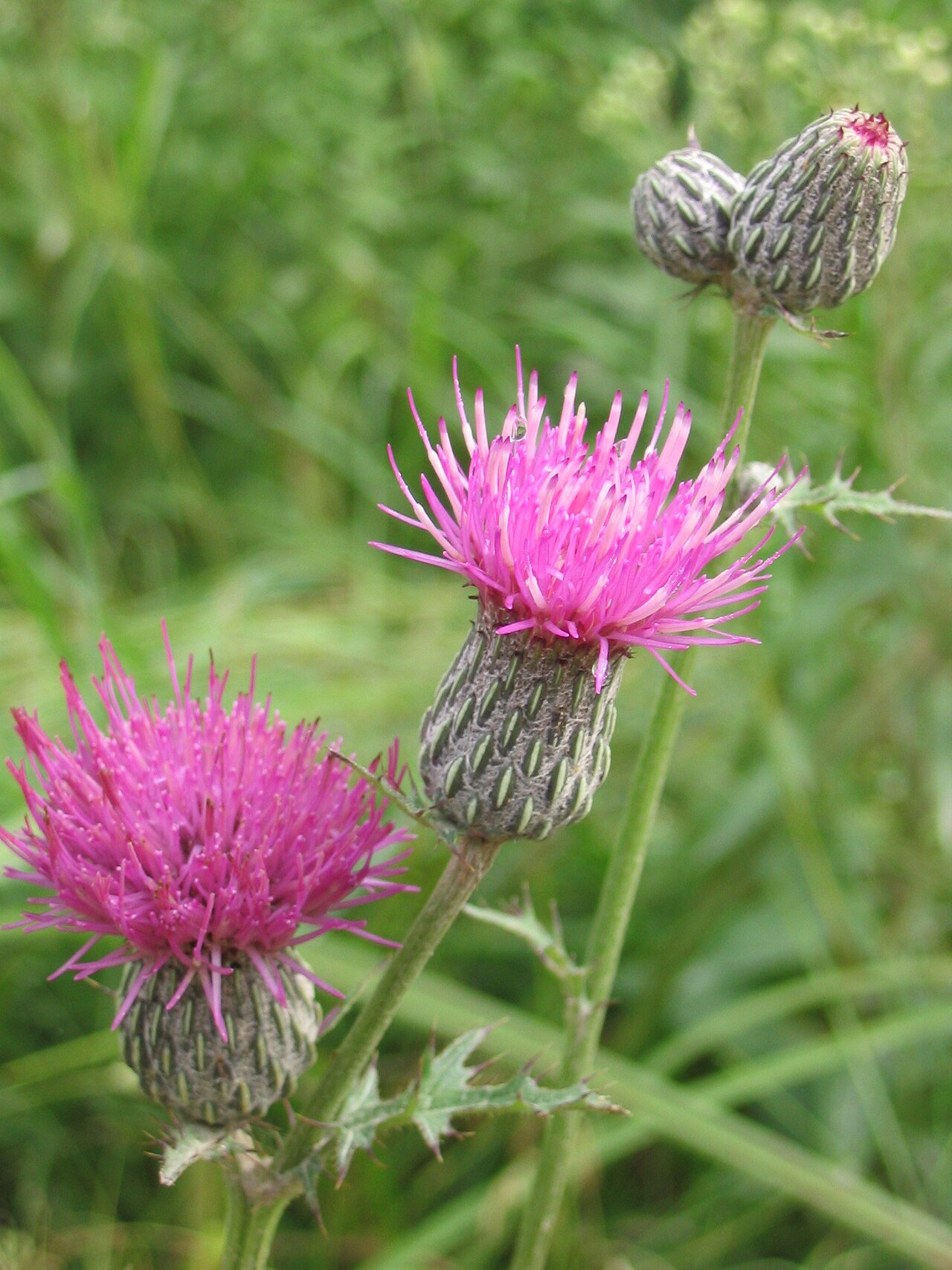
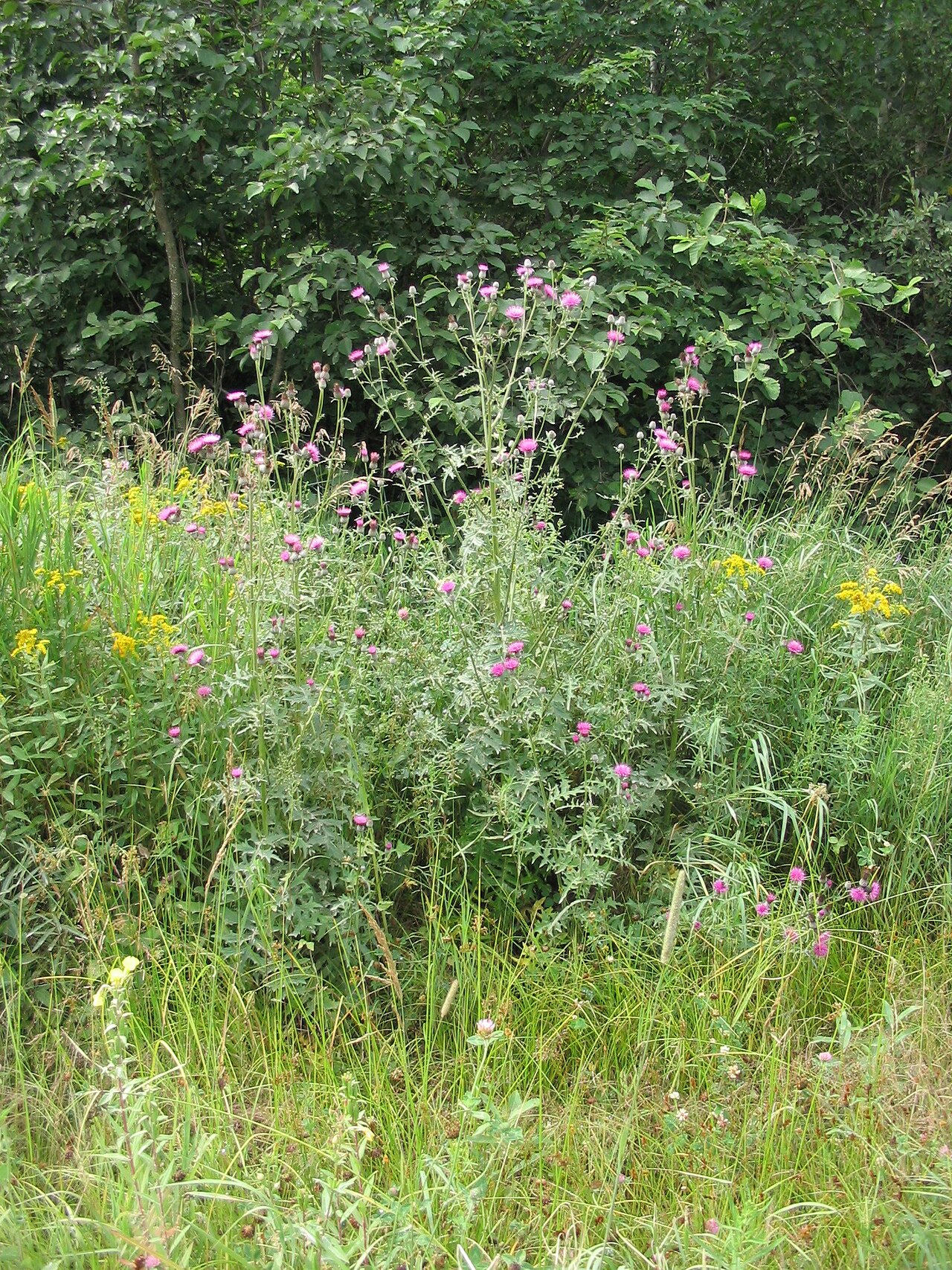
Cirsium muticum, known as Swamp Thistle, is a tall native thistle of fens, wet meadows and swamps in eastern North America. It belongs to the aster family (Asteraceae) and is a biennial: it spends its first year as a low rosette of lobed leaves and in its second year sends up a branched flowering stem, often 3 to 6 feet tall, before setting seed and dying.
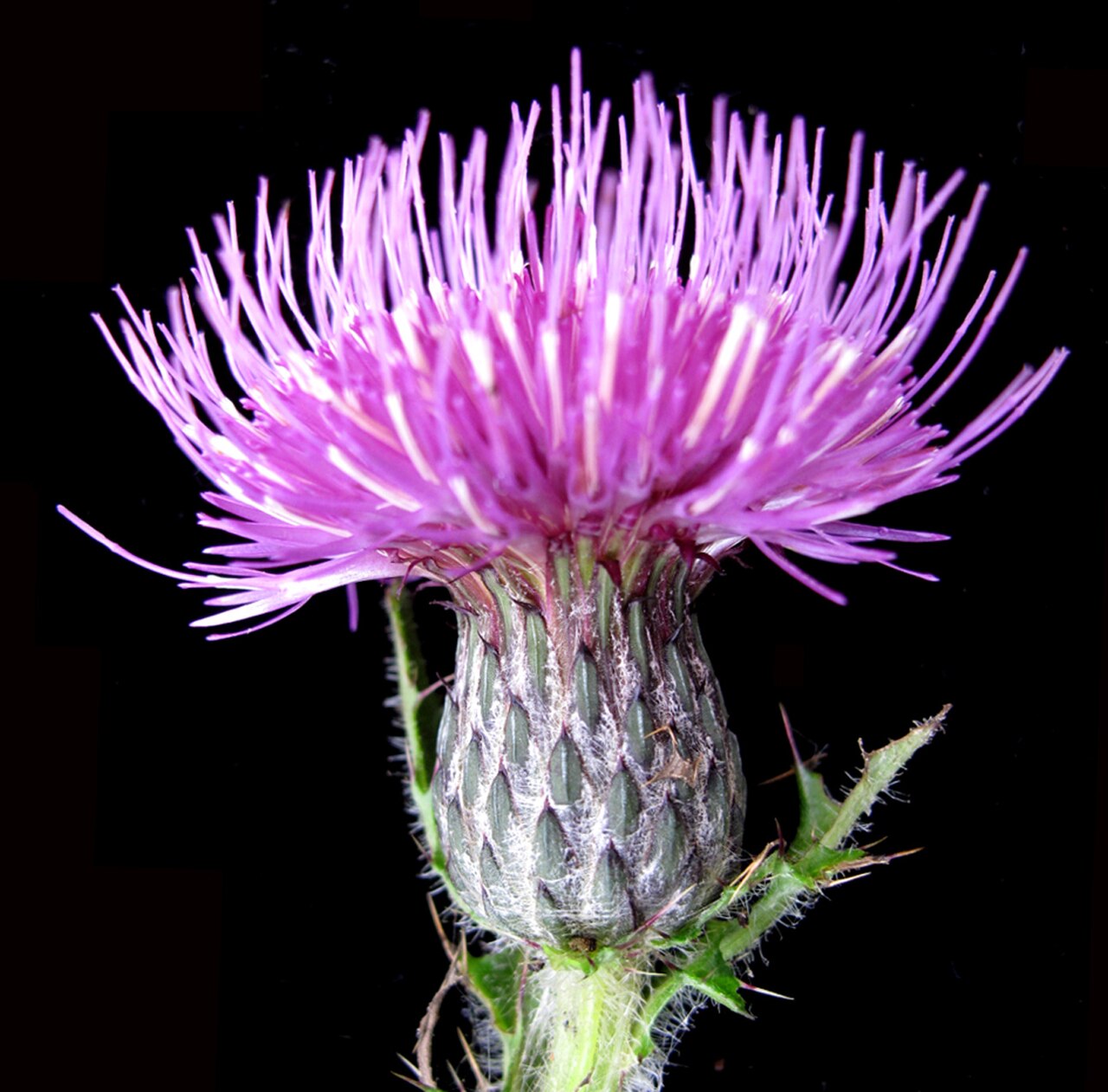
In late summer and early fall it bears rounded, pink-purple to lavender flower heads about 1 1/2 inches across. Unlike most thistles, the bracts around each head have no spines; they are blunt (the meaning of muticum), cobwebby and slightly sticky. The leaves are deeply lobed and prickly, but softer and less fierce than those of field or bull thistle.
Swamp thistle is an important wildlife plant. Bumblebees, swallowtails, monarchs and many other insects visit the flowers, goldfinches eat the seeds and line their nests with the down, and it is the main larval host of the rare swamp metalmark butterfly. It is a good native thistle for wet meadow and rain garden plantings, and has none of the weedy habits of the introduced thistles.
Identification
Look for a tall, branched thistle in a wet place with deeply lobed, weakly spiny leaves and pink-purple flower heads whose bracts are cobwebby and spineless.
Growth Habit
Swamp thistle is a biennial (sometimes a short-lived perennial) with a fleshy taproot. In the first year it forms a flat rosette of large, lobed leaves. In the second year it produces a single, hollow, ridged stem that branches in the upper half and is usually 2 to 6 feet tall, sometimes more. The stems are not winged and have no spines, though they are often hairy toward the base.
Leaves
The leaves are alternate, up to about 8 inches long on the lower stem, and deeply cut into narrow, irregular lobes that end in weak spines. The upper surface is green and nearly smooth; the underside has only sparse, cobwebby hairs and is not densely white-woolly. Leaves get smaller toward the top of the plant, and the lower ones often wither by flowering time.
Flowers
Flowers appear from about July to October. Each branch ends in one or a few flower heads about 1 to 1 1/2 inches across, made entirely of slender tubular disk florets in pink-purple to lavender (rarely white). The bracts around the head overlap like shingles, lack spines, and are covered with cobwebby hairs; each bract has a pale, sticky ridge along its back.
Fruit & Seeds
Each floret produces a small, smooth seed (an achene) topped with a plume of feathery bristles that carries it on the wind. Seeds ripen in late summer and fall, and the heads turn into fluffy white puffs.
Look-alikes
Field thistle (Cirsium discolor) and tall thistle (Cirsium altissimum) grow in drier places, have leaves densely white-woolly beneath, and have spine-tipped bracts. The introduced bull thistle (Cirsium vulgare) has spiny-winged stems and very spiny leaves and bracts. The introduced Canada thistle (Cirsium arvense) forms colonies from creeping roots and has much smaller flower heads, about 3/4 inch across.
Safety Notes
Swamp thistle is not toxic, but the leaf lobes end in weak spines, so wear gloves when handling it.
Quick Facts
| Scientific Name | Cirsium muticum |
| Family | Asteraceae (aster family) |
| Plant Type | Biennial wildflower |
| Mature Height | 2–6 ft (occasionally taller) |
| Mature Spread | 1–2 ft |
| Growth Rate | Fast |
| Sun Exposure | Full sun to partial shade |
| Water Needs | High; wet to moist soil |
| Soil Type | Wet loam, muck or peat; often calcareous |
| Soil pH | About 5.5–8.0 |
| Bloom Time | July–October |
| Flower Color | Pink-purple to lavender |
| Fall Color | None notable; white seed fluff |
| Fruit | Plumed achenes (thistle down) |
| Deer Resistant | Mostly; spiny leaves |
| USDA Hardiness Zones | 3–8 |
Native Range
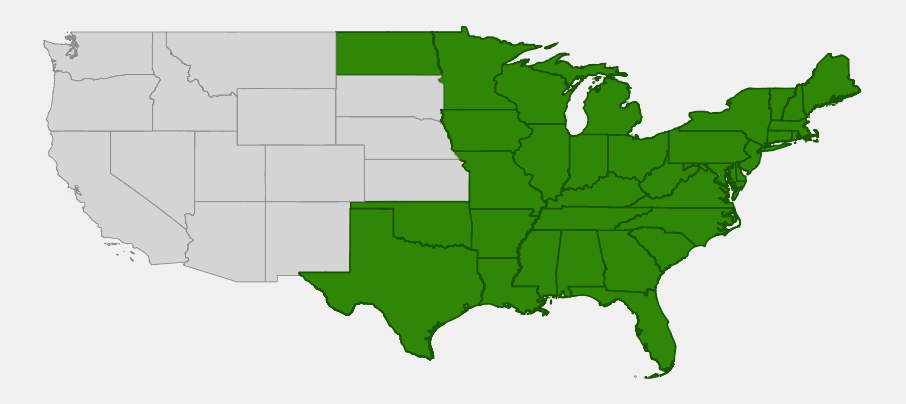
Swamp thistle is native to eastern and central North America, from Newfoundland and Labrador west across southern Canada to Saskatchewan, and south in the United States to the Gulf Coast. USDA PLANTS lists it as native in Alabama, Arkansas, Connecticut, Delaware, Florida, Georgia, Illinois, Indiana, Iowa, Kentucky, Louisiana, Maine, Maryland, Massachusetts, Michigan, Minnesota, Mississippi, Missouri, New Hampshire, New Jersey, New York, North Carolina, North Dakota, Ohio, Oklahoma, Pennsylvania, Rhode Island, South Carolina, Tennessee, Texas, Vermont, Virginia, West Virginia and Wisconsin.
It is most common in the Northeast, the Great Lakes region and the Appalachians. Farther south and west it is scattered and local, with isolated populations in seeps and bogs from eastern Texas and Oklahoma across the Gulf states to the Carolinas and the Florida Panhandle. At the northwestern edge of its range it reaches eastern North Dakota and western Minnesota.
Typical habitats are fens, sedge meadows, wet prairies, swamps, bog edges, seeps, wet woods and thickets, and the shores of streams and lakes. It is especially characteristic of calcareous fens and other wetlands fed by mineral-rich groundwater.
📋 Regional plant lists featuring Swamp Thistle: New Hampshire, Maine & Vermont · Connecticut, Massachusetts & Rhode Island · New York, Pennsylvania & Northern New Jersey · Delaware, Southern New Jersey & Long Island · Maryland, Virginia & West Virginia · North & South Carolina · Alabama, Georgia & Mississippi · North & South Florida · Kentucky & Tennessee · Ohio & Indiana · Michigan, Wisconsin & Eastern Minnesota · Illinois, Iowa & Missouri · North Dakota, South Dakota & Western Minnesota · Arkansas, Louisiana, Eastern Oklahoma & Eastern Texas
Growing & Care Guide
Swamp thistle is offered by some native plant nurseries and seed suppliers, especially in the Midwest and Northeast. It is easy to grow from seed and is the native thistle to choose for wet, sunny spots.
Light
Grow it in full sun to partial shade. It flowers most heavily in sun, but it tolerates light shade at woodland and wetland edges.
Soil & Water
It needs consistently moist to wet soil: a rain garden, pond or stream edge, wet meadow, or low spot that stays damp through summer. It does well in mucky, peaty or loamy soil and tolerates neutral to alkaline conditions. It will not thrive in dry garden soil.
Planting Tips
Because it is biennial, sow seed or plant first-year rosettes two years in a row so that some plants flower every year. Once established it maintains itself by self-sowing. Pair it with Joe-Pye weed, swamp milkweed, turtlehead, blue lobelia, asters and goldenrods for a long-blooming wet meadow.
Pruning & Maintenance
Leave the seed heads for goldfinches and other birds. If you want fewer seedlings, cut some heads after flowering. Remove dead stalks in late winter or spring. Weed out any introduced bull or Canada thistles nearby, and learn to tell the rosettes apart so you do not pull the native.
Propagation
Sow fresh seed outdoors in fall, or stratify it cold and moist for about 30 to 60 days before spring sowing. Press the seed lightly into the surface. Seedlings form rosettes the first year and flower the next. Taproots make older plants hard to transplant, so move them while small.
Landscape Uses
- Rain gardens and wet meadows: tall late-summer color for wet, sunny sites
- Pollinator gardens: heavy nectar source for bumblebees and butterflies
- Bird gardens: seeds and nesting down for goldfinches
- Butterfly conservation: larval host of the swamp metalmark
- Wetland restoration: fens, sedge meadows and pond margins
Wildlife & Ecological Value
Native thistles are among the most valuable plants for wildlife, and swamp thistle is no exception.
For Pollinators
The flowers produce plenty of nectar and attract bumblebees, long-horned bees, leafcutter bees, swallowtails, fritillaries, monarchs and many other butterflies, as well as skippers and moths. Swamp thistle is the primary larval host of the swamp metalmark (Calephelis muticum), a rare butterfly of fens in the Midwest and Ozarks, and painted lady caterpillars also feed on thistles.
For Birds
American goldfinches eat the seeds and use the soft thistle down to line their nests, which they build in late summer, timed with thistle seed. Other finches and sparrows also take the seeds, and hummingbirds sometimes visit the flowers.
For Mammals
The spiny leaves deter most browsers, though deer occasionally nibble young plants. Small mammals eat fallen seeds.
Ecosystem Role
As a biennial that seeds into gaps, swamp thistle helps fill openings in fens and wet meadows. Its role as host plant for the swamp metalmark makes healthy swamp thistle populations important for that butterfly’s survival.
Cultural & Historical Uses
The French botanist André Michaux described swamp thistle in 1803 in his Flora Boreali-Americana, based on plants he found in eastern North America. The species name muticum is Latin for “blunt” or “without a point,” referring to its spineless bracts.
Old folk names for the plant include dunce-nettle and horsetops. It has also been called marsh thistle, but that name is more often used for the European Cirsium palustre, which has become naturalized in parts of the northeastern United States and Canada.
Native thistles like swamp thistle are often pulled by mistake because people confuse them with invasive introduced thistles. Conservation groups encourage gardeners and land managers to learn the difference, since the loss of native thistles harms bees, goldfinches and specialist butterflies.
Frequently Asked Questions
Is swamp thistle invasive?
No. It is a native biennial that grows in wetlands and does not spread aggressively. The invasive thistles in North America, such as bull thistle and Canada thistle, are introduced from Europe and Asia.
How do I tell swamp thistle from other thistles?
Look at the bracts under the flower head: on swamp thistle they are spineless, blunt and cobwebby. It also grows in wet places and has leaves that are green, not white-woolly, beneath.
Does swamp thistle come back every year?
Individual plants are biennial: they grow a rosette the first year, flower the second, and then die. A patch persists by reseeding itself.
What butterflies use swamp thistle?
Many butterflies drink its nectar, and it is the main caterpillar food plant of the rare swamp metalmark. Painted lady caterpillars also feed on thistles.
Where does swamp thistle grow?
It grows in fens, wet meadows, swamps and seeps across eastern North America, from Newfoundland to Saskatchewan and south, more locally, to Texas and Florida.

Looking for a nursery that carries Swamp Thistle?
Browse our native plant nursery directory: Alabama & Arkansas · Connecticut, Delaware, Florida & Georgia · Illinois, Indiana & Iowa · Kentucky, Louisiana, Maine, Maryland, Massachusetts, Michigan, Minnesota, Mississippi & Missouri · New Hampshire, New Jersey, New York, North Carolina, North Dakota, Ohio & Oklahoma · Pennsylvania, Rhode Island, South Carolina, Tennessee, Texas, Vermont & Virginia · West Virginia & Wisconsin

