Purple Coneflower With Distorted Flowers: Documenting Symptoms Before Acting
Last updated: November 6, 2026
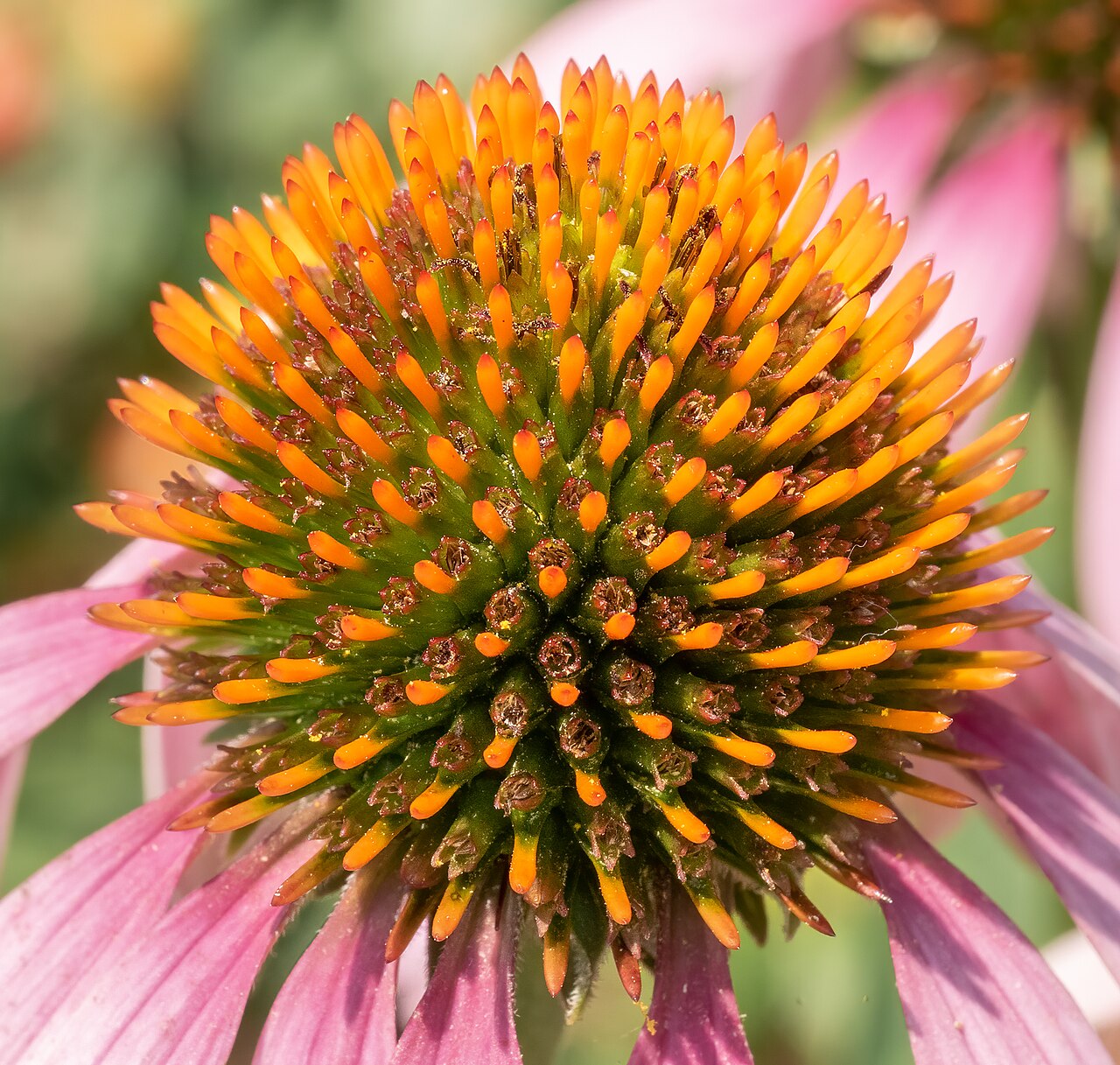
Something is wrong with your purple coneflower flowers. The cone has odd green tufts, the petals look twisted or stunted, or new little flower heads are sprouting out of old ones.
Several very different problems cause distorted coneflowers. One of them, aster yellows, means the plant should come out. The others are cosmetic or temporary and call for little more than snipping a few flowers.
Pulling the plant on a hunch can cost you a healthy coneflower, and so can leaving a diseased one in place. This guide shows you how to document what you’re seeing first, so the decision you make is the right one.
The Short Answer
Distorted flowers on purple coneflower (Echinacea purpurea) usually come from one of five sources:
- Aster yellows, a disease spread by leafhoppers. It affects the whole plant, can’t be cured, and calls for removal.
- Eriophyid mites feeding inside flower buds. The damage is cosmetic, and you remove only the affected flowers.
- Herbicide drift from lawn or weed sprays. Plants often grow out of it, so no removal is needed.
- Insect feeding on petals and buds.
- Normal variation, such as young flowers, double-flowered cultivars, or green-petaled cultivars.
Why the Diagnosis Matters
The University of Wisconsin’s Plant Disease Diagnostics Clinic makes this point directly. Proper diagnosis of aster yellows matters because plants damaged by herbicides or eriophyid mites do not need to be removed.
The same clinic cautions that very few plant diseases can be diagnosed accurately by eye. Good notes and photos are what turn a guess into a confident decision, whether you make it yourself or with help from an Extension office.
Start by learning what a normal coneflower looks like as it develops. Then work through the steps below.
What Normal Development Looks Like
A coneflower head is not one flower but hundreds. The cone is made of small disc florets, and the colored “petals” around it are ray florets.
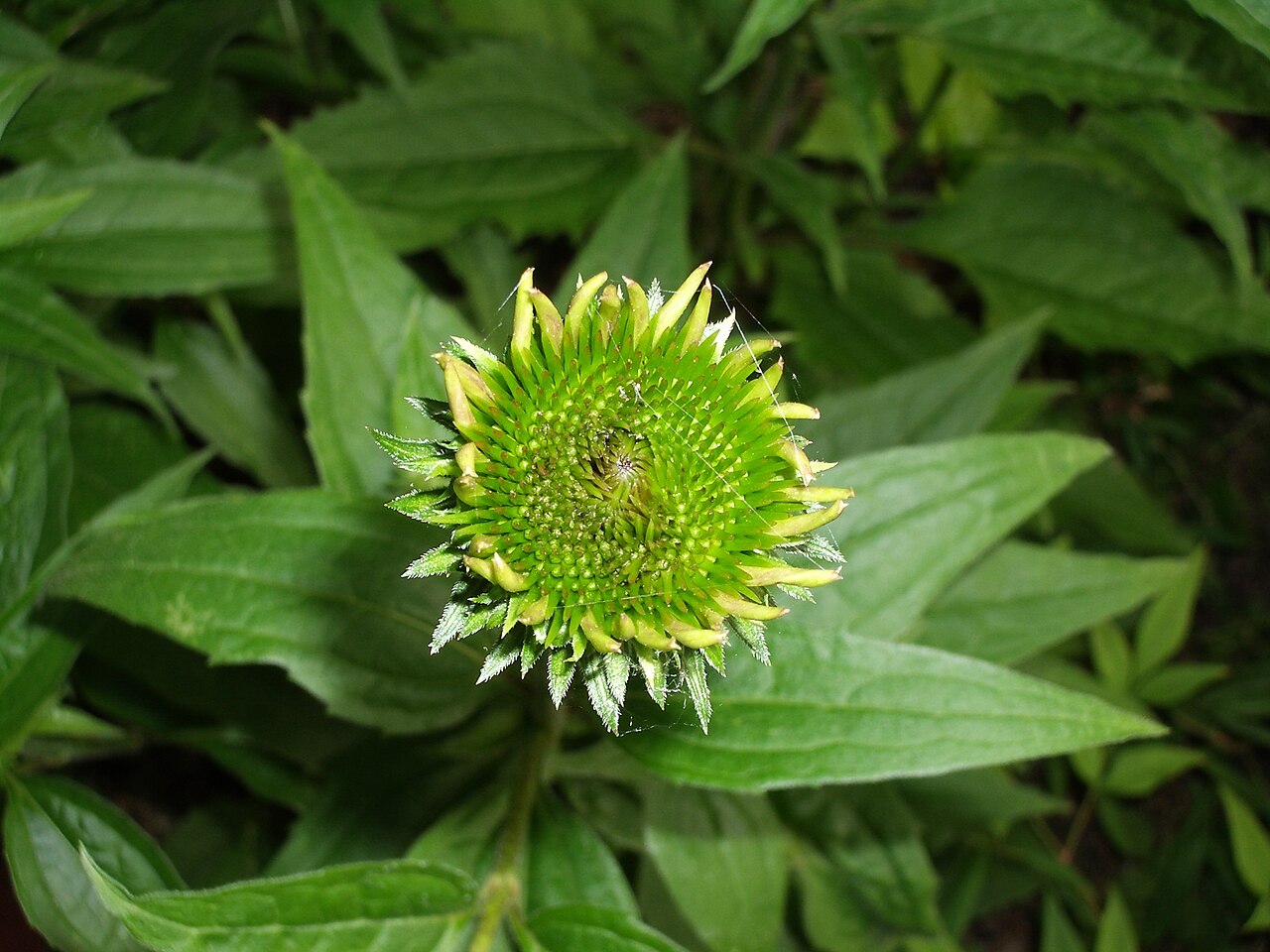
A new head opens with a flat or slightly domed green center and short, pale rays that lengthen and color up over several days. The disc florets then mature from the outside of the cone toward the center, so a cone can look half-finished for a week or more.
Clemson’s Home & Garden Information Center also points out that rays on the wild species droop. Many cultivars hold theirs more horizontally. Neither is a problem.
If a flower looks odd only for a few days and then fills out into a normal head, you were watching it develop. Distortion that persists, or appears on a fully open head, is worth documenting.
Step 1: Photograph Before You Cut
Take your photos before you snip, spray, or pull anything. Once the evidence is gone, it’s much harder to tell what happened.
- The whole plant from a few feet away, so overall size and leaf color are visible.
- Each odd flower close up, from the side and from above the cone.
- The leaves and stems just below the affected flowers. Look for yellowing, twisting, or curling.
- A normal flower on the same plant or a neighbor, if there is one, for comparison.
Put something for scale, such as a coin or your fingers, into a couple of the close-ups. Note the date. Coneflower symptoms change over weeks, and a dated series is far more useful than a single picture.
Step 2: Count How Much of the Plant Is Affected
This is the most useful clue you can collect. Walk around the plant and count normal heads and odd heads on each stem.
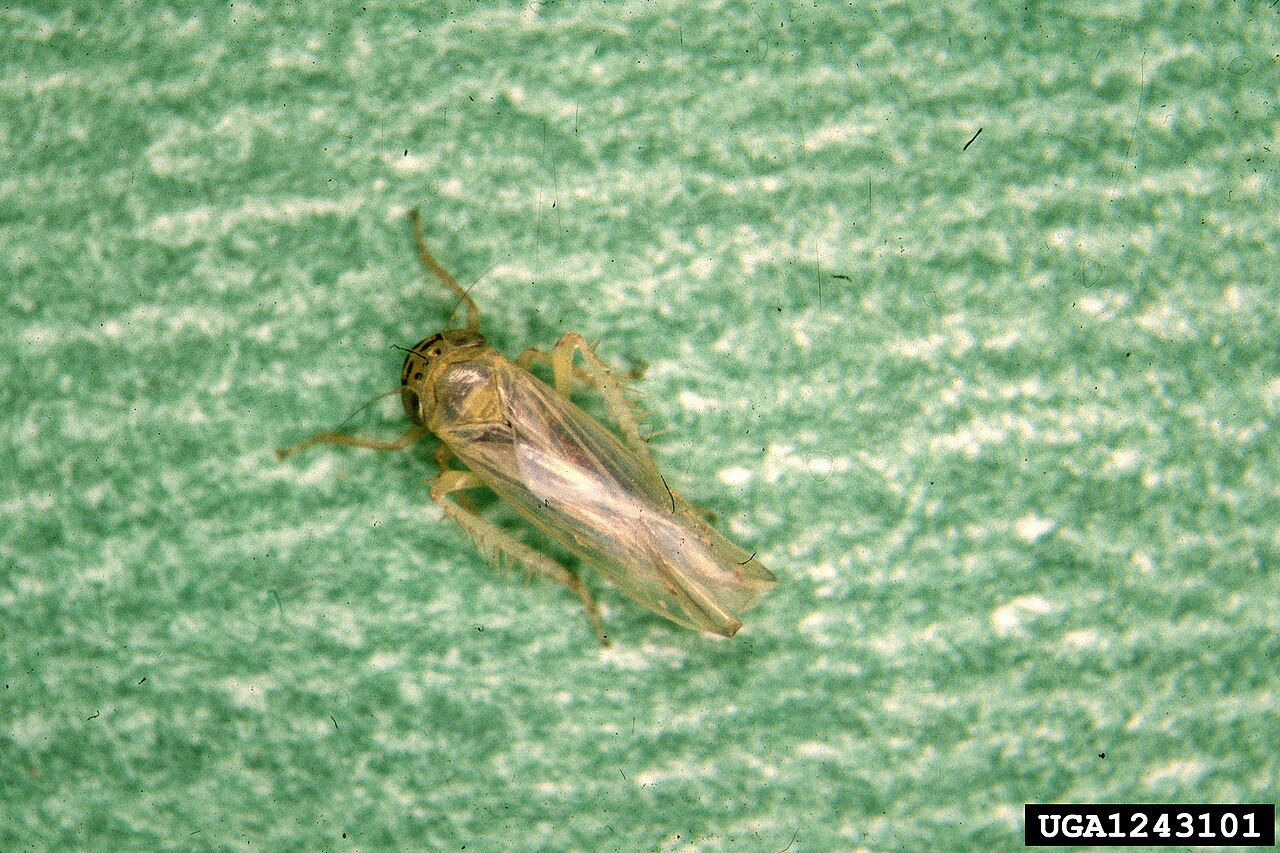
Aster yellows is a systemic disease. The phytoplasma that causes it moves through the plant’s food-conducting tissue, so symptoms tend to show up across the whole plant and come back year after year. University of Minnesota Extension describes infected plants as stunted, with yellowed foliage and small, malformed flowers that often stay green.
Eriophyid mite damage, by contrast, is tied to individual flower heads. Chicago Botanic Garden staff found that removing affected flowers was enough. New flowers later in the season came out undamaged.
- A few odd heads among many normal ones: points toward mites or insect feeding.
- Most heads odd, plus yellowish or stunted leaves: points toward aster yellows.
- Twisted stems and leaves as well as flowers: points toward herbicide exposure.
Step 3: Describe the Flower Distortion
Look closely at what the odd flowers are actually doing. Each cause tends to leave a recognizable pattern.
Aster yellows. UW–Madison’s clinic notes that in purple coneflower, secondary flower heads, often in a cluster, may grow out of the main head. Floral parts that should be colored may be green, and petals can be puckered and distorted. The Chicago Botanic Garden adds green, spoon-shaped rays and rosettes of leafy growth on the cone.
Eriophyid mites. These mites are microscopic and live inside the developing flower. Clemson describes the result as tufts of stunted, distorted flower parts sprouting from the cone. The Chicago Botanic Garden calls it “coneflower rosette.” It notes that the damage looks similar to aster yellows but is cosmetic, though it reduces seed production.
Herbicide drift. Herbicide injury often shows on stems and leaves as much as on flowers. UW–Madison lists flattened, twisted, or corkscrewed stems, oddly shaped leaves, and yellowed or reddened veins as common symptoms.
Insect feeding. Clemson lists aphids and Japanese beetles among coneflower pests. Chewed, ragged, or missing petals and visible insects point to feeders rather than disease.
Step 4: Check the Leaves and Overall Growth
Compare the affected plant with healthy coneflowers nearby, or with your photos from last year.
- Is the plant shorter or bushier than usual, with many thin stems?
- Are leaves yellowish, or tinged red or purple, when they should be dark green?
- Has the plant been getting smaller from year to year?
Yes answers line up with aster yellows, which UW–Madison describes as causing stunted, twisted plants with yellow, purple, or red foliage. A plant with normal size and leaf color but a few odd flowers is much less likely to be infected. If the plant has also been shrinking, our guide to a purple coneflower that returns smaller each year covers the other causes to rule out.
Step 5: Record What Happened Nearby
Some causes leave no trace on the plant except the symptoms. Write down anything that might point to herbicide exposure in the weeks before you noticed the problem:
- Weed-and-feed or broadleaf weed sprays on a nearby lawn, including a neighbor’s.
- Spot-spraying of weeds in or near the bed.
- Windy weather on the day anything was sprayed.
- Similar twisting on nearby tomatoes, grapes, or other sensitive plants. UW–Madison notes these often show herbicide damage first.
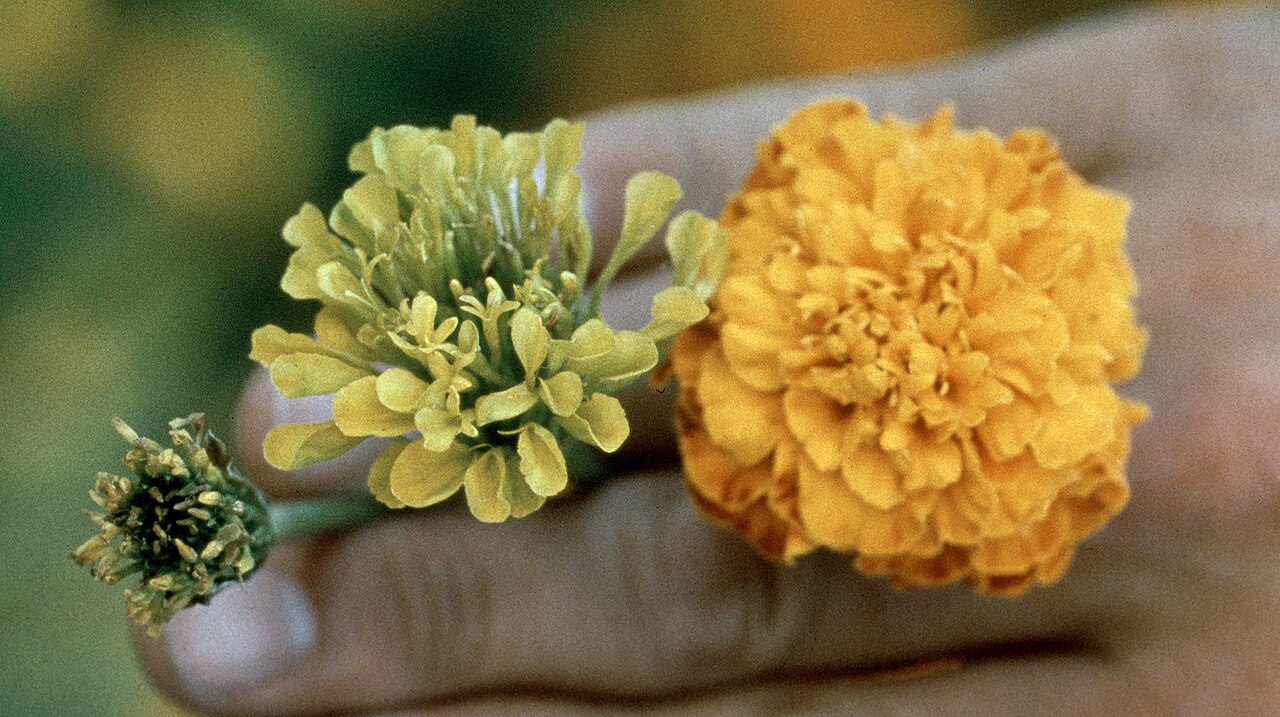
Note whether other aster-family plants in the garden show green or distorted flowers too. Aster yellows affects many plants, including asters, coreopsis, and marigolds. Our guide to New England aster buds that won’t open shows how the same disease looks on asters.
Step 6: Check the Plant Tag
Before you assume anything is wrong, find out exactly what you planted. Many coneflowers sold today are cultivars or hybrids with flower forms that would look alarming on the wild species.
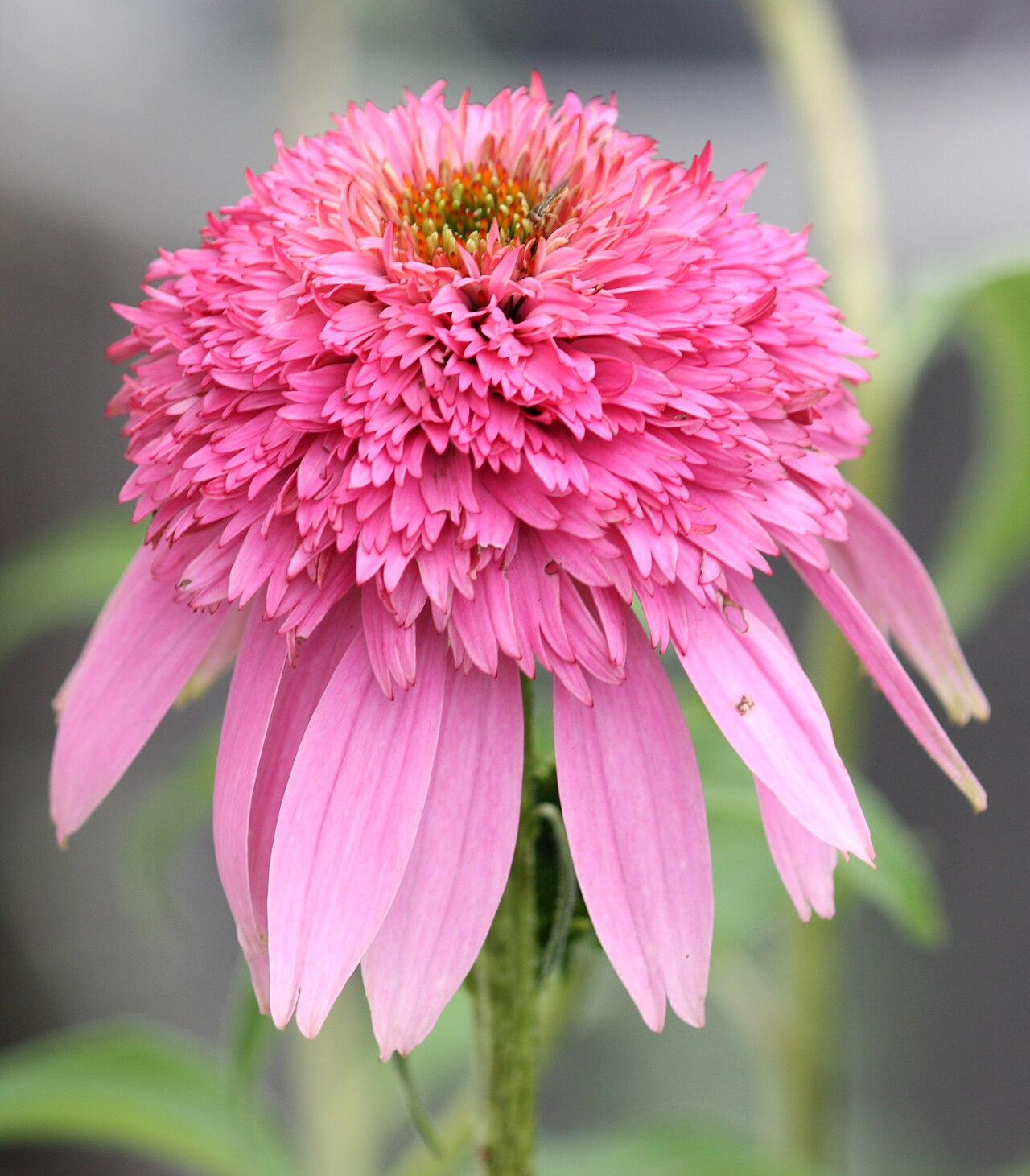
- Double-flowered cultivars have a pompom of short petals where the spiny cone would be. Clemson notes that one double cultivar was selected for more consistently double flowers.
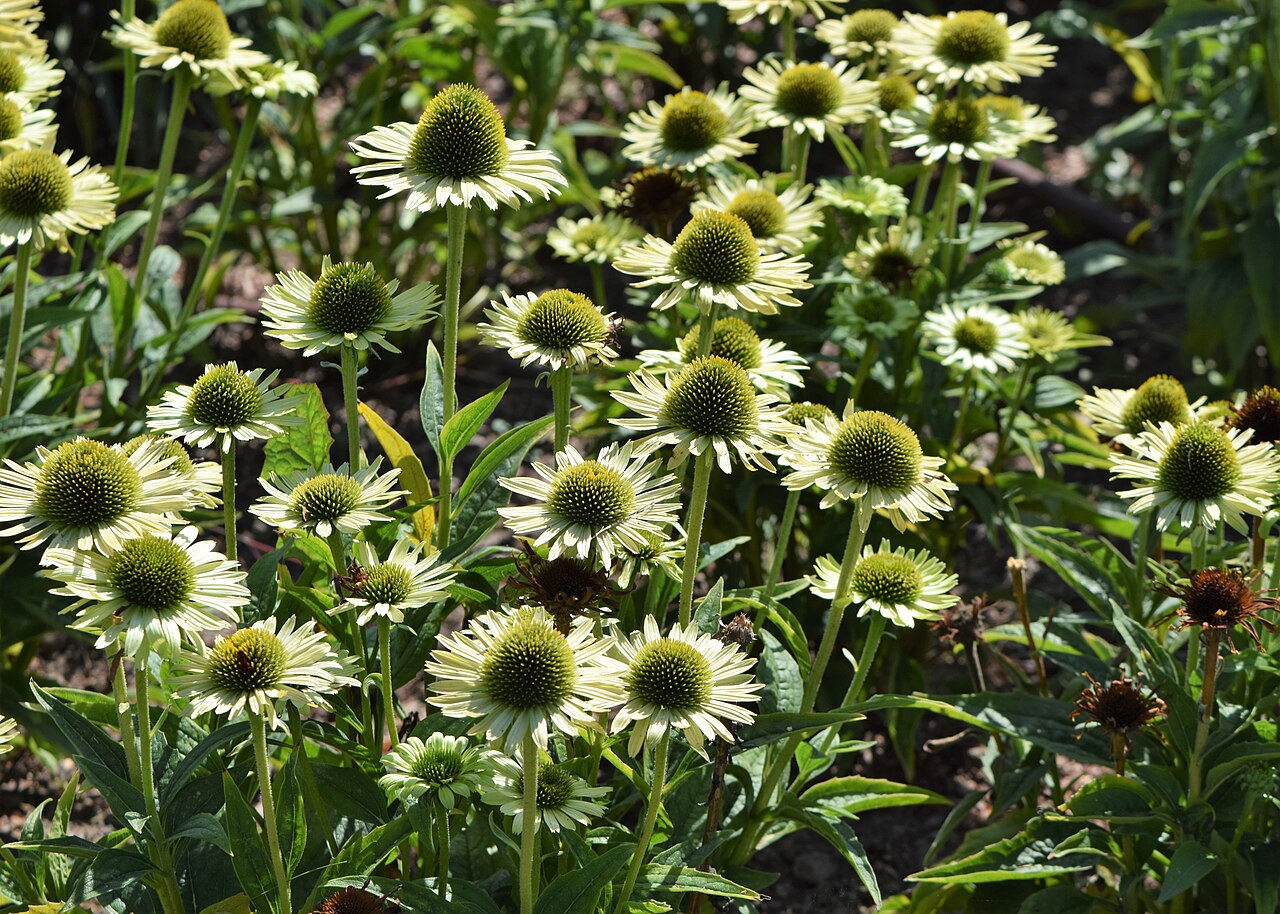
- Green-flowered cultivars, like the one pictured above, have pale green petals by design.
- Seedlings of cultivars can show unexpected flower colors and forms. They don’t come true from seed.
The key test is consistency. A cultivar trait shows on every flower, every year, from the start. Aster yellows usually shows up on a plant that used to flower normally, and the symptoms often get worse over time.
Symptom Comparison at a Glance
| Aster yellows | Green, leafy or spoon-shaped flower parts; heads growing out of heads; stunted, yellowish plant; worse each year. Remove the whole plant. |
| Eriophyid mites | Tufted or galled cones on some heads; foliage may curl or bronze; later flowers often normal. Remove affected flowers. |
| Herbicide drift | Twisted or corkscrewed stems and cupped, odd-shaped leaves; recent spraying nearby. Wait and watch new growth. |
| Insect feeding | Chewed or ragged petals, insects visible. Hand-pick; tolerate light damage. |
| Normal or cultivar | Young heads that fill out in days; doubles or green petals on every flower. No action. |
What to Do Once You Know
If you’re confident it’s aster yellows: remove the plant promptly, including the roots, and put it in the trash rather than the compost. UW–Madison and Minnesota Extension agree there is no cure. Infected perennials can serve as a source of the disease for years. Don’t divide or share pieces of an infected plant. Healthy clumps can still be split safely using our guide to dividing purple coneflower.
Don’t reach for insecticide to stop the leafhoppers, either. UW–Madison notes that controlling aster leafhoppers in landscape settings typically isn’t effective and isn’t recommended. Spraying flowers also harms the bees and butterflies a coneflower is there to feed. Our pollinator garden design basics explain why that matters.
If it looks like mites: snip off the affected flower heads and bag them. Clemson recommends cutting mite-affected plants back to the ground in fall and removing the debris. Healthy-looking plants can keep their seed heads for the birds. Our guide to choosing between deadheading and seed heads covers how to fit this into a routine.
If it looks like herbicide: leave the plant in place, stop any spraying near the bed, and watch the new growth. Note when normal leaves and flowers start appearing again.
If you still can’t tell: send your dated photos, or a fresh sample, to your county Extension office or state plant diagnostic clinic. In the meantime, remove the odd flowers so you can see whether the next ones come out normal. That’s useful evidence in itself.
A Season-by-Season Watch Plan
- Early summer: photograph the first flowers as they open. Note the cultivar name and where each plant came from.
- Midsummer: walk the bed weekly during bloom. Count odd heads, and remove any with tufted or galled cones.
- Late summer: recheck any plant you flagged. Normal new flowers suggest mites or herbicide; worsening symptoms suggest aster yellows.
- Fall: remove confirmed aster yellows plants, roots and all. Cut back mite-affected plants and clear the debris. Leave healthy seed heads standing.
- Next spring: compare the new growth with your photos. Replace removed plants with fresh stock in a new spot if you can. Our step-by-step echinacea planting guide covers the basics.
📋 More on this plant: read the full Purple Coneflower (Echinacea purpurea) profile, or see it in our native plant lists for Kentucky & Tennessee, Arkansas, Louisiana, Eastern Oklahoma & Eastern Texas, and Illinois, Iowa & Missouri.
Frequently Asked Questions
Why are there little green flowers growing out of my coneflower?
Small leafy or green heads sprouting from the main flower are a classic sign of aster yellows in purple coneflower. Eriophyid mites can cause similar tufts on the cone, so check how much of the plant is affected before you decide.
Is aster yellows spread through the soil?
No. The Chicago Botanic Garden notes that the disease is not soil-borne and needs living plants to survive. It’s carried from plant to plant by feeding leafhoppers. You can replant coneflowers in the same bed after removing an infected one.
Do eriophyid mites kill coneflowers?
The Chicago Botanic Garden found the damage to be cosmetic, with no long-term effect on plant health, although affected heads produce less seed. Removing the damaged flowers improved the display. Later flowers came out normal.
Can I spray to prevent aster yellows?
Spraying isn’t a practical answer. UW–Madison notes that controlling leafhoppers in home landscapes is typically ineffective and not recommended. Prompt removal of infected plants is the main tool.
My new coneflower has strange double flowers. Is it sick?
Probably not. Check the tag first. Double-flowered cultivars are common, and their pompom centers are a bred trait. If every flower looks the same and the leaves are healthy, it’s the cultivar.
Sources
- University of Wisconsin Plant Disease Diagnostics Clinic, Aster Yellows and Herbicide Damage: coneflower symptoms, diagnosis, removal, leafhopper control and drift symptoms.
- University of Minnesota Extension, Aster yellows: symptoms, the aster leafhopper and how the phytoplasma spreads.
- Chicago Botanic Garden, A Comparative Evaluation of Echinacea Cultivars (2024): aster yellows and eriophyid mite (“coneflower rosette”) symptoms and management in trial plantings.
- Clemson Cooperative Extension Home & Garden Information Center, How to Grow Echinacea (HGIC 1182): eriophyid mites, insect pests and cultivar flower forms.