
Cow Parsnip (Heracleum maximum)
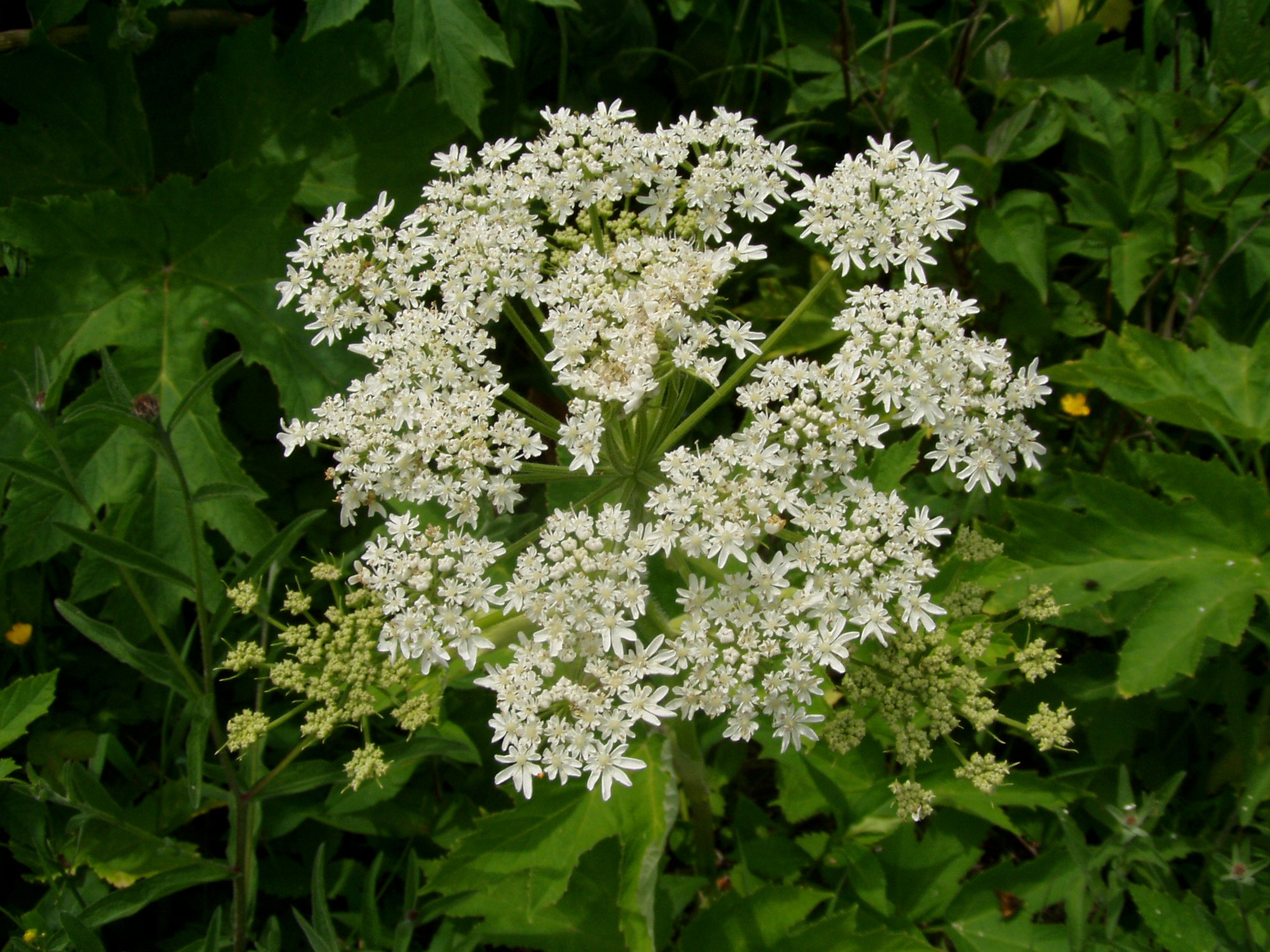
Heracleum maximum (syn. Heracleum lanatum), commonly called cow parsnip or American cow-parsnip, is a bold, coarse-textured wildflower in the carrot family (Apiaceae) and the only Heracleum species native to North America. It is an imposing plant, often reaching head height or taller, with huge maple-like leaves and broad, flat-topped clusters of white flowers that look like an oversized version of Queen Anne’s lace. Cow parsnip is widespread across Alaska, Canada, and much of the northern, western, and eastern United States, where it grows in damp meadows, streambanks, roadside ditches, and forest edges.
Before anything else: cow parsnip’s sap contains furanocoumarins that make skin extremely sensitive to sunlight. Brushing against broken stems or leaves and then going out in the sun can raise painful, blistering burns within a day or two, a reaction called phytophotodermatitis. This is not an allergy and does not require direct contact with bare skin for long — damp sap on skin followed by sunlight is enough. Always wear long sleeves, gloves, and eye protection when working around or removing this plant, wash exposed skin promptly with soap and water, and keep treated areas out of the sun for a couple of days afterward.
Despite that caution, cow parsnip is a genuinely valuable native plant: its flowers are a magnet for pollinators, its foliage feeds browsing wildlife, and in the right spot — a moist meadow edge, a rain garden, a streamside planting — it adds dramatic scale that few other native perennials can match. It is best planted where people and pets won’t brush against it regularly, such as toward the back of a bed or along a wilder, less-trafficked margin of the yard.
Identification
Cow parsnip is a robust herbaceous perennial that dies back to the ground each winter and resprouts from a stout taproot and rhizome. Mature plants typically stand 4 to 8 feet tall, occasionally taller in rich, moist soil, with a spread of 3 to 5 feet. The whole plant has a coarse, almost tropical look, very different from the lacy, finely cut foliage of most other members of the carrot family.
Stems
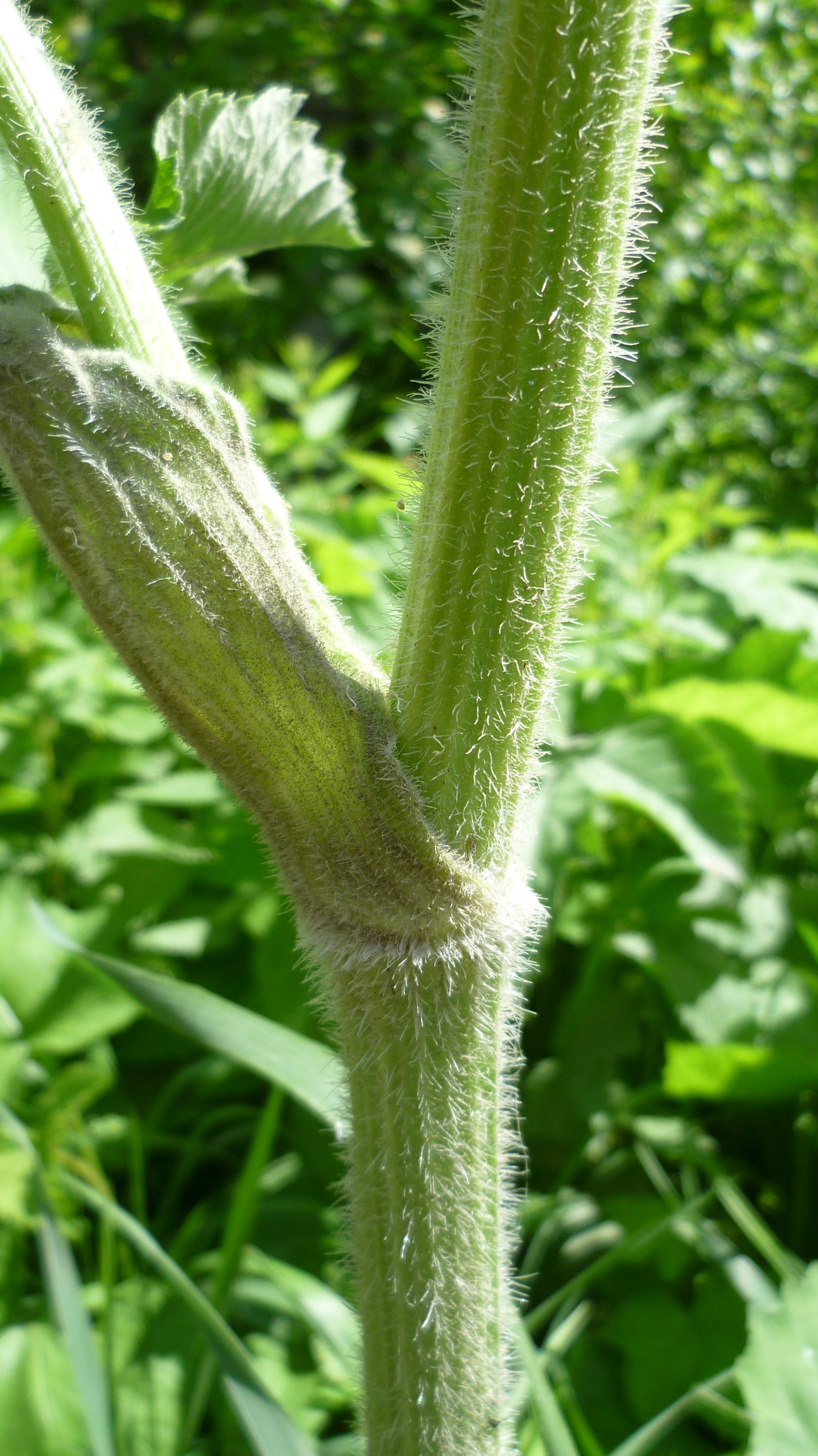
The hollow, ridged stems are thick — often an inch or more across at the base — and covered in dense, woolly white hairs, which is where the species gets its old name lanatum (“woolly”). This fuzzy, uniformly hairy stem is one of the most useful identification clues, and it also distinguishes cow parsnip from its two most important look-alikes (see Cultural & Historical Uses below for the full comparison). Stems are plain green, without the purple blotching seen in giant hogweed or the purple streaking seen in water hemlock.
Leaves
Leaves are enormous, up to a foot or more across, divided into three broad, maple-like leaflets with coarsely toothed, lobed margins. The leaf stalks (petioles) are long and sheathing at the base, clasping the stem. Leaf undersides are paler and often softly hairy. The sheer size of the leaves, combined with the woolly stem, usually makes cow parsnip easy to recognize at a glance once you know what to look for.
Flowers
Flowers appear in large, flat-topped compound umbels 4 to 8 inches across, made up of dozens of small white (occasionally pale pink) five-petaled flowers. The outer flowers of each umbel are often noticeably larger than the inner ones, a classic feature of the carrot family. Bloom time runs from late spring into mid-summer depending on elevation and latitude, with high-mountain and far-northern populations flowering later.
Fruit & Seeds
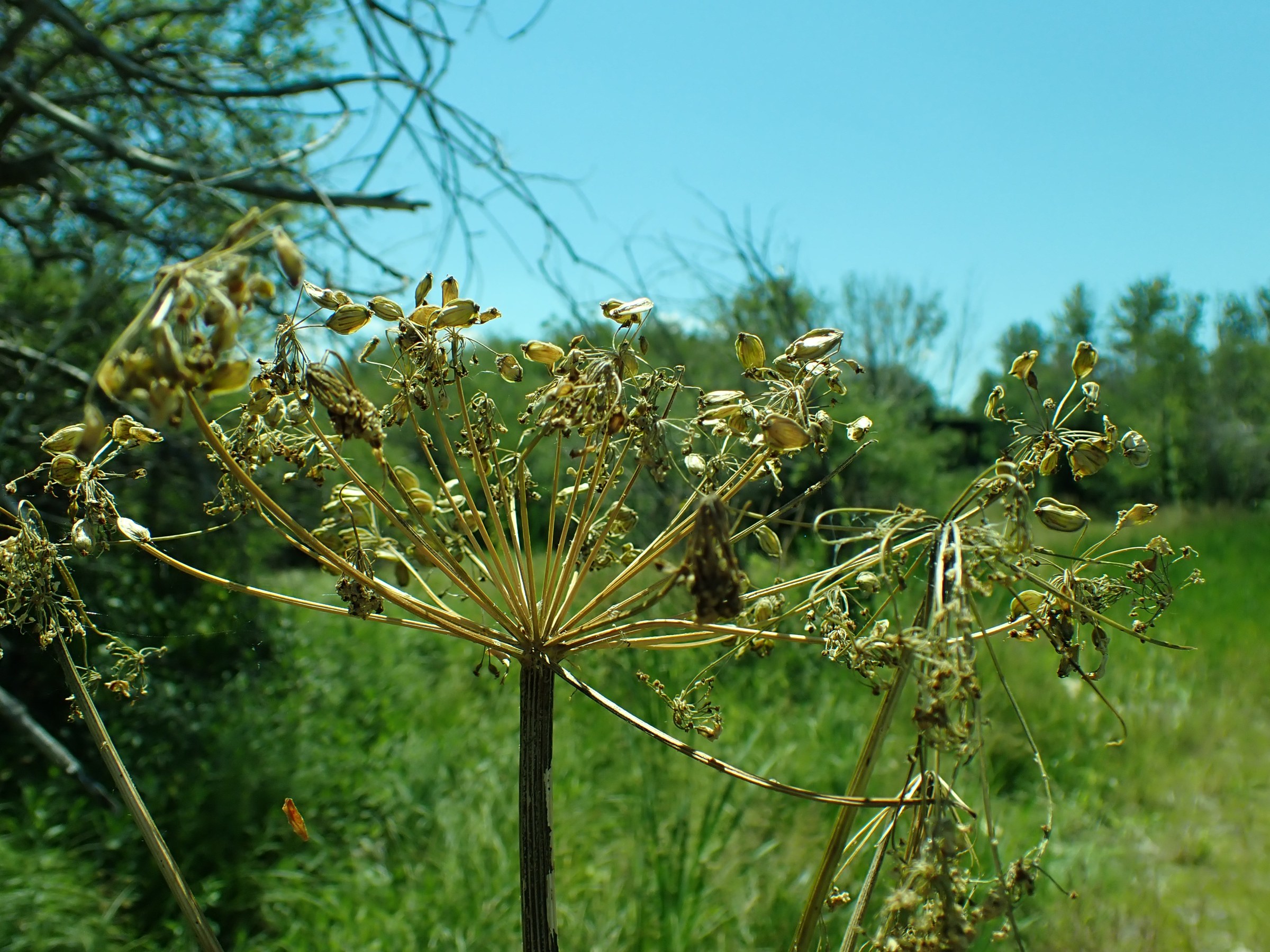
After flowering, each umbel produces flattened, winged, heart-shaped seed pods (schizocarps) about ⅓ to ½ inch long, which turn from green to papery tan as they ripen in late summer and persist on the dried stalks into fall and winter.
Quick Facts
| Scientific Name | Heracleum maximum (syn. Heracleum lanatum) |
| Family | Apiaceae (Carrot) |
| Plant Type | Herbaceous Perennial Wildflower |
| Mature Height | 4–8 ft |
| Mature Spread | 3–5 ft |
| Growth Rate | Fast |
| Sun Exposure | Full Sun to Part Shade |
| Water Needs | Moderate to High |
| Soil Type | Rich, moist, well-drained to seasonally wet |
| Soil pH | 6.0–7.5 |
| Bloom Time | May – August |
| Flower Color | White, occasionally pale pink |
| Fall Color | None (foliage dies back) |
| Fruit | Flat, winged tan seed pods |
| Deer Resistant | Somewhat (elk, moose and bears do browse it) |
| USDA Hardiness Zones | 3–9 |
Native Range
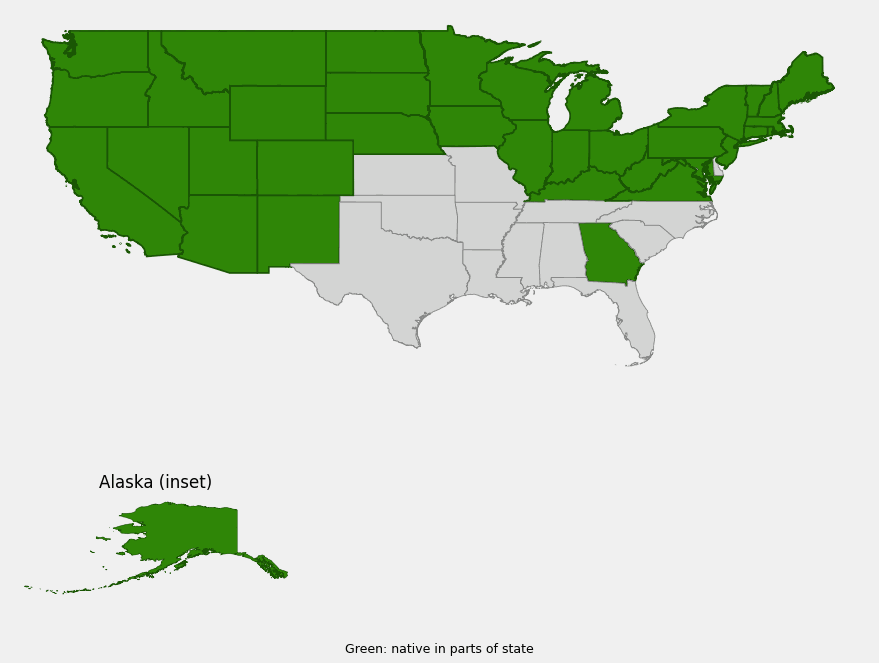
Cow parsnip has one of the broadest native ranges of any North American wildflower, occurring from Alaska across most of Canada and south through the Rocky Mountains, the Pacific states, the upper Midwest, and the Northeast, with scattered native populations reaching into the Appalachians as far south as Kentucky and the mountains of northern Georgia. It is absent as a native plant from the Gulf Coastal Plain and most of the Deep South — Texas, Oklahoma, Arkansas, Louisiana, Mississippi, Alabama, and Florida do not have native populations, and much of the southern Great Plains (Kansas) and the Ozark region of Missouri fall outside its natural range as well.
Across this range cow parsnip favors consistently moist ground: streambanks, wet meadows, seeps, avalanche chutes, roadside ditches, and the damp edges of forests and clearings. It is common from near sea level on the Pacific coast up to subalpine meadows well above 9,000 feet in the Rockies, tracking moisture availability more closely than elevation or latitude. In the mountain West it is often one of the first tall wildflowers to green up after snowmelt.
Because it needs reliable moisture, cow parsnip is a good indicator of wet soil in a landscape — if you see it growing wild nearby, that patch of yard is probably damp enough to support it in cultivation too. Gardeners in the Gulf states and Deep South should not plant cow parsnip, since it falls outside its native range there and the regional climate does not suit it well regardless.
📋 Regional plant lists featuring Cow Parsnip: Alaska · Western Oregon & Western Washington · Idaho, Eastern Oregon & Eastern Washington · Utah & Western Colorado · Arizona & New Mexico · Montana & Wyoming · North Dakota, South Dakota & Western Minnesota · Nebraska, Kansas & Eastern Colorado · Illinois, Iowa & Missouri · Michigan, Wisconsin & Eastern Minnesota · Ohio & Indiana · New York, Pennsylvania & Northern New Jersey · New Hampshire, Maine & Vermont · Connecticut, Massachusetts & Rhode Island · Maryland, Virginia & West Virginia · Kentucky & Tennessee · Georgia, Alabama & Mississippi
Growing & Care Guide
Cow parsnip is easy to grow once given a consistently damp spot, and it needs almost no coddling after that. Because of its size and the phototoxic sap, plant it with intention: give it room, and keep it away from paths, play areas, and anywhere people brush past regularly.
Light
Full sun to part shade suits cow parsnip well. In cooler, wetter climates it tolerates full sun without trouble; in hotter regions it appreciates afternoon shade and extra soil moisture to avoid wilting during the hottest part of summer.
Soil & Water
This is a moisture-loving plant. It performs best in rich, organic soil that stays consistently moist to seasonally wet — along a stream, at the edge of a rain garden, or in a low spot that collects runoff. It does not tolerate prolonged drought; established plants may survive dry spells but will look ragged and stop blooming well. Mulch generously to help retain moisture.
Planting Tips
Start from fresh seed sown in fall (it needs cold stratification to germinate reliably) or from nursery-grown container plants set out in spring. Space plants at least 3 feet apart to accommodate their mature spread. Choose the planting site carefully — once established, cow parsnip can self-seed into a loose colony, which is attractive in a wild garden but should be sited away from high-traffic areas because of the sap hazard.
Pruning & Maintenance
Deadhead spent flower umbels before seed set if you want to limit self-seeding. Cut plants back to the ground after they die back in fall, wearing gloves and long sleeves. Because sap remains phototoxic even on cut or wilted material, dispose of trimmings rather than handling them bare-handed, and never use a string trimmer on cow parsnip without eye and skin protection — the fine spray of sap it throws is a common source of burns.
Landscape Uses
Cow parsnip works best in naturalistic, lower-traffic parts of the landscape:
- Rain gardens and bioswales where soil stays consistently damp
- Streamside and pond-edge plantings for erosion control and habitat
- Wet meadow restoration alongside other moisture-loving natives
- Pollinator gardens, sited toward the back where its bulk won’t crowd paths
- Woodland edge plantings with dappled shade and rich soil
Wildlife & Ecological Value
Cow parsnip is a workhorse for wildlife across its enormous range, feeding pollinators, birds, and browsing mammals in turn through the growing season.
For Pollinators
The broad, flat umbels are extremely attractive to a wide range of pollinating insects, including native bees, honeybees, soldier beetles, flies, and numerous small wasps. The flat landing-pad shape of the flower cluster makes nectar and pollen easy to reach for short-tongued insects that struggle with deeper flowers, making cow parsnip an especially valuable early- to mid-summer nectar source in the mountain West.
For Birds
Seed-eating songbirds forage on the ripe, flattened seeds in late summer and fall, and the tall dried stalks offer perches and cover through the winter months before they finally break down.
For Mammals
Elk, moose, and black bears all browse the young leaves and stems in spring, when the new growth is most tender, and bears are known to dig and eat the roots. Deer browse cow parsnip less consistently than many wildflowers, likely because of the sap’s irritant properties, which gives it some relative deer resistance in home gardens even though it is not immune to browsing.
Ecosystem Role
In wet meadows and along streambanks, cow parsnip’s dense, broad-leaved growth helps shade out competing weeds and holds soil on damp slopes and avalanche chutes where many other tall perennials cannot establish. Its early, vigorous growth after snowmelt makes it one of the first substantial sources of nectar in many mountain meadow communities.
Cultural & Historical Uses
Many Indigenous peoples across cow parsnip’s range — including Alaska Native, First Nations, and tribal communities throughout the Rocky Mountain and Pacific Northwest regions — used the plant for food and other purposes, but always with care and specific knowledge, because improper preparation of the stems and petioles could cause the same skin burns described above. Young, tender shoots and peeled stalks were sometimes eaten in spring after the outer, sap-rich rind was carefully removed; the dried, hollow stems were also used as drinking straws or flutes by children in some traditions. This history is recorded here for context, not as a how-to: identification mistakes with this plant and its relatives carry real risk, and this page does not recommend foraging it.
That risk comes from two look-alikes that share cow parsnip’s habitat and general appearance. The first is giant hogweed (Heracleum mantegazzianum), a federally listed noxious weed native to the Caucasus region and now invasive in parts of the Northeast and Pacific Northwest. Giant hogweed is dramatically larger than cow parsnip — often 10 to 15 feet tall with leaves up to 5 feet across — and its stems are blotched with dark purple and covered in coarse, bristly hairs rather than cow parsnip’s uniformly woolly stem. Giant hogweed’s sap causes far more severe burns and scarring than cow parsnip’s, and suspected sightings should be reported to local extension or agriculture agencies rather than handled.
The second, far more dangerous look-alike is deadly water hemlock (Cicuta maculata), which shares cow parsnip’s taste for wet ground and produces broadly similar clusters of small white flowers. Water hemlock is one of the most acutely poisonous plants in North America — a small bite of the root or stem can be fatal — and it can be told apart by its smaller, more finely divided leaves, hairless stems often streaked with purple, and a distinctive chambered root crown. Never harvest any wild plant in the carrot family for food without expert, hands-on identification; the resemblance between the safe, the irritating, and the deadly members of this family is exactly why professional foragers treat the whole group with caution.
Frequently Asked Questions
Is cow parsnip poisonous?
Cow parsnip is not a classic “poisonous if eaten” plant like its relative water hemlock, but its sap causes phototoxic skin burns when it contacts skin that is then exposed to sunlight. Treat all parts of the plant as a skin hazard, wear protective clothing when handling it, and never present it as something to casually forage.
How do I tell cow parsnip apart from giant hogweed?
Size and stem markings are the quickest clues. Giant hogweed is much taller (10–15+ feet) with purple-blotched, bristly stems, while native cow parsnip tops out around 8 feet with plain green, uniformly woolly-haired stems. If you suspect giant hogweed, do not touch it — report it to your local extension office instead.
Is cow parsnip the same as water hemlock?
No, and this confusion can be deadly. Water hemlock (Cicuta maculata) is a different, extremely toxic plant that happens to grow in similar wet habitats and also has clusters of small white flowers. It has smaller, finer leaves and hairless, often purple-streaked stems. Never eat any wild member of the carrot family unless identification has been confirmed by an expert.
Will cow parsnip take over my garden?
It can self-seed readily in consistently moist soil, forming loose colonies over time. Deadheading spent flower umbels before seeds mature keeps it in check if you want a single clump rather than a spreading patch.
Does cow parsnip need wet soil to survive?
It strongly prefers consistent moisture and will struggle through drought. It is not a good choice for dry, well-drained garden beds — reserve it for rain gardens, streamsides, or naturally damp low spots.

Looking for a nursery that carries Cow Parsnip?
Browse our native plant nursery directory: Alaska & Arizona · Washington · Oregon · California · Nevada, New Mexico, North Dakota, Nebraska, Ohio, New York, New Jersey & New Hampshire · Idaho, Iowa, Illinois & Indiana · Montana, Minnesota, Michigan, Massachusetts, Maine, Kentucky & Maryland · Wyoming, Wisconsin & West Virginia · Utah, South Dakota, Pennsylvania, Rhode Island, Vermont & Virginia · Colorado, Connecticut & Georgia