Blazing Star and Native Grasses: A Narrow Sunny Border Plan
Last updated: November 6, 2026
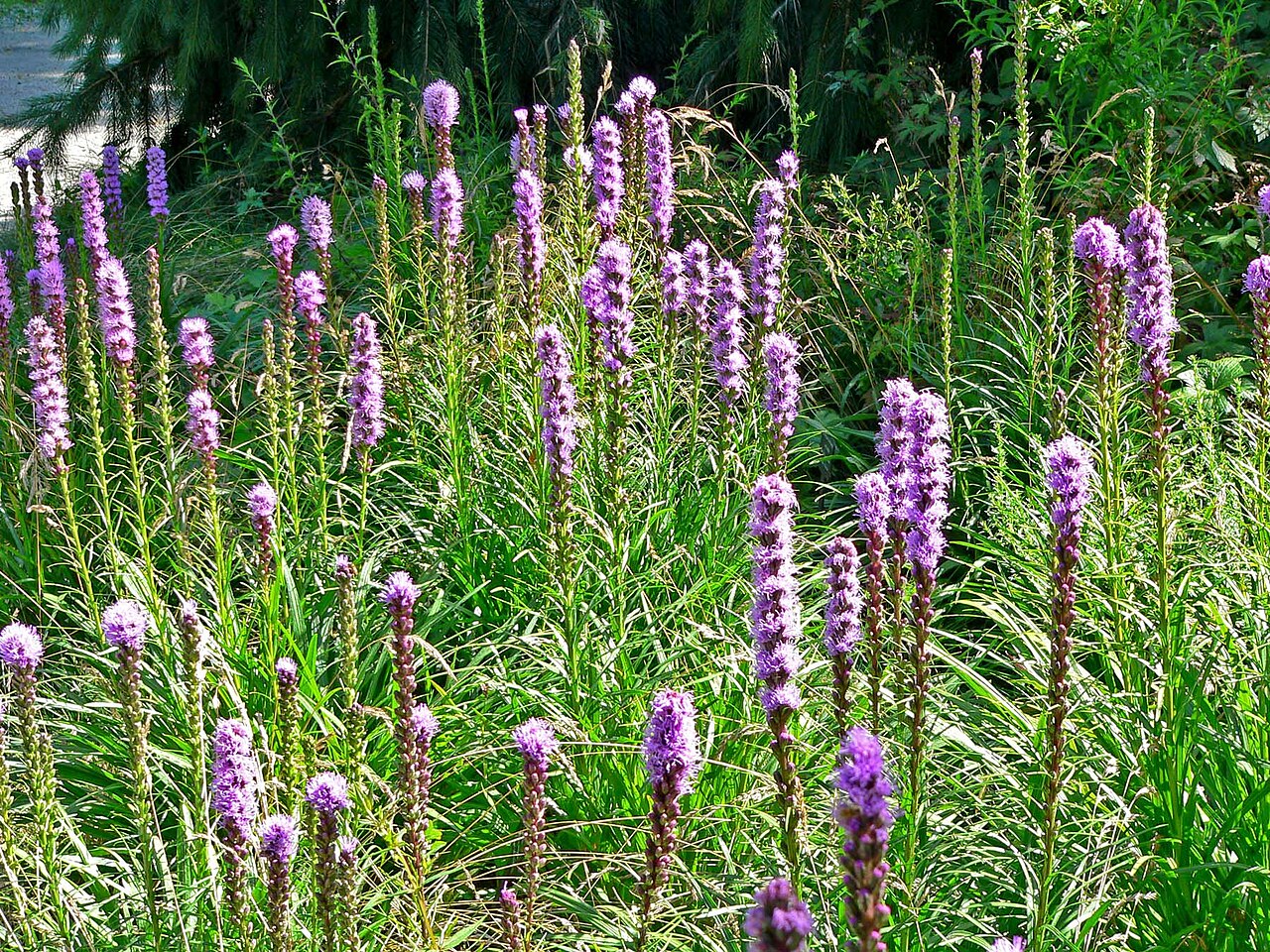
A narrow strip of sunny ground along a driveway, fence or front walk is one of the hardest spaces to plant well. Wide, sprawling perennials spill onto the pavement, and a single row of anything looks thin.
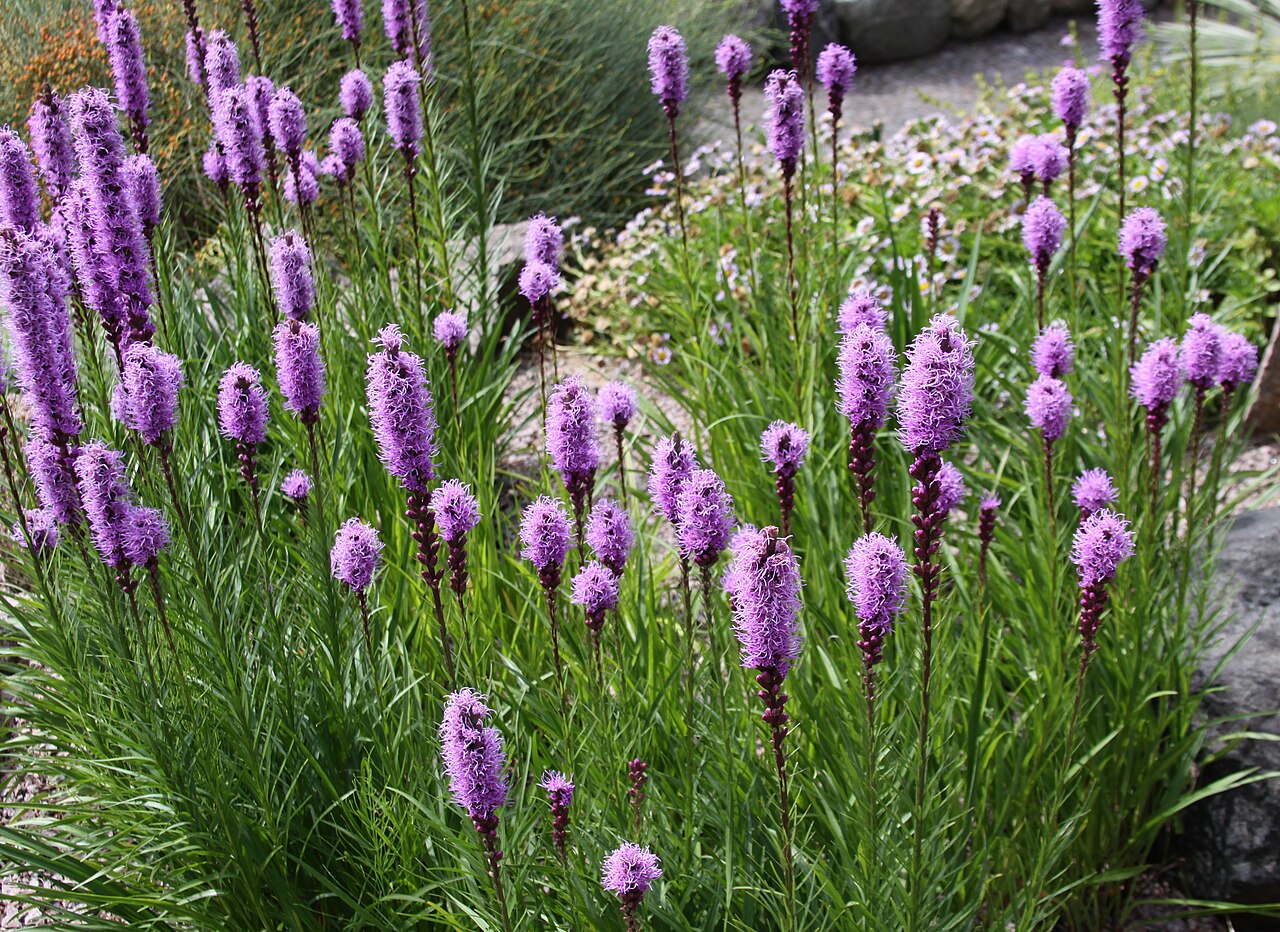
Blazing star paired with native bunchgrasses solves both problems. The blazing star grows upright with narrow, grass-like leaves, and clumping grasses fill the ground without running into the path.
This plan shows how to lay out a border as narrow as 3 feet: which grasses to use, how to repeat the blazing star, how to match plants to your soil, and how to care for it over the first three years.
Plan at a Glance
| Site | Narrow strip along a drive, walk, fence or foundation |
| Size | 3 to 4 feet deep, any length; the sample plan is 3 × 20 feet |
| Sun | Full sun, six or more hours of direct light |
| Soil | Average, well-drained garden soil; see the soil-matching notes below |
| Maintenance | Low: one spring cutback, occasional seedling editing |
| Best regions | Eastern U.S. where Liatris spicata is native; regional blazing star swaps below |
Read the Strip Before You Plant
Narrow borders often have tough conditions. Pavement reflects heat, roof runoff may pour onto one end, and the soil next to a driveway is often compacted fill.
Check three things. First, sun: blazing star and the grasses below need full sun. Second, drainage: dig a hole about a foot deep, fill it with water, and see whether it drains within a day. Third, width: measure the planting area, not including any edging.
Also note what is on the other side. A walk where people brush past needs low plants at the front edge. A fence or wall gives you a backdrop and some shelter from wind for the tall spikes.
Match the Blazing Star to Your Soil
Not all blazing stars want the same conditions, and this choice matters more than any other in the plan.
Liatris spicata, often called dense or marsh blazing star, prefers average to moist, well-drained soil. NC State Extension notes it does better in moist soils than some other blazing stars, and the Lady Bird Johnson Wildflower Center lists moist wood openings, mesic prairies and marsh edges as its habitat.
The bunchgrasses in this plan lean drier. The Wildflower Center lists prairie dropseed for dry prairies and dry, sandy soils, and little bluestem as tolerant of a wide range of soils but not wet sites.
For average, well-drained garden soil, the combination works. If your strip is dry, sandy or gravelly, swap in a drier blazing star from the regional list below. If it stays wet, skip the dry-prairie grasses and see our plan for a wet-meadow planting instead.
How Blazing Star Fits a Narrow Space
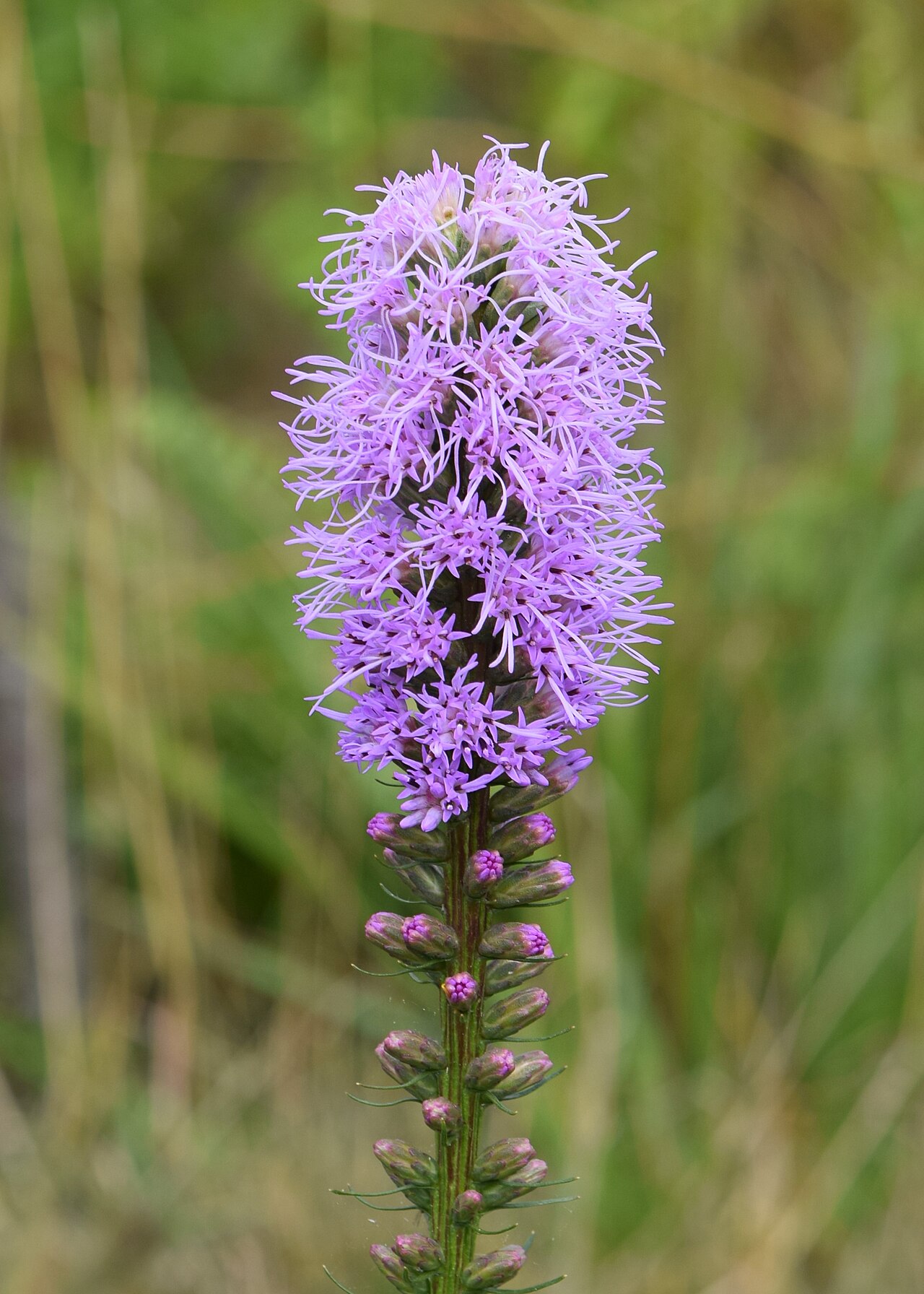
NC State lists Liatris spicata at 3 to 6 feet tall but only 3 inches to 1½ feet wide, and describes it as clump-forming with grass-like foliage. That narrow footprint is exactly why it works in a tight border.
The flower spikes bloom from the top down, according to NC State. The Wildflower Center gives a bloom season of July to September.
The plant grows from a corm. NC State notes it can form new colonies from its corms but most often spreads by seed, so expect a few seedlings rather than a running patch.
One drawback is height. NC State notes that taller stems sometimes flop and may need staking. In a narrow border, sturdy grass neighbors help hold them up. If spikes still lean, our guide to blazing star spikes falling over explains when to support them and when to change the site.
Choosing the Grasses
Use bunchgrasses that form clumps instead of spreading by runners. They hold the ground between blazing star clumps and stay out of the path.
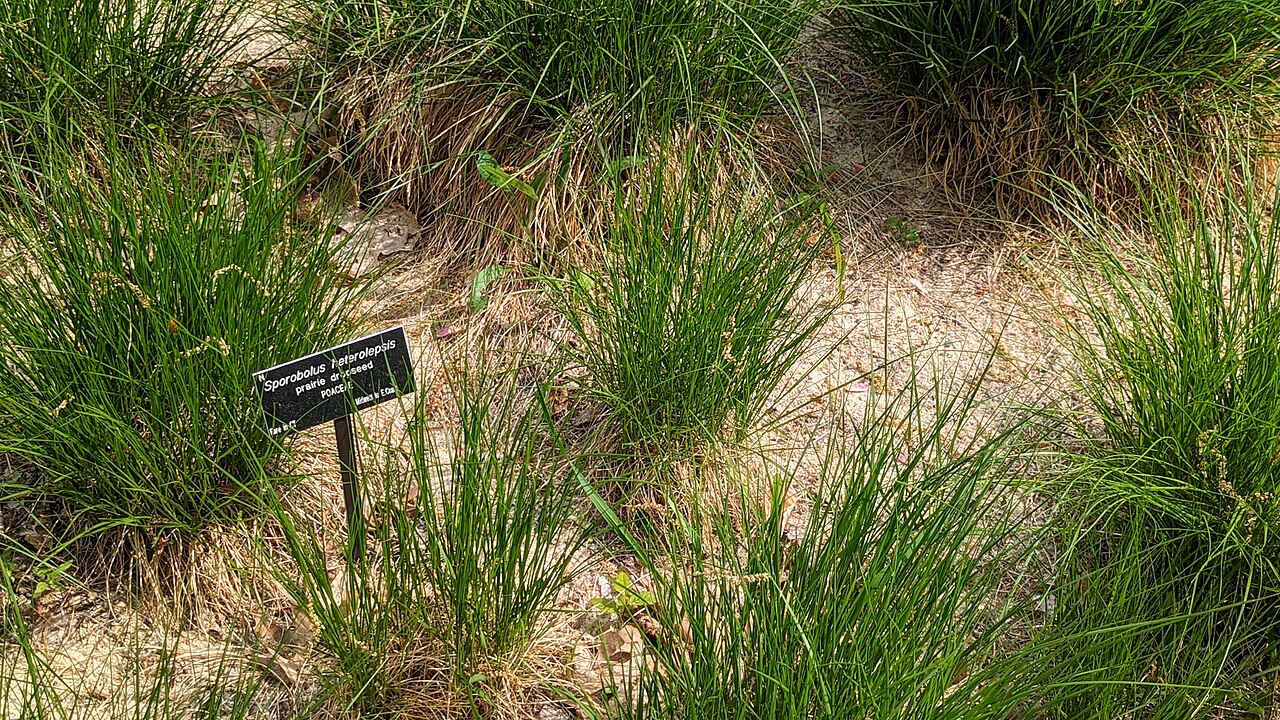
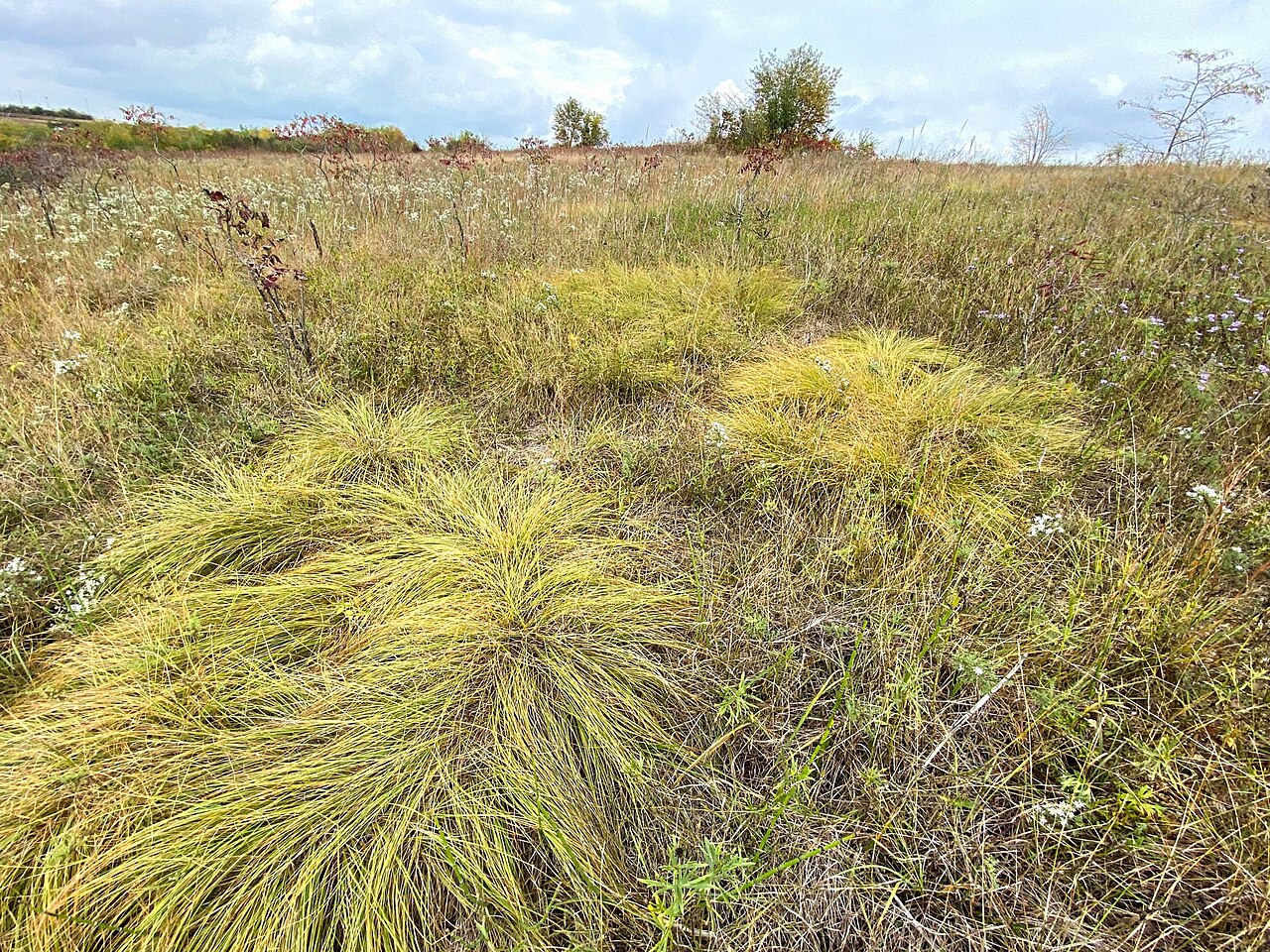
Prairie dropseed is the best match for the front of the border. The Wildflower Center describes it as a fine-textured bunchgrass with leaves that curve outward into large, round tufts, seed heads rising to about 3 feet in midsummer, and golden to orange fall color.
It is slow to establish, the Wildflower Center notes, so buy larger plants if you want a full look sooner. Its flowers are known for an unusual fragrance in late summer.
Little bluestem adds blue-green summer color and coppery fall color. The Wildflower Center describes dense foliage mounds 18 to 24 inches tall with stems that often reach 5 feet by September. It also notes that little bluestem reseeds readily and is not recommended for small gardens, so use it sparingly in a narrow border and pull extra seedlings.
Sideoats grama is shorter, at 1 to 3 feet per the Wildflower Center, with seeds hanging along one side of the stem. It suits drier, leaner strips.
Purple lovegrass is the lowest option at 8 to 18 inches, with a reddish-purple haze of flowers from August to October. It works at the very front edge on sandy or disturbed soil.
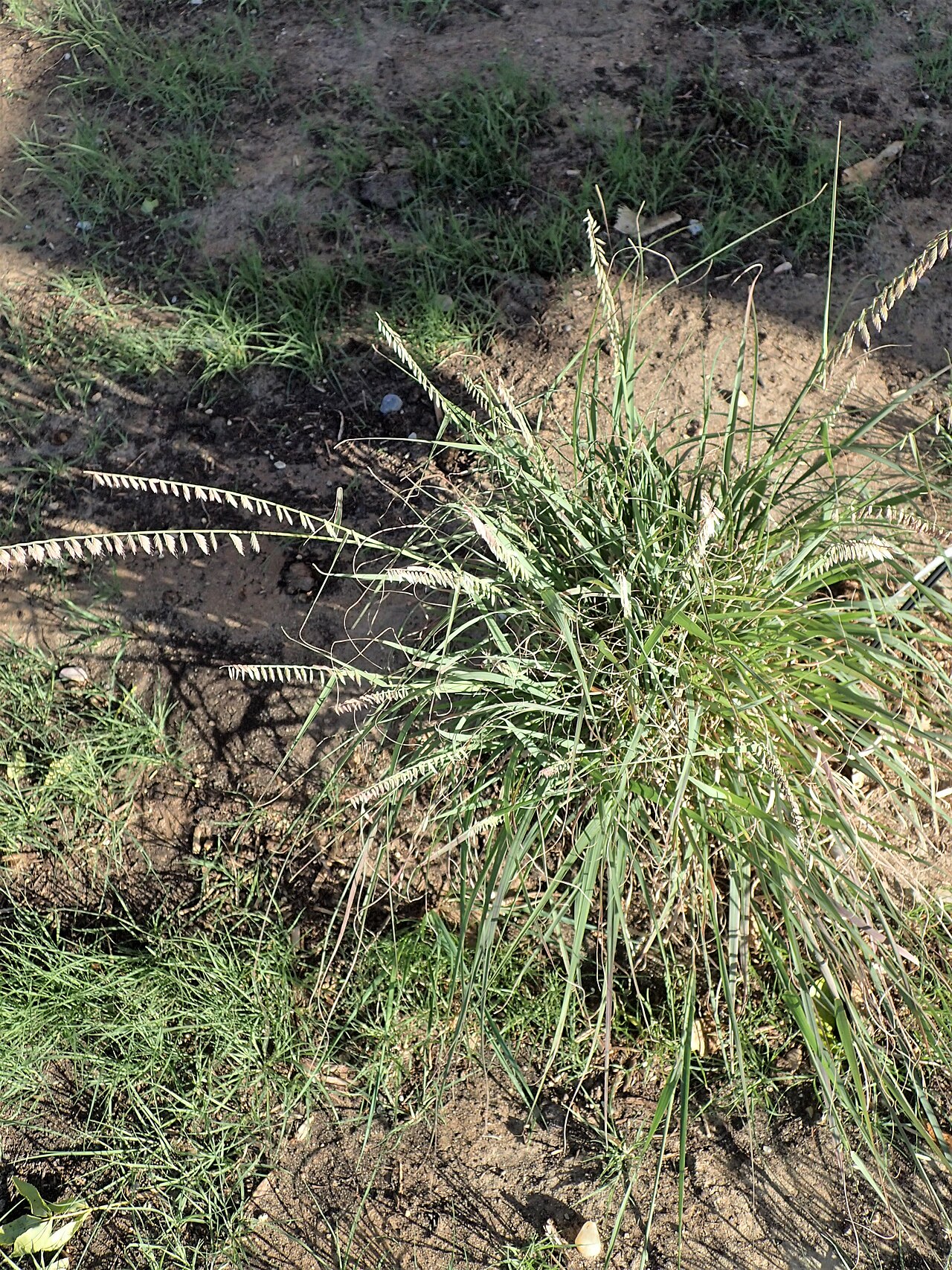
Layout: Rhythm in a Long, Narrow Bed
A narrow border is viewed lengthwise, so rhythm matters more than layers. The eye travels along the bed, and repeated shapes make it feel planned.
- Back line (against the fence or wall): blazing star clumps in groups of three, with little bluestem between groups.
- Front line (along the path): prairie dropseed or purple lovegrass in a continuous row of rounded clumps.
- Accent: a few aromatic aster plants for late color. The Wildflower Center lists it at up to about 3 feet, often less, blooming September to November.
Repeat the blazing star groups every 4 to 6 feet along the bed. Use the same spacing each time; even rhythm is what makes a narrow border look intentional.
The PlantNative profile suggests spacing blazing star 12 to 18 inches apart in mass plantings, which fits NC State’s narrow width range. Grasses need a bit more room; space prairie dropseed about 18 to 24 inches apart so the clumps can reach their full rounded shape.
Plant Palette
Heights and ranges are from the Lady Bird Johnson Wildflower Center unless noted. Confirm each plant is native to your state.
| Plant | Role | Height | Sun / moisture | Native range |
|---|---|---|---|---|
| Blazing star (Liatris spicata) | Vertical accent, repeated | 3–6 ft (NC State) | Sun / average to moist, well-drained | NJ to MI and IL, south to FL and LA |
| Prairie dropseed (Sporobolus heterolepis) | Front-row bunchgrass | Seed heads to about 3 ft | Sun / dry | Que. to Sask., locally south to NC, KY, e. TX and CO |
| Little bluestem (Schizachyrium scoparium) | Back-row grass between groups | Mounds 18–24 in; stems to about 5 ft | Sun to part shade / dry to average | Que. to Alta. and through much of the U.S. east of the Rockies |
| Sideoats grama (Bouteloua curtipendula) | Grass for drier strips | 1–3 ft | Sun to part shade / dry to moist | South-central Canada and much of the U.S. |
| Purple lovegrass (Eragrostis spectabilis) | Low front edge | 8–18 in | Sun / sandy, disturbed sites | ME to MN, south to FL and AZ |
| Aromatic aster (Symphyotrichum oblongifolium) | Late-fall color | Up to about 3 ft | Sun to part shade / well-drained | PA to NC, west to n.e. WY and TX |
Regional Alternates
Liatris spicata is native mainly to the eastern U.S. Elsewhere, or on drier soil, use a blazing star that fits your region. All ranges below are from the Wildflower Center.
- Great Plains and dry, sandy strips: dotted gayfeather (Liatris punctata) grows to about 3 feet in dry prairies from Alberta to New Mexico, east to Michigan and Texas. Pair it with sideoats grama or blue grama.
- Midwest and dry upland soils: rough blazing star (Liatris aspera) grows in dry plains and prairies from southern Ontario to South Carolina, west to North Dakota and eastern Texas.
- Southeast and southern Plains: scaly blazing star (Liatris squarrosa) stays under about 30 inches in dry, sandy prairies and thin woods from Virginia and Ohio south to Florida and Texas, which suits a very narrow strip.
Sample Plan: 3 × 20 Foot Border
| Blazing star | 4 groups of 3 (12 plants), groups about 5 ft apart along the back |
| Little bluestem | 3 plants, one between each pair of blazing star groups |
| Prairie dropseed | 10 plants in a front row, about 2 ft apart |
| Aromatic aster | 2 plants, one near each end |
| Purple lovegrass (optional) | 5–6 plants tucked between dropseed at the path edge on sandy soil |
Installation Steps
Step 1: Remove turf and loosen compacted soil. Narrow strips by driveways are often packed hard. Loosen the soil so roots and corms can establish, but skip heavy compost on well-drained sites.
Step 2: Install edging. A clean edge between the border and the path keeps grasses from flopping onto pavement and makes mowing easier.
Step 3: Lay out the rhythm. Set pots on the soil in their groups and step back to check the spacing from the far end of the bed before planting.
Step 4: Plant. The PlantNative profile recommends planting containers or corms in fall or early spring, with corms set 2 to 3 inches deep. Plant grasses at the same depth they grew in the pot.
Step 5: Water and mulch lightly. Water deeply after planting and during dry spells in the first season. Use a thin mulch layer, kept away from the crowns.
The First Three Years
- Year one: water during dry spells and pull weeds every couple of weeks. Grasses, especially prairie dropseed, may look small.
- Year two: in early spring, cut grasses and old blazing star stems back before new growth. NC State recommends leaving some dead stems at 12 to 24 inches for stem-nesting bees.
- Year three: the border should fill in. Pull extra little bluestem and blazing star seedlings. If blazing star clumps get crowded, see our guide on when to divide blazing star.
- Every fall and winter: leave seed heads standing. NC State notes goldfinches eat blazing star seeds, and prairie dropseed holds its shape through snow, per the Wildflower Center.
Mistakes to Avoid
- Using running grasses. Spreading grasses will invade the path. Stick to bunchgrasses.
- Planting single blazing stars in a line. Single plants look sparse. Group them in threes and repeat.
- Ignoring soil moisture. Match the blazing star species to your soil; Liatris spicata is not the best choice for a hot, dry gravel strip.
- Planting in shade. NC State lists full sun for Liatris spicata, and the Wildflower Center lists prairie dropseed for sun as well.
- Cutting everything in fall. Standing stems and seed heads feed birds and shelter insects through winter.
📋 Find plants for your region: see the full Blazing Star (Liatris spicata) profile or our native plant lists for Ohio & Indiana, Michigan, Wisconsin & Eastern Minnesota, North & South Carolina, Georgia, Alabama & Mississippi, and Arkansas, Louisiana, Eastern Oklahoma & Eastern Texas.
Frequently Asked Questions
How narrow can a blazing star border be?
About 3 feet works. NC State lists Liatris spicata at only 3 inches to 1½ feet wide, so it fits tight spaces. The grasses need the extra room.
What grasses look good with blazing star?
Clump-forming natives like prairie dropseed, little bluestem and sideoats grama. Their fine texture contrasts with the upright purple spikes.
Does blazing star need staking?
Sometimes. NC State notes taller stems can flop. Full sun and sturdy grass neighbors help hold them up.
Will blazing star spread in a narrow border?
Slowly. It can form new plants from its corms but mostly spreads by seed, according to NC State. Pull unwanted seedlings in spring.
When does blazing star bloom?
July to September, per the Wildflower Center. Pair it with aromatic aster or other fall bloomers to extend color into autumn.
Sources
- NC State Extension Gardener Plant Toolbox, Liatris spicata: height and width, moisture preference, top-down bloom, corms and spread, flopping, stem-nesting bees and goldfinches.
- Lady Bird Johnson Wildflower Center, Liatris spicata: habitat, bloom time and distribution. Grass and companion data from Wildflower Center pages for prairie dropseed, little bluestem, sideoats grama, purple lovegrass and aromatic aster; alternates from pages for dotted gayfeather, rough blazing star and scaly blazing star.
- USDA PLANTS Database, Liatris spicata profile.