Sassafras at the Woodland Edge: Designing for a Tree That Can Form Colonies
Last updated: November 6, 2026
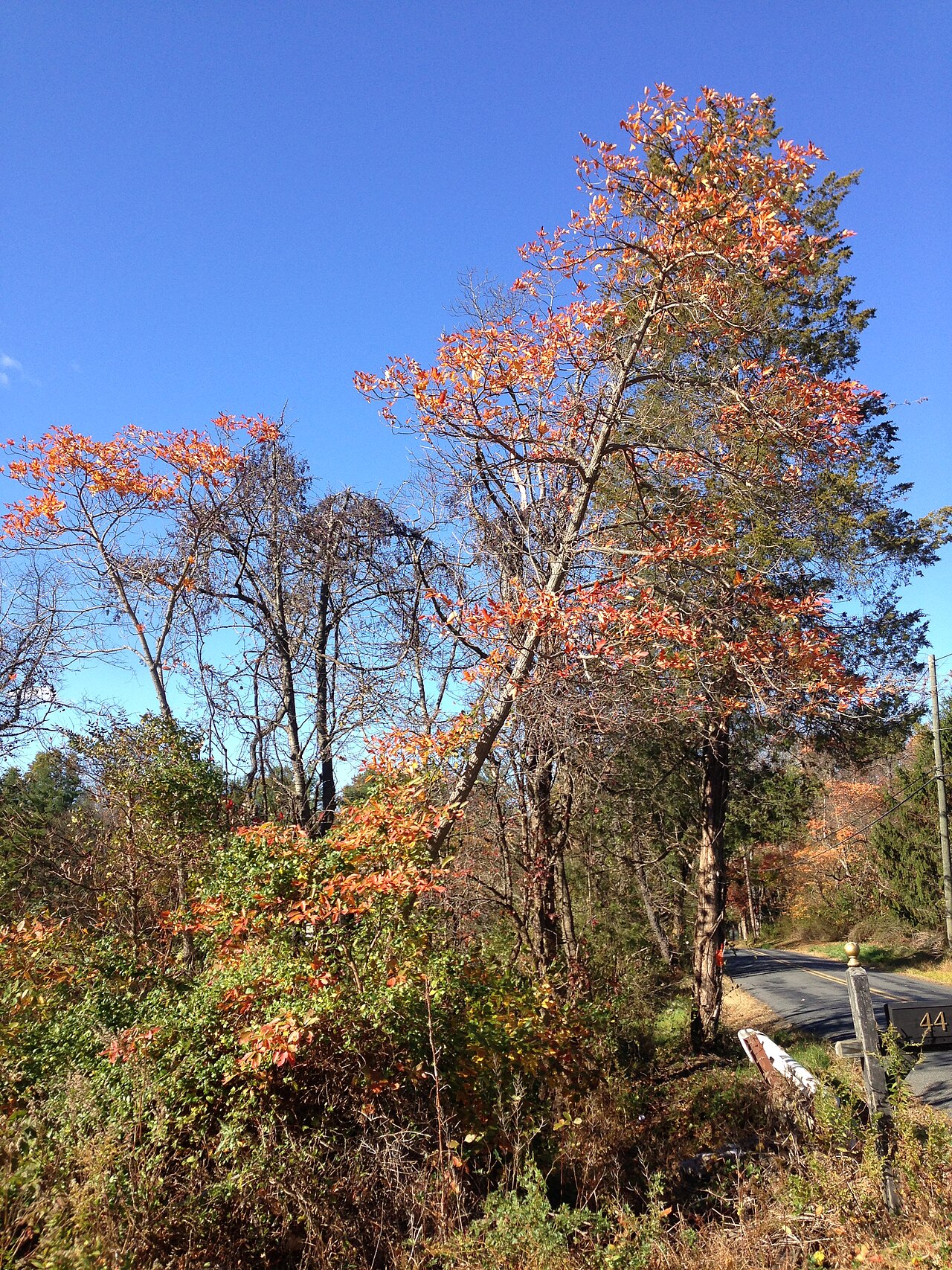
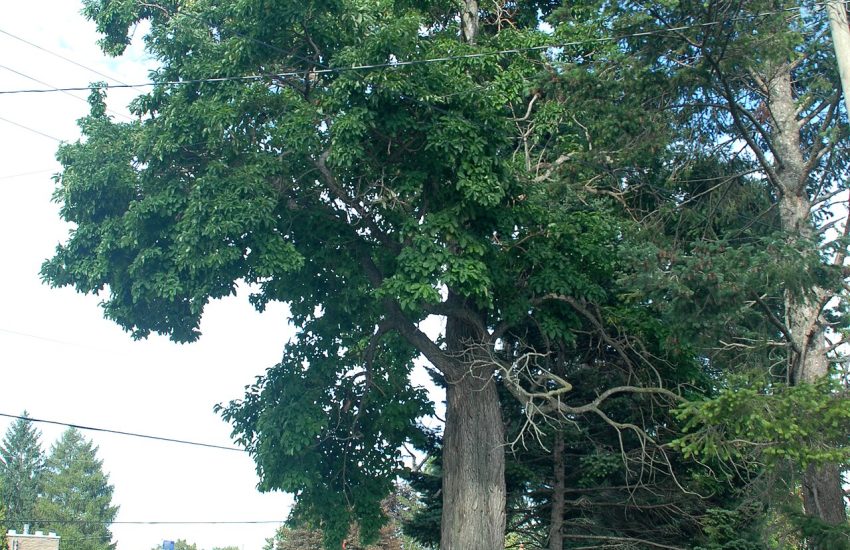
Sassafras is at home where woods meet open ground: roadsides, fence rows and old fields. Its mitten-shaped leaves, bright fall color and blue fruit on red stalks make it one of the most striking native trees for a woodland edge.
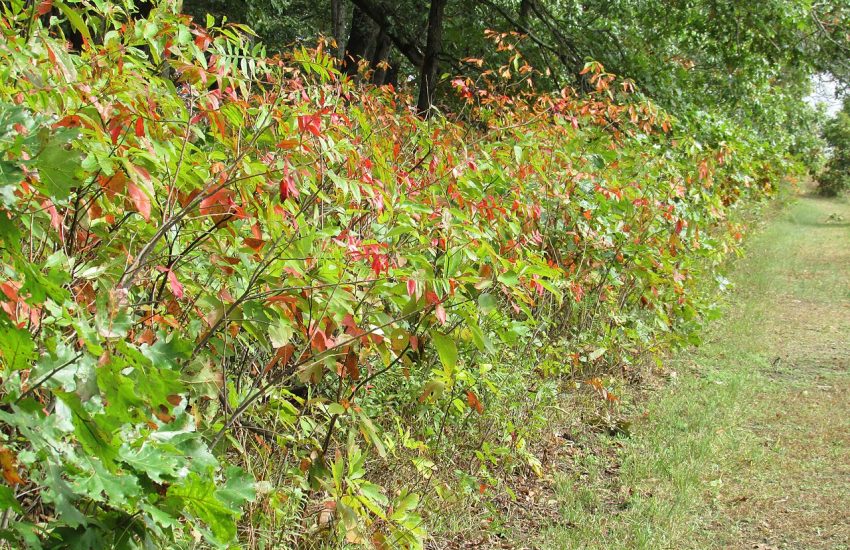
It also spreads. Sassafras sends up root sprouts and, left alone, forms a thicket of many stems. In the wrong spot that is a chore; at a woodland edge it can be the whole point of the design.
This guide shows how to plan for a colony instead of fighting it: where to put it, how to set boundaries, what to plant around it, and how to manage it over the first three years.
Plan at a Glance
| Site | The sunny side of a woodlot, fence row or property edge, well away from the house, septic system and utilities |
| Size | A colony zone at least 25 to 40 feet across (Morton Arboretum’s mature width), with a mowed boundary |
| Sun | Full sun to part shade; avoid deep, closed-canopy shade |
| Soil | Well drained; tolerates sand, clay, shallow and rocky soils (NC State) |
| Maintenance | Medium: annual sucker control at the boundary, optional cutting back every 2 to 3 years |
| Best regions | Eastern U.S. from southwestern Maine to central Michigan and extreme southeastern Kansas, south to Florida and east Texas |
How a Sassafras Colony Works
The U.S. Forest Service’s Fire Effects Information System (FEIS) describes sassafras as forming dense thickets of root sprouts. It notes that in wooded areas, reproduction is usually vegetative rather than from seed.
The roots are the key. FEIS describes a shallow root system with prominent lateral roots, mostly 6 to 20 inches deep, and calls it sparse and far-ranging. New stems can appear well away from the original trunk.
NC State Extension adds that sassafras tends to sucker repeatedly and spread into thickets. It suggests using it in naturalized areas or as a screen in large areas by letting the suckers colonize.
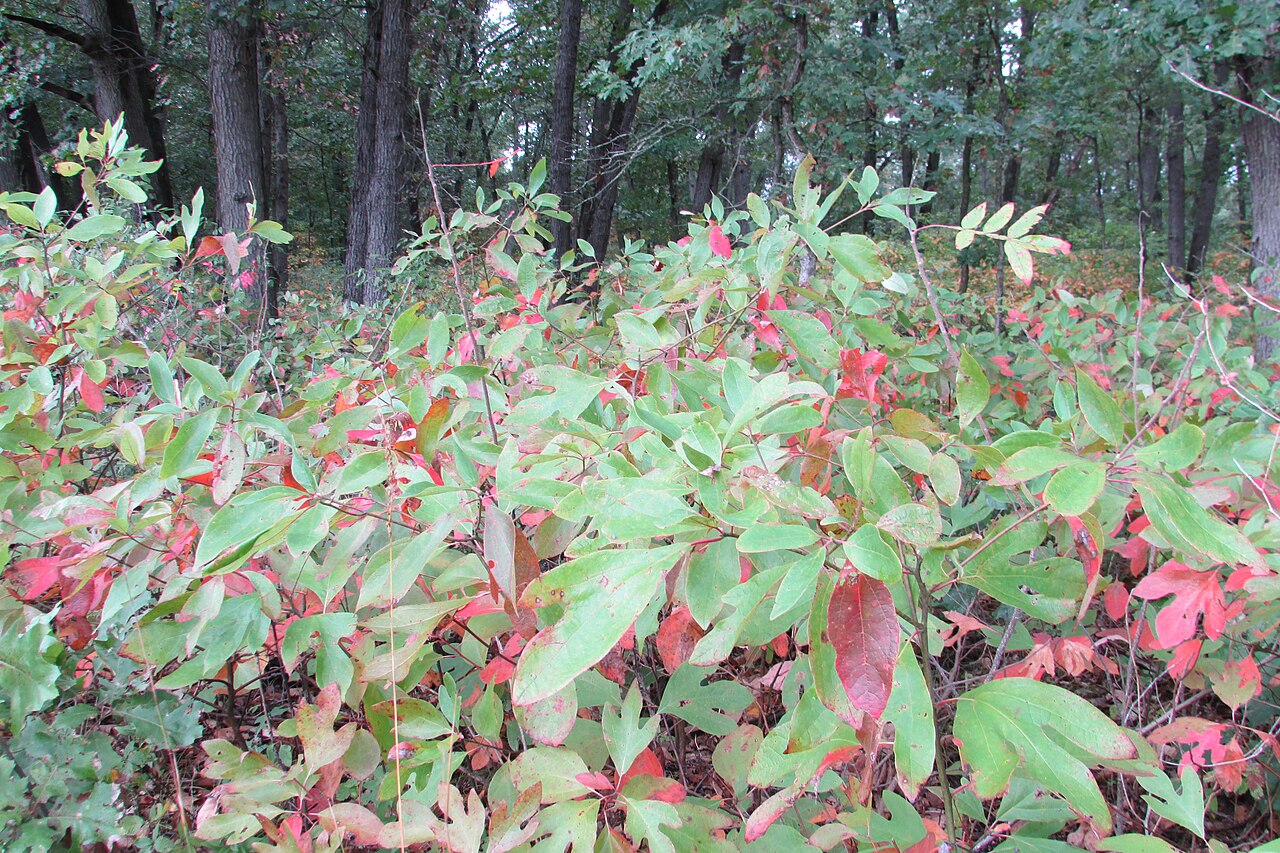
Disturbance makes colonies grow. FEIS reports that removing the overstory often increases sassafras stems, and that mowing does not control it because root sprouts quickly replace the cut stems.
Wounds matter too. University of Georgia Extension notes that root suckers are a common response when mowers, trimmers or equipment damage a tree’s base or roots.
Assess the Edge
Light. NC State lists sun to part shade. FEIS notes that sassafras was lost from plots that developed closed canopies. Pick the sunny side of a woodlot, not the interior.
Room. NC State gives a mature size of 30 to 60 feet tall and 25 to 40 feet wide; the Morton Arboretum lists 20 to 30 feet tall and 25 to 40 feet wide. A colony will be wider than any single tree.
What’s nearby. Keep the colony zone away from the house, driveway, septic field, buried lines and overhead wires. Shallow, far-ranging roots and a tall mature height make those poor neighbors. Our guide to sassafras near structures explains when work near a house needs an arborist.
Soil. NC State lists clay, loam, sand and shallow rocky soils, as long as drainage is good. The Morton Arboretum notes sassafras tolerates black walnut, which helps on edges where walnuts grow.
Designing the Colony Zone
Think of the planting as three bands running along the woods: the existing tree line at the back, a sassafras band in the middle, and a lower band of shrubs and perennials facing the lawn or path.
Draw the outer boundary first. This is the line where you will stop the colony each year, and it should be a feature you already maintain: a mowed path, lawn edge or fence.
Plan on regular work at that line. Because mowing alone does not eliminate sprouts, a mowed boundary keeps them short rather than gone. Our sassafras suckers in the lawn guide covers the decision in detail.
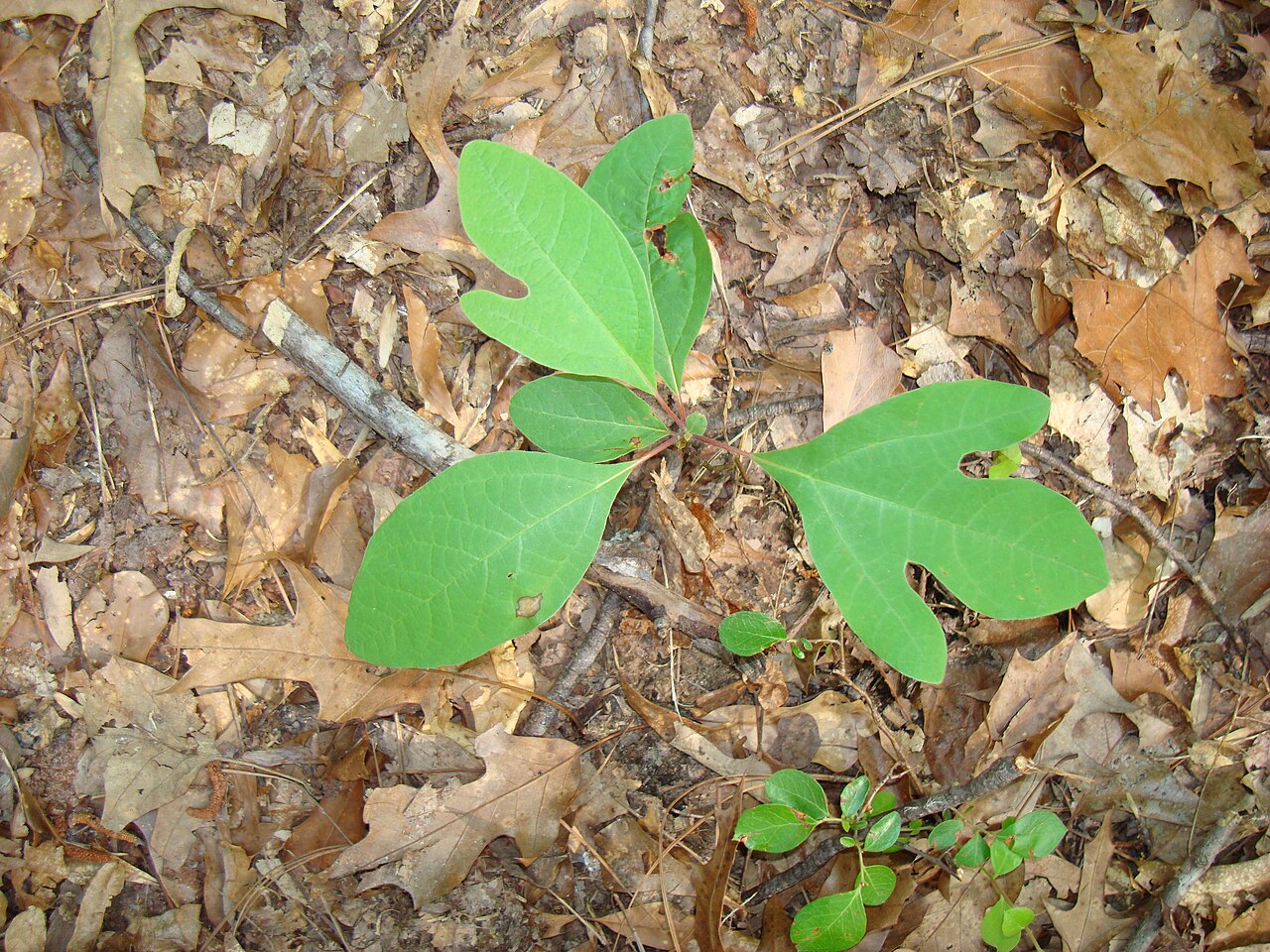
Three ways to shape a colony
Free colony. Let the sassafras band fill in and grow into a small grove of trees. This needs the most room and the least work inside the zone.
Low thicket. NC State notes that sassafras can be kept at shrub size by cutting it to the ground every 2 to 3 years. That gives a dense, colorful screen that never shades out the band in front.
Single specimen with a buffer. If you want one tree rather than a colony, NC State says suckers must be removed. Give it a wide mulch ring so mowers never touch the roots, as UGA recommends.
Paths through and around the colony
Run the main path along the front of the colony, not through it. A path through the middle becomes a line of sprouts to cut each year.
If you want to walk through, use a mulched or mowed path and accept that it doubles as a sucker-control strip. Keep it wide enough for the mower.
Plant Palette
| Plant | Role | Height | Sun / moisture | Native range |
|---|---|---|---|---|
| Sassafras (Sassafras albidum) | Colony band | 30–60 ft (NC State); often kept lower | Sun to part shade; well drained | Sw. ME to c. MI and extreme se. KS, south to FL and e. TX |
| Eastern redbud (Cercis canadensis) | Small flowering tree in gaps | Up to about 30 ft | Part shade; moist | FL to TX, north to PA, OH, s. MI, s. IA and se. NE |
| Spicebush (Lindera benzoin) | Shrub band, moister spots | Usually to about 15 ft | Sun to shade; dry to wet | Sw. ME, c. MI and se. KS, south to FL and se. TX |
| Wild geranium (Geranium maculatum) | Spring flowers in the front band | Up to about 3 ft | Part shade to shade; moist | ME to GA, west to Man., se. SD, e. KS and AR |
| Pennsylvania sedge (Carex pensylvanica) | Low cover along the path edge | Up to about 20 in | Sun to shade; dry | S. Que. to s. Ont., ND and MT, south to GA, AR and WY |
Sassafras height from NC State; all other heights and ranges from the Lady Bird Johnson Wildflower Center. NC State notes that swallowtail butterfly caterpillars feed on sassafras leaves.
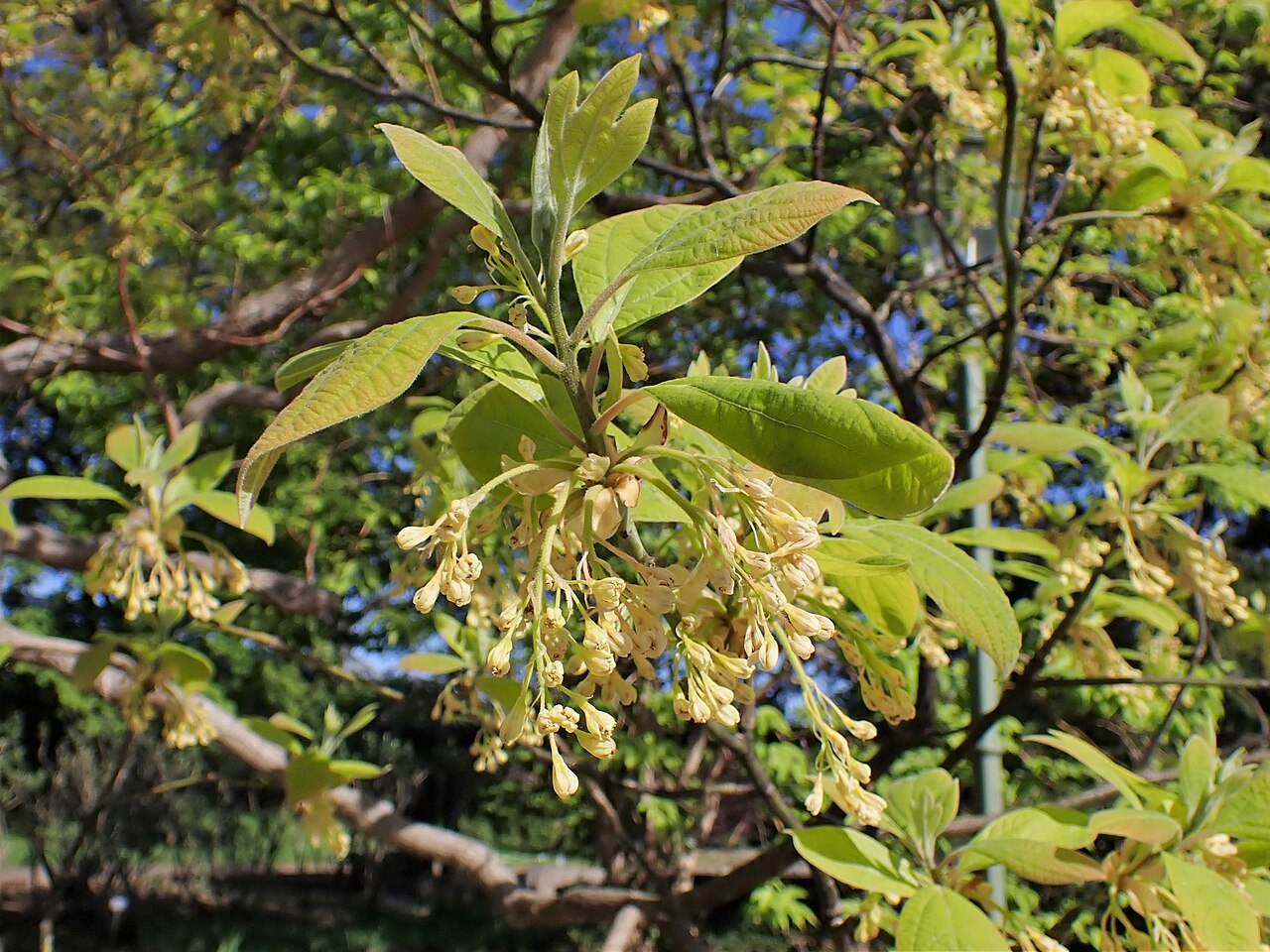
Male, Female, and Fruit
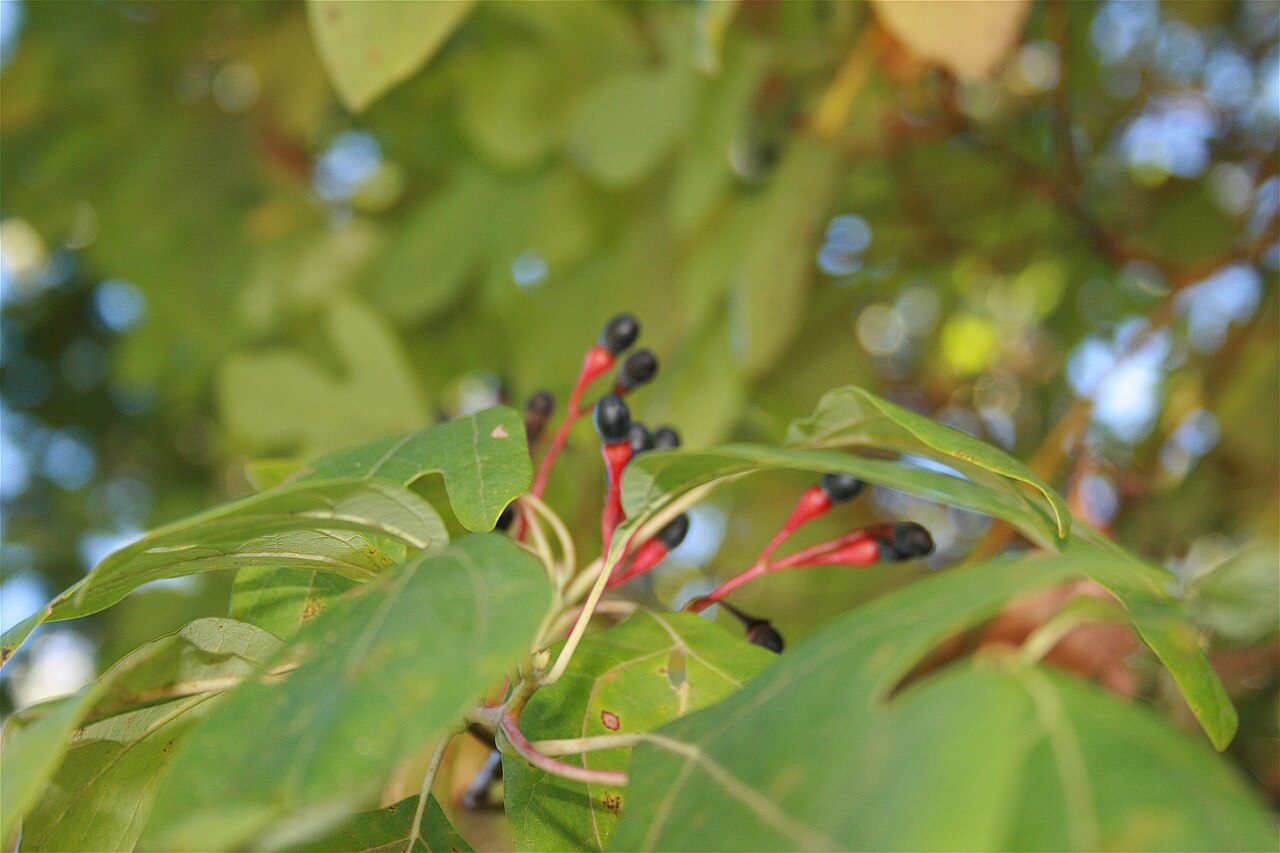
NC State notes that sassafras bears its flowers on separate male and female trees, and that only females produce fruit. The fruit is a bluish-black drupe on a scarlet stalk.
Root sprouts grow from the same root system as the parent tree, so a colony started from one tree is effectively one plant. If you want fruit for birds, plant more than one tree from seed-grown stock, or start next to existing wild sassafras.
The wildlife payoff is real. NC State lists eastern bluebirds, red-eyed vireos, wild turkeys, pileated woodpeckers and many other birds among the fruit eaters, and notes that deer browse the twigs and leaves.
Spacing and Quantity Guide
| Colony zone | At least 25–40 ft across, matching published mature widths (NC State, Morton Arboretum) |
| Starting trees | 2 to 5 small trees, planted in a loose group in the middle of the zone |
| Front shrub band | 5 to 8 ft deep between the colony and the path or lawn |
| Boundary strip | A mowed or mulched strip you maintain every year |
| Setback from buildings and septic | Keep the whole zone well clear; roots are shallow and far-ranging (FEIS) |
Starting numbers and band depths are design suggestions, not research figures.
Installation Steps
Step 1: Mark the zone and boundary. Flag the colony zone, the shrub band and the boundary path before buying plants. Call 811 or your local utility locating service before digging.
Step 2: Buy small, container-grown trees. NC State notes that a large taproot makes established trees hard to transplant, and FEIS calls sassafras difficult to transplant. Our guide to moving a young sassafras explains the risks.
Step 3: Plant in spring. The Morton Arboretum recommends spring planting for sassafras.
Step 4: Plant the front band. Add spicebush, wild geranium and sedge between the colony and the path. Put redbud in any sunny gap.
Step 5: Mulch and water. Water through the first summer. NC State notes sassafras is drought tolerant once established.
The First Three Years
- Year 1: water in dry weather. Mulch around each tree so the mower stays away from the trunks.
- Year 2: the first sprouts may appear. Cut any that come up in the path or lawn; leave those inside the zone.
- Year 3: decide on the colony style. For a low thicket, plan the first cut-back to the ground the following late winter, then repeat every 2 to 3 years as NC State suggests.
- Every year: walk the boundary in early summer and again in late summer, cutting sprouts that cross it.
Mistakes to Avoid
Planting near the house or septic field. Shallow, far-ranging roots and a tall mature height belong at the property edge. The same thinking applies to other big natives; our sweetgum yard guide works through setbacks for a large shade tree.
Expecting mowing to stop sprouts. FEIS says mowing does not control sassafras. It only keeps sprouts short.
Spraying sprouts. UGA warns that herbicides sprayed on root suckers can be absorbed into the parent tree. FEIS also reports that herbicides that top-kill sassafras do not control root sprouting. Cut instead.
Siting it in deep shade. Closed canopies are unfavorable, per FEIS. The colony thins out where the woods are dense.
Wounding roots near the boundary. UGA notes that root damage from mowers and equipment triggers suckers.
Regional Fit and Alternatives
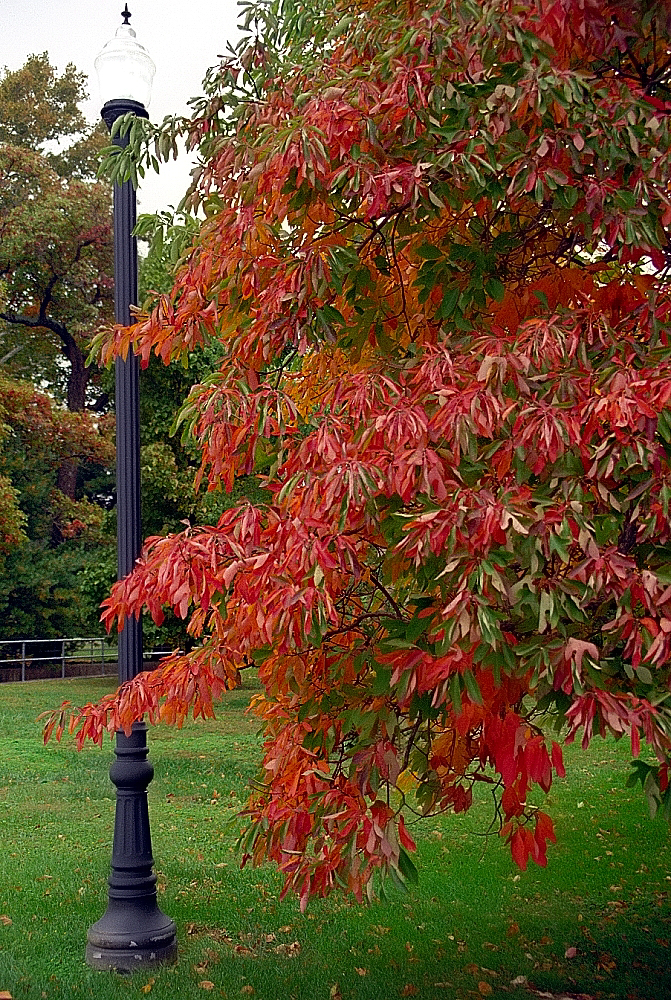
The Lady Bird Johnson Wildflower Center gives sassafras’s range as southwestern Maine to central Michigan and extreme southeastern Kansas, south to Florida and east Texas. Outside that range, choose a locally native edge tree.
Within the range, sassafras pairs naturally with other edge species. For a shrub-led edge, see our spicebush woodland-edge plan. If you also grow spicebush, our spicebush group planting plan uses sassafras as a companion.
📋 Sassafras appears on our regional native plant lists for New York, Pennsylvania and northern New Jersey, Delaware, southern New Jersey and Long Island, Maryland, Virginia and West Virginia, North and South Carolina and Arkansas, Louisiana, eastern Oklahoma and eastern Texas.
Frequently Asked Questions
How far does a sassafras colony spread?
There is no fixed distance. FEIS describes the roots as shallow and far-ranging, so plan a zone at least as wide as a mature tree, 25 to 40 feet, and maintain a boundary.
Can I stop sassafras from spreading by mowing?
Mowing keeps sprouts short but does not kill them; FEIS says root sprouts quickly replace cut stems. Expect to mow or cut the boundary every year.
Can I keep sassafras as a shrub?
Yes. NC State says it can be kept at shrub size by cutting it to the ground every 2 to 3 years.
Why doesn’t my sassafras colony have fruit?
Only female trees fruit, per NC State. A colony from one male tree’s root sprouts will never fruit.
Is it safe to use sassafras for tea?
NC State lists sassafras bark as having low-severity poison characteristics; its safrole has been shown to be a weak carcinogen in experimental animals. We don’t recommend it.
Sources
- USDA Forest Service, Fire Effects Information System, Sassafras albidum: thickets and root sprouting, root system, shade, mowing and herbicide response, transplanting.
- NC State Extension Gardener Plant Toolbox, Sassafras albidum: size, soils, light, suckering, cutting to shrub size, male and female trees, wildlife, poison characteristics.
- The Morton Arboretum, Sassafras: size, thicket habit, spring planting, black walnut tolerance.
- University of Georgia Extension, Prevent root suckers by keeping mowers, trimmers away from trees.
- Lady Bird Johnson Wildflower Center plant pages for sassafras, eastern redbud, spicebush, wild geranium and Pennsylvania sedge.