Blue Grama in a Dry-Site Planting: Clumps, Seedheads, and Open Space
Last updated: November 6, 2026
Some of the best dry-site gardens look less like a flower bed and more like a patch of shortgrass prairie: low tufts of grass, open ground between them, and wildflowers scattered through the gaps.
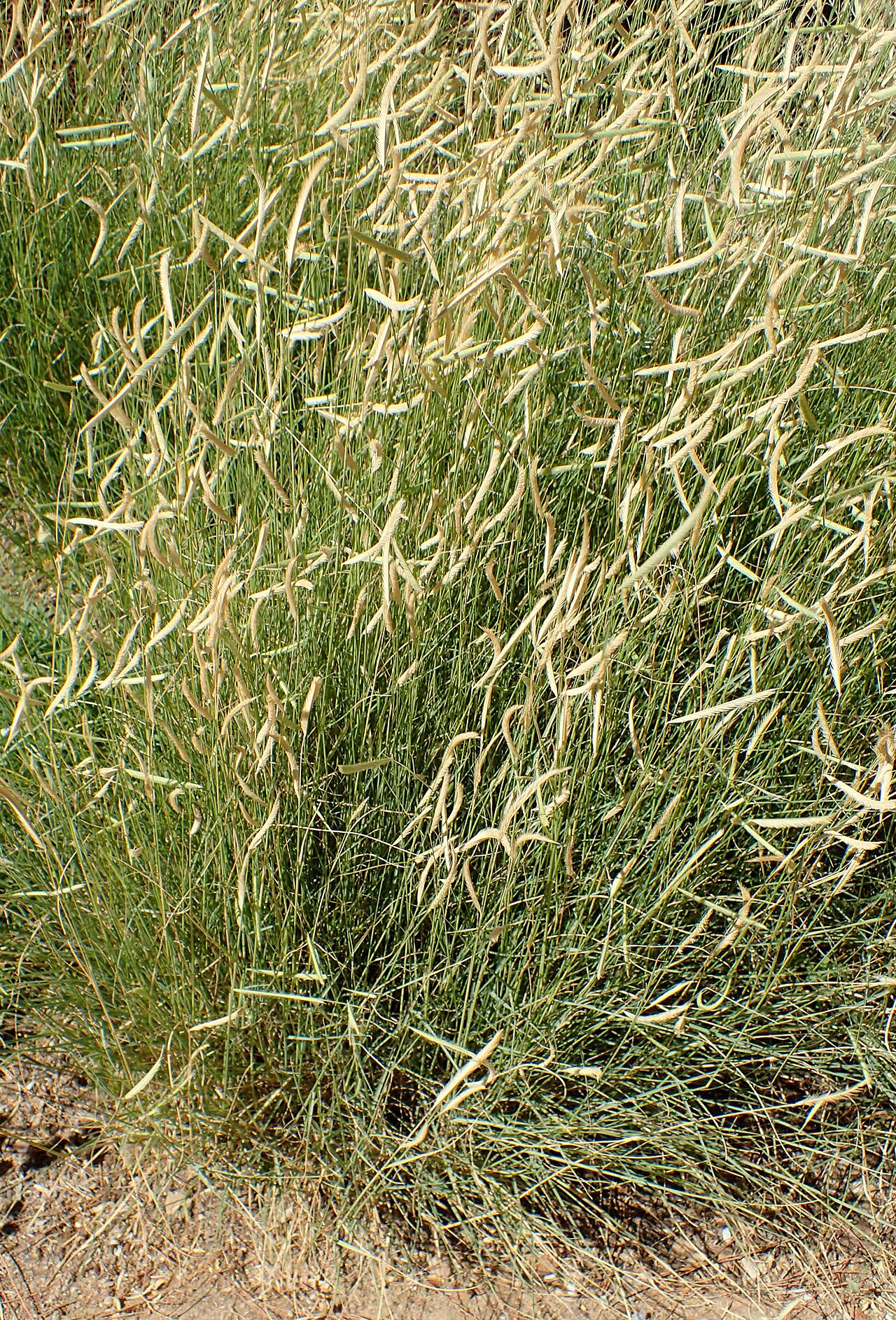
Blue grama is the grass that makes that look work. It stays low, survives on very little water, and in late summer it sends up small, comb-like seedheads that catch the light above the foliage.
This guide shows how to design a dry planting around blue grama: how to read the site, why separate clumps and open space are part of the design, which wildflowers and grasses to pair with it, and how to care for it as it establishes.
Plan at a Glance
| Site | Hot, dry, sunny ground: slopes, curb strips, gravel beds, parkways and lawn replacements |
| Size | Any size; works from a small strip to a large meadow |
| Sun | Full sun only |
| Soil | Well-drained, low in organic matter; gravelly, sandy loam or clay |
| Maintenance | Very low: occasional water while establishing, optional mowing |
| Best regions | Western and central North America from southern Canada to Mexico; see range notes |
Is Your Site Right for Blue Grama?
Blue grama is a dry-country specialist. The Lady Bird Johnson Wildflower Center calls it a dominant grass of dry shortgrass prairies, and says it can survive with as little as 7 inches of rain a year.
It wants full sun. The Wildflower Center lists sun only, and the USDA NRCS plant guide notes it is intolerant of shade. It also says blue grama does not tolerate frequent flooding.
Soil should drain freely. The Wildflower Center describes well-drained, low organic content, gravelly soils or sandy loams and clays, calcareous or granitic. The USDA guide adds that it grows less vigorously on true sands or heavy clays, and that it is intolerant of acidic soils.
That points to a few good fits and a few poor ones:
- Good: south- or west-facing slopes, hot curb strips, gravel gardens, unirrigated corners of the yard, and lawn areas you want to stop watering.
- Poor: shade, low spots that flood, rich garden beds with heavy compost, and acidic soils common in much of the humid East.
Where Blue Grama Is Native
The Wildflower Center gives its range as western North America from southern Canada to southern Mexico, from western Ontario to Alberta, south through Illinois to western Missouri, Texas and southern California. It is the state grass of Colorado and New Mexico, according to Wikipedia, which also notes it is listed as endangered in Illinois.
If you garden in the humid East, blue grama is outside its natural home and may not suit your soil. Look at shorter eastern natives instead, such as the shorter grasses in our big bluestem small-yard guide.
Clumps and Open Space: Designing With Dryness
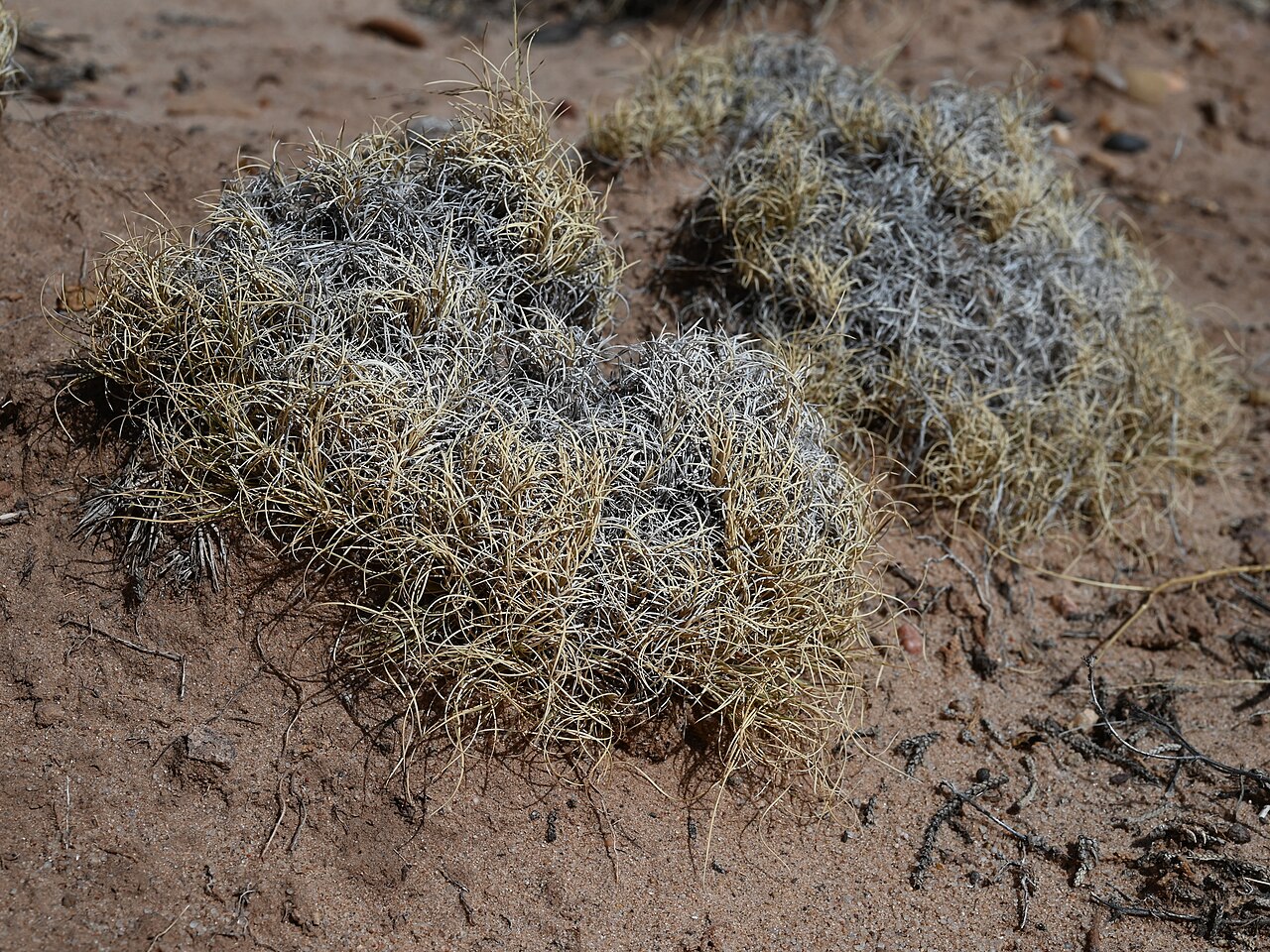
In a dry planting, bare ground between plants is not a mistake. It is how the plant community works when water is scarce.
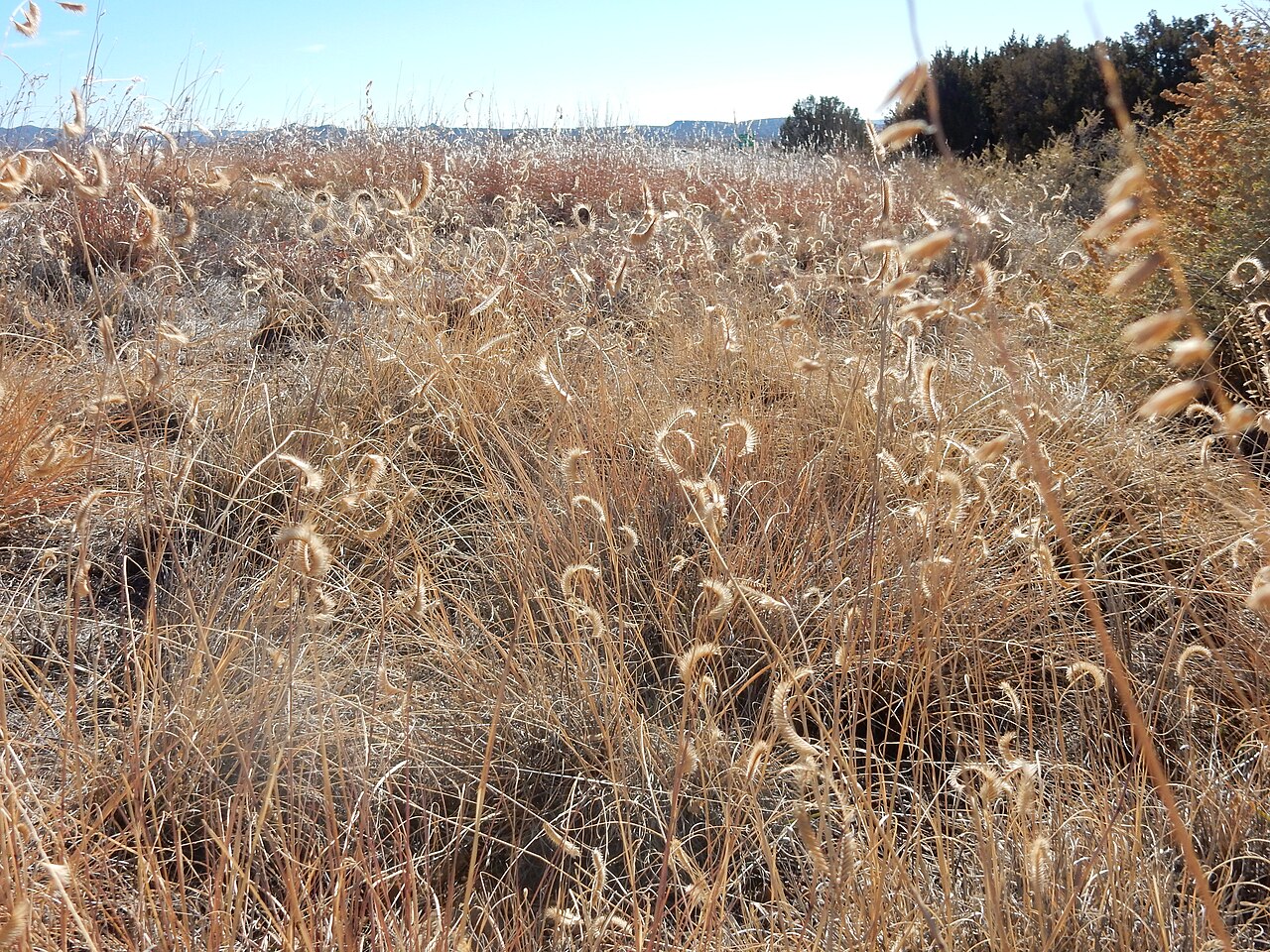
The Wildflower Center explains that the drier it is, the less likely blue grama will form a solid mat by rhizomes; it will stay in separate clumps. The USDA guide notes it grows as a bunchgrass in the southern states but forms sod in the north, in the mountains, and under heavy grazing.
So you have two design choices:
- Clump style. Separate tufts with gravel or bare soil between them, and wildflowers in the gaps. This needs little or no supplemental water once established, and it reads as a natural shortgrass prairie.
- Cover style. A more continuous, lawn-like cover. The Wildflower Center says it is often mixed with buffalograss and/or wildflowers for a solid cover, and that keeping a solid cover takes sparing water, once a week to once a month depending on region.
For most small dry plantings, clump style is easier and more interesting. The open space shows off the seedheads and leaves room for wildflowers.
Layout Tips for Open Space
- Group the clumps. Plant blue grama in loose drifts of five or more rather than evenly spaced rows.
- Vary the gaps. Leave some wider openings for wildflowers and a few tighter clusters of grass, as in a natural grassland.
- Use a mineral mulch. In dry gardens, gravel or crushed rock between plants is common practice. It suits the low-organic soil blue grama prefers.
- Keep an edge. A clean border, path or steel edge tells neighbors the open space is intentional.
Seedheads: The Feature to Design Around
Blue grama’s foliage is short. The Wildflower Center says it normally stays no more than 4 inches high, with seedheads reaching 1 to 2 feet. NC State Extension lists plants at 6 inches to 2 feet tall and 1.5 to 2 feet wide.
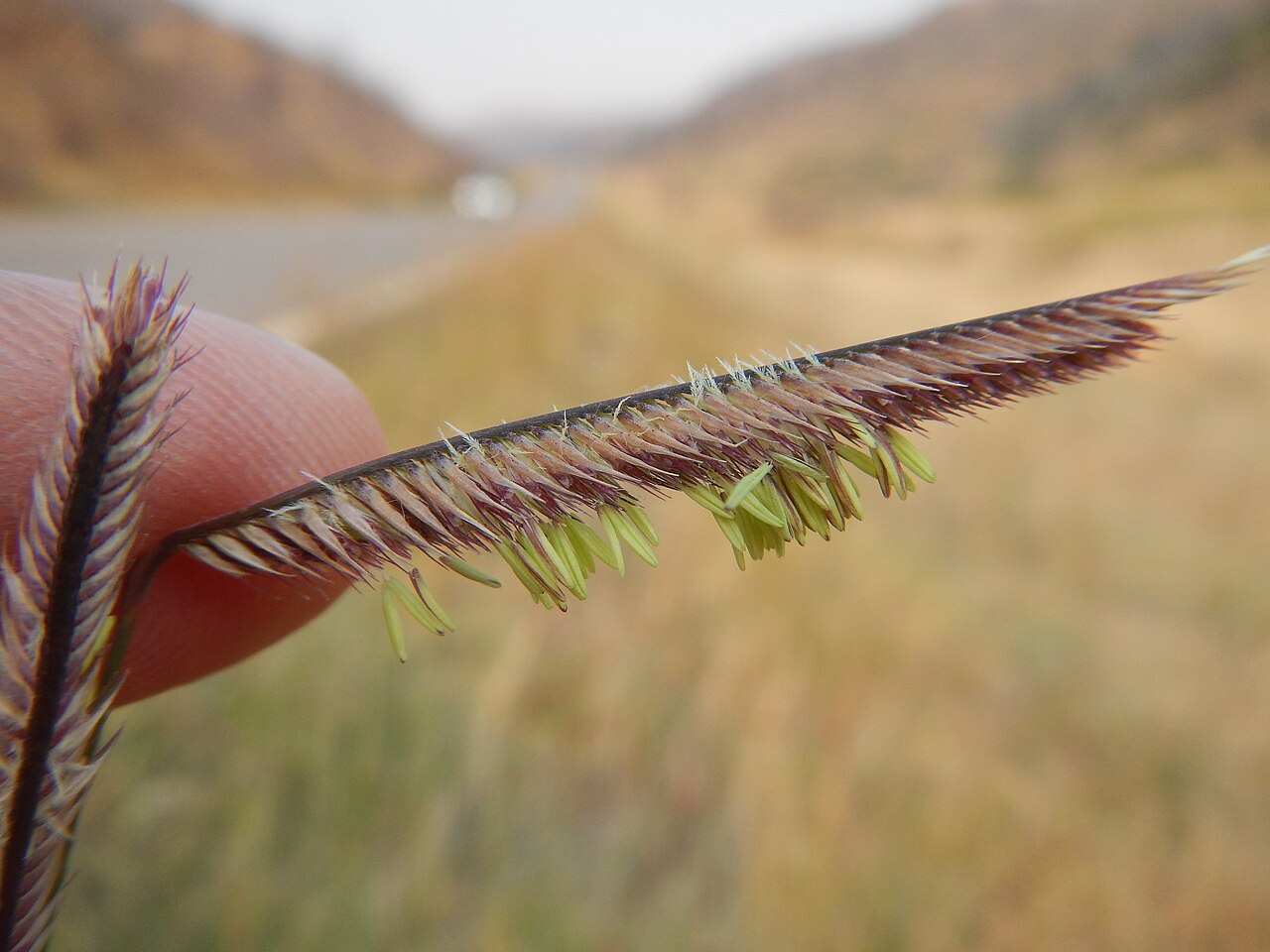
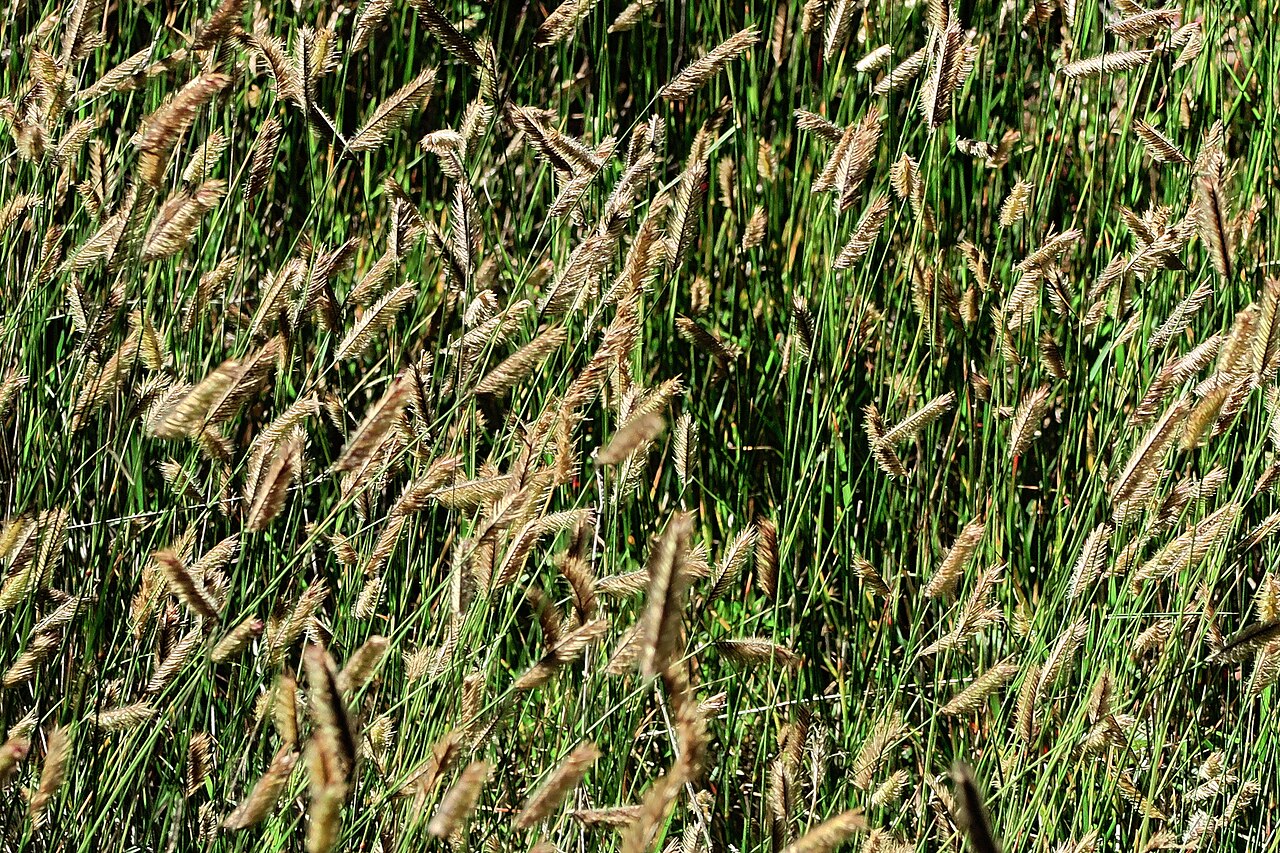
The seedheads are the show. Wikipedia describes one to four, usually two, comb-like spikes that extend out at a sharp angle from the flowering stem. The Wildflower Center gives a bloom time of July through October.
To make the most of them:
- Plant where low sun backlights them, such as on the west side of a path or patio.
- Keep taller plants behind them, not in front, so the spikes are not hidden.
- Do not mow clump-style plantings in summer if you want the seedheads. NC State notes they also work well in dried arrangements.
NC State also notes that blue grama self-seeds easily and turns shades of brown, orange and red in fall. Let some seedlings fill gaps, and pull ones that land in paths.
Plant Palette
Heights and ranges are from the Lady Bird Johnson Wildflower Center. These partners do not share the same range, so pick the ones native to your state.
| Plant | Role | Height | Sun / moisture | Native range |
|---|---|---|---|---|
| Blue grama (Bouteloua gracilis) | Main grass, clumps or cover | Foliage to about 4 in; seedheads 1–2 ft | Sun / dry | S. Canada to s. Mexico; w. ON to AB, south through IL, w. MO, TX and s. CA |
| Buffalograss (Bouteloua dactyloides) | Low cover grass mixed with blue grama | 3–12 in | Sun / dry | Man. and Sask. south through the central plains to Mexico |
| Sideoats grama (Bouteloua curtipendula) | Taller accent grass | 1–3 ft | Sun to part shade / dry to moist | South-central Canada and much of the U.S. |
| Blanket flower (Gaillardia aristata) | Summer bloom in the gaps | Up to about 4 ft | Sun / dry | B.C. to Sask., south to n. OR, n. UT, CO and KS |
| Purple prairie clover (Dalea purpurea) | Summer bloom, legume | Up to about 3 ft | Sun / dry | IN and w. TN southwest to AR and TX; north to s. Canada |
| Dotted gayfeather (Liatris punctata) | Late-season spikes | Up to about 3 ft | Sun / dry | AB to NM, east to MI, IA, w. MO, AR and TX |
| Prairie zinnia (Zinnia grandiflora) | Low yellow ground cover, Southwest | Up to about 8 in | Part shade listed / dry, calcareous | KS to NV, south to w. TX, AZ and n. Mexico |
Regional Partner Choices
- Northern Plains and northern Rockies: blanket flower, purple prairie clover and dotted gayfeather with blue grama and sideoats grama.
- Central and southern Plains: buffalograss for a cover-style planting, with purple prairie clover and dotted gayfeather.
- Southwest: prairie zinnia as a low, flowering ground cover between grama clumps.
- Intermountain West: check your regional list; blue grama is listed for several western regions.
The USDA guide notes that in the wild, blue grama grows mixed with buffalograss, needle-and-thread, western wheatgrass and green needlegrass in shortgrass prairie. Those are good clues for what will thrive alongside it.
Installation Steps
Step 1: Remove existing turf and weeds. Blue grama is slow to fill in, and weeds take advantage of open ground.
Step 2: Do not add compost. The Wildflower Center describes its ideal soil as low in organic content. Loosen compacted ground, but leave it lean.
Step 3: Choose plugs or seed. Plugs give you control over clump placement. For larger areas, seed is common. The Wildflower Center gives a home-scale rate of 1/2 to 2 pounds of pure live seed per 1,000 square feet. The USDA guide recommends good seed-to-soil contact.
Step 4: Plant in the warm season. Blue grama is a warm-season grass, so plant once the soil has warmed. Set plugs at soil level in loose drifts.
Step 5: Mulch gaps with gravel if you want the clump style, keeping it off the crowns.
Step 6: Water lightly while establishing. Water new plantings during dry spells in the first season, then taper off. Overwatering works against this grass.
Using Blue Grama as a Lawn Alternative
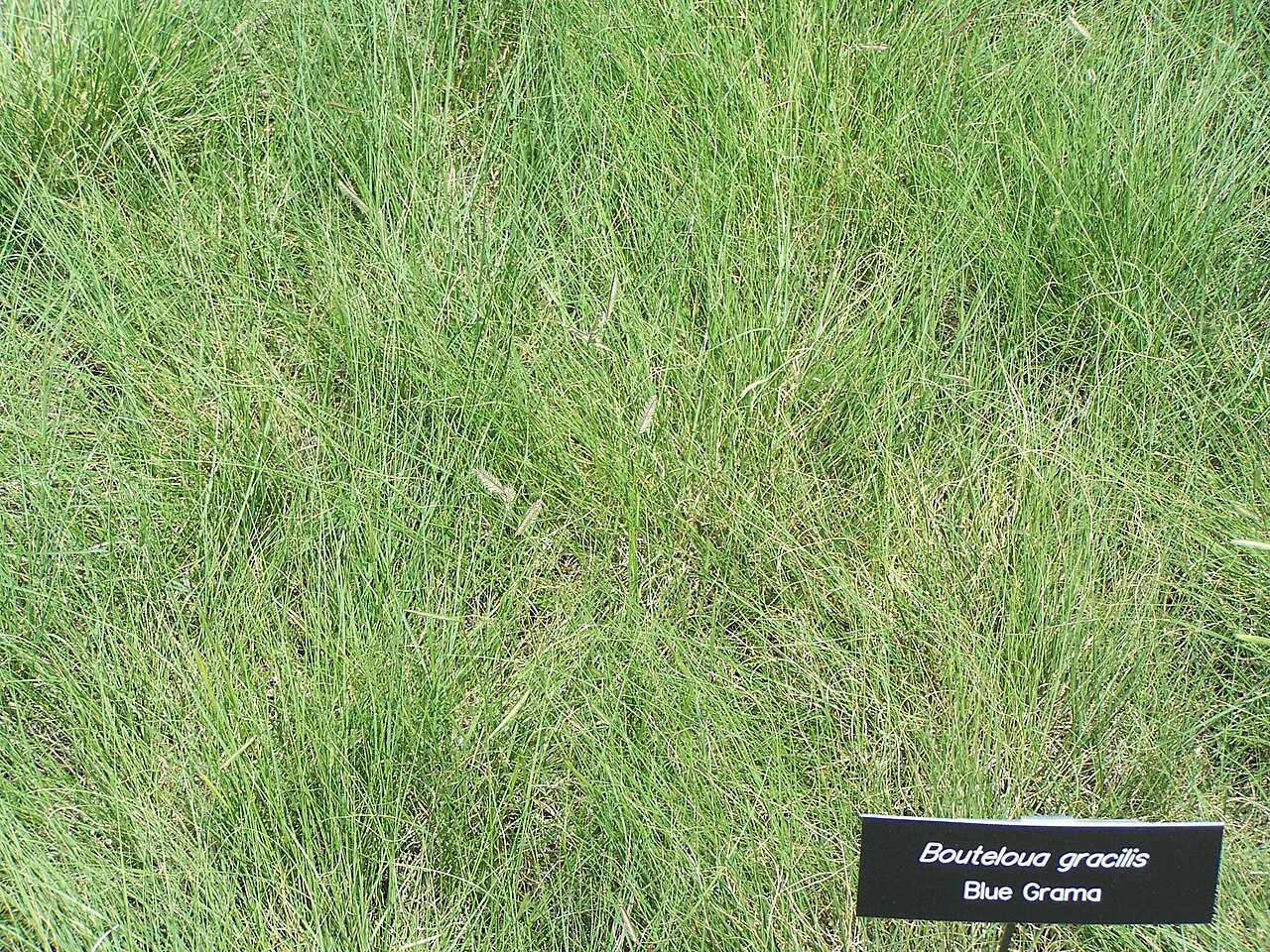
Blue grama can also replace part of a thirsty lawn. NC State notes it can be mowed to 2 inches and used as a lawn alternative where foot traffic is light.
The Wildflower Center adds a useful tip: the taller you let it grow, the less water it needs, because its roots are shaded. A higher mowing height, or no mowing at all, is the low-water choice.
Expect it to go tan during dormancy and in long droughts. That is normal for a warm-season grass, not a sign it has died.
The First Three Years
- Year 1: water during dry spells, weed the gaps regularly, and accept a sparse look while roots develop. Wikipedia notes its roots can reach 3 to 6.5 feet deep.
- Year 1, winter: leave plants standing.
- Year 2: reduce watering. Mow or trim old growth in late winter if you want a fresh look, or leave it.
- Year 2, summer: pull weeds before they set seed. Let a few blue grama seedlings fill thin spots.
- Year 3: the planting should be largely self-sufficient. Add wildflowers to any gaps that still look empty.
Mistakes to Avoid
- Planting in shade. The USDA guide calls it intolerant of shade.
- Enriching the soil. Compost and fertilizer favor weeds over blue grama.
- Overwatering. It is the most drought-tolerant native turf grass, per the Wildflower Center. Regular irrigation helps weeds more than the grama.
- Planting in a low, wet spot. It does not tolerate frequent flooding.
- Filling every gap. Open ground is part of the design in a dry planting. Fill only what you want filled.
- Mowing off the seedheads in a clump-style planting, which removes its best feature.
📋 Find plants for your region: see the full Blue Grama (Bouteloua gracilis) profile or our native plant lists for Montana & Wyoming, Utah & Western Colorado, Arizona & New Mexico, Idaho, Eastern Oregon & Eastern Washington, and South and West Texas.
Frequently Asked Questions
How tall does blue grama grow?
The Wildflower Center says the foliage normally stays no more than 4 inches high, with seedheads at 1 to 2 feet. NC State lists 6 inches to 2 feet overall.
Will blue grama fill in to form a lawn?
In wetter conditions it can, and in the north it tends to form sod (USDA). In dry conditions it stays in separate clumps, per the Wildflower Center. Mixing it with buffalograss helps form a solid cover.
How much water does blue grama need?
Very little once established. The Wildflower Center says it can survive on as little as 7 inches of rain a year. For a solid cover, it suggests sparing water, from once a week to once a month depending on region.
Can I grow blue grama in shade?
No. The Wildflower Center lists sun only, and the USDA guide says it is intolerant of shade.
Does blue grama spread?
It self-seeds easily (NC State) and can spread by short rhizomes where moisture allows. In dry, clump-style plantings it spreads slowly and is easy to manage.
Sources
- Lady Bird Johnson Wildflower Center, Bouteloua gracilis: range, size, sun and soil, drought tolerance, clump vs. mat behavior, buffalograss mixes, watering and mowing, seeding rate. Companion data from pages for buffalograss, sideoats grama, blanket flower, purple prairie clover, dotted gayfeather and prairie zinnia.
- USDA NRCS, Blue Grama Plant Guide: bunchgrass vs. sod form, shade and flood intolerance, soil tolerance, natural associates, seeding.
- NC State Extension Gardener Plant Toolbox, Bouteloua gracilis: size, self-seeding, fall color, mowing as a lawn alternative, dried arrangements.
- Wikipedia, Bouteloua gracilis: seedhead structure, root depth, state grass status, Illinois listing.