
Purple Thistle (Cirsium horridulum)
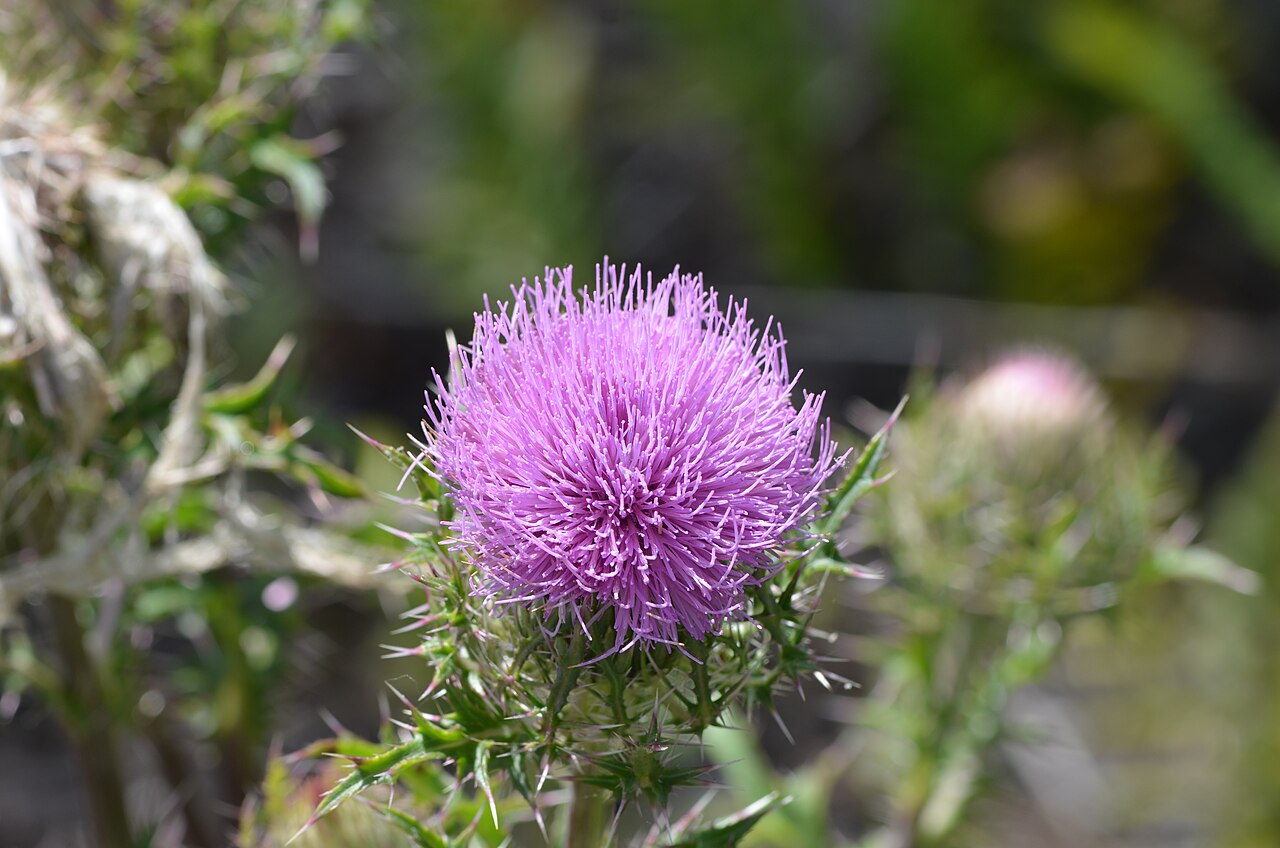
Cirsium horridulum, known in Florida as Purple Thistle, is a bold native thistle of the Atlantic and Gulf Coastal Plain. USDA PLANTS calls it yellow thistle, and it is also known as horrid thistle and bristly thistle. The names reflect its variable flowers: the large heads, 2 to 3 inches across, may be purple, pink, red-purple, pale yellow or almost white. In Florida purple and pink forms are the norm, while yellow forms are more frequent along the northern Atlantic coast.
It is a native thistle in the aster family (Asteraceae), not one of the weedy European thistles. It starts as a large, flat rosette of very spiny leaves and, usually in its second year, sends up a stout stem 1 to 5 feet tall. It is one of the best early-season nectar plants in Florida: bees, butterflies, skippers and hummingbirds crowd its flowers in spring.
Be honest with yourself before planting it. Every part except the flowers is armed with sharp spines, it self-seeds, and many farmers treat it as a pasture weed. It is rarely sold as a plant. But in a wild corner, meadow or large pollinator planting, few natives feed as many insects.
Identification
Purple thistle is easy to recognize as a thistle. The key to separating it from other thistles is the ring of narrow, spiny, leaf-like bracts that surrounds each flower head.
Rosette & Leaves
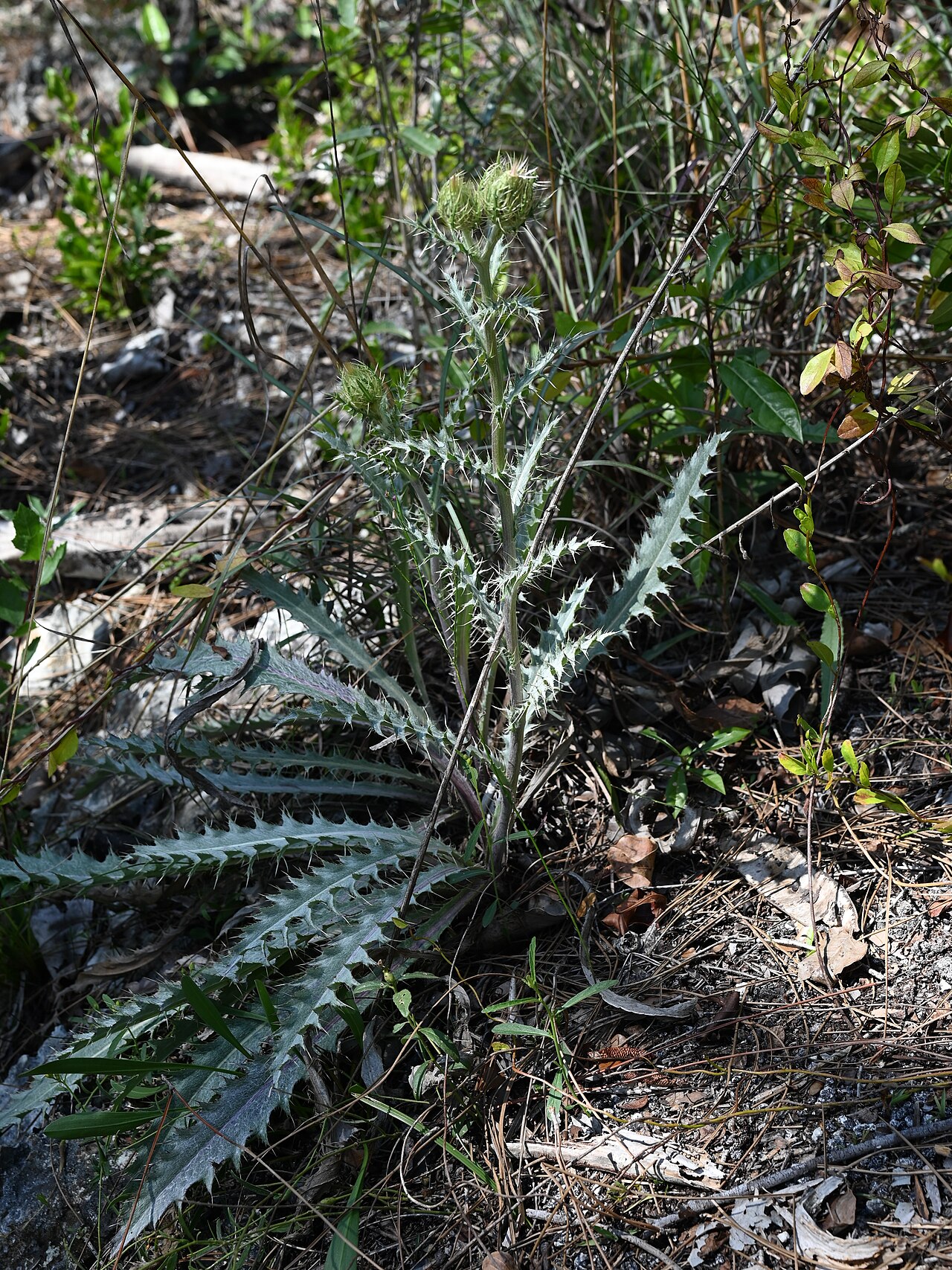
The first-year plant is a flat rosette up to 2 feet or more across. The leaves are 8 to 24 inches long, lance-shaped and deeply cut into wavy lobes, each tipped and edged with stiff, yellowish spines. They are green to gray-green and have a few cobwebby hairs, especially when young. The stem leaves clasp the stem and become smaller upward.
Stems
The flowering stem is thick, ribbed and usually unbranched or branched only near the top, from 1 to about 5 feet tall. It is covered with cobwebby hairs and spiny leaf bases. Plants are usually biennial, but some flower in their first year and die afterward.
Flower Heads
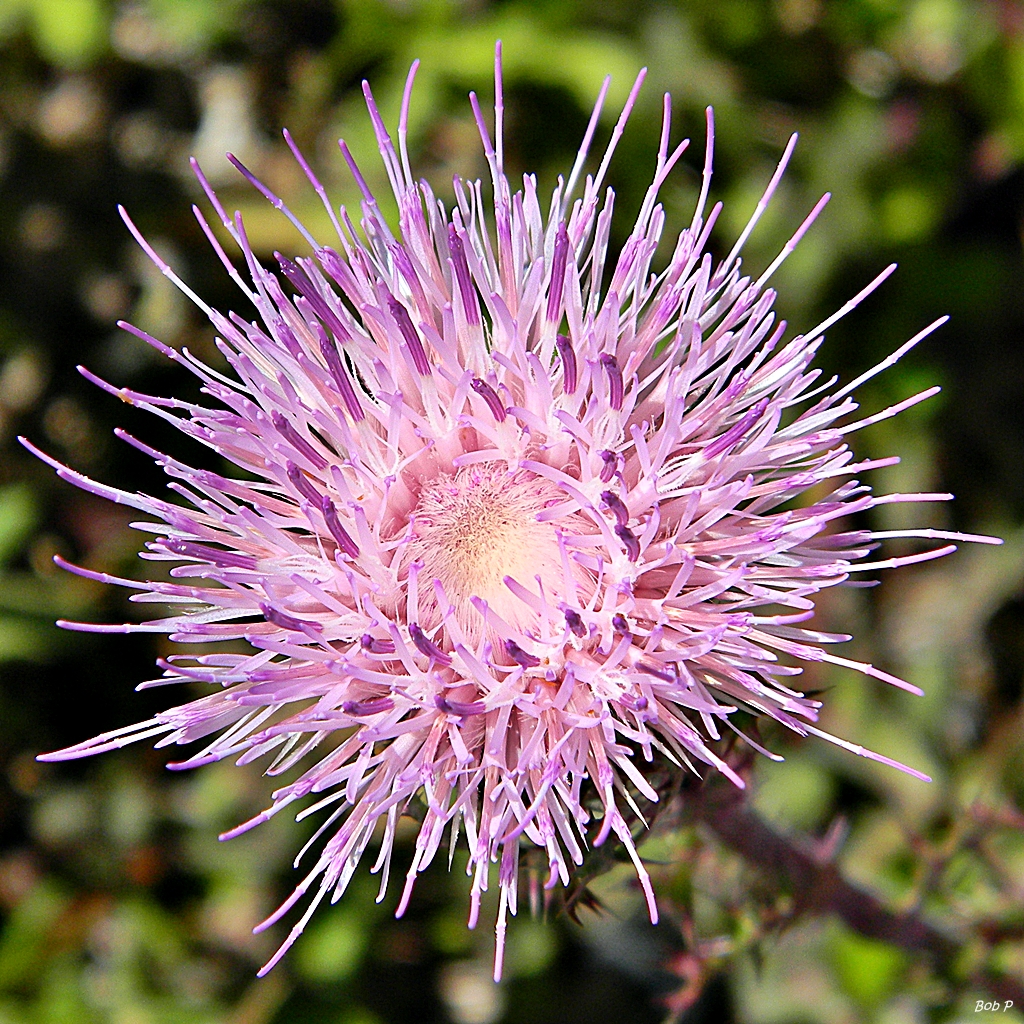
The heads are large, 2 to 3 inches wide, and made entirely of tubular disk florets. Each head sits in a collar of narrow, spiny outer bracts that look like small leaves, a feature that separates purple thistle from most other eastern thistles. Colors range from deep purple and magenta through pink to cream and pale yellow. Flowering is mainly in spring: from late winter through early summer in Florida and the Gulf states, and in early to mid summer farther north.
Fruit & Seeds
After flowering, each head produces many brown seeds (cypselae) with a white, feathery pappus that carries them on the wind, like other thistles. The heads open into a fluffy ball of down in late spring and early summer.
Similar Species
Nuttall’s thistle (Cirsium nuttallii) grows in similar places in Florida but is much taller and has many smaller heads without the ring of leafy, spiny bracts. The non-native bull thistle (Cirsium vulgare) has spiny-winged stems and smaller, uniformly purple heads.
Quick Facts
| Scientific Name | Cirsium horridulum (USDA common name: yellow thistle) |
| Family | Asteraceae (aster family) |
| Plant Type | Biennial (sometimes annual) spiny wildflower |
| Mature Height | 1–5 ft in flower |
| Mature Spread | 1.5–3 ft (rosette) |
| Growth Rate | Fast |
| Sun Exposure | Full sun |
| Water Needs | Low to moderate; tolerates wet and dry sandy soil |
| Soil Type | Sandy, sandy-peaty or loamy soils; tolerates some salt |
| Soil pH | About 4.5–7.0 |
| Bloom Time | February–July (spring in Florida) |
| Flower Color | Purple, pink, red-purple, cream or pale yellow |
| Fall Color | None |
| Fruit | Seeds with a feathery white pappus |
| Deer Resistant | Yes; very spiny |
| USDA Hardiness Zones | 6–11 |
Native Range
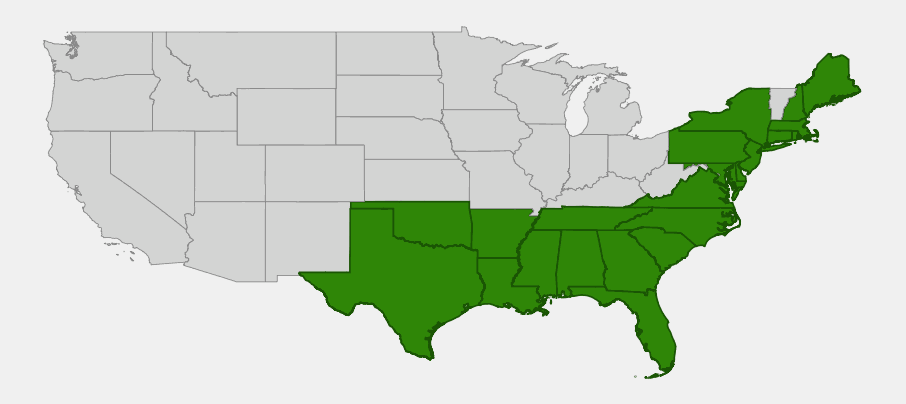
Purple thistle is native to the Atlantic and Gulf Coastal Plain from southern Maine to Florida and west to Texas and eastern Oklahoma. USDA PLANTS records it from 22 eastern and southern states, plus an outlying record from Nevada that is not part of its native range and is not shown on the map. It also grows in Mexico, Central America (Belize, Guatemala, Honduras) and the Bahamas.
In Florida it occurs throughout the state, from the Panhandle to the Everglades. Its habitats are open and sunny: pine flatwoods and savannas, wet and dry prairies, the upper edges of salt and brackish marshes, coastal dunes and swales, pastures, old fields and roadsides. It does well in sandy soil that is wet in one season and dry in another.
It is common across most of the Southeast. Near the northern edge of its range, in New England and New York, it is uncommon and mostly limited to the edges of coastal marshes and sandy coastal fields.
📋 Regional plant lists featuring Purple Thistle: North & South Florida · Alabama, Georgia & Mississippi · North & South Carolina · Maryland, Virginia & West Virginia · Kentucky & Tennessee · Arkansas, Louisiana, Eastern Oklahoma & Eastern Texas · South & West Texas · New York, Pennsylvania & Northern New Jersey · Delaware, Southern New Jersey & Long Island · Connecticut, Massachusetts & Rhode Island · New Hampshire, Maine & Vermont
Growing & Care Guide
Purple thistle is very easy to grow in sun and sandy soil, and the main question is where to put it. Give it a spot away from paths, play areas and pet runs, and wear thick gloves whenever you handle it.
Light
Plant it in full sun. In shade it stays a weak rosette and seldom flowers.
Soil & Water
It grows in almost any sandy or loamy soil, from seasonally wet flatwoods to dry roadsides, and tolerates some salt spray. Once its long taproot is established, it needs no watering in most of its range. Do not fertilize; rich soil only makes it floppy.
Planting Tips
It is rarely sold in pots, so it is usually grown from seed. Sow seed where you want the plants in fall or late winter, or set out small seedlings while young, because the taproot makes older plants hard to move. Put it toward the back of a meadow or wild corner, where its spines are not a hazard and where butterflies can reach it in full sun.
Pruning & Maintenance
Plants die after flowering and seeding. If you don’t want seedlings, cut off the flower heads as they fade and before the fluffy seeds blow away. Dig unwanted seedlings while they are small, with gloves and a narrow spade. It is not invasive, but it can seed itself into nearby open ground.
Propagation
Grow from seed. Collect the seed heads when they begin to turn fluffy, separate the seeds from the down, and sow them on the surface of a sandy mix or direct-sow in the garden. Seed usually germinates within a few weeks without special treatment. The first-year rosette flowers the following spring.
Landscape Uses
- Pollinator meadows: one of the earliest big nectar sources for bees and butterflies in the Southeast
- Wild corners and naturalized areas: where spines and self-seeding are not a problem
- Coastal and pine flatwoods restoration: tolerates salt spray, sand and seasonal flooding
- Larval host planting: for the little metalmark butterfly
Wildlife & Ecological Value
Gardeners often pull thistles, but native thistles like this one are among the most valuable wildflowers for insects and seed-eating birds.
For Pollinators
The flower heads produce abundant nectar and pollen and draw honey bees, bumble bees and many native bees, along with swallowtails, sulphurs, skippers and other butterflies, beetles and wasps. Ruby-throated hummingbirds also visit. The Xerces Society notes it as having special value to native bees and bumble bees. It is a larval host plant for the little metalmark (Calephelis virginiensis), a tiny butterfly of southeastern pine flatwoods and grasslands.
For Birds
Goldfinches and other finches eat thistle seeds and use the thistle down to line their nests. Its rosettes and stems also give cover to ground-nesting birds in open grassland.
For Mammals
Its spines protect it from most browsing. Deer and cattle usually avoid it, which is one reason it persists in pastures.
Ecosystem Role
Purple thistle is a pioneer of open, disturbed ground, reappearing after fire, storms and clearing. Because it flowers early, it fills a gap in spring before most summer wildflowers bloom.
Cultural & Historical Uses
The species name horridulum means “somewhat bristly” or “somewhat horrid,” a fair description of its spines. It was named by the French botanist André Michaux, who explored the southeastern United States in the 1780s and 1790s.
Like other thistles, the plant has a long history as food. Foragers peel the spines and outer skin from the young flowering stems and eat them raw or cooked, and the taproot of young rosettes can be cooked like other root vegetables. If you try it, be sure of the identification and handle the plant with thick gloves.
Native thistles have suffered from their weedy European cousins. Many eastern thistles are mowed, sprayed or pulled on sight. Recognizing purple thistle as a native and leaving some plants in wild areas is a simple way to support the insects and birds that depend on it.
Frequently Asked Questions
Is purple thistle the same as yellow thistle?
Yes. Cirsium horridulum has flowers that may be purple, pink, cream or yellow. USDA PLANTS uses the name yellow thistle, while Florida gardeners usually call it purple thistle because purple forms are most common there. Horrid thistle and bristly thistle are other names.
Is purple thistle invasive?
No. It is native to the eastern and southern United States. It does self-seed and is often treated as a weed in pastures, but it does not spread by roots like Canada thistle. Deadhead it if you don’t want seedlings.
Can I buy purple thistle plants?
It is rarely sold as a potted plant. Some Florida native nurseries and native seed suppliers offer seed. It grows easily from seed sown in fall or late winter.
Is purple thistle dangerous to touch?
The leaves, stems and bracts have stiff, sharp spines that can easily pierce skin and thin gloves. It is not poisonous, but plant it away from paths and children’s play areas, and wear heavy gloves when handling it.
What butterflies use purple thistle?
Many butterflies feed on its nectar, especially swallowtails, sulphurs and skippers. It is also a larval host plant for the little metalmark.

Looking for a nursery that carries Purple Thistle?
Browse our native plant nursery directory: Alabama & Arkansas · Connecticut, Delaware, Florida & Georgia · Louisiana, Maine, Maryland, Massachusetts & Mississippi · New Hampshire, New Jersey, New York, North Carolina & Oklahoma · Pennsylvania, Rhode Island, South Carolina, Tennessee, Texas & Virginia