
Whorled Wood Aster (Oclemena acuminata)
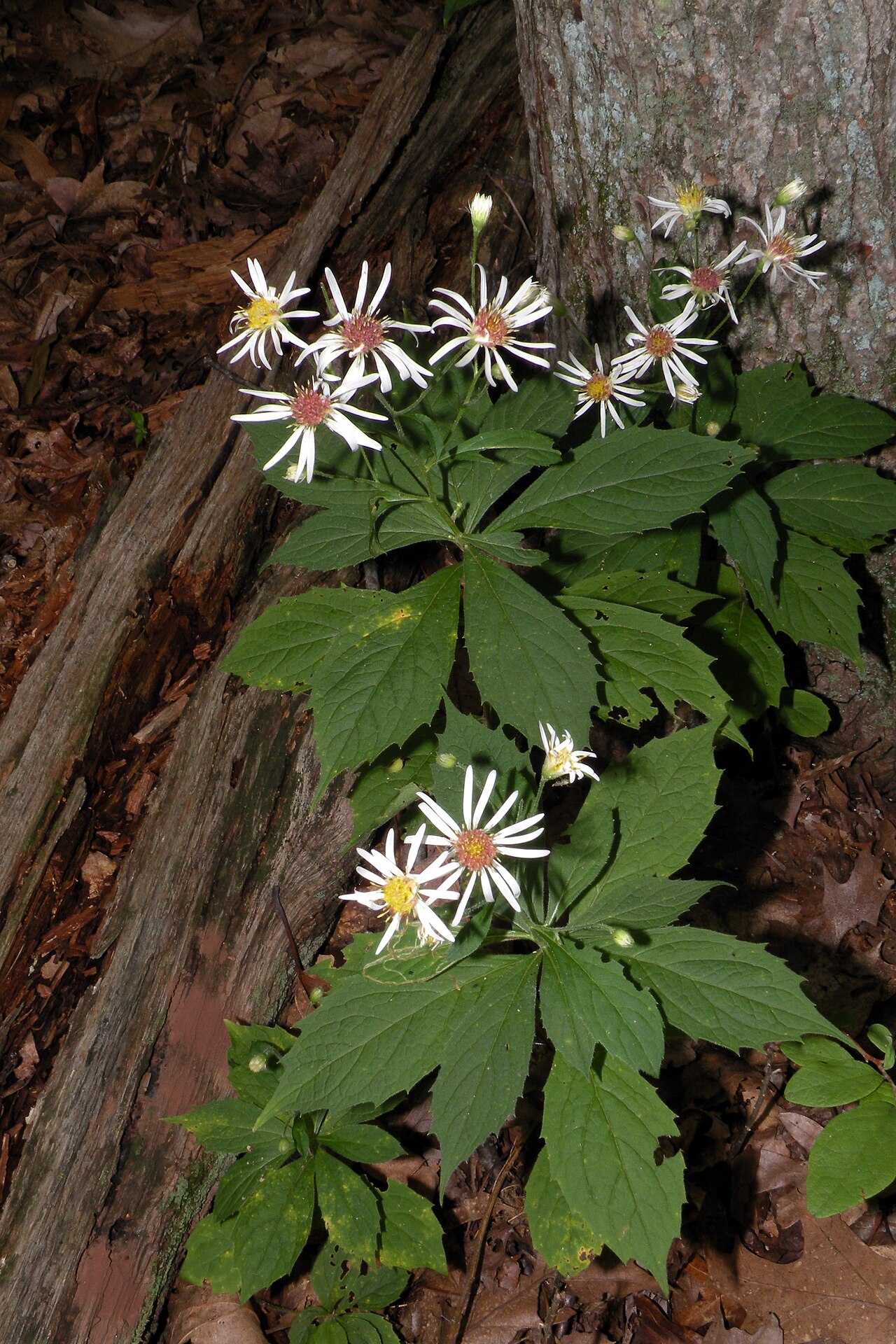
Oclemena acuminata, the Whorled Wood Aster, is a shade-loving aster of cool eastern forests. Its zigzag stems, usually 1 to 2 feet tall, carry broad, sharply toothed leaves that crowd together near the top so they look almost whorled, and from midsummer into fall a loose cluster of white daisy-like flower heads rises just above them. It is also known as sharp-leaved wood aster, mountain aster and sharp-toothed nodding aster, and older books list it as Aster acuminatus.
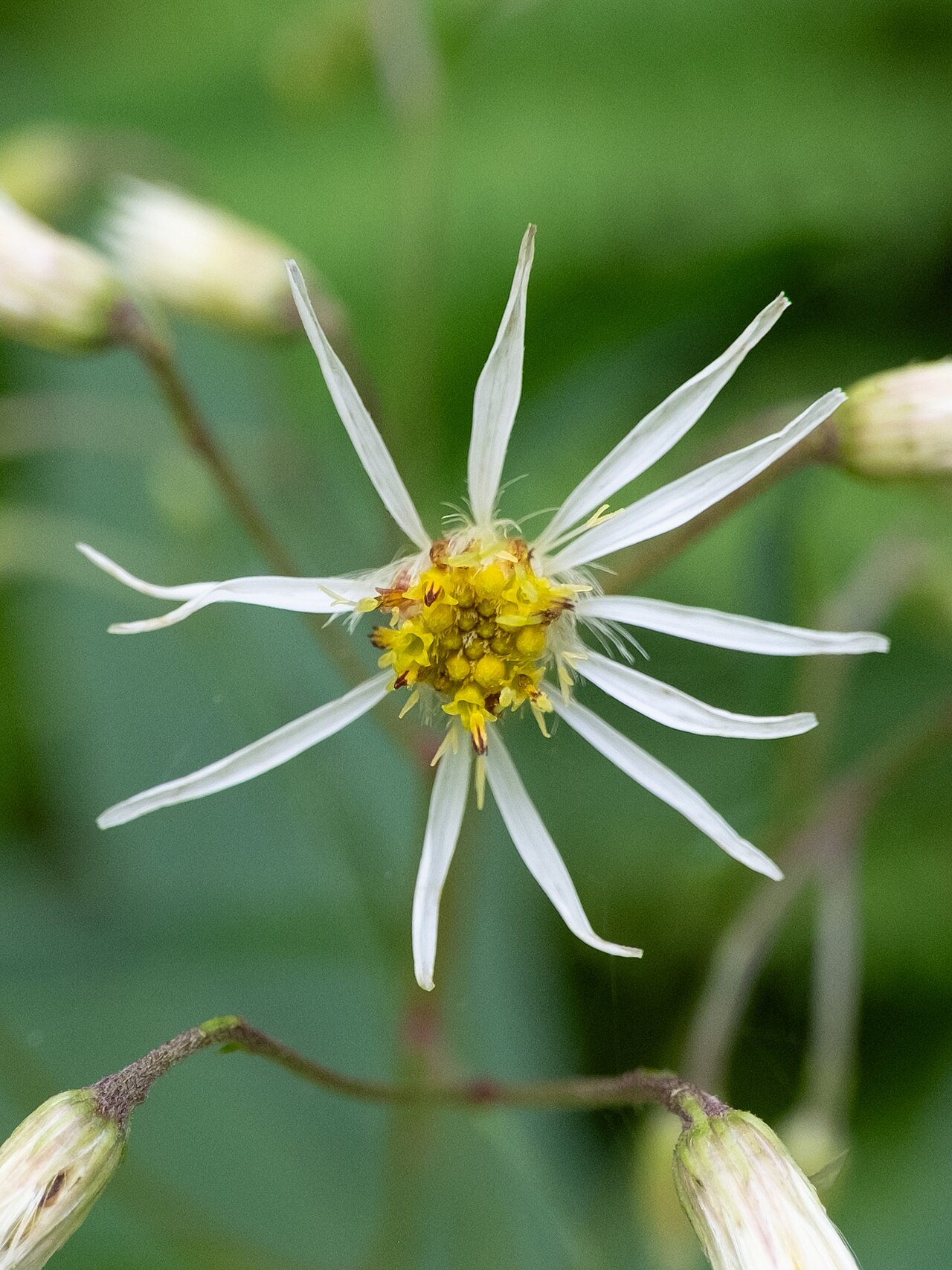
Whorled wood aster is one of the most familiar wildflowers of northern and Appalachian woods, often forming loose colonies by spreading underground stems. It grows in the same cool, acid forests as hobblebush, bunchberry and goldthread, and it is one of the few asters that thrives in real shade. The white rays often turn a little pinkish with age, and the yellow disk florets turn reddish-purple.
It is a good choice for woodland gardens in cooler regions, where it fills in under trees and provides late-season nectar for bees and other pollinators. It is closely related to whitetop aster of the southeastern coastal plain.
Identification
Whorled wood aster is easy to recognize by its leaf arrangement. Few other asters have such broad leaves clustered together near the top of the stem.
Stems & Leaves
The stems are slender, often slightly zigzag, and usually unbranched below the flower cluster. The lower stem has only a few small leaves or scales. Near the top, the leaves are crowded closely together and look almost whorled. Each leaf is elliptic to diamond-shaped, about 3 to 6 inches long, tapered to a long, sharp point (the meaning of acuminata), and coarsely toothed along the upper half.
Flowers
From July to October the stem ends in a loose, open cluster of a few to about 20 or more flower heads on slender stalks. Each head is about 1 to 1 1/2 inches across, with 10 to 20 narrow, white rays that are often slightly twisted, around a yellow center of disk florets that turn reddish-purple with age. The rays sometimes take on a pinkish or lilac tint.
Seeds
After flowering, the heads produce small, dry, one-seeded fruits topped with a tuft of white to tan bristles (the pappus), which carries them on the wind in fall.
Similar Species
White wood aster (Eurybia divaricata) has heart-shaped, stalked leaves spread evenly along the stem and smaller flower heads. Flat-top white aster is much taller, with many narrow leaves and a dense, flat-topped flower cluster in moist, sunnier ground.
Quick Facts
| Scientific Name | Oclemena acuminata (syn. Aster acuminatus) |
| Common Names | Whorled wood aster (USDA), sharp-leaved wood aster, mountain aster, sharp-toothed nodding aster |
| Family | Asteraceae (aster family) |
| Plant Type | Herbaceous perennial wildflower |
| Mature Height | 1–2 ft, occasionally to 3 ft |
| Mature Spread | 1–2 ft; slowly forms colonies by rhizomes |
| Growth Rate | Moderate |
| Sun Exposure | Part shade to full shade |
| Water Needs | Low to medium; dry to moist woodland soil |
| Soil Type | Acid, humus-rich loam or sandy loam |
| Soil pH | Acid (about 4.5–6.5) |
| Bloom Time | July–October |
| Flower Color | White rays, sometimes pink-tinged; yellow center aging reddish |
| Fall Color | Leaves yellow to bronze in fall |
| Fruit | Small dry seed with a tuft of bristles, wind-dispersed |
| Deer Resistant | Moderate; occasionally browsed |
| USDA Hardiness Zones | 3–7 |
Native Range
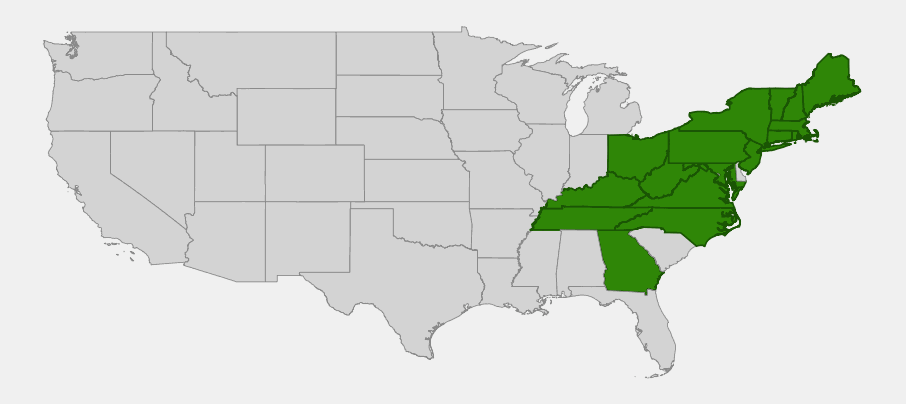
Whorled wood aster is native to eastern North America. USDA PLANTS records it from 17 states: all of New England, New York, New Jersey and Pennsylvania, Ohio, and south along the Appalachian Mountains through Maryland, West Virginia, Virginia, Kentucky, Tennessee and North Carolina to northern Georgia. In Canada it grows in Ontario, Quebec, New Brunswick, Nova Scotia, Prince Edward Island and Newfoundland.
It is common in northern New England, the Adirondacks, the Catskills and the Appalachian plateaus of Pennsylvania and West Virginia. In the southern Appalachians it is a plant of higher elevations, such as the spruce-fir and northern hardwood forests of the Great Smoky Mountains and the Black Mountains of North Carolina.
It grows in cool, moist to fairly dry, acid woods: northern hardwood forests of maple, beech and birch, spruce-fir and hemlock forests, mixed oak forests at higher elevations, woodland edges, clearings and rocky, shaded slopes. It often forms loose colonies on the forest floor.
📋 Regional plant lists featuring Whorled Wood Aster: New York, Pennsylvania & Northern New Jersey · Ohio & Indiana · Kentucky & Tennessee · Connecticut, Massachusetts & Rhode Island · New Hampshire, Maine & Vermont · Maryland, Virginia & West Virginia · Delaware, Southern New Jersey & Long Island · Alabama, Georgia & Mississippi · North & South Carolina
Growing & Care Guide
Whorled wood aster is an easy, low-maintenance plant for shady woodland gardens in cooler regions. Give it acid, humus-rich soil and some shade, and it will slowly spread into a loose colony. Buy nursery-propagated plants from native plant nurseries, and never dig them from the wild.
Light
Plant it in part shade to full shade under deciduous trees, or in an east- or north-facing spot. It tolerates more sun in cool northern gardens if the soil stays moist, but leaves may scorch in hot afternoon sun.
Soil & Water
It prefers acid, well-drained, humus-rich soil like that of a forest floor, from fairly dry to evenly moist. Mulch with shredded leaves to keep the roots cool. Water new plants regularly in their first season; established plants tolerate short dry spells in shade.
Planting Tips
Plant in spring or early fall, spacing plants about 12 to 18 inches apart for a loose ground layer. It looks natural with ferns, Canada mayflower and other woodland wildflowers. It is best suited to zones 3 to 7 and to cooler, higher-elevation gardens in the South.
Pruning & Maintenance
Little care is needed. Leave the stems standing over winter so the seeds can disperse and insects can shelter in them, then cut them back in spring. Divide crowded colonies every few years if needed.
Propagation
Divide clumps in early spring by separating sections of rhizome with shoots attached. It can also be grown from fresh seed sown outdoors in fall, where winter cold helps germination. Seedlings are slow to reach flowering size.
Landscape Uses
- Woodland gardens: one of the few asters that flowers well in shade
- Pollinator gardens: late-season nectar and pollen in shaded areas
- Naturalizing: fills in under trees and among ferns in cool, acid woods
- Restoration: suited to understory plantings in northern hardwood and conifer forests
Wildlife & Ecological Value
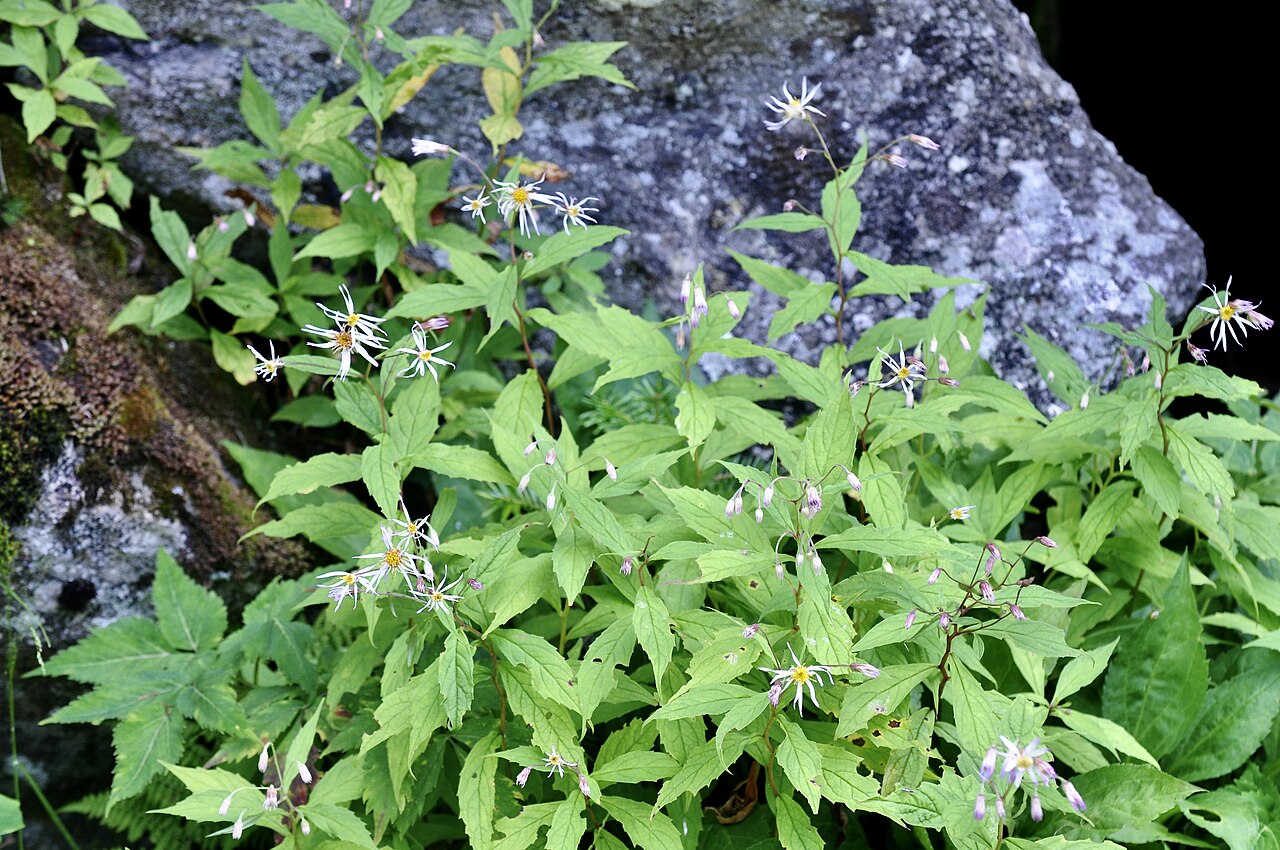
Like other asters, whorled wood aster supports a wide range of insects, and its late-season flowers are especially valuable in shaded woods, where few other plants bloom in late summer.
For Pollinators
The flowers attract bees, including bumblebees and small native bees, as well as flies, wasps and small butterflies, which feed on the nectar and pollen from midsummer into fall. Asters as a group are host plants for the caterpillars of many native moths.
For Birds
Small seed-eating birds may take the seeds in fall and winter, and the insects attracted to the plant provide food for warblers and other forest birds.
For Mammals
Deer browse it at times, though it is not a favored food in most areas. The leaves and stems provide some cover for small woodland animals.
Ecosystem Role
Whorled wood aster is a characteristic plant of the herb layer in northern hardwood and spruce-fir forests. Its colonies help hold leaf litter and soil on forest slopes, and its late bloom extends the flowering season for forest pollinators.
Cultural & Historical Uses
Whorled wood aster was long placed in the large genus Aster, as Aster acuminatus. When botanists divided North American asters into several smaller genera, it was moved to Oclemena, a small genus of three eastern species that also includes whitetop aster and bog aster.
Whorled wood aster and bog aster (Oclemena nemoralis) hybridize where they grow together, producing the intermediate Blake’s aster (Oclemena × blakei), which can be found around bogs in northern New England and eastern Canada.
The name acuminata means “tapering to a long point”, for the leaf tips. It is a familiar late-summer sight along trails in the White Mountains, the Adirondacks and the Smokies.
Frequently Asked Questions
Will whorled wood aster grow in shade?
Yes. It is one of the few asters that grows and flowers well in part to full shade, as long as the soil is acid and rich in organic matter.
Is whorled wood aster the same as Aster acuminatus?
Yes. Aster acuminatus is the older name. Most current references, including USDA PLANTS, place it in the genus Oclemena.
When does whorled wood aster bloom?
From July to October, depending on latitude and elevation. It begins blooming earlier than many asters.
Does whorled wood aster spread?
It spreads slowly by underground stems to form loose colonies, but it is not aggressive in most gardens.
How do I tell it from white wood aster?
Whorled wood aster has large, sharply pointed leaves crowded near the top of the stem. White wood aster has heart-shaped leaves on stalks spread along a branched stem and many smaller flower heads.

Looking for a nursery that carries Whorled Wood Aster?
Browse our native plant nursery directory: Connecticut & Georgia · Kentucky, Maine, Maryland & Massachusetts · New Hampshire, New Jersey, New York, North Carolina & Ohio · Pennsylvania, Rhode Island, Tennessee, Vermont & Virginia · West Virginia