
Daisy Fleabane (Erigeron strigosus)
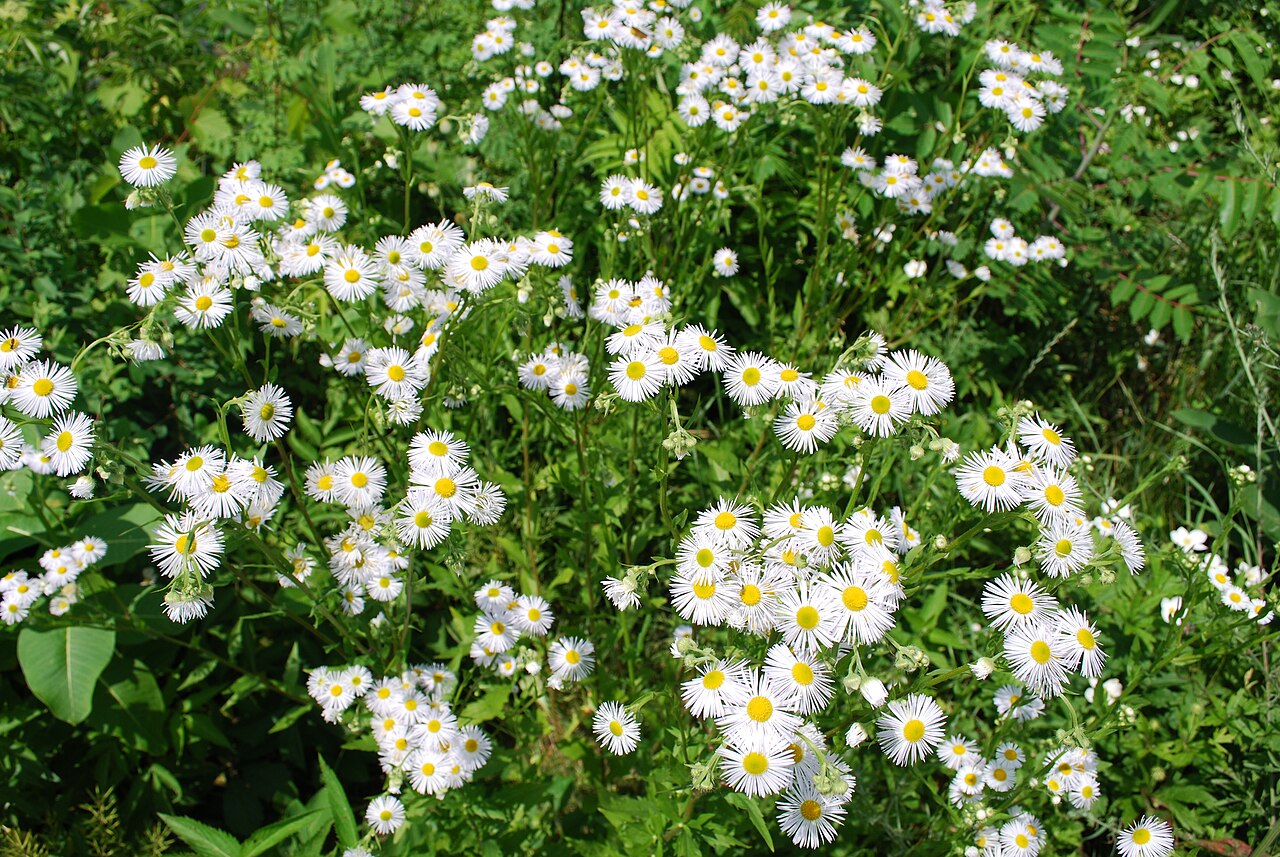
Erigeron strigosus, known as Daisy Fleabane, prairie fleabane (the USDA name), rough fleabane or lesser daisy fleabane, is a native annual or short-lived wildflower in the aster family (Asteraceae). From late spring through summer its slender, branched stems, 1 to 3 feet tall, carry many small daisy-like flower heads with dozens of short, narrow white rays around a bright yellow center.
It is one of the most widespread wildflowers in the United States, growing in 45 states and across southern Canada. It thrives in sunny, open places: prairies, old fields, pastures, glades, roadsides, open woods and lawns that are not mowed too often. The species name strigosus refers to the short, flat-lying hairs on its stems and leaves.
Daisy fleabane is easy to overlook as a roadside weed, but it is a valuable native plant. It flowers for months, feeds a large number of small bees, flies and butterflies, and fills gaps in new meadows while slower perennials get established. This guide covers how to identify it, how to tell it from its close relatives, and how to use it in a native garden.
Identification
Several white-flowered fleabanes are common in the East. Daisy fleabane is best told apart by its narrow, mostly untoothed stem leaves and the short, flat-lying hairs on its stems.
Stems
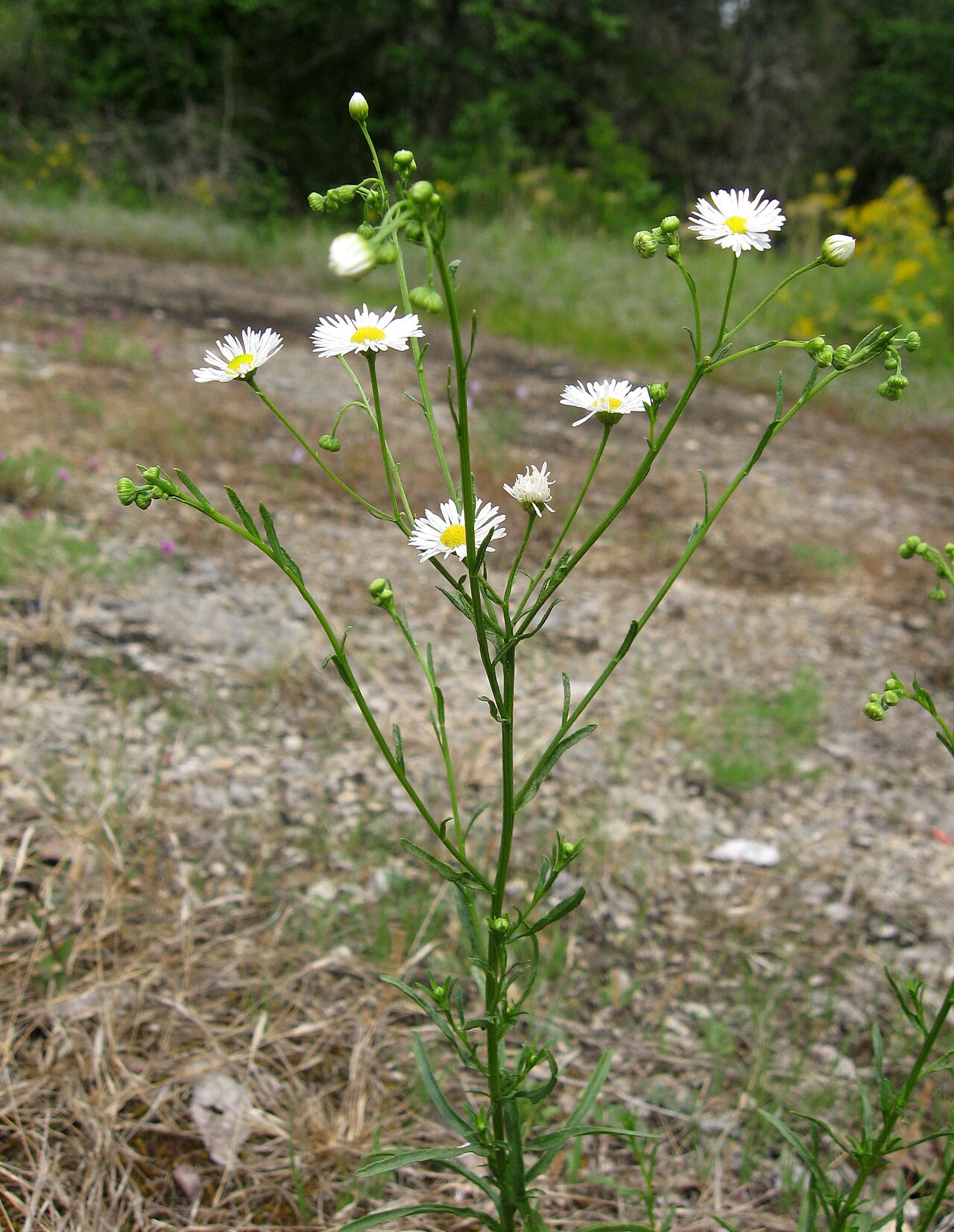
Plants have one or a few erect stems, 1 to 3 feet tall, branching in the upper part into a loose, open cluster of flower heads. The stems are covered with short hairs that lie flat against the surface and point upward, which makes them feel only slightly rough. In annual fleabane (Erigeron annuus), the stem hairs spread outward.
Leaves
The basal leaves are spoon-shaped to lance-shaped, 2 to 6 inches long, sometimes with a few shallow teeth. They often wither by flowering time. The stem leaves are alternate, narrow and lance-shaped to linear, usually without teeth, and become smaller toward the top. Narrow, mostly smooth-edged stem leaves are a good field mark.
Flowers
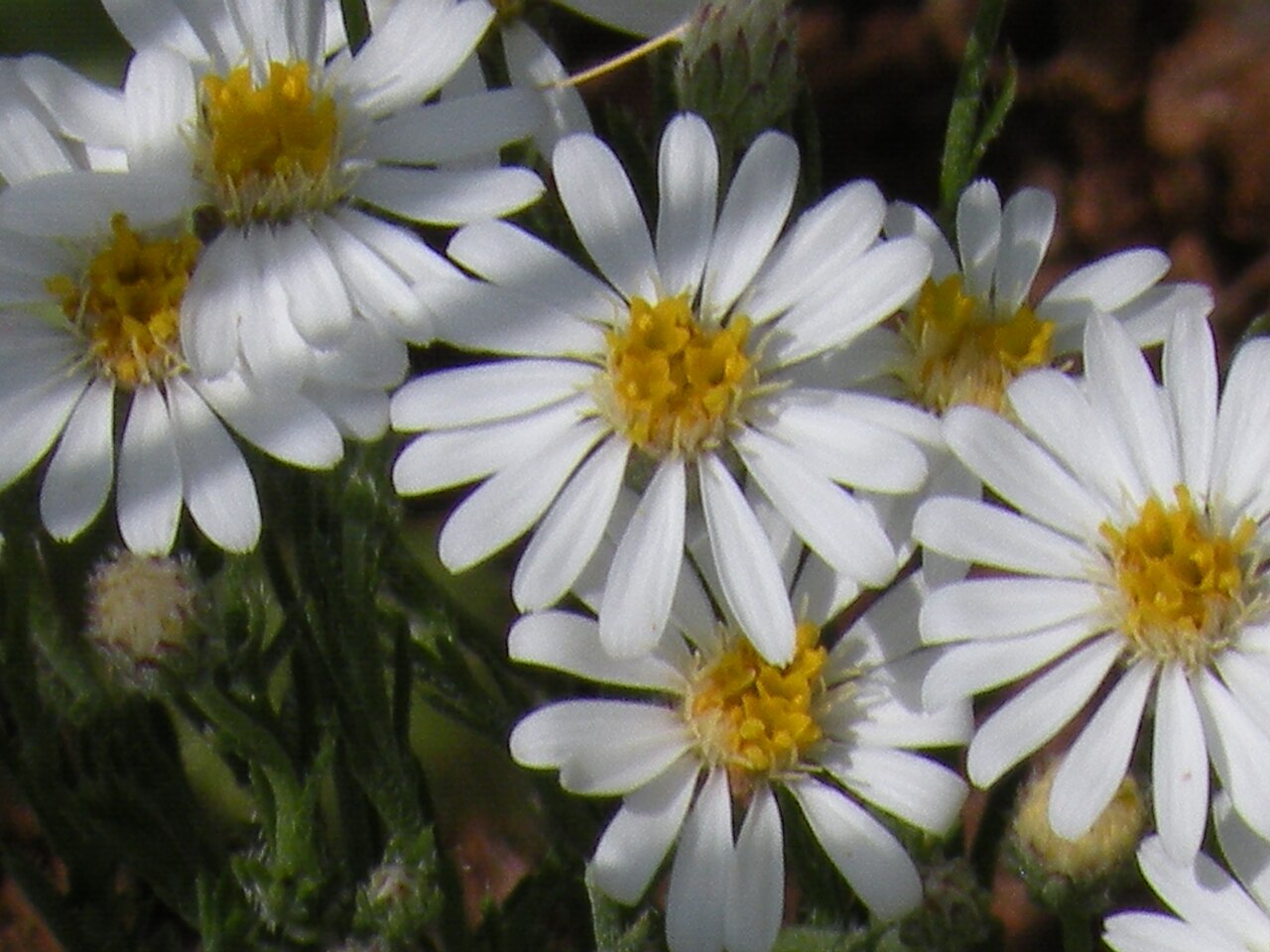
The flower heads are about ½ to ¾ inch across and carried in loose, branched clusters. Each has a yellow disk surrounded by 50 to more than 100 very narrow ray florets, usually white, sometimes tinged pink or lilac. Bloom begins in May in the South and continues through summer, often with scattered flowers into fall.
Fruit & Seeds
The seeds are tiny achenes. On the disk florets each carries a ring of fine bristles plus an outer ring of short scales, which help the seeds drift on the wind. Plants produce large numbers of seeds and reseed readily in open soil.
Quick Facts
| Scientific Name | Erigeron strigosus |
| Family | Asteraceae (aster family) |
| Plant Type | Annual, biennial or short-lived perennial wildflower |
| Mature Height | 1–3 ft |
| Mature Spread | 6–18 in |
| Growth Rate | Fast |
| Sun Exposure | Full sun to light shade |
| Water Needs | Low to medium; tolerates dry soils |
| Soil Type | Sand, loam, clay and thin rocky soils |
| Soil pH | About 5.5–8.0 |
| Bloom Time | May–August, often into fall |
| Flower Color | White rays (sometimes pinkish) with a yellow center |
| Fall Color | None of note |
| Fruit | Tiny achene with fine bristles |
| Deer Resistant | Moderately; deer and rabbits browse it occasionally |
| USDA Hardiness Zones | 3–9 |
Native Range
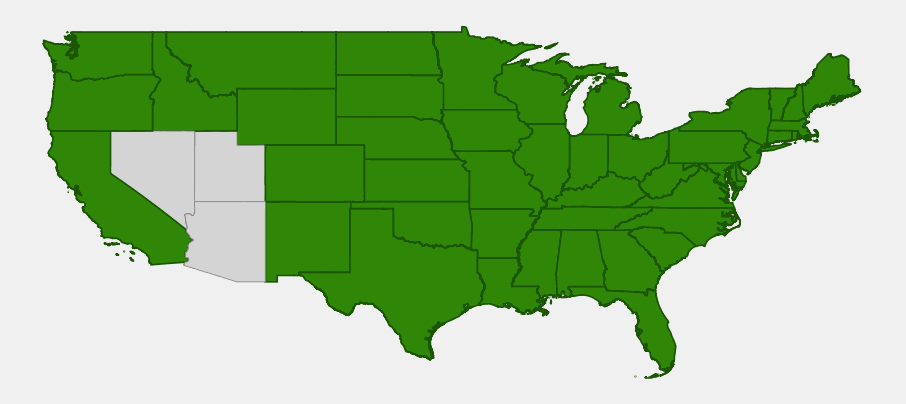
USDA PLANTS records daisy fleabane as native in 45 states and the District of Columbia, absent only from Alaska, Hawaii, Nevada, Utah and Arizona. It ranges from Maine and Florida west across the Great Plains to Montana, Wyoming, Colorado and New Mexico, and it also occurs in Idaho, Washington, Oregon and California. In Canada it grows from British Columbia to Newfoundland.
It is most abundant in the eastern and central states, where it is a common plant of old fields, prairies and roadsides. In the West it is more scattered, often in mountain meadows, open forests and disturbed ground. Several varieties are recognized, differing in size, leaf shape and hairiness.
Daisy fleabane has also spread outside North America. It is naturalized in parts of Europe and East Asia, where it is considered an introduced weed.
📋 Regional plant lists featuring Daisy Fleabane: New York, Pennsylvania & Northern New Jersey · Idaho, Eastern Oregon & Eastern Washington · Ohio & Indiana · Montana & Wyoming · Michigan, Wisconsin & Eastern Minnesota · Kentucky & Tennessee · Nebraska, Kansas & Eastern Colorado · Connecticut, Massachusetts & Rhode Island · New Hampshire, Maine & Vermont · Maryland, Virginia & West Virginia · Delaware, Southern New Jersey & Long Island · Illinois, Iowa & Missouri · Alabama, Georgia & Mississippi · North & South Florida · North & South Carolina · Arkansas, Louisiana, Eastern Oklahoma & Eastern Texas · South & West Texas · North Dakota, South Dakota & Western Minnesota · Western Oregon & Western Washington · California & Nevada
Growing & Care Guide
Daisy fleabane is one of the easiest native wildflowers to grow. It is rarely sold as a nursery plant but is included in some native seed mixes, and it often appears on its own in sunny, unmowed areas. Treat it as a short-lived filler that reseeds rather than a permanent perennial.
Light
Full sun gives the best flowering. It tolerates light shade but becomes taller and sparser.
Soil & Water
It grows in almost any well-drained soil, including sand, clay and thin, rocky ground, and it tolerates drought once established. Average to lean soil keeps plants compact.
Planting Tips
Scatter seed on bare or lightly raked soil in fall or early spring and press it in without covering; the seeds are tiny. Plants that germinate in fall form overwintering rosettes and flower the next summer. It works well as a nurse plant in new meadows, filling space while slower perennials and grasses establish.
Pruning & Maintenance
Little care is needed. Cutting plants back by half after the first flush of bloom often brings a second round of flowers. Remove seed heads if you want to limit reseeding, or leave them for birds and next year’s plants.
Propagation
Grow it from seed. Collect the fluffy seed heads when they turn tan and sow outdoors in fall or early spring. No special pretreatment is needed.
Landscape Uses
- Meadows and prairie plantings: a long-blooming filler that flowers the first or second year
- Pollinator gardens: many small flowers for small bees, flies and butterflies
- Naturalized lawns and roadsides: a tough native for areas mowed only a few times a year
- Restoration of disturbed sites: a quick native cover on bare or thin soil
- Cottage gardens: a delicate, airy daisy among taller perennials
Wildlife & Ecological Value
Daisy fleabane may look modest, but its long bloom and open, easy-to-reach flowers make it one of the most visited wildflowers in old fields and roadsides.
For Pollinators
The small, flat flower heads are visited by a wide range of insects, including small native bees such as sweat bees and mining bees, hover flies, small butterflies and skippers, beetles and wasps. Because it blooms from late spring through summer, it supplies nectar and pollen over a long season.
For Birds
Small seed-eating birds eat some seeds, and the many insects drawn to the flowers feed insect-eating birds and their young.
For Mammals
Rabbits and deer occasionally browse the leaves. It has little other value for mammals.
Ecosystem Role
As a fast-growing annual or biennial, daisy fleabane is an early colonist of bare soil after disturbance, fire or abandonment of fields. It holds soil and supports insects until longer-lived prairie and meadow plants take over. Its foliage and flowers feed the caterpillars of several native moths.
Cultural & Historical Uses
The name “fleabane” comes from an old European belief that dried plants of this group, burned or hung in houses, drove away fleas. There is no good evidence that they do. The genus name Erigeron comes from Greek words meaning “early old man,” often explained as a reference to the plants quickly forming white, fluffy seed heads.
The species was described in the early 1800s by Carl Ludwig Willdenow, based on a name proposed by the Pennsylvania botanist Henry Muhlenberg. Ethnobotanical records note medicinal uses of fleabanes by several Native American groups. These are historical uses, not recommendations.
Today daisy fleabane is valued mainly in meadow and prairie restoration and by gardeners who want native flowers for small pollinators. It is a reminder that many “weedy” native wildflowers are important parts of the landscape.
Frequently Asked Questions
How do I tell daisy fleabane from annual fleabane?
Daisy fleabane has narrow, mostly untoothed stem leaves and short hairs that lie flat against the stem. Annual fleabane (Erigeron annuus) has broader, toothed stem leaves and longer hairs that spread outward. The two can hybridize, and some plants are intermediate.
How is it different from Philadelphia fleabane?
Philadelphia fleabane blooms earlier in spring, has leaves that clasp the stem, and has very fine, threadlike rays, often pink, numbering 150 or more per head. Daisy fleabane has unclasping leaves and fewer rays, usually white.
Is daisy fleabane a weed?
It is a native wildflower that often grows in disturbed places, so it is sometimes called a weed. It is not invasive in North America and is valuable for pollinators. It is introduced and weedy in parts of Europe and Asia.
Is daisy fleabane annual or perennial?
It is usually an annual or biennial, sometimes a short-lived perennial. Plants often form a rosette in fall, flower the next summer and then die, so colonies persist by reseeding.
Does it really repel fleas?
No. The name comes from an old folk belief, but there is no good evidence that fleabanes repel fleas.

Looking for a nursery that carries Daisy Fleabane?
Browse our native plant nursery directory: Alabama & Arkansas · California · Colorado, Connecticut, Delaware, Florida & Georgia · Idaho, Illinois, Indiana, Iowa & Kansas · Kentucky, Louisiana, Maine, Maryland, Massachusetts, Michigan, Minnesota, Mississippi, Missouri & Montana · Nebraska, New Hampshire, New Jersey, New Mexico, New York, North Carolina, North Dakota, Ohio & Oklahoma · Oregon · Pennsylvania, Rhode Island, South Carolina, South Dakota, Tennessee, Texas, Vermont & Virginia · Washington · West Virginia, Wisconsin & Wyoming