
Cream Violet (Viola striata)
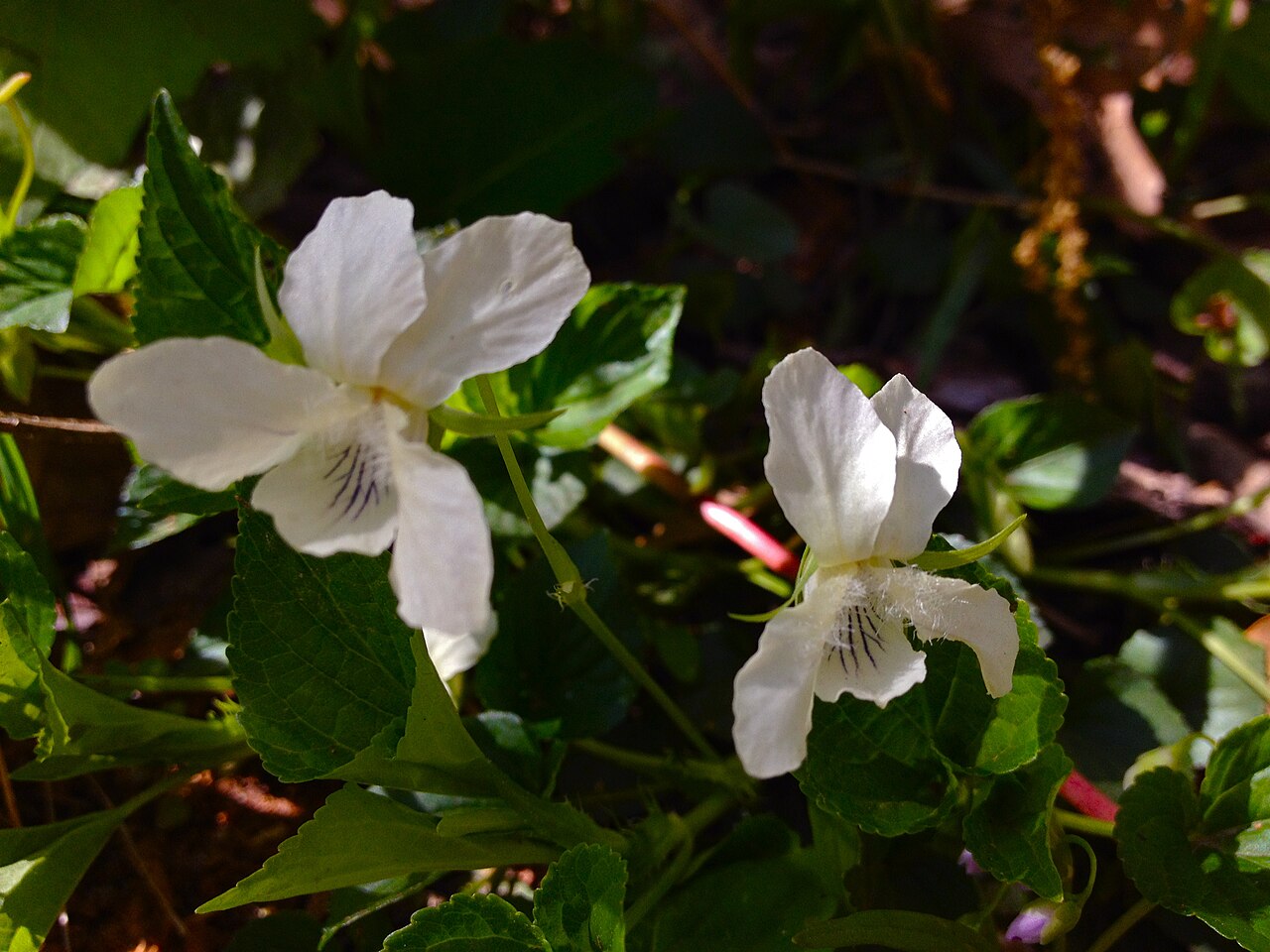
Viola striata, known as Cream Violet, striped cream violet (the USDA common name), pale violet or striped violet, is a leafy-stemmed native violet of moist woods and floodplains in eastern North America. In spring it bears creamy white flowers with fine purple lines on the lower petals, and unlike the familiar stemless lawn violets, its flowers and leaves grow on upright stems that lengthen through the season into a small, bushy plant.
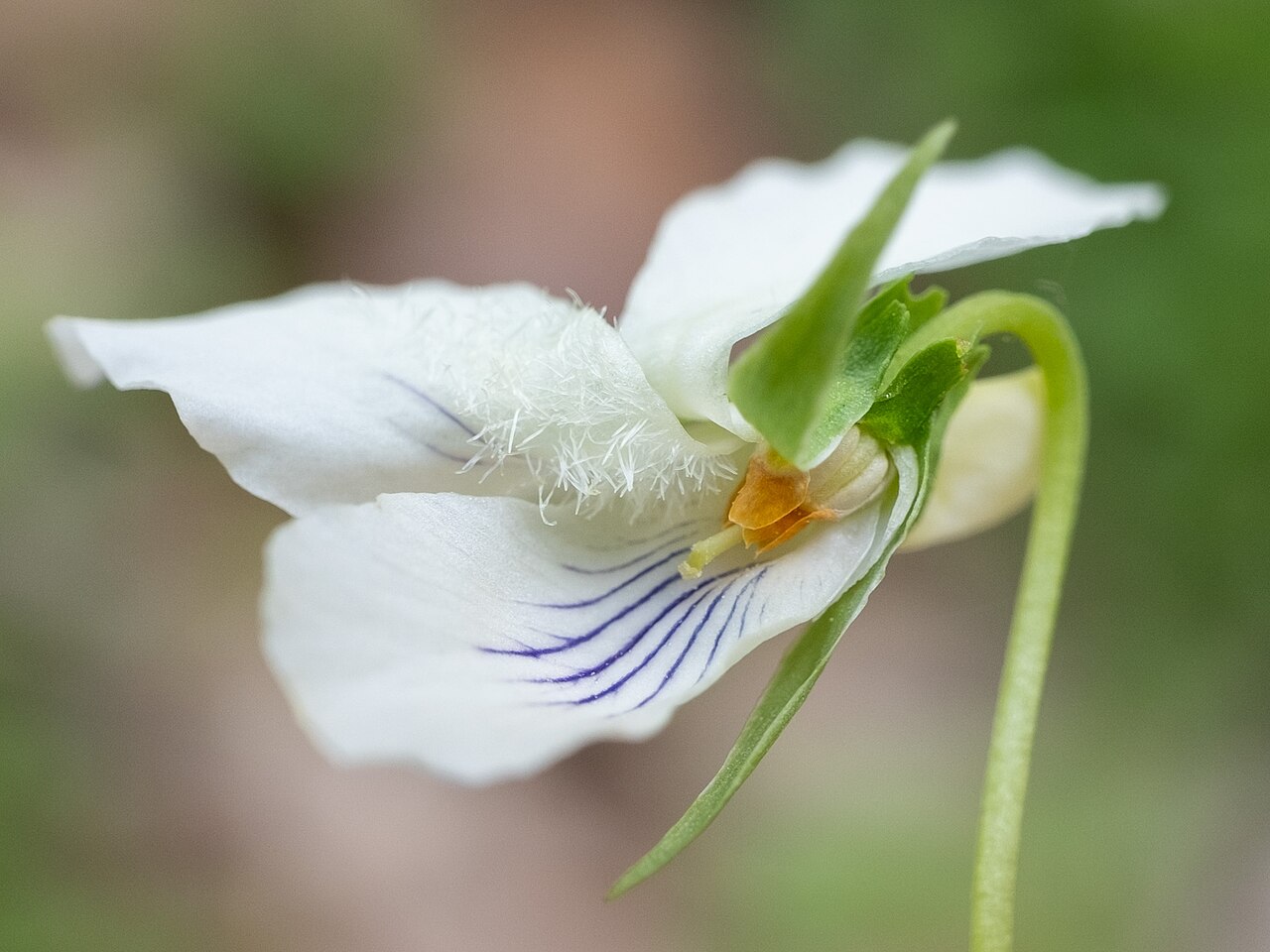
The species name striata means “striped” and refers to the dark violet veins that guide bees into the center of each flower. Cream violet belongs to the violet family (Violaceae). It grows in rich alluvial forests, along stream banks, in moist thickets and meadows, and sometimes in lawns and shady yards near woodlands. In gardens it is easy to grow and quick to self-sow, making it a cheerful groundcover for moist shade.
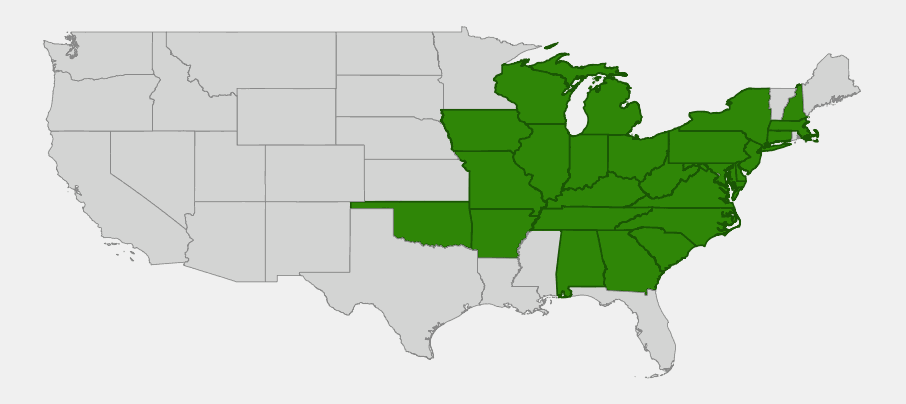
Its range extends from southern Ontario and New England west to Wisconsin, Iowa, Missouri and Oklahoma, and south to Georgia and Alabama. Like other violets it is a caterpillar food plant for fritillary butterflies. This guide covers how to tell it apart from other white violets, where it grows, how to grow it and its role in wildlife gardens.
Identification
Cream violet is the most common white-flowered, leafy-stemmed violet in much of the eastern United States. The combination of creamy white flowers, upright leafy stems and large, fringed stipules at the base of each leaf stalk identifies it.
Stems & Growth Habit
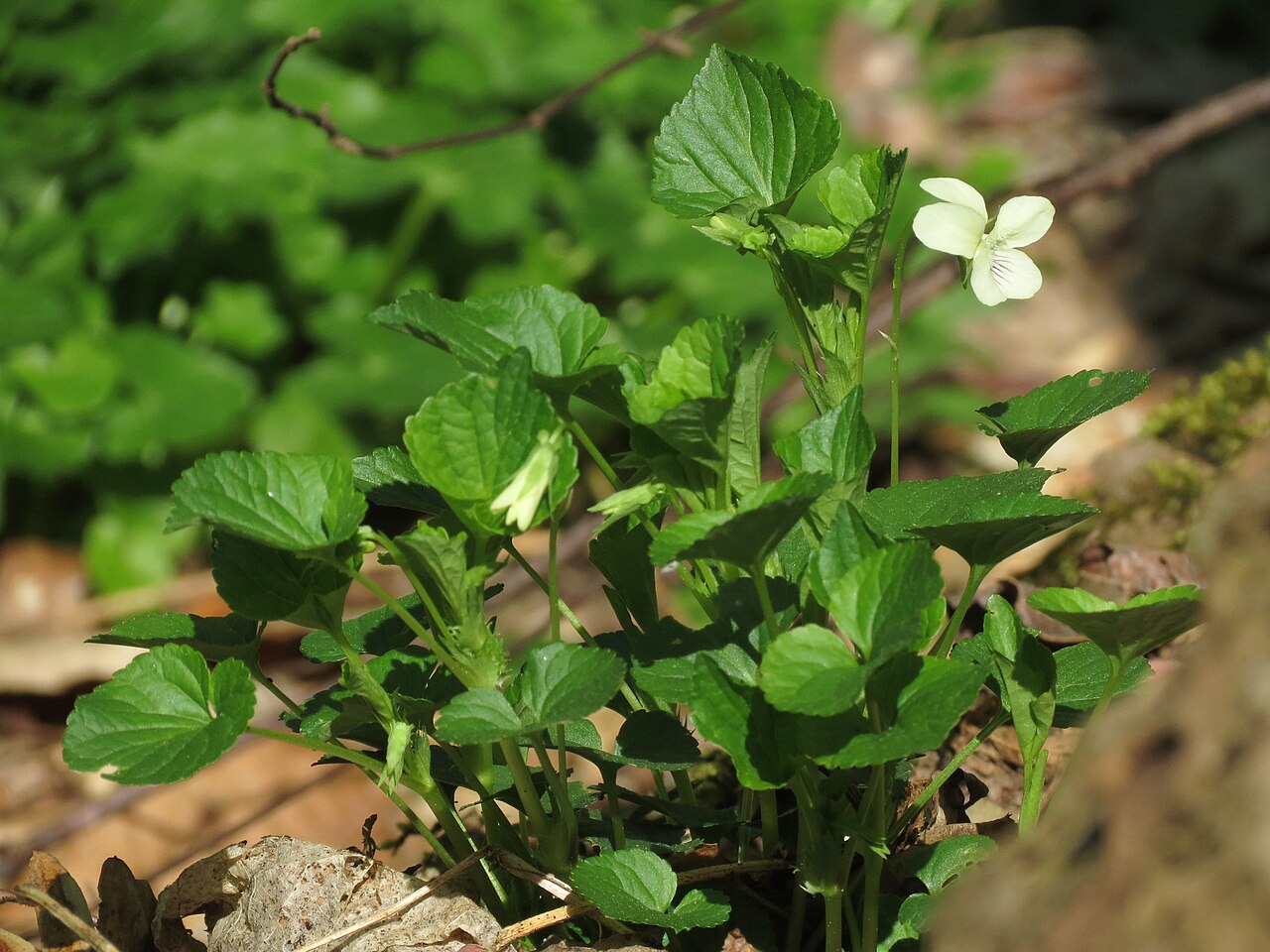
Plants form clumps of several stems from a short, thick rootstock. At flowering time in spring the stems are usually 4 to 12 inches tall, but they keep growing after flowering and can reach about 2 feet by summer, often leaning or sprawling. The stems are smooth or slightly hairy.
Leaves & Stipules
The leaves are alternate on the stems, heart-shaped to broadly oval, 1 to 3 inches long, with finely toothed edges and a pointed tip. At the base of each leaf stalk is a pair of leafy stipules that are conspicuously fringed or toothed, a key identification feature. Basal leaves are few and resemble the stem leaves.
Flowers
Flowers grow singly on slender stalks from the leaf axils. Each is about ¾ inch across, creamy white to white, with five petals. The lower three petals have dark purple to violet veins, the two side petals are bearded with white hairs near the center, and the lowest petal ends in a short, thick spur. Flowering is mainly from April to June. Later in the season, like many violets, the plant also produces small, closed (cleistogamous) flowers near the base that pollinate themselves and set seed without opening.
Fruit & Seeds
The fruit is a small, smooth, oval capsule that splits into three valves. As the valves dry they squeeze the seeds and shoot them several feet. The seeds carry an oily appendage (elaiosome) that attracts ants, which carry them farther away. This is why cream violet spreads readily in gardens.
Similar Species
Canada violet (Viola canadensis) is also white and leafy-stemmed, but its petals are usually tinged purple on the back, each has a yellow center, and its stipules are not fringed. Sweet White Violet and other small white violets are stemless, with leaves and flowers rising directly from the ground. Pale forms of Common Blue Violet are also stemless.
Quick Facts
| Scientific Name | Viola striata Aiton |
| Family | Violaceae (violet family) |
| Plant Type | Herbaceous perennial wildflower with leafy stems |
| Mature Height | 4–12 in in flower; stems to about 2 ft by summer |
| Mature Spread | 8–18 in; spreads by self-seeding |
| Growth Rate | Moderate to fast |
| Sun Exposure | Part shade to full shade |
| Water Needs | Medium to high; moist soil |
| Soil Type | Rich, moist loam; alluvial soils |
| Soil pH | About 5.5–7.5 (slightly acidic to slightly alkaline) |
| Bloom Time | April–June |
| Flower Color | Creamy white with violet veins |
| Fall Color | None notable |
| Fruit | Three-valved capsule that ejects seeds |
| Deer Resistant | Low; deer and rabbits browse violets |
| USDA Hardiness Zones | 4–8 |
Native Range
Cream violet is native to eastern North America. USDA PLANTS records it in 25 states and the District of Columbia, from New Hampshire, Massachusetts and Connecticut west through New York, Pennsylvania, Ohio, Michigan and Wisconsin to Iowa and Missouri, and south to North Carolina, South Carolina, Georgia, Alabama, Tennessee, Kentucky, Arkansas and Oklahoma. In Canada it grows in southern Ontario. Go Botany also documents it in Rhode Island.
It is most common in the Ohio River valley, the lower Midwest, the Appalachians and the Mid-Atlantic, where floodplain forests and rich bottomlands provide the moist, fertile soils it prefers. At the northeastern edge of its range in New England it is scattered and uncommon; Connecticut lists it as historical, and reports from Vermont are based on cultivated plants. Toward the south and west it thins out in the Coastal Plain and on the edge of the prairies.
Typical habitats include alluvial and floodplain forests, rich mesic woods, stream banks, moist thickets and meadows, and wooded swamps. It also appears in shady lawns, parks and gardens near woodland, where it can be one of the most common violets.
📋 Regional plant lists featuring Cream Violet: Alabama, Georgia & Mississippi · North & South Carolina · Maryland, Virginia & West Virginia · Kentucky & Tennessee · Arkansas, Louisiana, Eastern Oklahoma & Eastern Texas · Illinois, Iowa & Missouri · Ohio & Indiana · Michigan, Wisconsin & Eastern Minnesota · New York, Pennsylvania & Northern New Jersey · Delaware, Southern New Jersey & Long Island · Connecticut, Massachusetts & Rhode Island · New Hampshire, Maine & Vermont
Growing & Care Guide
Cream violet is among the easiest native violets to grow. It adapts to most moist, shady garden sites, and once established it maintains itself by self-seeding.
Light
Part shade to full shade. It blooms best with spring sun before the trees leaf out and shade later in the year, which is typical of deciduous woodland. It tolerates more sun if the soil stays moist.
Soil & Water
Grow it in rich, moist, well-drained loam with plenty of organic matter. It handles clay and occasional flooding, as you would expect of a floodplain plant. Water during dry spells in its first year. Established plants tolerate short droughts but look best with steady moisture. No fertilizer is needed.
Planting Tips
Plant in spring or fall, about 12 inches apart. Use it as a groundcover under deciduous trees and shrubs, along shady paths, in rain gardens and along streams. It mixes well with spring ephemerals such as Virginia bluebells and trout lilies, and with woodland phlox and ferns.
Pruning & Maintenance
Cream violet needs little care. The stems can be cut back after flowering if they become floppy, which also limits seeding. It self-sows freely, so pull extra seedlings where they are not wanted, or let it naturalize in wilder parts of the garden.
Propagation
Seed is easiest. Collect capsules as they turn pale and point upward, just before they split, and sow seeds outdoors in fall or after cold, moist stratification. Clumps can also be divided in early spring or fall. Seedlings often bloom in their second year.
Landscape Uses
- Woodland groundcover: fills moist shade under trees and shrubs
- Butterfly gardens: larval food plant for fritillaries
- Rain gardens and floodplains: tolerates periodic flooding and heavy soil
- Lawn alternative: a native addition to shady, informal lawns
- Restoration: floodplain and bottomland forest understory within its native range
Wildlife & Ecological Value
Cream violet supports a range of wildlife, from early bees to fritillary caterpillars and the ants that spread its seeds.
For Pollinators
Spring flowers attract small native bees, bumble bee queens, mason bees, bee flies and early butterflies, which follow the violet nectar lines to the spur. Violets are the only caterpillar food plants of the greater fritillaries, including the great spangled fritillary, and they are also used by the meadow fritillary and variegated fritillary. Cream violet’s abundant leafy growth makes it a good host plant for these butterflies.
For Birds
Ground-feeding birds such as wild turkeys, mourning doves and sparrows may eat violet seeds, and the Lady Bird Johnson Wildflower Center notes that cream violet attracts birds.
For Mammals
Rabbits, deer and small rodents eat violet leaves and seeds. The plant regrows quickly after browsing.
Ecosystem Role
As a floodplain plant, cream violet helps cover and hold soil after floods. Its seeds are dispersed both explosively and by ants, which carry them to their nests, eat the oily appendage and discard the seeds in rich soil where they can germinate. This mutualism is common among woodland wildflowers in eastern forests.
Cultural & Historical Uses
The Scottish botanist William Aiton described Viola striata in 1789 in Hortus Kewensis, his catalogue of plants growing at the Royal Botanic Gardens, Kew, from plants introduced from North America. It has been grown in European gardens since then and is still occasionally seen in botanic garden collections.
Violet leaves and flowers have been eaten in small amounts as spring greens and garnishes in many cultures, and violets appear in North American folk medicine. Specific uses of cream violet are not well documented, so it is best grown as an ornamental and wildlife plant.
Cream violet is one of the violets most often seen in eastern towns and suburbs near woodland, where it volunteers in shady lawns and garden beds. Many native gardeners welcome it as a host plant for fritillary butterflies and as a native alternative to nonnative groundcovers.
Frequently Asked Questions
Is cream violet invasive?
No. It is native to eastern North America. It does self-sow freely in gardens, so it can spread more than some gardeners want, but it is easy to pull and does not invade natural areas outside its range.
How can I tell cream violet from Canada violet?
Cream violet has creamy white flowers with violet lines, no yellow center and fringed stipules at the base of the leaf stalks. Canada violet has white petals with a yellow center, purple-tinged backs and smooth-edged stipules.
Does cream violet grow in lawns?
Yes. It often appears in shady lawns near woods. It tolerates mowing, though it stays smaller, and it adds spring flowers and butterfly food to the lawn.
When does cream violet bloom?
Mainly from April to June. It continues to produce small, closed, self-pollinating flowers through summer, which is why it keeps setting seed.
Is cream violet good for butterflies?
Yes. Violets are the caterpillar food plants for fritillary butterflies, and the spring flowers provide nectar for bees and early butterflies.

Looking for a nursery that carries Cream Violet?
Browse our native plant nursery directory: Alabama & Arkansas · Connecticut, Delaware & Georgia · Illinois, Indiana & Iowa · Kentucky, Maryland, Massachusetts, Michigan & Missouri · New Hampshire, New Jersey, New York, North Carolina, Ohio & Oklahoma · Pennsylvania, South Carolina, Tennessee & Virginia · West Virginia & Wisconsin