
Long-leaved Bluets (Houstonia longifolia)
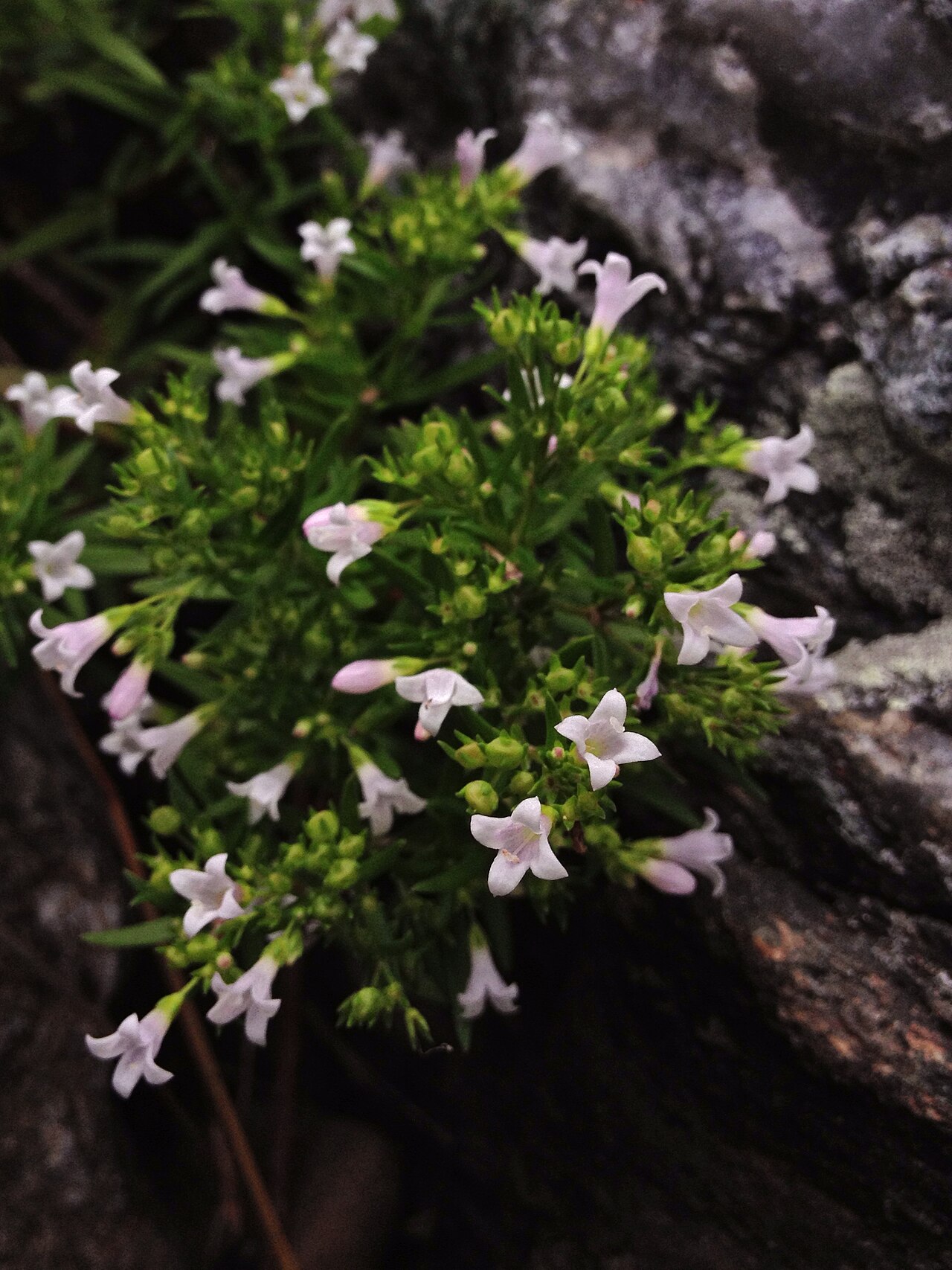
Houstonia longifolia, known as Long-leaved Bluets or longleaf summer bluet, is a small, tufted perennial wildflower of the coffee family (Rubiaceae). It grows 4 to 10 inches tall, with several thin, upright stems, pairs of narrow leaves and, from late spring through summer, clusters of tiny, four-lobed, funnel-shaped flowers that are white to pale lilac or pinkish.
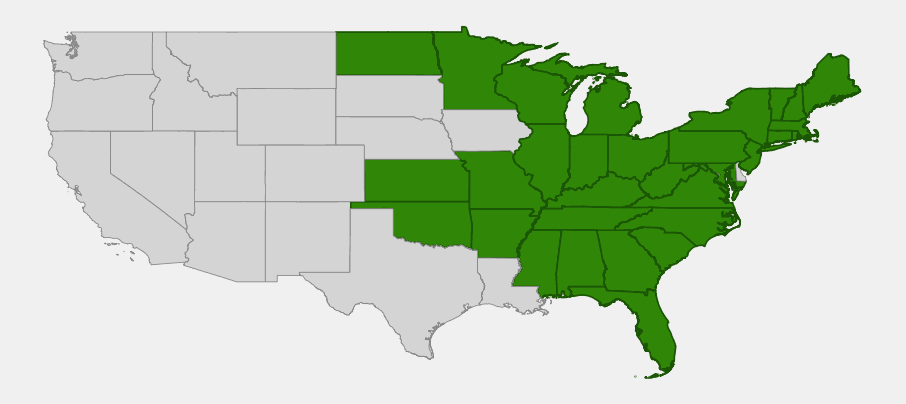
It is native from Saskatchewan, Manitoba and Quebec south through the eastern and central United States to Georgia and the Florida Panhandle, and west to North Dakota, Kansas and Oklahoma. It grows in dry, thin-soiled, open places: rock outcrops, ledges and cliffs, sandy and gravelly openings, barrens, glades, dry prairies and open oak and pine woods. Small bees, flies and butterflies visit the flowers.
Long-leaved bluets are a delicate, long-blooming plant for rock gardens, crevices and dry, sunny or lightly shaded spots with poor, well-drained soil. They are not sold often, but they are easy to grow from seed and need no fertilizer or extra water once established.
Identification
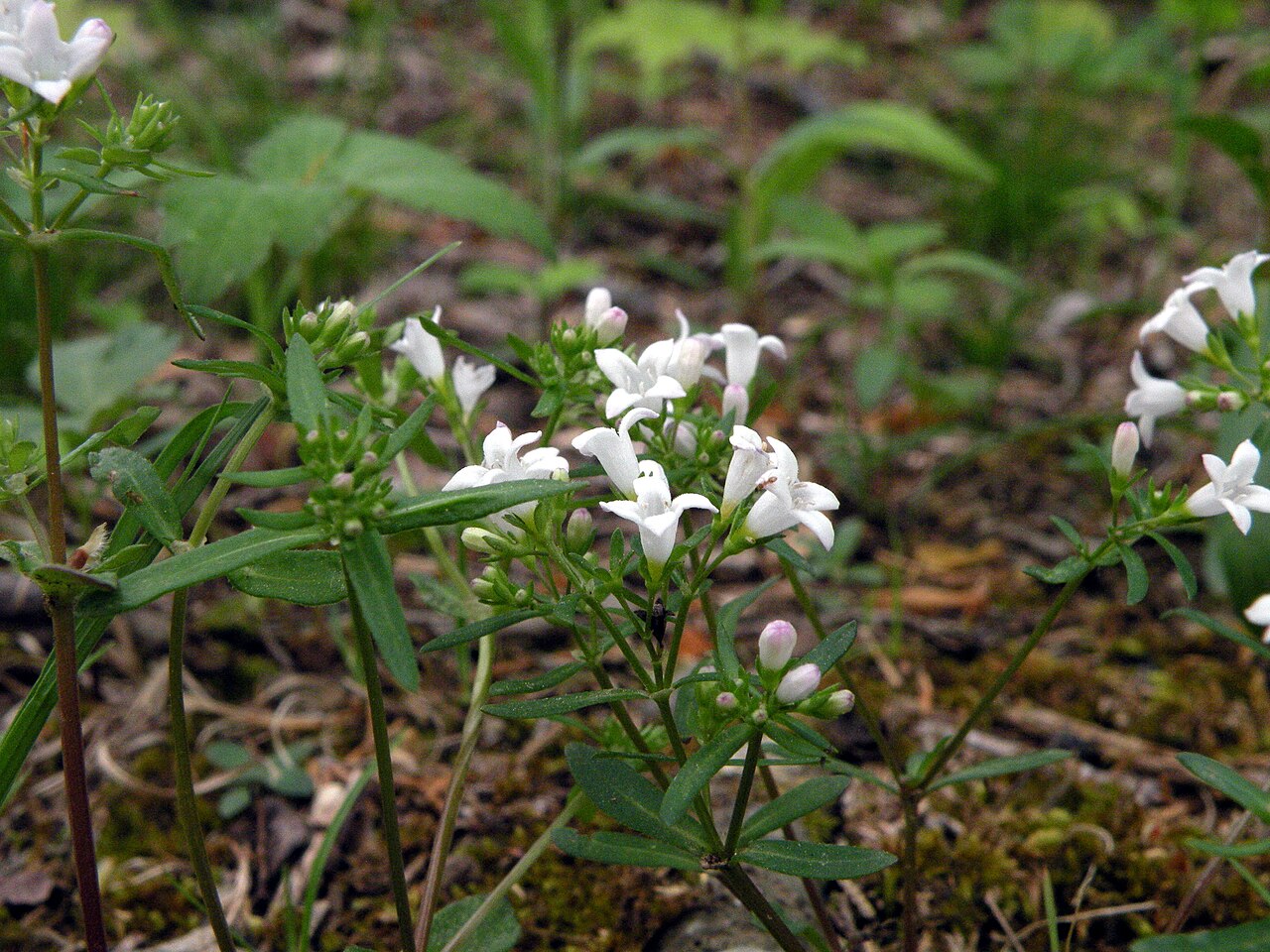
Look for a small tuft of thin, upright stems with narrow, opposite leaves and clusters of tiny, four-lobed white to pale lilac flowers at the tips, growing in dry, rocky or sandy open ground in summer.
Growth Habit
Long-leaved bluets form a small clump of several to many slender, erect or ascending stems, 4 to 10 inches tall, from a short, fibrous-rooted base. In spring there is often a small rosette of basal leaves, which usually withers by the time the plant flowers.
Leaves
The stem leaves are opposite, stalkless, narrowly lance-shaped to linear, 1/2 to about 1 1/4 inches long and less than 1/4 inch wide, with one main vein. They are smooth or slightly rough on the edges. The basal leaves, when present, are wider, oval to spoon-shaped and short-stalked.
Flowers
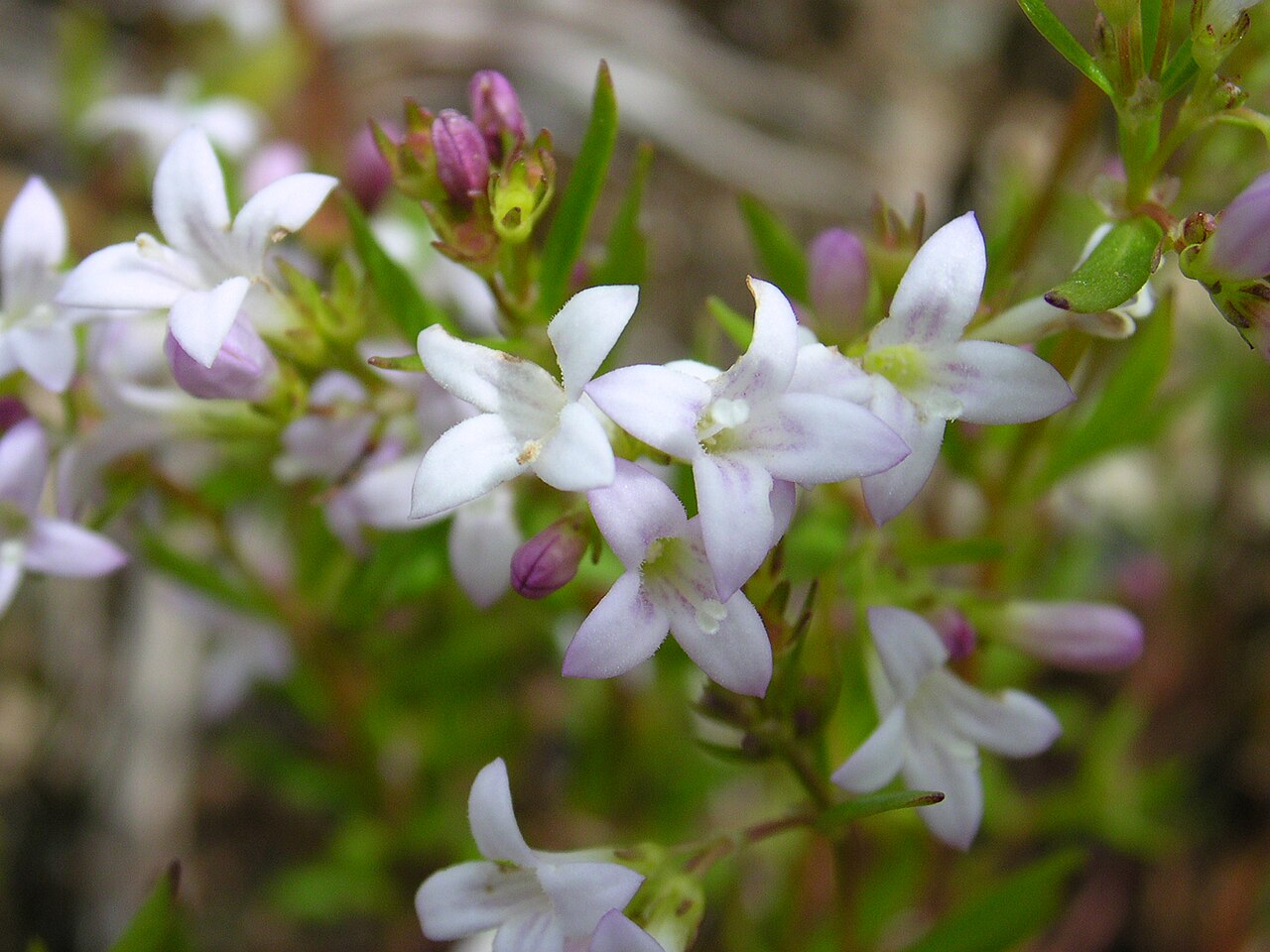
The flowers grow in small, branched clusters (cymes) at the tops of the stems. Each is tiny, about 1/4 inch long, with a funnel-shaped tube and four spreading, pointed lobes. They are white to pale lilac, lavender or pink. As in other bluets, some plants have long styles and short stamens and others the reverse, which helps cross-pollination. Bloom time is May to August, sometimes later.
Fruit & Seeds
The fruit is a small, rounded, two-lobed capsule, partly enclosed by the calyx, that splits open at the top to release tiny dark seeds.
Look-alikes
Azure bluets (Houstonia caerulea) have single, sky-blue flowers on threadlike stalks in spring. Summer bluet (H. purpurea) is larger, with broader, ovate leaves with three to five veins. Narrowleaf bluet (H. tenuifolia) of the Appalachians has very narrow leaves and more open, widely branched flower clusters. Botanists sometimes treat these species differently, and intermediate plants occur.
Quick Facts
| Scientific Name | Houstonia longifolia |
| Family | Rubiaceae (coffee or madder family) |
| Plant Type | Small herbaceous perennial |
| Mature Height | 4–10 in |
| Mature Spread | 4–8 in |
| Growth Rate | Moderate |
| Sun Exposure | Full sun to part shade |
| Water Needs | Low; dry to medium, well-drained soil |
| Soil Type | Sandy, gravelly or rocky soil; thin soil over rock |
| Soil pH | Acidic to slightly alkaline (about 5.0–7.5) |
| Bloom Time | May–August |
| Flower Color | White to pale lilac or pink |
| Fall Color | None |
| Fruit | Small two-lobed capsule |
| Deer Resistant | Moderate; small and seldom noticed |
| USDA Hardiness Zones | 3–8 |
Native Range
Long-leaved bluets grow across eastern and central North America. USDA PLANTS lists them as native in Alberta, Saskatchewan, Manitoba, Ontario and Quebec, and in 31 states, from Maine and Vermont south to Georgia and northern Florida and west to North Dakota, Minnesota, Kansas and Oklahoma.
They are most common in the Appalachians, the Ohio Valley, the Ozarks, the upper Great Lakes region and New England. In Maine they are found mainly in the central part of the state, along river ledges and in sandy openings. In North Dakota, they reach the western edge of their range in the Pembina Hills and the central and northeastern parts of the state. In the South they become scarce, reaching the Florida Panhandle and eastern Oklahoma.
Their habitats are dry and open: rock outcrops, ledges and cliffs, river-scoured rock along streams, shale and sandstone barrens, cedar glades, sand plains and pine barrens, dry upland prairies, and open oak and pine woods. They often grow where the soil is thin and competition from taller plants is limited.
📋 Regional plant lists featuring Long-leaved Bluets: New York, Pennsylvania & Northern New Jersey · Ohio & Indiana · Michigan, Wisconsin & Eastern Minnesota · Kentucky & Tennessee · Nebraska, Kansas & Eastern Colorado · Connecticut, Massachusetts & Rhode Island · New Hampshire, Maine & Vermont · Maryland, Virginia & West Virginia · Delaware, Southern New Jersey & Long Island · Illinois, Iowa & Missouri · Alabama, Georgia & Mississippi · North & South Florida · North & South Carolina · Arkansas, Louisiana, Eastern Oklahoma & Eastern Texas · North Dakota, South Dakota & Western Minnesota
Growing & Care Guide
Long-leaved bluets are easy in the right spot: a dry, sunny or lightly shaded place with lean, well-drained soil where taller plants won’t crowd them. They are seldom sold, but seed is available from some native seed suppliers.
Light
Full sun to part shade. They flower best with at least half a day of sun, but tolerate the light shade of open woods.
Soil & Water
Grow them in sandy, gravelly or rocky soil with little organic matter. They are drought-tolerant once established and need no supplemental water except during the first season. Rich, moist soil makes them short-lived and lets other plants outcompete them.
Planting Tips
Plant seedlings or small divisions in spring, 6 inches apart, in rock gardens, crevices, between flagstones, at the front of dry borders or in sandy, open patches of a meadow. They look best in small drifts.
Pruning & Maintenance
Very little is needed. Keep taller plants and fallen leaves from smothering them. Leave the seed heads to self-sow, since individual plants may live only a few years.
Propagation
Sow the tiny seed on the surface of a gritty mix in fall or late winter, or after a few weeks of cold, moist stratification; don’t cover it. Clumps can also be divided carefully in early spring.
Landscape Uses
- Rock gardens: a dainty plant for crevices, ledges and gravel
- Dry, lean soils: grows where many other plants struggle
- Pollinator gardens: long summer bloom for small bees and flies
- Meadow and prairie edges: fills sandy, open spots between grasses
- Restoration: used on rocky barrens, glades and sand plains
Wildlife & Ecological Value
Long-leaved bluets add small but long-lasting flowers to dry, rocky habitats in summer.
For Pollinators
Small native bees, especially sweat bees, along with bee flies, small butterflies and skippers visit the flowers for nectar. Their long bloom season helps support pollinators after spring wildflowers have finished.
For Birds
The tiny seeds are of minor value to birds, but the open, rocky habitats they share support many ground-feeding birds.
For Mammals
They are small and rarely eaten by deer or rabbits.
Ecosystem Role
Long-leaved bluets are part of the specialized plant communities of outcrops, barrens and glades, where they grow among mosses, lichens and drought-tolerant grasses on thin soil. They help cover bare ground and are often among the first flowering plants on exposed rock and sand.
Cultural & Historical Uses
The genus Houstonia honors William Houstoun, an 18th-century Scottish surgeon and botanist who collected plants in the Caribbean and Mexico. The species name longifolia means “long-leaved.”
Bluets were long placed in the genus Hedyotis, and this species is still listed as Hedyotis longifolia in some older books and databases. Most botanists now use Houstonia for the North American bluets.
Like many of its relatives, long-leaved bluets have two flower forms on different plants: one with a long style and short stamens and one with the reverse. Charles Darwin studied this arrangement, called heterostyly, in related plants, and it helps ensure cross-pollination by insects.
Frequently Asked Questions
Are long-leaved bluets blue?
Not usually. Despite the name “bluets,” their flowers are white to pale lilac or pink. The sky-blue spring bluet is a different species, Houstonia caerulea.
When do long-leaved bluets bloom?
From May to August, sometimes later, which is later and longer than the spring-blooming bluets.
What kind of soil do long-leaved bluets need?
Dry, well-drained, sandy, gravelly or rocky soil with little organic matter. They do poorly in rich, moist garden soil.
Are long-leaved bluets good for pollinators?
Yes. Small bees, flies and butterflies visit their flowers over a long summer season.
Is Hedyotis longifolia the same plant?
Yes. Hedyotis longifolia is an older name for Houstonia longifolia.

Looking for a nursery that carries Long-leaved Bluets?
Browse our native plant nursery directory: Alabama & Arkansas · Connecticut, Florida & Georgia · Illinois, Indiana & Kansas · Kentucky, Maine, Maryland, Massachusetts, Michigan, Minnesota, Mississippi & Missouri · New Hampshire, New Jersey, New York, North Carolina, North Dakota, Ohio & Oklahoma · Pennsylvania, Rhode Island, South Carolina, Tennessee, Vermont & Virginia · West Virginia & Wisconsin