
Halberd-leaved Tearthumb (Polygonum arifolium)
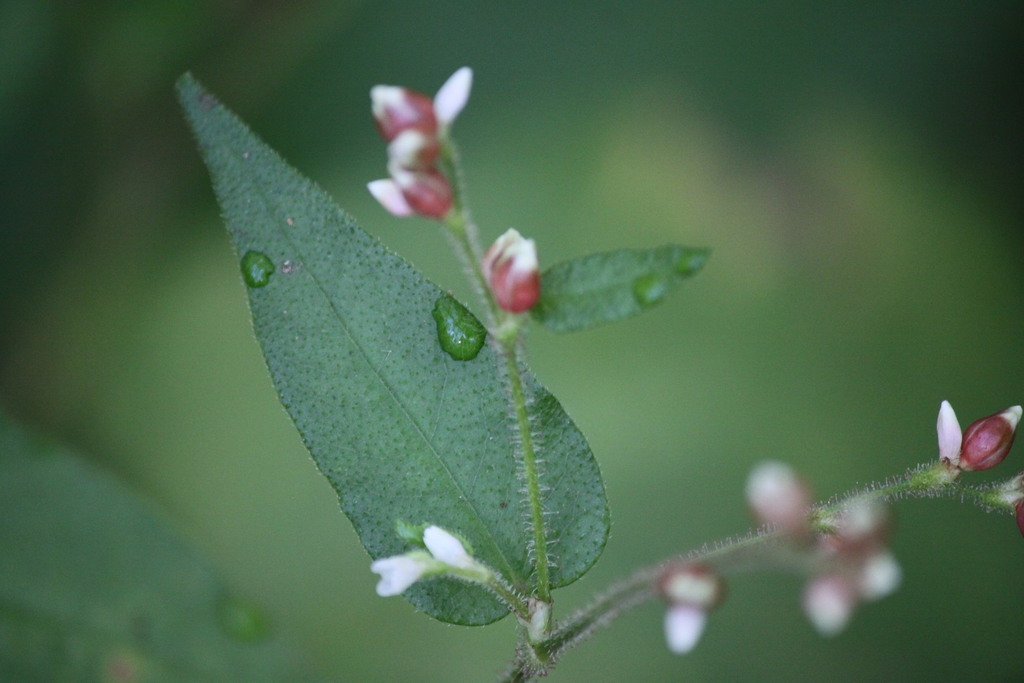
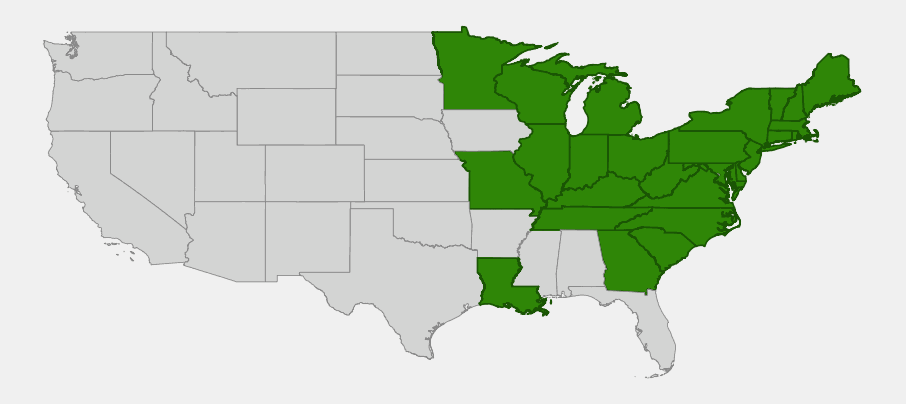
Polygonum arifolium, known as Halberd-leaved Tearthumb (USDA: halberdleaf tearthumb), is a sprawling annual of the buckwheat or smartweed family (Polygonaceae). Many recent floras call it Persicaria arifolia. It is native to eastern North America, from the Maritime Provinces, Quebec and Ontario south through New England, the Mid-Atlantic and the Great Lakes states to the Carolinas, Georgia, Tennessee, Missouri and Louisiana.
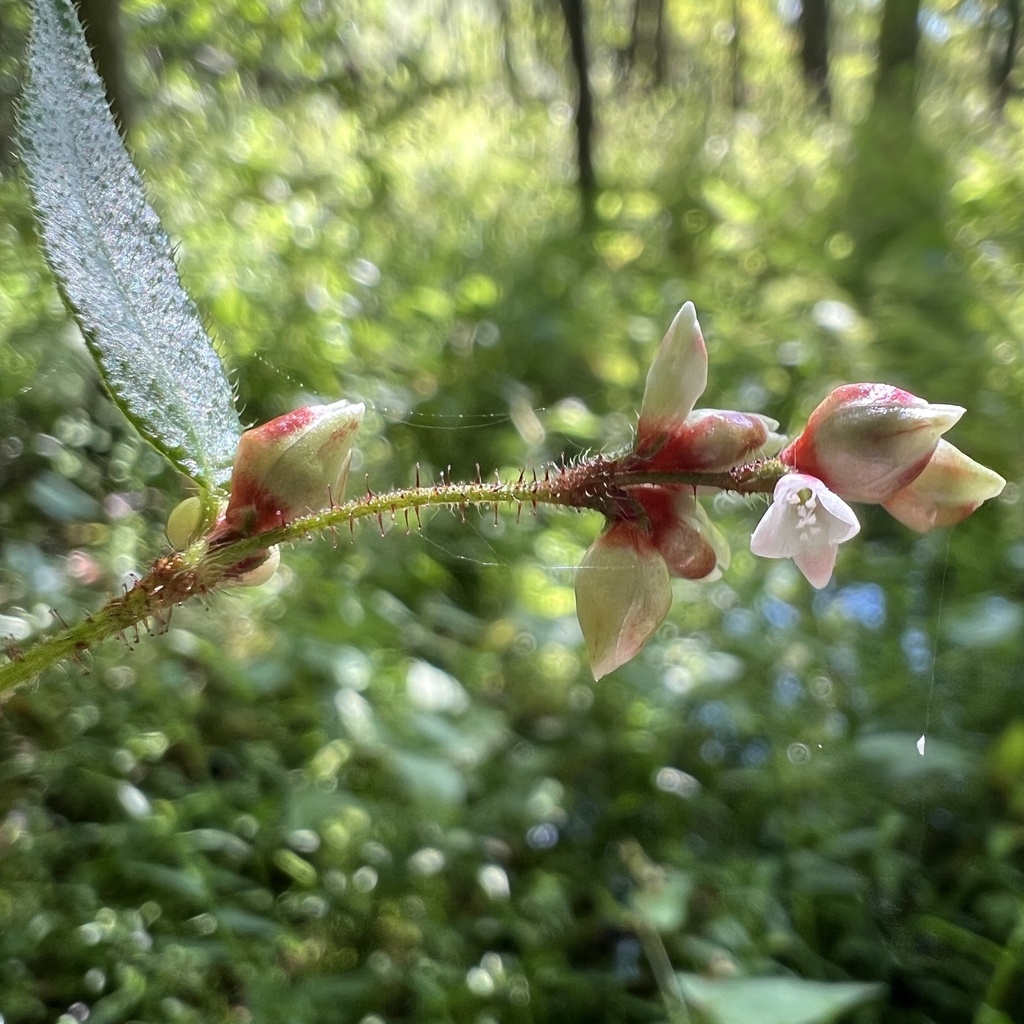
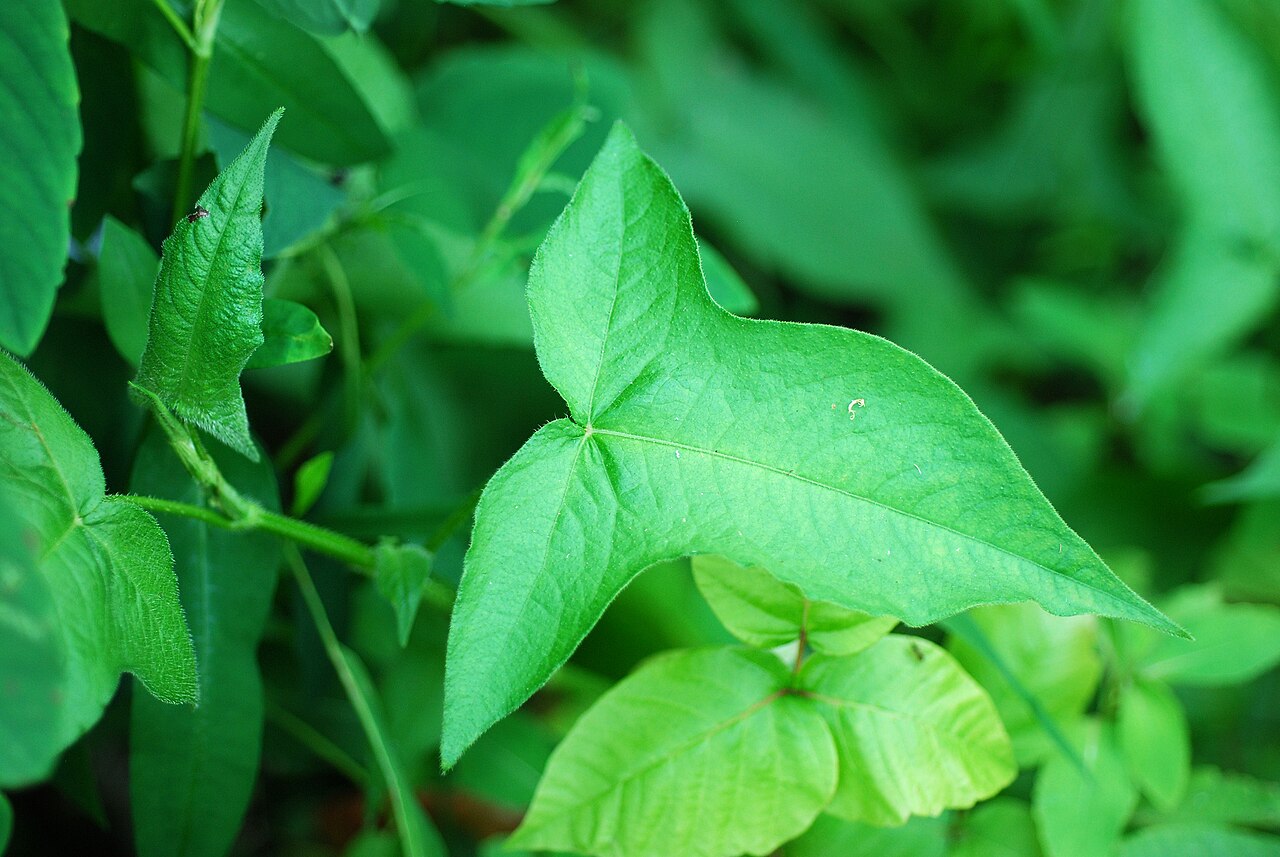
Its weak, angled stems are armed with small, downward-pointing prickles that let it scramble over and through other plants, reaching several feet long. The large leaves are shaped like a medieval halberd, with a long pointed blade and two lobes that flare outward at the base. From mid-summer into fall, small clusters of white to pink flowers appear at the branch tips, followed by dark seeds.
It grows in shaded swamps, freshwater tidal marshes, wet woods, stream banks and ditches. It is rarely planted in gardens because its prickly stems catch skin and clothing, but it is an important part of native wetland plant communities, where its seeds feed waterfowl and songbirds and its tangles provide cover.
Identification
Halberd-leaved tearthumb is easy to recognize by its combination of prickly, scrambling stems and broad leaves with two outward-flaring basal lobes, growing in wet, often shady places.
Growth Form
An annual herb with weak, branching stems that lean on, sprawl over or climb through surrounding vegetation, often reaching 3 to 6 feet long. The stems are angled and lined with small, sharp, backward-pointing prickles that help the plant cling to other plants. At each node is a papery sheath (ocrea) typical of the smartweed family, often fringed with bristles.
Leaves
The leaves are alternate, on long, prickly stalks, and are halberd-shaped: a long, triangular, pointed blade with two lobes at the base that spread outward or slightly forward, usually 2 to 7 inches long. The surfaces often have scattered hairs, and the midrib beneath may carry a few prickles.
Flowers
From about July to October, small, rounded clusters of flowers appear at the tips of the branches on stalks covered with gland-tipped hairs. Each flower is tiny, about 1/8 inch long, with five white, greenish or pink tepals, often pink-tipped. The clusters are loose and few-flowered compared with those of many smartweeds.
Fruit
Each flower produces a single, lens-shaped, dark brown seed (achene), partly enclosed by the persistent tepals. The seeds ripen from late summer through fall.
Look-alikes
Arrowleaf Tearthumb (Polygonum sagittatum) is a similar prickly wetland annual, but its narrower leaves are arrowhead-shaped with basal lobes pointing backward, its leaf stalks are short, and its flowers are in tighter, rounder heads. Mile-a-minute (Persicaria perfoliata), an invasive Asian vine, has triangular leaves, round leafy collars around the stem and blue berries.
Safety
Halberd-leaved tearthumb is not known to be toxic, but its prickles can scratch and catch skin and clothing, as its common name suggests. Wear gloves and long sleeves when working among dense patches.
Quick Facts
| Scientific Name | Polygonum arifolium (also Persicaria arifolia) |
| Family | Polygonaceae (buckwheat or smartweed family) |
| Plant Type | Annual; sprawling or climbing prickly herb |
| Mature Height | 2–6 ft (scrambling stems) |
| Mature Spread | 2–4 ft |
| Growth Rate | Fast |
| Sun Exposure | Part shade to full sun |
| Water Needs | High; wet to saturated soil |
| Soil Type | Muck, mud, silt or wet loam |
| Soil pH | About 5.0–7.5 |
| Bloom Time | July–October |
| Flower Color | White to pink |
| Fall Color | Stems and leaves may redden before frost |
| Fruit | Small, lens-shaped dark brown achene |
| Deer Resistant | Moderately; prickly stems discourage browsing |
| USDA Hardiness Zones | Annual; grows wild in zones 3–9 |
Native Range
Halberd-leaved tearthumb is native to eastern North America. In Canada it grows from Nova Scotia, Prince Edward Island and New Brunswick west through Quebec and Ontario. In the United States it ranges from Maine through New England, New York, New Jersey and Pennsylvania, west through Ohio, Indiana, Michigan, Illinois and Wisconsin to Minnesota and Missouri, and south along the Atlantic slope and Appalachians to the Carolinas, Georgia and Tennessee, with outlying populations in Louisiana. It is most common on the Atlantic Coastal Plain and in the Northeast.
It is especially characteristic of freshwater tidal marshes along large East Coast rivers such as the Hudson, Delaware, Potomac and the rivers of the Chesapeake Bay region, where it often forms tangles with other annuals in late summer. Inland it grows in shaded swamps, wooded seeps, stream banks and wet thickets. A report from Washington State is excluded by the state flora, and it is not considered part of the Pacific Northwest flora.
It grows in wet to saturated soil, often in partial shade under red maple, ash or alder, and in sunny marsh edges where other vegetation provides support for its scrambling stems.
📋 Regional plant lists featuring Halberd-leaved Tearthumb: New York, Pennsylvania & Northern New Jersey · Ohio & Indiana · Michigan, Wisconsin & Eastern Minnesota · Kentucky & Tennessee · Connecticut, Massachusetts & Rhode Island · New Hampshire, Maine & Vermont · Maryland, Virginia & West Virginia · Delaware, Southern New Jersey & Long Island · Illinois, Iowa & Missouri · Alabama, Georgia & Mississippi · North & South Carolina · Arkansas, Louisiana, Eastern Oklahoma & Eastern Texas
Growing & Care Guide
Halberd-leaved tearthumb is not sold as a garden plant, and most gardeners would not want its prickly stems in a border. It is best appreciated in the wild or in wetland restoration projects, where it returns each year from seed.
Light
It grows in full sun to fairly deep shade. In the wild it is most common in partial shade at swamp edges and in sunny tidal marshes where taller plants support its stems.
Soil & Water
It needs consistently wet to saturated soil, such as mucky marsh soil, stream banks or the wet margins of ponds. It tolerates periodic flooding and the daily tides of freshwater tidal marshes. It does not grow in dry soil.
Planting Tips
In wetland restoration or large naturalized rain gardens, it can be established by scattering fresh seed in fall on wet, open mud among other native wetland plants. It is a late-season annual and appears among sedges, rushes and wetland wildflowers that give it something to climb.
Pruning & Maintenance
No maintenance is needed in natural areas. If it spreads into paths, pull it by hand while wearing gloves before it sets seed. Because it is an annual, removing plants before seed ripens will reduce it the next year.
Propagation
It grows only from seed. Seeds of many smartweeds need a period of cold, moist conditions before they germinate, so sow them outdoors in fall or keep them cold and moist over winter before spring sowing.
Landscape Uses
- Wetland restoration: annual cover in tidal marshes and swamp edges
- Wildlife food: seeds for ducks, rails and sparrows
- Wildlife cover: prickly tangles shelter birds and small animals
- Naturalized wet areas: returns from seed along streams and ponds
- Education: a classic example of a climbing smartweed with prickles
Wildlife & Ecological Value
Like other native smartweeds, halberd-leaved tearthumb is a valuable wildlife plant in wetlands, especially for seed-eating birds in fall.
For Pollinators
Its small flowers are visited by small bees, flies and wasps, which collect nectar and pollen. The plant is not a major pollinator plant but adds late-season flowers to marshes.
For Birds
Its seeds are eaten by dabbling ducks, rails, sparrows and other seed-eating birds, particularly in freshwater tidal marshes in fall. The tangled stems give cover to marsh birds and migrating songbirds.
For Mammals
Muskrats and other small mammals may eat the seeds and foliage and use the tangles as cover. The prickles discourage most browsing by deer.
Ecosystem Role
As a fast-growing annual in wetlands, it fills open mud and gaps each summer, contributing seeds to the soil seed bank and organic matter to marsh soils. In freshwater tidal marshes it is part of a distinctive late-summer community of annual plants.
Cultural & Historical Uses
The common name “tearthumb” comes from the plant’s sharp, backward-pointing prickles, which easily scratch hands and catch clothing. “Halberd-leaved” refers to the leaf shape, which resembles the axe-and-spear blade of a medieval halberd.
The species name arifolium means “with leaves like Arum,” referring to the similar leaf shape of arums. Carl Linnaeus described the plant in 1753 from North American material.
Botanists have long debated how to divide the large genus Polygonum. Many modern floras place the tearthumbs and smartweeds in Persicaria, so this plant is often listed as Persicaria arifolia, while USDA PLANTS continues to use Polygonum arifolium.
Frequently Asked Questions
Why is it called tearthumb?
Its stems and leaf stalks are covered with tiny, backward-pointing prickles that can scratch skin, “tearing” a careless thumb.
How is it different from arrowleaf tearthumb?
Halberd-leaved tearthumb has broader leaves with basal lobes that spread outward, long leaf stalks and looser flower clusters. Arrowleaf tearthumb has narrower, arrow-shaped leaves with backward-pointing lobes, very short leaf stalks and tight, round flower heads.
Is it invasive?
No. It is a native annual of eastern wetlands. It should not be confused with mile-a-minute, an invasive Asian vine with triangular leaves and blue berries.
Does it grow in the Pacific Northwest?
No. It is an eastern North American plant. A report from Washington State is excluded by the Washington flora.
What wildlife uses it?
Ducks, rails and sparrows eat its seeds, and its prickly tangles shelter birds and small animals in marshes and swamps.

Looking for a nursery that carries Halberd-leaved Tearthumb?
Browse our native plant nursery directory: Connecticut, Delaware & Georgia · Illinois & Indiana · Kentucky, Louisiana, Maine, Maryland, Massachusetts, Michigan, Minnesota & Missouri · New Hampshire, New Jersey, New York, North Carolina & Ohio · Pennsylvania, Rhode Island, South Carolina, Tennessee, Vermont & Virginia · West Virginia & Wisconsin