
Northern Bedstraw (Galium boreale)
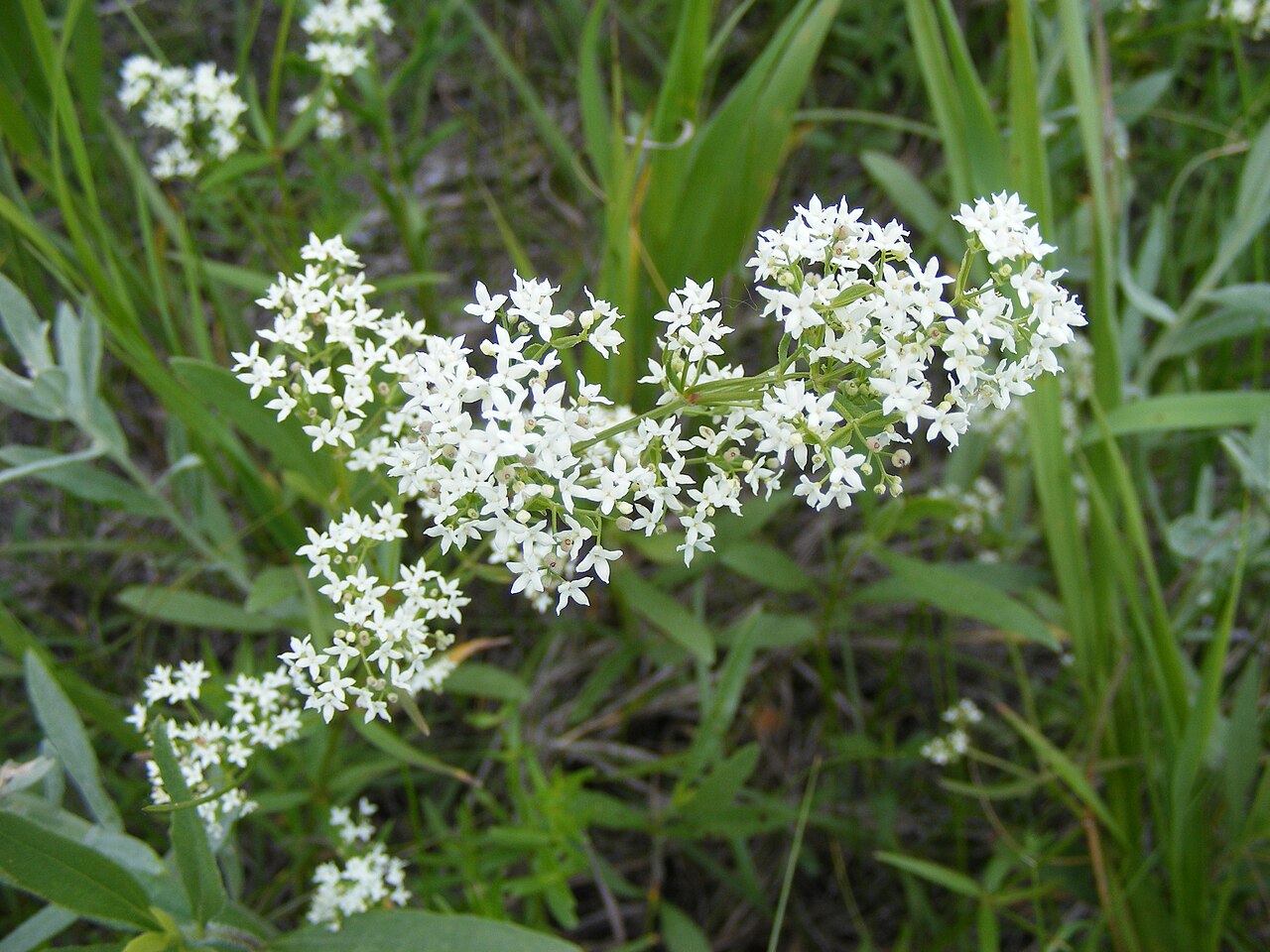
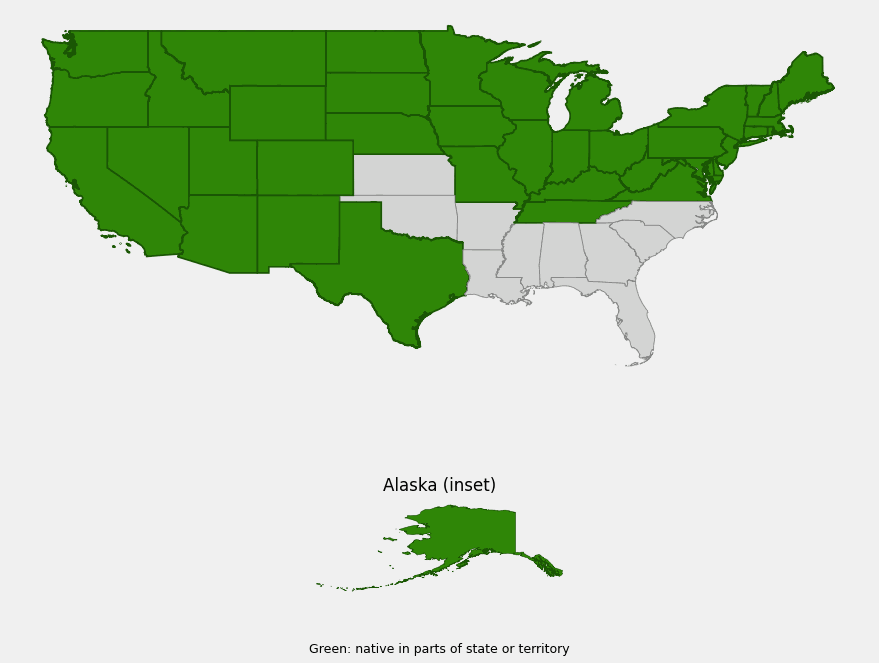
Galium boreale, known as Northern Bedstraw, is an upright, clump-forming perennial of the coffee or madder family (Rubiaceae). It is circumboreal, native across northern North America, Europe and Asia. In the United States, USDA PLANTS lists it as native in Alaska and 38 of the lower 48 states, from New England and the Great Lakes west across the northern Plains and Rocky Mountains to the Pacific Northwest and California, and south in the mountains to Arizona and New Mexico.
Its smooth, square stems carry narrow, three-veined leaves in whorls of four, and in early to mid-summer each stem is topped with a dense, branching cluster of tiny, white, four-petaled flowers. In bloom, patches of northern bedstraw look like drifts of white froth among prairie grasses and meadow flowers.
It grows in prairies, meadows, open woods, woodland edges, streambanks, lakeshores and rocky slopes. It is a hardy, adaptable native for meadow gardens and naturalistic plantings across the North and the West, with flowers that attract many small pollinators, though it can spread vigorously by rhizomes in rich soil.
Identification
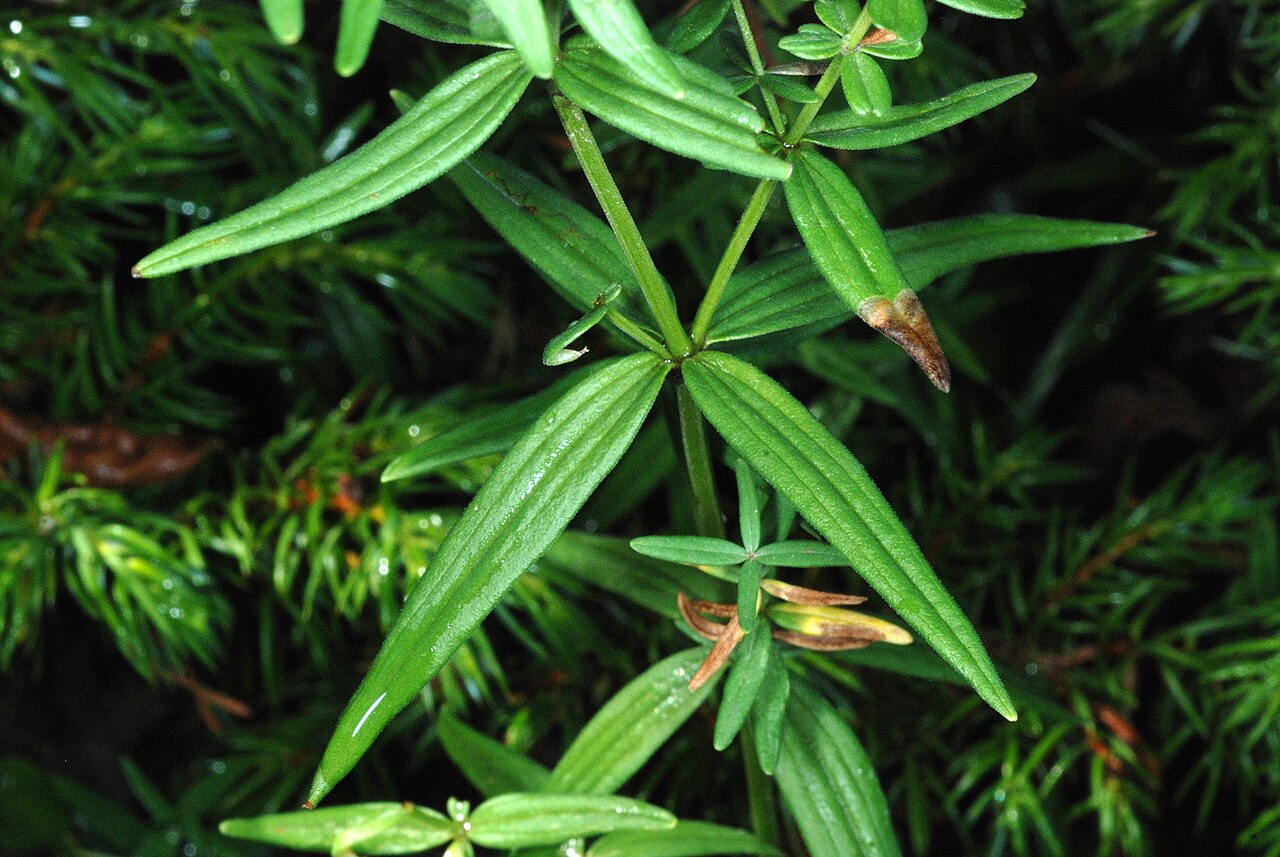
Northern bedstraw is best identified by its combination of smooth, square stems, narrow three-veined leaves in whorls of four, and dense clusters of tiny white flowers at the top of upright stems.
Growth Form
A perennial herb spreading by slender rhizomes and forming loose colonies. Stems are erect, usually 8 to 30 inches tall, four-angled, smooth or slightly hairy, and branched mainly in the flowering portion. Unlike many bedstraws, its stems are not rough or clinging.
Leaves
The leaves are in whorls of four at each node, narrow and lance-shaped, usually 1/2 to 2 inches long, with three distinct parallel veins and blunt to slightly pointed tips. They are firm, dark green and often slightly rough on the edges.
Flowers
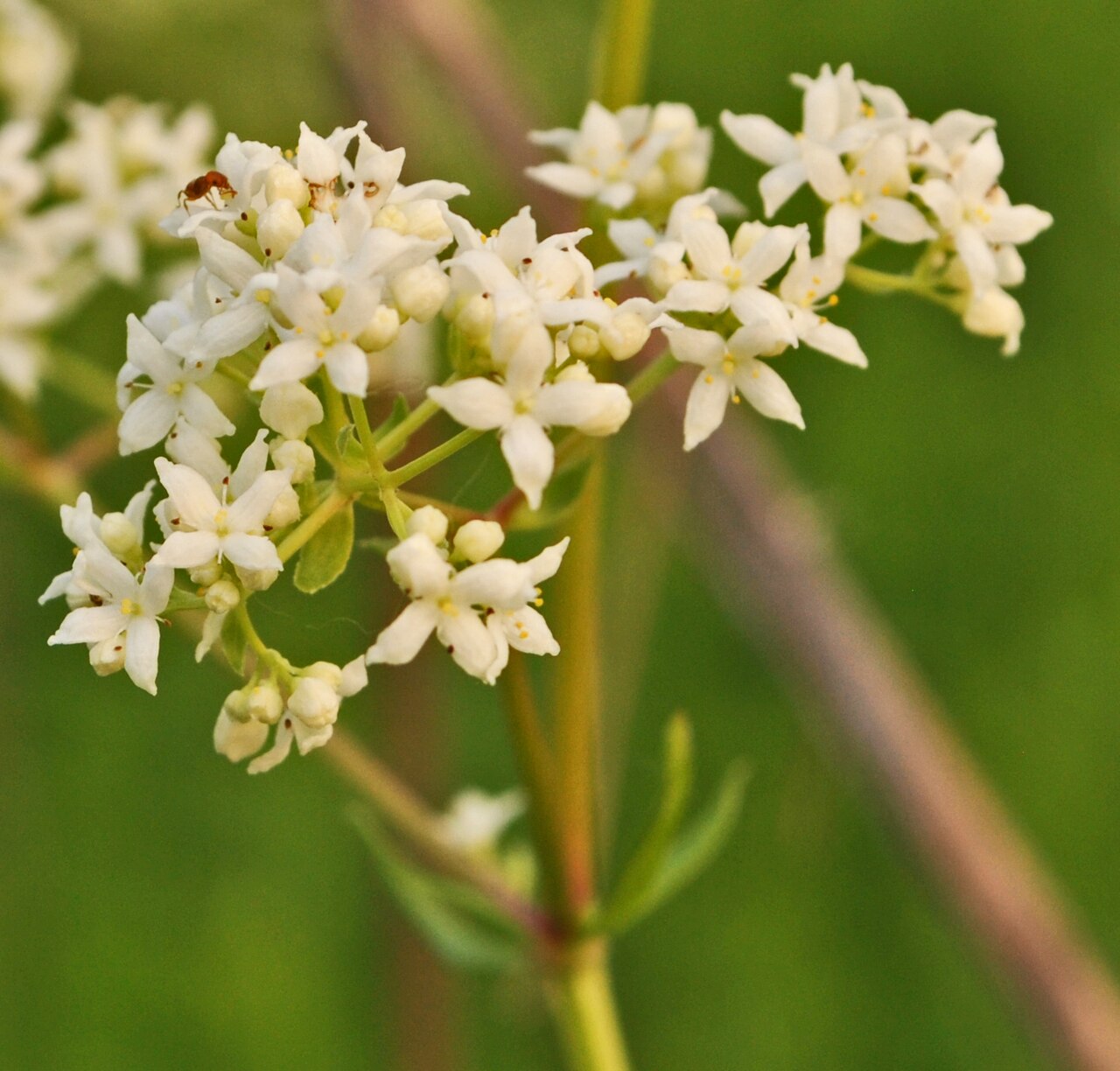
From about June to August, the stems end in dense, much-branched clusters (panicles) of many tiny flowers. Each flower is about 1/8 to 1/4 inch across, with four pointed white petals forming a small star, and they have a faint, honey-like fragrance.
Fruit
Each flower produces a tiny, paired fruit of two rounded nutlets, often covered with short, straight or hooked hairs, which help the seeds catch on fur and clothing. The fruits ripen in late summer.
Look-alikes
Sweet-scented Bedstraw (Galium triflorum) has weak, sprawling stems, leaves in whorls of six, and few flowers in small groups. Cleavers (G. aparine) is an annual with clinging, bristly stems and leaves in whorls of six to eight. Wild madder and other bedstraws generally have one-veined leaves.
Safety
Northern bedstraw is not considered toxic. Young plants of some bedstraws have been eaten, but this species is not a recognized food plant, and wild plants should not be eaten without expert identification.
Quick Facts
| Scientific Name | Galium boreale |
| Family | Rubiaceae (coffee or madder family) |
| Plant Type | Herbaceous perennial; spreads by rhizomes |
| Mature Height | 8–30 in |
| Mature Spread | 1–2 ft; forms loose colonies |
| Growth Rate | Moderate to fast |
| Sun Exposure | Full sun to part shade |
| Water Needs | Moderate; average to moist soil, tolerates dry spells |
| Soil Type | Loam, sand, gravel or rocky soil; adaptable |
| Soil pH | About 5.5–8.0 |
| Bloom Time | June–August |
| Flower Color | White |
| Fall Color | Foliage may turn tan to bronze |
| Fruit | Tiny paired nutlets, often with short hairs |
| Deer Resistant | Moderately |
| USDA Hardiness Zones | 2–7 |
Native Range
Northern bedstraw is one of the most widespread wildflowers of the Northern Hemisphere, found across Canada and Alaska, Greenland, Europe and northern Asia. In the United States it is common across the northern tier of states from Maine to Washington, including the Great Lakes region, the northern Great Plains and the Rocky Mountains. It extends south in the East to Pennsylvania, Maryland, Virginia, West Virginia, Kentucky and Tennessee, and in the West through the mountains to California, Nevada, Utah, Colorado, Arizona and New Mexico. USDA also lists it from Texas, where it is a rare outlying record at the southern edge of its range.
In the Midwest and Great Plains it is a typical plant of tallgrass and mixed-grass prairies, prairie swales, sedge meadows and savannas. In the Northeast it grows in meadows, rocky openings, shores and riverbanks. In the West it occurs from foothill grasslands and sagebrush to aspen groves, conifer openings and subalpine meadows.
It is tolerant of a wide range of soils and moisture levels, from moist meadows and streambanks to dry, rocky and gravelly slopes, and it often survives fire and grazing by resprouting from its rhizomes.
📋 Regional plant lists featuring Northern Bedstraw: New York, Pennsylvania & Northern New Jersey · Idaho, Eastern Oregon & Eastern Washington · Ohio & Indiana · Montana & Wyoming · Michigan, Wisconsin & Eastern Minnesota · Kentucky & Tennessee · Nebraska, Kansas & Eastern Colorado · Utah & Western Colorado · Connecticut, Massachusetts & Rhode Island · New Hampshire, Maine & Vermont · Maryland, Virginia & West Virginia · Delaware, Southern New Jersey & Long Island · Arizona & New Mexico · Illinois, Iowa & Missouri · Alaska · North Dakota, South Dakota & Western Minnesota · Western Oregon & Western Washington · California & Nevada
Growing & Care Guide
Northern bedstraw is easy to grow and very cold-hardy. It is sold by native plant nurseries and seed suppliers in the Midwest, northern Plains and Northeast, and it is often included in prairie and meadow seed mixes.
Light
It grows best in full sun to part shade. In sun it flowers heavily; in light shade at woodland edges it grows taller and more open.
Soil & Water
It adapts to most well-drained to moist soils, from sand and gravel to loam and light clay, and tolerates a wide pH range. Once established it handles dry spells well, and it also grows in moist meadows and along streams. Avoid very rich, constantly wet soil, where it may spread too aggressively.
Planting Tips
Plant plugs 12 to 18 inches apart in spring or fall, or sow seed in fall. Use it as a filler among taller prairie plants such as big bluestem, golden alexanders and asters, where its white flowers fill gaps in early summer. In small gardens, give it room or plant it with vigorous neighbors that can hold their own.
Pruning & Maintenance
Cut stems back after flowering if you want to prevent seeding or tidy the planting. Divide or pull spreading shoots in spring to control its size. In meadows it needs no care beyond occasional mowing or burning in late winter.
Propagation
Divide established clumps in spring or fall; the rhizomes root easily. It also grows from seed sown outdoors in fall or given about 60 days of cold, moist stratification before spring sowing.
Landscape Uses
- Prairie and meadow gardens: early-summer white flowers among grasses
- Restoration: prairie, savanna and meadow restoration across the North
- Pollinator plantings: nectar for small bees, flies and beetles
- Cut flowers: airy white sprays like baby’s breath
- Slopes and banks: rhizomes help hold soil on dry, rocky ground
Wildlife & Ecological Value
Northern bedstraw is a modest-looking plant that supports a wide variety of insects in prairies and meadows.
For Pollinators
Its tiny, open flowers provide easy nectar for small native bees, flower flies, wasps, beetles and small butterflies. Bedstraws are larval host plants for the bedstraw hawk moth (Hyles gallii), a large sphinx moth of northern regions, and for several smaller moths.
For Birds
Its small seeds are eaten by some ground-feeding birds, and the insects that visit its flowers provide food for songbirds raising young in early summer.
For Mammals
Deer, elk and livestock graze it lightly, and small mammals use dense patches as cover. Its hooked seeds may be carried in the fur of animals.
Ecosystem Role
As a long-lived, rhizomatous perennial it helps knit prairie and meadow soils together and resprouts quickly after fire and grazing. It is part of the diverse broadleaf flora that supports insect life in northern grasslands.
Cultural & Historical Uses
The name “bedstraw” comes from the old European practice of stuffing mattresses with dried bedstraw plants, which stay springy and have a pleasant, hay-like scent. The genus name Galium comes from the Greek word for milk, because some species were used to curdle milk for cheese.
Northern bedstraw belongs to the same family as coffee and madder. Like madder, its roots contain red pigments, and in several northern cultures they have been used to make red dyes.
Because its range circles the globe, northern bedstraw is one of relatively few wildflowers that grow natively in both North America and Europe. Its species name boreale means “northern.”
Frequently Asked Questions
Why is it called bedstraw?
In Europe, dried bedstraw plants were used to stuff mattresses because they stay springy and smell like fresh hay. The name was later given to North American species as well.
Does it spread aggressively?
It spreads by rhizomes and can form sizable patches in rich, moist soil. In prairies and meadows with strong competition it stays in balance, but in small gardens it may need occasional thinning.
How do I tell it from other bedstraws?
Look for leaves in whorls of four with three veins each, smooth upright stems, and dense, showy clusters of white flowers. Most other bedstraws have one-veined leaves, whorls of five to eight, or sprawling, clinging stems.
Is it native in Europe too?
Yes. Northern bedstraw is circumboreal, native across northern North America, Europe and Asia.
What wildlife uses it?
Its flowers feed small bees, flies and beetles, and it is a larval host for the bedstraw hawk moth and other moths. Deer and elk graze it lightly.

Looking for a nursery that carries Northern Bedstraw?
Browse our native plant nursery directory: Alaska & Arizona · California · Colorado, Connecticut & Delaware · Idaho, Illinois, Indiana & Iowa · Kentucky, Maine, Maryland, Massachusetts, Michigan, Minnesota, Missouri & Montana · Nebraska, Nevada, New Hampshire, New Jersey, New Mexico, New York, North Dakota & Ohio · Oregon · Pennsylvania, Rhode Island, South Dakota, Tennessee, Texas, Utah, Vermont & Virginia · Washington · West Virginia, Wisconsin & Wyoming