
Brittle Pricklypear (Opuntia fragilis)
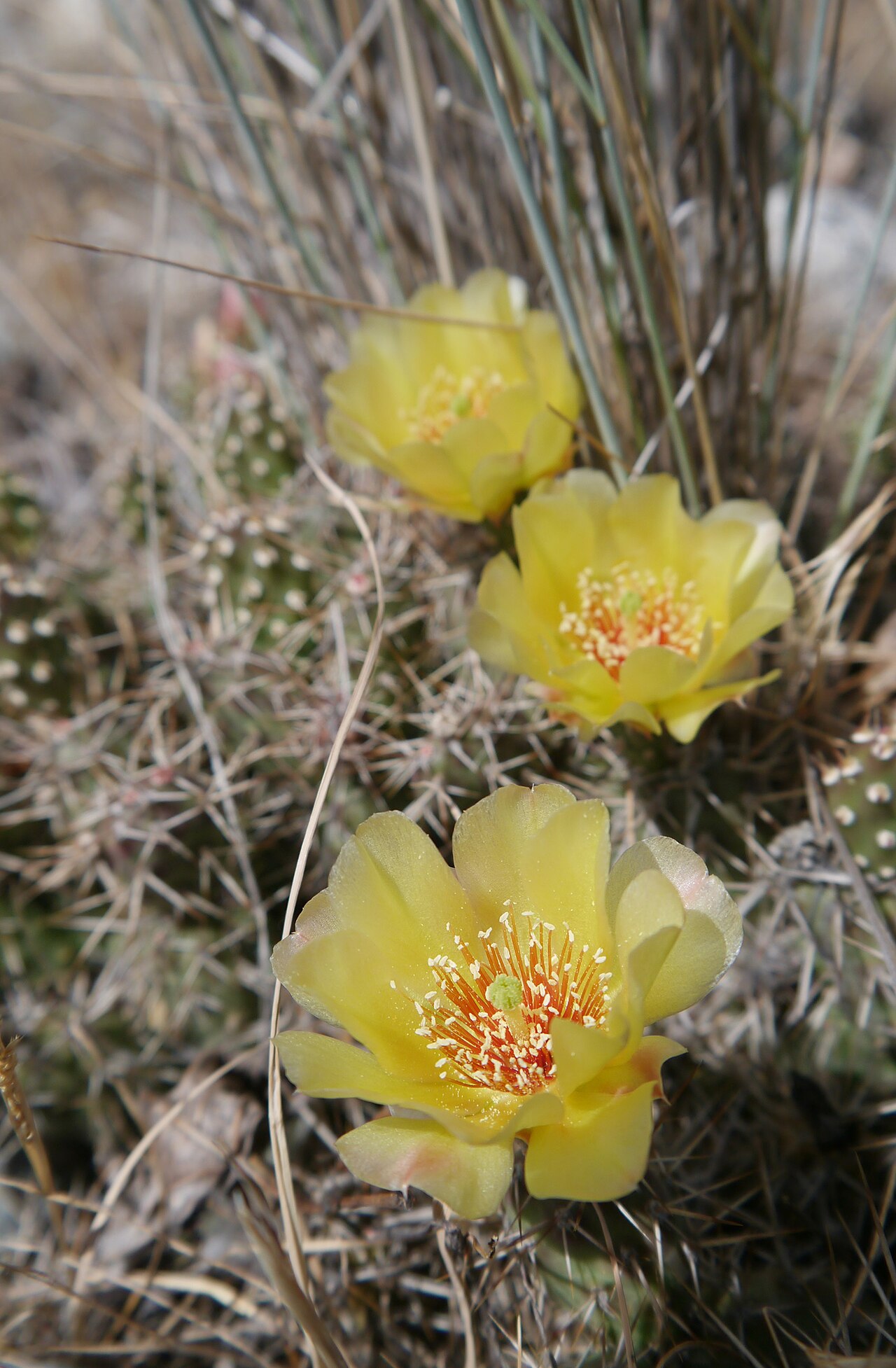
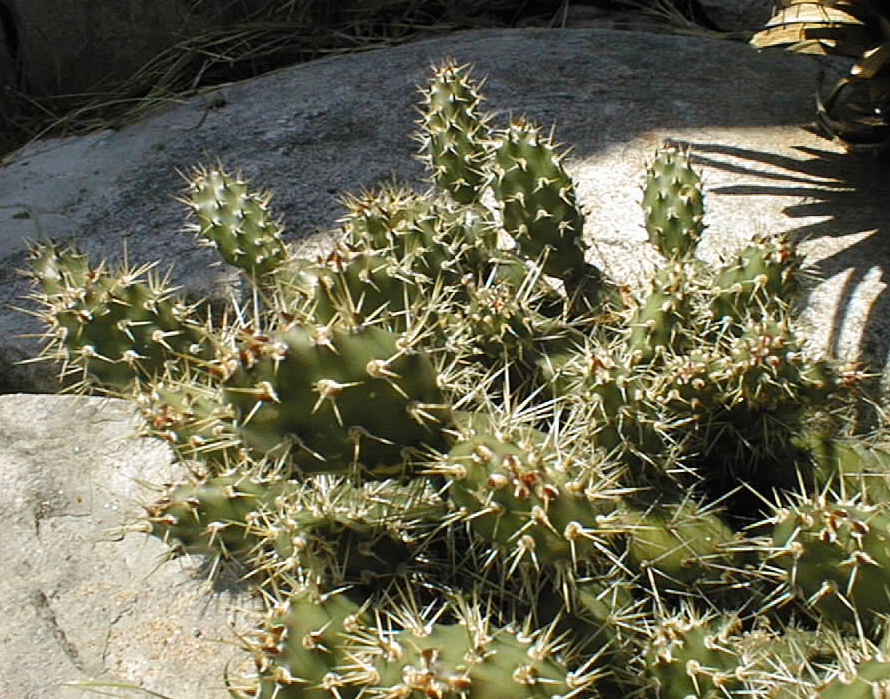
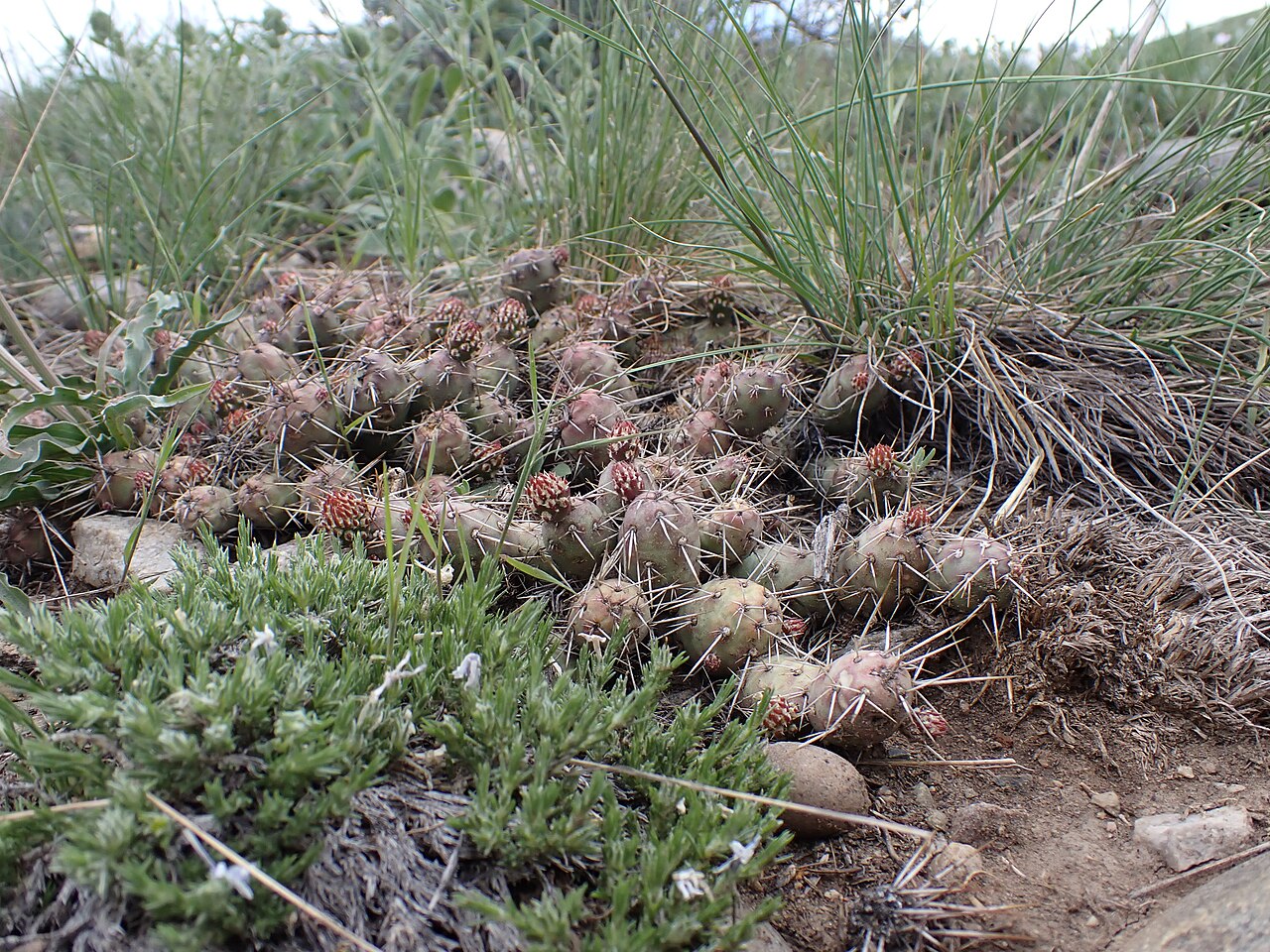
Opuntia fragilis, known as Brittle Pricklypear (USDA: brittle pricklypear) and also as fragile prickly pear or little prickly pear, is a small, mat-forming native cactus. It is usually only 2 to 4 inches tall, made of small, plump joints (pads) about 1 to 2 inches long that are often nearly round in cross-section rather than flat. The joints break off at the slightest touch, which is the source of its common and scientific names (fragilis means “fragile”).
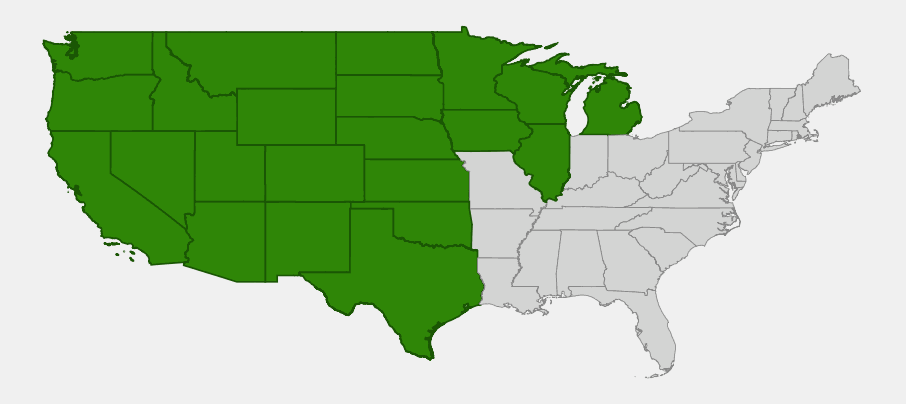
It is the most cold-hardy and northern cactus in the world. It ranges from Arizona and New Mexico north across the Great Basin, Rocky Mountains and Great Plains into Canada, where it reaches beyond 56° N along the Peace River in British Columbia and Alberta. Isolated populations also grow on sand and rock in the upper Midwest, and on dry, rocky balds west of the Cascades in Washington and British Columbia.
In late spring and early summer it opens pale yellow to greenish-yellow flowers. Many populations rarely set seed, and the plant spreads mainly when detached joints are carried by animals, people or water and take root. For gardeners in cold climates, it is an extremely hardy, low-maintenance cactus for rock gardens, green roofs and dry, sunny spots; just be careful where you put your hands.
Identification
Brittle pricklypear is easily recognized by its very small, swollen joints that fall off when touched, forming low mats or mounds rarely more than a few inches tall.
Growth Habit
A low, spreading cactus that forms mats or cushions 2 to 4 inches tall and from a few inches to several feet across. Plants branch freely, and joints often pile up loosely on one another.
Joints (Pads)
The joints are 3/4 to 2 inches long, oval to nearly round, and often thick or almost cylindrical rather than flat like most prickly pears. They are green, sometimes purplish in winter or drought. Joints at the branch tips are only loosely attached and break away easily.
Spines & Glochids
Each areole (the small cushion on the joint) carries 1 to about 8 straight, needle-like spines, gray to tan or brown with darker tips, up to about 1 inch long, along with tiny, barbed hairs (glochids) that lodge in skin. Spine number and length vary considerably among populations.
Flowers
Flowers appear from about May to July, opening from the sides or tops of the joints. They are 1 1/2 to 2 inches across, with pale yellow to greenish-yellow petals, sometimes tinged red or magenta at the base, and many stamens around a green to reddish stigma. Many plants flower sparingly, especially in shade or poor years.
Fruit
The fruit is small, dry and spiny when ripe, about 1/2 to 1 inch long, tan to reddish, and contains few seeds. In many populations, especially in the north and east, fruit rarely forms and seed is uncommon.
Look-alikes
Plains Pricklypear (Opuntia polyacantha) has larger, flat pads that do not break off easily, and the two species often grow together and hybridize. Eastern Prickly Pear (O. humifusa) has larger, flat pads, few or no spines and fleshy, red fruit. Spinystar (Escobaria vivipara) is a small, round cactus with pink to purple flowers and no joints.
Quick Facts
| Scientific Name | Opuntia fragilis |
| Family | Cactaceae (cactus family) |
| Plant Type | Low, mat-forming cactus |
| Mature Height | 2–4 in |
| Mature Spread | 6 in to several feet (spreading mats) |
| Growth Rate | Slow |
| Sun Exposure | Full sun |
| Water Needs | Very low; drought tolerant |
| Soil Type | Sand, gravel, thin rocky soil; must be well-drained |
| Soil pH | About 6.0–8.0 |
| Bloom Time | May–July |
| Flower Color | Pale yellow to greenish-yellow |
| Fall Color | Joints may turn purplish in cold or drought |
| Fruit | Small, dry, spiny fruit with few seeds |
| Deer Resistant | Yes |
| USDA Hardiness Zones | 3–9 |
Native Range
USDA PLANTS lists brittle pricklypear as native in the lower 48 states and Canada, with records from 22 states and from British Columbia, Alberta, Saskatchewan, Manitoba and Ontario. Its main range covers the interior West and northern Great Plains: the Columbia Plateau of eastern Washington and Oregon, Idaho, Nevada, Utah, Arizona, New Mexico, Colorado, Wyoming, Montana, the Dakotas, Nebraska and Kansas, with scattered records in eastern California.
West of the Cascades it grows on dry, rocky balds and shorelines of the San Juan Islands and Puget Sound region of Washington and in a few places in western Oregon and southwestern British Columbia. East of the plains, populations in Minnesota, Iowa, Wisconsin, Illinois and Michigan, and in Ontario, are disjunct, isolated colonies on sand dunes, sandstone and granite outcrops, probably left from warmer, drier periods after the last ice age. In Oklahoma and Texas it is an outlying plant of the Panhandle, at the southeastern edge of its range.
Typical habitats are sagebrush steppe, shortgrass and mixed-grass prairie, open ponderosa pine woodlands, sand dunes, gravelly river terraces, rock outcrops and cliff ledges. It grows in places with thin, fast-draining soil and little competition from tall plants, often under winter snow.
📋 Regional plant lists featuring Brittle Pricklypear: Idaho, Eastern Oregon & Eastern Washington · Montana & Wyoming · Michigan, Wisconsin & Eastern Minnesota · Nebraska, Kansas & Eastern Colorado · Utah & Western Colorado · Arizona & New Mexico · Illinois, Iowa & Missouri · North Dakota, South Dakota & Western Minnesota · Western Oregon & Western Washington · California & Nevada
Growing & Care Guide
Brittle pricklypear is one of the easiest cacti to grow outdoors in cold climates, as long as it has sun and sharp drainage. It is slow-growing and stays small, making it ideal for rock gardens and troughs. Buy nursery-propagated plants or root a joint from a garden plant; do not collect from wild populations, especially the rare disjunct colonies in the Midwest.
Light
Full sun. In shade it becomes weak and stretched and rarely flowers.
Soil & Water
Plant it in very well-drained sand, gravel or rocky soil; a raised bed, slope or rock crevice works well. It is extremely drought tolerant and needs no watering once established, except in the driest climates. Winter wet is the main danger: in rainy areas, use gritty soil, a gravel mulch and a sloped site so water drains away quickly.
Planting Tips
Plant in spring or early summer. Handle joints with tongs, folded newspaper or thick gloves, since the glochids are hard to remove from skin. Keep it away from paths, lawns and play areas where people or pets might brush against it. It pairs well with other dryland natives in a rock garden, crevice garden or green roof.
Pruning & Maintenance
Very little maintenance is needed. Remove weeds and fallen leaves that hold moisture around the joints, using tongs. Pick up detached joints if you do not want it to spread. The joints shrivel and may turn purplish in winter as the plant dehydrates to protect itself from freezing; this is normal, and they plump up again in spring.
Propagation
The easiest method is rooting joints: let a detached joint dry for a few days, then lay it on or press it lightly into dry, gritty soil. It roots in a few weeks in warm weather. Seed, when available, germinates slowly after cold, moist stratification.
Landscape Uses
- Rock and crevice gardens: a tiny, extremely hardy cactus for sunny, gravelly spots
- Dryland and xeric landscapes: needs no irrigation once established
- Green roofs and troughs: tolerates thin soil, heat and severe cold
- Prairie and steppe restoration: part of native shortgrass and sagebrush communities
- Cold-climate cactus collections: the world’s northernmost cactus, hardy to zone 3
Wildlife & Ecological Value
Small as it is, brittle pricklypear is a functioning part of dry grassland and steppe communities, feeding bees and sheltering small animals among its spiny mats.
For Pollinators
The flowers are visited mainly by native bees, including bumble bees, sweat bees and, in parts of the West, cactus-specialist bees that gather pollen mainly from prickly pear flowers. Beetles also visit the open flowers.
For Birds
Its low, spiny mats offer some cover for ground-nesting birds and their young in prairies and sagebrush steppe.
For Mammals
Its spines protect it from most grazers, although rodents and other animals sometimes eat joints in hard winters. Its detached joints often travel by attaching to the fur of deer, pronghorn, bison, cattle and other animals, which helps disperse the cactus.
Ecosystem Role
Brittle pricklypear is an important example of vegetative dispersal: in many places it rarely sets seed, and colonies are clones spread by joints. Its mats trap windblown soil and organic matter and give shelter to insects, spiders, lizards and small mammals.
Cultural & Historical Uses
Thomas Nuttall described this species in 1818 as Cactus fragilis from plants collected along the upper Missouri River. Members of the Lewis and Clark Expedition encountered prickly pears on the northern plains and complained in their journals about prickly pear spines piercing their moccasins.
Several Indigenous peoples of the Plains and Plateau used prickly pears, including this species, for food. The joints were roasted or peeled to remove spines and eaten, especially in times of food shortage.
Brittle pricklypear’s disjunct colonies in the upper Midwest have long interested botanists. Populations on sand and rock outcrops in places such as Minnesota, Wisconsin, Illinois and Ontario are thought to be relicts of a warmer, drier climate several thousand years ago, and several are tracked as rare plants by the states and provinces where they grow.
Frequently Asked Questions
Why is it called brittle pricklypear?
Its small joints break off at the slightest touch. The detached joints cling to fur, clothing and tires and can root wherever they land.
Is brittle pricklypear really cold hardy?
Yes. It is the northernmost cactus in the world, growing wild into central Alberta and British Columbia, and it survives winters well below 0°F if its soil is dry.
How is it different from plains pricklypear?
Brittle pricklypear is smaller, with plump, nearly round joints that break off easily. Plains pricklypear has larger, flat pads that stay firmly attached. The two often grow together and can hybridize.
Does it produce edible fruit?
Its fruits are small, dry and spiny with few seeds, and many populations rarely make fruit at all. It is not grown for fruit.
How do I remove glochids from my skin?
Use tweezers for larger spines, then press tape or a thin layer of white glue onto the skin, let it dry and peel it off to lift the tiny glochids. Wear thick gloves and use tongs when handling the plant.

Looking for a nursery that carries Brittle Pricklypear?
Browse our native plant nursery directory: Arizona · California · Colorado · Idaho, Illinois, Iowa & Kansas · Michigan, Minnesota & Montana · Nebraska, Nevada, New Mexico, North Dakota & Oklahoma · Oregon · South Dakota, Texas & Utah · Washington · Wisconsin & Wyoming