
Purple Groundcherry (Quincula lobata)
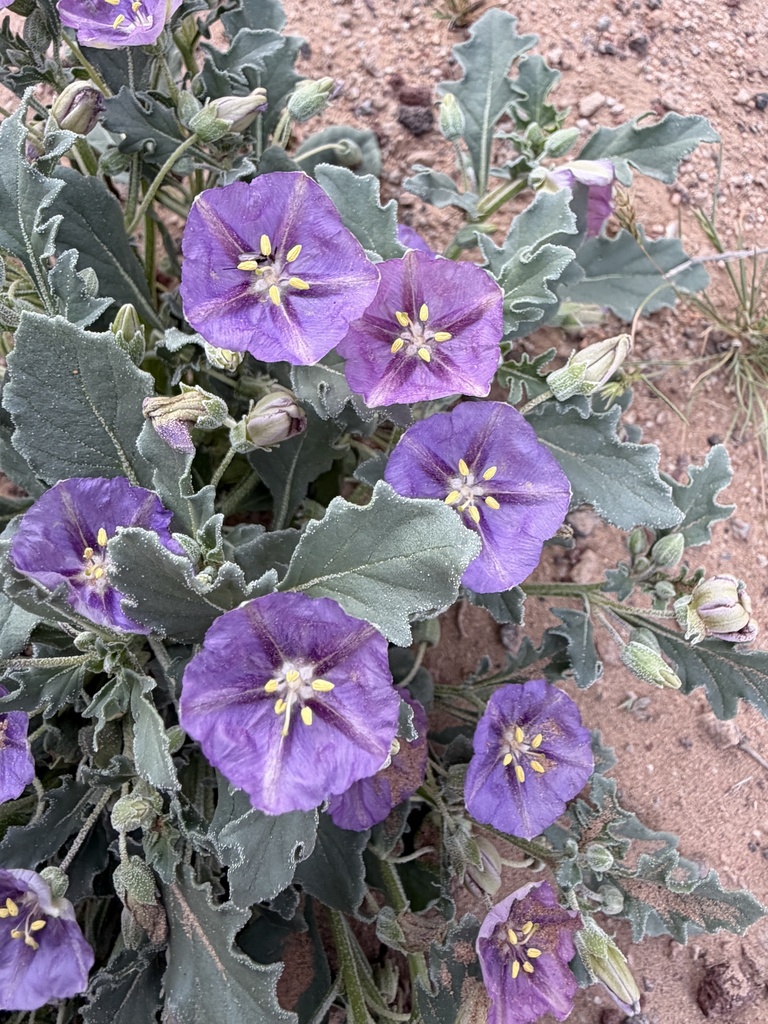
Quincula lobata, known as Purple Groundcherry, lobed groundcherry or Chinese lantern, is a low, spreading perennial in the nightshade family (Solanaceae). It grows almost flat on the ground from a deep root, and from spring to fall it produces flat, wheel-shaped purple to blue-violet flowers, 3/4 to 1 1/4 inches across, among wavy, lobed leaves. Many botanists and field guides call it Physalis lobata; USDA PLANTS uses the name Quincula lobata.
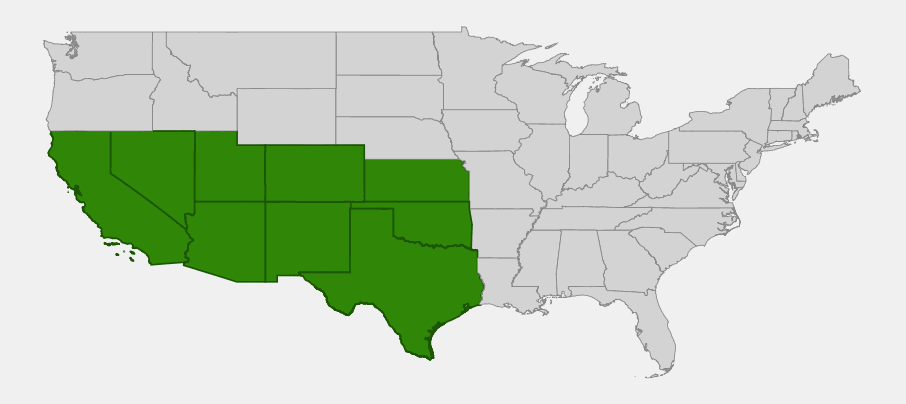
It is native to the southern Great Plains and the desert Southwest, from western Kansas, eastern Colorado and Oklahoma south through Texas and New Mexico and west across Arizona, southern Utah and southern Nevada to southeastern California, and on into northern Mexico. It grows on plains, desert flats, playas, washes and roadsides, often on clay or caliche soils.
Like its Physalis relatives, it forms a small berry enclosed in a papery, inflated calyx, the “lantern” behind its common names. Tough, drought tolerant and long-blooming, it makes an attractive low groundcover for dry, sunny gardens in its native range.
Identification
Look for a flat, spreading plant with wavy-toothed or lobed leaves and upward-facing, flat purple flowers with yellow anthers, followed by small berries wrapped in a papery husk.
Growth Habit
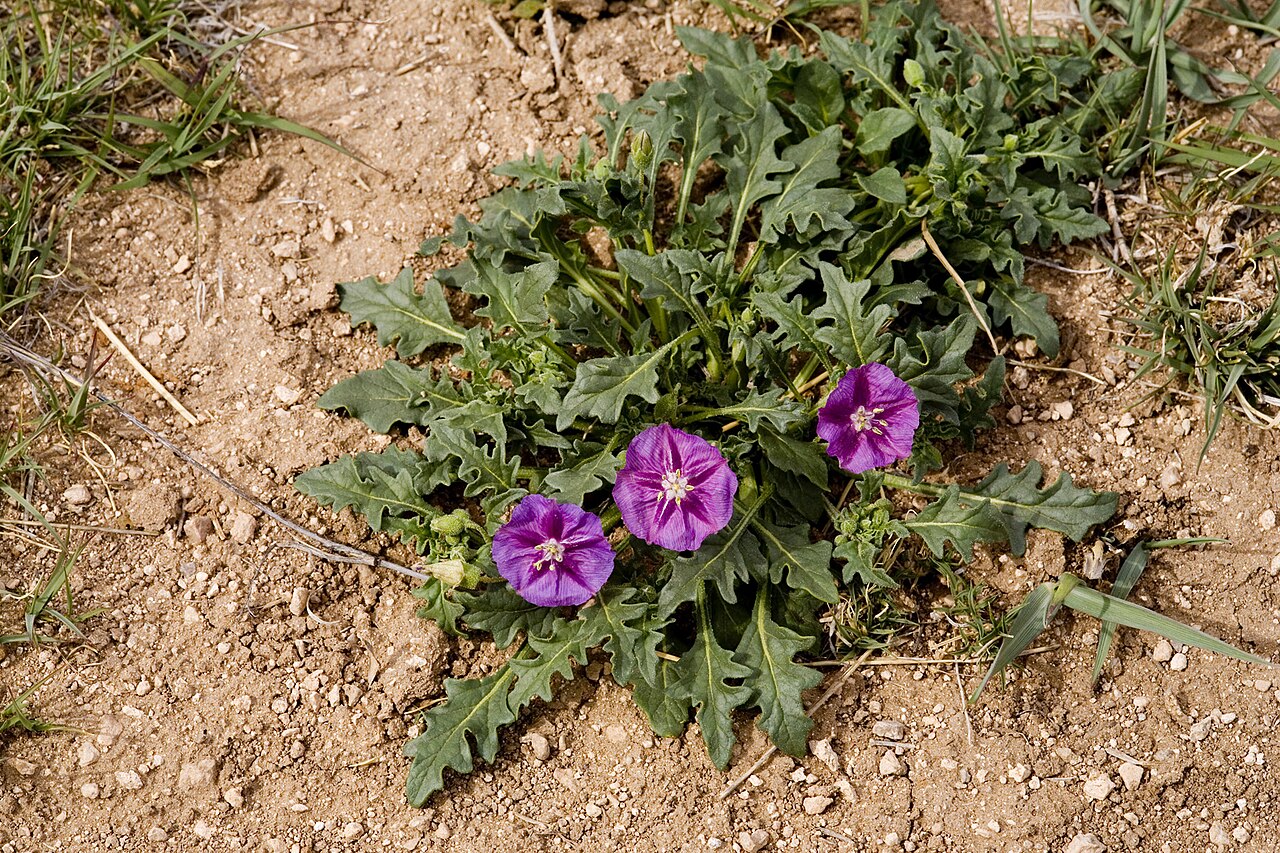
Purple groundcherry is a perennial that grows from a deep, thick root. Its stems spread out flat or slightly ascending from the crown, forming a low rosette or mat usually 2 to 6 inches tall and up to 1 to 2 feet across. Plants die back to the root in winter or drought and resprout when conditions improve.
Leaves
The leaves are alternate, about 1 1/2 to 3 inches long and narrower than long, tapering to a stalk. The margins are wavy, coarsely toothed or deeply cut into rounded lobes, which gives the species its name lobata. The foliage is green to grayish and often has a slightly mealy or crystalline look from tiny bladder-like hairs.
Flowers
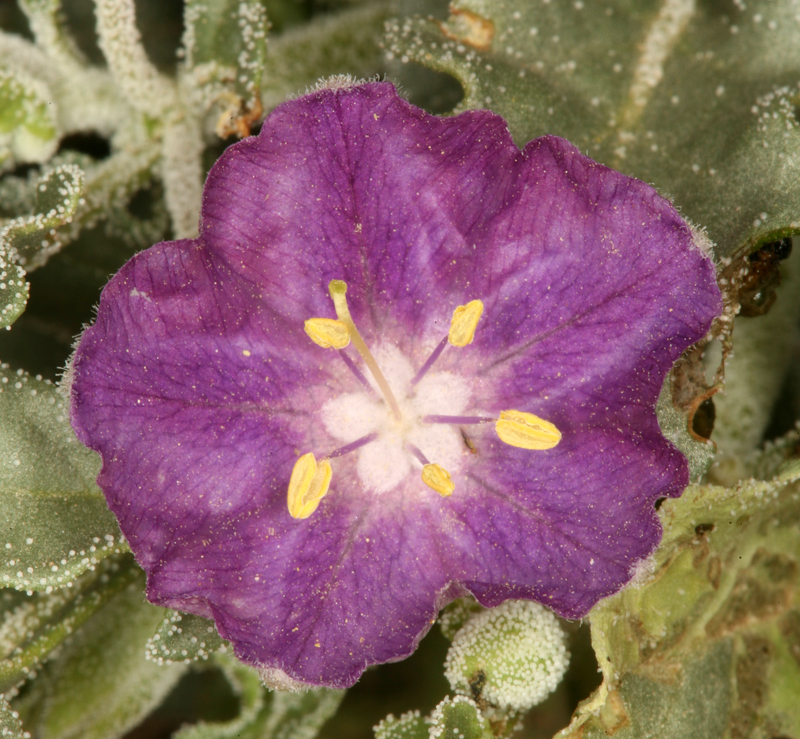
The flowers grow singly or in pairs from the leaf axils on short stalks. The corolla is flat and wheel-shaped (rotate), 3/4 to 1 1/4 inches across, purple to blue-violet or occasionally whitish, usually with a paler center. Five stamens with yellow anthers stand up in the middle. Flowering runs from about March to October, and plants keep blooming after rains until frost.
Fruit
After flowering, the calyx enlarges into a papery, five-angled husk about 1/2 inch long that encloses a small round berry. The berry holds a few relatively large seeds.
Look-alikes
Silverleaf nightshade (Solanum elaeagnifolium), common in the same region, also has purple flowers with yellow anthers, but it grows upright, has silvery, prickly stems and leaves, and its anthers form a beak-like cone; its fruit is a yellow berry without a husk. Other groundcherries, such as long-leaved groundcherry (Physalis longifolia) and thickleaf groundcherry (Physalis crassifolia), have yellow, nodding, bell-shaped flowers. Western horsenettle is a taller, spiny Solanum with violet flowers.
Quick Facts
| Scientific Name | Quincula lobata (syn. Physalis lobata) |
| Family | Solanaceae (nightshade family) |
| Plant Type | Low, spreading herbaceous perennial |
| Mature Height | 2–6 in |
| Mature Spread | 1–2 ft |
| Growth Rate | Moderate |
| Sun Exposure | Full sun to light shade |
| Water Needs | Low; very drought tolerant |
| Soil Type | Well-drained sand, loam, clay or caliche |
| Soil pH | Neutral to alkaline (about 6.5–8.5) |
| Bloom Time | March–October, after rains |
| Flower Color | Purple to blue-violet, rarely white |
| Fall Color | None |
| Fruit | Small berry in a papery, lantern-like husk |
| Deer Resistant | Yes; nightshade-family foliage is seldom browsed |
| USDA Hardiness Zones | 5–10 |
Native Range
USDA PLANTS lists purple groundcherry as native in nine states: Arizona, California, Colorado, Kansas, New Mexico, Nevada, Oklahoma, Texas and Utah. Its range continues south into northern Mexico.
On the Great Plains it grows in western Kansas, eastern Colorado, western Oklahoma and the Texas Panhandle, and it extends across much of Texas, including the Trans-Pecos, the Edwards Plateau and South Texas. Westward it is found throughout New Mexico and Arizona, in southern Utah and southern Nevada, and in the eastern Mojave Desert of southeastern California.
It favors open, sunny sites: shortgrass prairie, desert grassland, creosote bush and mesquite flats, playas and clay flats, washes, roadsides and disturbed ground, often on heavy clay or caliche soils, from low desert elevations to about 6,500 feet.
📋 Regional plant lists featuring Purple Groundcherry: Nebraska, Kansas & Eastern Colorado · Utah & Western Colorado · Arizona & New Mexico · South & West Texas · California & Nevada
Growing & Care Guide
Purple groundcherry is an easy, low-maintenance groundcover for hot, dry gardens in the Southwest and southern plains. Its deep root lets it survive long droughts, and it blooms again whenever it gets a good rain or an occasional watering.
Light
Full sun is best. It also takes light shade, such as the filtered shade under a mesquite, but blooms less in deeper shade.
Soil & Water
It grows in almost any well-drained soil, including sand, clay and caliche. Once established it needs no regular water; an occasional deep watering in summer gives denser growth and more flowers. Avoid soggy soil.
Planting Tips
Plant it at the front of a dry border, between paving stones, along a sunny path or in a rock garden, where its low mat of flowers can be seen. It combines well with blackfoot daisy, desert marigold, globemallows and low grasses such as blue grama and buffalograss.
Pruning & Maintenance
Little care is needed. Remove dead stems in late winter. The plant may go dormant in very dry periods or after frost and comes back from the root. It can spread slowly by its roots and by seed in open ground, so give it room or edge it if needed.
Propagation
Grow it from seed collected from ripe husks in fall and sown in spring in warm soil, or from root divisions or softwood cuttings taken from established plants. Because the root is deep, dig plants for division carefully and only from your own garden.
Landscape Uses
- Xeriscape groundcover: low, flowering cover for dry, sunny ground
- Rock gardens: between stones and along gravel paths
- Pollinator gardens: long bloom season for native bees
- Hellstrip and roadside plantings: tolerates heat, drought and poor soil
- Prairie and desert restoration: a native forb for shortgrass and desert grassland
Wildlife & Ecological Value
Purple groundcherry blooms for months in hot, dry country, when many other wildflowers have stopped.
For Pollinators
The open, upward-facing flowers are visited by native bees, including small sweat bees and bumble bees, which gather pollen from the yellow anthers. The long bloom season provides a steady pollen source through summer and fall.
For Birds
Quail, doves and other ground-feeding birds eat groundcherry fruits and seeds when the husks fall and split.
For Mammals
Rodents and other small mammals eat the fruits and seeds. Deer and livestock generally avoid the foliage.
Ecosystem Role
Its deep root and low mat help hold bare, open soil on plains and desert flats, and it is one of the native forbs that helps disturbed ground recover. Groundcherries are also host plants for a few specialist insects, including some moths whose caterpillars feed inside the husks.
Cultural & Historical Uses
The species name lobata means “lobed,” describing the leaves. Quincula refers to the five-angled calyx and husk. The genus was described by the naturalist Constantine Rafinesque; later DNA studies have shown that it is closely related to Physalis, and many botanists now include it in that genus as Physalis lobata.
The common name “Chinese lantern” is shared with the unrelated Old World garden plant Alkekengi officinarum (formerly Physalis alkekengi), whose bright orange husks are used in dried arrangements. Both names come from the papery, lantern-shaped calyx around the fruit.
Safety note: Purple groundcherry is in the nightshade family. The fully ripe berries of groundcherries are eaten in some places, but the leaves, stems and unripe fruit can contain toxic alkaloids, and several look-alike nightshades are poisonous. Do not eat any part of the plant unless you are certain of its identity and ripeness, and keep children and pets from grazing on it.
Frequently Asked Questions
Is purple groundcherry the same as Physalis lobata?
Yes. USDA PLANTS calls it Quincula lobata, while many botanists and field guides place it in Physalis as Physalis lobata. Both names refer to the same plant.
Are purple groundcherry berries edible?
Ripe groundcherry berries are eaten in some places, but the leaves and unripe fruit can be toxic, and poisonous nightshades look similar. Do not eat it unless you are completely sure of the plant and its ripeness.
How do I tell it from silverleaf nightshade?
Purple groundcherry lies flat on the ground and has green, unarmed leaves and fruit in a papery husk. Silverleaf nightshade is upright, silvery and prickly, with bare yellow berries.
Does purple groundcherry need water?
Very little. It is very drought tolerant once established. An occasional deep watering in summer makes it fuller and keeps it blooming.
Where is purple groundcherry native?
In the southern Great Plains and desert Southwest, from Kansas and Colorado south through Oklahoma, Texas and New Mexico and west to Arizona, Utah, Nevada and southeastern California, plus northern Mexico.

Looking for a nursery that carries Purple Groundcherry?
Browse our native plant nursery directory: Arizona · California · Colorado · Kansas · Nevada, New Mexico & Oklahoma · Texas & Utah