
Early Goldenrod (Solidago juncea)
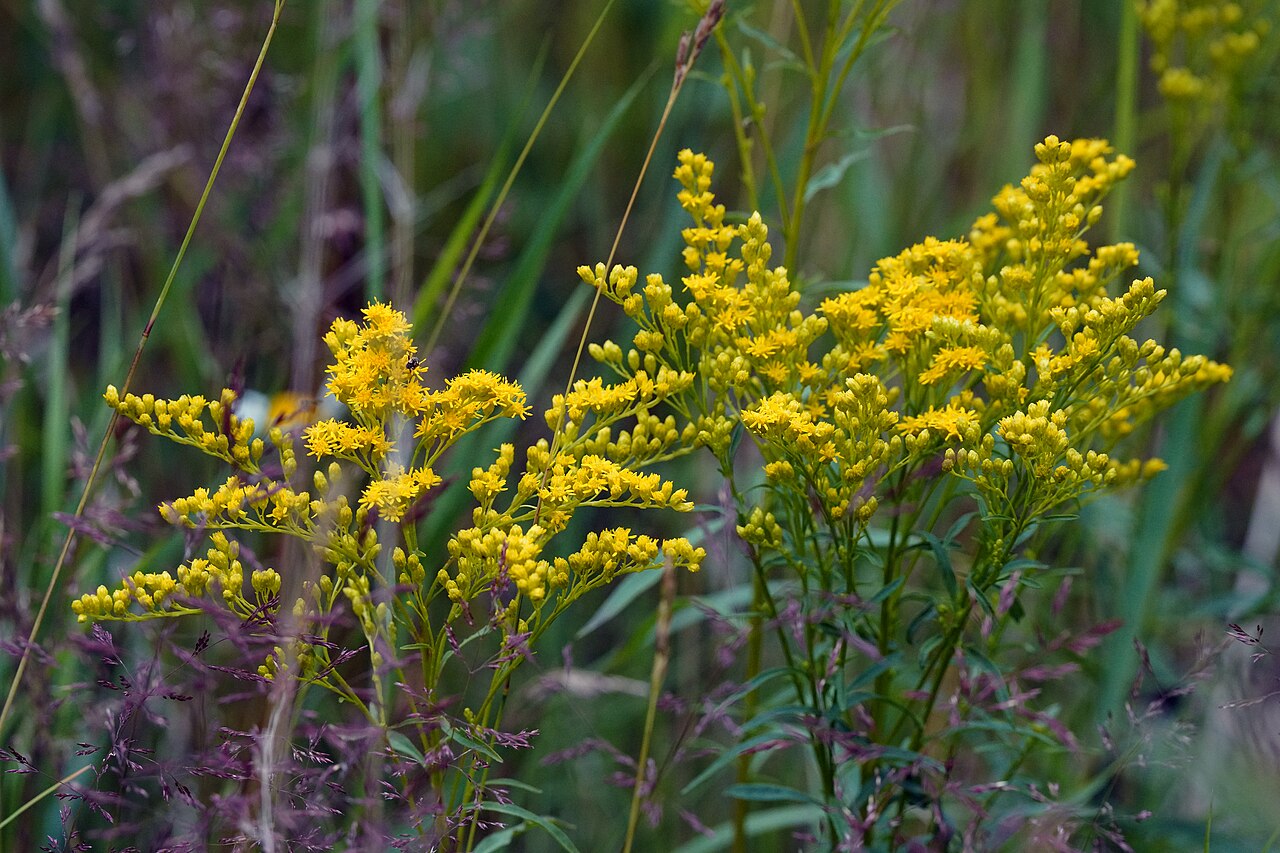
Solidago juncea, known as Early Goldenrod, is a native perennial wildflower of dry fields, open woods, rocky slopes and roadsides across eastern and central North America. A member of the aster family (Asteraceae), it grows 1 to 4 feet tall from a woody crown and short rhizomes, with a rosette of long, stalked basal leaves and a smooth stem that carries progressively smaller leaves toward the top. As its name says, it is the first goldenrod to bloom, often opening its arching plumes of tiny yellow flower heads in late June or July, weeks before the main goldenrod season.
That early bloom makes it valuable both in the garden and in the wild. It bridges the gap between the early summer wildflowers and the late summer flush of goldenrods and asters, feeding bees, wasps, flies, beetles and butterflies at a time when meadows can be short on flowers. Its open, spreading flower clusters often arch to one side, giving the plant a graceful, fountain-like look. Other names include plume goldenrod and yellow-top.
Early goldenrod is a tough, drought-tolerant plant for sunny, dry or sandy sites. It is better behaved than some aggressive goldenrods, forming slowly expanding clumps rather than running colonies, and it suits meadows, prairie plantings, roadside restorations and informal borders where a lean soil keeps it compact.
Identification
Look for a smooth, slender goldenrod with a clump of long, stalked basal leaves, much smaller upper stem leaves, and a broad, arching flower cluster that is already in bloom in early or mid summer.
Growth Habit
Early goldenrod grows from a short, woody crown (caudex) with short rhizomes, producing one to a few upright stems 1 to 4 feet tall above a persistent rosette of basal leaves. Plants form tight clumps that widen slowly over time. The stems are usually smooth (hairless) and often reddish toward the base.
Leaves
The basal and lower stem leaves are the largest, up to about 12 inches long including the stalk, lance-shaped to elliptic, with sharp teeth along the margins and a long, often winged stalk. They are mostly smooth, though the edges can be slightly rough. Moving up the stem, the leaves shrink quickly and become narrow, stalkless and usually untoothed. Small clusters of tiny leaves often grow in the axils of the upper stem leaves, a useful clue for this species. Each leaf has one prominent midvein rather than the three parallel veins of Canada goldenrod.
Flowers
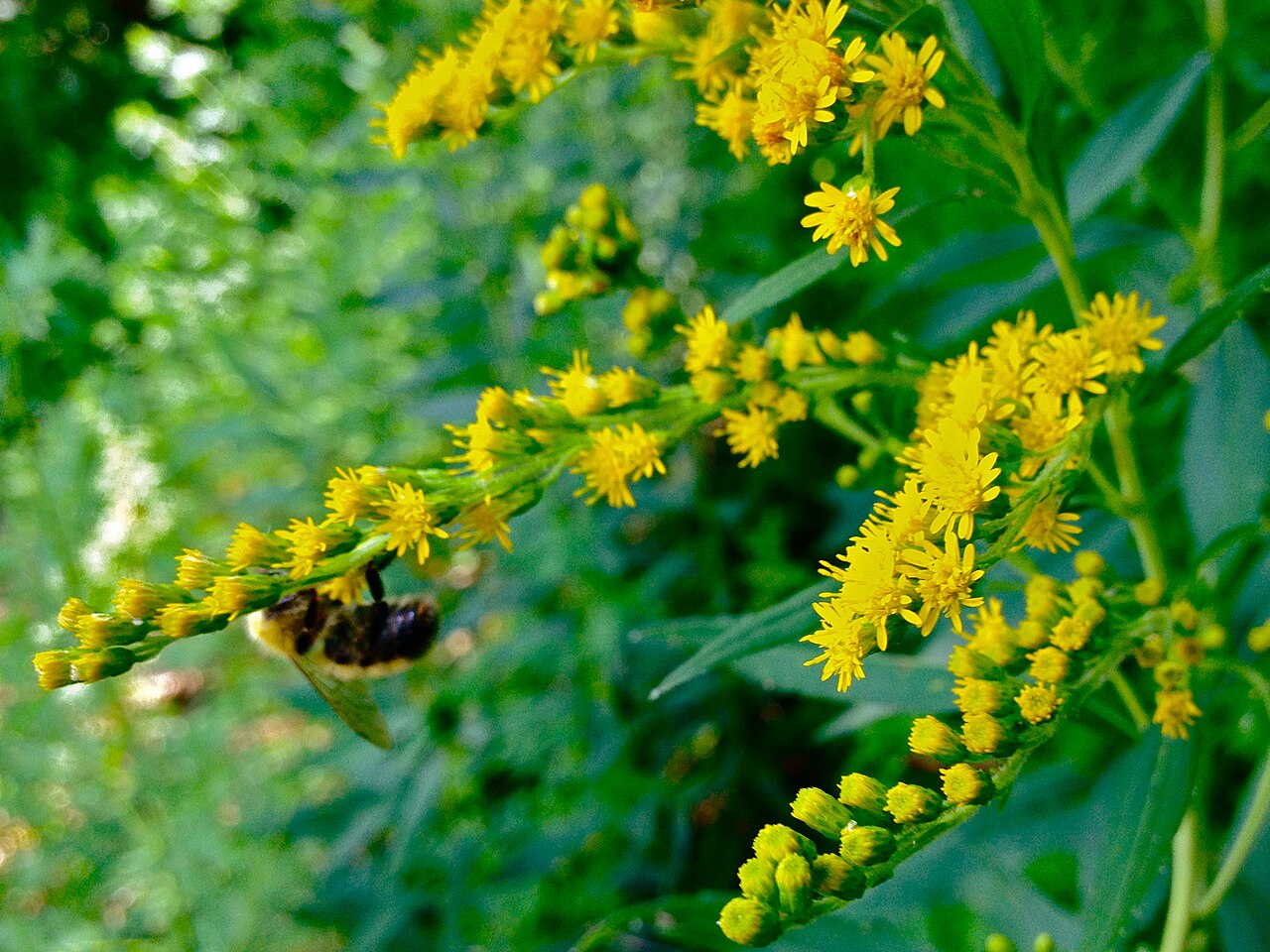
The flower cluster is a broad, open panicle at the top of the stem, often as wide as it is tall, with spreading to arching branches. The small yellow flower heads sit mostly along the upper side of each branch, so the branches look like curving yellow plumes. Each head is about 1/4 inch across with roughly 7 to 12 short yellow rays around a small cluster of yellow disk flowers. Bloom begins in late June or July and continues into August, occasionally into September in the north.
Seeds
After flowering, each head produces small, ribbed seeds (achenes) topped with a tuft of white bristles that carry them on the wind in late summer and fall. The dry seed heads turn fluffy and tan.
Look-alikes
Gray goldenrod (Solidago nemoralis) also grows in dry, sandy sites, but its stems and leaves are covered in fine gray hairs and it blooms later. Canada goldenrod and tall goldenrod are leafier, with three-veined leaves and no basal rosette at flowering time, and they bloom later. Sharp-leaved goldenrod (S. arguta) is very similar but usually grows in woodlands and has larger, broader basal leaves. Missouri goldenrod (S. missouriensis), mainly of the Great Plains and West, is also early-blooming and smooth, but its leaves are usually more strongly three-veined.
Quick Facts
| Scientific Name | Solidago juncea |
| Family | Asteraceae (aster family) |
| Plant Type | Herbaceous perennial wildflower |
| Mature Height | 1–4 ft |
| Mature Spread | 1–2 ft |
| Growth Rate | Moderate |
| Sun Exposure | Full sun to part shade |
| Water Needs | Low to medium; drought tolerant |
| Soil Type | Dry to medium sandy, gravelly or rocky soil; also loam |
| Soil pH | Acidic to neutral (about 5.0–7.0) |
| Bloom Time | Late June–August, sometimes September |
| Flower Color | Yellow |
| Fall Color | Fluffy tan seed heads; leaves may turn reddish |
| Fruit | Small achenes with white bristles |
| Deer Resistant | Moderately; occasionally browsed |
| USDA Hardiness Zones | 3–8 |
Native Range
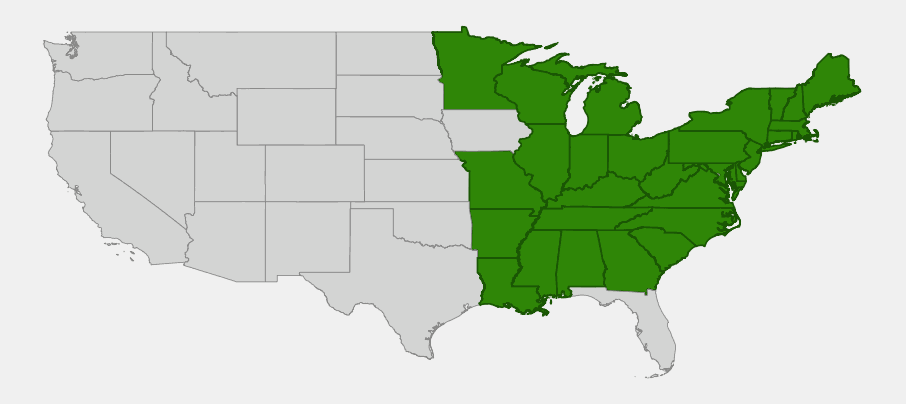
Early goldenrod is native to eastern and central North America. USDA PLANTS records it as native in 29 states and in Canada from Manitoba and Ontario east to Quebec, New Brunswick, Nova Scotia and Prince Edward Island. Its main range runs from the Maritimes and New England west through the Great Lakes region to Minnesota, and south to Virginia, Kentucky, Missouri and northern Arkansas.
Farther south it follows the Appalachian Mountains into the Carolinas, Tennessee and northern Georgia. Records from Alabama, Mississippi and Louisiana are outlying, isolated populations at the southern edge of its range, and the plant is uncommon there. In Minnesota it reaches the western edge of its range and grows mainly in the eastern and central part of the state, not in the western prairie counties.
It grows in dry, open, often sandy, gravelly or rocky places: old fields, pastures, dry prairies and barrens, open oak and pine woods, woodland edges, rocky slopes and ledges, and roadsides. It is one of the characteristic wildflowers of dry, nutrient-poor openings in the Northeast and Great Lakes states.
📋 Regional plant lists featuring Early Goldenrod: New York, Pennsylvania & Northern New Jersey · Ohio & Indiana · Michigan, Wisconsin & Eastern Minnesota · Kentucky & Tennessee · Connecticut, Massachusetts & Rhode Island · New Hampshire, Maine & Vermont · Maryland, Virginia & West Virginia · Delaware, Southern New Jersey & Long Island · Illinois, Iowa & Missouri · Alabama, Georgia & Mississippi · North & South Carolina · Arkansas, Louisiana, Eastern Oklahoma & Eastern Texas
Growing & Care Guide
Early goldenrod is easy to grow in a sunny spot with average to poor, well-drained soil. It is one of the best goldenrods for dry, sandy or rocky ground, and it stays more compact and upright in lean soil than in rich garden beds.
Light
Full sun gives the most flowers and the sturdiest stems. It tolerates part shade, such as an open woodland edge, but flowers less and may lean toward the light.
Soil & Water
Plant in dry to medium, well-drained soil. Sandy, gravelly and rocky soils are ideal, and it also grows in loam and in clay that does not stay wet. Water during the first season. Once established, its deep roots let it ride out droughts, and it rarely needs watering. Avoid fertilizer, which makes the stems floppy.
Planting Tips
Plant nursery-grown plants in spring or early fall, about 12 to 18 inches apart. Combine it with little bluestem, butterfly weed, wild bergamot, asters and later goldenrods to extend the bloom season in a meadow or border. Because it flowers in midsummer, it pairs well with late-season plants that will take over once it fades.
Pruning & Maintenance
Little care is needed. Cut stems back in late winter or early spring rather than in fall, so birds can use the seed and insects can overwinter in the stems. If self-sowing is unwanted, cut the flower heads off after bloom. Clumps can be divided every few years if they get crowded.
Propagation
Grow it from seed sown outdoors in fall, or give the seed about 60 days of cold, moist stratification before spring sowing. Seed needs light to germinate, so press it onto the soil surface. Established clumps can also be divided in early spring.
Landscape Uses
- Meadows and prairie plantings: early color before the main goldenrod and aster season
- Pollinator gardens: abundant midsummer nectar and pollen for many insects
- Dry, sandy or rocky sites: thrives where many perennials struggle
- Roadside and old-field restoration: a native goldenrod for lean, open ground
- Cut and dried flowers: arching yellow sprays for fresh or dried arrangements
Wildlife & Ecological Value
Goldenrods are among the most valuable native plants for wildlife in eastern North America, and early goldenrod extends their benefits into early and mid summer.
For Pollinators
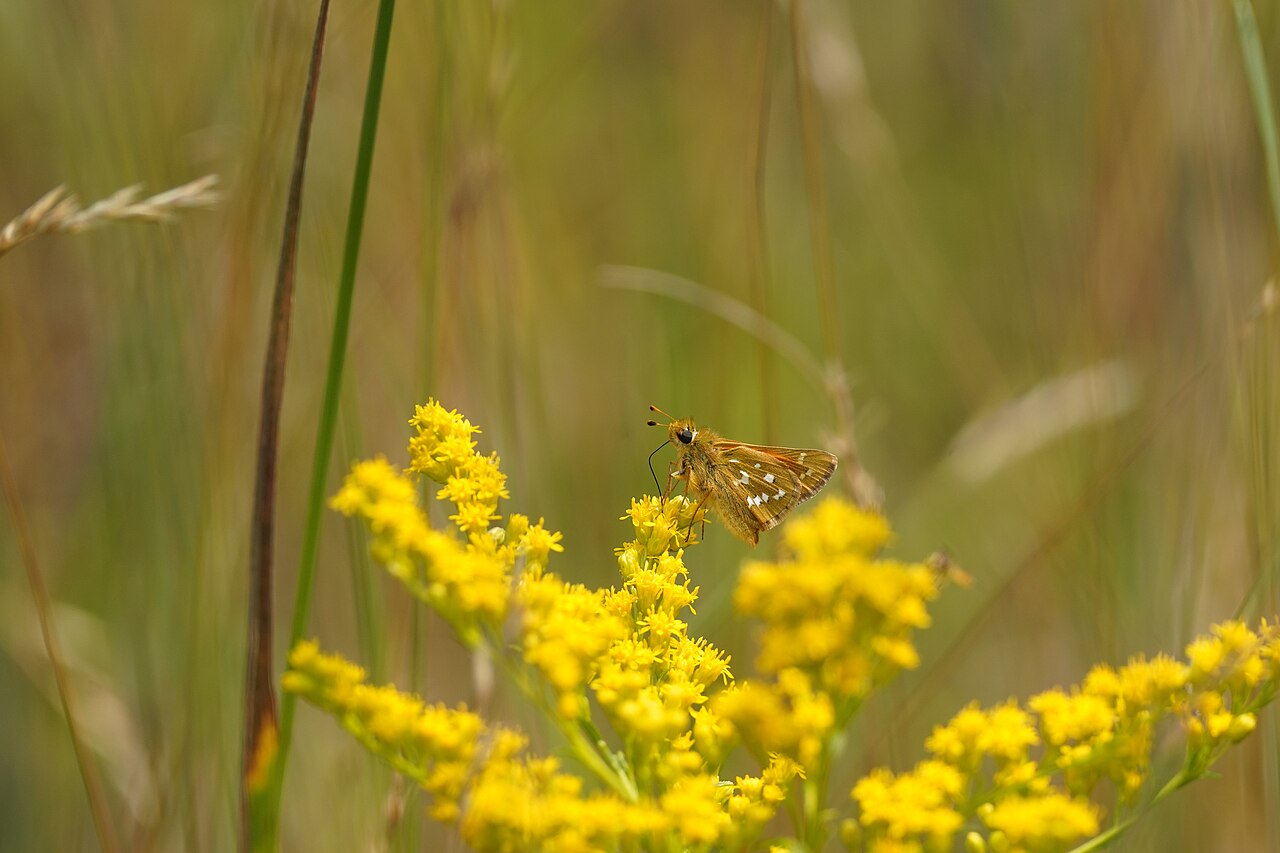
Its flowers draw a wide range of insects: bumble bees, sweat bees and other native bees, honey bees, wasps, flies, beetles and butterflies such as skippers. The Xerces Society notes it as having special value to native bees. Goldenrods also host specialist bees that collect pollen mainly from goldenrods and their relatives, and many moth caterpillars feed on the foliage.
For Birds
American goldfinches and other small seed-eating birds eat the seeds in fall and winter. The many insects that visit the flowers and foliage are food for insect-eating birds raising young in summer.
For Mammals
White-tailed deer and rabbits sometimes nibble the foliage, but it is seldom heavily browsed. Small mammals use the seeds and the cover of goldenrod stands.
Ecosystem Role
Early goldenrod hosts a variety of gall-making insects, including gall flies (Eurosta) and gall moths (Gnorimoschema), whose galls in turn feed parasitic wasps, beetles and birds such as chickadees and woodpeckers. Its deep roots help hold sandy and rocky soils on dry slopes and road banks.
Cultural & Historical Uses
The species name juncea means “rush-like,” from the Latin juncus (rush), likely a reference to the slender, stiff upper stem with its tiny, narrow leaves. The genus name Solidago comes from the Latin for “to make whole,” reflecting the long history of goldenrods as healing herbs in both Europe and North America.
Goldenrods are often blamed for late-summer hay fever, but their pollen is heavy and sticky and carried by insects, not by the wind. The usual culprit is ragweed, which blooms at the same time and sheds huge amounts of light, airborne pollen. Early goldenrod, which flowers before ragweed, is a good example of how unfairly the genus has been judged.
Because it is one of the first goldenrods to flower each year, naturalists in the Northeast and Great Lakes states have long treated its bloom as a sign that summer has turned toward fall. It is also one of the goldenrods most often studied by gall researchers, since several gall-forming insects use it.
Frequently Asked Questions
When does early goldenrod bloom?
It usually begins blooming in late June or July and continues into August, sometimes into September in the north. That is several weeks earlier than most other goldenrods.
Is early goldenrod invasive or aggressive?
No. It forms slowly expanding clumps from a woody crown and short rhizomes, and it is much less aggressive than Canada or tall goldenrod. It can self-sow in open soil.
Does early goldenrod cause hay fever?
Not significantly. Like other goldenrods, its pollen is carried by insects. Ragweed is the main cause of late-summer hay fever.
Will early goldenrod grow in shade?
It tolerates part shade, such as a woodland edge, but flowers best and stays sturdier in full sun.
How do I tell early goldenrod from gray goldenrod?
Early goldenrod is smooth and blooms in early to mid summer. Gray goldenrod has fine gray hairs on its stems and leaves and blooms later, from August into fall.

Looking for a nursery that carries Early Goldenrod?
Browse our native plant nursery directory: Alabama & Arkansas · Connecticut, Delaware & Georgia · Illinois & Indiana · Kentucky, Louisiana, Maine, Maryland, Massachusetts, Michigan, Minnesota, Mississippi & Missouri · New Hampshire, New Jersey, New York, North Carolina & Ohio · Pennsylvania, Rhode Island, South Carolina, Tennessee, Vermont & Virginia · West Virginia & Wisconsin
