
Purplestem Aster (Symphyotrichum puniceum)
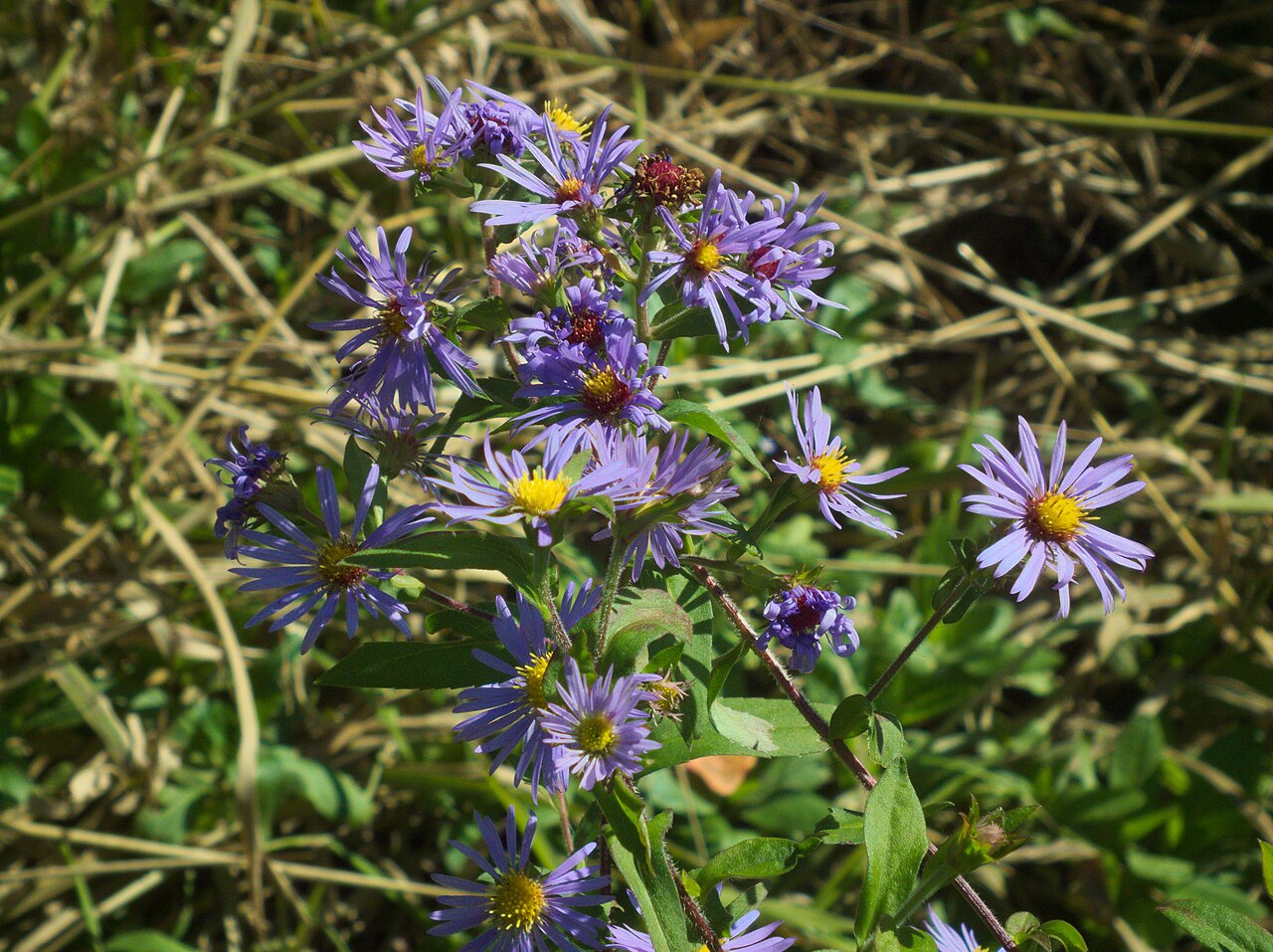
Symphyotrichum puniceum, known as Purplestem Aster and also widely called swamp aster, red-stemmed aster or purple-stemmed aster, is a tall wetland aster of eastern North America. It belongs to the aster family (Asteraceae) and was long known as Aster puniceus, the name still used in many older field guides.
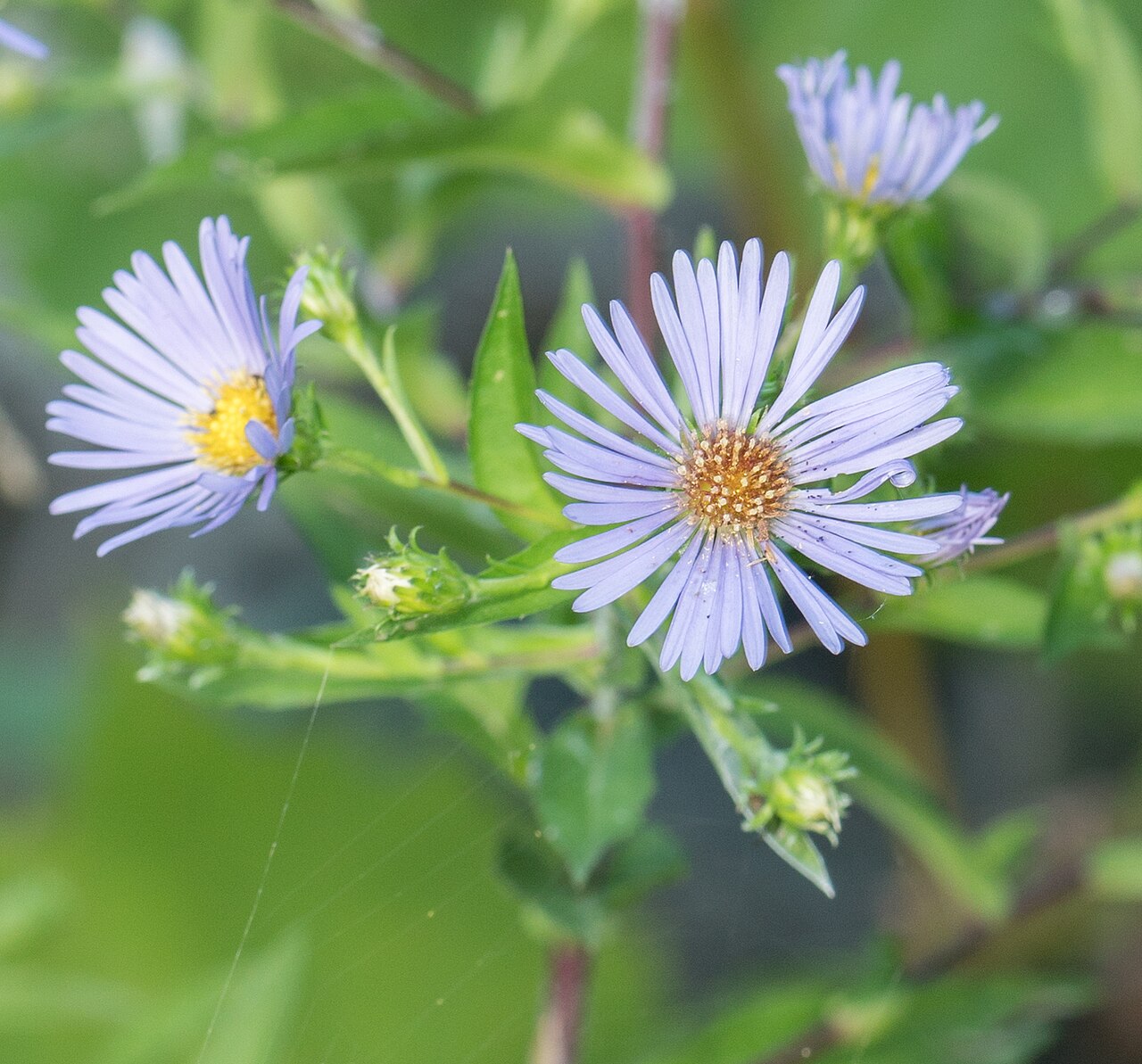
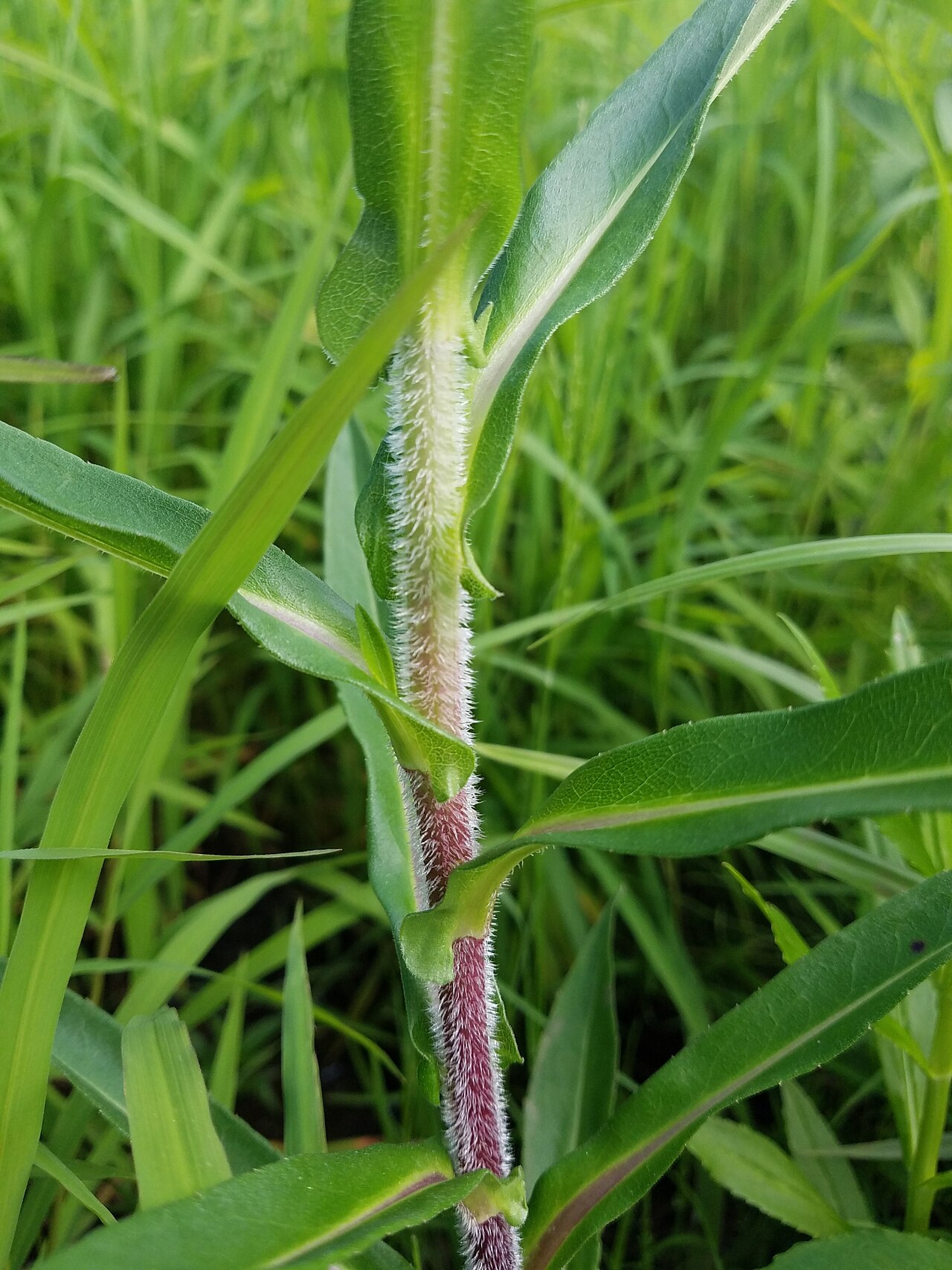
True to its name, it has stout, reddish-purple stems bristling with stiff hairs, and long, narrow leaves that clasp the stem. From late summer into fall the upper branches carry loose clusters of showy flower heads about 1 to 1 1/2 inches across, with many narrow lavender to blue-violet rays around a yellow center. Plants are typically 2 to 6 feet tall and can be taller in rich, wet soil.
Purplestem aster grows in swamps, fens, wet meadows, marsh edges, stream banks and wet ditches from Newfoundland and Quebec to the Dakotas and south to Georgia and eastern Texas. It is a superb late-season nectar plant for bees and butterflies and one of the best asters for rain gardens and other wet, sunny sites.
Identification
Look for a tall aster in a wet place with a hairy, purplish stem, long narrow leaves that wrap around the stem, and lavender-blue flower heads in late summer and fall.
Growth Habit
Purplestem aster is a clump-forming perennial with a short, thick rhizome. It usually forms small clusters or scattered stems rather than large colonies. The stems are 2 to 6 feet tall (sometimes to 8 feet), stout, often reddish-purple at least on the sunny side, and covered with stiff, spreading hairs, especially in the upper part. They branch in the top third to form a broad, leafy flower cluster.
Leaves
The leaves are alternate, lance-shaped, about 3 to 6 inches long and up to about 1 1/4 inches wide, with a pointed tip. Their bases are widened into small lobes that clasp the stem. The upper surface is often rough to the touch, the edges are smooth or have a few small teeth, and the midrib beneath is often hairy. The basal leaves usually wither before flowering.
Flowers
Flowers appear from about August to October. The heads are about 1 to 1 1/2 inches across, each with roughly 30 to 60 narrow ray florets in lavender, lilac or blue-violet (rarely pale pink or white) around a disk of small yellow florets that turn pink or purple with age. The bracts beneath the head are long, narrow, green and fairly loose, with spreading tips, and they are not sticky or glandular.
Fruit & Seeds
Each floret produces a small, slightly hairy achene topped with a tuft of whitish to tan bristles (pappus) that carries it on the wind. Seeds ripen from late September through November.
Look-alikes
New England aster (Symphyotrichum novae-angliae) also has clasping leaves and hairy stems, but its leaves are softer and densely hairy, its heads have more numerous, deeper purple rays, and its bracts are sticky and glandular; it usually grows in moist meadows rather than swamps. Shining aster (Symphyotrichum firmum) is very similar but has smooth, shiny stems with hairs only in lines, paler rays, and forms dense colonies. Panicled aster (Symphyotrichum lanceolatum) has smaller white or pale heads and leaves that do not clasp the stem.
Safety Notes
Purplestem aster is not known to be toxic to people or pets. The rough leaves and bristly stems can mildly irritate sensitive skin.
Quick Facts
| Scientific Name | Symphyotrichum puniceum (syn. Aster puniceus) |
| Family | Asteraceae (aster family) |
| Plant Type | Herbaceous perennial wildflower |
| Mature Height | 2–6 ft (occasionally to 8 ft) |
| Mature Spread | 2–3 ft |
| Growth Rate | Fast |
| Sun Exposure | Full sun to partial shade |
| Water Needs | High; wet to moist soil |
| Soil Type | Wet loam, muck, peat or clay |
| Soil pH | About 5.5–7.5 |
| Bloom Time | August–October |
| Flower Color | Lavender, lilac or blue-violet with yellow centers |
| Fall Color | Reddish-purple stems; leaves often turn bronze |
| Fruit | Small achenes with tan, fluffy pappus |
| Deer Resistant | Moderately; occasionally browsed |
| USDA Hardiness Zones | 3–8 |
Native Range
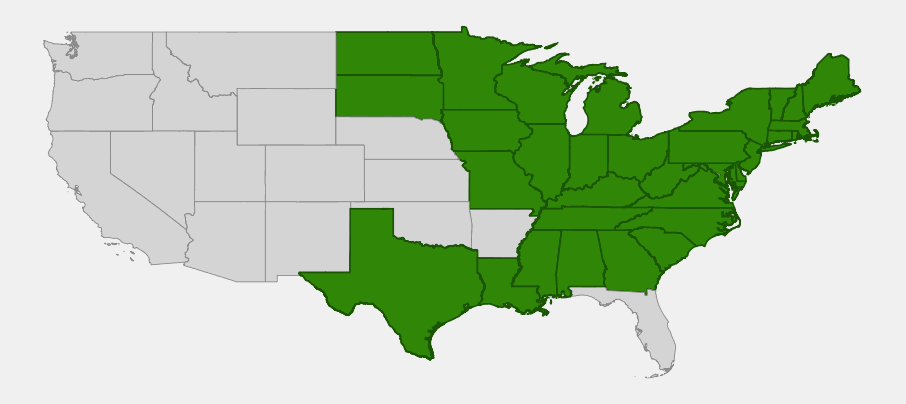
Purplestem aster is native to eastern North America, from Newfoundland, Labrador and northern Quebec west across Canada to Alberta and the Northwest Territories, and south in the United States to the Gulf Coast. USDA PLANTS lists it as native in Alabama, Connecticut, Delaware, Georgia, Illinois, Indiana, Iowa, Kentucky, Louisiana, Maine, Maryland, Massachusetts, Michigan, Minnesota, Mississippi, Missouri, New Hampshire, New Jersey, New York, North Carolina, North Dakota, Ohio, Pennsylvania, Rhode Island, South Carolina, South Dakota, Tennessee, Texas, Vermont, Virginia, West Virginia and Wisconsin, as well as the District of Columbia.
It is common across the Northeast, the Great Lakes states and the Appalachians. Farther south it becomes local, mainly in mountain bogs and seeps, and the southern variety, var. scabricaule, is rare in scattered wetlands from eastern Texas and Louisiana to Alabama. In the west it reaches the eastern Dakotas.
Typical habitats are swamps and swamp edges, fens, wet meadows, sedge meadows, marsh borders, wet thickets, stream and pond banks, seeps and wet roadside ditches. It favors open, sunny wetlands with saturated soil, but also grows in partial shade along wooded streams.
📋 Regional plant lists featuring Purplestem Aster: New Hampshire, Maine & Vermont · Connecticut, Massachusetts & Rhode Island · New York, Pennsylvania & Northern New Jersey · Delaware, Southern New Jersey & Long Island · Maryland, Virginia & West Virginia · North & South Carolina · Alabama, Georgia & Mississippi · Kentucky & Tennessee · Ohio & Indiana · Michigan, Wisconsin & Eastern Minnesota · Illinois, Iowa & Missouri · North Dakota, South Dakota & Western Minnesota · Arkansas, Louisiana, Eastern Oklahoma & Eastern Texas
Growing & Care Guide
Purplestem aster is sold by many native plant nurseries in the Northeast and Midwest, often under the name swamp aster. It is easy to grow anywhere the soil stays moist and is a top choice for late color in wet gardens.
Light
Grow it in full sun for the most flowers and sturdiest stems. It tolerates partial shade, especially in the south of its range, but becomes taller and floppier in shade.
Soil & Water
It needs consistently moist to wet soil and tolerates standing water for short periods. Rain gardens, pond and stream edges, wet meadows and low, poorly drained beds suit it well. It grows in clay, loam, muck or peat. In ordinary garden soil, water it during dry spells, or it will drop its lower leaves and bloom poorly.
Planting Tips
Plant it toward the back of a wet border or in groups in a rain garden, spacing plants about 2 feet apart. It looks best with other wetland natives such as Joe-Pye weed, boneset, swamp milkweed, blue vervain and goldenrods, which bloom alongside or just before it.
Pruning & Maintenance
To get shorter, bushier plants, cut the stems back by about a third in late May or early June. Leave the seed heads standing into winter for birds and cut the old stems in early spring. Powdery mildew sometimes appears on the lower leaves in late summer; good sun and air circulation help.
Propagation
Sow seed outdoors in fall, or give it about 60 days of cold, moist stratification before spring sowing; the seed needs light to germinate, so press it into the surface. Clumps can be divided in early spring every few years, and soft stem cuttings taken in late spring root easily.
Landscape Uses
- Rain gardens: thrives in soil that floods briefly after storms
- Pollinator gardens: late-season nectar for bees and migrating butterflies
- Pond and stream edges: tall fall color along wet banks
- Wetland restoration: swamps, fens, wet meadows and ditches
- Naturalistic borders: pairs with Joe-Pye weed, boneset and goldenrods
Wildlife & Ecological Value
Like other asters, purplestem aster is one of the most important late-season wildlife plants in the eastern wetlands where it grows.
For Pollinators
The flowers attract bumblebees, honey bees, many small native bees, syrphid flies and butterflies, including migrating monarchs that need nectar in fall. Native asters are larval host plants for the pearl crescent and many moth caterpillars, and specialist mining bees collect aster pollen for their young.
For Birds
Seeds are eaten in fall and winter by goldfinches, sparrows and other small seed-eating birds, and the dense stands provide cover in wet meadows. Insects on the plants feed migrating warblers.
For Mammals
Deer and rabbits occasionally browse the young shoots, but the rough, hairy foliage is less favored than many other plants.
Ecosystem Role
As a common, late-blooming member of wetland plant communities, purplestem aster supports a large number of insects at a time of year when few other flowers are open. Its roots help stabilize wet, soft soil along streams and ditches.
Cultural & Historical Uses
Carl Linnaeus described the plant as Aster puniceus in 1753. In 1982 the botanists Áskell and Doris Löve moved it to Symphyotrichum, a genus that became widely accepted for North American asters in the 1990s. The species name puniceum means “reddish-purple” or “crimson,” for its colorful stems.
Many Indigenous peoples used the plant. The Iroquois used the roots in remedies for colds and fevers, the Woodland Cree used it for toothache, and the Ojibwe (Chippewa) are recorded as smoking the root with tobacco to attract game. Old folk names include cocash and swanweed.
Purplestem aster is a variable species. Botanists recognize a southern variety, var. scabricaule, and debate whether the smooth-stemmed shining aster (Symphyotrichum firmum) is a separate species or part of this one; most current references treat them as distinct.
Frequently Asked Questions
Is purplestem aster the same as swamp aster?
Yes. “Swamp aster” is one of its most common names, along with purple-stemmed aster and red-stemmed aster. USDA PLANTS uses “purplestem aster.”
How do I tell purplestem aster from New England aster?
Purplestem aster grows in wetter places, has bristly purplish stems, rough leaves and non-sticky bracts. New England aster has softer, densely hairy leaves, more deeply purple flowers and sticky, glandular bracts.
Does purplestem aster need wet soil?
It does best in moist to wet soil and is ideal for rain gardens and pond edges. In average garden soil it needs watering during dry spells.
When does purplestem aster bloom?
Mainly from August to October, providing nectar for bees and migrating monarchs late in the season.
Where does purplestem aster grow?
It grows in swamps, fens, wet meadows and stream banks across eastern North America, from Newfoundland to Alberta and south to Georgia and eastern Texas.

Looking for a nursery that carries Purplestem Aster?
Browse our native plant nursery directory: Alabama · Connecticut, Delaware & Georgia · Illinois, Indiana & Iowa · Kentucky, Louisiana, Maine, Maryland, Massachusetts, Michigan, Minnesota, Mississippi & Missouri · New Hampshire, New Jersey, New York, North Carolina, North Dakota & Ohio · Pennsylvania, Rhode Island, South Carolina, South Dakota, Tennessee, Texas, Vermont & Virginia · West Virginia & Wisconsin

