
Threadleaf Groundsel (Senecio flaccidus)
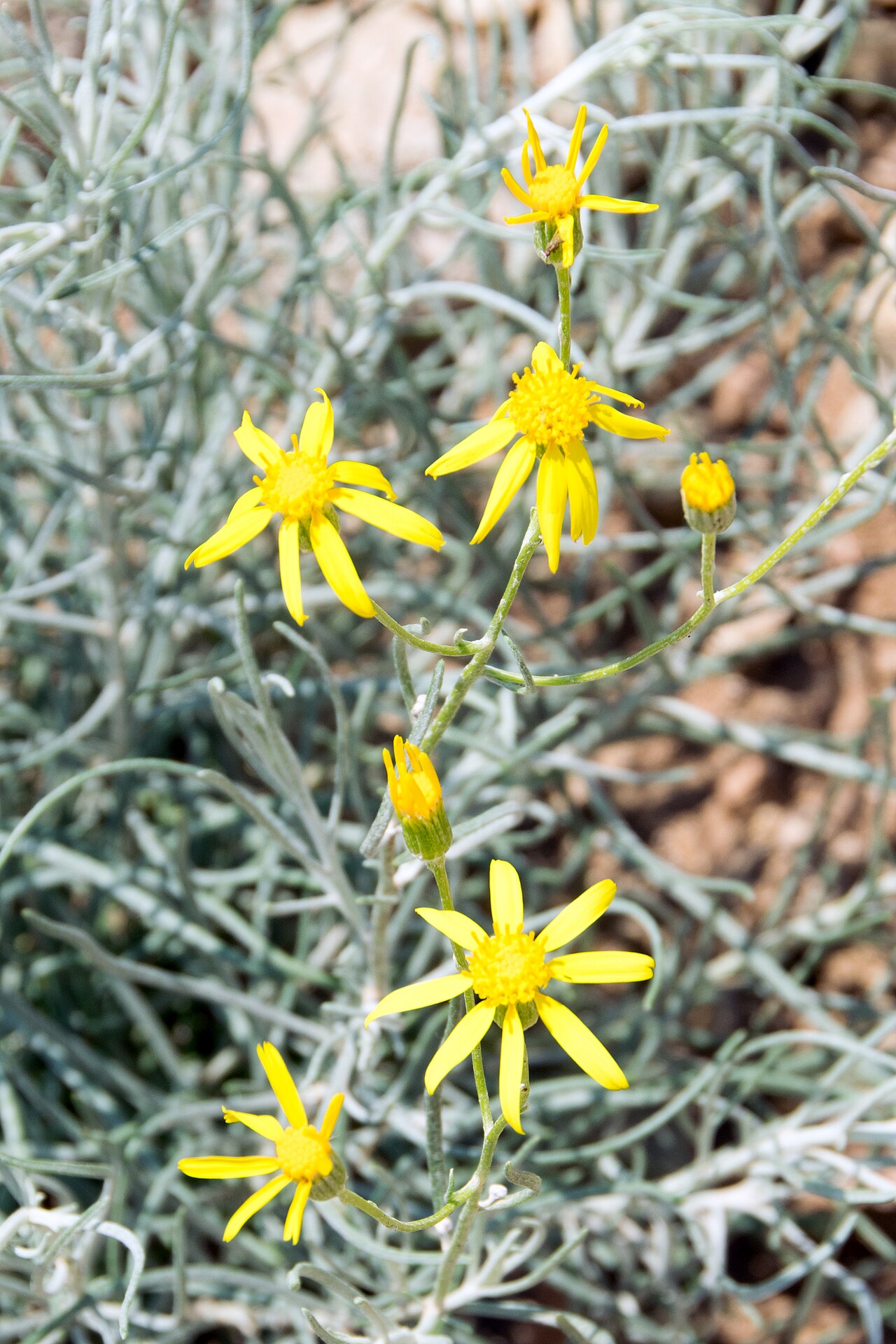
Senecio flaccidus, known as Threadleaf Groundsel, threadleaf ragwort (the USDA name), sand groundsel or butterweed, is a bushy, silvery subshrub of the aster family (Asteraceae). It grows across the Southwest, from southern Colorado, Utah and Nevada south through Arizona, New Mexico and West Texas into northern Mexico, and east onto the southern High Plains of western Kansas and Oklahoma. In California it is represented by two varieties: shrubby butterweed or bush groundsel (var. douglasii) and Mono ragwort (var. monoensis).
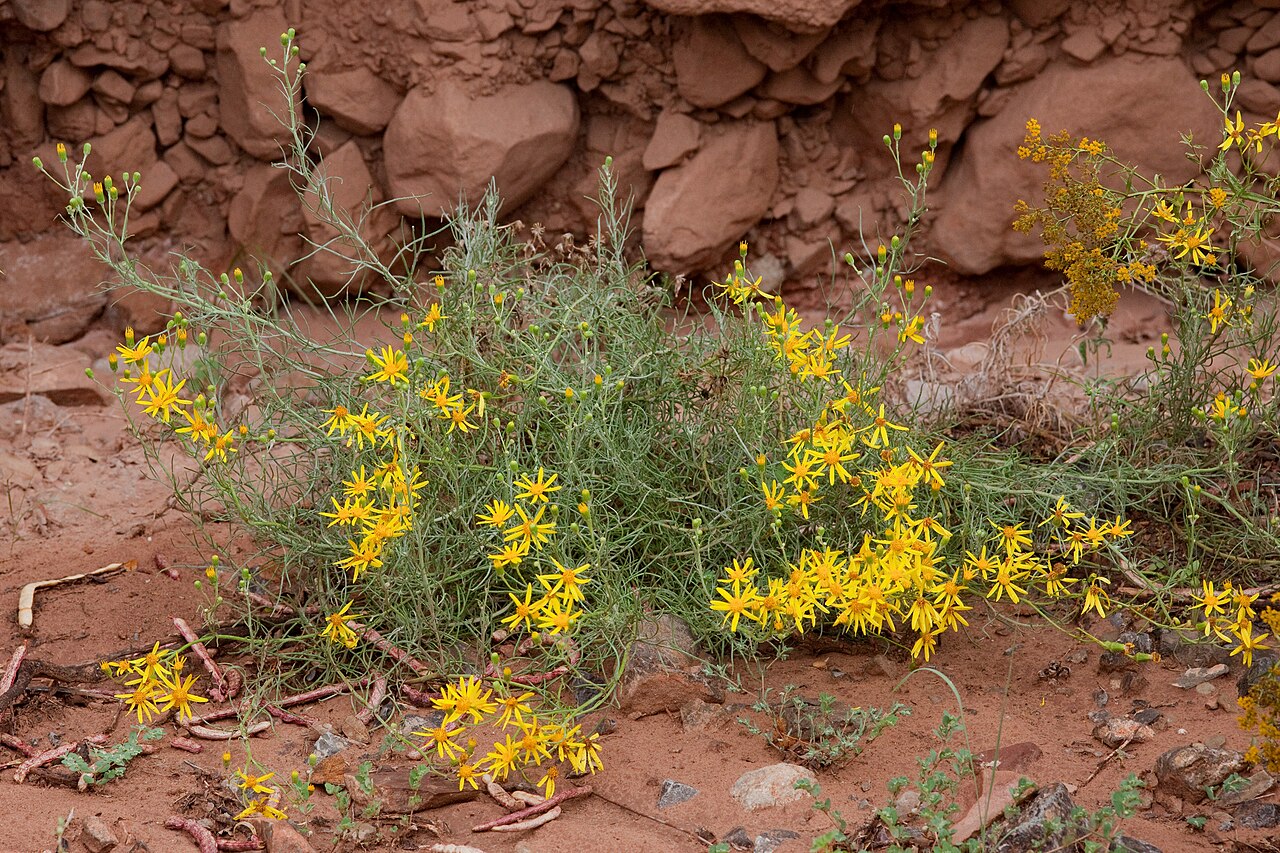
Plants form rounded mounds 1 to 3 feet tall of slender stems, woody at the base, clothed in leaves cut into thread-like lobes. In the typical variety the whole plant is covered with white, woolly hairs, giving it a soft, silvery look. Bright yellow, daisy-like flower heads about 1 to 1 1/2 inches across bloom from spring into fall, often in flushes after rain. It is a common sight along sandy washes, roadsides, grasslands and desert scrub.
Safety note: threadleaf groundsel, like many Senecio species, contains pyrrolizidine alkaloids, which damage the liver. It is poisonous to cattle, horses and other livestock, and the damage is cumulative and irreversible. People have been poisoned by herbal teas and remedies made from Senecio and by grain contaminated with its seeds. Never eat it or use it as an herbal remedy, and keep it out of pastures and hay. As an ornamental in a xeriscape where no animals graze, it is a tough, showy native for pollinators.
Identification
Look for a rounded, silvery-gray subshrub with thread-like, divided leaves and many bright yellow daisies, growing in sandy or gravelly ground in the Southwest.
Growth Habit
Threadleaf groundsel is a short-lived perennial subshrub, 1 to 3 feet tall (occasionally to 4 feet) and about as wide, with many slender, upright stems that are woody at the base and herbaceous above. Plants often form loose colonies, especially on disturbed ground.
Leaves
The leaves are alternate, 1 to 4 inches long and pinnately divided into a few very narrow, thread-like lobes, or sometimes undivided and simply linear. In var. flaccidus, the leaves and stems are densely covered in white, woolly (tomentose) hairs, making the plant look silvery. Var. douglasii in California has broader leaf lobes and is often less woolly, and var. monoensis of the deserts is green and nearly hairless.
Flowers
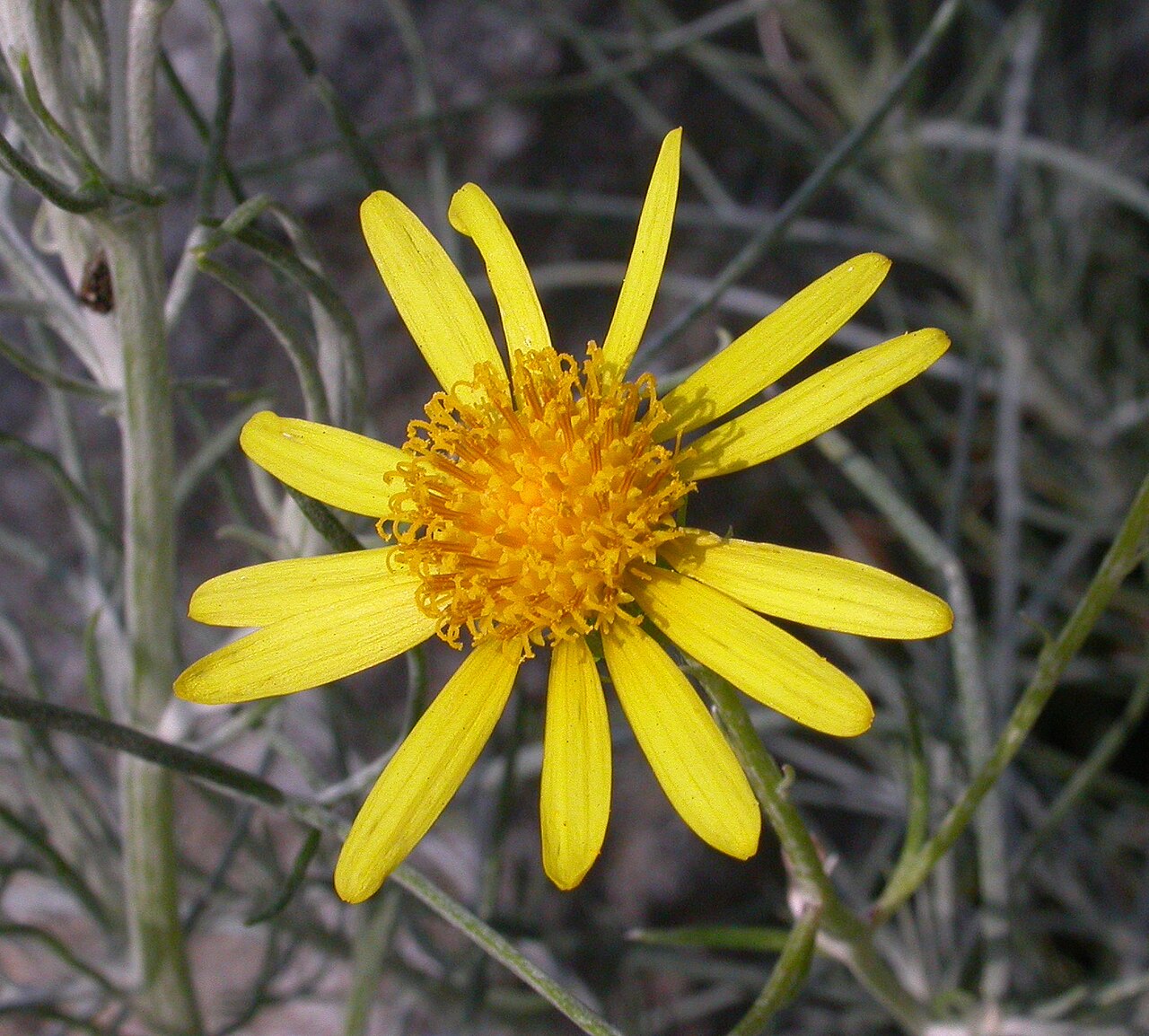
Flower heads are borne in loose, flat-topped clusters at the branch tips. Each head is about 1 to 1 1/2 inches across, with about 10 to 13 bright yellow ray florets around a golden-yellow disc. The heads are surrounded by a single row of narrow green bracts (phyllaries), often with dark tips, typical of Senecio. Blooming peaks in spring and again in late summer and fall after rains, and in mild areas can continue almost all year.
Seeds
The seeds are small, hairy achenes, each topped with a tuft of soft, white bristles (pappus) that carries it on the wind. The fluffy seed heads look like small dandelion puffs.
Look-alikes
Broom snakeweed has green, linear leaves and tiny flower heads with only a few short rays. Desert marigold (Baileya) has broader, woolly leaves near the base and heads on long, nearly bare stalks. Other groundsels, such as tall western groundsel, are herbaceous with broad, undivided leaves.
Quick Facts
| Scientific Name | Senecio flaccidus |
| Family | Asteraceae (aster family) |
| Plant Type | Perennial subshrub |
| Mature Height | 1–3 ft |
| Mature Spread | 1–3 ft |
| Growth Rate | Fast |
| Sun Exposure | Full sun |
| Water Needs | Very low to low |
| Soil Type | Sandy, gravelly or rocky, well-drained soil |
| Soil pH | Neutral to alkaline (about 6.5–8.5) |
| Bloom Time | April–October, in flushes after rain |
| Flower Color | Bright yellow |
| Fall Color | Silvery foliage; often blooms in fall |
| Fruit | Achenes with white, fluffy pappus |
| Deer Resistant | Yes; toxic and seldom browsed |
| USDA Hardiness Zones | 5–10 |
Native Range
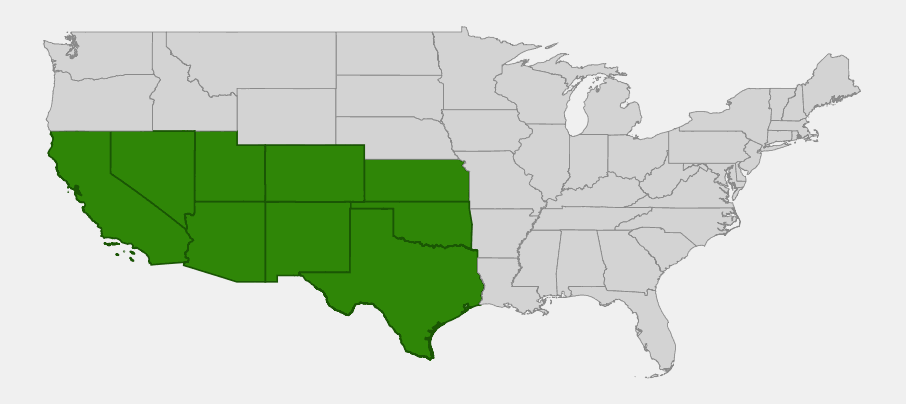
Threadleaf groundsel is native to the southwestern United States and northern Mexico. USDA PLANTS lists it in Arizona, California, Colorado, Kansas, Nevada, New Mexico, Oklahoma, Texas and Utah. The typical variety (var. flaccidus) is the plant of southern Colorado and Utah, Arizona, New Mexico, West Texas and the western edges of Kansas and Oklahoma, extending south into the Chihuahuan Desert of Mexico.
In California and southern Nevada the species is represented by var. douglasii, the bush groundsel of coastal and inland scrub, chaparral and washes in central and southern California, and var. monoensis, Mono ragwort, of the Mojave and Great Basin deserts. In Texas it is common in the Trans-Pecos, the western Edwards Plateau and the Panhandle, but it does not reach the eastern part of the state.
It grows on sandy plains and dunes, gravelly washes and arroyos, rocky slopes, desert grassland, shrubland, pinyon-juniper woodland and roadsides, mostly from about 1,000 to 8,000 feet. It increases on overgrazed or disturbed ground, where it can become abundant.
📋 Regional plant lists featuring Threadleaf Groundsel: Nebraska, Kansas & Eastern Colorado · Utah & Western Colorado · Arizona & New Mexico · South & West Texas · California & Nevada
Growing & Care Guide
Threadleaf groundsel is an easy, fast-growing plant for hot, dry gardens in the Southwest. It is short-lived but reseeds, and it needs almost no care once established. Because it is poisonous, do not plant it where horses, cattle, goats or other animals graze.
Light
Full sun. In shade it becomes leggy and flowers poorly.
Soil & Water
It needs well-drained sandy, gravelly or rocky soil, and tolerates alkaline and poor soils. Water occasionally until established; afterward, rainfall is usually enough, although a deep soak in long droughts will encourage another flush of flowers. Overwatering and heavy soil shorten its life.
Planting Tips
Plant in spring or fall, 2 to 3 feet apart. Its silvery foliage combines well with agaves, yuccas, penstemons, globemallows and native grasses in xeriscapes, gravel gardens, roadside and slope plantings.
Pruning & Maintenance
Shear plants back by about a third after a big flush of bloom, or in late winter, to keep them compact and encourage new flowers. Plants typically live a few years; let some seedlings grow to replace them, and pull unwanted ones while small. Wear gloves when handling it and wash your hands afterward.
Propagation
Seeds germinate readily without special treatment when sown in warm soil; they need light, so press them onto the surface. Softwood cuttings also root easily.
Landscape Uses
- Xeriscapes: silvery foliage and long bloom with very little water
- Pollinator gardens: repeat flowering for bees and butterflies
- Slope and roadside plantings: quickly covers dry, disturbed ground
- Gravel and rock gardens: fine, silvery texture
- Deer-resistant beds: toxic and avoided by browsers
Wildlife & Ecological Value
Threadleaf groundsel blooms repeatedly through the warm season, making it a dependable nectar plant in dry country.
For Pollinators
Native bees, honey bees, flower flies, beetles and many butterflies visit the flowers. Its flushes of bloom after summer rains feed late-season pollinators when few other plants are flowering.
For Birds
Small seed-eating birds such as finches and sparrows may eat the seeds, and the shrubby mounds provide cover for quail and other ground birds.
For Mammals
Because of its toxicity, it is avoided by most wildlife and livestock unless other forage is scarce.
Ecosystem Role
It is an early colonizer of disturbed and eroded ground, sandy washes and roadsides, helping stabilize soil. Its abundance often increases on overgrazed rangeland, where it is regarded as an indicator of heavy grazing. Some specialized insects tolerate its alkaloids and feed on it.
Cultural & Historical Uses
The genus name Senecio comes from the Latin senex, “old man,” a reference to the white, hair-like pappus on the seeds. The species name flaccidus means “limp” or “drooping,” probably referring to its slender, flexible stems and leaves. It has also been called Senecio longilobus and Senecio douglasii.
Threadleaf groundsel has a long history as a dangerous range plant. Pyrrolizidine alkaloid poisoning from Senecio species causes chronic liver disease in cattle and horses, and it has been a significant cause of livestock losses in the Southwest during droughts, when other forage is scarce.
In parts of the Southwest and Mexico, threadleaf groundsel and related species were used in folk remedies, including teas. Cases of serious liver damage in people, including infants, have been linked to herbal preparations containing Senecio, so it should never be used as a medicine.
Frequently Asked Questions
Is threadleaf groundsel poisonous?
Yes. It contains pyrrolizidine alkaloids that cause cumulative liver damage in livestock and people. Never eat it or use it in teas or remedies, and keep it away from grazing animals.
How do I grow threadleaf groundsel?
Give it full sun and well-drained, sandy or gravelly soil with little water. Shear it back after flowering to keep it compact.
How long does threadleaf groundsel live?
It is a short-lived perennial, usually living a few years, but it reseeds readily in dry, open ground.
When does threadleaf groundsel bloom?
From spring to fall, with flushes after rains. In mild areas it may flower almost all year.
Is threadleaf groundsel the same as bush groundsel in California?
California’s bush groundsel is Senecio flaccidus var. douglasii, a variety of the same species with broader, often less woolly leaves.

Looking for a nursery that carries Threadleaf Groundsel?
Browse our native plant nursery directory: Arizona · California · Colorado · Kansas · Nevada, New Mexico & Oklahoma · Texas & Utah

