
Large-Leaf Waterleaf (Hydrophyllum macrophyllum)
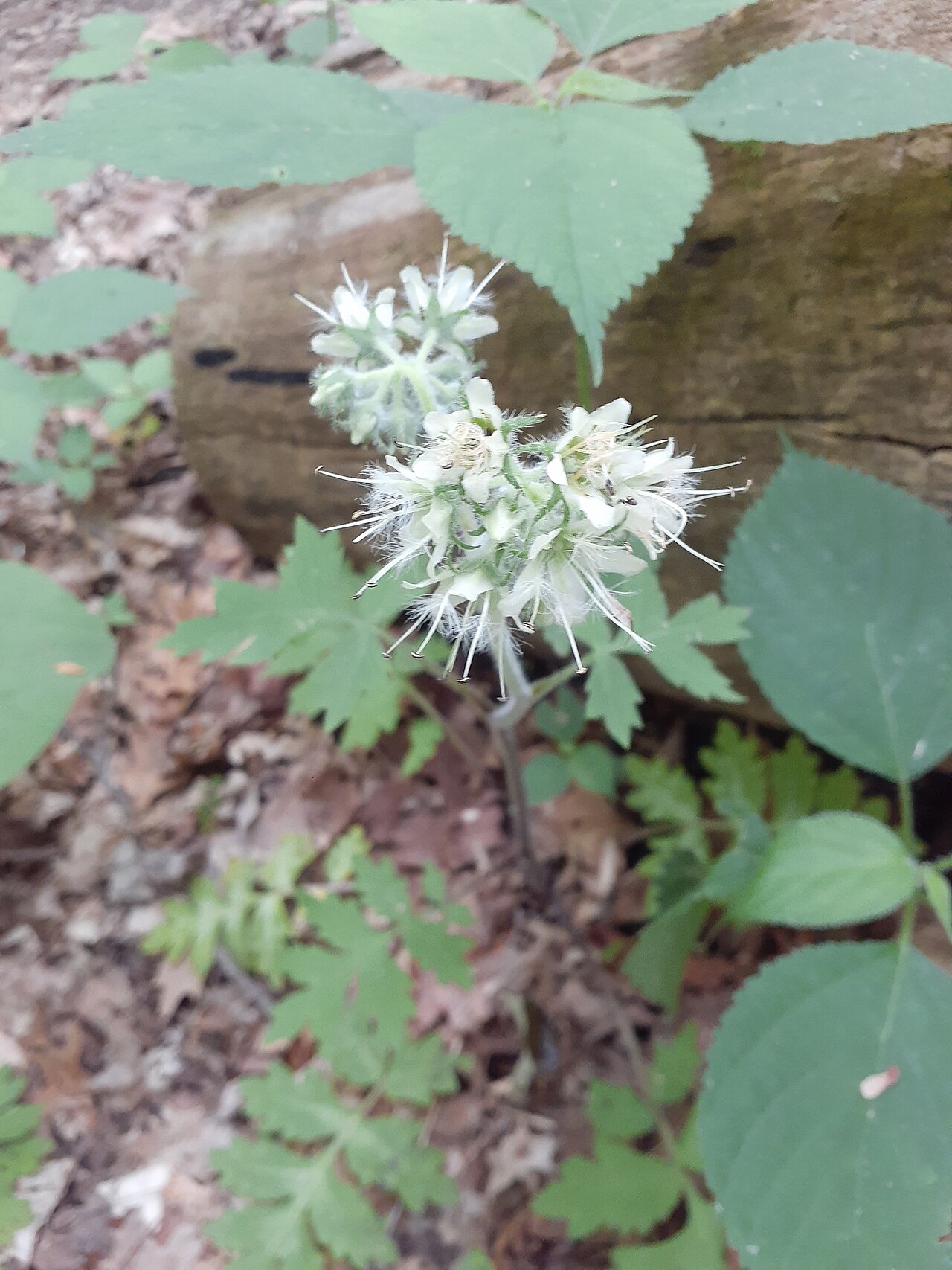
Hydrophyllum macrophyllum, known as Large-Leaf Waterleaf (USDA: largeleaf waterleaf), is a hairy woodland perennial of rich forests in the Ohio Valley, the Appalachians and the mid-South. It belongs to the borage family (Boraginaceae; formerly the waterleaf family, Hydrophyllaceae). It is the roughest and hairiest of the eastern waterleafs, with large, deeply lobed leaves and rounded clusters of whitish to pale lavender, bristly flowers in late spring.
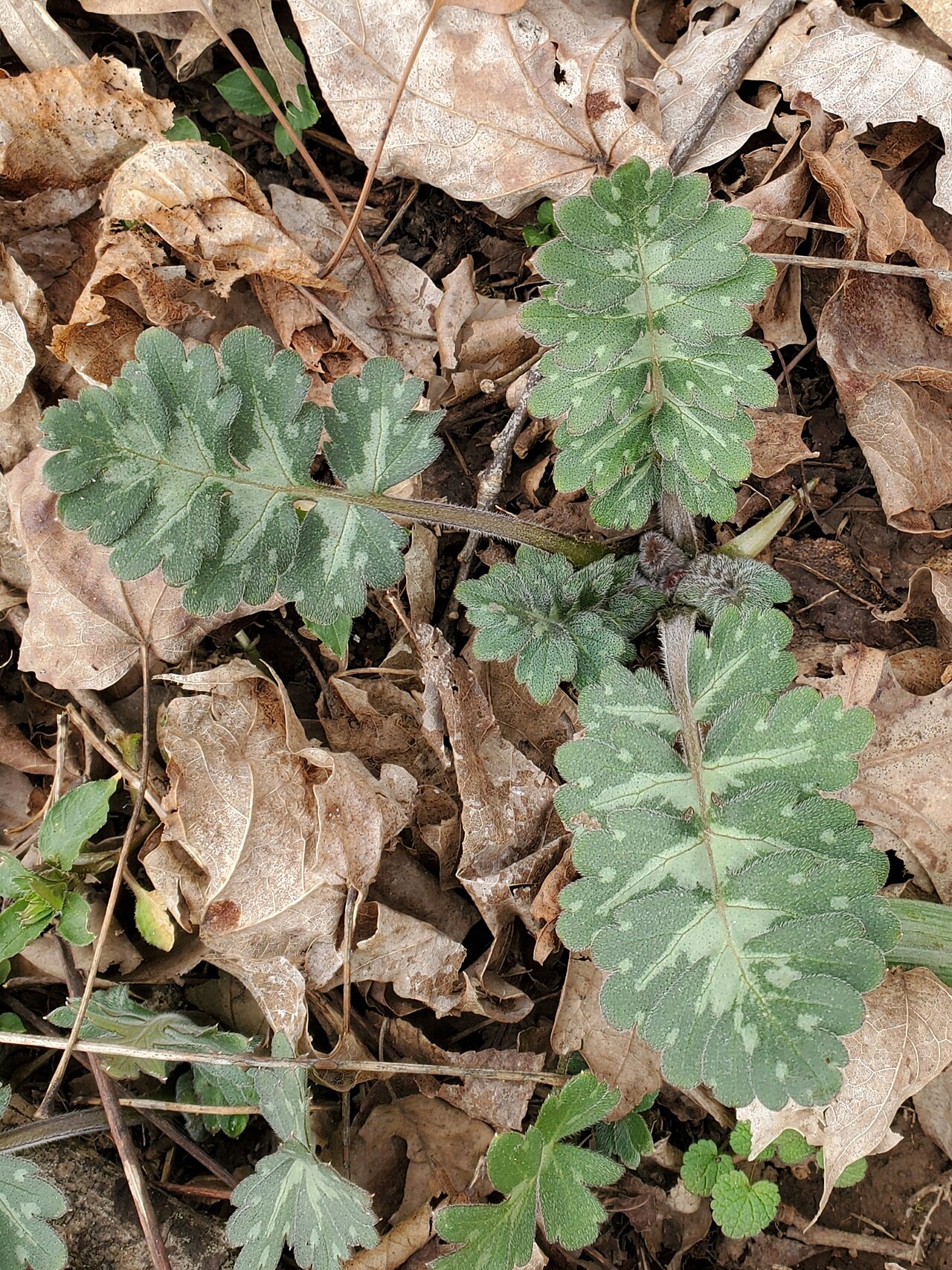
Like its relatives, it gets its common name from the pale, irregular blotches on its young leaves, which look as if water had stained them. The leaves can be up to a foot long and are divided into 7 to 13 toothed lobes. Plants grow 1 to 2 feet tall and spread slowly by short rhizomes, forming patches on moist, shady slopes, ravines and stream terraces, often over limestone.
Large-leaf waterleaf is a good groundcover for shade gardens with rich, moist soil. Its leaves fill gaps left by spring ephemerals, and its flowers are an important early-summer food for bumble bees and other native bees. It is less common in gardens than Virginia waterleaf, so look for it from native plant nurseries in its range.
Identification
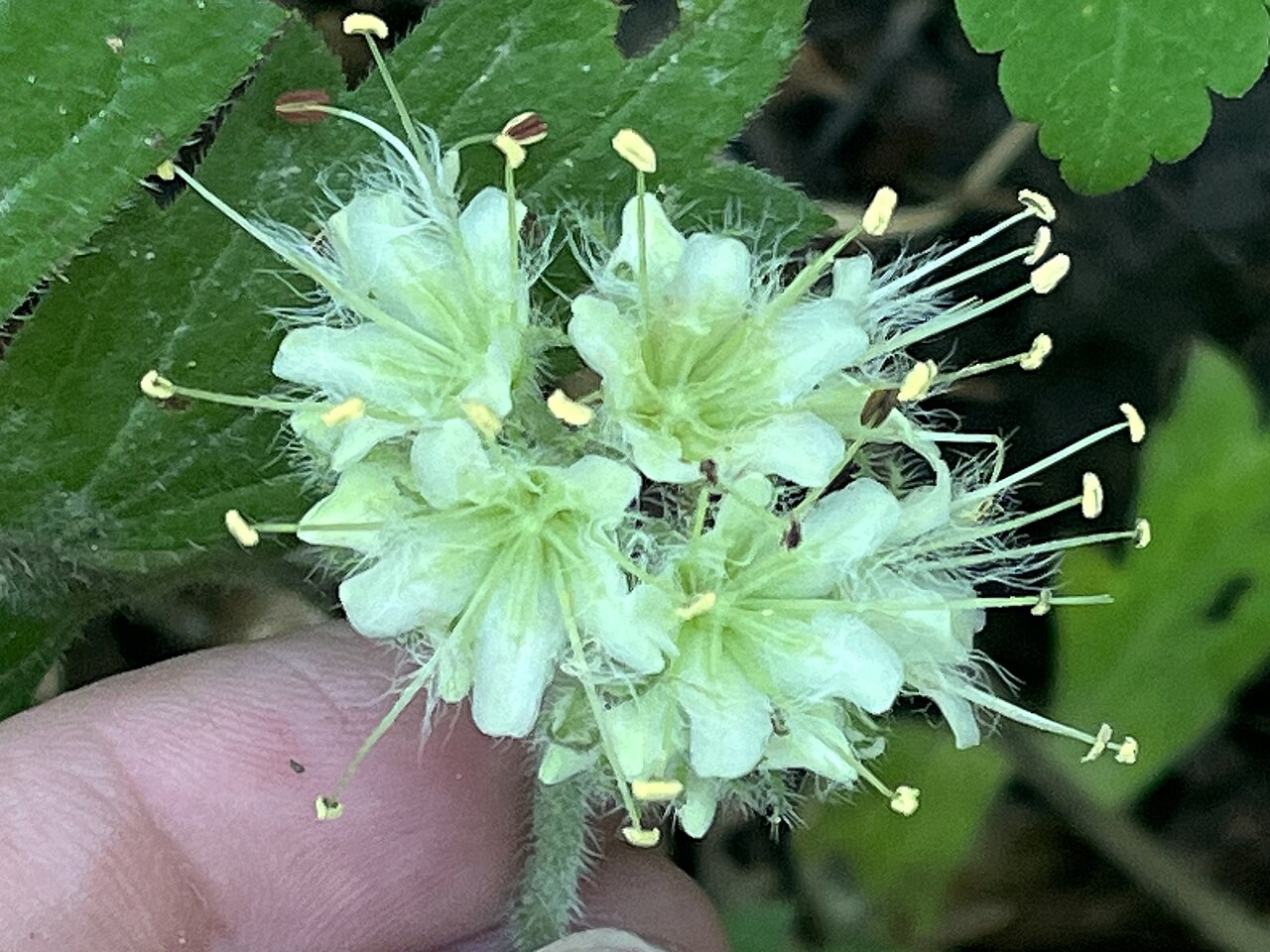
Look for large, very hairy, pinnately lobed leaves with pale mottling in spring, and in May to July rounded, bristly clusters of pale bell-shaped flowers with long, protruding stamens.
Growth Habit
Large-leaf waterleaf is a herbaceous perennial 1 to 2 1/2 feet tall from a short, scaly rhizome. Its stems and leaf stalks are covered in stiff, spreading hairs that feel rough to the touch. Plants grow singly or in loose colonies on the forest floor. The foliage stays green through most of the summer, unlike spring ephemerals that disappear by June.
Leaves
The leaves are large, often 6 to 12 inches long, oblong in outline and pinnately divided into 7 to 13 lobes or segments with coarse, irregular teeth. Both surfaces are rough-hairy. In spring, the leaves often show pale gray or whitish blotches, as if stained by water; the markings fade as the leaves mature. Lower leaves have long stalks; upper ones are smaller.
Flowers
Flowers appear from May to July in dense, rounded clusters (cymes) on long stalks that rise above the leaves. Each flower is bell-shaped, about 1/2 inch long, white to pale lavender, sometimes greenish-white. The five long stamens and the style stick out well beyond the petals, and the sepals are bristly-hairy, giving the clusters a fuzzy look.
Fruit & Seeds
The fruit is a small, round capsule enclosed by the hairy sepals, with one to three seeds. Capsules ripen in early to mid summer.
Look-alikes
Virginia waterleaf has smoother leaves with fewer (5 to 7) lobes and less bristly flowers. Broadleaf waterleaf has maple-like, palmately lobed leaves. Great waterleaf has palmately lobed upper leaves and lavender flowers with small appendages between the sepals. Large-leaf waterleaf is the hairiest of these and has the most lobes.
Quick Facts
| Scientific Name | Hydrophyllum macrophyllum |
| Family | Boraginaceae (borage family; formerly Hydrophyllaceae) |
| Plant Type | Herbaceous perennial |
| Mature Height | 1–2.5 ft |
| Mature Spread | 1–2 ft; slowly forms colonies |
| Growth Rate | Moderate |
| Sun Exposure | Part shade to full shade |
| Water Needs | Medium; moist but well-drained |
| Soil Type | Rich, loamy forest soil, often over limestone |
| Soil pH | Slightly acidic to neutral or alkaline (about 6.0–7.5) |
| Bloom Time | May–July |
| Flower Color | White to pale lavender |
| Fall Color | None notable |
| Fruit | Small round capsule |
| Deer Resistant | Moderate; rough hairs discourage some browsing |
| USDA Hardiness Zones | 5–8 |
Native Range
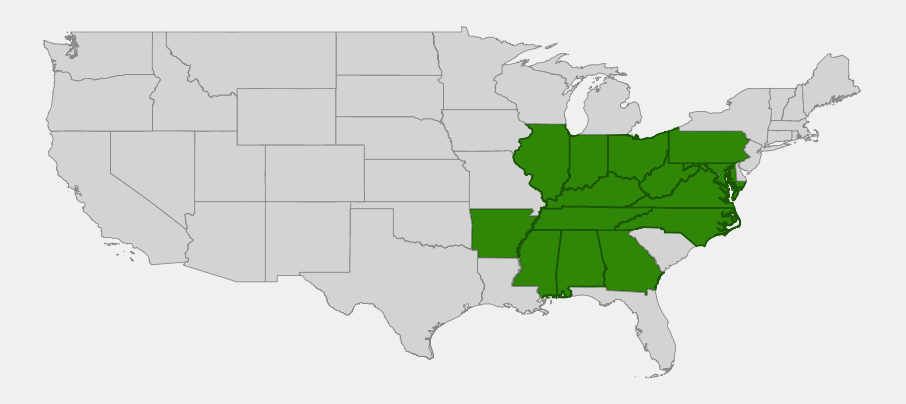
Large-leaf waterleaf is a plant of the eastern and central United States, and is not found in Canada. USDA PLANTS lists it as native in 14 states: Pennsylvania, Maryland, Virginia and West Virginia, west through Ohio, Indiana and Illinois, and south through Kentucky, Tennessee, North Carolina, Georgia, Alabama, Mississippi and Arkansas.
It is most common in the Ohio Valley and the Interior Low Plateaus of Kentucky, Tennessee, southern Ohio and southern Indiana, and in the western Appalachians. It becomes scattered and uncommon toward its edges, including the Piedmont and mountains of North Carolina and Georgia, northern Mississippi and the Ozarks of Arkansas.
It grows in rich, moist deciduous forests, on shaded slopes and bluffs, in ravines, on stream terraces and at the bases of limestone outcrops. It favors fertile, loamy soils, often calcareous, in the same habitats as many spring wildflowers.
📋 Regional plant lists featuring Large-Leaf Waterleaf: New York, Pennsylvania & Northern New Jersey · Ohio & Indiana · Kentucky & Tennessee · Maryland, Virginia & West Virginia · Illinois, Iowa & Missouri · Alabama, Georgia & Mississippi · North & South Carolina · Arkansas, Louisiana, Eastern Oklahoma & Eastern Texas
Growing & Care Guide
Large-leaf waterleaf is easy to grow in rich, moist shade. It establishes as a loose groundcover and returns reliably each year.
Light
Part shade to full shade under deciduous trees. It tolerates morning sun if the soil stays moist, but leaves wilt and scorch in hot afternoon sun.
Soil & Water
Plant in loamy, humus-rich soil that stays moist but drains well. It does well in neutral to slightly alkaline soils and over limestone. Water during long dry spells, especially the first year. Leaving fallen leaves in place keeps the soil rich and moist.
Planting Tips
Plant in spring or fall, about 12 to 18 inches apart. It works well with spring ephemerals such as Virginia bluebells, whose space it fills after they go dormant, and with wild ginger and ferns.
Pruning & Maintenance
Little care is needed. Cut back tired, ragged foliage in late summer if you want a tidier look. It spreads slowly by rhizomes and seed but is not aggressive in most gardens.
Propagation
Divide clumps in early spring or fall. Seed can be sown outdoors in fall soon after ripening; it needs a cold, moist winter period before it germinates in spring.
Landscape Uses
- Shade groundcover: a hairy, textured groundcover for rich woodland soil
- Woodland gardens: fills gaps left by spring ephemerals
- Pollinator gardens: late-spring nectar and pollen for bumble bees
- Naturalized slopes: helps hold soil on shady, moist banks
- Restoration: understory plantings in rich deciduous forests
Wildlife & Ecological Value
Large-leaf waterleaf supports native bees in late spring and early summer, a time when woodland flowers are becoming scarce.
For Pollinators
The nectar-rich flowers are visited by bumble bees, mason bees, sweat bees and other native bees, as well as flies and butterflies. Some native mining bees (Andrena) specialize on waterleaf pollen.
For Birds
Its seeds are small and few, so it is not an important food for birds, but its dense foliage gives cover to ground-foraging birds.
For Mammals
The rough, hairy foliage is browsed occasionally by deer and rabbits but is less favored than smoother woodland plants.
Ecosystem Role
As a long-lived, colony-forming perennial, it helps build and protect the rich soil of moist woodland slopes and provides summer leaf cover after the spring ephemerals fade.
Cultural & Historical Uses
The genus name Hydrophyllum comes from the Greek hydro (water) and phyllon (leaf), and the species name macrophyllum means “large-leaved.” The “water” in the name refers to the pale, water-stain-like marks on young leaves, though some sources suggest it also refers to the water that collects in the cupped young leaves.
The young leaves of some waterleafs, especially Virginia waterleaf, were traditionally cooked as spring greens. Large-leaf waterleaf is much hairier and less palatable, and it should not be eaten unless you are certain of identification and preparation.
Waterleafs were long placed in their own family, the Hydrophyllaceae. DNA studies have shown that they belong in the borage family (Boraginaceae), along with bluebells and forget-me-nots.
Frequently Asked Questions
Why is it called waterleaf?
Young leaves have pale, irregular blotches that look like water stains. The markings fade as the leaves mature.
How is large-leaf waterleaf different from Virginia waterleaf?
Large-leaf waterleaf is much hairier, with rough leaves divided into 7 to 13 lobes. Virginia waterleaf is smoother and has 5 to 7 lobes.
Is large-leaf waterleaf invasive?
No. It is a native woodland perennial that spreads slowly by rhizomes and seed and rarely becomes a problem in gardens.
Does large-leaf waterleaf grow in shade?
Yes. It grows best in part to full shade in rich, moist woodland soil.
What pollinators visit waterleaf flowers?
Bumble bees and many smaller native bees, including specialist mining bees, as well as flies and butterflies.

Looking for a nursery that carries Large-Leaf Waterleaf?
Browse our native plant nursery directory: Alabama & Arkansas · Georgia · Illinois & Indiana · Kentucky, Maryland & Mississippi · North Carolina & Ohio · Pennsylvania, Tennessee & Virginia · West Virginia

