
False Boneset (Brickellia eupatorioides)
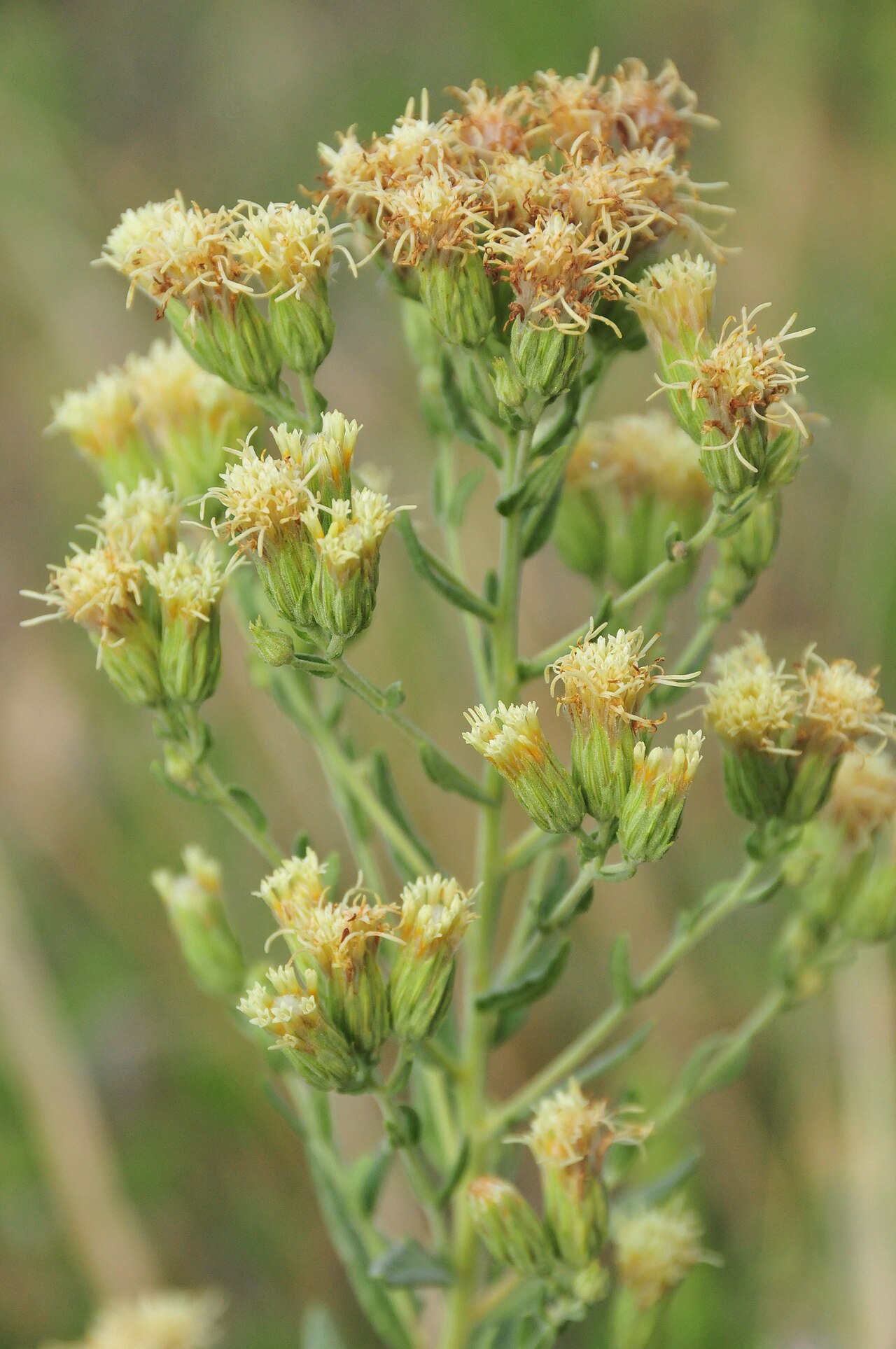
Brickellia eupatorioides, known as False Boneset, is a tough, deep-rooted perennial of prairies, glades, dry open woods and rocky slopes across much of the United States. In late summer and fall it produces loose clusters of small, creamy white to pale yellow flower heads with long, curling styles, followed by fluffy, tan seed heads that last into winter. It belongs to the aster family (Asteraceae) and was long known under the name Kuhnia eupatorioides, which many older field guides still use.
False boneset is not a showy plant, but it is a dependable one. Its deep taproot lets it survive drought, heat and poor, rocky or sandy soils where many wildflowers fail, and its late flowers feed bees, butterflies and moths when prairie bloom is winding down. It is a characteristic plant of high-quality prairie remnants from the Great Plains to the Midwest, and it reaches east to the Atlantic Coastal Plain and southwest into the deserts.
Its common name comes from its resemblance to true boneset (Eupatorium perfoliatum), a relative in the same family. This guide covers how to identify false boneset, its large native range, and how to use it in dry prairie and meadow gardens.
Identification
False boneset is easiest to recognize in late summer and fall by its rayless, creamy flower heads with shaggy, protruding styles, and later by its tawny, feathery seed heads. The species is quite variable, and botanists divide it into several varieties across its range.
Stems & Growth Habit
Plants grow 1 to 4 feet tall from a thick, woody taproot, usually with several stiff, upright stems that branch near the top. The stems are often finely hairy and may be reddish or purplish. In the dry western part of the range plants tend to be shorter and bushier; in the eastern prairies they are taller and more open.
Leaves
The leaves are alternate, mostly stalkless, and lance-shaped to narrowly linear, from about 1 to 4 inches long. They may have a few coarse teeth or be entire. Under a hand lens the undersides are dotted with tiny resin glands. Western and southern plants often have very narrow, almost grasslike leaves.
Flowers
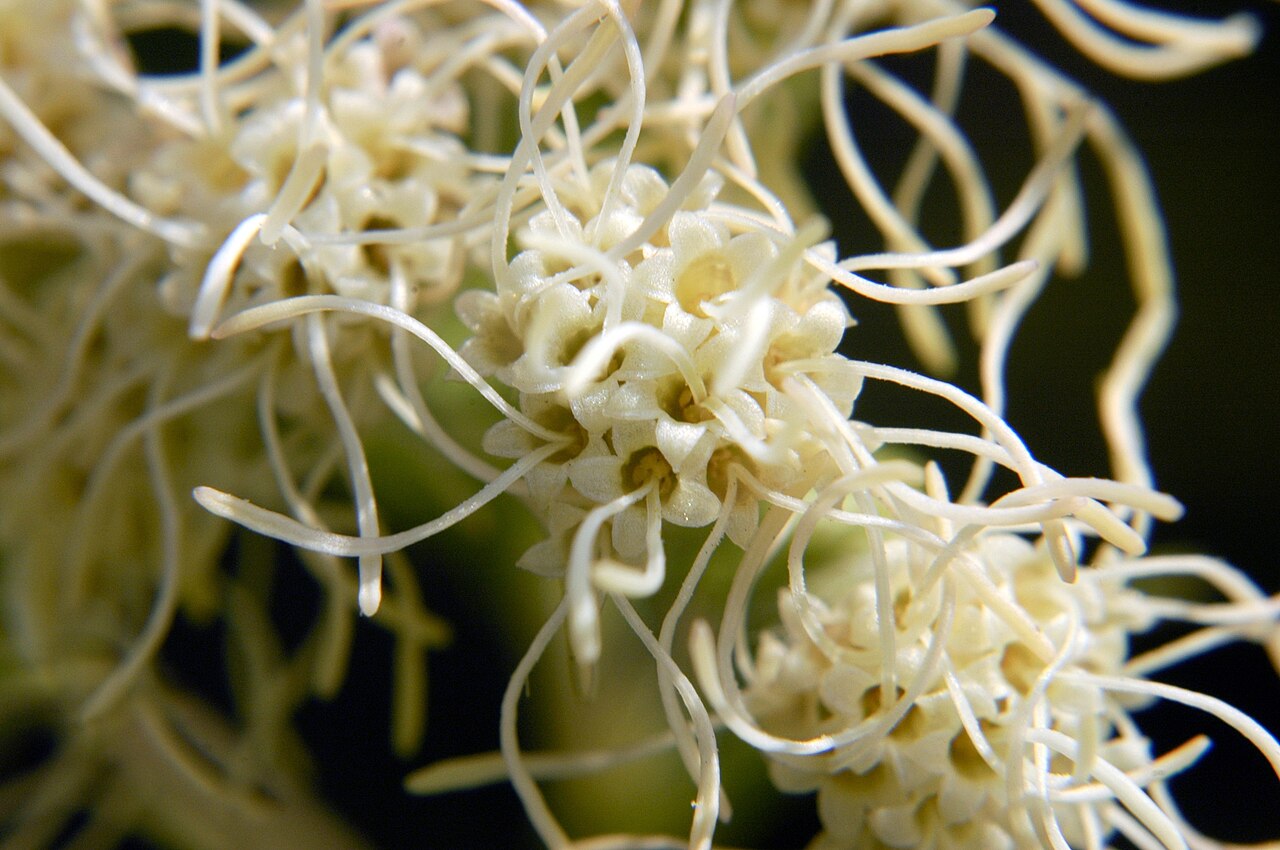
The flower heads are borne in loose, branched clusters at the tops of the stems. Each head is about ½ inch long and contains 7 to about 30 small, tubular disk florets, creamy white to pale yellow, sometimes tinged with pink or purple. There are no ray petals. The long, curling, cream-colored styles stick out from each floret and give the heads a shaggy look. The heads are held in a cup of narrow, striped bracts. It blooms from about July to October, depending on location.
Fruit & Seeds
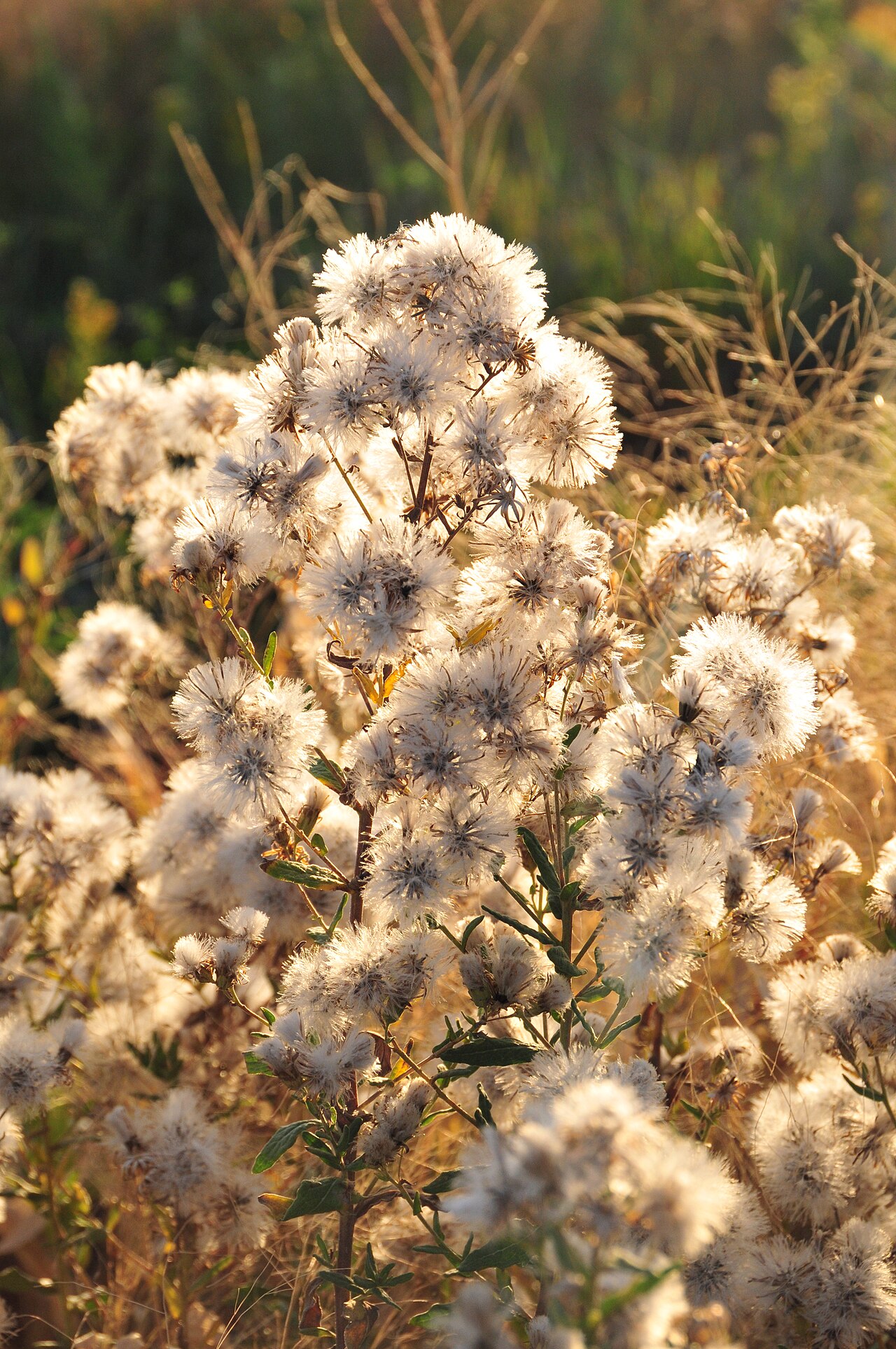
Each floret produces a small, ribbed, dark seed (achene) topped by a pappus of feathery, tan to white bristles. When ripe, the heads open into fluffy, light brown balls that look like little dandelion clocks, and the seeds blow away on the wind. The dry seed heads often remain on the plants into winter.
Look-alikes
True boneset (Eupatorium perfoliatum) has white flowers in flat-topped clusters and large, wrinkled leaves joined around the stem; it grows in wet places. Tall boneset (Eupatorium altissimum) has opposite leaves with three prominent veins. False boneset has alternate leaves, a feathery pappus and shaggy, cream-colored flower heads, and it grows in dry places.
Quick Facts
| Scientific Name | Brickellia eupatorioides (syn. Kuhnia eupatorioides) |
| Family | Asteraceae (aster family) |
| Plant Type | Herbaceous perennial with a deep taproot |
| Mature Height | 1–4 ft |
| Mature Spread | 1–2 ft |
| Growth Rate | Moderate |
| Sun Exposure | Full sun to light shade |
| Water Needs | Low; very drought tolerant |
| Soil Type | Dry, well-drained sandy, rocky, gravelly or clay-loam soils |
| Soil pH | About 6.0–8.0 |
| Bloom Time | July–October |
| Flower Color | Creamy white to pale yellow, sometimes tinged pink |
| Fall Color | Tan, fluffy seed heads in fall and winter |
| Fruit | Small achene with a feathery pappus, wind dispersed |
| Deer Resistant | Moderate |
| USDA Hardiness Zones | 3–9 |
Native Range
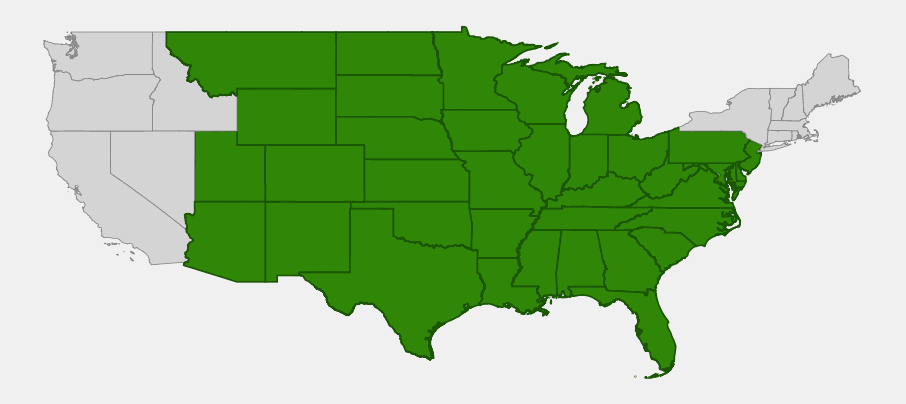
False boneset has one of the largest ranges of any prairie wildflower. USDA PLANTS lists it as native in 36 states, from New Jersey, Pennsylvania and Michigan west across the Midwest and Great Plains to Montana, Wyoming, Colorado and Utah, and south to Florida, the Gulf Coast, Texas, New Mexico and Arizona. It is also native in northern Mexico.
It is most common in the prairies and plains, from Minnesota and the Dakotas south through Nebraska, Kansas and Oklahoma to Texas, where it grows on upland prairies, rocky hillsides and roadsides. In the Southwest, including West Texas, New Mexico and Arizona, it grows in grasslands, rocky slopes and open woodlands in the mountains. East of the Mississippi it is more scattered, growing in dry prairies, cedar glades, sand barrens, open oak woods and the sandy pinelands of the Southeast. Near the northeastern edge of its range, in states such as New Jersey, Pennsylvania and Michigan, it is uncommon.
Botanists recognize several varieties that replace each other across this range. Var. eupatorioides grows in the East, var. corymbulosa in the Midwest and Plains, var. chlorolepis in the Southwest and Rocky Mountain foothills, and var. texana and var. gracillima mainly in Texas and nearby states.
📋 Regional plant lists featuring False Boneset: New York, Pennsylvania & Northern New Jersey · Ohio & Indiana · Montana & Wyoming · Michigan, Wisconsin & Eastern Minnesota · Kentucky & Tennessee · Nebraska, Kansas & Eastern Colorado · Utah & Western Colorado · Maryland, Virginia & West Virginia · Delaware, Southern New Jersey & Long Island · Arizona & New Mexico · Illinois, Iowa & Missouri · Alabama, Georgia & Mississippi · North & South Florida · North & South Carolina · Arkansas, Louisiana, Eastern Oklahoma & Eastern Texas · South & West Texas · North Dakota, South Dakota & Western Minnesota
Growing & Care Guide
False boneset is an easy, low-maintenance plant for dry, sunny sites. It thrives on neglect, needs no watering once established, and adds late-season bloom and winter texture to prairie gardens. Its deep taproot makes it long-lived and drought-proof, but also means it should be planted young and then left in place.
Light
Full sun is best. It tolerates light shade, such as at the edge of open woods or savannas, but grows lanky and flowers less in heavy shade.
Soil & Water
It needs well-drained soil and does well in poor, dry, sandy, gravelly, rocky or clay-loam soils, including limestone soils. Avoid rich, wet or poorly drained soil, where it may flop or rot. Water new plants until they are established; after that it rarely needs watering, even in drought.
Planting Tips
Plant young plugs or seedlings in spring or fall; the taproot makes larger plants difficult to move. Space plants 12 to 18 inches apart and mix them with native grasses such as little bluestem and sideoats grama, which help hold them upright. It is a good choice for difficult sites such as dry slopes, banks and hellstrips.
Pruning & Maintenance
No regular maintenance is needed. Leave the seed heads standing through winter for texture and for the birds, and cut the old stems back in late winter or early spring. In larger prairie plantings, periodic burning or mowing in late winter helps keep woody plants from invading. Do not fertilize.
Propagation
Grow it from seed. Collect the fluffy seed heads in fall and sow the seeds outdoors in fall or in early spring after a short cold, moist stratification. Seedlings develop a taproot quickly, so transplant them while small. Mature plants do not divide well.
Landscape Uses
- Prairie and meadow gardens: late-season bloom and winter seed heads on dry, sunny sites
- Xeriscapes and rock gardens: very drought tolerant once established
- Pollinator gardens: late-summer and fall nectar for bees, butterflies and moths
- Restoration: a common component of prairie and grassland seed mixes
- Difficult sites: dry slopes, sandy banks, roadsides and other hard-to-plant spots
Wildlife & Ecological Value
False boneset may look modest, but its late flowers, seeds and foliage support a range of wildlife in prairies and grasslands.
For Pollinators
The flowers bloom late in the season, when many prairie plants have finished, and attract bees, flies, butterflies and moths. Several flower moths in the genus Schinia lay their eggs on the flower heads, and their caterpillars feed on the developing flowers and seeds.
For Birds
Seed-eating birds such as sparrows and finches feed on the seeds in fall and winter, and the standing stems provide cover in grassland habitats.
For Mammals
Deer and livestock browse the plant to some degree, but it is not a preferred food. Its deep taproot helps it survive grazing and recover from it.
Ecosystem Role
As a deep-rooted perennial, false boneset helps stabilize soil on dry slopes and in sandy areas. It is a characteristic species of intact prairies and grasslands and an indicator of good habitat quality in many areas.
Cultural & Historical Uses
The genus Brickellia honors John Brickell, an Irish-born naturalist and physician who settled in Georgia in the late 1700s. The earlier genus name Kuhnia honored Adam Kuhn, an American physician and botanist who studied with Linnaeus. False boneset was moved from Kuhnia to Brickellia because the two genera are so similar.
The species name eupatorioides means “like Eupatorium,” the boneset genus. The common name false boneset reflects this resemblance.
Some Plains peoples reportedly used false boneset medicinally, and its leaves contain aromatic resin. These are historical uses; the plant is not recommended for home remedies.
Frequently Asked Questions
Is false boneset the same as boneset?
No. True boneset (Eupatorium perfoliatum) is a related plant of wet places with white flowers and leaves that clasp the stem. False boneset grows in dry places and has alternate leaves and shaggy, cream-colored flower heads.
Is false boneset drought tolerant?
Yes, very. Its deep taproot lets it survive long droughts, and it grows well in poor, dry, rocky or sandy soils.
When does false boneset bloom?
From about July to October, depending on location. The fluffy seed heads follow in fall and often last into winter.
What is Kuhnia eupatorioides?
It is an older scientific name for false boneset, still used in many field guides.
Does false boneset spread aggressively?
No. It grows as a clump from a taproot and spreads only by seed, usually modestly.

Looking for a nursery that carries False Boneset?
Browse our native plant nursery directory: Alabama, Arizona & Arkansas · Colorado, Delaware, Florida & Georgia · Illinois, Indiana, Iowa & Kansas · Kentucky, Louisiana, Maryland, Michigan, Minnesota, Mississippi, Missouri & Montana · Nebraska, New Jersey, New Mexico, North Carolina, North Dakota, Ohio & Oklahoma · Pennsylvania, South Carolina, South Dakota, Tennessee, Texas, Utah & Virginia · West Virginia, Wisconsin & Wyoming

