
New Mexico Thistle (Cirsium neomexicanum)
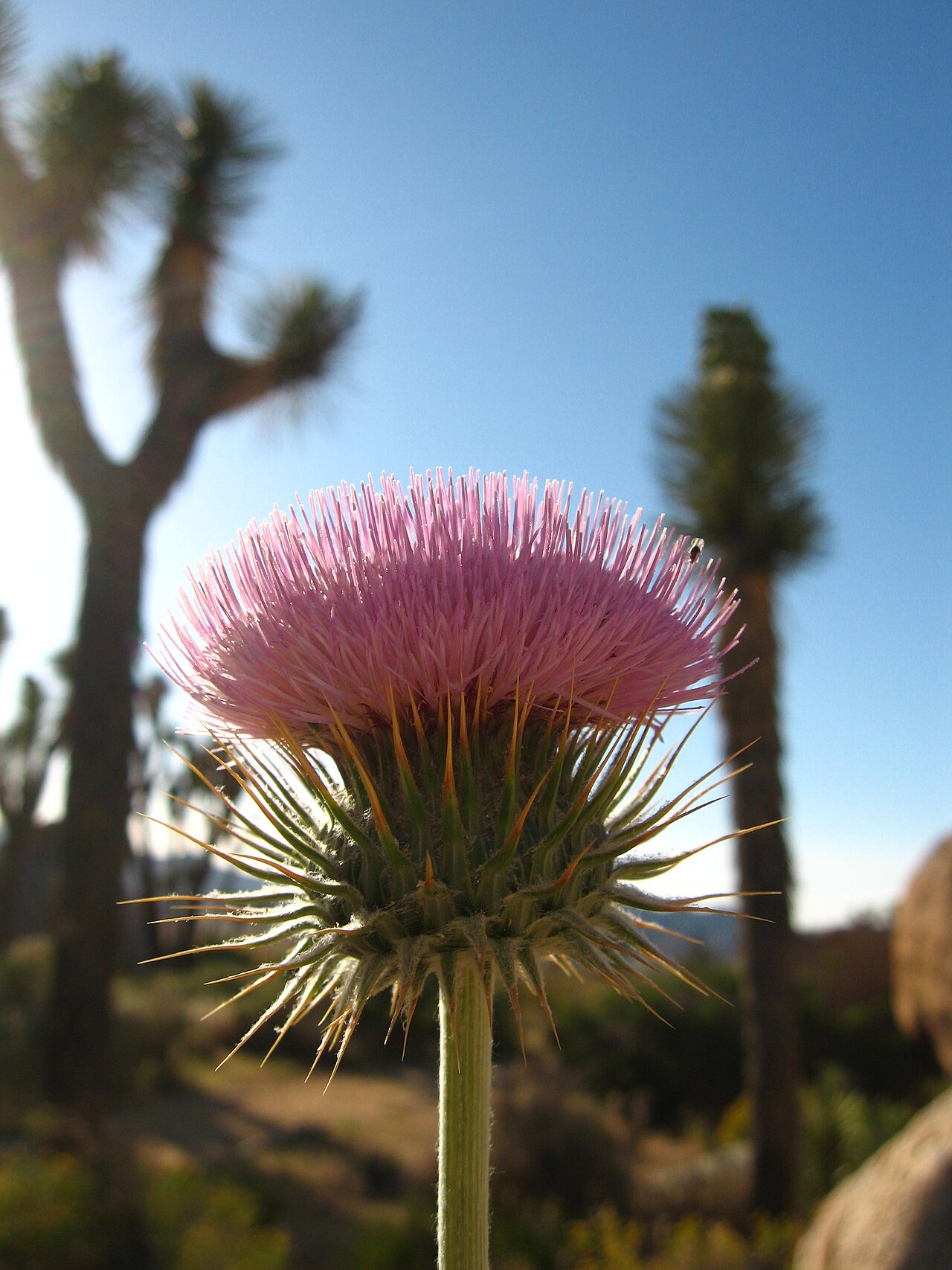
Cirsium neomexicanum, known as New Mexico Thistle or desert thistle, is a tall, silvery native thistle of the desert Southwest. It spends its first year as a flat rosette of gray-green, spiny leaves, then sends up slender, woolly stems 2 to 6 feet tall (occasionally taller) topped with large, shaggy flower heads in white, pale pink or soft lavender from spring into early summer.
It is one of the most common native thistles of the Mojave Desert, the Colorado Plateau and the deserts and foothills of Arizona and New Mexico, growing on rocky slopes, in washes and along roadsides from creosote bush scrub up into pinyon-juniper woodland. Unlike the invasive bull thistle and musk thistle, New Mexico thistle is a native wildflower and an important nectar and pollen source for bees and butterflies in dry country.
For gardeners in the Southwest it is an easy, drought-tolerant plant for a wild or habitat garden, especially for anyone who wants to feed native bees, butterflies and goldfinches. This guide covers how to identify it, where it grows, how to grow it from seed, and its value to wildlife.
Identification
New Mexico thistle is a tall, pale native thistle. The white-woolly stems, spiny bracts and pale flower heads help separate it from weedy thistles.
Growth Habit
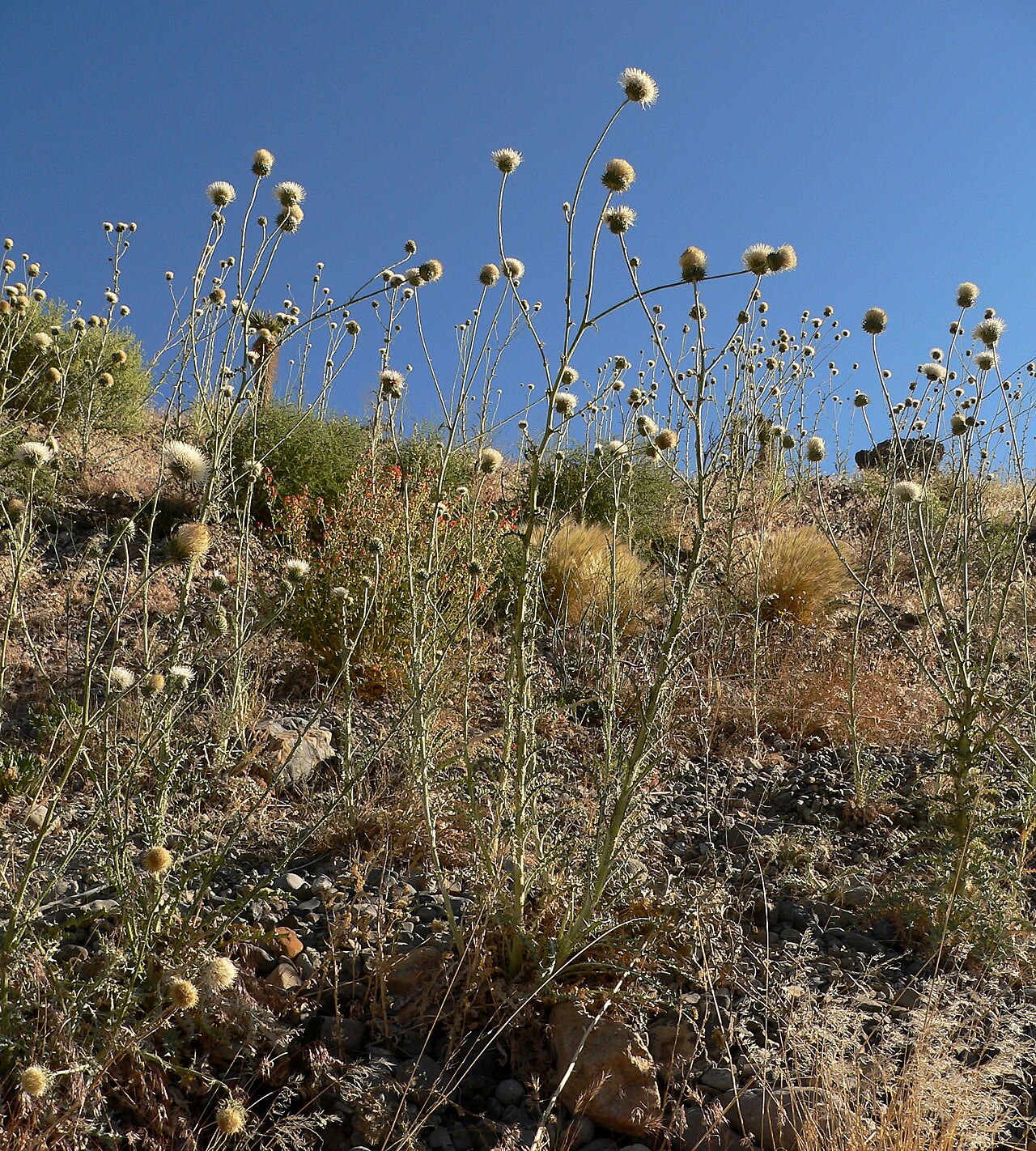
A biennial or short-lived perennial. The first year it forms a basal rosette of spiny leaves; in the second spring it bolts into one to several slender, sparingly branched stems, usually 2 to 6 feet tall. The stems are covered with white, cobwebby wool, giving the whole plant a silvery-gray look. After flowering and setting seed the plant usually dies.
Leaves
The leaves are long and narrow, deeply lobed, and armed with stiff yellowish spines along the edges and lobe tips. Both surfaces are gray-green to whitish with fine woolly hairs. Basal leaves can be 6 to 12 inches long; stem leaves are smaller and clasp the stem.
Flowers
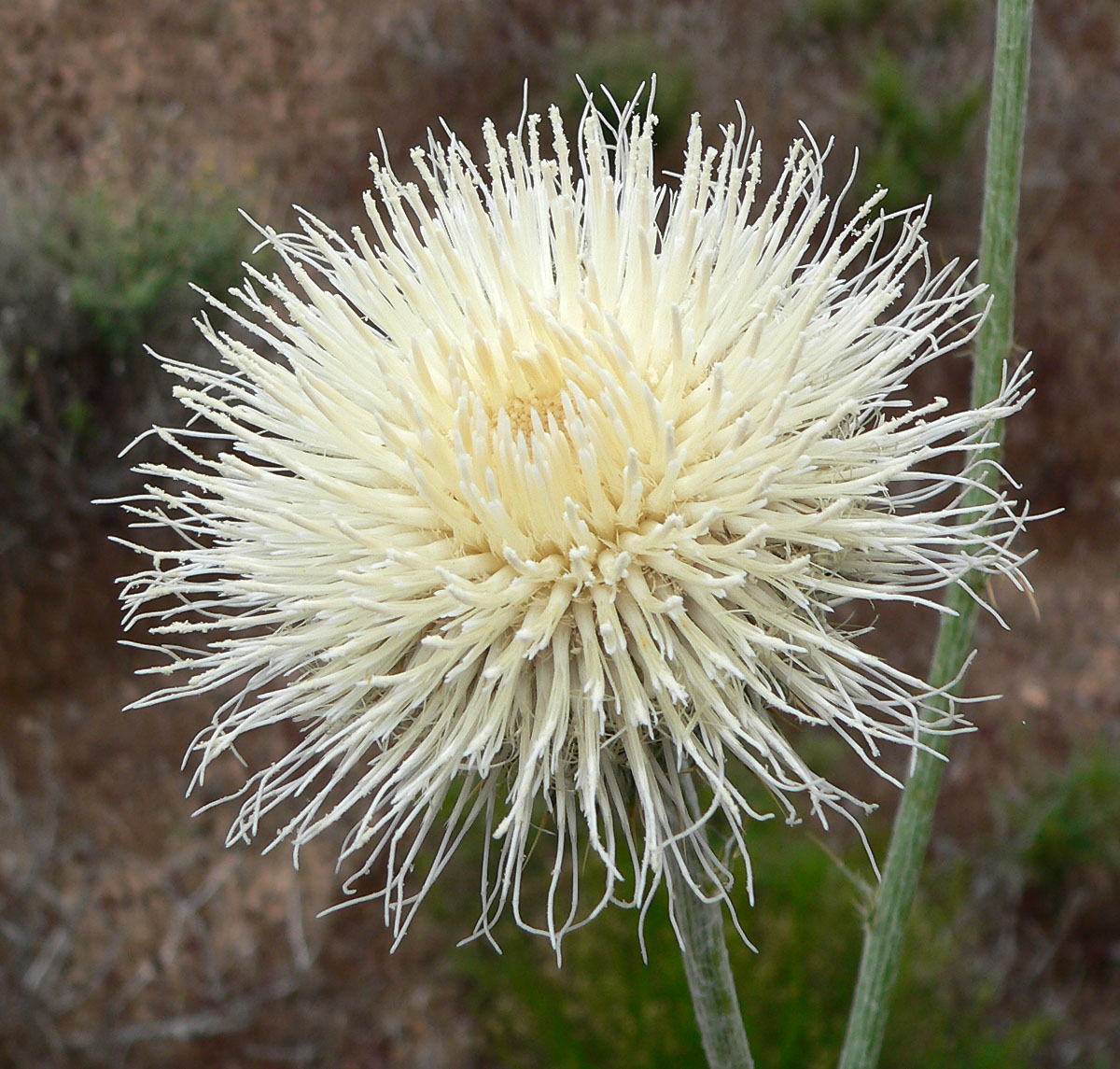
Flower heads are about 1½ to 2½ inches across, held singly at the tips of long, often nearly leafless branches. Each head is made up of many slender tubular florets, usually white, cream or pale pink to lavender. The cup of bracts below the flowers (the involucre) is cobwebby and lined with long, slender, outward-spreading spines, which makes the heads look prickly even from a distance. Bloom is mainly from March to July, earlier in the low desert and later at higher elevations.
Fruit & Seeds
The seeds (achenes) are small, smooth and tipped with a feathery, white pappus that carries them on the wind. Ripe heads turn into fluffy white balls in early summer.
Look-alikes
Bull thistle (Cirsium vulgare) is an invasive European thistle with spiny-winged stems and dark green leaves, and musk thistle (Carduus nutans) has nodding, deep pink heads; neither has the white-woolly stems of New Mexico thistle. Among native thistles, wavyleaf thistle is shorter and more branched, with wavy, gray leaves and usually pinkish-purple heads, and Arizona thistle (C. arizonicum) has red to purple flowers. Cobwebby thistle of California has heads densely wrapped in cobwebby hairs.
Quick Facts
| Scientific Name | Cirsium neomexicanum A. Gray |
| Family | Asteraceae (aster family) |
| Plant Type | Biennial or short-lived perennial wildflower |
| Mature Height | 2–6 ft (occasionally taller) |
| Mature Spread | 1–2 ft |
| Growth Rate | Fast in its second year |
| Sun Exposure | Full sun to part shade |
| Water Needs | Low; tolerates long drought |
| Soil Type | Rocky, gravelly or sandy, well-drained soils |
| Soil pH | Neutral to alkaline (about 6.5–8.5) |
| Bloom Time | March–July |
| Flower Color | White, cream, pale pink or lavender |
| Fall Color | None; silvery rosettes are visible in winter |
| Fruit | Small achenes with a white, feathery pappus |
| Deer Resistant | Yes; spiny foliage is rarely browsed |
| USDA Hardiness Zones | 5–10 |
Native Range
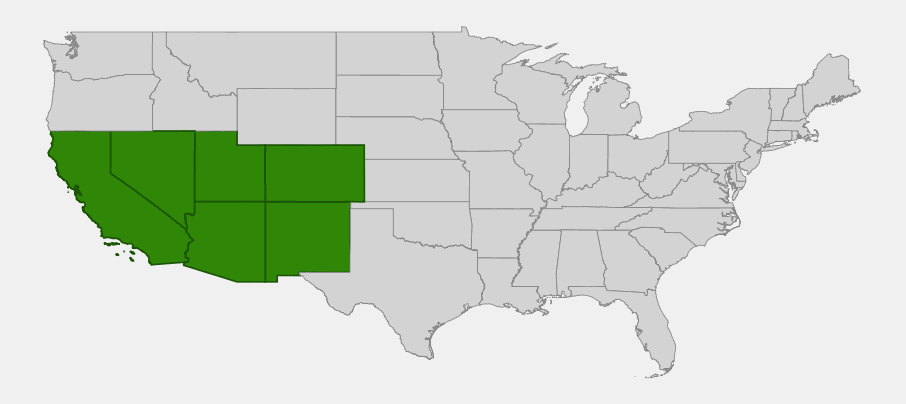
New Mexico thistle is native to the desert Southwest of the United States and northern Mexico. USDA PLANTS lists it in six states: Arizona, California, Colorado, Nevada, New Mexico and Utah. In California it grows in the Mojave Desert and the desert edges of the Transverse and Peninsular Ranges, including Joshua Tree National Park. It is common around Las Vegas and in southern Nevada, across southern and eastern Utah and the Colorado Plateau, throughout much of Arizona and New Mexico, and in western Colorado.
It grows in a wide range of dry habitats: rocky slopes and canyon sides, washes and alluvial fans, creosote bush and blackbrush scrub, desert grassland and pinyon-juniper woodland. It is also common on road shoulders and other disturbed ground, where its tall pale stems are easy to see from a car in spring.
Its elevation range runs from the low Mojave Desert at roughly 1,000 feet to about 7,500 feet in the foothills and on the Colorado Plateau, so its bloom moves upslope over the spring and early summer.
📋 Regional plant lists featuring New Mexico Thistle: Arizona & New Mexico · Utah & Western Colorado · California & Nevada
Growing & Care Guide
New Mexico thistle is easy to grow in dry, sunny gardens within its native range. Because it is a biennial, plan on letting it reseed to keep it in the garden. Seed is sometimes available from Southwest native seed suppliers. Give it room away from paths, since the leaves and flower heads are very spiny.
Light
Full sun is best. It tolerates light shade, but the plants flower less and lean toward the light.
Soil & Water
Plant in lean, well-drained rocky, gravelly or sandy soil. Once established it needs no supplemental water in most of its range. Occasional deep watering in a very dry spring can extend bloom, but rich soil and frequent watering make the plants floppy and short-lived.
Planting Tips
Sow seed in fall or late winter directly where you want plants, pressing it lightly into the soil. It germinates readily, and young rosettes are easy to move only while small, because the plant forms a deep taproot. Place it at the back of a wildflower bed, along a fence, or in a dry meadow with desert marigold and penstemons.
Pruning & Maintenance
Little care is needed. Wear gloves when handling the spiny leaves. Leave a few seed heads to ripen for goldfinches and for self-sowing; cut the rest after bloom if you want to limit spread. Remove the dead stalks after the seed has dispersed.
Propagation
Grow it from seed. Collect the fluffy seed heads as they open in early summer and store the seeds dry. Seeds need no special treatment, although a short cold, moist period can improve germination.
Landscape Uses
- Pollinator gardens: large nectar- and pollen-rich heads for native bees, bumblebees and butterflies
- Bird gardens: seed heads attract goldfinches and other finches
- Xeriscapes and dry meadows: tall silvery accent that needs no summer water
- Habitat restoration: a native pioneer on disturbed desert and foothill sites
- Wild and naturalistic gardens: a striking vertical form for the back of a dry border
Wildlife & Ecological Value
Native thistles like New Mexico thistle are among the best wildlife plants in the West, and this one is no exception in the desert.
For Pollinators
The Xerces Society lists New Mexico thistle as having special value to native bees and bumblebees, and as providing nesting materials or structure for native bees. The flower heads also draw butterflies such as painted ladies and swallowtails, and hummingbirds sometimes visit them for nectar. Several butterflies, including the painted lady, use thistles as caterpillar host plants.
For Birds
Lesser goldfinches, house finches and other seed-eating birds feed on the ripening seeds, and goldfinches use the soft thistle down to line their nests.
For Mammals
The spiny leaves are seldom browsed by deer or livestock. Rodents eat the fallen seeds.
Ecosystem Role
As a native biennial that readily colonizes open, disturbed ground, New Mexico thistle helps cover bare soil and supports a large community of insects. Native thistles also host specialist insects that do not use invasive thistles, so protecting them helps keep these insects around.
Cultural & Historical Uses
The species was described by Asa Gray in 1849 from specimens collected in New Mexico, which gave it its scientific and common names. Cirsium comes from the Greek kirsos, “swollen vein”, because some thistles were once used to treat varicose veins.
Native peoples of the Southwest used several native thistles for food and medicine, for example peeling and eating young stems or roots. Because identification takes care and some plants grow in contaminated roadside soils, it is best to enjoy this thistle for its flowers rather than as food.
Native thistles are sometimes mistakenly removed along with weedy ones during thistle control. Learning to recognize New Mexico thistle by its white-woolly stems and pale heads helps protect it while invasive species are controlled.
Frequently Asked Questions
Is New Mexico thistle a noxious weed?
No. It is a native wildflower of the Southwest. Noxious weed lists target non-native species such as bull thistle, musk thistle and Scotch thistle, not native thistles like this one.
What color are the flowers?
Usually white, cream or pale pink to lavender. Color can vary from plant to plant in the same area.
Is it a biennial or a perennial?
Usually a biennial: it grows as a rosette the first year, flowers in the second, then dies. Some plants live a little longer. Let it reseed to keep it in your garden.
Does New Mexico thistle attract butterflies?
Yes. Its large flower heads attract many butterflies as well as native bees and bumblebees, and goldfinches eat the seeds.
How tall does New Mexico thistle grow?
Usually 2 to 6 feet tall when flowering, with slender, woolly, silvery stems.

Looking for a nursery that carries New Mexico Thistle?
Browse our native plant nursery directory: Arizona · California · Colorado · Nevada & New Mexico · Utah

