
Grassy Tarweed (Madia gracilis)
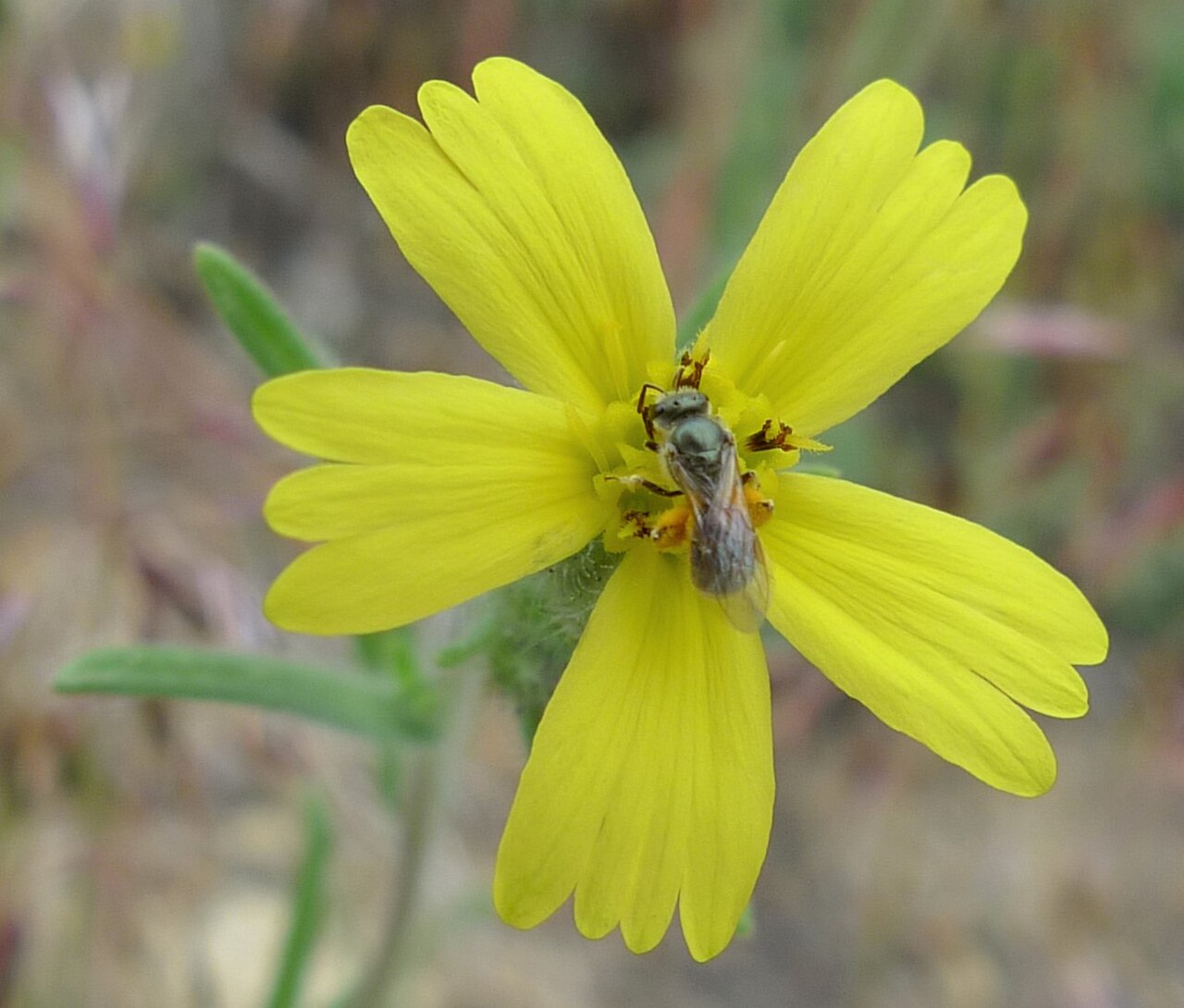
Madia gracilis, known as Grassy Tarweed, slender tarweed or gumweed madia, is a slender, sticky annual wildflower of western North America. It grows 6 inches to 3 feet tall, with narrow, hairy leaves and small yellow flower heads that open in late spring and summer. The whole plant is covered in glandular hairs that give it a sticky feel and a strong, resinous scent typical of tarweeds.
It belongs to the aster family (Asteraceae) and to the tarweed group, along with common madia, coast tarweed and hayfield tarweed. The flower heads often open in the evening or on cloudy days and close in hot afternoon sun, a habit shared by several madias.
Grassy tarweed grows from British Columbia through Washington, Oregon and California to Baja California, and east to Idaho, Montana, Nevada and Utah. It is common in grasslands, oak woodland openings and open forests. This guide covers how to identify it, where it grows, how to grow it from seed, and its value to wildlife and people.
Identification
Grassy tarweed is a wiry, upright annual with small yellow daisy-like flowers that can be hard to spot during the heat of the day. Touch it, and the sticky glands and strong, resinous smell confirm that it is a tarweed.
Growth Habit
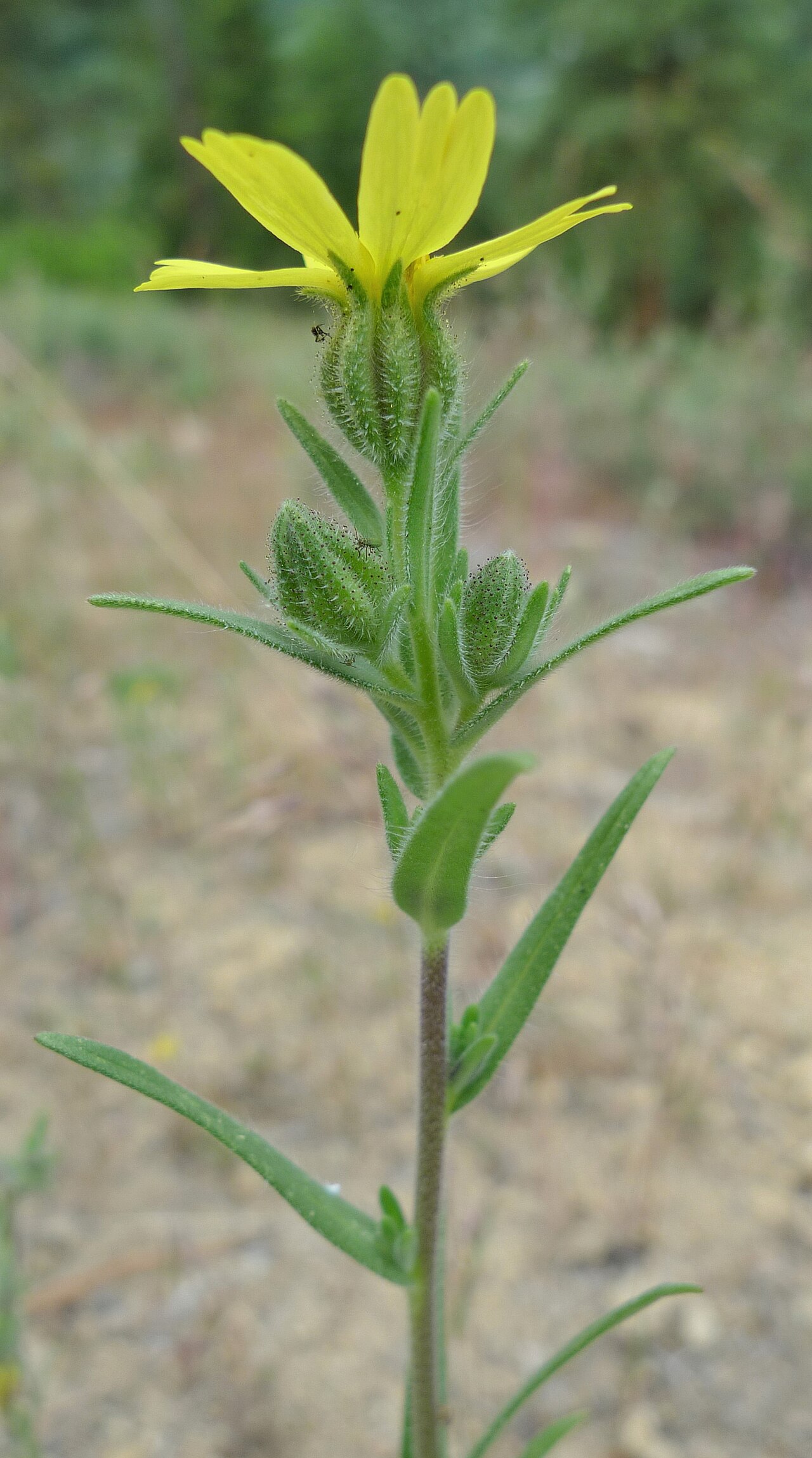
It is an annual, usually 6 inches to 3 feet tall, with a single, slender stem that branches in the upper part. The stems are hairy and glandular, especially toward the top. It germinates with the fall or winter rains and flowers from late spring through summer.
Leaves
The leaves are narrow and linear, up to about 4 inches long, softly hairy and often glandular. Lower leaves are opposite and upper leaves alternate, and they become smaller toward the top of the plant.
Flowers
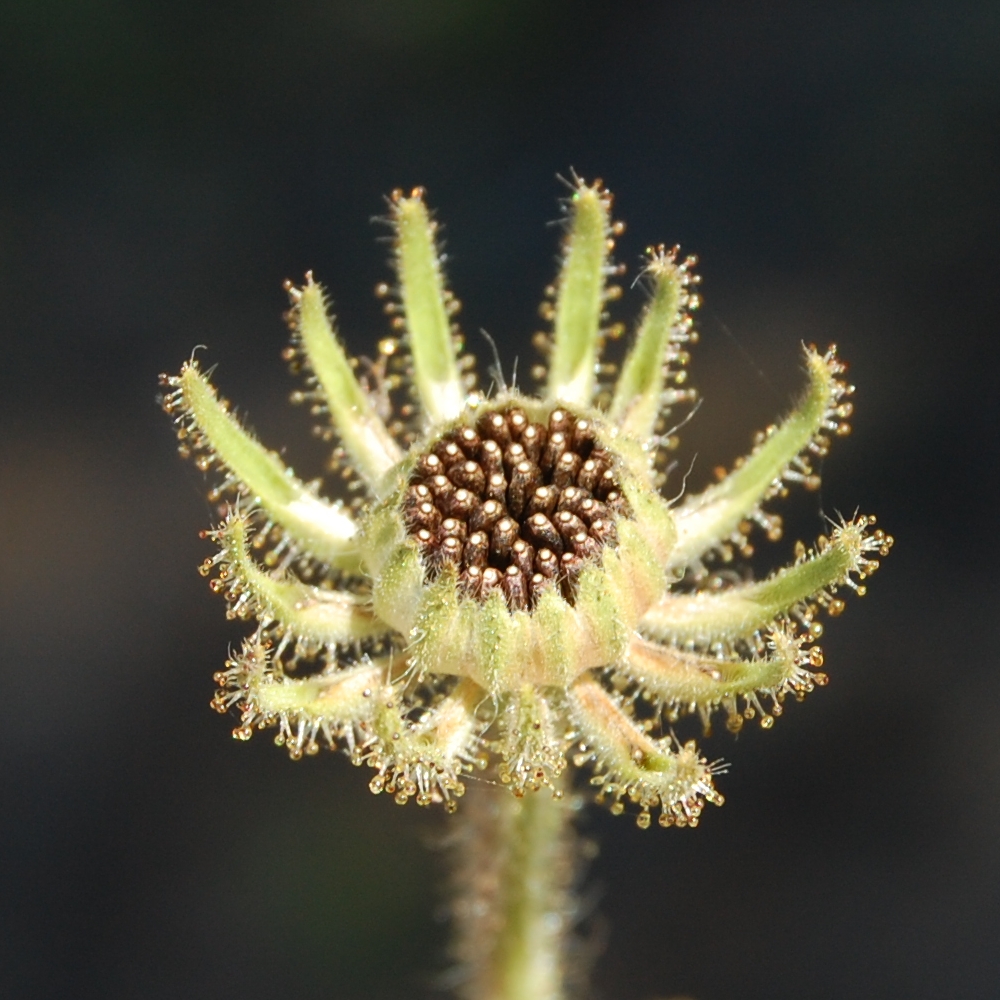
The flower heads are small, about 1/2 inch across, arranged in loose clusters at the ends of the branches. Each head has a few short, yellow ray florets, each with three lobes at the tip, around a small cluster of disc florets with dark, black-purple anthers. The bracts surrounding the head are densely covered with stalked, knob-tipped resin glands. Bloom time is mainly May to August.
Fruit & Seeds
The fruits are small, flattened, hairless achenes with no pappus, often dark and mottled. They fall near the plant or cling to animals and clothing.
Look-alikes
Common madia has larger flower heads with showy rays, often with a maroon spot at the base. Coast tarweed is stouter, with more crowded heads. Grassy tarweed is distinguished by its slender, wiry habit and small heads with short rays and dark anthers.
Quick Facts
| Scientific Name | Madia gracilis (Sm.) D.D. Keck |
| Family | Asteraceae (aster family) |
| Plant Type | Annual wildflower |
| Mature Height | 0.5–3 ft |
| Mature Spread | 4–12 in |
| Growth Rate | Fast (annual) |
| Sun Exposure | Full sun to light shade |
| Water Needs | Low; winter-spring moisture only |
| Soil Type | Wide range; well-drained loam, clay, rocky or disturbed soils |
| Soil pH | About 5.5–7.5 |
| Bloom Time | May–August |
| Flower Color | Yellow |
| Fall Color | None; dries to tan by late summer |
| Fruit | Small, flattened, hairless achene |
| Deer Resistant | Fairly; sticky and strong-smelling |
| USDA Hardiness Zones | 5–10 (grows as a cool-season annual) |
Native Range
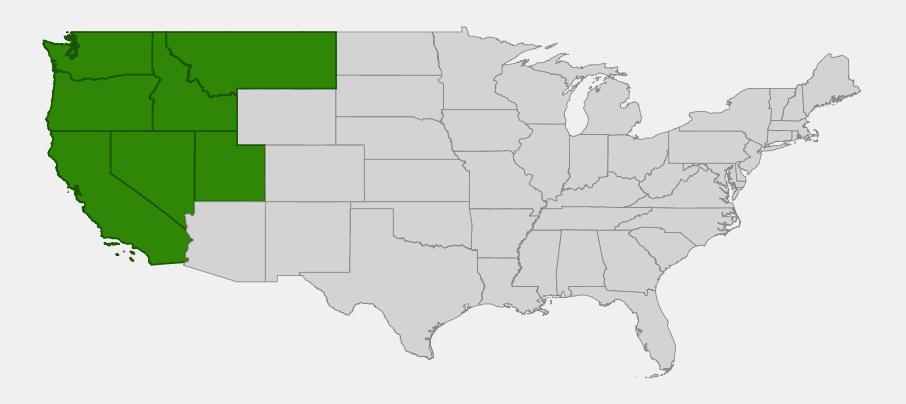
Grassy tarweed is native to western North America. USDA PLANTS lists it as native in California, Oregon, Washington, Idaho, Montana, Nevada and Utah, and in British Columbia, and it also reaches northern Baja California. USDA PLANTS also has a record from Maine, far outside the documented western native range; it is treated here as an introduction and is not shown on the map.
It is most common in California and western Oregon, in the Coast Ranges, the Sierra Nevada foothills, the Klamath region and the Willamette Valley. It also grows east of the Cascades in Washington and Oregon, in the foothills of the northern Rockies in Idaho and western Montana, and in scattered sites in Nevada and Utah.
It grows in open, sunny places: grasslands and meadows, oak woodlands and savannas, chaparral openings, open coniferous forests and their edges, and disturbed ground such as road cuts and burns. It avoids true desert. It ranges from near sea level to moderate mountain elevations.
📋 Regional plant lists featuring Grassy Tarweed: Idaho, Eastern Oregon & Eastern Washington · Montana & Wyoming · Utah & Western Colorado · Western Oregon & Western Washington · California & Nevada
Growing & Care Guide
Grassy tarweed is not a showy garden flower, but it is a useful, easy annual for meadow and grassland restorations and wildlife gardens in the West. It extends the season of bloom into summer, after most spring annuals have dried. Seed is offered by some western native seed companies, often in meadow mixes.
Light
Plant it in full sun to light shade. It flowers best in open, sunny sites.
Soil & Water
It grows in many soils, from rocky and sandy to clay, as long as they are not waterlogged. It relies on winter and spring rain and needs no summer water. Irrigation encourages weeds that crowd it out.
Planting Tips
Scatter seed in fall on bare or lightly raked soil and press it in. It works well in meadow mixes with native bunchgrasses, clarkias, lupines and other wildflowers. Its sticky foliage clings to clothing, so plant it away from paths.
Pruning & Maintenance
No pruning is needed. Let plants set seed and dry in place so they can reseed the following year. Remove aggressive non-native grasses in winter and spring.
Propagation
It is grown only from seed. Collect the dry heads in late summer and store the seed dry until fall sowing. Seeds germinate with the cool, wet weather of fall and winter.
Landscape Uses
- Meadow and prairie plantings: summer flowers in grassland and oak savanna restorations
- Wildlife gardens: seeds for birds and small mammals
- Pollinator gardens: nectar and pollen for native bees in summer
- Habitat restoration: a native annual for disturbed and burned sites
- Ethnobotanical gardens: a traditional seed food of California Indigenous peoples
Wildlife & Ecological Value
Like other tarweeds, grassy tarweed flowers in summer when the surrounding grasses have dried, providing late-season food for insects and animals.
For Pollinators
The small flower heads are visited by native bees, including small solitary bees, and by flies and other insects. Because tarweeds bloom after most spring wildflowers have finished, they are an important summer resource.
For Birds
The oily, nutritious seeds are eaten by finches, sparrows, quail, doves and other seed-eating birds in late summer and fall.
For Mammals
Small mammals such as mice, ground squirrels and chipmunks eat the seeds. The sticky, strong-smelling foliage is not favored by deer or livestock.
Ecosystem Role
Grassy tarweed is one of the native annuals that fill open ground in western grasslands and woodlands, especially after fire or disturbance. Its glandular hairs produce resins that deter many insect herbivores and may reduce water loss during hot, dry summers.
Cultural & Historical Uses
The seeds of grassy tarweed and other madias were an important food for many California Indigenous peoples. Ethnobotanical sources record that the Miwok, Pomo and Mendocino-area peoples gathered the seeds, which were parched and ground into pinole, a nutritious meal.
The genus name Madia comes from madi, the Chilean name for Madia sativa, which was cultivated in Chile for its oil-rich seeds. The species name gracilis means slender, describing its wiry stems.
The name tarweed comes from the sticky, resinous glands on the plant, which can leave a tarry residue and a strong scent on clothing, skin and the legs of animals that brush through it in summer.
Frequently Asked Questions
Why is it called tarweed?
The plant is covered in sticky, resinous glands that leave a tar-like residue and a strong smell on anything that brushes against it.
When does grassy tarweed bloom?
Mainly from May to August, after most spring wildflowers have finished. The flower heads often open in the evening or on cloudy days.
Where does grassy tarweed grow?
It grows in grasslands, oak woodlands and open forests from British Columbia to Baja California and east to Idaho, Montana, Nevada and Utah.
Can I grow grassy tarweed?
Yes. Scatter seed in fall in a sunny spot. It needs no summer water and reseeds if allowed to set seed.
Is grassy tarweed good for wildlife?
Yes. Native bees visit its summer flowers, and birds and small mammals eat its oily seeds.

Looking for a nursery that carries Grassy Tarweed?
Browse our native plant nursery directory: California · Idaho · Montana · Nevada · Oregon · Utah · Washington

