
Spreading Fleabane (Erigeron divergens)
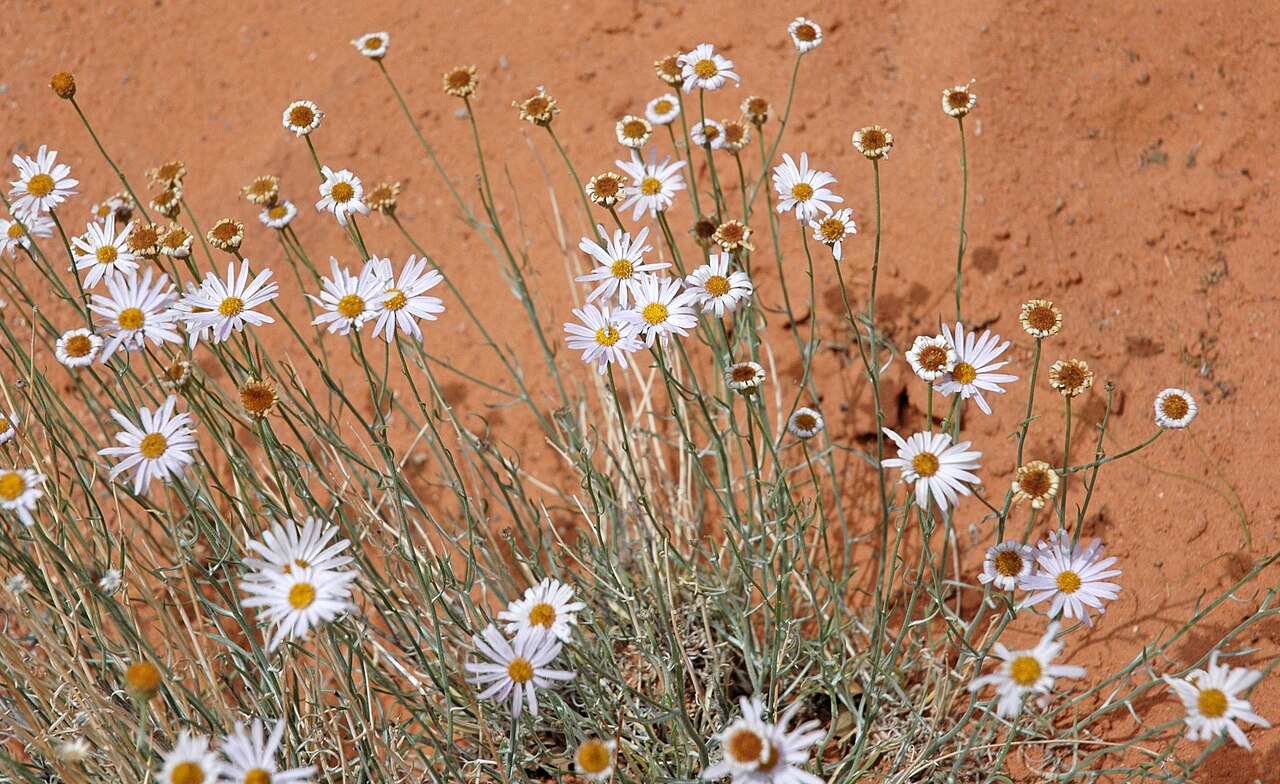
Erigeron divergens, known as Spreading Fleabane, is a small, bushy wildflower in the aster family (Asteraceae) found across much of western North America. It is a short-lived plant that may behave as an annual, a biennial or a short-lived perennial. From spring into late summer it covers itself with small daisies, each with a crowd of very narrow white, pink or pale lavender rays around a yellow center.
The common name refers to its widely spreading, much-branched stems, which are covered in short, gray hairs that stand straight out. A single plant can carry dozens to more than a hundred flower heads at once. It grows in sagebrush, desert scrub, grasslands, pinyon-juniper woodland, open pine forest and along roadsides, from British Columbia and Alberta south to Texas, Arizona and northern Mexico.
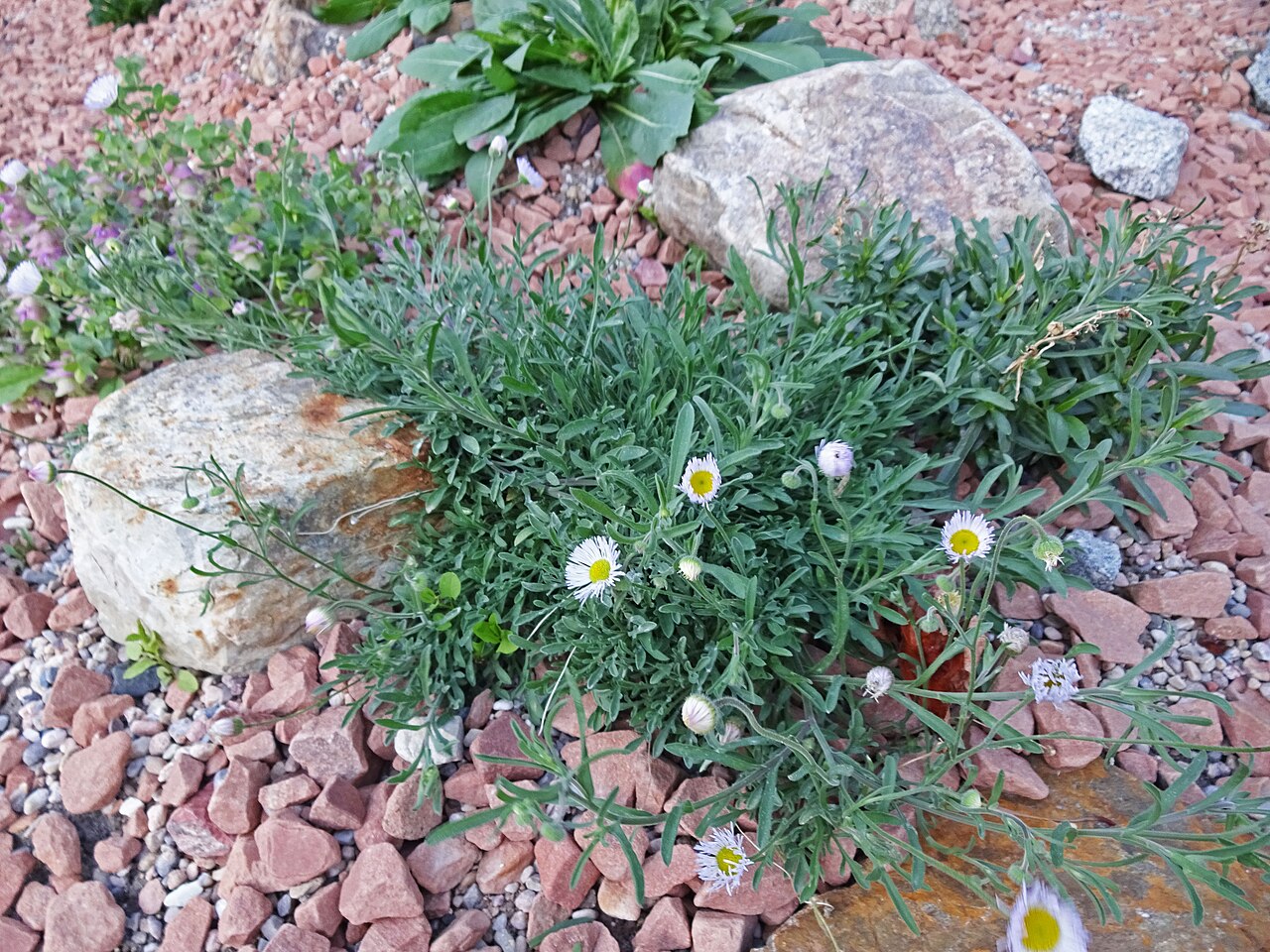
Spreading fleabane is an easy, drought-tolerant plant for dry gardens, gravel beds and wildflower meadows in the West. It blooms for months, attracts many small bees and flies, and reseeds gently into open, sunny spots.
Identification
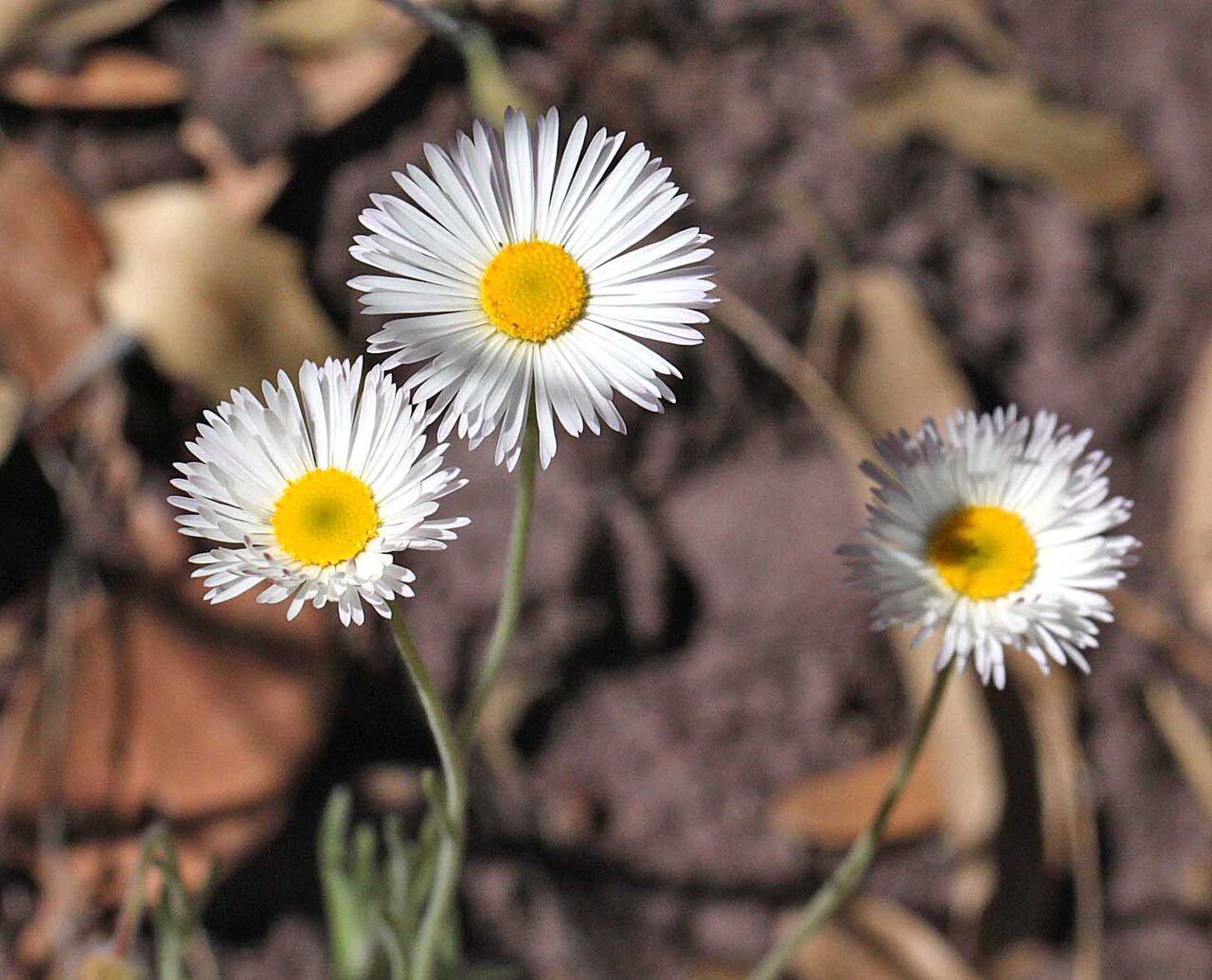
Look for a low, intricately branched plant with grayish, spreading-hairy stems, small leaves and many small white to pinkish daisies with very fine rays.
Growth Habit
Plants grow from a taproot, sometimes with a short woody base (caudex). Stems are 3 to about 27 inches long but usually 4 to 16 inches, branching widely from the base and often leaning outward so that the plant forms a rounded mound. Some plants produce slender, trailing stems. Stems are covered with short, stiff hairs that stand out at right angles, often mixed with small glandular hairs near the top.
Leaves
The basal leaves are narrowly spoon-shaped (oblanceolate), about 1/2 to 3 inches long, often with a few shallow teeth or lobes, and usually wither by flowering time. The stem leaves are numerous, smaller and narrow, gradually getting smaller toward the flower heads. All leaves are gray-green and hairy.
Flowers
Flower heads are about 1/2 to 1 inch across and are borne singly at the ends of the many branches. Each head has 75 to 150 very narrow ray flowers, up to about 3/8 inch long, that are white, pink or pale lavender and often fade to purple. The center is a disk of many small yellow flowers. Flower buds often nod before opening. It blooms mainly from April to September.
Seeds
The tiny seeds (achenes) are about 1/16 inch long and topped with a ring of fine bristles plus a few outer scales, so they are carried by wind. Many plants produce seed without pollination (agamospermy), and the species includes many polyploid forms.
Look-alikes
Daisy fleabane (E. strigosus) has appressed (flat-lying) hairs and taller, more upright stems. Plains fleabane (E. modestus) is a perennial of the southern plains with fewer, wider rays. Several closely related fleabanes, such as E. incomptus and E. tracyi, were long included in E. divergens, and some botanists and iNaturalist now treat them separately. Separating them usually needs a close look at the hairs, rays and seeds.
Quick Facts
| Scientific Name | Erigeron divergens |
| Family | Asteraceae (aster family) |
| Plant Type | Annual, biennial or short-lived perennial wildflower |
| Mature Height | 4–16 in (occasionally to 27 in) |
| Mature Spread | 6–18 in |
| Growth Rate | Fast |
| Sun Exposure | Full sun to part shade |
| Water Needs | Low; drought tolerant once established |
| Soil Type | Sandy, gravelly or rocky well-drained soils; tolerates clay |
| Soil pH | Neutral to alkaline (about 6.5–8.5) |
| Bloom Time | April–September |
| Flower Color | White, pink or pale lavender rays; yellow center |
| Fall Color | None |
| Fruit | Tiny achenes with a tuft of fine bristles |
| Deer Resistant | Moderately |
| USDA Hardiness Zones | 4–9 |
Native Range
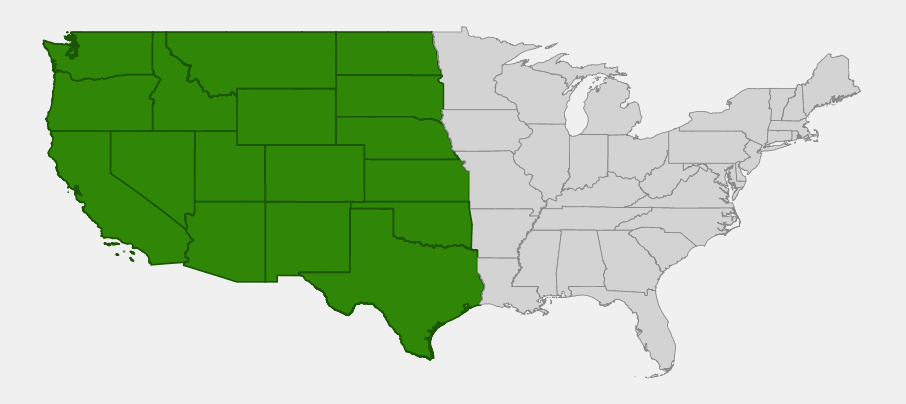
USDA PLANTS lists spreading fleabane as native to 17 western states: Arizona, California, Colorado, Idaho, Kansas, Montana, Nebraska, Nevada, New Mexico, North Dakota, Oklahoma, Oregon, South Dakota, Texas, Utah, Washington and Wyoming. In Canada it grows in southern British Columbia and Alberta, and in Mexico it extends into Baja California, Sonora, Chihuahua, Durango and Nuevo León.
It is common across the Great Basin, Colorado Plateau, Rocky Mountain foothills and the Southwest deserts and grasslands. On the eastern edge of its range it reaches the western Great Plains: western North and South Dakota, western Nebraska and Kansas, the Oklahoma Panhandle and West Texas. In Washington and Oregon it grows mainly east of the Cascades, and in California it is found mostly in the eastern and southern mountains, the Great Basin and the deserts.
Habitats include sagebrush steppe, desert shrubland, grasslands, pinyon-juniper and oak woodland, open ponderosa pine forest, sandy washes, riverbanks and meadow edges. It often colonizes disturbed ground such as roadsides, trail edges and old fields, sometimes in large numbers.
📋 Regional plant lists featuring Spreading Fleabane: Idaho, Eastern Oregon & Eastern Washington · Montana & Wyoming · Nebraska, Kansas & Eastern Colorado · Utah & Western Colorado · Arizona & New Mexico · South & West Texas · North Dakota, South Dakota & Western Minnesota · California & Nevada
Growing & Care Guide
Spreading fleabane is a low-maintenance plant for sunny, dry places. It is short-lived but reseeds, so a patch usually persists if it has some open ground.
Light
Full sun is best. It tolerates light shade, especially in hot desert gardens, but blooms less and sprawls more in shade.
Soil & Water
Grow it in well-drained sandy, gravelly or rocky soil. It handles poor and alkaline soils and some clay if drainage is reasonable. Once established it needs little water: in most of the interior West, occasional summer watering extends bloom, but overwatering or rich soil makes it floppy and short-lived.
Planting Tips
Sow seed on the soil surface in fall or early spring and do not cover it, since the seed needs light to germinate. Nursery transplants can go out in spring. Space plants about 12 inches apart, or scatter seed in a meadow mix with grasses such as blue grama and other dryland wildflowers.
Pruning & Maintenance
Little care is needed. Cutting back the stems by about a third in midsummer can bring a fresh flush of flowers. Leave some seed heads to ripen if you want the plant to reseed.
Propagation
Easily grown from seed, which ripens a few weeks after flowering and is spread by wind. Seedlings are easy to move while small.
Landscape Uses
- Rock and gravel gardens: a soft mound of small daisies among stones
- Xeriscapes: long bloom with little water
- Wildflower meadows: fills gaps between grasses and perennials
- Pollinator gardens: many small flowers for bees and flies
- Restoration: quick cover on disturbed, dry ground
Wildlife & Ecological Value
Spreading fleabane provides a long season of small, open flowers that feed many kinds of insects in dry western habitats.
For Pollinators
The flat, open flower heads are easy for short-tongued insects to use. Small native bees such as sweat bees and masked bees (Hylaeus), flower flies, bee flies, small butterflies and beneficial insects visit the flowers. The Xerces Society notes it as a plant that supports conservation biological control, meaning it feeds predatory and parasitic insects that help control pests.
For Birds
Small seed-eating birds such as finches and sparrows may glean the tiny seeds, and insect-eating birds hunt the many insects that visit the flowers.
For Mammals
Deer, pronghorn and rabbits occasionally browse it, but it is not a major forage plant.
Ecosystem Role
As a quick colonizer of open and disturbed ground, it helps cover bare soil after fire, flooding or other disturbance, and its long flowering season supports insect communities through summer.
Cultural & Historical Uses
The name Erigeron comes from the Greek for “early old man,” probably a reference to the white, hairy seed heads. The species name divergens means spreading apart, describing its widely branching stems. “Fleabane” comes from an old belief that dried plants could repel fleas.
Several Native American peoples used spreading fleabane. The Navajo used it in childbirth, as a lotion and eyewash, and for headache and snakebite, and it was a good luck charm among the Kiowa. These uses are recorded for cultural interest only, not as medical advice.
Because many plants make seed without pollination and the species includes many chromosome forms, spreading fleabane is very variable, and botanists continue to debate how many species are hidden within it.
Frequently Asked Questions
Is spreading fleabane an annual or a perennial?
It can be either. Many plants live one or two years, and some live a few years as short-lived perennials. It reseeds readily, so patches persist.
Does spreading fleabane need much water?
No. It is drought tolerant and grows best in lean, well-drained soil with only occasional summer water.
Does it really repel fleas?
There is no good evidence that it does. The name comes from an old folk belief about fleabanes in general.
How is it different from daisy fleabane?
Spreading fleabane has spreading, outward-pointing hairs and a low, much-branched habit, while daisy fleabane has flat-lying hairs and taller, more upright stems.
Is spreading fleabane good for pollinators?
Yes. Its many small flowers feed native bees, flies and other beneficial insects from spring through late summer.

Looking for a nursery that carries Spreading Fleabane?
Browse our native plant nursery directory: Arizona · California · Colorado · Idaho & Kansas · Montana · Nebraska, Nevada, New Mexico, North Dakota & Oklahoma · Oregon · South Dakota, Texas & Utah · Washington · Wyoming

