
Alpine False Springparsley (Pseudocymopterus montanus)
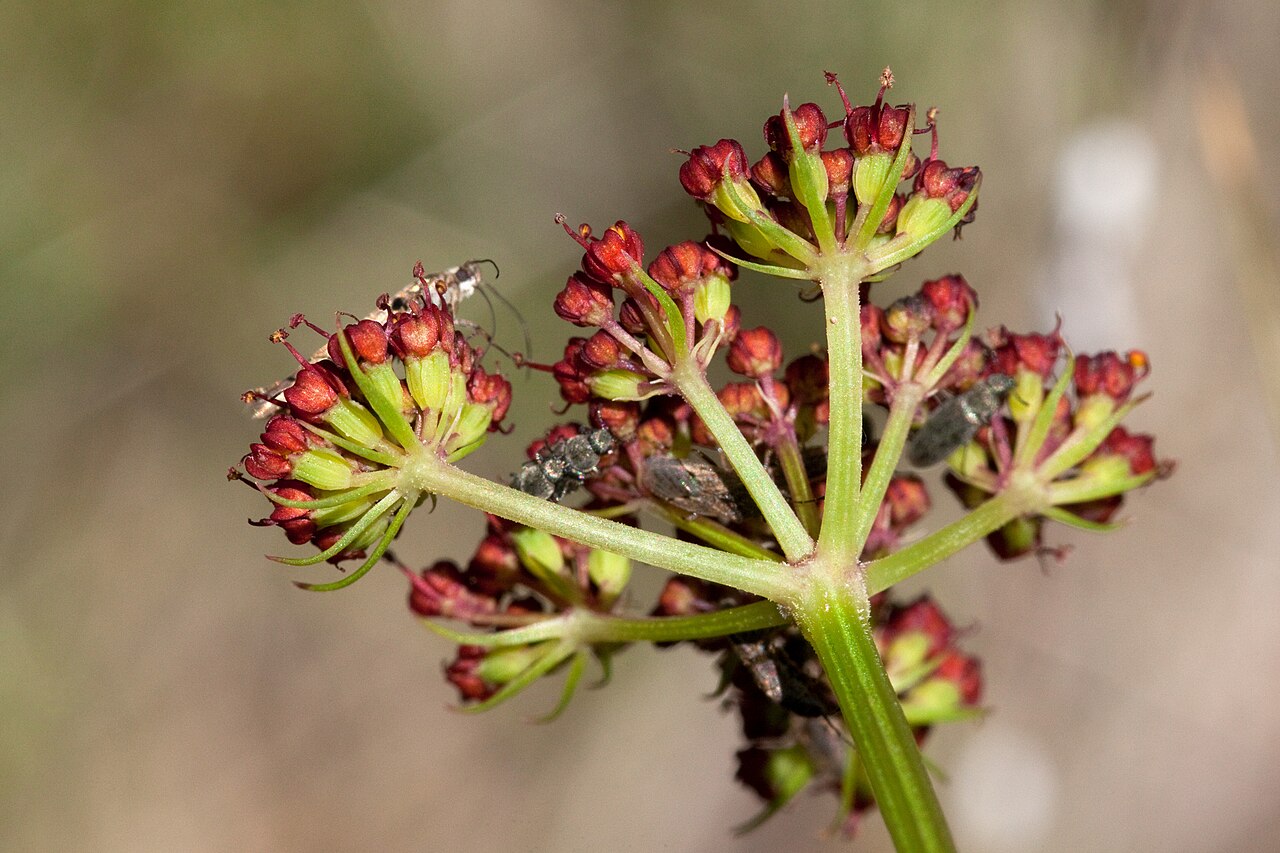
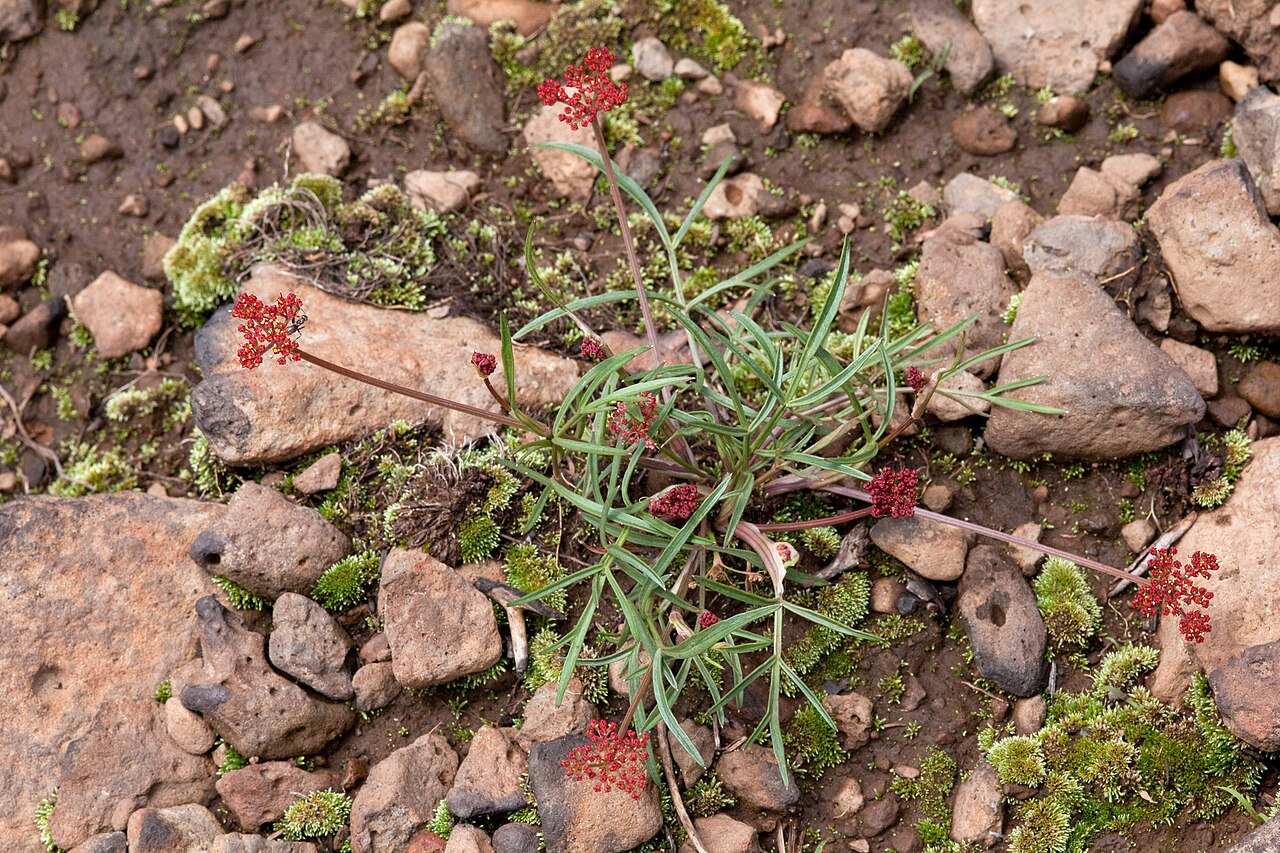
Pseudocymopterus montanus, known as Alpine False Springparsley (also mountain parsley or yellow mountain parsley), is a common wildflower of the mountains of the Southwest and southern Rockies. It is a low to medium-sized perennial, usually 4 to 24 inches tall, with finely divided, carrot-like leaves and flat-topped umbels of tiny flowers. Depending on the population, the flowers are bright yellow or deep red to maroon. It belongs to the carrot or parsley family (Apiaceae).
Despite the name “alpine,” this plant is not limited to the tundra. It grows from ponderosa pine forests and mountain meadows up through spruce-fir forests to alpine slopes, in Arizona, New Mexico, Colorado, Utah, Wyoming, Nevada and the mountains of West Texas, and south into Mexico. Its very long bloom season, from late spring into fall, makes it one of the most frequently seen members of the parsley family in western mountains.
Mountain parsley is an important source of nectar and pollen for small bees, flies, wasps and beetles, which crowd onto its flat umbels. A note of caution: the parsley family includes some of the most poisonous plants in North America, such as water hemlock and poison hemlock, so never eat any wild parsley-family plant unless an expert has confirmed its identity.
Identification
Look for a low, clumped plant of mountain forests and meadows with finely divided, carrot-like leaves and long-stalked, flat-topped umbels of tiny yellow or dark red flowers, blooming from late spring to fall.
Leaves
Most leaves grow from the base on long stalks. The blades are one to three times pinnately divided into narrow to broad, lobed segments, giving a lacy, carrot-like look. Leaf form is very variable: some plants have very fine, almost thread-like segments, while others have broader lobes. Leaves are green to blue-green and smooth.
Stems
One to several slender, mostly leafless flowering stems rise from a taproot topped with old leaf bases. They are usually 4 to 24 inches tall, sometimes up to about 30 inches, and are often curved at the base.
Flowers
The flowers grow in compound umbels, with several unequal rays each ending in a small umbellet of tiny, five-petaled flowers. Each umbel is about 1 to 3 inches across. Flower color is bright yellow in many populations and deep red, maroon or purplish in others, especially in parts of Arizona and New Mexico. Bloom runs from about May to October, depending on elevation and rain.
Fruit & Seeds
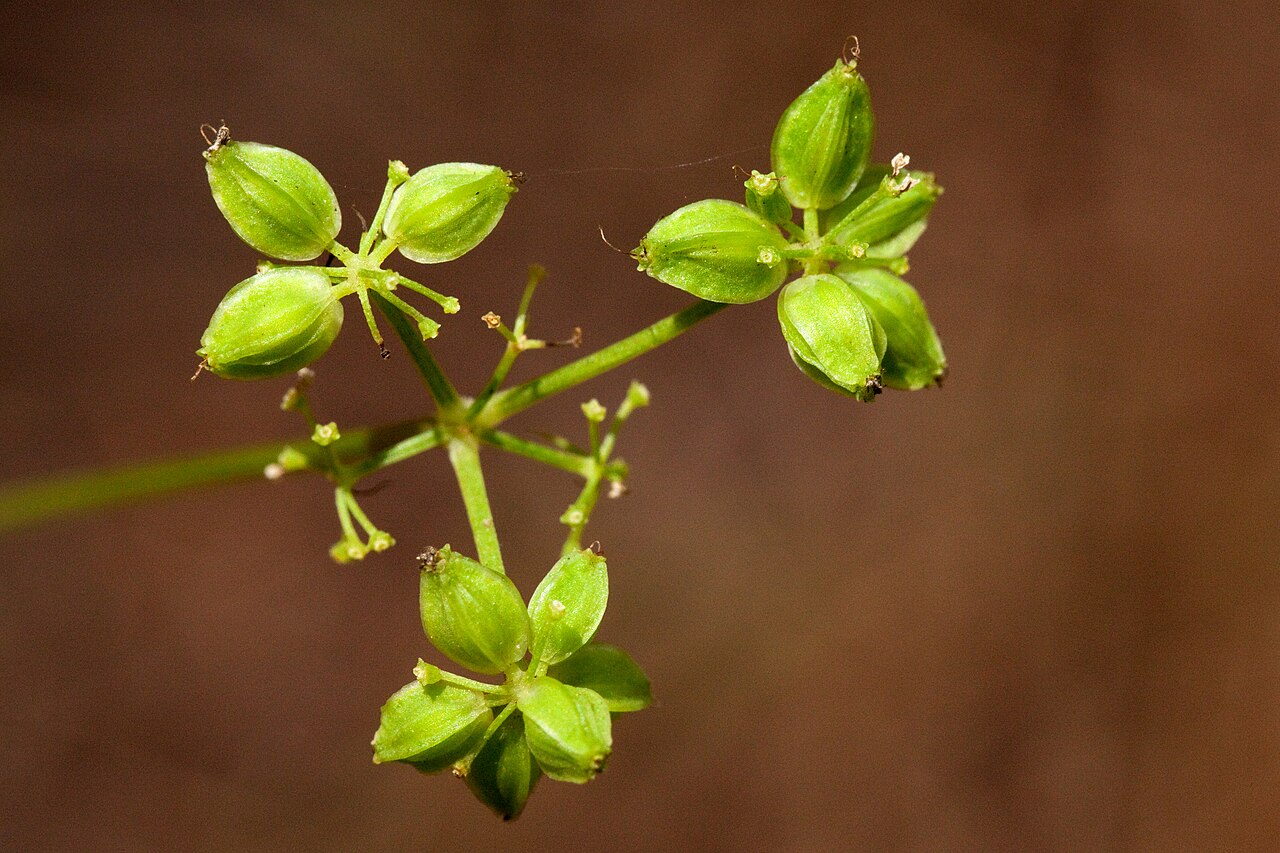
The fruit is an oblong, flattened schizocarp about 1/4 inch long that splits into two halves. Each half has prominent ribs, some of them extended into narrow wings.
Look-alikes
Many western parsley-family plants look similar. Biscuitroots and desertparsleys (Lomatium), such as Foothill Desert Parsley, mostly bloom in early spring and have broader, more strongly winged fruits. Golden alexanders (Zizia) and meadow-parsnips (Thaspium) have yellow flowers but broader leaflets. Several other Cymopterus species are low spring bloomers of dry, open ground. Careful study of the fruit is often needed to identify parsley-family plants, and none should be eaten based on appearance alone.
Quick Facts
| Scientific Name | Pseudocymopterus montanus |
| Family | Apiaceae (carrot or parsley family) |
| Plant Type | Herbaceous perennial |
| Mature Height | 4–24 in |
| Mature Spread | 6–12 in |
| Growth Rate | Slow to moderate |
| Sun Exposure | Full sun to part shade |
| Water Needs | Low to medium |
| Soil Type | Well-drained gravelly, rocky or loamy soil |
| Soil pH | About 6.0–8.0 |
| Bloom Time | May–October |
| Flower Color | Yellow, or deep red to maroon |
| Fall Color | None |
| Fruit | Ribbed, narrowly winged schizocarp |
| Deer Resistant | Moderate |
| USDA Hardiness Zones | 4–8 |
Native Range
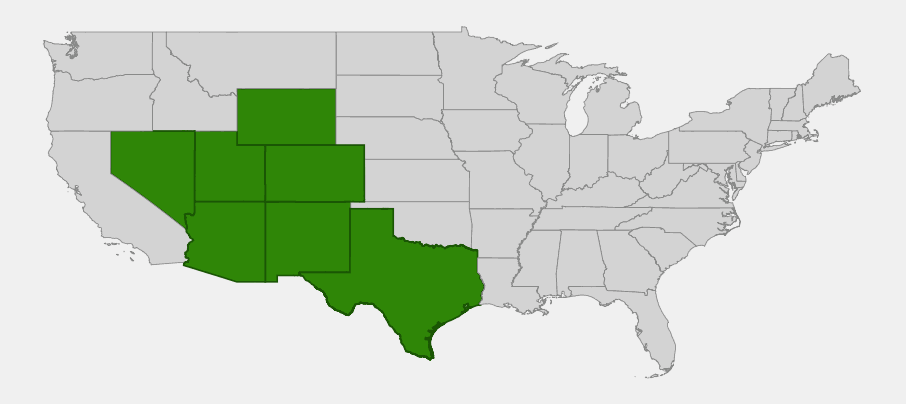
Alpine false springparsley is native to the mountains of the American Southwest and the southern and central Rocky Mountains. USDA PLANTS lists it as native in Arizona, Colorado, Nevada, New Mexico, Texas, Utah and Wyoming. Its range extends south into the mountains of northern Mexico.
It is most abundant in the mountains of Arizona, New Mexico and Colorado, and it reaches Utah, southern Wyoming and the mountains of southern Nevada. In Texas it is limited to the high mountains of the Trans-Pecos, at the eastern edge of its range.
It grows in mountain meadows and grasslands, open ponderosa pine, mixed conifer, aspen and spruce-fir forests, and on rocky slopes and talus up to alpine tundra. It is common along trails and forest edges, usually on well-drained soils.
📋 Regional plant lists featuring Alpine False Springparsley: Arizona & New Mexico · Utah & Western Colorado · Montana & Wyoming · California & Nevada · South & West Texas
Growing & Care Guide
Alpine false springparsley is rarely available in nurseries, but it can be grown from seed in mountain and high-desert gardens within its range. It suits rock gardens and dry meadows where its long bloom and pollinator value can be appreciated.
Light
Full sun to light shade. At lower, hotter elevations, give it some afternoon shade, like the open pine forests where it often grows.
Soil & Water
Plant in well-drained gravelly, rocky or loamy soil. It tolerates dry periods once established and benefits from summer monsoon rains in the Southwest. Avoid heavy, poorly drained soils, which can rot the taproot.
Planting Tips
Sow seed where you want plants to grow, or set out small seedlings while the taproot is still short. Mix it with native bunchgrasses, penstemons and other mountain wildflowers in a meadow or rock garden.
Pruning & Maintenance
Little maintenance is needed. Leave the seed heads to ripen and drop if you want more plants. Cut back old stems in late fall or early spring. Plants resent being moved once established.
Propagation
Grow from fresh seed sown outdoors in fall; like many mountain parsley-family plants, the seed usually needs a cold, moist winter period to germinate. Seedlings grow slowly and may take two years or more to bloom. Do not dig plants from the wild.
Landscape Uses
- Pollinator gardens: long-blooming umbels for small bees, flies, wasps and beetles
- Rock gardens: low, compact plant for gravelly mountain soils
- Mountain meadows: natural companion for bunchgrasses and wildflowers
- Restoration plantings: montane and subalpine seed mixes within its range
- Butterfly gardens: parsley-family plants support swallowtail caterpillars
Wildlife & Ecological Value
Like other members of the parsley family, alpine false springparsley offers open, easily reached flowers that feed a wide variety of small insects.
For Pollinators
Small native bees, including mining bees and sweat bees, along with flies, wasps and beetles, feed on the nectar and pollen in the flat umbels. Its long bloom from late spring into fall provides food through much of the short mountain growing season.
For Birds
Insects drawn to the flowers feed insect-eating birds such as warblers and flycatchers. The seeds may be eaten by some ground-feeding birds and small mammals.
For Mammals
Deer, elk and livestock graze it to some extent along with other mountain forbs.
Ecosystem Role
Wild parsley-family plants are larval host plants for several swallowtail butterflies, and mountain parsley is one of the native plants available to them in southwestern mountains. As a common, long-blooming forb, it is part of the plant diversity of mountain meadows and forests.
Cultural & Historical Uses
The genus name Pseudocymopterus means “false Cymopterus,” because the plant resembles members of the related springparsley genus Cymopterus; that name comes from Greek words meaning “wave” and “wing,” for the wavy wings on the fruits. The species name montanus means “of the mountains.” Asa Gray first described the plant, and John Merle Coulter and Joseph Nelson Rose placed it in Pseudocymopterus.
In New Mexico, mountain parsley and some of its relatives are known in Spanish as chimajá, a name also applied to other aromatic wild parsley-family plants of the region that have been used as seasonings. Because the parsley family includes deadly poisonous species, foraging any of them requires expert knowledge.
Botanists have long noted how variable this plant is, in leaf shape, size and flower color, and some treatments have merged it with Cymopterus. On this site, other western parsley-family plants include Foothill Desert Parsley, Barestem Biscuitroot and Woollyfruit Desertparsley.
Frequently Asked Questions
Why do some plants have yellow flowers and others red?
Flower color varies by population. Many plants have bright yellow flowers, while others, especially in Arizona and New Mexico, have deep red to maroon flowers. Both are the same species.
Does alpine false springparsley grow only in alpine areas?
No. Despite its name, it grows from ponderosa pine forests and mountain meadows up to alpine tundra, at roughly 5,500 to 12,500 feet.
Is alpine false springparsley edible?
It belongs to the parsley family, which includes deadly poisonous plants such as water hemlock and poison hemlock. Do not eat any wild parsley-family plant unless an expert has confirmed its identity.
When does alpine false springparsley bloom?
From about May to October, depending on elevation and rainfall, which makes it one of the longest-blooming mountain wildflowers.
What pollinates alpine false springparsley?
Small native bees, flies, wasps and beetles visit its flat umbels of tiny flowers for nectar and pollen.

Looking for a nursery that carries Alpine False Springparsley?
Browse our native plant nursery directory: Arizona · Colorado · Nevada & New Mexico · Texas & Utah · Wyoming

