
Harlequin Lupine (Lupinus stiversii)
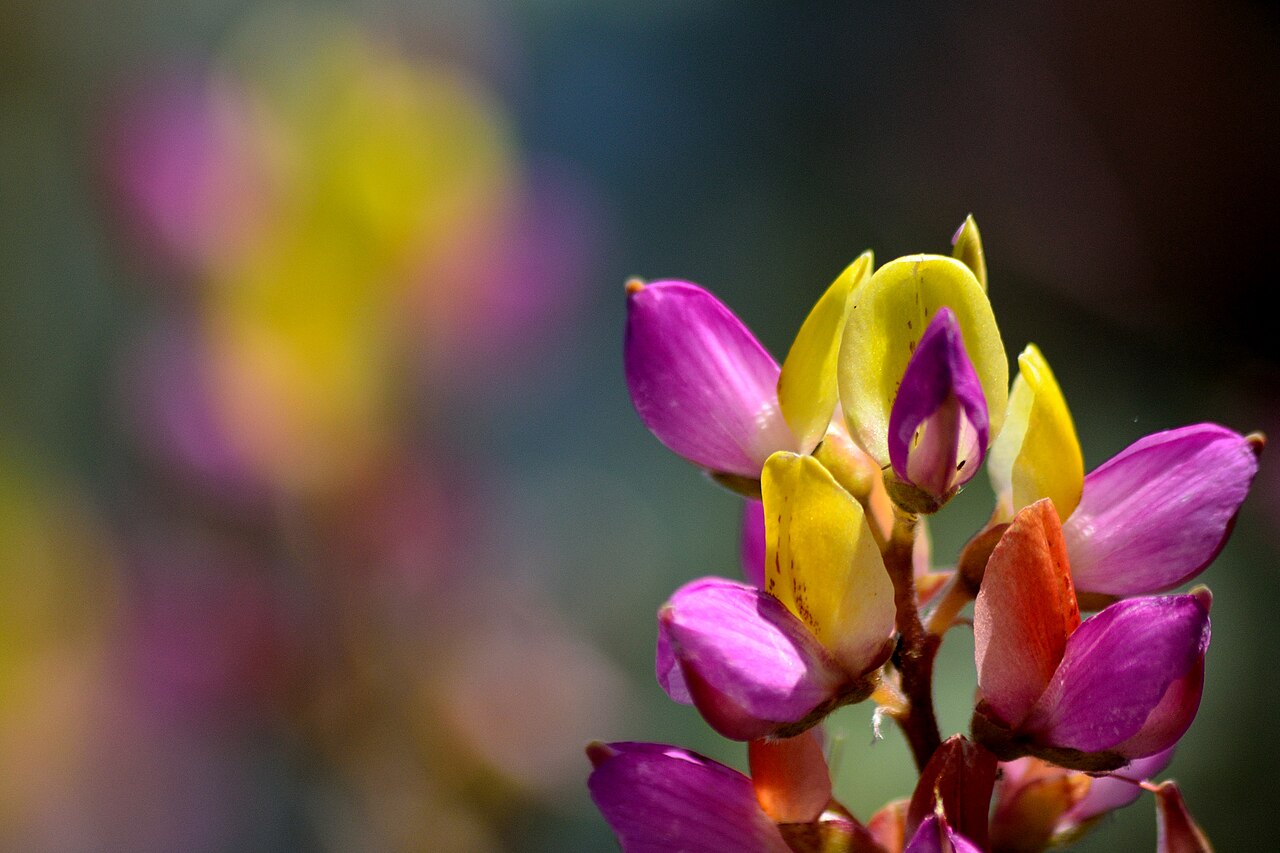
Lupinus stiversii, the Harlequin Lupine or harlequin annual lupine, is one of the most colorful wildflowers of California’s mountains. Its flowers are a startling mix of a bright yellow banner petal and rose-pink to magenta wings, so that each short flower cluster looks like a costume in a harlequin’s patchwork of colors. It is a hairy, branching annual, usually 4 to 18 inches tall, that blooms in late spring and early summer.
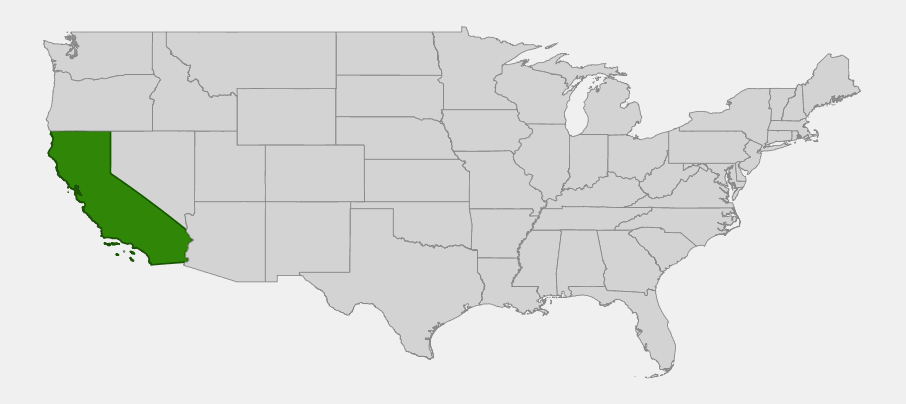
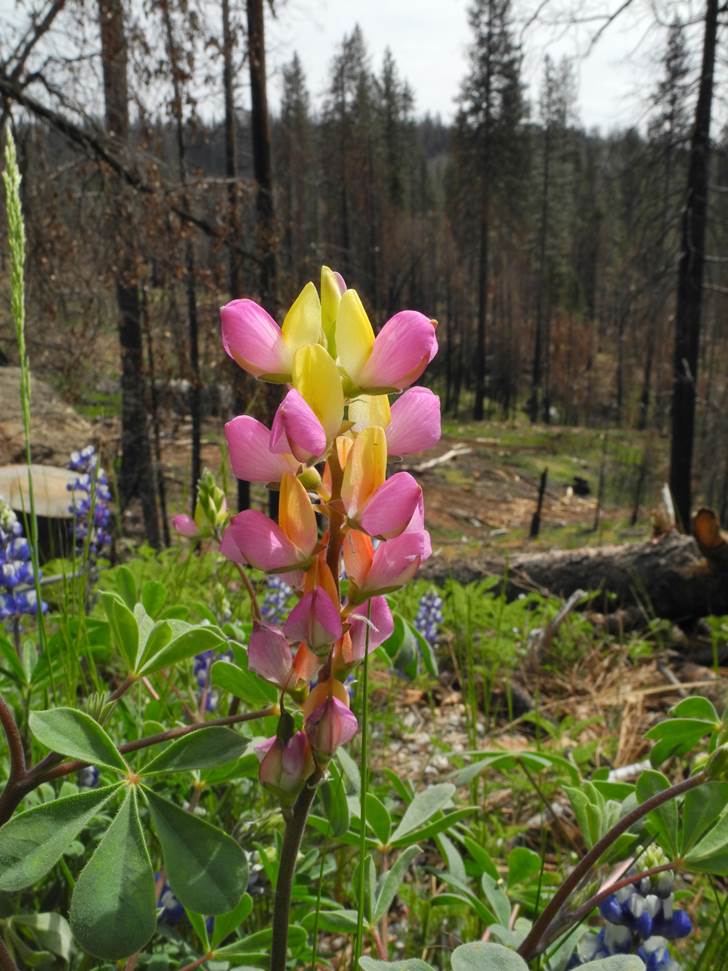
Harlequin lupine is found only in California. It grows on dry, open, sandy or gravelly slopes in chaparral, oak woodland and conifer forest clearings, and it is often especially abundant in the first years after a wildfire, when sunlight reaches the forest floor. Like other lupines it fixes nitrogen, helping to restore soil fertility on burned and disturbed ground.
It is named for Charles Austin Stivers, who first collected it near Yosemite in 1862. This guide covers how to identify harlequin lupine, where it grows, how to grow it from seed in a dry, sunny garden, and its value to bees and the post-fire landscape.
Identification
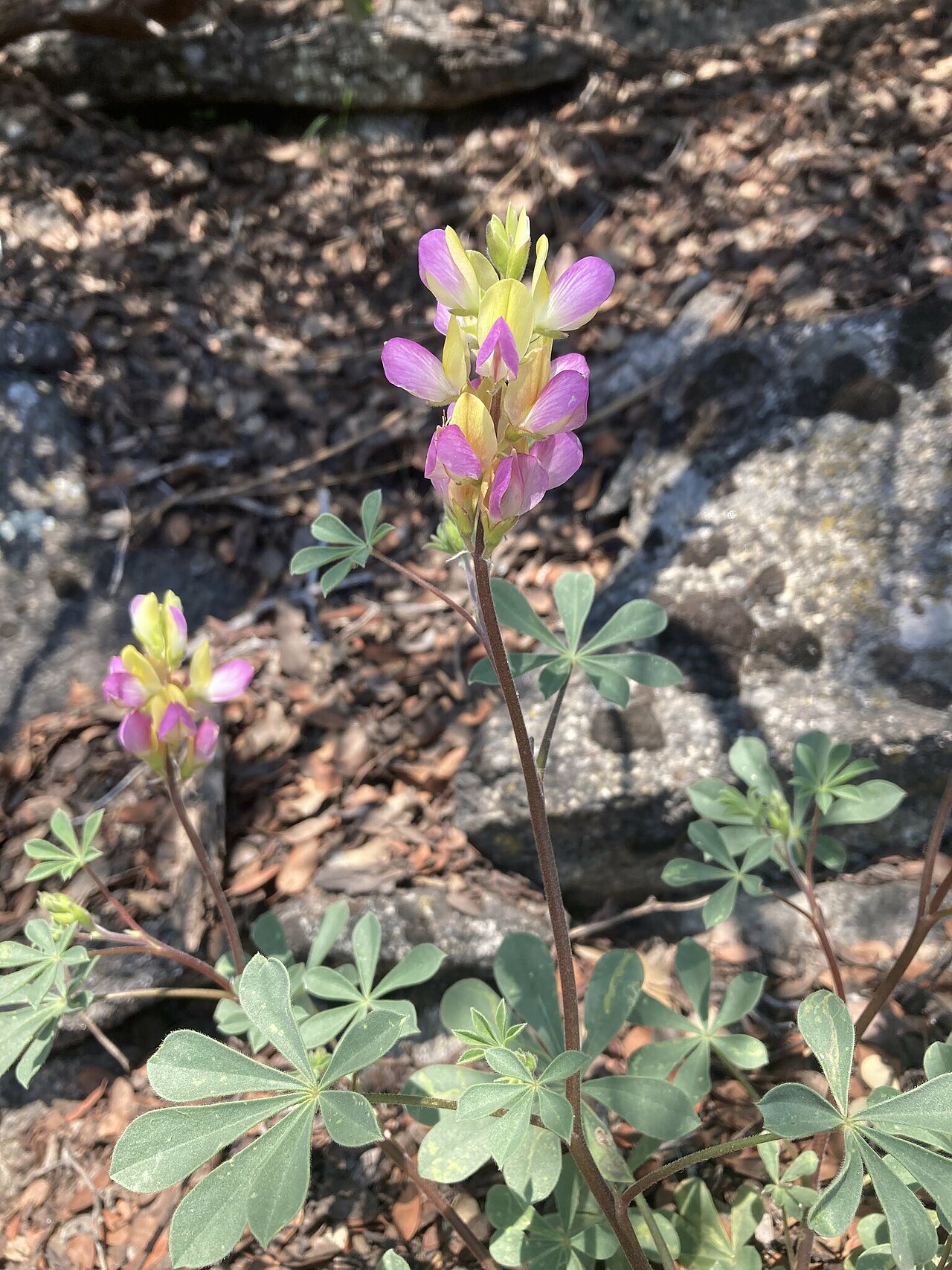
No other California lupine has flowers like this: look for a low, hairy annual with palmate leaves and short clusters of flowers that are yellow on top and pink to magenta below.
Growth Habit
Harlequin lupine is an annual herb with an erect, branching stem, usually 4 to 18 inches tall (to about 20 inches). The stems and leaves are covered with soft hairs.
Leaves
The leaves are palmately compound, like a small hand, usually with about 7 leaflets each roughly 3/4 to 2 inches long. They are gray-green to green and hairy, held on long stalks.
Flowers
Flowers are borne in short, fairly dense clusters at the ends of the branches, often only one or two tiers deep. Each pea-shaped flower is about 1/2 to 3/4 inch long, with a bright yellow banner (the upright top petal) and rose-pink to magenta wings, sometimes with an orange or reddish tint as the flower ages. Bloom time is mainly April through July, depending on elevation.
Fruit & Seeds
The fruit is a short, hairy pea pod about 3/4 inch long, usually holding about five seeds. Pods split open explosively when dry, throwing the seeds away from the parent plant.
Look-alikes
Most other California annual lupines, such as sky lupine, miniature lupine and arroyo lupine, have blue to purple flowers with a white or pale banner spot. No other native lupine has a solid yellow banner combined with pink wings, which makes harlequin lupine easy to recognize in flower.
Quick Facts
| Scientific Name | Lupinus stiversii Kellogg |
| Family | Fabaceae (pea or legume family) |
| Plant Type | Annual herb |
| Mature Height | 4–18 in (to about 20 in) |
| Mature Spread | 6–12 in |
| Growth Rate | Fast |
| Sun Exposure | Full sun to light shade |
| Water Needs | Low; dry, well-drained soil |
| Soil Type | Sandy, gravelly or decomposed granite soils on open slopes |
| Soil pH | About 5.5–7.5 |
| Bloom Time | April–July |
| Flower Color | Yellow banner with rose-pink to magenta wings |
| Fall Color | None; annual that dies after seeding |
| Fruit | Short hairy pea pod with about 5 seeds |
| Deer Resistant | Somewhat; lupines contain bitter alkaloids |
| USDA Hardiness Zones | Annual; grows where winters are mild to moderately cold (zones 7–10) |
Native Range
Harlequin lupine is endemic to California. USDA PLANTS lists it only in California, and it has a disjunct distribution in several separate mountain areas.
Most populations are in the Sierra Nevada and its western foothills, from the area around Yosemite and the central Sierra south through the southern Sierra. Separate populations occur in the Transverse Ranges above the Los Angeles Basin and in the Santa Lucia Mountains of Monterey County.
It grows in dry, open places: sandy and gravelly slopes, chaparral openings, oak woodland and clearings in yellow pine and mixed conifer forest, often on decomposed granite. It responds strongly to fire and disturbance and can form showy displays along road cuts and in burned forest for a few years before taller plants close in. It occurs mostly at low to middle elevations, roughly 1,000 to 6,500 feet.
📋 Regional plant lists featuring Harlequin Lupine: California & Nevada
Growing & Care Guide
Harlequin lupine is a cheerful annual for a dry, sunny California wildflower garden. Seed is offered occasionally by native seed suppliers in California. Like most annual lupines, it is easiest to grow by sowing seed where you want it to bloom.
Light
Full sun or very light shade, such as the dappled edge of an oak or pine canopy.
Soil & Water
Give it lean, fast-draining sandy, gravelly or decomposed granite soil. It needs no fertilizer, since lupines fix their own nitrogen, and rich or heavy soils lead to rot. Winter and spring rains are usually enough; stop watering once plants begin to set seed.
Planting Tips
Sow seed directly in fall, just before winter rains, about 1/4 inch deep. Lupines dislike root disturbance, so avoid transplanting. Mix it with California poppies, clarkias and Chinese houses for a colorful spring and early summer display.
Pruning & Maintenance
No pruning is needed. Let the pods ripen and pop so plants can reseed, then pull or cut the dry plants in summer. Keep competing weeds down while seedlings are small.
Propagation
Grow from seed. The hard seed coat germinates better if the seeds are nicked or soaked in hot water overnight before sowing. Collect seed only in small amounts and only where permitted, and never from parks or protected areas.
Landscape Uses
- Wildflower gardens and meadows: a uniquely colored annual lupine for spring and early summer
- Dry, sunny slopes: grows in lean, sandy or gravelly soil without irrigation
- Pollinator gardens: its flowers attract bumble bees and other native bees
- Post-fire restoration: a nitrogen-fixing annual that colonizes burned and disturbed ground
- Educational gardens: shows the variety of California native lupines
Wildlife & Ecological Value
Harlequin lupine adds pollen, nectar and nitrogen to dry slopes and forest openings, especially in the years following a fire.
For Pollinators
Bumble bees and other sturdy bees visit the flowers, pushing down the keel petals to reach the pollen. Lupines are an important pollen source for many native bees.
For Birds
Quail, doves and other seed-eating birds eat lupine seeds that fall to the ground after the pods split.
For Mammals
Small mammals such as ground squirrels and mice eat the seeds. The bitter alkaloids in the foliage discourage heavy browsing by deer.
Ecosystem Role
Like all lupines, it hosts nitrogen-fixing bacteria in root nodules, adding nitrogen to the poor, freshly burned or disturbed soils where it grows. Lupines are also host plants for the caterpillars of several blue butterflies and other insects.
Cultural & Historical Uses
The species was named by Albert Kellogg, one of the founders of the California Academy of Sciences, in honor of Charles Austin Stivers, who collected the first specimens near Yosemite in 1862. The common name harlequin refers to the patchwork costume of the harlequin character, an apt description of its multicolored flowers.
Harlequin lupine is a favorite of wildflower photographers in Yosemite and the Sierra foothills, and it is often one of the most eye-catching flowers in the first spring after a forest fire.
Safety note: lupine seeds and foliage contain alkaloids that can be toxic to people, pets and livestock if eaten. Do not eat any part of the plant, and keep seeds away from children and animals.
Frequently Asked Questions
Why is it called harlequin lupine?
Its flowers combine a yellow banner petal with pink to magenta wings, like the colorful patchwork costume of a harlequin.
Where does harlequin lupine grow?
It is found only in California, mainly in the Sierra Nevada and its foothills, with separate populations in the Transverse Ranges and the Santa Lucia Mountains.
Is harlequin lupine an annual?
Yes. It sprouts from seed, blooms in late spring and early summer, sets seed and dies the same year.
Can I grow harlequin lupine in my garden?
Yes, from seed sown in fall in a sunny spot with sandy or gravelly, well-drained soil. Nick or soak the seeds before sowing and give little summer water.
Is harlequin lupine poisonous?
Lupines contain alkaloids that can be toxic if eaten, especially the seeds. Do not eat it, and keep it away from pets and livestock.

Looking for a nursery that carries Harlequin Lupine?
Browse our native plant nursery directory: California

