
Greenfly Orchid (Epidendrum magnoliae)
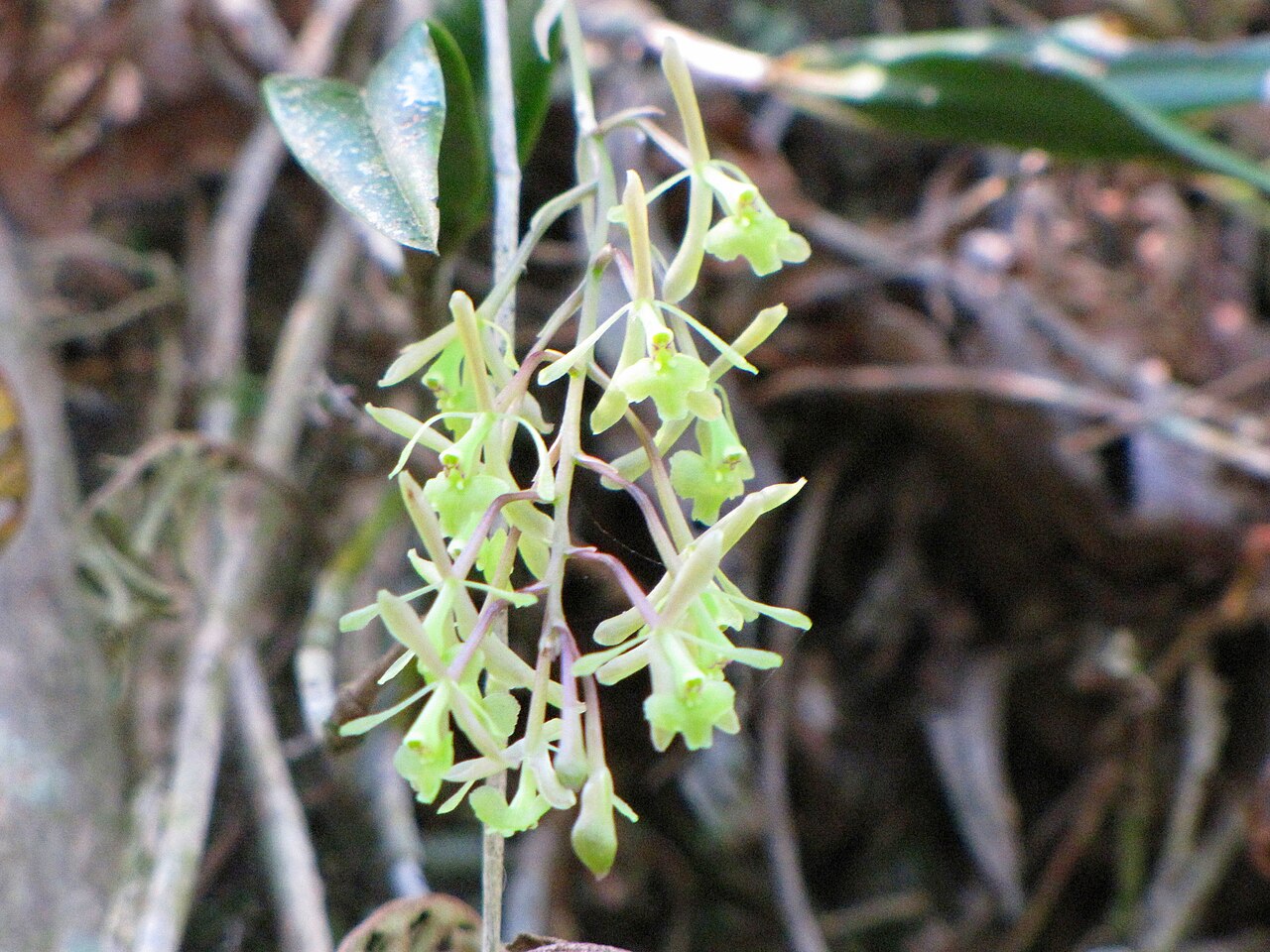
Epidendrum magnoliae, known as Greenfly Orchid or green-fly orchid, is a small epiphytic orchid in the orchid family (Orchidaceae) that grows on the trunks and branches of trees in southeastern swamps and hammocks. It forms clumps of short stems with two or three thick, leathery leaves, and produces loose sprays of small, pale green to bronze flowers that are often sweetly fragrant in the evening. It is the only epiphytic orchid that grows wild north of Florida.
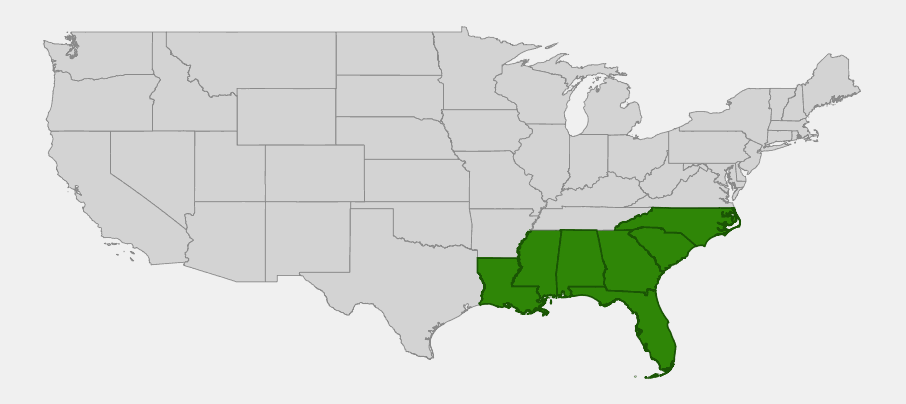
Greenfly orchid ranges along the Atlantic and Gulf coastal plains from southeastern North Carolina to Florida and west to Louisiana, with a separate population in northeastern Mexico. It grows on live oak, southern magnolia, bald cypress, swamp tupelo, beech and other trees in humid floodplain forests, cypress swamps and hammocks, often hidden among resurrection fern and Spanish moss. Many botanists now call it Epidendrum conopseum; the plants of the United States belong to the typical variety, Epidendrum magnoliae var. magnoliae.
Florida lists the greenfly orchid as a Commercially Exploited plant under its Regulated Plant Index, because wild plants have long been stripped from trees for sale. Enjoy it where it grows, never pull it from trees, and if you want to grow it, buy only nursery-propagated plants from a reputable orchid grower.
Identification
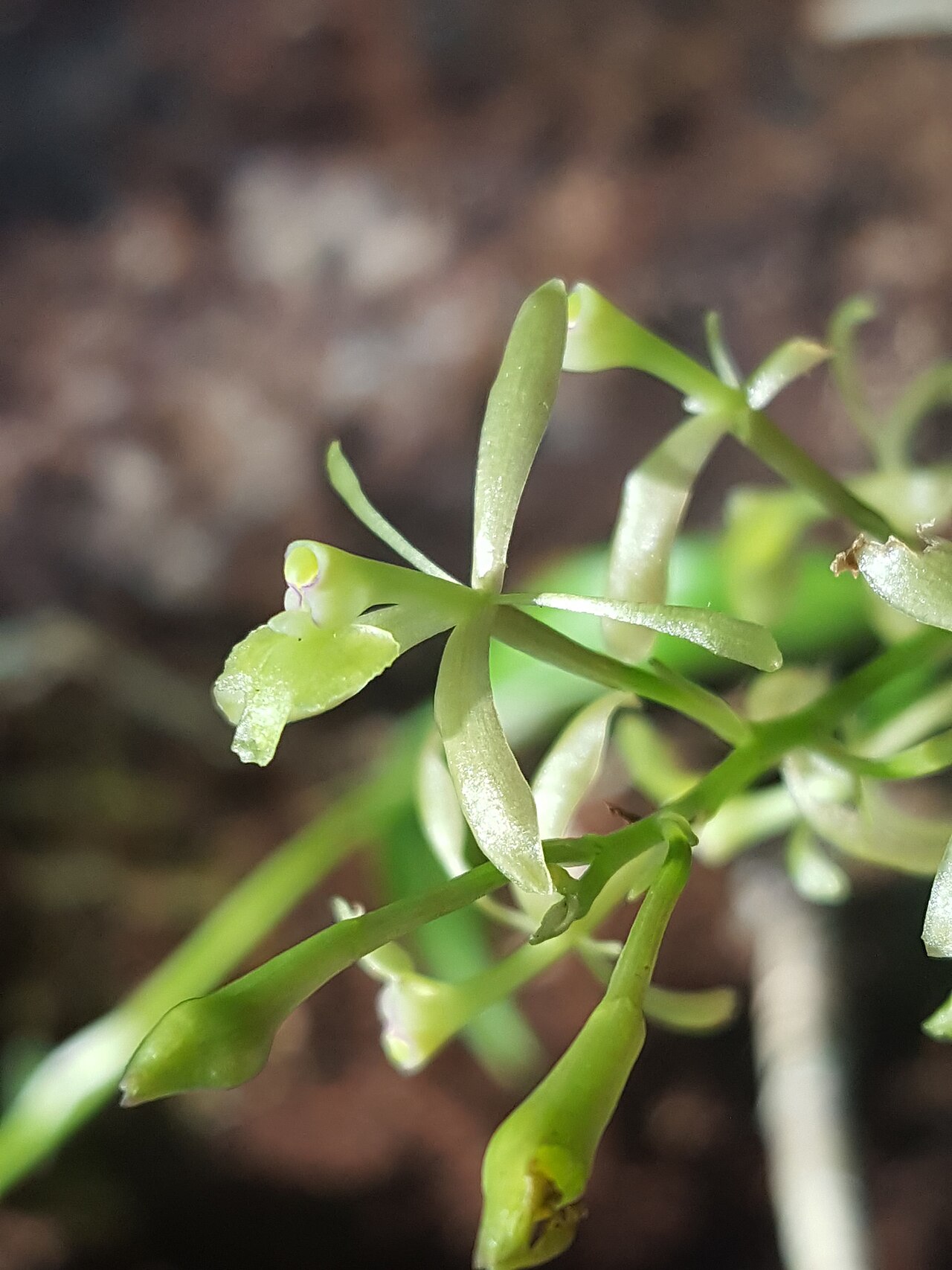
Look for a small clump of thick, leathery, strap-shaped leaves on a tree branch or trunk in a humid southern forest, often among resurrection fern, with thin sprays of small green flowers rising above the leaves.
Growth Habit
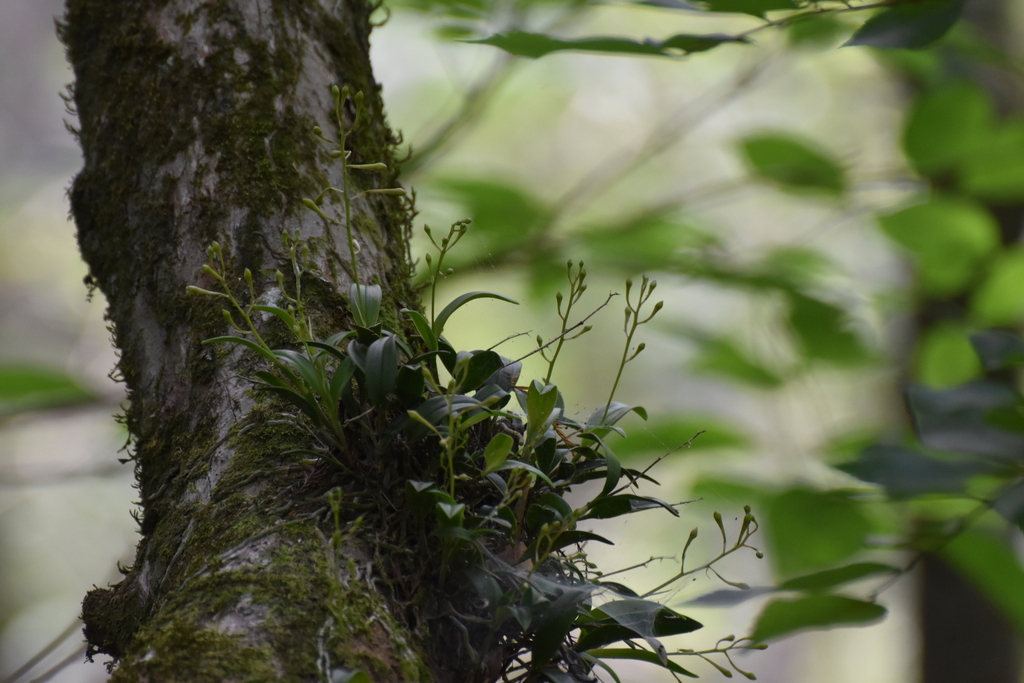
Greenfly orchid is a perennial epiphyte, growing on trees without harming them. It forms clumps of short, slender, cane-like stems a few inches long, each wrapped in leaf sheaths and carrying two or three leaves. Thick, whitish roots cling to the bark and absorb water and nutrients from rain and debris. Large clumps can spread along a branch for a foot or more.
Leaves
The leaves are leathery, elliptic to strap-shaped, up to about 4 inches long, dark green and sometimes tinged purple, especially in sun. They stay green all year.
Flowers
The flowers grow in a loose, erect to arching raceme about 2 to 6 inches long at the tip of the stem, with a few to about 14 flowers. Each is a little under an inch across, pale green to grayish green or bronze, sometimes tinged with purple, with narrow sepals and petals and a three-lobed lip. They are often fragrant, especially in the evening. Its flowering season is long and variable across its range, with blooms reported from summer into winter and occasionally at other times.
Fruit
The fruit is a small, ribbed, oval capsule that splits when ripe to release thousands of dust-like seeds, which drift on the wind to other trees.
Look-alikes
Fringed star orchid (Epidendrum ciliare), a rare relative in South Florida, has large, white, fringed lips. Florida butterfly orchid (Encyclia tampensis) has round pseudobulbs and showier brownish flowers with a white, purple-marked lip. Night-scented orchid (Epidendrum nocturnum) of South Florida has larger white flowers. Out of flower, small clumps of greenfly orchid can be mistaken for ball moss or other epiphytes, but its leaves are flat, thick and leathery.
Quick Facts
| Scientific Name | Epidendrum magnoliae |
| Family | Orchidaceae (orchid family) |
| Plant Type | Epiphytic perennial orchid |
| Mature Height | 4–10 in |
| Mature Spread | 4–12 in (clumps) |
| Growth Rate | Slow |
| Sun Exposure | Part shade to filtered sun |
| Water Needs | High humidity; roots dry between rains |
| Soil Type | None; grows on tree bark among mosses and ferns |
| Soil pH | Not applicable (epiphyte) |
| Bloom Time | Variable; mostly summer into winter |
| Flower Color | Pale green to bronze, sometimes purple-tinged |
| Fall Color | Evergreen |
| Fruit | Small ribbed capsules with dust-like seeds |
| Deer Resistant | Yes; grows out of reach on trees |
| USDA Hardiness Zones | 8–10 |
Native Range
Greenfly orchid is native to the southeastern United States and northeastern Mexico. USDA PLANTS lists it from seven states: North Carolina, South Carolina, Georgia, Florida, Alabama, Mississippi and Louisiana. In Mexico it grows in Nuevo León, San Luis Potosí and Tamaulipas.
In the United States it follows the warm, humid coastal plain, from southeastern North Carolina through the Lowcountry of South Carolina and Georgia to northern and central Florida, and west along the Gulf Coast to Louisiana. It is most common in northern and central Florida and the coastal plain of Georgia and South Carolina, and it becomes rare in the southern Florida peninsula and at the northern edge of its range.
Its habitat is humid forest at low elevations, below about 330 feet: cypress and tupelo swamps, river floodplains, hardwood hammocks and old live oak groves. It grows on the trunks and branches of trees such as live oak, southern magnolia, bald cypress, swamp tupelo and American beech, typically where humidity stays high and where resurrection fern and Spanish moss also grow.
📋 Regional plant lists featuring Greenfly Orchid: Alabama, Georgia & Mississippi · North & South Florida · Arkansas, Louisiana, Eastern Oklahoma & Eastern Texas · North & South Carolina
Growing & Care Guide
Greenfly orchid can be grown by orchid enthusiasts, but it should never be taken from the wild. It is protected as a Commercially Exploited plant in Florida, and wild plants rarely survive being pulled from their trees. Buy only nursery-propagated (seed-grown or division-grown) plants from a reputable orchid grower.
Light
Bright, filtered light, like the dappled shade of a live oak canopy. Direct midday sun can scorch the leaves, though plants tolerate more sun in humid sites.
Soil & Water
It needs no soil. Mount it on a piece of rough bark, a cork slab or a live tree branch, with a little sphagnum moss around the roots. Water or mist frequently in warm weather so the roots get wet and then dry within a day; high humidity is essential. Water less in winter.
Planting Tips
In the Deep South and Florida, nursery plants can be tied to the trunk or a branch of a rough-barked tree such as live oak, using cotton string or plastic-free ties that will rot away once the roots attach. Place it where it receives filtered light and humidity, such as near water or in a shady garden. Elsewhere, grow it mounted in a humid greenhouse.
Pruning & Maintenance
No pruning is needed. Remove dead flower spikes if you like. A very dilute orchid fertilizer in summer can help mounted plants, but plants on trees need no feeding.
Propagation
Large clumps of cultivated plants can be divided carefully. Orchid seed needs special fungi or laboratory culture to germinate, so propagation from seed is done by specialist growers in sterile flasks.
Landscape Uses
- Native epiphyte gardens: grows on live oaks and other rough-barked trees
- Shade and woodland gardens in the Deep South: a small, evergreen accent on tree branches
- Orchid collections: a hardy native orchid for mounted culture
- Nature viewing: a hidden treasure of southeastern swamps and hammocks
- Conservation education: an example of an orchid protected from wild collecting
Wildlife & Ecological Value
Greenfly orchid is part of the rich community of epiphytes that grow on the trees of southeastern swamps and hammocks.
For Pollinators
Its small, fragrant flowers are thought to be pollinated mainly by small moths and other night-flying insects drawn by the evening scent.
For Birds
It does not provide food for birds directly, but the epiphyte mats it grows in harbor insects and spiders that warblers, gnatcatchers and other songbirds feed on.
For Mammals
It grows out of reach of most mammals and is seldom eaten.
Ecosystem Role
Together with resurrection fern, mosses, lichens and Spanish moss, it forms mats on tree branches that capture water, dust and organic debris, creating habitat for small invertebrates. It is an indicator of old, humid forests with large trees.
Cultural & Historical Uses
The species name magnoliae refers to the southern magnolia, one of its host trees. The name conopseum, used by many botanists, comes from a Greek word meaning “gnat-like,” and, like the common name greenfly orchid, describes its small, insect-like green flowers. Epidendrum means “upon a tree.”
It has long fascinated botanists as the northernmost tree-dwelling orchid on the continent. It can withstand brief freezes and dry spells, drying and curling like the resurrection fern it grows with, then recovering after rain.
In Florida, greenfly orchid is listed on the Commercially Exploited Plant List of the Regulated Plant Index, alongside the Florida butterfly orchid. Taking plants from the wild for sale needs a permit, and taking them from private land needs the landowner’s permission. Clearing of old hammocks and swamp forests is also a threat.
Frequently Asked Questions
Where does greenfly orchid grow?
On trees in humid swamps, floodplain forests and hammocks on the southeastern coastal plain, from North Carolina to Florida and west to Louisiana, often on live oak, magnolia and cypress.
Does greenfly orchid harm the tree it grows on?
No. It is an epiphyte, not a parasite. It only uses the tree for support and gets water and nutrients from rain, air and debris.
Is greenfly orchid protected?
Yes, in Florida it is listed as a Commercially Exploited plant. Never pull it from trees. Buy only nursery-propagated plants.
When does greenfly orchid bloom?
Its flowering season is long and variable. Blooms are reported mostly from summer into winter, and the small green flowers are often fragrant in the evening.
Can I grow greenfly orchid on a tree in my yard?
Yes, in the humid Southeast, if you start with a nursery-propagated plant. Tie it to a rough-barked tree in filtered light, and it will attach with its roots.

Looking for a nursery that carries Greenfly Orchid?
Browse our native plant nursery directory: Alabama · Florida & Georgia · Louisiana & Mississippi · North Carolina · South Carolina

